
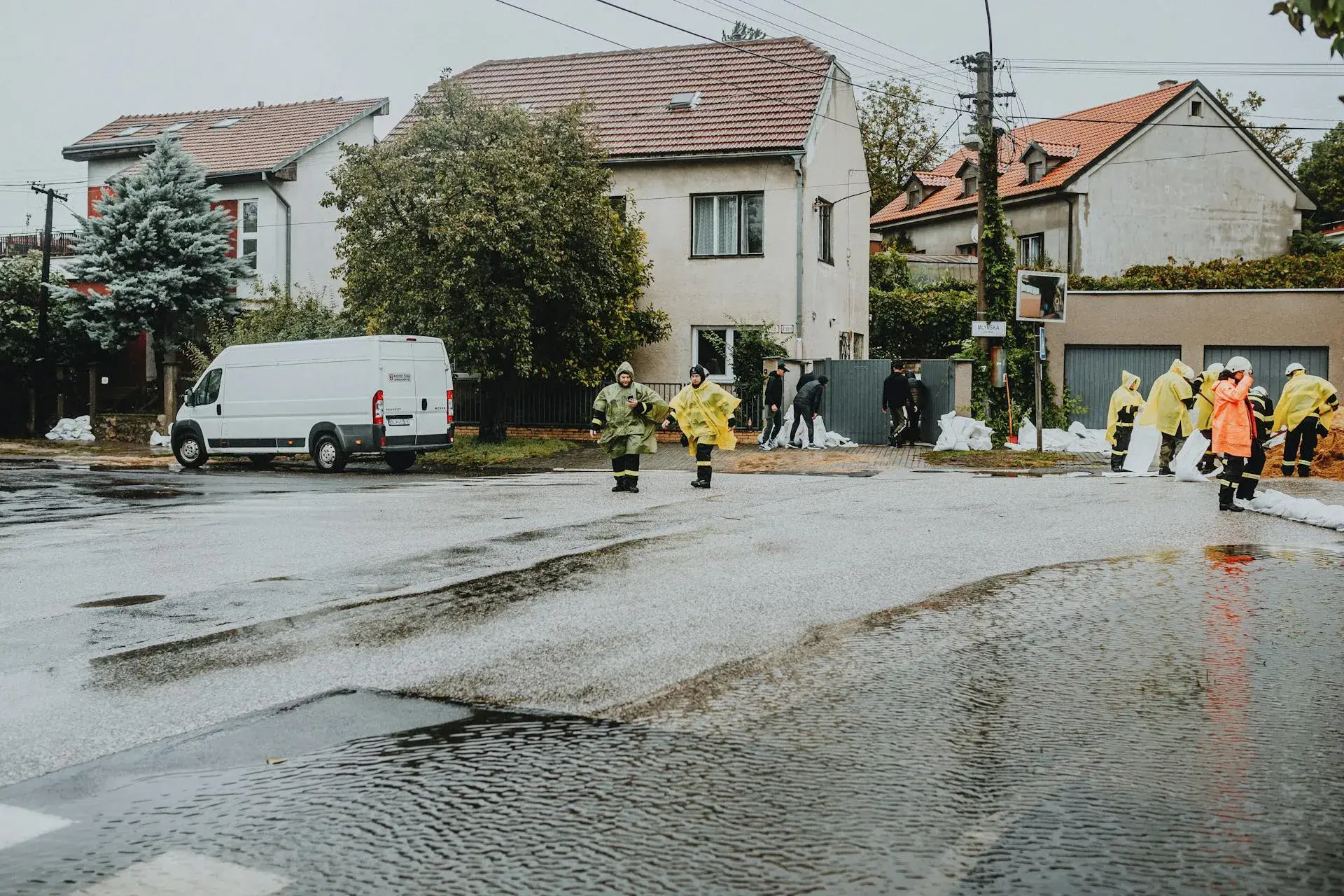
Sewage Cleanup in Sandy Springs, GA
Sewage contamination poses immediate health risks and worsens rapidly. Every hour of contact allows bacteria to penetrate deeper into materials. Our local team responds to Sandy Springs emergencies within 60 minutes.
What Happens When You Call
A real person answers, not a call center. We assess your situation, ask the right questions about the contamination source and extent, and begin coordinating your response immediately.
Your dedicated cleanup team is dispatched from our local base serving Sandy Springs and the surrounding northern Fulton County communities.
Team arrives with extraction equipment, PPE, antimicrobial chemistry, and containment materials. Emergency removal and sanitization begin immediately.
Sewage extracted, contaminated materials removed, antimicrobial treatment applied, drying initiated. You know exactly what comes next.
Sewage is in your property and it needs to come out now. Not tomorrow, not after you figure out who is responsible, not after you call three companies for quotes. Raw or partially treated sewage carries bacteria, viruses, and parasites that pose immediate health risks to anyone in the building. X Response exists for this exact moment. When you reach out, your cleanup team is mobilized within minutes and on site within the hour. From that point forward, one team manages everything: extraction, sanitization, drying, and restoration. Call now. Your team is standing by.
Why Sandy Springs Homes Are Vulnerable to Sewage
Sandy Springs sits at the intersection of two sewage infrastructure systems, each carrying its own failure modes. The Fulton County Public Works system serves the city's sanitary sewer needs through a network of aging collection lines, lift stations, and the Big Creek Water Reclamation Facility located upstream along the Chattahoochee River corridor. The collection system covers a 285-square-mile service area with approximately 2,300 miles of pipe and 70,000 manholes serving 86,500 customers including Sandy Springs. Much of the pipe in Sandy Springs' portion of the system was installed in the 1960s and 1970s during the housing boom and is now approaching or past its expected service life. Clay and early PVC sewer mains crack, separate at joints, and allow groundwater infiltration during rain events. That infiltration overwhelms the system's capacity during heavy storms, leading to sanitary sewer overflows that back up through the lowest fixtures in homes or discharge from manholes into streets, yards, and waterways.
The scale of the sewage infrastructure problem in the Sandy Springs area became dramatically visible in June 2023. In June 2023, a malfunction at the Fulton County Big Creek Water Reclamation Facility discharged poorly treated sewage into the Chattahoochee River at Morgan Falls near Sandy Springs, closing over 15 miles of the river through the July 4th holiday weekend due to dangerously elevated E. coli levels. Chattahoochee Riverkeeper discovered the discharge near Bull Sluice Lake, and the National Park Service confirmed the contamination and closed the river from the Chattahoochee Nature Center in Sandy Springs downstream to the East Palisades. The incident was traced to a failure in the biological processes used to treat wastewater at the facility, not a pipe break, meaning millions of gallons of inadequately treated sewage passed through the plant and into the river over multiple days before detection. For Sandy Springs residents and property owners along the river corridor, the event demonstrated that sewage contamination risk extends beyond backup in their own plumbing to include failures in the broader infrastructure system that serves the entire region.
Aging Fulton County Sewer Collection System
Sandy Springs is served by Fulton County's sewer collection system, which includes approximately 2,300 miles of pipe and 70,000 manholes across its 285-square-mile service area. Much of the collection infrastructure in Sandy Springs was installed during the 1960s and 1970s housing boom. Clay pipe from this era develops cracks and joint separations over decades, allowing tree roots to infiltrate, groundwater to enter during rain events, and wastewater to exfiltrate into surrounding soil near foundations. During heavy rain, groundwater infiltration through deteriorated pipe can overwhelm system capacity, causing sewage to back up through the lowest connected fixture in a home, typically a basement floor drain, ground-floor toilet, or bathtub. Properties at lower elevations in the drainage network are most vulnerable because sewage follows gravity to the lowest available outlet when the system surcharges.
Big Creek Water Reclamation Facility and River Corridor Risk
The Fulton County Big Creek Water Reclamation Facility processes wastewater for a large portion of North Fulton County and discharges treated effluent into the Chattahoochee River near Morgan Falls Dam in Sandy Springs. In June 2023, a malfunction in the plant's biological treatment process allowed inadequately treated sewage to discharge into the river, closing over 15 miles of the Chattahoochee for weeks due to dangerously elevated E. coli levels. The spill was discovered by Chattahoochee Riverkeeper near Bull Sluice Lake and confirmed by the National Park Service. For properties along the Chattahoochee corridor in Sandy Springs, this type of event represents a contamination risk distinct from a household backup: when the river rises during flood events while carrying elevated sewage contamination, the floodwater that enters riverside properties is not just water but biologically contaminated water that requires Category 3 (black water) cleanup protocols.
Sanitary Sewer Overflows During Storm Events
When heavy rain overwhelms the sewer collection system through infiltration and inflow, sanitary sewer overflows (SSOs) occur at manholes, cleanouts, and system low points throughout Sandy Springs. These overflows discharge raw sewage onto the ground surface, into storm drains, and into waterways. For residential properties, the same hydraulic conditions that cause an SSO in the street can also cause sewage to back up through floor drains, toilets, and tub drains inside the home. Hurricane Helene's remnants dropped nearly 12 inches of rain on Sandy Springs over four days in September 2024, creating exactly the conditions that produce widespread SSOs and indoor backups across the aging collection system. Properties with basement or lower-level connections to the sewer system are most vulnerable because they sit below the hydraulic grade line when the system surcharges.
Private Lateral Line Failures
The sewer lateral connecting a home to the public main is the property owner's responsibility. In Sandy Springs, many of these laterals are the same age as the homes they serve: 50 to 60 years old, constructed of clay pipe or early-generation PVC, and running through Piedmont clay soil that shifts seasonally and stresses pipe joints. Root intrusion from Sandy Springs' mature tree canopy is a primary failure mode. Oak, pine, and magnolia roots seek the moisture and nutrients inside sewer laterals, penetrating through cracked joints and eventually blocking flow entirely. When a lateral blockage occurs, sewage backs up through the lowest fixture in the home. In homes with crawl spaces, a cracked lateral beneath the foundation can leak sewage directly into the crawl space for extended periods before anyone detects the contamination, because the odor is masked by the enclosed space and the leak may not produce visible backup at fixtures above.
Multi-Unit Building Sewage Events
Sandy Springs' dense apartment communities and condominium buildings present unique sewage contamination scenarios. A blockage in the building's main sewer line causes backup into ground-floor or basement-level units while upper floors continue draining, effectively sending the entire building's wastewater into the lowest units. A failed sewage ejector pump in a below-grade parking structure floods the garage with sewage that can enter storage units, utility rooms, and elevator pits. In older garden-style apartment complexes from the 1970s and 1980s, shared lateral connections mean a blockage on the property side affects multiple units simultaneously. The contamination in these events is often severe because the backup contains waste from multiple households and the volume overwhelms a single unit rapidly. Restoration requires treating the backup as Category 3 (black water) regardless of whether the sewage appears diluted.
These factors create a sewage contamination environment specific to Sandy Springs: an aging county collection system installed during the 1960s housing boom and now past its design life, a water reclamation facility with demonstrated failure potential at Morgan Falls, storm-driven infiltration that surcharges the system during heavy rain, private laterals degraded by decades of root intrusion and soil movement, and multi-unit building configurations that concentrate backup into the lowest-level spaces. Effective sewage cleanup here requires understanding that all sewage contamination, regardless of visual appearance, carries pathogenic organisms that require professional-grade extraction, antimicrobial treatment, and material removal protocols. It rewards a team that knows the difference between managing a single-fixture backup from a root-blocked lateral and remediating a multi-unit event where an entire building's waste entered ground-floor apartments.
What Happens to Your Home While You Wait
Within 1 Hour
Sewage spreads across flooring, wicks into baseboards and drywall, and saturates carpet and padding. Bacterial contamination begins penetrating porous materials on contact. In Sandy Springs homes with crawl spaces, sewage from a failed lateral pools on the vapor barrier and contacts floor joists. The immediate health risk from pathogens in the air and on surfaces makes this a hazardous environment for unprotected occupants. Every minute of contact extends the contamination boundary.
1–24 Hours
Bacteria multiply rapidly in the warm, nutrient-rich environment that sewage creates on building materials. Drywall, carpet padding, and wood flooring absorb contaminated water and become saturated with pathogens that cannot be removed through surface cleaning alone. In Sandy Springs' warm climate, microbial activity accelerates compared to cooler environments. Odor intensifies as biological decomposition advances. Materials that might have been salvageable in the first hour cross into mandatory removal territory.
24–48 Hours
Contamination penetrates deeply into porous materials. Drywall loses structural integrity and begins harboring bacteria within its gypsum core. Wood framing in contact with sewage absorbs contaminated moisture into the grain. Mold colonization begins on any organic material that remains damp, compounding the biological contamination with fungal growth. The restoration scope expands significantly as more material must be removed rather than cleaned.
48–72 Hours
Extensive bacterial contamination throughout affected materials. Mold growth becomes visible on walls, framing, and any porous surface. Structural wood shows early signs of decay in direct-contact areas. The combination of bacterial contamination and mold creates a complex remediation scenario that requires both sewage cleanup and mold remediation protocols. Health risks intensify as airborne pathogen and spore counts climb.
One Week and Beyond
Severe biological contamination with active mold growth throughout the affected area. Structural materials in sustained contact with sewage begin losing structural capacity. The scope of work escalates from cleanup to full demolition and rebuild of affected areas. Insurance claims become more complex as carriers assess whether timely mitigation could have prevented the escalation. What began as an extraction job becomes a reconstruction project.
Sewage contamination is a health emergency that worsens by the hour. Every additional hour of contact means more material that must be removed rather than cleaned, more biological contamination to neutralize, and higher restoration costs. Contact X Response now. Our Sandy Springs team responds within 60 minutes.
How We Restore Sewage-Damaged Sandy Springs Homes
From the moment our team arrives, every step follows strict protocols for biohazard handling, contamination removal, and verified sanitization. Here is exactly what the sewage cleanup process involves for Sandy Springs properties.
Safety Assessment and Contamination Containment
Our team arrives in full PPE appropriate for Category 3 (black water) contamination: respirators with appropriate cartridges, impermeable coveralls, boots, and gloves. The first action is assessing the contamination boundary and establishing containment to prevent cross-contamination of unaffected areas. In Sandy Springs homes, that means determining whether the backup is limited to a single floor or whether it reached the crawl space, wall cavities, or multiple rooms. For apartment buildings, it means identifying every unit affected by the backup. HVAC systems are shut down immediately to prevent the air handling system from distributing airborne pathogens from the contaminated zone throughout the building. Access is restricted to trained personnel with appropriate protection.
Sewage Extraction and Contaminated Material Removal
All standing sewage is extracted using industrial equipment designed for contaminated water. Truck-mounted extractors remove bulk liquid rapidly, followed by portable units to extract from crevices, beneath cabinets, and in areas where standing equipment cannot reach. In Sandy Springs homes with crawl spaces, submersible pumps and low-clearance extraction tools address contamination beneath the floor. After liquid extraction, all porous materials that contacted sewage are removed: carpet, padding, baseboards, lower drywall (typically cut at minimum 12 inches above the visible waterline to account for wicking), insulation, and any other absorbent material. Porous materials cannot be adequately sanitized after sewage contact and must be disposed of as contaminated waste. Non-porous materials like concrete, tile, and metal are cleaned and sanitized in place.
Antimicrobial Treatment and Sanitization
After contaminated materials are removed, all remaining surfaces within the affected zone are treated with EPA-registered antimicrobial products designed for sewage contamination. This includes subfloor sheathing, wall framing exposed by drywall removal, concrete slab surfaces, crawl space structural members, and any non-porous fixture or surface that contacted contaminated water. Treatment is applied at concentrations and dwell times specified by the product manufacturer for pathogen kill. Sandy Springs' warm climate accelerates bacterial regrowth on inadequately treated surfaces, so thoroughness is essential. HEPA air scrubbers run continuously during this phase to capture airborne pathogens released during material removal and to maintain air quality within the contained work zone.
Structural Drying
With contaminated materials removed and surfaces sanitized, the structural drying phase begins. Commercial dehumidifiers and air movers are positioned to dry exposed framing, subfloor sheathing, concrete, and any structural material that absorbed moisture during the event. In Sandy Springs' humid climate, mechanical dehumidification is essential because ambient humidity would extend drying time dramatically and risk mold colonization on treated surfaces before they reach their dry standard. Moisture meters monitor progress daily, and equipment is repositioned as materials dry to ensure uniform results. The structure must reach verified dry levels before reconstruction materials are installed, or residual moisture trapped behind new drywall and flooring creates the conditions for mold growth.
Verification, Clearance, and Completion
Before the project is cleared for reconstruction, testing verifies that the sanitization was successful and the structure is ready for new materials. Moisture readings confirm all structural materials have returned to acceptable levels. ATP (adenosine triphosphate) testing or bacterial culture testing on representative surfaces verifies that antimicrobial treatment reduced pathogen levels to acceptable standards. Air quality testing confirms that the environment is safe for unprotected occupancy. You receive completion documentation including all test results, extraction volumes, material removal records, treatment protocols, and before-and-after photos. This documentation supports your insurance claim and provides permanent evidence that professional biohazard remediation was performed to standard.
The X Response Difference
When you contact X Response for sewage cleanup in Sandy Springs, you get a team trained in biohazard protocols that treats the event as the health emergency it is. Not a general cleaning crew with household products working without PPE or testing.
Insurance Claim Guidance for Sandy Springs Homeowners
Sewage backup insurance coverage in Georgia is not automatically included in standard homeowner's policies. Most carriers offer sewer and drain backup coverage as a separate endorsement with its own sublimit, typically ranging from $5,000 to $25,000 depending on the policy and rider selected. Without this endorsement, damage from sewage backing up through your plumbing system may have no coverage at all. If the sewage contamination resulted from a covered cause like storm damage to the public system, coverage may apply under a different provision, but carrier interpretations vary. For Sandy Springs homeowners, this endorsement is particularly important given the age of the Fulton County collection system and the demonstrated risk of system surcharge during heavy rain events like Hurricane Helene.
How X Response Helps
- Document the contamination source, extent, and affected materials with professional photos and written scope from day one
- Distinguish between damage from sewer backup (endorsement coverage) versus flood-driven contamination (flood policy) versus plumbing failure (standard coverage), as each triggers different policy provisions
- Provide extraction volumes, material removal records, and treatment documentation that demonstrate the scope of professional remediation performed
- Document timeline clearly to demonstrate that mitigation began promptly and additional damage was not caused by delay
- Deliver post-cleanup verification testing proving the remediation met professional standards, supporting claim closure
X Response does not file claims on your behalf, adjust claims, or make coverage determinations. We provide documentation and guidance to help you make informed decisions about your property and your policy. Coverage decisions are made solely by your insurance carrier.
Certified Restoration Specialists Serving Sandy Springs
When you contact X Response for sewage cleanup in Sandy Springs, your team is drawn from certified professionals trained in biohazard remediation who work across northern Fulton County. They have managed sewer backups in homes where 60-year-old clay laterals finally collapsed under root pressure, apartment building events where ground-floor units received the backup from an entire building, and crawl space contamination from cracked laterals that leaked for months before detection. They understand the Fulton County sewer system's behavior during storm events, know which neighborhoods sit at hydraulic low points in the collection network, and have experience with the Category 3 protocols required when river flooding carries sewage contamination into properties along the Chattahoochee corridor. This is not a general water damage crew treating sewage the same as a clean water leak. It is a specialized team with biohazard training, appropriate PPE, and the testing capability to verify that contamination has been eliminated.
Every technician on your team holds current IICRC certification in water damage restoration with specific training in Category 3 contamination protocols. Equipment includes industrial extractors rated for contaminated water, EPA-registered antimicrobial chemistry, HEPA air scrubbers, commercial dehumidification systems, and ATP testing equipment for post-cleanup verification. Full PPE including respirators, impermeable suits, and chemical-resistant boots is worn throughout the contaminated work zone. When your team arrives, they bring everything needed to contain, extract, sanitize, and begin drying immediately.
In Sandy Springs, X Response works with Atlanta's Best Restoration, an independent local restoration partner serving Fulton County.
Sewage Cleanup FAQ for Sandy Springs Homeowners
Other Emergency Services in Sandy Springs

Water Damage Restoration
Burst pipes, storm flooding, standing water. We extract, dry, and restore before mold sets in.
Learn more
Fire Damage Restoration
Structural damage, soot, debris. We stabilize, clean, and rebuild what fire destroyed.
Learn more
Smoke Damage Restoration
Soot residue, chemical odors, HVAC contamination. We decontaminate surfaces, eliminate odors, and restore air quality.
Learn more
Mold Remediation
Testing, containment, removal, prevention. We find the source, eliminate the growth, and stop it from returning.
Learn more