
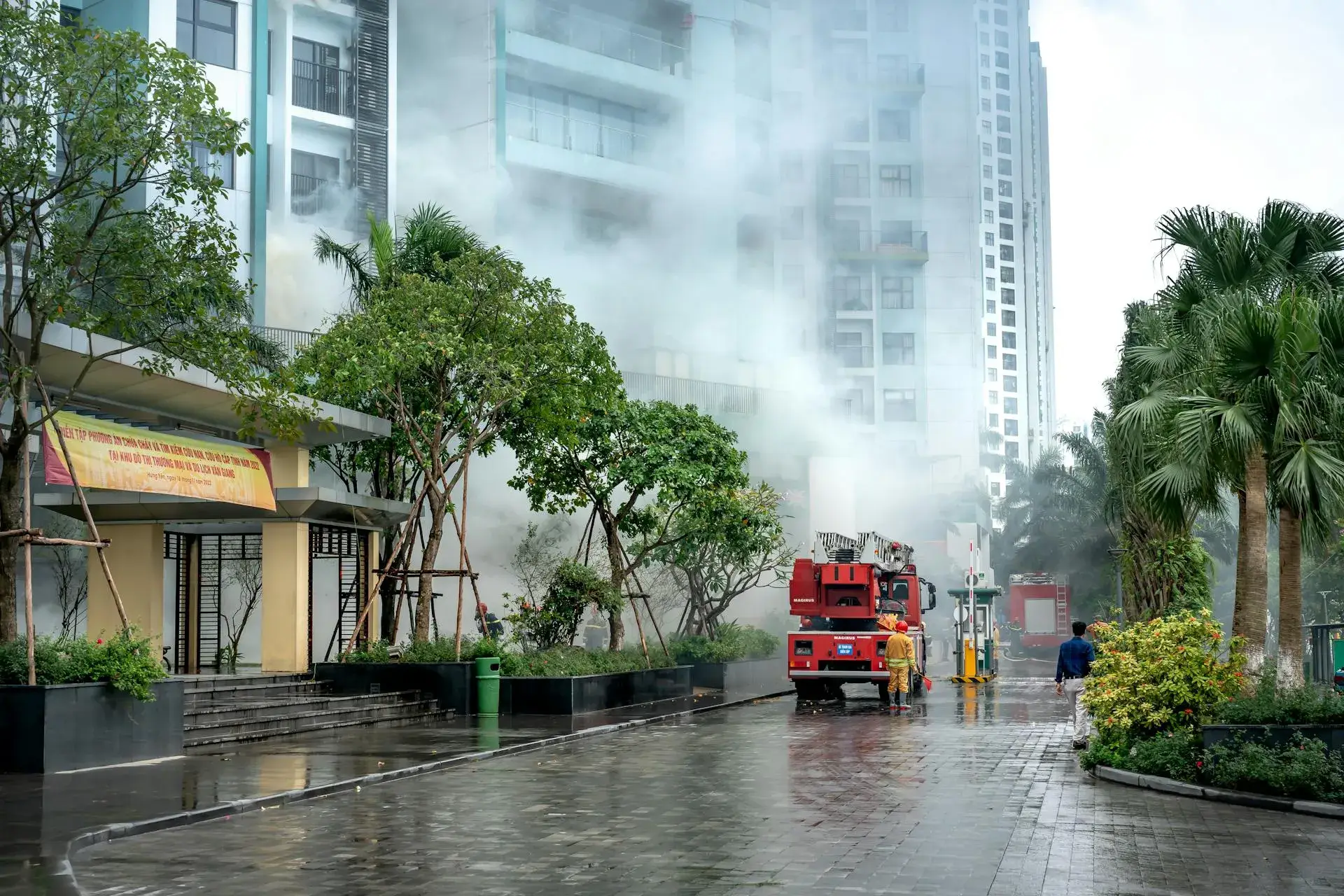
Smoke Damage Restoration in Sandy Springs, GA
Smoke residue acidifies and bonds permanently to surfaces within hours. Odor penetrates deeper into materials with every passing day. Our local team responds to Sandy Springs emergencies within 60 minutes.
What Happens When You Call
A real person answers, not a call center. We assess your situation, ask the right questions, and begin coordinating your response immediately.
Your dedicated restoration team is dispatched from our local base serving Sandy Springs and the surrounding northern Fulton County communities.
Team arrives with air quality testing equipment, HEPA scrubbers, soot removal chemistry, and odor neutralization systems. Assessment and mitigation begin immediately.
Contamination mapped, cleaning priorities established, HVAC isolated, restoration plan documented. You know exactly what comes next.
Smoke damage does not wait for you to figure out what happened. Whether it came from a structure fire down the hall, a wildfire event blanketing metro Atlanta, or a furnace malfunction that filled your home overnight, the residue is bonding to surfaces and penetrating deeper into materials right now. X Response exists for this exact moment. When you reach out, your restoration team is mobilized within minutes and on site within the hour. From that point forward, one team manages everything: air quality assessment, soot removal, odor elimination, and HVAC decontamination. Call now. Your team is standing by.
Why Sandy Springs Homes Are Vulnerable to Smoke Damage
Sandy Springs faces smoke damage risk from two distinct directions. The first is structure fires within the city's dense building stock, where smoke from a fire in one apartment unit, one restaurant, or one commercial tenant space travels through shared HVAC systems, wall cavities, and vertical chases to contaminate spaces far from the origin. The second is wildfire and outdoor smoke events that infiltrate buildings from the outside. Both have affected Sandy Springs in recent years, and both leave residue that requires professional intervention to remove completely. The city's mix of 1960s-era homes with original HVAC systems, garden-style apartment complexes with shared mechanical infrastructure, and modern sealed office towers along GA 400 means smoke infiltrates and concentrates differently in different building types, requiring building-specific restoration approaches.
In April 2026, a series of wildfires burning across southern Georgia prompted a state of emergency declaration. Smoke from the fires spread northward across the state, and the Georgia Department of Public Health issued a statewide warning urging residents to take precautions. Metro Atlanta, including Sandy Springs, received a Code Orange Air Quality Alert indicating conditions unhealthy for sensitive groups. Earlier, in the summer of 2023, smoke from Canadian wildfires drifted south into Georgia, pushing air quality monitors across the state to dangerously elevated pollution levels for a multi-day period. These events demonstrate that Sandy Springs is vulnerable to wildfire smoke infiltration even though the city itself is fully urbanized. When outdoor air quality degrades to Code Orange or worse, smoke particles enter buildings through every unsealed gap: HVAC fresh-air intakes, window frames, door seals, attic ventilation, and crawl space openings. Once inside, fine particulate matter settles on surfaces, infiltrates soft furnishings, and contaminates ductwork. Older homes with leaky building envelopes and original HVAC systems without high-efficiency filtration are especially vulnerable.
Wildfire Smoke Infiltration Events
Sandy Springs has experienced multiple wildfire smoke events in recent years. In April 2026, wildfires across southern Georgia triggered a state of emergency and a Code Orange Air Quality Alert for metro Atlanta. In summer 2023, Canadian wildfire smoke pushed air quality to unhealthy levels across Georgia for several days. During these events, fine particulate matter (PM2.5) infiltrates buildings through HVAC fresh-air intakes, building envelope gaps, attic ventilation, and crawl space openings. The particles are microscopic but their effects are measurable: a thin film of residue settles on horizontal surfaces, soft furnishings absorb the smoky odor, and HVAC systems distribute contaminated air throughout the building. Sandy Springs' older homes with original 1960s-era construction are particularly vulnerable because their building envelopes were not designed for airtightness and their HVAC systems lack the high-efficiency particulate filtration found in modern construction. After a multi-day smoke event, professional air quality testing and targeted cleaning may be needed to restore indoor conditions, especially for residents with respiratory sensitivities.
Adjacent-Unit Smoke Travel in Apartment Buildings
Sandy Springs' high concentration of apartment communities creates a common smoke damage scenario: a fire or cooking incident in one unit sends smoke through shared infrastructure into neighboring units. In garden-style apartments built in the 1970s and 1980s, shared attic spaces and wall cavities provide direct pathways for smoke to travel horizontally between units. In high-rise buildings, elevator shafts, stairwells, and centralized HVAC systems distribute smoke vertically. Residents in units far from the fire origin discover soot on surfaces, smoky odors in closets, and discolored HVAC register faces days after the incident. The contamination is often worse than it appears because the bulk of the residue settles inside ductwork, behind walls, and on surfaces hidden above drop ceilings rather than in visible areas. Professional testing identifies the full extent of contamination so cleaning addresses the source rather than just the symptoms.
Furnace Puffback and HVAC Malfunction
A furnace puffback occurs when an oil or gas furnace misfires, igniting accumulated fuel in the combustion chamber and blowing soot through the supply ductwork into every room connected to the system. The result is a fine, oily black residue distributed throughout the home in minutes. Sandy Springs' older homes with original furnaces or boiler systems that have been maintained sporadically over 50 to 60 years are susceptible to puffback events, particularly at the start of the heating season when systems fire up for the first time after months of dormancy. The soot from a puffback is petroleum-based and bonds aggressively to surfaces. It coats walls, ceilings, furniture, clothing in closets, and food in open pantries. Because it travels through the duct system, every room with a supply register is affected simultaneously. Cleaning requires specialized techniques for petroleum soot that differ from structure-fire or wildfire residue.
Commercial Smoke from Restaurant and Kitchen Incidents
Sandy Springs' mixed-use developments and commercial corridors contain numerous restaurants whose kitchens produce smoke events that affect adjacent tenants. A grease fire in a restaurant kitchen produces protein-based soot and aerosolized grease particles that travel through exhaust systems, shared wall assemblies, and any mechanical chase connecting the kitchen space to other occupancies. The residue is sticky, carries a distinct rancid odor, and bonds to surfaces differently than fire soot from burned building materials. Residential units above restaurants in mixed-use buildings are chronically exposed to trace kitchen odors that accumulate over time, and acutely exposed when a kitchen fire or grease incident sends concentrated smoke through shared building infrastructure. Cleaning protein and grease soot requires alkaline chemistry that differs from the solvents used for synthetic fire soot or the methods used for wildfire particulate.
Sealed Modern Buildings and Recirculated Contamination
The office towers and newer apartment buildings along GA 400 and in the Perimeter Center area are built with tight building envelopes and mechanical ventilation systems that recirculate conditioned air. This design is energy-efficient but creates a problem when smoke enters the building: once contamination reaches the air handling system, it circulates repeatedly through the building, depositing residue with each pass. In a sealed commercial building, a small smoke event in one tenant space can contaminate dozens of floors through the mechanical system before anyone identifies the source. The contamination accumulates inside ductwork, on coil surfaces, in filter housings, and across the air-side surfaces of the HVAC system. Surface cleaning alone does not resolve the problem because the mechanical system continues redistributing residue from its internal surfaces into the occupied space with every operating cycle.
These factors create a smoke damage environment specific to Sandy Springs: wildfire smoke events that infiltrate an aging building stock through leaky envelopes, apartment density that provides pathways for smoke to travel between units, older furnaces susceptible to puffback events, restaurant smoke in mixed-use buildings, and sealed commercial towers that recirculate contamination through mechanical systems. Effective smoke damage restoration here requires understanding the residue type (wildfire particulate, structure-fire soot, petroleum puffback, or protein-based kitchen grease), the distribution pathway (building envelope infiltration, shared cavities, ductwork, or gravity), and the building type, because each combination demands a different cleaning chemistry and approach.
What Happens to Your Home While You Wait
Within 1 Hour
Soot and smoke residue begin settling on horizontal surfaces and bonding to vertical ones. Acidic compounds in the residue start reacting with metals, plastics, and porous materials. The longer residue sits, the deeper it penetrates and the harder it becomes to remove without damaging the substrate. In sealed buildings with recirculating HVAC, contamination distributes to every connected space with each air handling cycle.
1–24 Hours
Residue penetrates deeper into porous materials: drywall absorbs smoke compounds, wood grain traps particles in its open cells, fabric fibers bind with soot at the molecular level. Chrome, brass, and aluminum fixtures begin permanent discoloration from acid soot. Smoke odor compounds migrate into soft furnishings, mattresses, and clothing in closets. What could have been cleaned from surfaces begins requiring treatment of the materials themselves.
24–48 Hours
Permanent staining sets into light-colored surfaces and painted finishes. Odor compounds bond with building materials at a level that surface cleaning alone cannot address. Electronics begin showing corrosion at contact points on circuit boards and connectors. In North Georgia's humid climate, moisture combines with soot residue to create acidic compounds that accelerate material degradation.
48–72 Hours
Smoke odor becomes embedded in the structure rather than just on surfaces. Thermal fogging and surface treatments become less effective as compounds bond deeper into substrates. Soft goods like upholstery, drapery, and clothing may cross from cleanable to replacement. The scope of work expands from professional cleaning to material replacement for items that could have been saved with earlier intervention.
One Week and Beyond
Odor permeates structural framing, subfloor assemblies, and insulation. Remediation shifts from cleaning and deodorizing to encapsulation or material removal. HVAC systems that have been running with contaminated coils and ductwork have distributed residue into every corner of the building. Restoration costs increase substantially as the proportion of salvageable materials decreases with each passing day.
Every hour that smoke residue sits on surfaces is an hour of deepening damage and expanding scope. Contact X Response now. Our Sandy Springs team responds within 60 minutes.
How We Restore Smoke-Damaged Sandy Springs Homes
From the moment our team arrives, every step is documented, measured, and verified. Here is exactly what the smoke damage restoration process involves for Sandy Springs properties.
Air Quality Assessment and Contamination Mapping
Our team arrives with particulate counters, surface residue test kits, and thermal imaging equipment to map the full extent of smoke contamination. In Sandy Springs homes, that means testing every room, the crawl space or attic, and the HVAC system to determine which areas carry residue and at what concentration. For apartment buildings, it means identifying the smoke travel pathway and testing each potentially affected unit independently. For commercial buildings with recirculating air systems, it means testing supply and return ductwork to determine whether the mechanical system is actively redistributing contamination. The assessment produces a contamination map that guides cleaning priorities and gives your insurance company documented evidence of the full scope from day one.
HVAC Isolation and Decontamination
If the HVAC system distributed smoke through the building, or if outdoor smoke infiltrated through the fresh-air intake, the mechanical system is contaminated and will continue redistributing residue every time it operates. We shut down and isolate the system, then clean or replace filters, clean coil surfaces, and address contamination inside supply and return ductwork. For Sandy Springs' older homes with original ductwork from the 1960s, cleaning may reveal decades of accumulated dust and debris that compounded the smoke contamination. For commercial buildings with complex multi-zone systems, each air handling unit is assessed and decontaminated independently. The system is not restarted until testing confirms it will circulate clean air.
Surface Cleaning and Soot Removal
With the HVAC system isolated so it cannot redistribute residue, surface cleaning proceeds systematically from the least contaminated areas toward the most contaminated. The chemistry and technique depend on the soot type: dry chemical sponges for light wildfire particulate, alkaline degreasers for protein-based kitchen soot, solvent-based cleaners for petroleum puffback residue, and acidic neutralizers for synthetic fire soot. We clean walls, ceilings, trim, fixtures, and all hard surfaces in each room, followed by professional cleaning of soft goods where salvageable. HEPA air scrubbers run continuously during cleaning to capture particles released by the process and prevent recontamination of cleaned areas.
Odor Elimination
Visible soot is only part of the problem. Smoke odor compounds penetrate into materials at a molecular level and continue off-gassing for weeks or months if not properly neutralized. We use thermal fogging to reach odor compounds inside wall cavities, above ceilings, and within structural assemblies that cannot be accessed for direct cleaning. Hydroxyl generators break down odor molecules in the air and on surfaces through a photocatalytic process safe for occupied spaces. For severe contamination, ozone treatment in unoccupied, sealed rooms oxidizes stubborn compounds embedded in materials. The combination of these approaches addresses odor at every level: in the air, on surfaces, and within materials.
Verification and Completion
Before we consider the project complete, air quality testing confirms particulate levels have returned to acceptable standards and odor is eliminated rather than just masked. Surface residue testing verifies cleaning effectiveness on representative surfaces throughout the space. HVAC output testing confirms the mechanical system is circulating clean air. We provide completion documentation including all test results, before-and-after photos, cleaning protocols used, and a summary of work performed. That package supports your insurance claim and provides a permanent record that professional remediation was performed to standard.
The X Response Difference
When you contact X Response for smoke damage in Sandy Springs, you get a team that treats the problem as a system: source identification, pathway tracing, contamination removal, and verified results. Not a surface wipe-down that leaves the real problem hidden in your walls and ductwork.
Insurance Claim Guidance for Sandy Springs Homeowners
Smoke damage insurance coverage depends on the source. Smoke from a structure fire, whether in your property or an adjacent unit, is typically covered under standard homeowner's, renter's, or commercial property policies as part of the fire loss. Smoke damage from a furnace puffback is generally covered as a sudden mechanical failure. Wildfire smoke infiltration is more complex: if the smoke entered through normal building openings during an outdoor air quality event without any direct flame contact to your property, coverage may be limited or denied depending on your specific policy language and carrier interpretation. This distinction became relevant for Sandy Springs residents during the April 2026 wildfire smoke event when outdoor air quality degraded to Code Orange across metro Atlanta and smoke infiltrated homes through HVAC systems and building envelope gaps.
How X Response Helps
- Document contamination with air quality testing, surface residue assessment, and professional photos before any cleaning begins
- Identify and document the smoke source, which determines which coverage provision applies under your policy
- Distinguish between areas requiring professional cleaning versus material replacement, supported by contamination testing
- Provide HVAC contamination documentation if the mechanical system distributed smoke throughout the property
- Deliver completion testing results proving remediation was effective, supporting claim closure
X Response does not file claims on your behalf, adjust claims, or make coverage determinations. We provide documentation and guidance to help you make informed decisions about your property and your policy. Coverage decisions are made solely by your insurance carrier.
Certified Restoration Specialists Serving Sandy Springs
When you contact X Response for smoke damage in Sandy Springs, your restoration team is drawn from certified professionals who work across northern Fulton County and understand the specific challenges of smoke remediation in different building types. They know how wildfire particulate infiltrates the leaky envelopes of 1960s-era homes differently than it enters a sealed Perimeter Center office tower. They understand how smoke travels through garden-style apartment buildings with shared attic spaces versus high-rise buildings with centralized mechanical systems. They have managed furnace puffback cleanings in older homes, restaurant smoke incidents in mixed-use buildings, and wildfire infiltration events across the metro area. This is not a general cleaning crew with household products. It is a specialized team with the testing equipment, chemistry, and techniques to address smoke contamination at its source.
Every technician on your team holds current IICRC certification in fire and smoke restoration and carries the appropriate Georgia state licensing. Equipment includes particulate counters, surface contamination test kits, commercial HEPA air scrubbers, thermal foggers, hydroxyl generators, and the specialized cleaning chemistry for each soot type encountered in Sandy Springs properties. When your team arrives, they bring everything needed to assess, contain, and begin remediating smoke contamination immediately.
In Sandy Springs, X Response works with Atlanta's Best Restoration, an independent local restoration partner serving Fulton County.
Smoke Damage Restoration FAQ for Sandy Springs Homeowners
Other Emergency Services in Sandy Springs

Water Damage Restoration
Burst pipes, storm flooding, standing water. We extract, dry, and restore before mold sets in.
Learn more
Fire Damage Restoration
Structural damage, soot, debris. We stabilize, clean, and rebuild what fire destroyed.
Learn more
Mold Remediation
Testing, containment, removal, prevention. We find the source, eliminate the growth, and stop it from returning.
Learn more
Sewage Cleanup
Sewer backups, contaminated water, biohazard. We extract, sanitize, and restore safely.
Learn more