
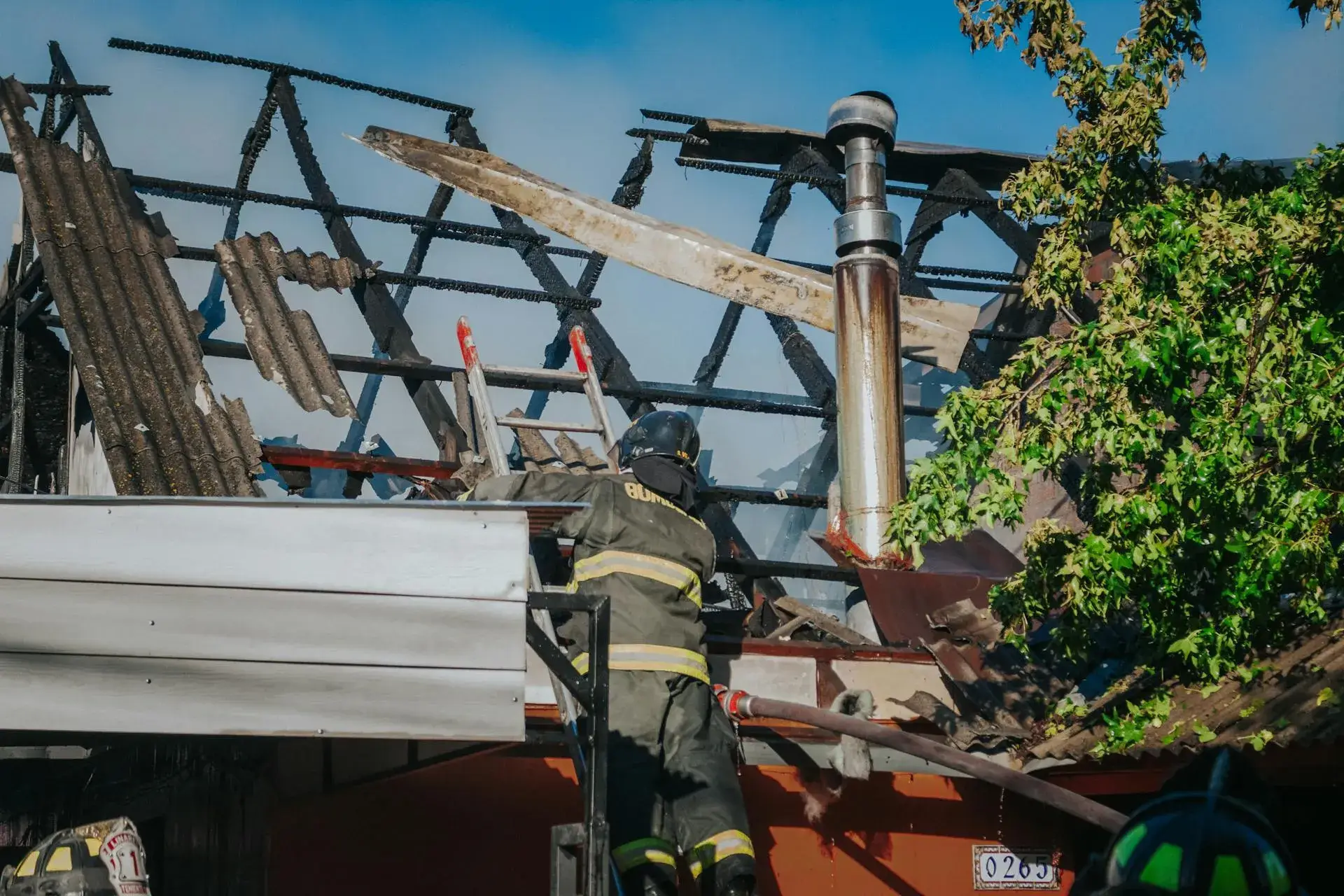
Fire Damage Restoration in Sandy Springs, GA
Fire and smoke damage worsen every hour as soot acidifies, corrosion spreads, and odor penetrates deeper into materials. Our local team responds to Sandy Springs emergencies within 60 minutes.
What Happens When You Call
A real person answers, not a call center. We assess your situation, ask the right questions, and begin coordinating your response immediately.
Your dedicated restoration team is dispatched from our local base serving Sandy Springs and the surrounding northern Fulton County communities.
Team arrives with board-up materials, soot removal equipment, air scrubbers, and structural assessment tools. Emergency securing and mitigation begins immediately.
Structure secured, immediate hazards addressed, suppression water managed, restoration plan documented. You know exactly what comes next.
A fire just happened and everything feels chaotic. The flames may be out, but the damage is still progressing. Soot is acidifying on surfaces, smoke residue is bonding to materials, and water from suppression is soaking into the structure. X Response exists for this exact moment. When you reach out, your restoration team is mobilized within minutes and on site within the hour. From that point forward, one team manages everything: securing the structure, removing soot and smoke, drying suppression water, and guiding the insurance process. Call now. Your team is standing by.
Why Sandy Springs Homes Are Vulnerable to Fire Damage
Sandy Springs occupies a unique position in metro Atlanta's fire risk landscape. The Sandy Springs Fire Department, established when the city incorporated in 2005, operates from multiple stations positioned to cover both the dense commercial corridor along GA 400 and the Perimeter Center area, and the sprawling residential neighborhoods that were built during the 1960s and 1970s housing boom. The department reports that only approximately two percent of its total call volume involves active fires, but the city's dense mix of 1960s-era residential stock and high-rise commercial buildings along GA 400 concentrates fire risk in aging electrical systems and multi-unit structures. That low percentage is misleading about the stakes, because when a fire does occur in Sandy Springs, the building stock ensures the damage is often severe and complex. The residential neighborhoods contain homes built 50 to 60 years ago with original electrical panels, aluminum wiring in some cases, and systems that have been incrementally loaded well beyond their original capacity. The commercial corridor contains high-rise buildings, dense apartment complexes, and mixed-use developments where fire in one space quickly affects many others.
The community that became Sandy Springs grew rapidly after Interstate 285 and GA 400 connected the area to metro Atlanta in the 1960s. That growth wave produced thousands of ranch homes, split-levels, and garden-style apartment buildings in a concentrated period. Many of these structures still operate on their original 100-amp or 150-amp electrical panels with wiring that has degraded over six decades. Homeowners have added central air conditioning, multiple kitchen appliances, home office equipment, and in recent years electric vehicle chargers to systems designed for a simpler era. The gap between electrical demand and system capacity is a primary driver of residential fires in older suburbs like Sandy Springs. In multi-family buildings from the same era, the risk compounds: a fire that starts in one unit's electrical panel can spread through shared attic spaces and wall cavities before detection, affecting multiple families and requiring complex multi-party restoration.
Aging Electrical Systems in 1960s-Era Homes
Sandy Springs' primary residential building boom occurred in the 1960s and 1970s. Many homes from this period still have original electrical panels, often 100-amp Federal Pacific or Zinsco brands that are known for breaker failure under overload. Some homes built in this era contain aluminum branch wiring, which expands and contracts with temperature cycling and develops high-resistance connections at outlets and switches over time. Even homes with copper wiring carry risk because the systems were designed for loads far below what modern households draw. When a 60-year-old panel is asked to serve central HVAC, a modern kitchen, home office equipment, and an EV charger in the garage, the result is chronic overheating at connection points that can smolder in wall cavities for hours before detection. Restoration after an electrical fire in these homes often reveals that the fire traveled through wall cavities and attic spaces long before it became visible, distributing smoke and heat damage well beyond the point of ignition.
Multi-Family Apartment Density
Sandy Springs contains an exceptionally high concentration of apartment communities for a suburban city. Many of the older garden-style complexes were built in the 1970s and 1980s with wood-frame construction, shared attic spaces, and party walls that may not meet current fire-separation standards. When fire enters the attic space of one unit, it can travel horizontally through continuous truss spaces into adjacent units before suppression arrives. Newer high-rise apartment buildings along the GA 400 corridor present different challenges: fires are typically contained to the unit of origin but smoke travels through HVAC systems, elevator shafts, and stairwells, contaminating dozens of units with soot and odor that require professional cleaning. In both building types, fire damage restoration becomes a multi-unit, multi-party project that requires coordinating with property managers, multiple insurance carriers, and displaced residents simultaneously.
Commercial and Office Tower Fire Risks
The Perimeter Center area in southern Sandy Springs contains Class A office towers, data centers, and commercial buildings that house major corporate headquarters. These buildings carry fire risks from high-density electrical infrastructure, server rooms with significant heat loads, and commercial kitchen operations in ground-floor restaurants. When fire occurs in a commercial building, the primary damage is often from smoke rather than flame. Smoke travels through plenum ceilings, cable trays, and shared HVAC systems, contaminating tenant spaces far from the fire origin. Electronics, server equipment, and sensitive documents exposed to smoke residue require specialized cleaning within hours to prevent permanent corrosion damage. The financial stakes in commercial fire damage are amplified by business interruption: every day a tenant space cannot be occupied is a day of lost revenue on top of the physical restoration costs.
Kitchen Fires in Dense Residential and Mixed-Use Buildings
Cooking is the leading cause of residential fires nationally, and Sandy Springs' concentration of apartment units and mixed-use buildings with restaurant tenants magnifies this risk. In apartment communities, unattended cooking fires are the most frequent ignition source. Grease fires that ignite range hoods can enter exhaust ductwork and spread within wall cavities. In mixed-use buildings where restaurants occupy the ground floor beneath residential units, commercial kitchen fires produce protein-based and grease-laden soot that is particularly difficult to clean and travels upward through any available chase or penetration. The combination of cooking-related soot residues and synthetic soot from burned building materials requires different chemical cleaning approaches applied to different surfaces, making restaurant-adjacent fire restoration more complex than a straightforward residential incident.
Lightning and Summer Storm Ignition
Georgia ranks among the top ten states nationally for cloud-to-ground lightning density, with North Georgia's summer thunderstorm season running from May through September. Sandy Springs' older homes carry particular vulnerability to lightning strikes because many lack modern whole-house surge protection or have grounding systems that have degraded over decades. A lightning strike can enter a home through the electrical service, cable lines, or plumbing, igniting fires at multiple points simultaneously or damaging electronics throughout the structure without visible flame. Even when a strike does not cause immediate ignition, it can damage wiring insulation inside walls, creating a delayed fire hazard that manifests days or weeks later. Tall mature trees throughout Sandy Springs' established neighborhoods can redirect lightning current into adjacent structures through root systems or overhead branches that contact rooflines.
These factors create a fire risk profile specific to Sandy Springs: aging 1960s electrical systems pushed beyond capacity in residential neighborhoods, dense multi-family construction where fire and smoke travel between units through shared spaces, a commercial corridor with high-density electrical loads and plenum ceiling smoke distribution, cooking fires in the apartment and mixed-use building stock, and lightning strikes finding vulnerable entry points in older homes without modern protection. Effective fire damage restoration here requires understanding how each building type burns and how smoke, soot, and suppression water distribute through the structure. It rewards a team that can manage the complex multi-party coordination that Sandy Springs' dense building stock demands.
What Happens to Your Home While You Wait
Within 1 Hour
Soot begins bonding to surfaces throughout the structure. Acidic residues from burned synthetics, plastics, and building materials start corroding metals, etching glass, and permanently staining porous surfaces. The longer soot sits, the harder and more expensive it becomes to remove without damaging the underlying material. Smoke odor penetrates soft furnishings, carpet, and unsealed wood. In multi-unit buildings, smoke that entered HVAC systems continues distributing contamination to uninvolved units.
1–24 Hours
Acid soot permanently discolors chrome, brass, and aluminum fixtures. Smoke residue penetrates deeper into porous materials like drywall, wood grain, and fabric. Suppression water that was not extracted begins causing secondary water damage: swelling subfloors, wicking into wall cavities, and creating conditions for mold growth in North Georgia's humid climate. Electronics exposed to smoke residue begin corroding internally at contact points and circuit boards.
24–48 Hours
Tarnishing and corrosion spread across exposed metals throughout the structure. Smoke odor bonds permanently into materials that could have been cleaned if treated within the first day. Suppression water in wall cavities and crawl spaces creates mold risk. What began as smoke cleaning starts crossing into material replacement. Restoration costs climb as salvageable items become unsalvageable with each passing hour.
48–72 Hours
Yellowing and permanent staining set into painted surfaces, countertops, and fixtures. Mold colonization begins in areas where suppression water was not extracted, particularly behind walls and in the crawl spaces beneath Sandy Springs' older homes. The scope of restoration expands from cleaning to demolition and rebuild as materials pass the point of recoverable damage.
One Week and Beyond
Corrosion damage to wiring, HVAC components, and appliances becomes irreversible. Mold growth compounds the original fire and smoke damage, adding a second layer of remediation. Smoke odor permeates the structure so deeply that thermal fogging and ozone treatment alone cannot eliminate it, requiring sealant encapsulation of framing before rebuild. Insurance claims grow more complex and contested as damage layers accumulate.
The difference between cleaning your property and rebuilding it is often measured in hours of response time after the fire is extinguished. Contact X Response now. Our Sandy Springs team responds within 60 minutes.
How We Restore Fire-Damaged Sandy Springs Homes
From the moment our team arrives, every step is documented, measured, and verified. Here is exactly what the fire damage restoration process involves for Sandy Springs properties.
Emergency Securing and Assessment
Our team arrives to secure the structure immediately. That means boarding up broken windows, tarping damaged roof sections, and stabilizing any structural elements at risk of further collapse. In Sandy Springs' older homes, we assess the electrical system first because a fire that started in aging wiring may have damaged circuits throughout the house that could reignite if power is restored prematurely. For apartment buildings, we work with property management to secure not just the unit of origin but adjacent units where smoke traveled through shared wall cavities and attic spaces. A comprehensive damage assessment maps the full extent of fire, smoke, soot, and water damage across every affected space, documented with photos and written scope for your insurance company from day one.
Smoke and Soot Removal
Soot chemistry varies by what burned. Electrical fires produce a fine, dry, acidic residue that corrodes metals rapidly. Kitchen fires produce sticky protein-based residue that bonds to surfaces and requires alkaline cleaning agents. Synthetic materials from carpets, furniture, and building products produce an oily, penetrating residue that smears if wiped with the wrong technique. Our team identifies the soot type present, selects the appropriate chemical cleaning agents, and works systematically from the least affected areas toward the most affected to prevent cross-contamination. For Sandy Springs' multi-unit buildings, we clean each affected space independently because smoke that traveled through HVAC systems or shared cavities may have deposited different concentrations of residue in different units.
Suppression Water Management
Firefighting operations introduce significant water into a structure. In Sandy Springs homes with crawl spaces, suppression water pools beneath the floor and soaks into the clay subgrade and floor joists. In multi-story apartment buildings, it cascades through floor penetrations into units below the fire. We extract all standing water, deploy commercial dehumidifiers and air movers to dry structural materials, and monitor moisture levels until the structure reaches its dry standard. Managing suppression water quickly prevents the secondary damage of mold growth, which in North Georgia's humid climate can begin within 24 to 48 hours of the water event.
Odor Elimination and Air Quality Restoration
Smoke odor penetrates far beyond the visible soot line. It infiltrates HVAC ductwork, settles into insulation, bonds with porous materials, and lingers in enclosed spaces like attics and crawl spaces. We use a combination of thermal fogging, hydroxyl generators, and HEPA air scrubbers to neutralize odor throughout the structure. For Sandy Springs' older homes with complex attic assemblies and crawl spaces, direct treatment of these enclosed areas is essential because they act as reservoirs that continuously re-release odor into the living space if left untreated. Ductwork is cleaned or replaced depending on contamination severity.
Structural Restoration and Completion
Once cleaning, drying, and odor elimination are complete, we address any structural repairs needed: replacing fire-damaged framing, rebuilding walls, installing new drywall, and refinishing surfaces. For Sandy Springs homes where an electrical fire originated, this phase includes coordination with a licensed electrician to upgrade the panel and rewire affected circuits before walls are closed. Final inspection verifies all work meets code, all odor is eliminated, all moisture readings are within standard, and the scope of work is fully executed. Completion documentation with before-and-after photos, test results, and scope summary is provided for your insurance file.
The X Response Difference
When you contact X Response after a fire in Sandy Springs, you get a dedicated team that understands the full scope of what fire damage means in your specific building type and manages every phase under one roof.
Insurance Claim Guidance for Sandy Springs Homeowners
Fire damage insurance claims in Georgia are generally covered under standard homeowner's policies, but the claim process is more complex than most homeowners expect. Your policy covers the structure, contents, and typically additional living expenses while the home is uninhabitable. However, disputes arise around scope: the boundary between what needs replacement versus cleaning, whether smoke damage in adjacent rooms is part of the same loss, whether the electrical system upgrade required by code is covered under ordinance-or-law provisions, and whether contents were damaged by fire, smoke, or suppression water, which may carry different sublimits. For apartment and condo fires, complexity multiplies because multiple policies from different carriers may cover different portions of the same incident.
How X Response Helps
- Document all fire, smoke, soot, and suppression water damage with professional photos and a detailed written scope from day one
- Distinguish between areas requiring replacement versus professional cleaning, supporting the appropriate scope with moisture and contamination evidence
- Identify code-upgrade requirements triggered by the fire that may be covered under your policy's ordinance-or-law provision
- Coordinate documentation with property management and adjacent-unit owners in multi-family fire incidents
- Provide completion documentation including air quality test results, moisture readings, and scope verification for your adjuster's file
X Response does not file claims on your behalf, adjust claims, or make coverage determinations. We provide documentation and guidance to help you make informed decisions about your property and your policy. Coverage decisions are made solely by your insurance carrier.
Certified Restoration Specialists Serving Sandy Springs
When you contact X Response after a fire in Sandy Springs, your restoration team is drawn from certified professionals who work across northern Fulton County and understand the specific challenges of restoring fire-damaged properties here. They know the difference between cleaning acidic electrical-fire soot from a 1960s home's wiring compartments and removing protein-based kitchen-fire residue from apartment ventilation systems. They have managed multi-unit projects in the apartment complexes along GA 400, coordinated with commercial property managers in the Perimeter Center area, and restored older homes where electrical fires traveled through original wiring chases before anyone saw smoke. This is not a crew dispatched from hours away reading a generic manual. It is a local team with local building knowledge, operating under national quality standards.
Every technician on your team holds current IICRC certification in fire and smoke restoration and carries the appropriate Georgia state licensing for the work being performed. Equipment includes commercial air scrubbers, thermal foggers, hydroxyl generators, industrial extraction units for suppression water, and the specialized cleaning chemistry needed to address different soot types without cross-contamination. When your team arrives, they bring everything needed to begin stabilization immediately and build your insurance documentation from the first hour on site.
In Sandy Springs, X Response works with Atlanta's Best Restoration, an independent local restoration partner serving Fulton County.
Fire Damage Restoration FAQ for Sandy Springs Homeowners
Other Emergency Services in Sandy Springs

Water Damage Restoration
Burst pipes, storm flooding, standing water. We extract, dry, and restore before mold sets in.
Learn more
Smoke Damage Restoration
Soot residue, chemical odors, HVAC contamination. We decontaminate surfaces, eliminate odors, and restore air quality.
Learn more
Mold Remediation
Testing, containment, removal, prevention. We find the source, eliminate the growth, and stop it from returning.
Learn more
Sewage Cleanup
Sewer backups, contaminated water, biohazard. We extract, sanitize, and restore safely.
Learn more