
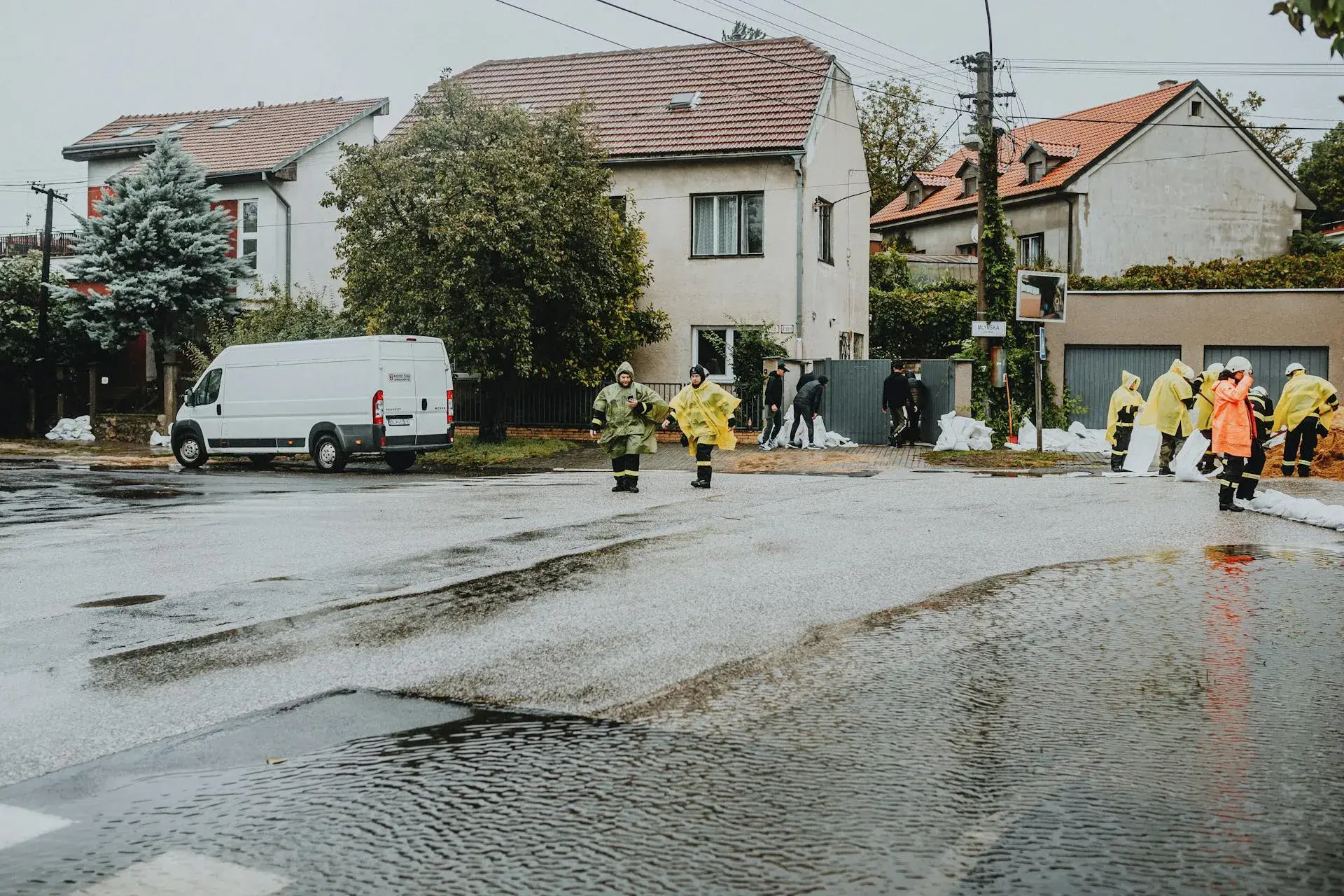
Sewage Cleanup in Morton Grove, IL
Sewage in your home is an immediate health hazard. Every hour of exposure deepens contamination and increases removal costs. Our local team responds to Morton Grove emergencies within 60 minutes.
What Happens When You Call
A real person answers, not a call center. We assess the severity, determine whether the space is safe to occupy, and begin coordinating your emergency response immediately.
Your dedicated restoration team is dispatched from our local base serving Morton Grove and the surrounding Cook County communities.
Team arrives with submersible pumps, Category 3 contamination equipment, PPE, antimicrobial agents, and decontamination tools. Emergency extraction begins immediately.
Sewage extracted, contaminated materials removed, decontamination initiated, restoration plan documented. You know exactly what comes next.
Sewage has entered your home and it is a health emergency. Raw sewage carries bacteria, viruses, parasites, and chemical contaminants that make the affected area immediately unsafe for occupants. This is not something you clean yourself. This is not something that waits for business hours. X Response exists for exactly this moment. When you reach out, a certified hazardous-materials restoration team is mobilized within minutes and on site within the hour. From that point forward, one team manages everything: extraction, decontamination, drying, and insurance documentation. Call now. Your team is standing by.
Why Morton Grove Homes Are Vulnerable to Sewage
Morton Grove is a village of 25,297 residents in Niles Township, Cook County, Illinois, covering 5.09 square miles along the North Branch of the Chicago River. The village operates a combined sewer system in which sanitary sewage and stormwater share a single network of underground pipes. During moderate to heavy rainfall, the combined system's capacity is overwhelmed, the pipes become pressurized, and the sewage-stormwater mixture backs up through the lowest openings in the system: residential basement floor drains, laundry connections, and low-lying plumbing fixtures. The Village of Morton Grove operates an Overhead Sewer and Flood Control Assistance Program that provides financial assistance to homeowners who install overhead sewer conversions or backflow prevention devices, acknowledging that the village's combined sewer system regularly surcharges during heavy rain and pushes sewage into basements through floor drains. The program is administered by the Public Works Department and exists to help homeowners stop sewage from entering their basements during surcharge events. The program's existence, documented on the village's official website, confirms that combined sewer backup into residential basements is not a rare anomaly but a recognized, systemic condition in Morton Grove that the village actively helps homeowners mitigate through infrastructure modification.
The April 2013 storm event that dropped more than 4.80 inches of rain on Morton Grove's east side and prompted 190 homeowners to file flooding surveys with the village demonstrated the combined sewer system's vulnerability at scale. During that event, the system surcharged across the east side, pushing a mixture of stormwater and raw sanitary sewage into basements through floor drains and plumbing connections that sit at or below the elevation of the street sewer main. Morton Grove Fire Chief Tom Friel confirmed that most flooding occurred on the east side of town, where pipe capacity and gradient create the greatest bottleneck during heavy rain. Public Works personnel were responding to flooded streets and overwhelmed drains by 4:30 a.m. Just weeks later, in late June 2013, another early-morning storm flooded parts of Morton Grove again, leaving standing water in streets and basements for the second time in three months. For residents whose basements received combined sewer water during either event, the damage was not merely a water problem. It was a Category 3 biohazard contamination event requiring professional extraction, material removal, and antimicrobial decontamination before the space could be safely reoccupied.
The Combined Sewer System and How Backup Occurs
Morton Grove's combined sewer system was designed and built during the village's mid-century development to carry both sanitary sewage from homes and stormwater from streets and downspouts in a single pipe network. During dry weather and light rain, the system functions normally. During moderate to heavy rainfall, the volume of stormwater entering the system through street inlets, roof downspouts connected to the sewer, and surface drainage overwhelms the pipe capacity. When capacity is exceeded, the system pressurizes. The pressurized mixture of stormwater and raw sanitary sewage then seeks the lowest relief point, which in Morton Grove's residential neighborhoods is typically the basement floor drain. Unlike a separate sewer system where stormwater and sanitary flows are isolated from each other, the combined system means that every heavy-rain backup event delivers raw sewage, not just rainwater, into the home. The contamination level is Category 3 from the moment of entry, requiring full hazardous-materials response protocols regardless of how much water enters or how quickly it is removed.
The Overhead Sewer Program and What It Reveals
The Village of Morton Grove's Overhead Sewer and Flood Control Assistance Program funds the installation of overhead sewer conversions, which reroute a home's internal plumbing so that basement fixtures drain upward to a point above the street sewer main elevation before connecting to the public system. This eliminates the gravity pathway that allows surcharged sewage to flow backward into the basement. The program also assists with backflow preventer valve installation, which blocks reverse flow through the sewer lateral during surcharge events. The program's existence as a standing village initiative, not a one-time disaster response, reveals the chronic nature of the problem. The village has determined that the most cost-effective solution is helping individual homeowners protect their properties through plumbing modification rather than rebuilding the entire combined sewer system to handle modern storm volumes. However, many Morton Grove homeowners have not yet completed the conversion, either because they are unaware of the program, the out-of-pocket cost exceeds their budget even with village assistance, or they have not experienced a backup event severe enough to motivate the disruption of replumbing their basement. Those unmodified homes remain directly exposed to sewage backup during every storm that surcharges the combined system.
1950s Basement Plumbing and Direct Sewer Connections
Morton Grove's postwar housing stock was built with basement plumbing configurations that maximize vulnerability to combined sewer backup. Standard practice in the 1950s connected basement floor drains, laundry tubs, and utility sinks directly to the combined sewer lateral through gravity drain lines at or below the elevation of the street main. This means these fixtures sit at the same hydraulic level as the public sewer: when the system pressurizes, there is no elevation difference or mechanical barrier preventing the pressurized sewage from flowing backward into the home. Many 1950s basements also have their main sewer cleanout at floor level, which can become a backup entry point when the cap fails or was removed and never replaced. Washing machine drain connections in older homes frequently lack proper traps or backflow protection. Every one of these low-lying, unprotected openings becomes a potential sewage entry point during a combined sewer surcharge event. The homes that are most vulnerable are those that have never been retrofit with overhead sewer conversions, backwater valves, or ejector pump systems that break the gravity connection between basement fixtures and the street main.
MWRD, TARP, and System Capacity Limits
Morton Grove's combined sewer connects to the Metropolitan Water Reclamation District of Greater Chicago's (MWRD) interceptor system, which feeds into the Tunnel and Reservoir Plan (TARP, or Deep Tunnel). TARP was designed to capture combined sewer overflows during storms and store them in massive tunnels until they can be treated at water reclamation plants. When TARP capacity is available, it relieves pressure on local systems by accepting overflow that would otherwise back up into homes or discharge untreated into the North Branch of the Chicago River. However, during large regional storms that affect the entire Chicago metropolitan area simultaneously, multiple communities overwhelm the interceptor system at the same time, and TARP tunnels fill toward capacity. When the regional system cannot accept additional flow from Morton Grove's local sewers, the excess has nowhere to go but backward into the lowest relief points in the residential system: basement floor drains and unprotected plumbing fixtures. MWRD issues Overflow Action alerts during these events, advising residents to minimize water usage. For Morton Grove homeowners, these alerts signal the highest-risk period for basement sewage backup.
Aging Sewer Laterals and Private-Side Failures
In addition to system-wide surcharge events, Morton Grove residents face sewage backup risk from failures in private sewer laterals: the individual pipes that connect each home to the public sewer main under the street. In homes built in the 1950s, these laterals are typically clay tile pipe with mortared joints, now over 70 years old. Clay tile laterals deteriorate through root intrusion at joints, joint separation from soil movement, bellying (sagging) in sections where soil has settled, cracking from frost heave, and eventual collapse. Any of these conditions can cause a localized sewer backup into an individual home even when the public system is operating normally. Root intrusion is particularly common in Morton Grove given the mature tree canopy throughout residential neighborhoods. A root-compromised lateral can partially block flow for months, causing slow drains and occasional backup of sewage through the basement floor drain during peak usage periods (morning routines, post-dinner dishwashing) when the household generates its highest sewer flow volumes. When the blockage becomes complete, raw sewage backs up into the home regardless of weather conditions.
These factors create a community where sewage backup is driven by both systemic events (combined sewer surcharge during heavy rain) and individual infrastructure failures (compromised private laterals). The village's Overhead Sewer and Flood Control Assistance Program addresses the systemic pathway but cannot prevent private-lateral failures. Morton Grove homeowners face a dual risk: storm-driven backups that affect entire neighborhoods simultaneously, and individual blockages that create sewage emergencies in a single home during otherwise normal conditions. Both produce Category 3 contamination that requires professional hazardous-materials response, not DIY cleanup.
What Happens to Your Home While You Wait
Within 1 Hour
Raw sewage spreads across basement floors, carrying bacteria (E. coli, Salmonella, Shigella), viruses (hepatitis A, norovirus, rotavirus), parasites (Giardia, Cryptosporidium), and chemical contaminants from the combined sewer system. The affected area is immediately unsafe for unprotected occupants. Porous materials in contact with the sewage, including carpet, pad, drywall below the flood line, cardboard, upholstered furniture, and stored paper goods, begin absorbing contaminated water. Bacterial colonies establish on every organic surface the sewage contacts. In Morton Grove basements with finished spaces, the sewage wicks into wall cavities behind drywall, beneath floating floors, and into the gap between the concrete slab and any floor covering, creating contamination zones that are not visible from the occupied side of the wall or floor.
1–24 Hours
Bacterial populations multiply rapidly in the warm, nutrient-rich environment. Sewage-contaminated materials that could have been cleaned or saved within the first hour become progressively more hazardous and less salvageable. Drywall absorbs contaminated water upward from the flood line, extending the contamination height beyond the visible water mark. Carpet pad saturated with sewage cannot be salvaged regardless of cleaning attempt. Wood framing in contact with sewage begins absorbing bacteria into the grain. Odor from decomposing organic matter in the sewage intensifies. In Morton Grove homes with forced-air HVAC systems, return registers at basement floor level can draw contaminated air into the ductwork and distribute pathogens to upper floors, creating a health risk in areas that were never directly flooded.
24–48 Hours
All porous materials that contacted raw sewage are now classified as non-salvageable under IICRC S500/S520 standards regardless of their apparent condition. Drywall, insulation, carpet, pad, particleboard, fabric, and paper products that were in contact with Category 3 water for more than 24 hours must be removed and disposed of as contaminated waste. Mold colonization begins on sewage-contaminated materials, compounding the biological hazard with mycotoxin production. The scope of required demolition expands beyond the original flood footprint as contaminated moisture migrates through wall cavities and under floor systems by capillary action. Health risk to occupants escalates as airborne pathogen concentrations increase in the enclosed basement environment.
48–72 Hours
Active mold growth on contaminated materials produces visible colonies and releases spores into the basement air. Structural wood in prolonged contact with sewage begins showing decay at surface fibers. The combined biological load of bacteria, mold, and decomposing organic matter creates air quality conditions in the basement that are immediately hazardous to unprotected persons. HVAC cross-contamination to upper floors makes the entire home a health concern. The scope of remediation now includes not only sewage cleanup but concurrent mold remediation, HVAC decontamination, and potentially structural repair of compromised wood members. Every additional day of delay adds significant cost and extends the timeline for safe re-occupancy.
One Week and Beyond
Extensive mold throughout wall cavities, structural decay at sill plates and rim joists in contact with contaminated moisture, and permanent odor absorption into concrete, framing lumber, and remaining building materials. The basement requires complete demolition to bare structure: all drywall, insulation, flooring, and trim removed, followed by antimicrobial treatment of the concrete shell and surviving framing, structural assessment and repair, drying, and rebuild. The total cost at this stage often exceeds three to five times what immediate professional cleanup would have cost within the first 24 hours. Insurance claims become more complex as adjusters evaluate whether timely mitigation could have limited the loss.
Sewage in your home is a health emergency that gets worse with every hour of delay. The materials, the air quality, and the restoration cost all deteriorate on the same timeline. Contact X Response now. Our Morton Grove team responds within 60 minutes with Category 3 contamination equipment and protocols.
How We Restore Sewage-Damaged Morton Grove Homes
From the moment our team arrives, every step is documented, measured, and verified. Here is exactly what the sewage cleanup process involves for Morton Grove properties.
Safety Assessment and Source Control
Our team arrives in full PPE (personal protective equipment) appropriate for Category 3 biohazard conditions: Tyvek suits, respirators, chemical-resistant gloves, and eye protection. Before entering the affected area, we assess electrical safety (standing water and live circuits are a lethal combination) and atmospheric conditions. If the combined sewer is still surcharged and sewage is actively entering the home, we establish temporary pumping to manage active inflow while working inside. If a private lateral blockage is the source, we coordinate with a licensed plumber to clear the line before extraction begins, because removing sewage while the source continues flowing is futile. Source control is the first priority: we stop the inflow before we begin removing what has already entered.
Sewage Extraction and Contaminated Material Removal
Standing sewage is removed using submersible pumps and truck-mounted extraction equipment. Simultaneously, all porous materials that contacted the sewage are removed: carpet and pad, drywall below the contamination line (plus a safety margin above visible water marks to account for wicking), insulation, baseboard trim, stored contents that cannot be decontaminated, and any particleboard or composite materials that absorbed contaminated water. In Morton Grove basements with finished walls, we open wall cavities to expose the foundation wall and verify the extent of contamination behind the drywall. Materials are cut, bagged, and disposed of as contaminated waste per Illinois EPA regulations. Every removed item is documented with photos for your insurance claim.
Decontamination and Antimicrobial Treatment
After contaminated materials are removed and all surfaces are exposed, we apply EPA-registered antimicrobial treatments to every surface the sewage contacted: concrete floors, concrete-block or poured-concrete foundation walls, exposed wood framing, remaining structural members, and any non-porous surfaces that can be decontaminated rather than replaced. Treatment is applied at full concentration and allowed to dwell for the manufacturer-specified contact time to ensure pathogen kill. HEPA air scrubbers run throughout the process to capture airborne pathogens and particulates disturbed during material removal. The decontamination standard is complete pathogen elimination on all remaining surfaces, verified by visual inspection and odor assessment before the drying phase begins.
Structural Drying
Once decontamination is complete, commercial dehumidifiers and high-velocity air movers are deployed to dry the remaining structure to acceptable moisture levels. In Morton Grove basements where concrete walls and slabs retain moisture from both the sewage event and the ongoing vapor transmission from surrounding soils, drying can take longer than in above-grade spaces. We monitor moisture levels daily with professional meters, tracking progress at the concrete surface, within remaining wood framing, and at the slab-to-wall junction where moisture persists longest. Cook County humidity during summer months makes mechanical dehumidification essential; ambient air cannot dry a concrete basement on its own. The structure must reach verified dry conditions before any rebuild materials are installed, because rebuilding over residual moisture will create the conditions for mold growth within weeks of completion.
Verification, Clearance, and Rebuild Preparation
Before we consider the cleanup complete, final inspection verifies that all contaminated materials have been removed, all surfaces have been treated, moisture readings have returned to acceptable levels, and no residual odor remains. We document the cleared space with photos and moisture readings that serve as the foundation for the rebuild scope. If air sampling is appropriate (typically for insurance documentation or occupant health concerns), we collect samples and compare results to outdoor baselines. The cleared, dry, decontaminated shell is now ready for reconstruction: new insulation, new drywall, new flooring, and new finishes installed on a verified-clean substrate. Our documentation package supports both the cleanup claim and the subsequent reconstruction claim with your insurance carrier.
The X Response Difference
When you contact X Response for sewage cleanup in Morton Grove, you get a biohazard-certified team that follows Category 3 contamination protocols from entry to clearance. One team, one standard, verified results.
Insurance Claim Guidance for Morton Grove Homeowners
Sewage backup insurance coverage in Illinois requires specific attention to your policy's endorsements. Standard homeowner's policies typically do not cover sewer and drain backup without a dedicated endorsement, often called 'sewer and drain backup coverage' or 'water backup coverage.' In Morton Grove, where the combined sewer system routinely surcharges during heavy rain and pushes sewage into basements, this endorsement is essential but many homeowners do not carry it until after their first backup event. The endorsement typically adds $50 to $150 annually to your premium and provides coverage (usually with its own sublimit, commonly $10,000 to $25,000) for damage caused when water or sewage backs up through drains, sewers, or sump pump failures. Without this endorsement, your standard policy will likely deny a claim for combined sewer backup into your Morton Grove basement, even though the event was sudden, unexpected, and caused by weather rather than homeowner negligence. The village's Overhead Sewer Assistance Program can help prevent future events, but the current backup requires coverage that must have been in place before the loss occurred.
How X Response Helps
- Verify whether your policy includes sewer and drain backup coverage before filing, as standard policies exclude this peril without the endorsement
- Document the contamination source clearly: combined sewer surcharge, private lateral blockage, and sump pump failure each trigger different coverage provisions
- Photograph all contaminated areas, materials removed, and the decontamination process with detailed documentation from entry to clearance
- Provide a scope of work that separates extraction, material removal, decontamination, drying, and reconstruction into distinct phases for adjuster review
- Explain your policy's backup coverage sublimit and deductible before you file, so you understand your likely recovery and plan accordingly
X Response does not file claims on your behalf, adjust claims, or make coverage determinations. We provide documentation and guidance to help you make informed decisions about your property and your policy. Coverage decisions are made solely by your insurance carrier.
Certified Restoration Specialists Serving Morton Grove
When you contact X Response for sewage cleanup in Morton Grove, your team is drawn from certified professionals who work across Cook County's North Shore suburbs and understand the specific sewage challenges in this community. They know how the combined sewer system behaves during heavy rain, how 1950s basement plumbing creates direct pathways for sewage entry, how the flat terrain and clay soils prolong moisture retention after a backup event, and how aging clay-tile laterals fail and create individual-home backup emergencies. They have responded to neighborhood-wide surcharge events affecting dozens of homes simultaneously during major storms, and to single-home lateral blockages on otherwise dry days. They understand the Category 3 contamination protocols required for any event involving raw sewage, the material-removal standards that apply, and the verification procedures that confirm safe re-occupancy. This is not a crew that treats sewage like dirty water. It is a biohazard-certified team that treats every sewage event as the health emergency it represents.
Every technician on your team holds current IICRC certification in water damage restoration with specific Category 3 contamination training, and carries the appropriate Illinois state licensing for the work being performed. Equipment includes submersible pumps for rapid extraction, industrial wet vacuums for residual removal, EPA-registered antimicrobial treatment systems, commercial dehumidifiers for structural drying, HEPA air scrubbers for airborne pathogen control, and full biohazard PPE for worker protection. When your team arrives, they bring everything needed to begin extraction and decontamination immediately, because sewage cleanup cannot wait for equipment to be sourced or delivered.
In Morton Grove, X Response works with Scene Cleaners, an independent local restoration partner serving Cook County.
Sewage Cleanup FAQ for Morton Grove Homeowners
Other Emergency Services in Morton Grove
Water Damage Restoration
Burst pipes, storm flooding, standing water. We extract, dry, and restore before mold sets in.
Learn more
Fire Damage Restoration
Structural damage, soot, debris. We stabilize, clean, and rebuild what fire destroyed.
Learn more
Smoke Damage Restoration
Soot residue, chemical odors, HVAC contamination. We decontaminate surfaces, eliminate odors, and restore air quality.
Learn more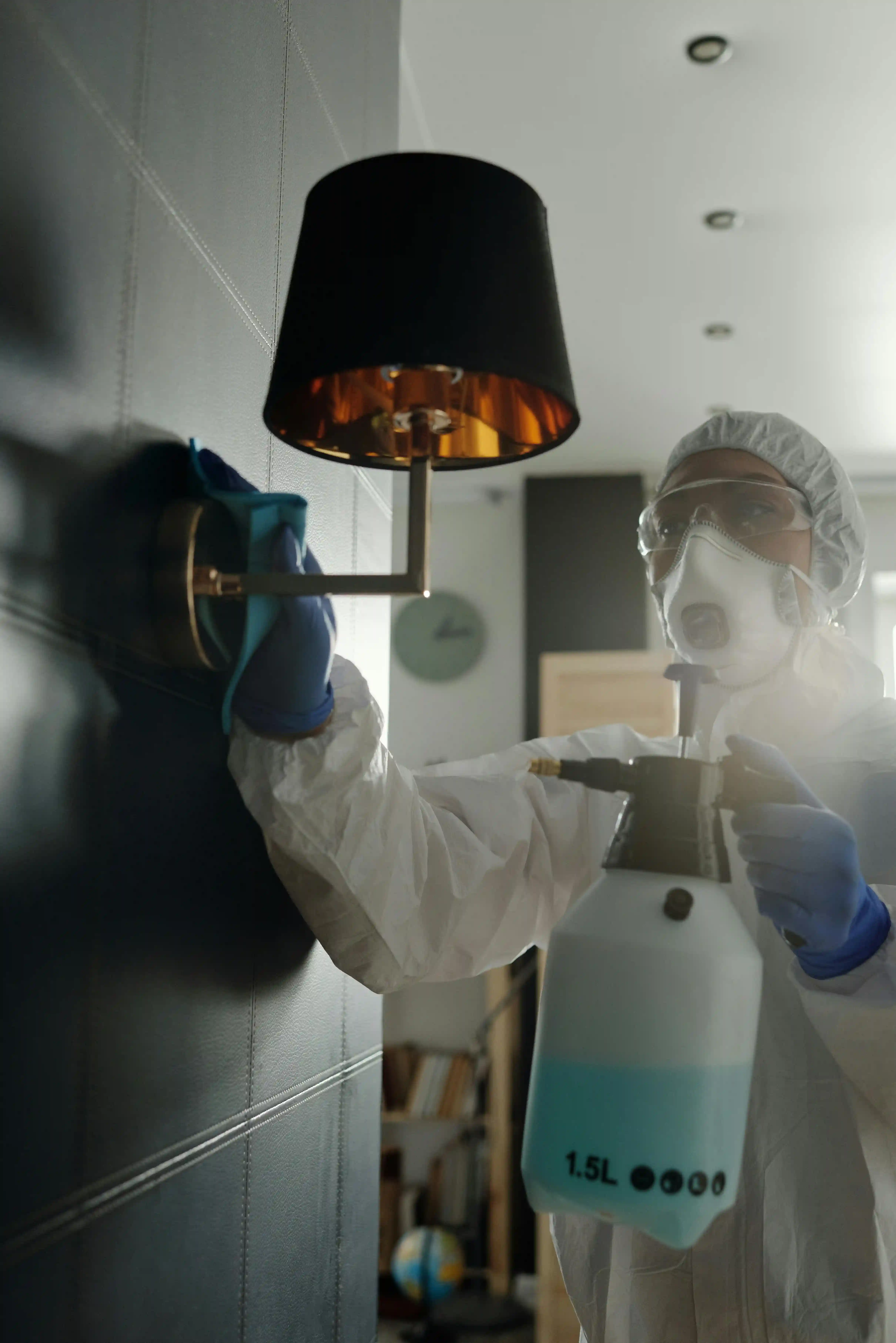
Mold Remediation
Testing, containment, removal, prevention. We find the source, eliminate the growth, and stop it from returning.
Learn more