
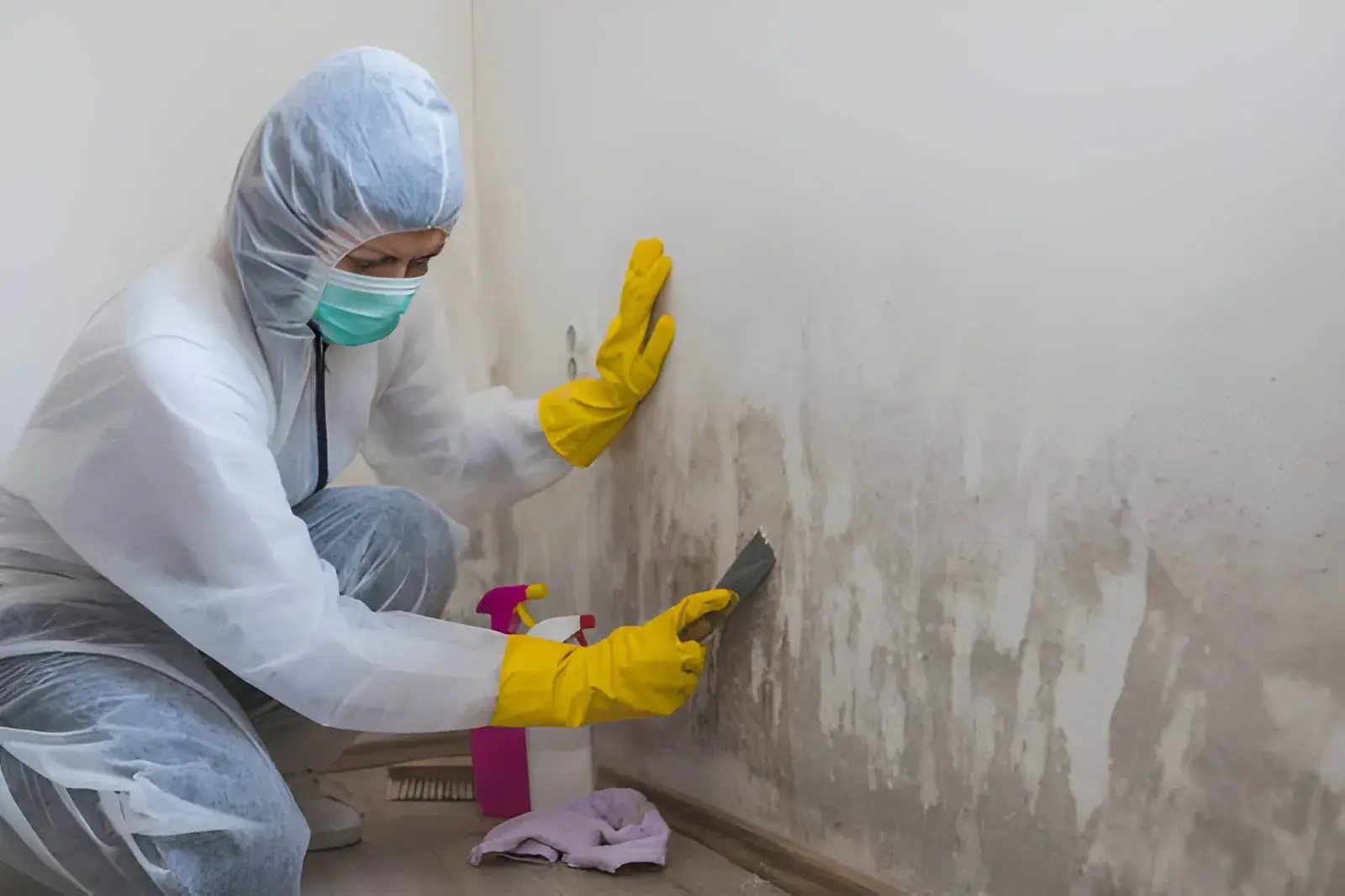
Mold Remediation in Morton Grove, IL
Mold spreads through concealed spaces every day it goes unaddressed. Our local team responds to Morton Grove properties within 60 minutes for assessment.
What Happens When You Call
A real person answers, not a call center. We assess your situation, ask the right questions about the location, extent, and possible moisture source, and begin coordinating your response immediately.
Your dedicated remediation team is dispatched from our local base serving Morton Grove and the surrounding Cook County communities.
Team arrives with moisture detection equipment, HEPA filtration, containment materials, and air quality monitoring tools. Professional assessment begins immediately.
Moisture source identified, mold extent mapped, containment established, remediation plan documented. You know exactly what comes next.
You have found mold in your home, or you suspect it based on persistent musty odors, unexplained respiratory symptoms, or visible discoloration in a basement or bathroom. Mold does not wait for a convenient time. It grows continuously once established, consuming organic materials and releasing spores into your living space. X Response exists for exactly this moment. When you reach out, a certified remediation team is dispatched to assess, contain, and eliminate the problem at its source. Call now. Your team is standing by.
Why Morton Grove Homes Are Vulnerable to Mold
Morton Grove is a village of 25,297 residents in Niles Township, Cook County, Illinois, covering 5.09 square miles along the North Branch of the Chicago River in Chicago's northern suburbs. The village's residential development pattern creates ideal conditions for mold growth in homes throughout the community. Morton Grove's housing stock experienced its largest growth in the 1950s when population rose by over 15,000 after the Edens Expressway opened, producing thousands of ranch homes with full basements built on former marshland along the North Branch of the Chicago River without modern waterproofing or vapor barriers. The Encyclopedia of Chicago History notes that land along the North Branch and the Skokie marshes was designated forest preserve property as early as 1904, indicating the naturally wet character of the terrain surrounding what would become Morton Grove's residential neighborhoods. The homes built during this boom period feature full basements with poured-concrete or concrete-block walls constructed directly in contact with the high water table and clay soils characteristic of the North Branch floodplain, without the moisture barriers, exterior waterproofing membranes, or interior vapor retarders that modern construction codes require.
The combination of these mid-century basements, Cook County's humid continental climate (averaging 36 inches of annual precipitation and summer relative humidity regularly running high), and the village's combined sewer system that periodically surcharges and introduces moisture into homes creates persistent, recurring conditions for mold colonization. Unlike states such as Florida and Texas that require specific mold remediation licensing, Illinois has no state mold license or registration requirement. This means that any contractor can market mold services regardless of training or certification. For Morton Grove homeowners, the absence of state regulation makes independent third-party certification, specifically IICRC S520 standard compliance and AMRT (Applied Microbial Remediation Technician) credentials, the primary quality indicator when selecting a remediation provider. X Response teams hold these certifications and follow the IICRC S520 standard for mold remediation, which establishes protocols for containment, removal, and verification that protect both workers and occupants.
Basement Moisture in Former Marshland Construction
Morton Grove was built on terrain that was naturally wet. The North Branch of the Chicago River and the former Skokie marshes defined the area's hydrology before residential development, and the water table remains high across much of the village, particularly in neighborhoods west of Austin Avenue where the river corridor lies within a quarter mile of residential lots. The 1950s homes built on this terrain have basements that sit directly in or near the seasonal water table, with concrete-block or poured-concrete walls that are inherently permeable to moisture vapor. Over 70 years, exterior waterproofing coatings have deteriorated, footer drains have silted or collapsed, and rising damp through the slab and walls has become a chronic condition in many of these basements. This moisture manifests as efflorescence (white mineral deposits) on concrete surfaces, condensation on cold walls during humid months, damp carpet and pad in finished basements, and persistent relative humidity above 60% in below-grade spaces. Each of these conditions supports mold colonization on organic materials: wood framing, drywall paper facing, carpet backing, stored cardboard and paper goods, and the dust layer that accumulates on surfaces in enclosed spaces.
Combined Sewer Backups and Post-Flood Mold
Morton Grove's combined sewer system surcharges during heavy rainfall, pushing contaminated water into basements through floor drains and low-lying plumbing connections. The April 2013 storm that flooded 190 homes on the east side is the most documented example, but smaller-scale basement backups occur multiple times during heavy-rain seasons. Every sewer backup event introduces moisture into basement materials and creates conditions for mold growth, even when the standing water is removed within hours. The problem is not the standing water itself but the moisture that remains absorbed in drywall, carpet pad, wood framing, and the concrete slab after the visible water is gone. If a homeowner pumps the basement and runs fans but does not verify that wall cavities and sub-floor materials have dried to acceptable moisture levels within 24 to 48 hours, mold colonization begins in concealed spaces. The village's Overhead Sewer and Flood Control Assistance Program exists specifically because repeat flooding is a recognized problem, but many homes that have experienced multiple backup events carry accumulated moisture damage in wall cavities that has never been professionally assessed or remediated.
Cook County Climate and Seasonal Mold Pressure
Morton Grove experiences a humid continental climate with distinct seasonal mold pressures. Summer months (June through September) bring high average relative humidity and temperatures between 75 and 85 degrees Fahrenheit, creating ideal surface conditions for mold growth on any material with sufficient moisture content. The transition from heating to cooling season in May and June is particularly problematic: as outdoor humidity rises, cool basement surfaces develop condensation as warm, moist air contacts walls and floors that remain below the dew point. This condensation window provides the moisture source for mold growth even in basements with no active water intrusion. In winter, the opposite dynamic creates risk: heated indoor air rises and carries moisture into cold attic spaces through ceiling penetrations, where it condenses on the underside of roof sheathing and provides a moisture source for attic mold growth. Morton Grove's 1950s homes with minimal attic vapor barriers and numerous unsealed penetrations (recessed lights, bathroom exhaust fans, attic access hatches) are particularly susceptible to this winter condensation pattern.
1950s Construction Details That Enable Mold Growth
The specific construction practices of Morton Grove's postwar building era created homes that are structurally sound but poorly suited to moisture management by modern standards. Wall assemblies consist of wood studs with no vapor barrier between the exterior sheathing and interior drywall or plaster, allowing moisture to migrate freely through the wall cavity in either direction depending on seasonal pressure differentials. Basement walls are bare concrete block or poured concrete with no interior moisture barrier, allowing water vapor to pass through the wall continuously. Original basement floor slabs were poured directly on gravel or soil without polyethylene vapor barriers beneath, so ground moisture wicks upward through the concrete permanently. Sill plates (the wood member that sits on top of the foundation wall) were installed without gaskets or capillary breaks, allowing moisture from the concrete to wick directly into the wood framing that supports the entire house. After 70 years, these sill plates are among the most common locations for structural mold growth in Morton Grove homes, often hidden behind the first-floor wall finish until a renovation or inspection reveals extensive decay.
HVAC Systems and Mold Distribution
Nearly every home in Morton Grove operates a central forced-air HVAC system with the air handler and ductwork running through the basement. When mold grows in a basement, the HVAC system becomes a distribution mechanism that carries spores to every room in the home through supply ductwork. Return-air registers in basements pull mold-contaminated air from the below-grade space and cycle it through the entire home continuously. The evaporator coil, which condenses moisture from the air during cooling season, provides an additional mold-friendly environment: standing water in the drain pan, organic debris on coil fins, and continuous darkness create conditions where mold colonizes the coil itself and distributes spores through the supply ductwork. In Morton Grove's ranch homes where the ductwork runs through a continuous, unpartitioned basement space, there is no separation between the area where mold grows and the air intake for the system that serves the entire home. Remediation that addresses visible mold on basement walls but ignores the HVAC system will fail because the system continues distributing spores from contaminated ducts and coils into living spaces above.
These factors create a community where mold is not an occasional problem but a structural tendency built into the housing stock. Former marshland with high water tables, mid-century basements without moisture barriers, a combined sewer system that periodically introduces water, Cook County's humid climate, and forced-air HVAC that distributes spores throughout homes all combine to make mold a persistent risk for Morton Grove homeowners. Effective remediation requires not only removing visible mold growth but identifying and eliminating the moisture source that enabled it, verifying that concealed spaces (wall cavities, sill plates, duct interiors) are free of contamination, and establishing conditions that prevent recurrence.
What Happens to Your Home While You Wait
Within 24 Hours of Moisture Introduction
Mold spores, which are present in all indoor environments at low background concentrations, detect the new moisture source and begin germinating on organic surfaces. In Morton Grove basements where a sewer backup, plumbing leak, or condensation event has introduced moisture to drywall, carpet, or wood framing, the clock starts the moment materials reach a moisture content above approximately 20%. At this stage, there is no visible growth and no detectable odor. The opportunity to prevent mold entirely through rapid drying still exists if the moisture source is identified and eliminated and the affected materials are dried to acceptable levels within this window.
24–48 Hours
Initial mold colonization begins in concealed spaces where moisture, organic material, and darkness intersect. Behind baseboards where drywall contacts the concrete floor, inside wall cavities where the paper facing of drywall contacts the wet concrete-block foundation wall, beneath carpet pad sitting on a damp slab, and on the backside of paneling installed against basement walls. Growth at this stage is microscopic but metabolically active, producing the enzymes that break down organic materials for nutrients. The earliest indication may be a faint musty odor detectable when entering the basement from upstairs, particularly noticeable after the space has been closed for several hours.
48 Hours–One Week
Visible mold colonies appear on surfaces where conditions are most favorable. In Morton Grove basements, this typically means the lower portions of drywall where the paper facing contacts or is near the concrete floor, on stored cardboard boxes touching the slab, on the backside of furniture pushed against exterior walls, and on any organic material in direct contact with the concrete foundation. The musty odor becomes persistent and detectable throughout the basement. Spore concentrations in the air begin rising above background levels. At this stage, the HVAC system is already carrying elevated spore loads to upper floors during normal operation, potentially triggering respiratory symptoms in occupants before visible mold is discovered in the basement.
One–Four Weeks
Mold growth becomes extensive and spreads beyond the initial colonization site. In wall cavities, mold travels along the paper facing of drywall and across wood studs, moving upward from the floor line as moisture wicks through materials by capillary action. On carpet, growth spreads through the backing and pad beneath, visible on the surface as discoloration. Spore concentrations in indoor air reach levels that commonly trigger symptoms in sensitive occupants: nasal congestion, eye irritation, coughing, and exacerbation of existing asthma. The structural integrity of affected materials begins to decline as mold enzymes break down cellulose in drywall paper and wood fiber. Remediation at this stage requires containment, removal of affected materials, and professional air scrubbing rather than simple cleaning.
One Month and Beyond
Established mold colonization becomes a chronic condition that affects the entire home through HVAC distribution. Structural materials including sill plates, rim joists, and floor joists in contact with the foundation show decay. Drywall throughout affected wall cavities requires removal. The scope of remediation expands from a localized treatment to a comprehensive project that may involve temporary relocation, full containment of affected areas, removal of all contaminated materials to the substrate, HVAC decontamination, and post-remediation verification testing before re-occupancy. The cost and disruption at this stage far exceed what immediate moisture control and targeted remediation would have required in the first 48 hours.
Mold grows continuously once established. There is no point at which it stabilizes or stops on its own. Every week of delay increases the scope of contamination, the volume of materials requiring removal, and the cost of restoring your home to safe condition. Contact X Response now. Our Morton Grove team responds within 60 minutes to begin assessment and containment.
How We Restore Mold-Affected Morton Grove Homes
From the moment our team arrives, every step is documented, measured, and verified. Here is exactly what the mold remediation process involves for Morton Grove properties.
Inspection and Moisture Source Identification
Our team conducts a comprehensive inspection using professional moisture meters, thermal imaging, and visual assessment to identify both the visible mold growth and the moisture source enabling it. In Morton Grove homes, we specifically investigate basement wall-to-floor junctions, sill plates hidden behind wall finish, areas around and beneath the HVAC system, wall cavities on exterior walls where condensation occurs, and any area with a history of water intrusion or sewer backup. Identifying the moisture source is the critical first step because removing mold without eliminating its water supply guarantees recurrence. The moisture source may be obvious (an active leak, recurring sewer backup) or subtle (vapor transmission through uncoated concrete walls, condensation from inadequate ventilation, a slow lateral leak from a compromised sewer connection). Our inspection identifies both, because effective remediation requires solving both problems simultaneously.
Containment and Negative Air Pressure
Before any mold is disturbed, we establish physical containment using polyethylene sheeting sealed at all seams and edges. Negative air pressure machines with HEPA filtration maintain airflow from clean areas into the contained space, preventing spore migration into unaffected parts of the home during removal. In Morton Grove basements where the HVAC system sits within the affected area, we seal all supply and return registers and shut down the air handler to prevent the system from distributing disturbed spores throughout the home. Workers enter and exit through a decontamination chamber. This containment protocol follows IICRC S520 standards and protects both occupants (if partial occupancy continues in upper floors) and uncontaminated building materials from cross-contamination during the remediation process.
Mold Removal and Material Demolition
Contaminated materials are removed to the extent required by the contamination depth. Porous materials with established mold growth, including drywall, carpet and pad, insulation, and severely affected wood trim, are removed in contained sections, bagged, and disposed of as contaminated waste. Non-porous and semi-porous materials (concrete, dimensional lumber, metal ductwork) are cleaned to bare substrate using HEPA-vacuuming, wire brushing, and media blasting as appropriate. In Morton Grove homes where mold has colonized sill plates and rim joists, we assess structural integrity and either clean to bare wood (if structural capacity remains) or replace the affected sections. All removed materials are documented with photos for insurance purposes. HEPA air scrubbers run continuously during removal to capture airborne spores within the containment area.
Antimicrobial Treatment and Structural Drying
After all contaminated materials are removed, remaining surfaces receive EPA-registered antimicrobial treatment to kill residual growth and inhibit re-colonization during the drying period. If the moisture source involved the concrete foundation or slab, commercial dehumidifiers and directed airflow bring the remaining structure to acceptable moisture levels. For Morton Grove basements where the moisture source is chronic (vapor transmission through uncoated concrete, high water table wicking through the slab), we recommend long-term moisture management solutions, including interior drainage systems, vapor barriers on foundation walls, commercial-grade dehumidification, and sump pump installation or upgrade, to prevent the conditions that allowed mold to establish from recurring after rebuilding.
Post-Remediation Verification and Clearance
After remediation is complete and the space is dry, a post-remediation verification confirms that the work was successful. This typically includes visual inspection of all treated surfaces under direct lighting, moisture readings to confirm drywall, concrete, and framing have returned to acceptable levels, and air sampling to compare spore concentrations in the remediated area against outdoor baseline and unaffected indoor control areas. In Illinois, where no state mold license exists, this verification step is the primary quality assurance mechanism. Our work meets IICRC S520 clearance criteria: visible mold removed, moisture sources eliminated, airborne spore counts at or below outdoor baselines, and no residual odor. We provide a written clearance report documenting all readings and findings that serves as evidence of successful remediation for both your records and your insurance claim.
The X Response Difference
When you contact X Response for mold remediation in Morton Grove, you get a team that follows IICRC S520 protocols from inspection through verified clearance. One team, one standard, documented results.
Insurance Claim Guidance for Morton Grove Homeowners
Mold damage insurance coverage in Illinois is complex and depends on both the cause of the mold and your specific policy language. Standard homeowner's policies typically cover mold remediation when the mold results from a covered peril, such as a sudden pipe burst or appliance failure that introduces water and leads to mold growth before the damage could reasonably be discovered or mitigated. However, most policies exclude mold that results from chronic moisture conditions, deferred maintenance, gradual water intrusion, or long-term humidity issues. In Morton Grove, where basement moisture from high water tables, aging foundations without moisture barriers, and recurring combined sewer backup events creates conditions for mold growth, the coverage determination often hinges on whether the moisture source qualifies as sudden and accidental or chronic and preventable. Policies may also carry mold-specific sublimits, typically $5,000 to $25,000, that cap coverage regardless of the actual remediation cost.
How X Response Helps
- Document the moisture source and timeline clearly, establishing whether the condition was sudden (covered) or chronic (likely excluded)
- Photograph all visible mold growth with measurement references before any remediation begins
- Provide professional moisture readings that establish the extent and source of the water intrusion enabling mold growth
- Separate remediation costs from moisture-source repair costs in the scope of work, as they may trigger different coverage provisions
- Explain your policy's mold coverage provisions, sublimits, and exclusions before you file, so you understand your likely recovery and out-of-pocket exposure
X Response does not file claims on your behalf, adjust claims, or make coverage determinations. We provide documentation and guidance to help you make informed decisions about your property and your policy. Coverage decisions are made solely by your insurance carrier.
Certified Restoration Specialists Serving Morton Grove
When you contact X Response for mold remediation in Morton Grove, your team is drawn from certified professionals who work across Cook County's North Shore suburbs and understand the specific mold challenges in this community's housing stock. They know how 1950s basement construction without moisture barriers creates chronic dampness conditions, how the North Branch of the Chicago River's water table affects foundation moisture levels, how the combined sewer system's periodic backups introduce water that leads to concealed mold growth, and how forced-air HVAC systems distribute spores from basement growth throughout the entire home. They have remediated mold in every configuration common to Morton Grove: post-flood growth behind drywall, chronic basement wall colonization from vapor transmission, attic sheathing mold from winter condensation, and HVAC-distributed contamination from evaporator coil growth. This is not a crew dispatched from hours away with generic mold knowledge. It is a local team with local expertise, operating under national IICRC S520 standards.
Every technician on your team holds current IICRC AMRT (Applied Microbial Remediation Technician) certification and follows S520 protocols for containment, removal, and verification. Equipment includes professional moisture meters and thermal imaging for inspection, negative-air machines with HEPA filtration for containment, commercial dehumidifiers for structural drying, air sampling equipment for pre- and post-remediation verification, and all PPE required for safe handling of contaminated materials. Illinois has no state mold license, which means independent certification is the only quality standard distinguishing professional remediation from unqualified contractors. Our credentials and documented protocols provide that assurance.
In Morton Grove, X Response works with Scene Cleaners, an independent local restoration partner serving Cook County.
Mold Remediation FAQ for Morton Grove Homeowners
Other Emergency Services in Morton Grove

Water Damage Restoration
Burst pipes, storm flooding, standing water. We extract, dry, and restore before mold sets in.
Learn more
Fire Damage Restoration
Structural damage, soot, debris. We stabilize, clean, and rebuild what fire destroyed.
Learn more
Smoke Damage Restoration
Soot residue, chemical odors, HVAC contamination. We decontaminate surfaces, eliminate odors, and restore air quality.
Learn more
Sewage Cleanup
Sewer backups, contaminated water, biohazard. We extract, sanitize, and restore safely.
Learn more