
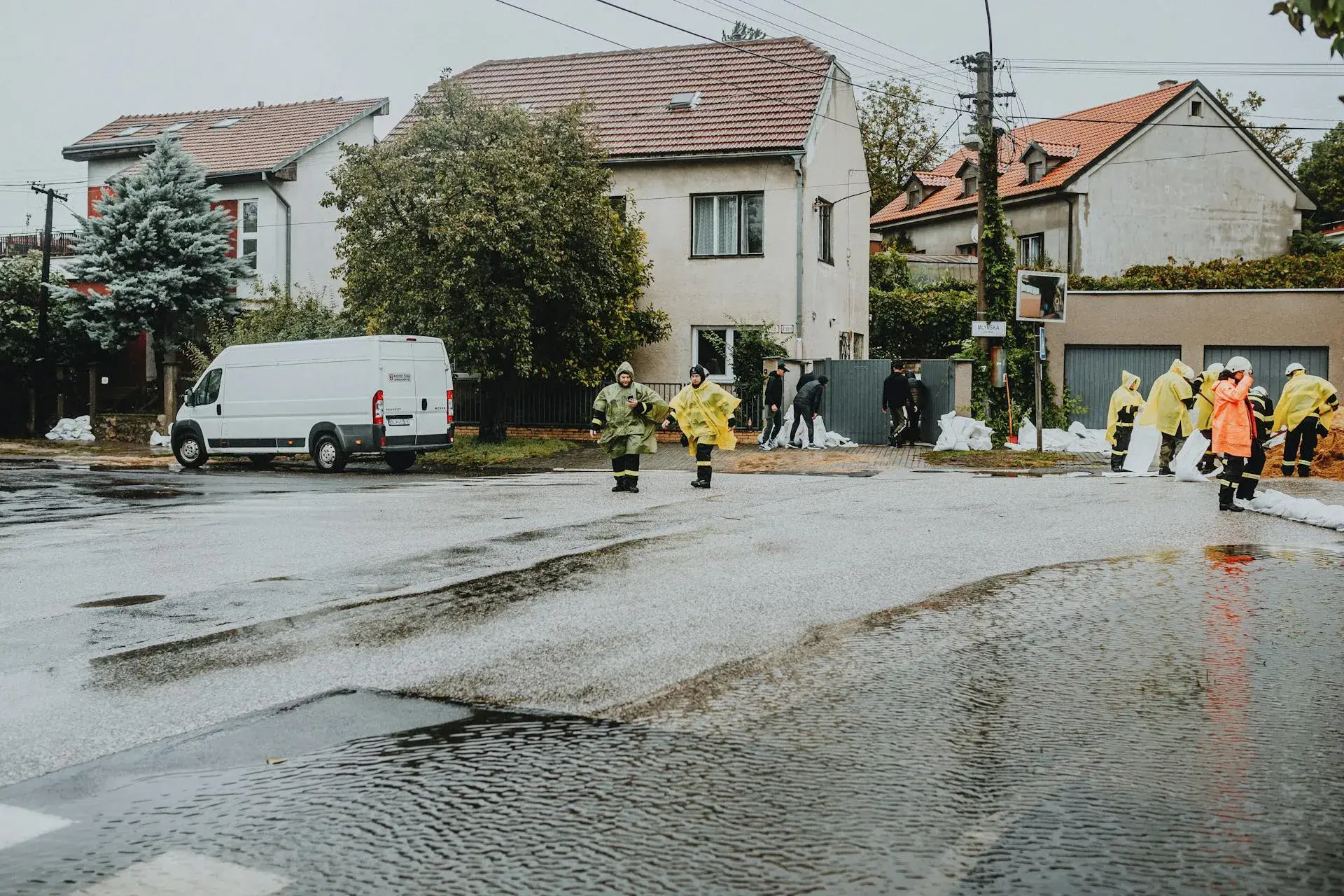
Sewage Cleanup in Lincolnwood, IL
Sewage in your home is a biohazard that requires immediate professional response. Every hour of delay increases contamination spread and health risk. Our local team responds within 60 minutes.
What Happens When You Call
A real person answers, not a call center. We assess your situation, ask the right questions, and begin coordinating your response immediately.
Your dedicated restoration team is dispatched from our local base serving Lincolnwood and the surrounding Cook County communities.
Team arrives with extraction equipment, biohazard PPE, antimicrobial agents, and commercial dehumidifiers. Emergency mitigation begins immediately.
Sewage extracted, affected materials removed, decontamination underway, restoration plan documented. You know exactly what comes next.
Sewage is in your basement and you need it gone now. Not after a callback queue, not after business hours. X Response exists for exactly this moment. When you reach out, your restoration team is mobilized within minutes and on site within the hour. From that point forward, one team manages everything: extraction, decontamination, drying, and insurance documentation. You are never left guessing about the next step. Call now. Your team is standing by.
Why Lincolnwood Homes Are Vulnerable to Sewage
Lincolnwood is a village of 13,463 residents in Niles Township, Cook County, Illinois, occupying approximately 2.5 square miles directly north of Chicago's city limits. The majority of the village operates on a combined sewer system in which sanitary sewage and stormwater share a single network of pipes. Only the northeast corner of the village contains a separate storm sewer. This combined system means that during heavy rain events, the same pipes carrying human waste, household chemicals, and industrial effluent also receive stormwater runoff from streets, driveways, and rooftops. When the system's capacity is exceeded, this combined flow, including raw sewage, backs up through basement floor drains, laundry connections, and low-lying plumbing fixtures into Lincolnwood homes. The village has invested millions in sewer improvements since 2007, but the fundamental design of a combined system means that sewage backup risk persists during storms that exceed capacity, particularly in homes without backflow prevention devices.
In October 2024, the Metropolitan Water Reclamation District of Greater Chicago launched a Sewer Backup Prevention Program offering Cook County homeowners 50 percent reimbursement for installing backflow prevention devices (up to $3,000) or overhead sewers (up to $5,000), with a one-time grant cap of $5,000 per property and permit fees waived. This program was created specifically because communities like Lincolnwood that operate on combined sewer systems experience recurring basement sewage flooding that imposes significant costs on homeowners. The program acknowledges what Lincolnwood residents have experienced for decades: that the combined sewer system's fundamental design creates an inherent risk of sewage entering homes during heavy rain, and that homeowner-level protections are necessary in addition to system-wide infrastructure improvements. For Lincolnwood homeowners who have not yet installed backflow prevention, this program reduces the financial barrier to protection. For homeowners who have already experienced a sewage backup, the program offers a path to preventing recurrence after professional cleanup and restoration.
How Combined Sewer Backups Enter Lincolnwood Homes
In a combined sewer system, the same pipe that carries sanitary waste from a home also receives stormwater from the street above. During dry weather, flow moves by gravity from the home through the lateral connection to the main sewer, then to MWRD interceptors and ultimately the treatment plant. During heavy rain, stormwater volume overwhelms the combined main, which fills to capacity and begins pressurizing. When pressure in the street main exceeds the elevation head of basement plumbing fixtures, the combined flow, including raw sewage from every connected building, reverses direction and enters basements through the lowest openings: floor drains, laundry standpipes, toilet bowls, and shower drains. In Lincolnwood's postwar homes, basement floor drains often sit at or below the elevation of the street sewer main, providing a direct path for backflow. Homes without a backflow preventer or check valve have no mechanical barrier between the pressurized main and the basement interior. The result is Category 3 water, grossly contaminated, entering the home under pressure during every storm that exceeds the combined system's capacity.
Category 3 Contamination and Health Risks
Sewage that enters a home through a combined sewer backup is classified as Category 3 (black water) under the IICRC S500 standard, the highest contamination level requiring the most aggressive response protocol. This water contains human fecal matter, intestinal bacteria including E. coli and Salmonella, viruses including norovirus and hepatitis A, parasites, household chemicals from every connected building on the sewer line, and dissolved organic material. Contact with skin, eyes, or mucous membranes poses immediate health risk. Ingestion, even accidental, can cause serious illness. Aerosolization during cleanup without proper containment spreads pathogens to surfaces and air throughout the home. Children, elderly residents, and immunocompromised individuals face elevated risk. In Lincolnwood homes where the backup affects finished basements used as living space, family rooms, playrooms, or bedrooms, the exposure risk is amplified because occupants may contact contaminated surfaces before recognizing the extent of the backup. Illinois Department of Public Health guidelines classify sewage backup cleanup as work requiring biohazard protocols, personal protective equipment, and professional decontamination.
Porous Materials and Non-Salvageability
The IICRC S500 standard is explicit: porous materials that have been contacted by Category 3 water cannot be decontaminated and must be removed. In Lincolnwood basements, this means that carpet, carpet pad, drywall below the water line, insulation behind finished walls, particleboard shelving, cardboard storage, upholstered furniture, and any paper-faced building product that contacted sewage water must be physically removed and disposed of as contaminated waste. There is no cleaning method, no antimicrobial treatment, and no drying protocol that makes a sewage-saturated porous material safe for continued occupancy. This standard applies regardless of how clean the water appeared or how quickly it receded. The distinction matters because homeowners often see clear water backing up through a floor drain and assume it is stormwater, when in fact it is combined flow from a system that mixes sanitary sewage and stormwater in the same pipe. All backup from a combined sewer system is presumed Category 3 contaminated and treated accordingly.
The Multi-Year Improvement Plan and Remaining Risk
Lincolnwood's multi-phased sewer improvement plan, initiated in 2007, has systematically addressed capacity constraints in the combined system. The 2015-2016 flow-restrictor pilot tested underground devices that slow stormwater entry into the system by storing up to nine inches of water on streets for up to two hours during heavy rain. The $4.3 million North Shore Avenue outfall sewer, completed in 2019 with a $1.4 million MWRD grant, created a direct discharge point into the North Shore Channel to relieve system pressure during storms. These improvements have reduced the frequency of backup events, but they have not eliminated the risk. The combined system still has finite capacity, and storms that exceed design capacity still produce surcharge conditions. The MWRD's 2024 Sewer Backup Prevention Program implicitly acknowledges this remaining risk by funding homeowner-level protections: backflow preventers and overhead sewers that protect individual homes when the system-wide infrastructure is overwhelmed. For Lincolnwood homeowners, the message is clear: infrastructure improvements reduce frequency but do not eliminate the need for property-level protection.
Overhead Sewers and Backflow Prevention Options
Two primary mechanical solutions protect Lincolnwood homes from combined sewer backup. A backflow preventer (check valve) installed in the sewer lateral allows flow to exit the home toward the main but closes automatically when pressure reverses, preventing backup from entering. This is the simpler and less expensive option, typically costing $1,500 to $4,000 installed, and is eligible for 50 percent MWRD reimbursement up to $3,000. However, during extended surcharge events when the valve is closed, wastewater generated inside the home cannot exit either, meaning fixtures must not be used until the system clears. An overhead sewer conversion is more comprehensive: the main sewer lateral is raised above the basement floor elevation, and all below-grade fixtures (floor drains, basement toilets, laundry) are connected to an ejector pit with a pump that lifts wastewater to the overhead lateral. This eliminates the gravity backflow path entirely and allows the home to continue generating wastewater during surcharge events because the pump pushes flow up to the lateral above flood level. Overhead sewer conversions typically cost $8,000 to $15,000 and are eligible for 50 percent MWRD reimbursement up to $5,000. Neither solution was standard when Lincolnwood's homes were built in the 1940s and 1950s, which is why many homes remain unprotected today.
These factors create a community where sewage cleanup is not a hypothetical emergency but a recurring reality driven by infrastructure design, housing stock age, and storm intensity. The combined sewer system mixes sanitary waste and stormwater in shared pipes, the postwar housing has direct low-elevation connections to that system without backflow protection, and storms that exceed capacity force that combined flow backward into basements. Effective sewage cleanup in Lincolnwood requires Category 3 contamination protocols from first contact: biohazard PPE, removal of all contacted porous materials, professional decontamination of structural surfaces, and thorough drying before any reconstruction begins.
What Happens to Your Home While You Wait
Within 1 Hour
Sewage water spreads across basement floors, seeping into carpet pad, the base of drywall, and any porous material it contacts. Bacterial load is at its highest concentration in the standing water. Contact with skin or inhalation of aerosolized droplets poses immediate health risk. In Lincolnwood's postwar homes with finished basements, sewage penetrates behind drywall and paneling into wall cavities where it contacts wood framing, insulation, and the paper facing of adjacent materials. Every minute of contact between Category 3 water and porous materials makes those materials non-salvageable under IICRC standards. The contamination boundary expands with the water's reach.
1–24 Hours
Bacteria multiply rapidly in the warm, nutrient-rich environment. Pathogens from the sewage colonize every wet surface. Drywall wicks contaminated water upward above the visible flood line, extending the zone of non-salvageable material. Wood framing absorbs contaminated water and begins harboring bacteria in its grain structure. Odor intensifies as decomposition of organic material in the sewage produces hydrogen sulfide and other volatile compounds. The contamination boundary has now expanded well beyond the visible water line into materials that appear dry from the surface but are absorbing moisture through capillary action.
24–48 Hours
Mold colonization begins on sewage-contaminated materials, compounding the biological hazard. In Cook County's summer humidity, mold establishes rapidly on wet organic surfaces. The combination of active bacterial contamination and emerging mold growth creates a dual biological hazard that requires progressively more aggressive remediation. Materials that might have been addressed with surface decontamination if extracted within the first hours now require removal as the sewage has penetrated too deeply. Structural wood shows early saturation. The scope of demolition required expands significantly.
48–72 Hours
Bacterial contamination has penetrated deeply into all contacted porous materials. Mold growth becomes visible on wet surfaces. Hydrogen sulfide and other decomposition gases reach concentrations that cause nausea and respiratory irritation. The home becomes unsafe for unprotected occupancy. In finished Lincolnwood basements where sewage reached wall cavities, the contamination zone now extends from the slab to well above the original water line as wicking and vapor transport carried pathogens into previously dry materials. The restoration scope shifts from cleanup to extensive demolition.
One Week and Beyond
Extensive bacterial contamination, established mold growth, and structural deterioration where wood has remained saturated with sewage water. Subfloor materials show decay. Foundation slab and walls have absorbed contaminated moisture that will off-gas decomposition odors for months without professional treatment. The cost of restoration at this stage is typically three to five times what would have been required with immediate professional response in the first 24 hours. Materials that could have been preserved with rapid extraction must now be demolished and replaced entirely.
Sewage in your home is a health emergency that worsens by the hour. Contact X Response now. Our Lincolnwood team responds within 60 minutes with biohazard protocols and Category 3 extraction equipment.
How We Restore Sewage-Damaged Lincolnwood Homes
From the moment our team arrives, every step follows Category 3 contamination protocols. Here is exactly what the sewage cleanup process involves for Lincolnwood properties.
Biohazard Assessment and Safety Protocols
Our team arrives in full biohazard PPE: Tyvek suits, nitrile gloves, face shields, and respiratory protection rated for biological hazard exposure. Before entering the affected area, we assess the extent of contamination, identify the entry point (typically a floor drain or low-lying fixture connected to the combined sewer), and determine whether active backflow is continuing. If the sewer system is still surcharged and backup is ongoing, we establish temporary pumping to manage active inflow while beginning extraction inside. All occupants are advised to avoid the contaminated area entirely. We establish a contamination perimeter with signage and barriers to prevent accidental contact by household members, particularly children and pets. The assessment documents the flood depth, affected materials, contamination category, and scope of work required.
Sewage Extraction and Material Removal
Standing sewage water is removed using truck-mounted and portable extraction units. All porous materials contacted by the sewage are removed under biohazard protocols: carpet and pad are cut into manageable sections and bagged for disposal, drywall is cut back to a minimum of two feet above the visible water line (because capillary wicking carries contamination above the surface level), insulation is removed from all affected wall cavities, and any paper-faced, fabric, or porous material that contacted the backup is removed and disposed of as contaminated waste. In Lincolnwood homes with finished basements, this typically means removing all finish materials from the flood zone: drywall, baseboards, insulation, paneling, and carpet from the affected area. There is no option to dry these materials in place. IICRC Category 3 standards are absolute: contacted porous materials are non-salvageable regardless of appearance.
Decontamination and Antimicrobial Treatment
Once all contaminated porous materials are removed, the remaining structural surfaces receive professional decontamination. Concrete foundation walls and floor slabs are cleaned with industrial-grade antimicrobial solutions applied at biocidal concentrations. Wood framing that was exposed to sewage but retains structural integrity is HEPA-vacuumed to remove surface contamination, then treated with antimicrobial solution that penetrates into the wood grain. Metal surfaces, pipes, and mechanical equipment are cleaned and disinfected. The entire affected area is treated with broad-spectrum antimicrobial agents applied with sprayers that reach into corners, joints, and crevices where contamination may persist. HEPA air scrubbers run throughout the process to capture airborne pathogens disturbed during cleaning. The goal is to reduce bacterial and pathogen levels on all remaining surfaces to concentrations safe for occupancy before any reconstruction begins.
Structural Drying
After decontamination, the affected area must be dried to prevent mold colonization on cleaned structural surfaces. Commercial dehumidifiers and air movers are positioned to dry concrete walls, slab perimeters, wood framing, and any remaining structural materials. In Lincolnwood homes where clay soils hold moisture against foundation walls for extended periods after the sewer system clears, drying requires patience and monitoring. We return daily to take moisture readings and adjust equipment placement until all materials reach their dry standard. The flat terrain and heavy soil characteristic of this area slow exterior drainage and maintain hydrostatic pressure against foundations longer than in communities with natural slope, sometimes extending the drying period beyond what the interior conditions alone would suggest. Drying is not complete until moisture meters confirm acceptable levels in all structural materials.
Verification and Clearance
Before the remediation zone is released for reconstruction, final inspection verifies that decontamination and drying objectives have been achieved. Moisture readings confirm that all structural materials are at acceptable levels. Visual inspection confirms that all contaminated porous materials have been removed and disposed of, and that remaining surfaces are clean and free of visible residue. Where occupant health concerns warrant or the scope of contamination was extensive, ATP testing (adenosine triphosphate luminescence) provides quantitative verification that surface biological contamination has been reduced to acceptable levels. Clearance documentation includes the full scope of work performed, before-and-after photos, moisture readings, antimicrobial treatment records, and any testing results. This documentation supports your insurance claim and provides confidence that the space is safe for reconstruction and re-occupancy.
The X Response Difference
When you contact X Response for sewage cleanup, you get a professional biohazard response team that follows Category 3 protocols without compromise. Extraction, removal, decontamination, drying, verification, and prevention guidance. One team, one standard, documented results.
Insurance Claim Guidance for Lincolnwood Homeowners
Sewage backup insurance coverage in Illinois requires a specific endorsement on your homeowner's policy. Standard policies exclude sewer and drain backup damage. You must have purchased a sewer backup endorsement, sometimes called a 'water backup' or 'sump pump and sewer backup' rider, for your policy to cover damage from combined sewer surcharges that push sewage into your basement. In Lincolnwood, where the combined sewer system has a documented history of backup events during heavy storms and where the village itself has invested millions in infrastructure to reduce that frequency, this endorsement is essential. Coverage limits on sewer backup endorsements typically range from $5,000 to $25,000, though higher limits are available. Because sewage cleanup under Category 3 protocols requires removal of all contacted porous materials, structural decontamination, and professional drying before reconstruction, total costs can exceed lower endorsement limits for even moderate basement floods. Understanding your endorsement limit before a backup occurs determines whether your recovery covers the full cost of proper remediation.
How X Response Helps
- Verify that the sewer backup endorsement is active on your policy before filing, as standard coverage excludes this specific damage source
- Document the combined sewer system as the source of backup, distinguishing it from interior plumbing failures which are covered under standard provisions
- Provide scope documentation demonstrating Category 3 contamination protocols, justifying the cost of material removal and professional decontamination rather than simple drying
- Include moisture readings and decontamination verification to demonstrate the remediation was both necessary and complete
- Explain your endorsement limit and coverage structure before you file, so you understand your likely recovery and any gap between remediation cost and coverage cap
X Response does not file claims on your behalf, adjust claims, or make coverage determinations. We provide documentation and guidance to help you make informed decisions about your property and your policy. Coverage decisions are made solely by your insurance carrier.
Certified Restoration Specialists Serving Lincolnwood
When you contact X Response for sewage cleanup in Lincolnwood, your team is drawn from certified professionals who work across Cook County's North Shore suburbs and understand the specific sewage contamination challenges of this community. They know how the combined sewer system delivers Category 3 contaminated water through basement floor drains during surcharge events, how postwar homes without backflow prevention are directly exposed to this backflow, how the IICRC S500 standard governs what can be saved and what must be removed after sewage contact, and how Cook County's humidity accelerates mold colonization on sewage-contaminated materials if decontamination and drying are delayed. They have responded to sewer surcharge events across the village, cleaned and decontaminated finished basements contaminated by combined sewer backup, and guided homeowners through the specific insurance documentation required for sewer endorsement claims. This is not a crew that treats sewage like routine water damage. It is a biohazard response team with the protocols, PPE, and equipment to handle Category 3 contamination safely and thoroughly.
Every technician on your team holds current IICRC certification in water damage restoration with specific training in Category 3 contamination protocols. All team members are equipped with full biohazard PPE including Tyvek suits, double-layer nitrile gloves, face shields, and respiratory protection rated for biological hazard exposure. Equipment includes truck-mounted and portable extraction units, submersible pumps for deep standing water, HEPA air scrubbers for airborne pathogen capture, industrial antimicrobial application systems, commercial dehumidifiers sized for basement volumes, and contaminated-material containment and disposal systems. When your team arrives, they bring everything needed to begin Category 3 extraction and decontamination immediately.
In Lincolnwood, X Response works with Scene Cleaners, an independent local restoration partner serving Cook County.
Sewage Cleanup FAQ for Lincolnwood Homeowners
Other Emergency Services in Lincolnwood

Water Damage Restoration
Burst pipes, storm flooding, standing water. We extract, dry, and restore before mold sets in.
Learn more
Fire Damage Restoration
Structural damage, soot, debris. We stabilize, clean, and rebuild what fire destroyed.
Learn more
Smoke Damage Restoration
Soot residue, chemical odors, HVAC contamination. We decontaminate surfaces, eliminate odors, and restore air quality.
Learn more
Mold Remediation
Testing, containment, removal, prevention. We find the source, eliminate the growth, and stop it from returning.
Learn more