
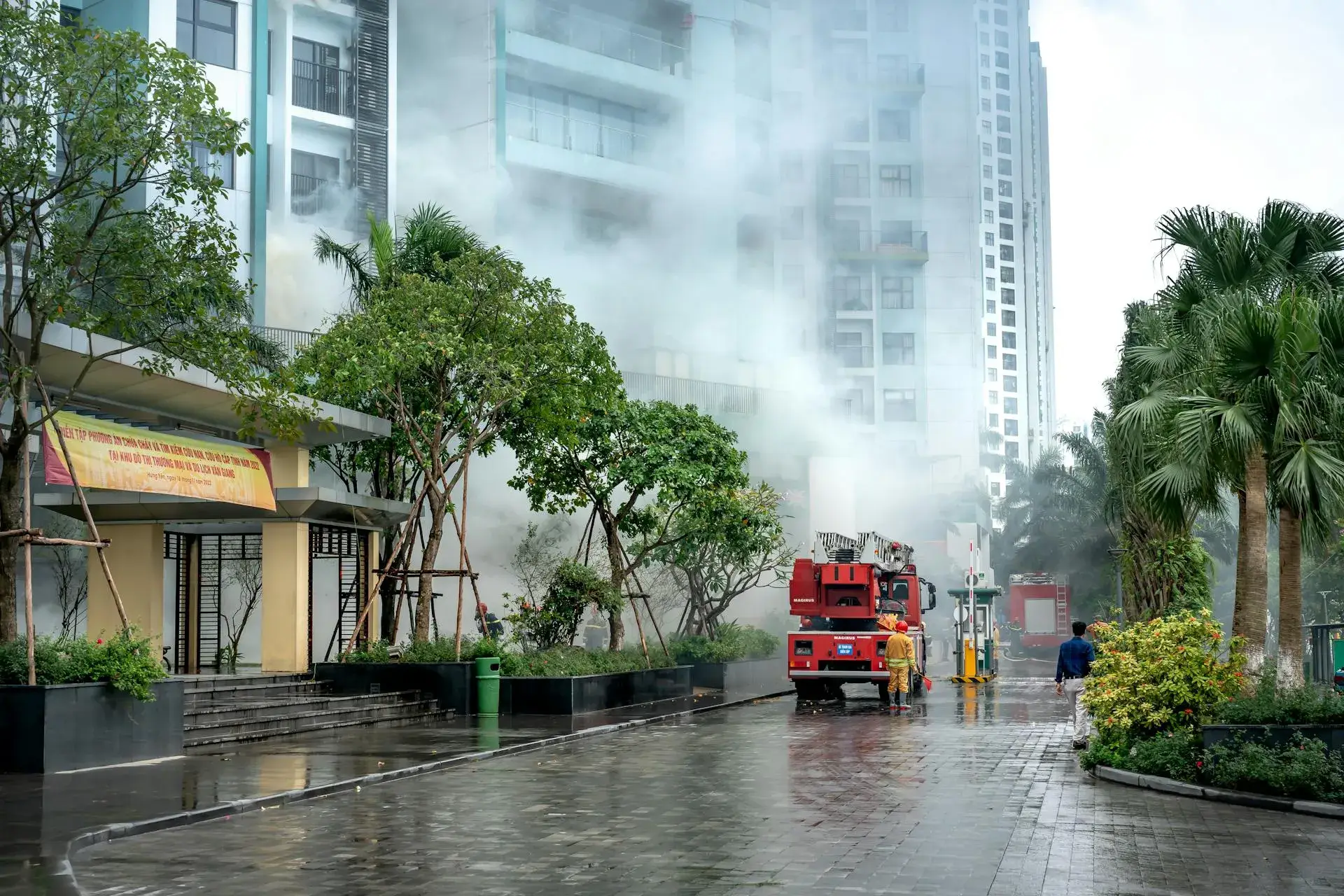
Smoke Damage Restoration in Decatur, GA
Microscopic soot particles penetrate HVAC ducts, drywall, and insulation within hours. Our Decatur smoke restoration team responds within 60 minutes.
What Happens When You Call
A restoration professional answers 24/7, identifies the smoke category, and dispatches our local Decatur response vehicle.
Our certified technicians arrive within 60 minutes equipped with HEPA air filtration equipment, chemical sponges, and diagnostic meters.
We seal off affected rooms with containment barriers and establish negative air pressure to stop smoke particle migration.
Soot is chemically removed, HVAC ductwork is decontaminated, and industrial hydroxyl generators neutralize all odor compounds.
Smoke damage is insidious, traveling through hidden wall cavities, electrical outlets, and central air systems long after a fire is extinguished. Whether caused by a kitchen grease flare-up along West Ponce de Leon Avenue, an electrical short in an Oakhurst bungalow, or furnace puffback in a historic Winnona Park home, microscopic smoke particles cling to every surface. Attempting to clean soot with household sprays drives acidic oils deeper into paint and historic plaster, locking in foul odors permanently. X Response provides scientific smoke mitigation and advanced deodorization throughout Decatur and surrounding DeKalb County communities. Our certified technicians deploy commercial HEPA air scrubbers, chemical soot sponges, and molecular odor neutralizers to restore clean indoor air quality. Call now for expert smoke damage response in Decatur.
Why Decatur Homes Are Vulnerable to Smoke Damage
Decatur is an established, historic city in central DeKalb County with over 24,000 residents, situated just east of Atlanta. The local housing stock spans a distinctive architectural range, including 1920s Craftsman bungalows in Oakhurst, Queen Anne and Victorian homes in Great Decatur, mid-century brick ranches in Winnona Park and Clairemont, and modern multi-level infill townhomes. Decatur's humid subtropical climate and dense tree canopy mean residential HVAC systems operate almost year-round, circulating air continuously through complex duct networks. When smoke occurs from a localized kitchen fire, faulty appliance, or electrical malfunction, the forced-air HVAC system acts as a superhighway, rapidly pulling fine soot particles into ductwork and dispersing caustic contaminants into every living space.
The U.S. Environmental Protection Agency documented that smoke is composed of a complex mixture of gases and fine particles produced when organic materials burn, with microscopic particulate matter posing the primary health threat. In Decatur homes, smoke particles containing carbon, volatile organic compounds, and heavy metals settle into porous textures, wall cavities, and attic insulation. Beyond the immediate respiratory hazards of fine particulate matter, untreated smoke residues react with ambient humidity to form corrosive acids that permanently pit brass fixtures, discolor delicate fabrics, and degrade electronic circuit boards.
Forced-Air HVAC Circulation and Duct Contamination
Central air conditioning and heating systems in Decatur homes run constantly due to regional humidity and temperature swings. When smoke enters the return air plenum, soot is forced through duct registers, coating fiberglass duct liner and distributing airborne soot into bedrooms and living spaces.
Differentiation of Soot Types and Surface Chemistry
Kitchen grease fires produce sticky protein soot, while smoldering synthetic furnishings generate heavy black oil soot, and electrical fires produce dry carbon residues. Each soot classification requires specialized cleaning chemistry; using improper water-based cleaners smears grease and causes permanent staining.
High Ambient Humidity and Acidic Chemical Reaction
Decatur's high summer humidity accelerates the corrosive reaction between soot and moisture. Acidic soot residues on bathroom chrome, stainless steel appliances, and window glass cause permanent microscopic pitting if not neutralized within 24 to 48 hours.
Multi-Story Vertical Smoke Travel and Stack Effect
In Decatur's historic multi-story homes and renovated townhomes, thermal buoyancy forces hot smoke upward through open stairwells, utility chases, and recessed lighting fixtures, concentrating severe soot and odor damage in upper-floor ceilings and attic insulation.
Deep Odor Absorption in Porous Building Envelope Materials
Drywall, historic plaster, unsealed framing studs, carpet padding, and attic fiberglass readily absorb volatile smoke compounds. Simple surface cleaning leaves deep odor reservoirs untouched; complete elimination requires gas-phase hydroxyl or ozone treatment.
Complete smoke damage recovery in Decatur requires scientific soot removal, specialized air scrubbing, and molecular odor neutralization. X Response combines certified IICRC methodologies with commercial HEPA technology to return your Decatur home to a clean, odor-free environment.
What Happens to Your Home While You Wait
Within Minutes
Smoke particles coat ceilings, walls, and furnishings. Acidic residues begin reacting with porous surfaces, and pungent chemical odors permeate carpet fibers, drapes, and clothing.
1-24 Hours
Acidic soot begins discoloring painted walls, wood finishes, and fiberglass fixtures. Polished metal hardware and appliance trims start pitting from chemical corrosion. Central HVAC ductwork becomes thoroughly contaminated.
24-48 Hours
Soot residues penetrate deeper into porous drywall paper and subfloors. Vinyl flooring and laminate surfaces experience permanent yellowing. Corrosion on electronic circuits and metal switches accelerates.
3-7 Days
Smoke odors become deeply embedded in structural framing studs, insulation, and subflooring. Painted walls require heavy chemical sealing and repainting rather than simple cleaning. Unsalvageable textiles must be discarded.
One Week and Beyond
Permanent chemical etching on glass, ceramic tile, and marble countertops. Lingering airborne particulates continue degrading indoor air quality, posing ongoing respiratory risks to occupants.
Prompt smoke remediation within the first 24 hours prevents irreversible surface staining and eliminates stubborn odors. Contact X Response today for 24/7 service in Decatur.
How We Restore Smoke-Damaged Decatur Homes
Our IICRC-certified smoke restoration process uses targeted chemical cleaning and advanced air scrubbing to remove soot and eliminate odors at the molecular level.
Comprehensive Soot Inspection and Residue Testing
Our technicians inspect every room with specialized soot-testing sponges and UV lights to identify the smoke type (wet, dry, protein, or fuel oil). We establish a detailed remediation protocol tailored to the specific chemical properties of the residue.
Containment and HEPA Air Scrubbing
We erect heavy plastic containment barriers with zipper doors to isolate unaffected areas of your Decatur home. Commercial HEPA air scrubbers and carbon filters are deployed to create negative air pressure and capture airborne smoke particulates continuously.
Specialized Chemical Soot Removal and Surface Cleaning
Using vulcanized natural rubber dry-cleaning sponges and specialized alkaline soot detergents, we clean walls, ceilings, baseboards, and built-in cabinetry without introducing excess moisture that could drive soot deeper into porous materials.
HVAC Duct Cleaning and Sanitization
We thoroughly clean your heating and cooling ductwork, removing soot accumulation from supply lines, return plenums, blower wheels, and evaporator coils. The system is treated with an EPA-registered antimicrobial sealant to encapsulate any microscopic residue.
Thermal Fogging and Hydroxyl Odor Neutralization
We deploy industrial thermal foggers and hydroxyl generators that disperse microscopic odor-counteracting compounds into structural voids, wall cavities, and framing. These agents bond with and neutralize volatile organic compounds (VOCs) permanently.
The X Response Difference
Ensure clean, healthy indoor air for your family with Decatur's dedicated smoke restoration specialists. Call X Response today.
Insurance Claim Guidance for Decatur Homeowners
Smoke damage claims require detailed documentation to prove both visible soot contamination and invisible odor absorption. Most Georgia homeowner and commercial property insurance policies cover sudden and accidental smoke losses, including damage originating from kitchen incidents, electrical fires, and furnace puffbacks. Insurance carriers require itemized proof of damage for structural components, ductwork, and personal contents. X Response provides complete documentation to support your smoke damage claim from initial testing through final clearance.
How X Response Helps
- Conduct surface wipe testing and photographic documentation to substantiate soot distribution across all rooms
- Itemize costs for structural cleaning, chemical sponging, and gas-phase odor neutralization
- Provide detailed justification for HVAC duct decontamination and replacement of contaminated attic insulation
- Catalog non-salvageable personal belongings and porous contents for contents claim reimbursement
- Coordinate directly with your carrier's adjuster to ensure all necessary remediation steps are covered
X Response does not adjust insurance claims or determine policy coverage. We provide forensic soot documentation, air quality testing data, and detailed restoration estimates to support your claim.
Certified Restoration Specialists Serving Decatur
Our Decatur smoke restoration technicians are certified by the IICRC in Fire and Smoke Restoration (FSRT) and Odor Control (OCT). With extensive experience across DeKalb County properties from Oakhurst historic bungalows to modern downtown Decatur condos, our team understands the unique challenges of soot removal in North Georgia homes.
We operate specialized mobile units equipped with commercial HEPA air scrubbers, hydroxyl generators, thermal fogging systems, and high-efficiency duct cleaning apparatus. We take pride in delivering meticulous craftsmanship, clear communication, and guaranteed odor elimination for Decatur homeowners.
In Decatur, X Response works with Boss Contracting, an independent local restoration partner serving DeKalb County.
Smoke Damage Restoration FAQ for Decatur Homeowners
Other Emergency Services in Decatur

Water Damage Restoration
Burst pipes, storm flooding, standing water. We extract, dry, and restore before mold sets in.
Learn more
Fire Damage Restoration
Structural damage, soot, debris. We stabilize, clean, and rebuild what fire destroyed.
Learn more
Mold Remediation
Testing, containment, removal, prevention. We find the source, eliminate the growth, and stop it from returning.
Learn more
Sewage Cleanup
Sewer backups, contaminated water, biohazard. We extract, sanitize, and restore safely.
Learn more