
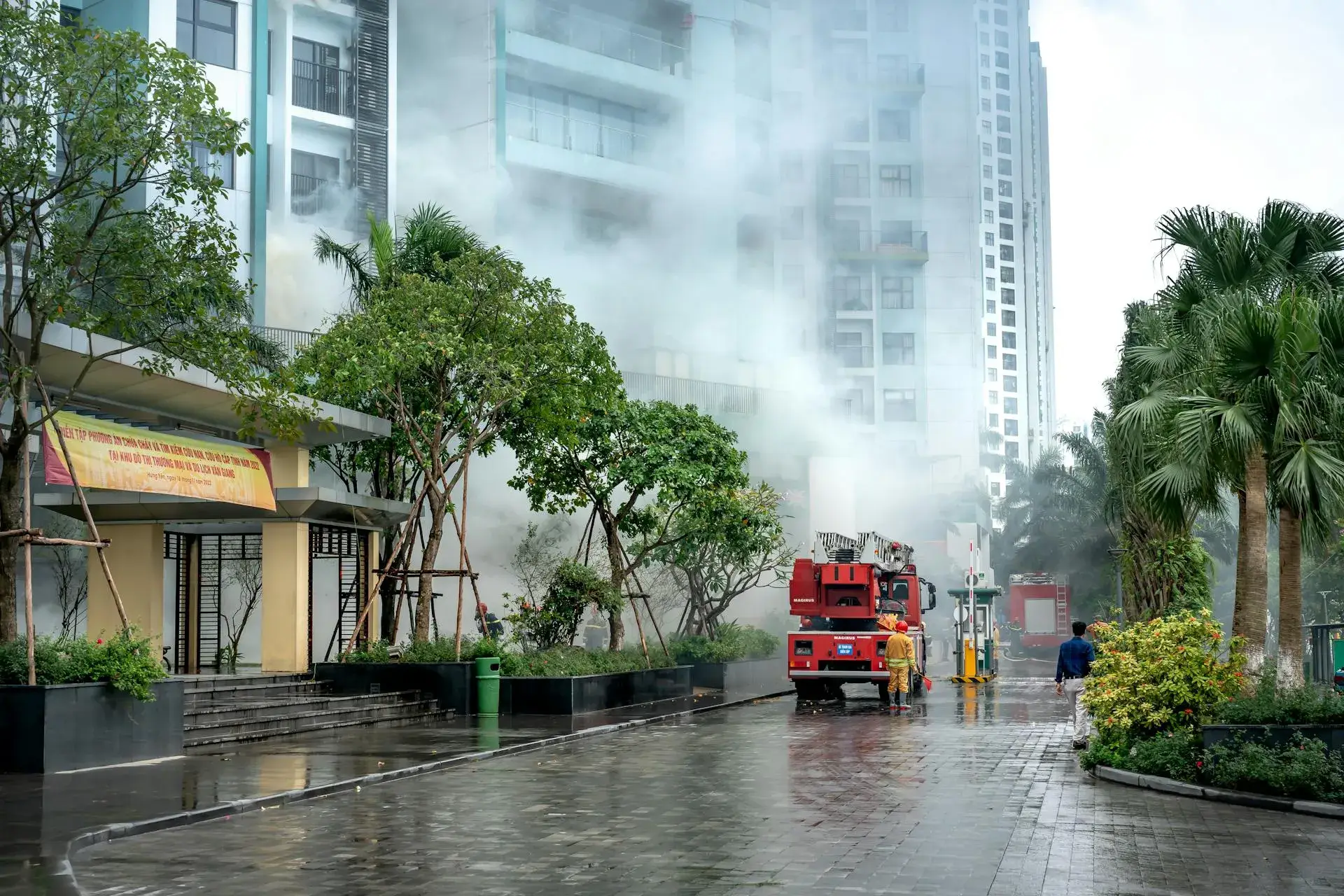
Smoke Damage Restoration in Druid Hills, GA
Smoke residue acidifies and bonds to surfaces within hours. Odor penetrates deeper into porous materials with every passing day. Our local team responds to Druid Hills emergencies within 60 minutes.
What Happens When You Call
A real person answers, not a call center. We assess your situation, ask the right questions, and begin coordinating your response immediately.
Your dedicated restoration team is dispatched from our local base serving Druid Hills and the surrounding DeKalb County communities.
Team arrives with HEPA filtration, soot removal equipment, and deodorization systems. Emergency mitigation begins immediately.
Smoke residue cleaned, air quality addressed, restoration plan documented. You know exactly what comes next.
Smoke damage does not stop when the visible haze clears. Residue is acidifying on surfaces, odor molecules are bonding into porous materials, and particulates are circulating through your HVAC system right now. Whether the smoke came from a structure fire in your building, a neighbor's house fire, wildfire smoke infiltrating through the building envelope, or a furnace malfunction, the damage progresses until professional intervention stops it. X Response exists for this exact moment. When you reach out, your restoration team is mobilized within minutes and on site within the hour. Call now. Your team is standing by.
Why Druid Hills Homes Are Vulnerable to Smoke Damage
Druid Hills occupies a position in unincorporated DeKalb County where the dense, mature tree canopy designed by Frederick Law Olmsted creates a microenvironment that interacts with smoke events differently than open suburban development. The towering oaks, hickories, and tulip poplars that form the Olmsted canopy slow air circulation at street level, trapping smoke particulates closer to homes for longer periods during regional haze events. On April 22 to 23, 2026, smoke from wildfires burning in Clinch and Brantley counties in South Georgia drifted north into metro Atlanta as shifting winds pushed the plume across the state. The Georgia Department of Public Health issued guidance urging residents to take precautions, and the Georgia Department of Natural Resources Environmental Protection Division issued a Code Orange Air Quality Alert indicating conditions unhealthy for sensitive groups. The Air Quality Index across metro Atlanta reached levels prompting the alert as ozone combined with fine particulate matter from the wildfire smoke.
Wildfire smoke events are one category of smoke exposure in Druid Hills, but structure fires within and adjacent to the community represent a more acute and localized threat. The March 2023 apartment fire on Briarcliff Road sent thick smoke across the parking lot and surrounding properties. Smoke from a neighbor's house fire can infiltrate adjacent homes through shared walls in attached housing, through HVAC intakes that draw outdoor air, and through gaps in the building envelope that century-old homes inevitably possess. The July 2021 arson fire at an abandoned building on North Druid Hills Road produced a massive smoke plume visible from the nearby Publix grocery store, sending particulates across the Toco Hills commercial area and surrounding residences. Each of these smoke sources produces different residue types that require different restoration approaches.
The homes in Druid Hills present particular challenges for smoke restoration because of their age and materials. Plaster walls, original hardwood floors, exposed brick fireplaces, and unfinished attic framing are all porous surfaces that absorb smoke compounds deeply. Modern homes with painted drywall, vinyl flooring, and sealed surfaces resist smoke penetration to a degree. Druid Hills' early 1900s homes, with their textured plaster, tongue-and-groove flooring, and unsealed basement and attic spaces, absorb smoke like a sponge. The older HVAC systems in these homes, many retrofitted into structures that were not designed for ductwork, have more leakage points where outdoor smoke can enter and more internal surfaces where residue accumulates. Once smoke compounds penetrate these porous historic materials, they require more aggressive and careful treatment to remove than they would from modern surfaces.
Regional Wildfire Smoke Events
Georgia experiences wildfire smoke events from multiple directions. South Georgia prescribed burns and wildfires, such as the April 2026 Clinch and Brantley County fires, push smoke northward into metro Atlanta when winds shift. The June 2023 Canadian wildfire smoke event brought elevated particulate levels to the entire eastern seaboard, including metro Atlanta where Code Orange alerts were issued. These regional events deposit fine particulate matter (PM2.5) on exterior surfaces, drive particles through building envelopes into interior spaces, and saturate HVAC filters far beyond their rated capacity. In Druid Hills' older homes, where weatherstripping is often deteriorated and envelope sealing was never a construction priority, outdoor smoke infiltrates more readily than in modern, tightly sealed construction.
Neighbor and Adjacent Structure Fires
The density of Druid Hills' residential fabric means that a fire in one home can cause smoke damage to multiple surrounding properties. Homes on the historic streets sit on lots that were generous by 1905 standards but place structures within 30 to 50 feet of neighbors. The multi-family complexes along Briarcliff Road are even closer. When a structure fire occurs, prevailing winds carry smoke directly into adjacent homes through open windows, HVAC intakes, and envelope gaps. The damage is real even when no flames touch the adjacent property: soot deposits, smoke odor absorption, and HVAC contamination from a neighbor's fire can require professional restoration in your home. The larger the source fire and the longer it burns before suppression, the wider the radius of smoke-affected properties.
Furnace Puffbacks and HVAC Malfunctions
Oil-fired furnaces and boilers in older Druid Hills homes can produce puffbacks, sudden misfires that blow soot and combustion byproducts through the ductwork and into living spaces. Even a small puffback distributes an oily, acidic soot throughout the home in seconds, coating walls, ceilings, furnishings, and the entire HVAC system interior. Older forced-air systems retrofitted into homes not originally designed for ductwork often have connections that are not fully sealed, allowing furnace soot to leak into wall cavities and between floors. A puffback may seem minor because it happens without flames, but the damage to finishes, fabrics, and air quality can equal or exceed what a small fire produces.
Porous Historic Materials and Smoke Absorption
The materials that make Druid Hills homes architecturally significant are the same materials that make smoke damage more severe and more difficult to resolve. Plaster is porous and absorbs smoke compounds into its matrix rather than holding them on the surface. Original hardwood flooring, especially heart pine with open grain, draws smoke molecules deep into the wood fibers. Exposed brick mantels and chimneys absorb odor compounds that resurface during warm weather for months after the event. Unfinished attic framing and crawl space lumber act as reservoirs for smoke odor. In a modern home with painted drywall and sealed laminate flooring, smoke damage is largely a surface phenomenon. In a Druid Hills home, smoke damage penetrates structurally.
Tree Canopy and Microclimate Effects
The mature Olmsted canopy that defines Druid Hills slows air movement at ground level and creates a temperature inversion effect on still days. During regional smoke events, this means particulates linger longer in the neighborhood than they do in open areas with better air circulation. The canopy also means that many Druid Hills homes rely on natural ventilation rather than air conditioning during mild seasons, with windows open to the outdoors. When a smoke event begins during these open-window periods, particulates enter homes rapidly and in higher concentrations than in air-conditioned homes with closed envelopes. By the time residents notice haze or smell and close windows, interior surfaces may already be coated with a fine layer of particulate matter that will require professional removal.
Smoke damage in Druid Hills comes from multiple distinct sources, each producing different residue types and requiring different restoration approaches. Structure fire soot is thick, acidic, and concentrated. Wildfire particulates are fine, widespread, and persistent. Furnace puffback residue is oily and distributes through ductwork. The one constant is that all smoke damage worsens with time as compounds bond deeper into porous historic materials. The restoration team that addresses smoke damage in these homes needs to distinguish between residue types, select appropriate cleaning chemistry for each historic surface, and verify that odor elimination is complete rather than cosmetic.
What Happens to Your Home While You Wait
Within 1 Hour
Smoke residue settles on all horizontal surfaces and begins adhering to vertical ones. In Druid Hills' homes with plaster walls and exposed wood trim, particles begin penetrating porous surfaces immediately. Acidic compounds in soot start reacting with metal fixtures, hardware, and decorative elements. The HVAC system, if running, distributes particulates throughout the house within minutes, contaminating ductwork, registers, and return plenums.
1 to 24 Hours
Soot acidifies permanently on unfinished metal, etching and discoloring hardware, light fixtures, and appliance surfaces. Smoke odor compounds migrate from surfaces into the matrix of porous materials: plaster absorbs them, hardwood draws them into the grain, and fabric fibers trap them. The longer residue sits on surfaces, the more it transitions from removable film to bonded stain. In DeKalb County's humid climate, moisture in the air accelerates chemical reactions between acidic soot and vulnerable surfaces.
24 to 72 Hours
Odor molecules become chemically bonded within porous materials rather than remaining on surfaces. Simple wiping or surface cleaning will no longer address them. Corrosion on metals progresses to permanent pitting. Soot films on painted surfaces begin creating permanent discoloration called ghosting where the outline of smoke patterns becomes embedded in the paint layer. HVAC ductwork that has not been cleaned continues recirculating particulates with every heating or cooling cycle.
One Week and Beyond
Smoke odor has fully migrated into structural materials: plaster, framing lumber, subfloor sheathing, and insulation. In Druid Hills' older homes with unsealed attic and crawl space framing, odor reservoirs form in inaccessible areas that re-release compounds during warm weather for months. Restoration at this stage requires deep-penetrating treatment methods including thermal fogging, hydroxyl generation, or selective material removal rather than surface cleaning. The scope and cost of restoration multiply when treatment is delayed beyond the first few days.
Smoke damage is progressive and irreversible once compounds bond into historic materials. Every day of delay makes restoration more complex and more costly, and increases the chance that irreplaceable elements in your Druid Hills home will require replacement rather than cleaning. Contact X Response now. Our team responds within 60 minutes.
How We Restore Smoke-Damaged Druid Hills Homes
Effective smoke restoration requires identifying the smoke source, mapping the contamination pattern, selecting appropriate cleaning methods for each material type, and verifying that odor elimination is complete. Here is our approach for Druid Hills properties.
Source Identification and Damage Assessment
Different smoke sources require different restoration approaches. Structure fire soot is thick, visible, and acidic. Wildfire smoke deposits fine particulates that may not be immediately visible but contaminate surfaces and HVAC systems. Furnace puffback residue is oily and distributes through ductwork into every room. Our team identifies the source type, maps the contamination boundary using visual inspection and particle testing, and creates a scope of work specific to the residue type and the materials affected. In Druid Hills homes with plaster, hardwood, brick, and other porous surfaces, this assessment determines which cleaning chemistry and methods are appropriate for each material.
HVAC System Isolation and Cleaning
The HVAC system is addressed first because it continues spreading contamination with every cycle if left running. We shut down and isolate the system, then clean interior ductwork surfaces, replace filters, clean coils and blower components, and verify that the system will not recontaminate cleaned spaces when restarted. In Druid Hills homes where HVAC systems were retrofitted into structures not originally designed for ductwork, we check for leakage points where smoke may have entered wall cavities or between-floor spaces through duct gaps. These hidden contamination paths are common in older homes and account for lingering odors that surface-only cleaning cannot resolve.
Surface Cleaning and Residue Removal
Smoke residue is cleaned from all affected surfaces using methods specific to each material. Plaster walls receive gentle chemical sponging that lifts residue without damaging the surface texture. Original hardwood is cleaned with appropriate solvents that address soot without stripping finish. Exposed brick and stone require alkaline cleaners that break down acidic residue. Metal hardware is treated with corrosion inhibitors after cleaning. Modern surfaces like tile, glass, and sealed countertops can tolerate more aggressive cleaning. The key is matching the method to the material. In Druid Hills homes where multiple material types exist in every room, our team works surface by surface rather than applying one method uniformly.
Deep Odor Elimination
Surface cleaning removes visible residue but does not eliminate odor that has migrated into porous materials. We deploy thermal foggers that produce microscopic deodorant particles capable of reaching odor compounds within plaster, wood, and fabric. Hydroxyl generators break down odor molecules through oxidation without producing harmful ozone in occupied spaces. For severely affected areas, we use controlled ozone treatment in sealed, unoccupied rooms to penetrate materials at a molecular level. The combination of methods addresses odor at every depth: surface, near-surface, and deep structural. We verify completion by sealing the space, raising temperature to accelerate off-gassing, and testing whether any residual odor emerges.
Air Quality Verification and Completion
Before the job is complete, we verify that indoor air quality has returned to acceptable levels. HEPA air scrubbers run continuously throughout the project, and final particle counts confirm that airborne contamination is resolved. We inspect all treated surfaces under angled lighting to confirm no residue remains. An odor-free environment at room temperature does not guarantee completion because heat and humidity can reactivate embedded odor compounds. We test under elevated temperature conditions to confirm that treatment is thorough. You receive documentation including treatment methods, verification results, and before-and-after conditions for your records and insurance file.
The X Response Difference
When you contact X Response, you get a dedicated restoration team that manages everything, from emergency assessment through insurance documentation to final air quality verification. One team, one point of contact, one standard of work from start to finish.
Insurance Claim Guidance for Druid Hills Homeowners
Smoke damage insurance claims in Georgia are covered under standard homeowner's policies when the smoke originates from a sudden and accidental event, whether the fire was in your home, a neighbor's property, or an external source like wildfire. Coverage typically includes cleaning, deodorization, content restoration, HVAC cleaning, and replacement of materials too damaged to restore. For Druid Hills' historic homes with porous materials that absorb smoke deeply, documentation of the specialized cleaning methods and materials required is critical to receiving appropriate coverage rather than generic replacement allowances.
How X Response Helps
- Document all smoke contamination with professional photos, particle testing, and detailed scope from day one
- Map the contamination boundary to distinguish areas requiring professional restoration from unaffected zones
- Prepare documentation that supports specialized cleaning costs for historic materials including plaster, hardwood, and brick
- Align our restoration scope with standard insurance coverage categories so your adjuster can process the claim efficiently
- Coordinate with your adjuster on air quality testing and HVAC cleaning costs that document the full restoration need
X Response does not file claims on your behalf, adjust claims, or make coverage determinations. We provide documentation and guidance to help you make informed decisions about your property and your policy. Coverage decisions are made solely by your insurance carrier.
Certified Restoration Specialists Serving Druid Hills
When you contact X Response for smoke damage in Druid Hills, your restoration team is drawn from certified professionals who work across DeKalb County and understand how smoke interacts with historic building materials. They know the difference between protein soot from a kitchen fire and fine particulate from wildfire infiltration. They understand which cleaning chemistry is appropriate for plaster versus hardwood versus exposed brick. They have worked with the porous, absorptive materials that define Druid Hills' century-old homes. This is not a crew that applies one cleaning method to every surface. It is a team that matches the approach to the material.
Every technician on your team holds current IICRC certification in fire and smoke restoration and carries the appropriate Georgia state licensing for the work being performed. Equipment includes HEPA air scrubbers, thermal foggers, hydroxyl generators, and the specialized cleaning tools required for different historic surfaces. When your team arrives, they bring the assessment and treatment equipment to begin mitigation immediately, plus the documentation tools to build your insurance file from the first hour on site.
In Druid Hills, X Response works with Atlanta's Best Restoration, an independent local restoration partner serving DeKalb County.
Smoke Damage Restoration FAQ for Druid Hills Homeowners
Other Emergency Services in Druid Hills

Water Damage Restoration
Burst pipes, storm flooding, standing water. We extract, dry, and restore before mold sets in.
Learn more
Fire Damage Restoration
Structural damage, soot, debris. We stabilize, clean, and rebuild what fire destroyed.
Learn more
Mold Remediation
Testing, containment, removal, prevention. We find the source, eliminate the growth, and stop it from returning.
Learn more
Sewage Cleanup
Sewer backups, contaminated water, biohazard. We extract, sanitize, and restore safely.
Learn more