
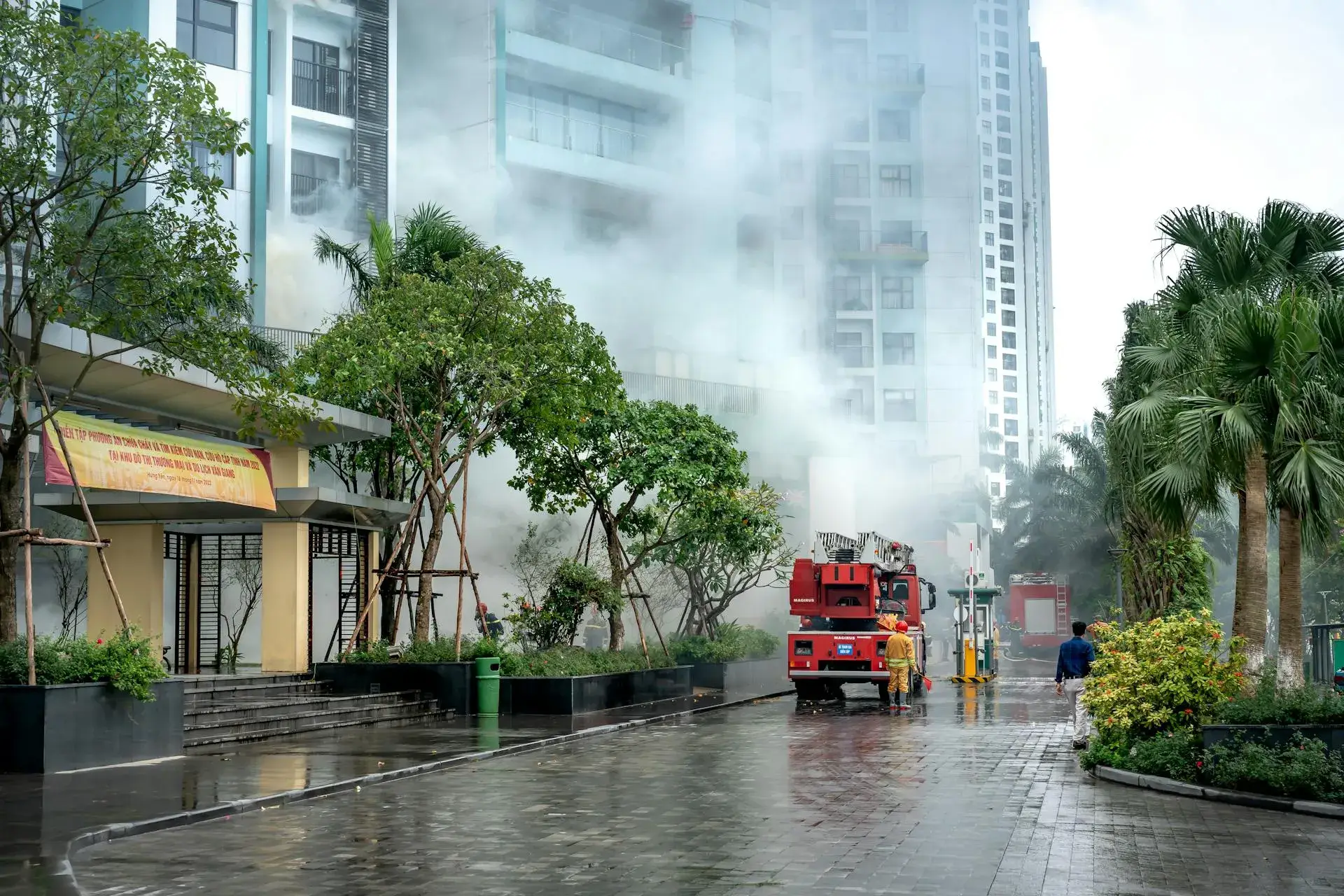
Smoke Damage Restoration in Hoffman Estates, IL
Smoke residue bonds permanently to surfaces within days. Whether from a structure fire, a neighboring property, or a wildfire event, professional treatment within 48 hours prevents permanent damage. Our local team responds within 60 minutes.
What Happens When You Call
A real person answers, not a call center. We assess your situation, ask the right questions, and begin coordinating your response immediately.
Your dedicated restoration team is dispatched from our local base serving Hoffman Estates and the surrounding northwest Cook County communities.
Team arrives with HEPA filtration, soot testing equipment, and professional cleaning systems. Assessment and emergency treatment begin immediately.
Contamination mapped, treatment plan documented, cleaning underway. You know exactly what comes next and how long it will take.
Smoke has entered your home. Maybe it came from a fire in your own kitchen. Maybe it traveled from a neighboring unit or an adjacent property. Maybe it infiltrated during a wildfire smoke event that blanketed all of Cook County. Regardless of the source, the damage mechanism is identical: acidic particulates settle on every surface, penetrate soft materials, and begin chemical reactions that become permanent within days. X Response exists for exactly this moment. When you reach out, your restoration team is mobilized within minutes and on site within the hour. From that point forward, one team manages everything: assessment, cleaning, deodorization, and verification. Call now. Your team is standing by.
Why Hoffman Estates Homes Are Vulnerable to Smoke Damage
Hoffman Estates is a village of approximately 52,530 residents in northwest Cook County, Illinois, located along Interstate 90 about 30 miles from downtown Chicago. The community spans more than 20 square miles of dense suburban development, with residential construction dating from the early 1960s through the 2010s. On June 27 and 28, 2023, smoke from unprecedented Canadian wildfires drifted south into the upper Midwest and blanketed the entire Chicago metropolitan area, including Hoffman Estates and all of Cook County, in a thick haze that pushed the Air Quality Index above 250, a level the EPA classifies as very unhealthy for all populations. On June 27, Chicago recorded the worst air quality of any major city in the world. The City of Chicago issued emergency guidance urging residents to remain indoors, close windows, and run HVAC systems in recirculation mode. Illinois EPA issued unhealthy air alerts for counties across the state. A 2024 University of Illinois study confirmed that pollution levels during that portion of June 2023 exceeded anything measured in the previous five years across every region of the state.
For Hoffman Estates residents, the wildfire smoke event demonstrated a vulnerability that most suburban homeowners never consider: outdoor air quality events that infiltrate homes through building envelope gaps, HVAC fresh-air intakes, and the normal pressure differentials that pull outdoor air indoors. Older homes in the village, particularly those from the 1960s and 1970s, have building envelopes far less air-tight than modern construction. Their windows, door seals, sill plate connections, and HVAC ducting allow significant air exchange with the outdoors even when everything appears closed. During the June 2023 event, fine particulate matter (PM2.5) entered these homes and settled on interior surfaces, embedded in soft furnishings, and accumulated within HVAC ductwork where it remained long after outdoor air quality returned to normal. But wildfire smoke is only one source of smoke damage in Hoffman Estates. Structure fires in the village's dense multi-family housing, kitchen fires in single-family homes, fires at neighboring properties that send smoke across lot lines, and electrical fires that smolder in wall cavities for hours before detection all produce indoor smoke contamination requiring professional restoration.
The June 2023 Canadian Wildfire Smoke Event
The summer of 2023 saw Canada's most intense wildfire season on record, with more than 40 million acres burned across the country. Smoke from these fires traveled thousands of miles south, reaching the Chicago metropolitan area on multiple occasions between June and August. The most severe episode struck on June 27 and 28, when the Air Quality Index in Cook County exceeded 250, a level where the EPA recommends all people avoid outdoor exertion and sensitive groups remain indoors entirely. A NOAA study published in late 2024 confirmed that these early-season wildfires generated record-breaking surface ozone levels across the upper Midwest. For Hoffman Estates residents, the immediate health concern passed within days as winds shifted, but the particulate intrusion into homes persisted. Fine smoke particles that entered through building envelope leaks, HVAC systems, and even momentary door openings settled on surfaces and within duct systems. Homes with older, less air-tight construction experienced greater infiltration than newer, tighter-built properties. Residents who ran window-unit air conditioners, opened windows before realizing the severity, or had HVAC systems with fresh-air intakes found their indoor air quality significantly degraded even after outdoor conditions improved.
Structure Fire Smoke in Multi-Family Buildings
Hoffman Estates contains a significant concentration of apartment complexes, condominium buildings, and townhome clusters built between the late 1960s and 1990s. When a fire occurs in one unit of a multi-family building, smoke travels through shared HVAC systems, vertical plumbing chases, electrical conduit pathways, and any gap in the fire-separation assemblies between units. The April 2025 Atlantic Avenue apartment fire displaced 12 families from a three-story building, but smoke contamination from that event affected units throughout the structure, including those where flames never reached. For residents of undamaged units that received smoke through shared pathways, the damage is no less real: acidic soot on every surface, smoke odor embedded in walls and furnishings, and HVAC systems that continue recirculating contaminated air until professionally cleaned. This type of smoke damage is distinct from direct fire damage and requires different restoration techniques focused on surface chemistry, air quality, and odor elimination rather than structural repair.
Kitchen and Appliance Fires as Smoke Sources
Not all smoke damage in Hoffman Estates results from catastrophic fire events. Kitchen fires that are extinguished before structural damage occurs still produce significant smoke that distributes through the home's HVAC system within minutes. A grease fire contained to the stovetop and suppressed with a fire extinguisher deposits soot on kitchen surfaces and sends smoke through the return air duct to every room in the home. An electrical appliance that overheats, smolders, and is unplugged before flames develop produces acrid synthetic smoke that coats nearby surfaces and migrates through wall cavities. A dryer fire caught early leaves visible soot in the laundry area but distributes invisible smoke particulates through the attached ductwork and living spaces. In each case, the fire itself may cause minimal structural damage, but the smoke contamination requires professional assessment and treatment to prevent permanent surface damage and eliminate odors that household cleaning cannot address.
Neighboring Property Fires and Exterior Smoke Intrusion
In Hoffman Estates' residential neighborhoods, where homes sit on standard suburban lots with typical setbacks, a fire at a neighboring property can send smoke across lot lines and into adjacent homes through windows, doors, HVAC fresh-air intakes, and building envelope gaps. During the suppression phase, when firefighters ventilate the burning structure, large volumes of smoke are pushed out of the fire building and can drift directly into neighboring homes depending on wind direction and proximity. Residents who were home during a neighbor's fire and noticed smoke odor or visible haze inside their property likely experienced particulate intrusion that settled on surfaces and penetrated soft materials. This type of smoke exposure is often dismissed as minor because no fire occurred in the affected home, but the contamination mechanism is identical to interior smoke: acidic particulates settle on surfaces, bond chemically within 48 to 72 hours, and produce persistent odors that household cleaning cannot resolve.
HVAC Systems as Smoke Distribution and Storage Pathways
Forced-air heating and cooling systems, which are standard in virtually every Hoffman Estates residence, serve dual roles in smoke events. During the event itself, the blower motor distributes smoke-laden air from the source area to every room served by the duct system, multiplying the contamination footprint within minutes. After the event, the duct system retains deposited soot and smoke residue on interior duct surfaces, in the filter compartment, on the evaporator coil, and within the blower assembly. Every time the system cycles after the event, it redistributes residual particulates into living spaces, maintaining degraded air quality and redepositing soot on cleaned surfaces. This is why homes that are surface-cleaned after a smoke event but do not receive professional HVAC remediation continue to exhibit smoke odor and surface recontamination for weeks or months. The duct system must be cleaned, the coil decontaminated, the blower assembly addressed, and the filter replaced before the HVAC can be returned to service without redistributing contamination.
These smoke sources interact differently with Hoffman Estates properties, but the damage chemistry is consistent. Whether the particulate came from Canadian wildfires infiltrating through an aging building envelope, from a fire in an adjacent apartment unit traveling through shared ductwork, from a kitchen event distributing through the home's HVAC, or from a neighbor's fire drifting across the lot line, the soot is acidic, it bonds to surfaces within days, and it embeds in soft materials and structural wood where surface cleaning alone cannot reach it. Effective smoke damage restoration means identifying the source and scope of contamination, treating every affected surface before permanent bonding occurs, remediating the HVAC system that both distributed and retained the contamination, and verifying through air quality testing that the space is safe for occupancy.
What Happens to Your Home While You Wait
Within 1 Hour
Smoke particulates settle on horizontal surfaces throughout the affected area. In Hoffman Estates homes with forced-air HVAC, the blower distributes smoke to every room served by the duct system regardless of the smoke's origin point. Fine particles (PM2.5) penetrate soft furnishings at the fiber level. Acidic soot contacts metal surfaces, beginning corrosion reactions on chrome fixtures, electronics, and stainless steel appliances. The contamination zone expands rapidly as the HVAC system cycles, depositing particulates in rooms far from the original smoke source.
1–24 Hours
Soot acids begin etching into metal surfaces, discoloring chrome and brass fixtures, and degrading exposed circuit boards in electronics. Smoke odor penetrates carpet fibers, upholstery fabrics, drapes, and clothing at the molecular level. On painted walls and ceilings, soot particles bond into the paint film and become progressively harder to remove without surface damage. The HVAC system retains deposited soot in ductwork, on the evaporator coil, and within the blower assembly, creating a reservoir of contamination that re-releases particulates each time the system runs.
24–72 Hours
Permanent staining begins on porous surfaces: grout lines, natural stone countertops, unfinished wood, textured ceiling materials, and light-colored fabrics. Acidic residue causes visible pitting and discoloration on metal hardware, plumbing fixtures, and appliance surfaces. Smoke odor molecules penetrate deep into wall cavities, insulation, and structural wood where surface cleaning cannot reach them. What could be professionally cleaned and restored within the first day begins crossing into replacement territory as the chemistry becomes irreversible. This 72-hour threshold is the critical decision point for most smoke-damaged materials.
3–7 Days
Corrosion on electronics progresses past repair thresholds. Circuit boards develop permanent connection failures. HVAC components, including the evaporator coil, blower motor bearings, and control boards, sustain damage that degrades system performance and lifespan even after cleaning. Smoke odor becomes embedded in structural materials at a depth that surface treatments cannot address, requiring thermal fogging, hydroxyl generation, or ozone treatment to neutralize. Restoration scope and cost increase as more items and surfaces move from the cleanable category to the replacement category with each passing day.
One Week and Beyond
Widespread permanent damage to soft goods, electronics, HVAC components, and finish surfaces. Odor is embedded in structural wood, concrete, and insulation at depths that require aggressive treatment protocols. Contents that could have been restored in the first 48 hours are now total losses for insurance purposes. The cumulative cost difference between prompt treatment and delayed treatment can be thousands of dollars in additional material replacement and extended project timelines. For wildfire smoke intrusion events where treatment was skipped entirely, chronic odor issues and surface degradation continue for months as residual contamination slowly reacts with interior materials.
The critical window for smoke damage restoration is 48 to 72 hours. After that threshold, cleaning becomes replacement and restoration becomes reconstruction. Contact X Response now. Our Hoffman Estates team responds within 60 minutes.
How We Restore Smoke-Damaged Hoffman Estates Homes
From the moment our team arrives, every step is documented, measured, and verified. Here is exactly what the smoke damage restoration process involves for Hoffman Estates properties.
Contamination Assessment and Source Identification
Our team arrives to identify the smoke source, map the contamination extent, and determine the soot type present on surfaces. Different combustion sources produce different residue types requiring different cleaning chemistry: protein soot from kitchen events is nearly invisible but aggressively corrosive; synthetic soot from plastics and modern materials is thick and adhesive; wildfire smoke deposits fine particulate that penetrates more deeply than structural fire soot. We test surfaces in each zone of the home, inspect the HVAC system for contamination, assess soft goods and contents for treatability, and document everything with photos and written findings. This assessment drives the treatment plan and provides the foundation for your insurance documentation if a claim is involved.
HEPA Filtration and Air Quality Stabilization
Before detailed cleaning begins, we deploy HEPA-filtered air scrubbers throughout the affected space to capture airborne particulates and prevent continued settlement on surfaces during the restoration process. In Hoffman Estates homes where the HVAC system distributed smoke throughout the structure, we shut down the forced-air system and establish independent air circulation through the scrubbers to prevent the duct system from continuing to redistribute contamination. Negative air pressure may be established in the most heavily contaminated areas to prevent migration to less-affected spaces. This stabilization step ensures that our cleaning efforts are not undermined by ongoing particulate fallout from airborne residue or HVAC redistribution.
Surface Cleaning and Soot Removal
Systematic cleaning proceeds from ceilings downward through walls, fixtures, and finally floors, ensuring that dislodged particulate falls to surfaces not yet cleaned rather than recontaminating finished areas. Cleaning chemistry is matched to the soot type and surface material: dry-chemical sponges for delicate surfaces and initial removal passes, alkaline cleaners for heavy synthetic soot on non-porous surfaces, enzyme-based solutions for protein soot, and specialty products for electronics and sensitive equipment. Every surface in the contamination zone is addressed, including areas inside cabinets and closets where doors were open during the event, the interior surfaces of appliances, and the underside of shelving where soot settles unseen. For Hoffman Estates multi-family units where smoke entered from an adjacent space, we clean the full contamination path from entry point through the unit's HVAC distribution to every affected room.
HVAC System Remediation
The forced-air system that distributed smoke through the home must be fully remediated before it can return to service. This means professional duct cleaning of all supply and return lines, decontamination of the evaporator coil where soot accumulates on the wet surface, cleaning of the blower assembly and motor housing, and replacement of all filters. In Hoffman Estates homes with older systems where ductwork is fiberglass-lined or flex-duct, soot may have penetrated the duct material itself, requiring section replacement rather than surface cleaning. The system is sealed during the restoration process and only returned to service after cleaning is complete and verified. Running a contaminated system, even with a new filter, redistributes deposited soot from duct surfaces back into living spaces and defeats the purpose of surface cleaning.
Deodorization and Verification
Smoke odor molecules penetrate deeper than visible soot, embedding in structural wood, drywall, insulation, and concrete at a molecular level that surface cleaning cannot address. We deploy thermal fogging that generates a deodorizing vapor matching the penetration characteristics of smoke, reaching concealed spaces the smoke reached during the event. For severe contamination or persistent odor after initial treatment, hydroxyl generators or controlled ozone treatment neutralize remaining odor molecules within enclosed spaces. Post-treatment air quality testing confirms particulate levels have returned to acceptable thresholds and odor has been eliminated rather than masked. We do not consider the job complete until instrumented testing confirms the result, not just a subjective sniff test.
The X Response Difference
When you contact X Response for smoke damage in Hoffman Estates, you get a team that understands the chemistry, respects the timeline, and treats the full contamination footprint rather than just the visible surfaces. One team, one standard, from assessment through verified completion.
Insurance Claim Guidance for Hoffman Estates Homeowners
Smoke damage insurance claims in Illinois depend on the source of the smoke and the coverage type. Smoke damage from a fire within your home or building is covered under standard fire coverage in homeowner's, renter's, and condo policies. Smoke damage from a neighbor's fire that infiltrated your property is typically covered under the same fire peril, as the smoke is a direct consequence of a covered event. Smoke intrusion from wildfire events is more complex. If the wildfire is declared a covered disaster and your policy covers smoke as a peril, the infiltration damage is likely covered, but many carriers require documentation proving the damage occurred during the specific event and is not pre-existing or the result of normal wear. For Hoffman Estates condo and apartment residents who experience smoke damage from another unit's fire, your individual policy covers your unit's contents and interior surfaces, while the building's master policy covers common areas and shared structural elements.
How X Response Helps
- Document all smoke contamination with professional testing, photos, and a detailed scope identifying the soot type and affected areas
- Identify and document the smoke source clearly, as interior fire, neighboring property fire, and wildfire infiltration each trigger different coverage provisions
- Provide before-and-after air quality testing results that demonstrate measurable contamination and successful remediation
- Inventory affected contents with photos, condition assessments, and restoration-versus-replacement recommendations for efficient claims processing
- Align restoration scope with standard insurance coverage categories and document the timeline to demonstrate that treatment was prompt and reasonable
X Response does not file claims on your behalf, adjust claims, or make coverage determinations. We provide documentation and guidance to help you make informed decisions about your property and your policy. Coverage decisions are made solely by your insurance carrier.
Certified Restoration Specialists Serving Hoffman Estates
When you contact X Response for smoke damage in Hoffman Estates, your restoration team is drawn from certified professionals who work across northwest Cook County and understand the specific challenges of this community. They know the multi-family building construction where smoke travels between units through shared systems, the older single-family homes where aging building envelopes allow exterior smoke to infiltrate readily, and the HVAC configurations across different construction eras that determine how smoke distributes through a structure. They have worked through multi-unit smoke events in the village's apartment complexes, kitchen-fire distributions in single-family homes, cross-property smoke intrusion from neighbor fires, and the aftermath of the June 2023 wildfire smoke event that infiltrated homes throughout the area. This is not a general cleaning crew. It is a team trained in the chemistry of smoke damage, the time sensitivity of treatment, and the technical requirements of professional restoration.
Every technician on your team holds current IICRC certification in smoke and fire damage restoration and carries the appropriate Illinois state licensing for the work being performed. Equipment includes HEPA-filtered air scrubbers rated for particulate capture down to 0.3 microns, professional-grade soot cleaning chemistry matched to different residue types, thermal fogging and hydroxyl generation systems for deep-penetration deodorization, and instrumented air quality testing equipment for post-treatment verification. When your team arrives, they bring the tools and knowledge to address the contamination scientifically rather than cosmetically.
In Hoffman Estates, X Response works with Scene Cleaners, an independent local restoration partner serving Cook County.
Smoke Damage Restoration FAQ for Hoffman Estates Homeowners
Other Emergency Services in Hoffman Estates
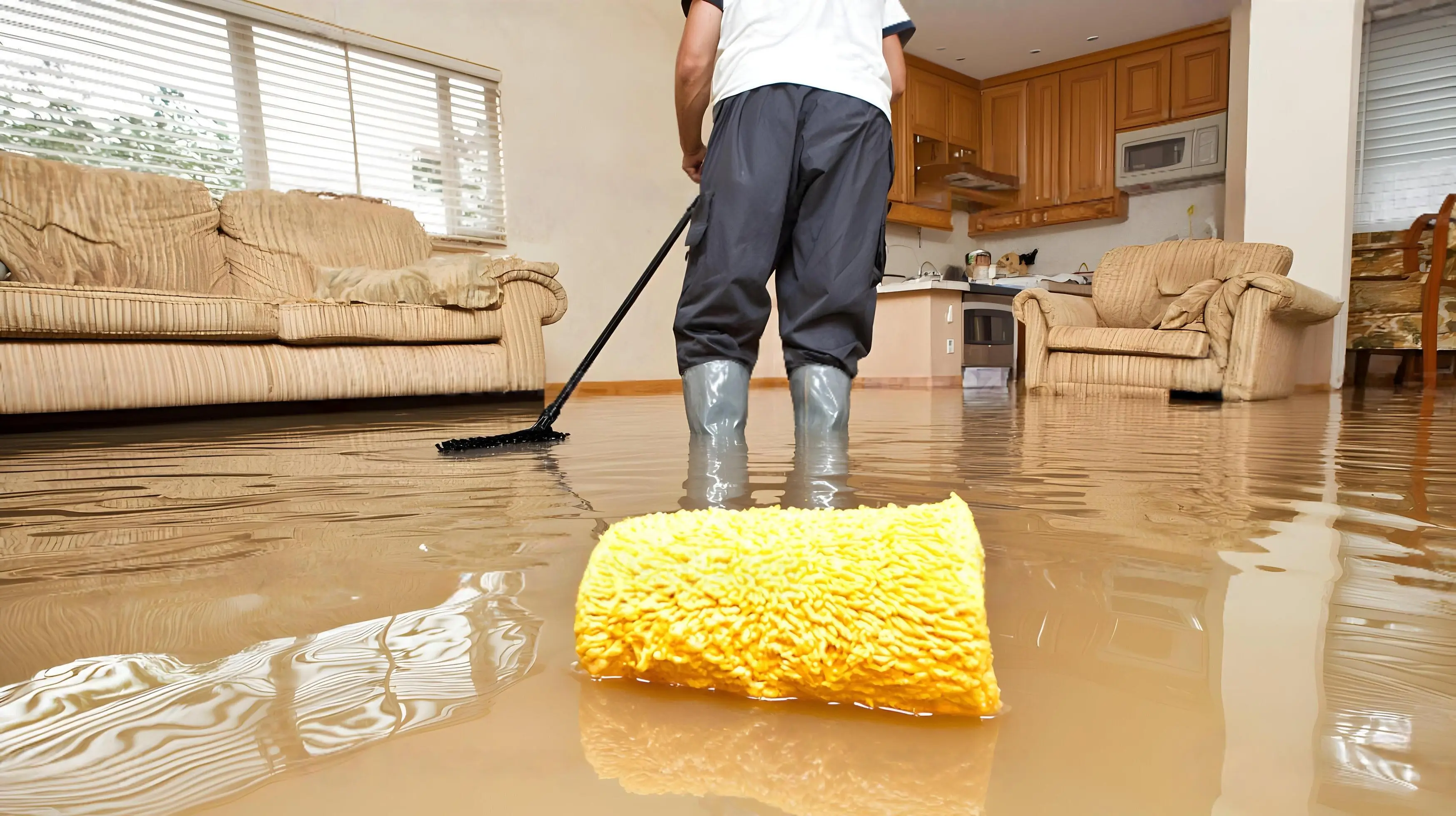
Water Damage Restoration
Burst pipes, storm flooding, standing water. We extract, dry, and restore before mold sets in.
Learn more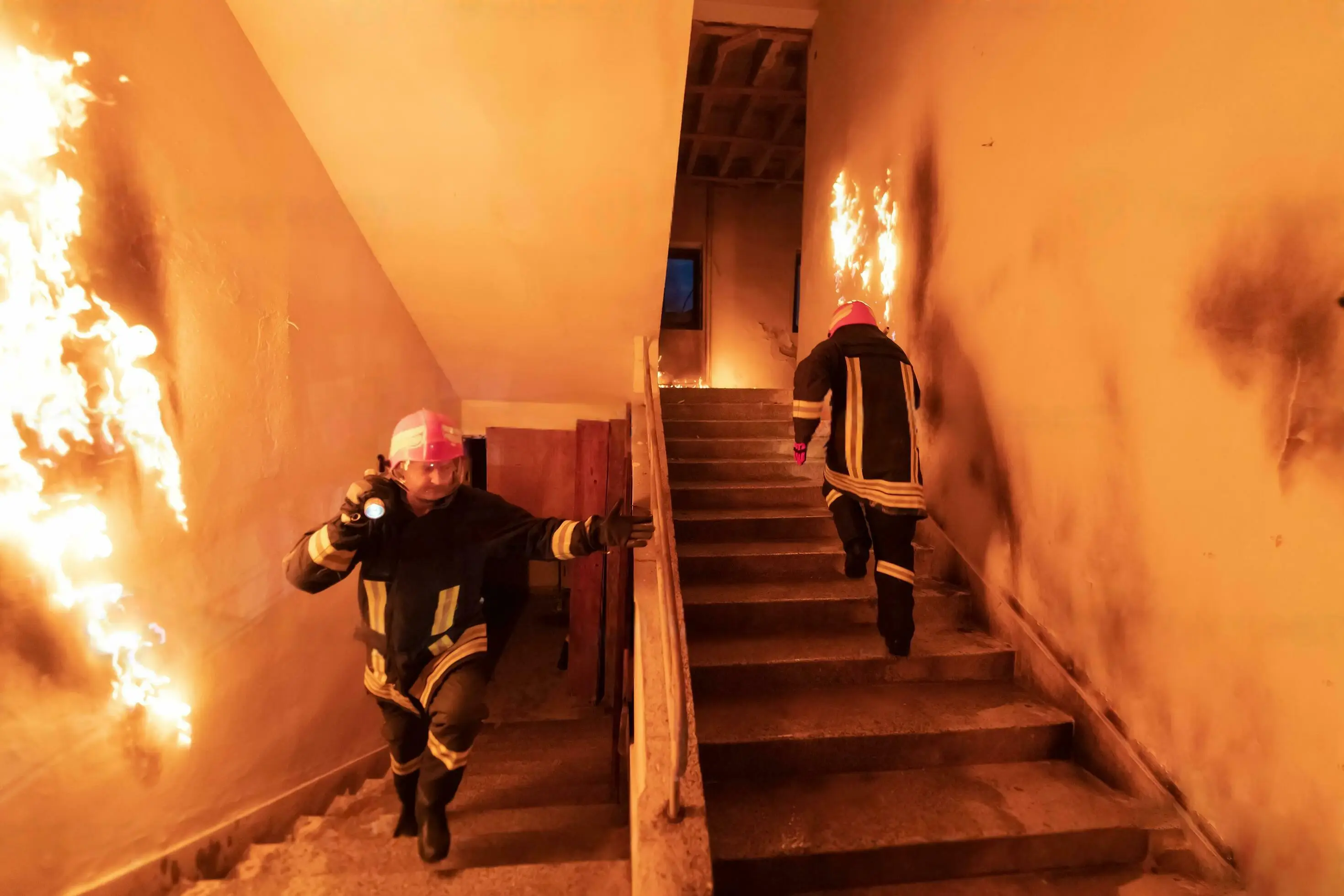
Fire Damage Restoration
Structural damage, soot, debris. We stabilize, clean, and rebuild what fire destroyed.
Learn more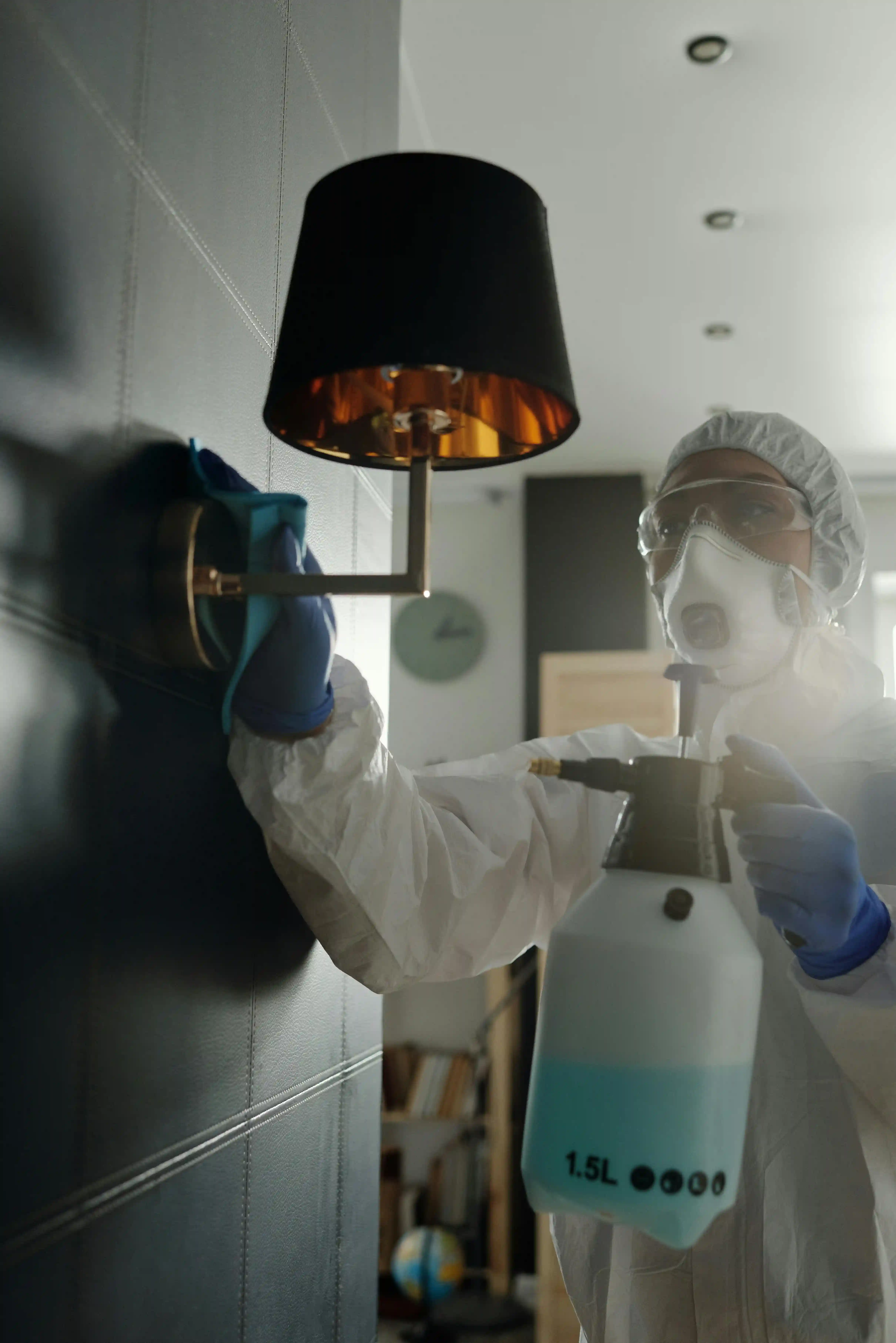
Mold Remediation
Testing, containment, removal, prevention. We find the source, eliminate the growth, and stop it from returning.
Learn more
Sewage Cleanup
Sewer backups, contaminated water, biohazard. We extract, sanitize, and restore safely.
Learn moreNearby Service Areas
Also serving nearby: