
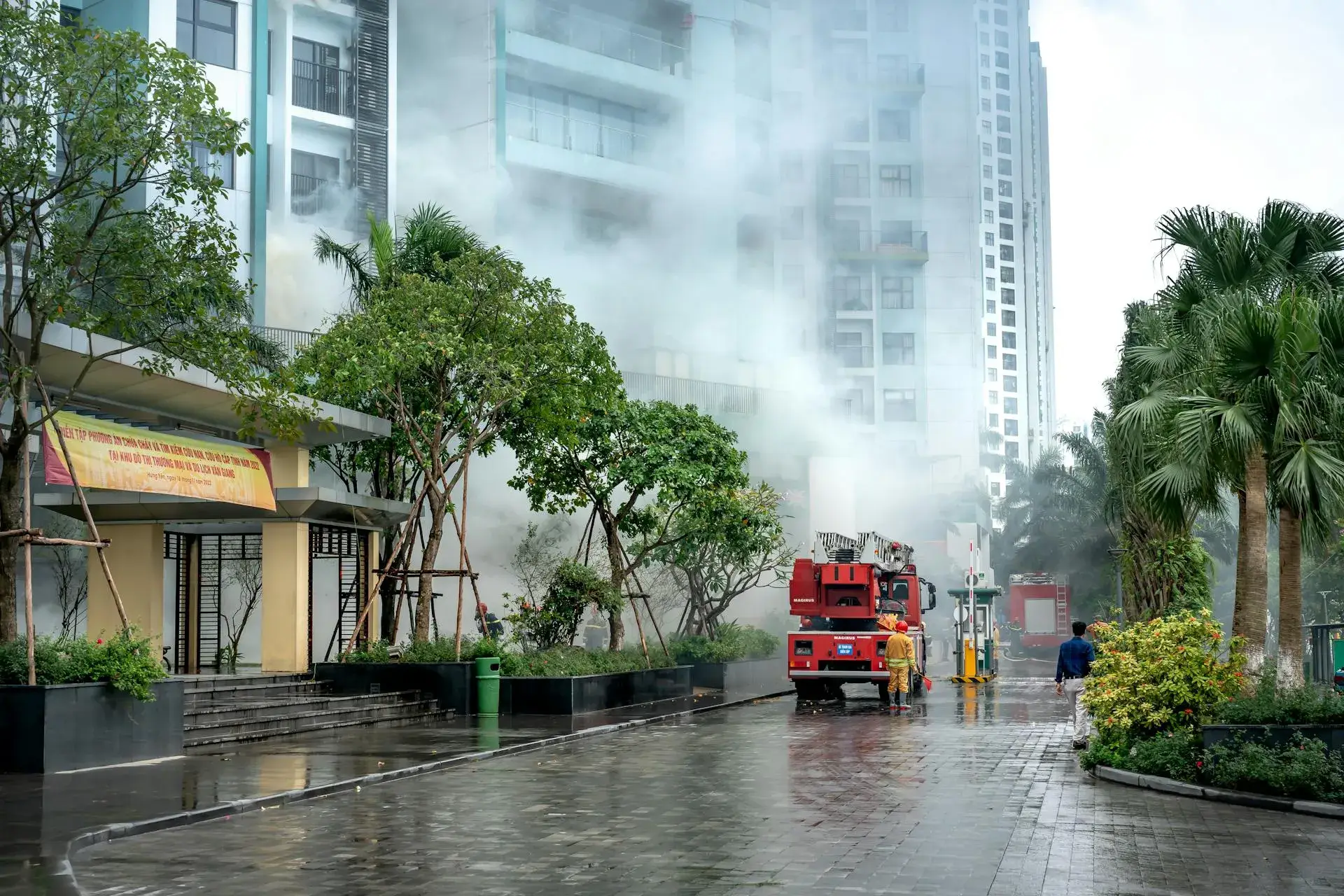
Smoke Damage Restoration in Elk Grove Village, IL
Smoke residue is acidic and corrosive. Every hour it remains on surfaces, it bonds more deeply into materials and becomes harder to remove. Our local team responds to Elk Grove Village emergencies within 60 minutes.
What Happens When You Call
A real person answers, not a call center. We assess your situation, ask the right questions about the smoke source and the extent of visible residue, and begin coordinating your response immediately.
Your dedicated restoration team is dispatched from our local base serving Elk Grove Village and the surrounding northwest suburban communities in Cook and DuPage Counties.
Team arrives with HEPA filtration, soot removal equipment, and air quality testing instruments. Assessment and emergency mitigation begin immediately.
Contamination mapped, immediate threats addressed, restoration plan documented. You know exactly what comes next.
Smoke damage does not require an active fire in your home. Whether it originates from a kitchen incident, a neighboring property fire, an HVAC malfunction that circulated combustion products, or a regional air quality event that infiltrated your building envelope, smoke residue on surfaces and embedded in materials is actively damaging your property right now. X Response exists for exactly this moment. When you reach out, your restoration team is mobilized within minutes and on site within the hour. From that point forward, one team manages everything: assessment, cleaning, deodorization, and documentation. Call now. Your team is standing by.
Why Elk Grove Village Homes Are Vulnerable to Smoke Damage
Elk Grove Village is a community of 32,812 residents occupying 11.6 square miles in Cook and DuPage Counties, approximately 22 miles northwest of Chicago. Its unique dual identity as both a residential community of mid-century homes and the home of North America's largest contiguous business park (over 62 million square feet, 5,600+ businesses) creates a smoke damage environment unlike any other Chicago suburb. On the residential side, the 1957-1973 Centex housing stock presents aging HVAC systems, original ductwork runs, and building envelopes that admit exterior smoke infiltration more readily than modern tight-construction homes. On the commercial side, the industrial park's 400+ manufacturers, 22 data centers, and thousands of warehouse operations generate internal smoke sources from manufacturing processes, electrical failures, and equipment malfunctions that can contaminate enormous volumes of enclosed space.
On June 27, 2023, Chicago recorded the worst air quality in the world as wildfire smoke from Quebec, Canada, pushed the Air Quality Index into the purple zone (very unhealthy, AQI exceeding 200) across the entire metropolitan area. The Journal and Topics reported that Elk Grove Village received a strong whiff of Canadian wildfires with visible haze appearing as early as May 17, 2023, weeks before the worst of the event. The smoke persisted at unhealthy levels for multiple days, infiltrating buildings through fresh-air intakes, open windows, gaps in older building envelopes, and HVAC systems drawing from unconditioned spaces. For Elk Grove Village specifically, the event coincided with the village's location directly adjacent to O'Hare International Airport, where the massive airfield and surrounding open space provided no natural windbreak or filtration for smoke-laden air flowing from the north and northwest. Properties that had fresh-air dampers open, ventilation systems running, or the age-related envelope gaps common in 1960s construction absorbed smoke particulates into their ductwork, furnishings, and wall cavities during the extended event.
The June 2023 Canadian Wildfire Smoke Event
The 2023 Canadian wildfire season was the most intense on record, with over 40 million acres burned across multiple provinces. During late June, Quebec wildfires produced a massive smoke plume that traveled south into the Great Lakes region and settled over the Chicago metropolitan area. On June 27, 2023, Chicago, Milwaukee, and Detroit recorded some of the worst air quality in the world, with AQI readings exceeding 200 (purple/very unhealthy zone). Elk Grove Village experienced visible haze beginning in mid-May that intensified through June. For residential properties, the extended multi-day exposure allowed fine particulate matter (PM2.5) to infiltrate building envelopes and deposit on interior surfaces, in HVAC ductwork, and on furnishings. Properties with window air conditioning units, older homes without sealed ductwork, and buildings with fresh-air ventilation systems all absorbed smoke at varying concentrations. The residue from wildfire smoke differs from structural fire soot: it is finer, more uniformly distributed, and penetrates deeper into fabrics and porous materials, but it is less immediately corrosive than the acidic soot from synthetic-material fires.
O'Hare Proximity and Atmospheric Exposure
Elk Grove Village's location immediately adjacent to O'Hare International Airport places the community in a unique atmospheric environment. The airport complex, one of the busiest in the world, encompasses thousands of acres of open runway, taxiway, and apron space with no tree canopy, no buildings, and no natural features to filter or deflect airborne particulates. When regional smoke events occur, whether from Canadian wildfires, agricultural burning downstate, or industrial incidents in the corridor, the open expanse of O'Hare provides an unobstructed path for smoke-laden air to reach the village's residential neighborhoods on the western side. Prevailing northwest winds carry particulates directly across the airport and into the community. For properties on the eastern edge of the residential area adjacent to the industrial park and airport, this exposure is compounded by the particulate load from airport operations themselves: jet fuel combustion, de-icing chemical residue, and rubber particulates from landing operations that deposit on exterior surfaces year-round.
1957-1973 HVAC Systems and Smoke Infiltration
The Centex-era homes that form Elk Grove Village's residential core were built with the HVAC technology of their era: forced-air furnaces with sheet-metal ductwork runs through unconditioned basement and attic spaces, return air systems drawing from floor-level registers, and building envelopes with minimal air-sealing compared to modern energy-code construction. These systems are efficient at distributing smoke throughout a home once any amount enters the system. A furnace cycling in a basement where smoke has infiltrated through foundation gaps pulls contaminated air through the return system and distributes it to every room on every level through the supply ducts. The original ductwork joints, many sealed only with duct tape that has long since deteriorated, leak conditioned air into wall cavities and ceiling spaces while simultaneously drawing unconditioned (and potentially smoke-contaminated) air from those same cavities into the airstream. Homes that have never had their original ductwork replaced, sealed, or cleaned carry decades of accumulated particulate in their duct interiors that regional smoke events add to incrementally.
Industrial Park Smoke Sources: Manufacturing and Electrical
The Elk Grove Village industrial park generates smoke events from internal sources unrelated to exterior air quality. Manufacturing processes involving plastics, chemicals, metalworking fluids, and food processing can produce smoke and airborne particulates when equipment malfunctions or processes exceed their thermal parameters. Electrical fires in commercial and industrial buildings often smolder for extended periods before detection, distributing fine particulates throughout the structure's HVAC system and depositing corrosive residue on electronic equipment, inventory, and building surfaces. A smoldering electrical event in a warehouse ceiling plenum can contaminate an entire multi-tenant building through shared ductwork before visible smoke or an alarm triggers evacuation. For the industrial park's 22 data centers, even trace amounts of airborne particulate contamination pose a threat to electronic components: conductive particles landing on circuit boards can cause short circuits, while corrosive residues accelerate contact degradation in high-density server environments.
Smoke Migration in Multi-Tenant Commercial Buildings
The Elk Grove Village industrial park contains thousands of multi-tenant buildings where individual lease spaces share structural elements, ceiling plenums, and sometimes HVAC distribution systems. A smoke event in one tenant's space, whether from a small fire, a cooking operation, a manufacturing process, or an electrical malfunction, can migrate through the building to adjacent tenants through multiple pathways. Shared ceiling plenums above drop-tile ceilings allow smoke to travel horizontally between tenant spaces without any visible penetration. HVAC systems serving multiple tenants distribute smoke from one space throughout the building. Utility penetrations, unsealed pipe chases, and gaps at demising walls provide additional migration paths. The resulting contamination pattern often affects tenants who have no knowledge of the source and discover the problem only through odor, discoloration on surfaces, or health symptoms reported by occupants. Restoration in these environments requires identifying the migration path, cleaning all affected spaces regardless of the tenant of origin, and sealing the pathways to prevent recurrence.
Smoke damage in Elk Grove Village operates on multiple scales simultaneously. Regional events like the June 2023 Canadian wildfire smoke affect the entire community at once, depositing fine particulates through building envelopes and HVAC systems across thousands of properties. Local residential smoke events from kitchen fires, furnace malfunctions, and neighboring-property fires affect individual homes with more concentrated residue. And industrial smoke events in North America's largest business park can contaminate massive commercial spaces with corrosive particulates that threaten equipment, inventory, and occupant health. Each scenario demands different cleaning chemistry, different equipment, and different urgency, but all share the same fundamental principle: the longer smoke residue remains on surfaces, the more permanently it bonds and the more difficult restoration becomes.
What Happens to Your Home While You Wait
Within 1 Hour
Smoke particles settle on horizontal surfaces and begin adhering to walls, ceilings, and furnishings. The acidic compounds in soot start reacting with metal surfaces, causing tarnishing on fixtures, appliance faces, and decorative hardware. Fine particulates from wildfire smoke penetrate fabric fibers in upholstery, curtains, and carpet. In commercial spaces, smoke particulates begin settling on electronic equipment, inventory packaging, and production surfaces.
1–24 Hours
Soot residue begins permanently staining porous surfaces including grout, natural stone countertops, and unfinished wood. Smoke odor molecules absorb into soft materials: fabrics, carpet padding, mattresses, and clothing in open closets. Metal surfaces develop visible oxidation spots where acidic residue has begun corroding protective finishes. In Elk Grove Village's Centex-era homes, smoke drawn through the HVAC system deposits residue throughout the ductwork interior where it will be re-distributed every time the system cycles.
24–72 Hours
Corrosion on chrome, brass, and aluminum surfaces progresses past the point of simple cleaning and into permanent damage requiring refinishing or replacement. Smoke odor embeds deep into wall cavity insulation, making it nearly impossible to eliminate without removing the affected material. Yellowing appears on white painted surfaces, plastics, and appliance exteriors where soot acids have reacted with the finish. Electronics exposed to conductive particulates may begin experiencing intermittent failures as corrosion develops on circuit contacts.
One Week and Beyond
Materials that could have been restored with professional cleaning in the first 48 hours now require replacement. Smoke odor has permeated the entire HVAC system, wall cavities, and attic insulation, requiring comprehensive deodorization treatment rather than surface cleaning. Corrosion damage on metal surfaces, electronics, and mechanical components has progressed to functional failure. In commercial spaces, inventory contaminated with smoke particulates that sat too long may be rejected by quality standards even if visually clean. The restoration scope and cost have expanded significantly compared to the same damage addressed within the first day.
Smoke residue bonds more permanently to surfaces with every passing hour. Materials that can be cleaned today will need replacement tomorrow. Contact X Response now. Our Elk Grove Village team responds within 60 minutes.
How We Restore Smoke-Damaged Elk Grove Village Homes
Smoke damage restoration requires identifying the smoke source, mapping the contamination, selecting the correct cleaning chemistry, and verifying elimination. Here is exactly what the process involves for Elk Grove Village properties.
Air Quality Assessment and Contamination Mapping
Our team arrives with particulate monitoring equipment and conducts a systematic assessment of the affected property. We identify the smoke source type (protein from cooking, synthetic from plastics and electronics, natural from wood or wildfire), which determines the cleaning approach for each affected surface. We map the contamination pattern through the property: which rooms have visible residue, where the HVAC system distributed particulates, which surfaces show discoloration, and where odor is concentrated versus uniformly distributed. For Elk Grove Village homes with 1960s ductwork, we inspect the duct interiors for accumulated residue that predates the current event and may be contributing to persistent odor. Everything is documented with photos and air quality readings.
HEPA Filtration and Containment
Before cleaning begins, we establish HEPA air filtration throughout the affected space. Air scrubbers capture airborne particulates that become resuspended during the cleaning process, preventing cross-contamination to unaffected areas. In multi-room residential properties, we may isolate the most heavily affected areas with containment barriers to prevent migration during cleaning. In multi-tenant commercial buildings in the industrial park, containment prevents our cleaning activities from pushing particulates into adjacent tenant spaces. The HEPA units run continuously throughout the project and for a period after cleaning to capture any residual airborne matter and verify air quality improvement through measurable particle-count reduction.
Surface Cleaning and Soot Removal
Cleaning techniques are matched to both the surface material and the smoke residue type. Dry sponge methods remove loose soot from walls and ceilings without smearing. Wet cleaning with appropriate chemistry addresses protein residues and bonded particulates on hard surfaces. Solvent-based approaches handle the oily residue from synthetic material smoke. Media blasting may be required for masonry, brick, and concrete surfaces in commercial structures. Every surface in the affected area is addressed: walls, ceilings, trim, light fixtures, cabinet interiors, appliance surfaces, and window systems. We clean in a systematic pattern from top to bottom, from the least affected areas toward the most affected, to prevent recontamination of cleaned surfaces.
HVAC Duct Cleaning and Decontamination
The HVAC system is almost always a major vector for smoke distribution. In Elk Grove Village homes where the original 1960s ductwork was never replaced, decades of accumulated dust mixed with smoke residue creates persistent odor that resurfaces every time the system cycles. Our team cleans the full duct system: supply runs, return runs, the air handler cabinet, the blower assembly, and the evaporator coil. We replace the filter and treat duct interiors with an antimicrobial coating that encapsulates any residual particulate matter that cannot be physically removed from the sheet metal surfaces. For commercial systems, the cleaning scope scales to match the HVAC complexity: rooftop units, VAV boxes, terminal units, and the distribution network throughout the occupied space.
Odor Elimination and Verification
After surface cleaning and duct decontamination, residual smoke odor often remains in porous materials that cannot be surface-cleaned: wall cavity insulation, carpet padding beneath cleaned carpet, upholstered furniture cores, and attic insulation. We deploy thermal fogging, ozone treatment, or hydroxyl generators depending on the property type and occupancy status. Thermal fog penetrates the same pathways smoke originally used to enter concealed spaces. Ozone treatment (with the property vacated) oxidizes odor molecules throughout the structure. Hydroxyl generators provide a safe, occupied-space option for extended treatment. After deodorization, we conduct air quality testing to verify particulate levels have returned to acceptable ranges and odor has been eliminated rather than merely masked.
The X Response Difference
Smoke damage restoration is not general cleaning. It requires identifying the residue type, understanding how it migrated through the property, applying the correct removal technique for each surface, decontaminating the HVAC system, and eliminating embedded odor from concealed spaces. X Response handles all of it as one coordinated project.
Insurance Claim Guidance for Elk Grove Village Homeowners
Smoke damage insurance coverage depends on the source of the smoke and the policy language. Smoke damage from a fire on your own property is covered as part of the fire claim. Smoke damage from a neighboring property fire is typically covered under your own policy as well, since smoke is a named peril. However, smoke damage from gradual sources, such as a malfunctioning furnace that distributed soot over months, or from external environmental events like the 2023 wildfire smoke, may fall into gray areas depending on your carrier's interpretation of sudden versus gradual damage and the specific exclusions in your policy. For commercial properties in the Elk Grove Village industrial park, smoke contamination from a neighboring tenant's operations raises questions about the responsible party, the building owner's maintenance obligations, and whether the tenant's own policy or the building's master policy responds.
How X Response Helps
- Document the smoke source and timeline clearly, as sudden events (fire, single-incident equipment failure) receive different coverage treatment than gradual contamination
- Photograph all affected surfaces before any cleaning begins, showing discoloration, residue patterns, and the extent of migration through the property
- Inventory affected personal property and contents, noting items that require professional cleaning versus replacement
- Document air quality readings before and after restoration to demonstrate the contamination level and verify successful remediation
- Maintain the HVAC filter removed during the event as physical evidence of the particulate load the system processed
X Response does not file claims on your behalf, adjust claims, or make coverage determinations. We provide documentation and guidance to help you make informed decisions about your property and your policy. Coverage decisions are made solely by your insurance carrier.
Certified Restoration Specialists Serving Elk Grove Village
When you contact X Response for smoke damage in Elk Grove Village, your restoration team understands both the residential and commercial smoke damage environments this community presents. They know how the 1957-1973 Centex ductwork distributes smoke throughout a home, how the flat terrain and O'Hare proximity affect regional smoke infiltration, how multi-tenant industrial buildings allow smoke migration between lease spaces, and how data center environments require specialized protocols for particulate removal around sensitive electronic equipment. They have worked through regional wildfire smoke events, residential kitchen and furnace incidents, and large-scale commercial smoke contamination in warehouse and manufacturing spaces.
Every technician on your team holds current IICRC certification in fire and smoke restoration and carries the appropriate Illinois state licensing for the work being performed. Equipment includes industrial HEPA air scrubbers, particulate monitoring instruments, thermal fogging systems, ozone generators, hydroxyl generators, and the full range of specialized cleaning chemistry for protein, synthetic, and natural smoke residue types. When your team arrives at an Elk Grove Village property, they bring the diagnostic capability to identify the residue type and the cleaning capacity to address it correctly.
In Elk Grove Village, X Response works with Scene Cleaners, an independent local restoration partner serving Cook County.
Smoke Damage Restoration FAQ for Elk Grove Village Homeowners
Other Emergency Services in Elk Grove Village
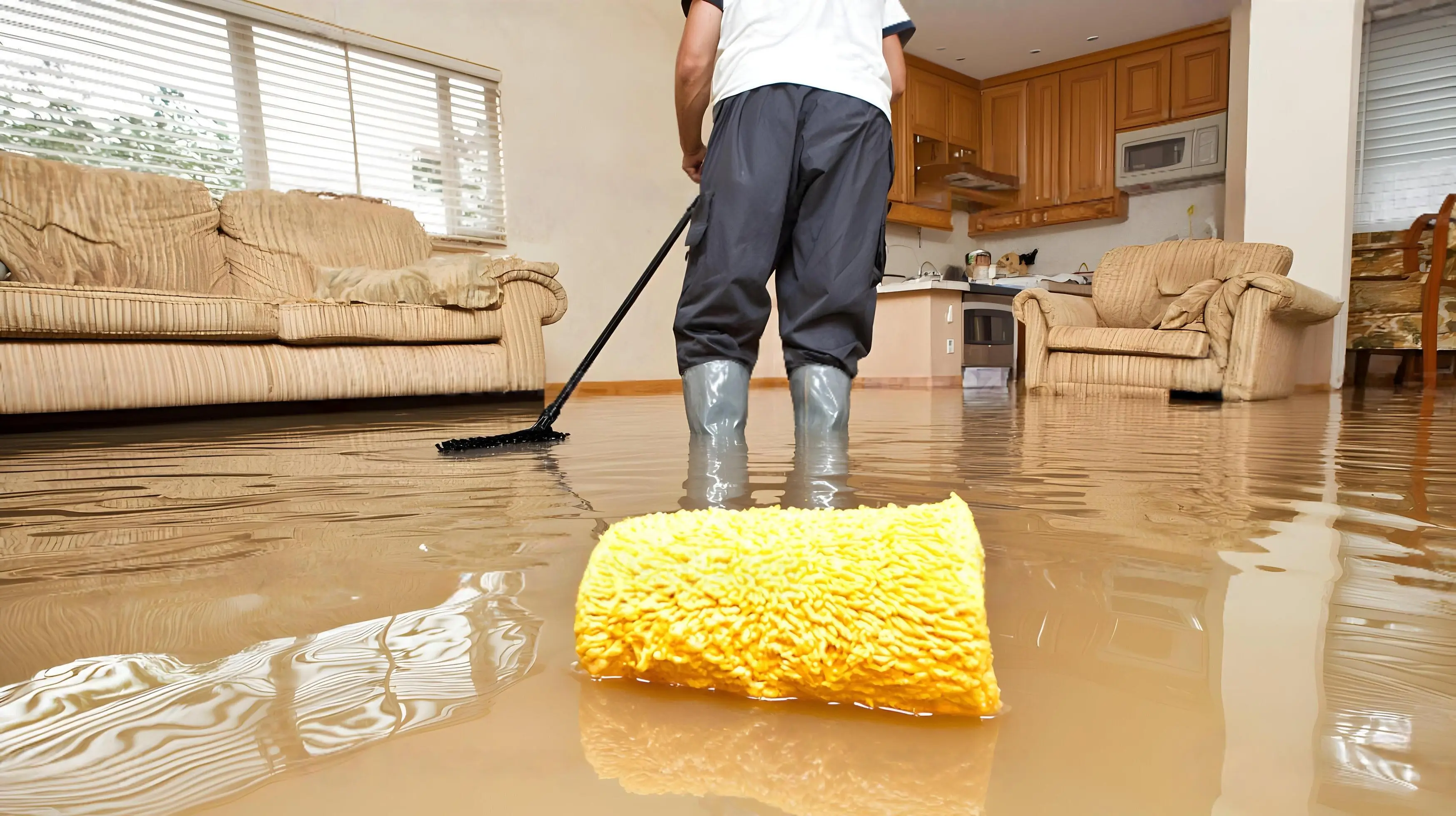
Water Damage Restoration
Burst pipes, storm flooding, standing water. We extract, dry, and restore before mold sets in.
Learn more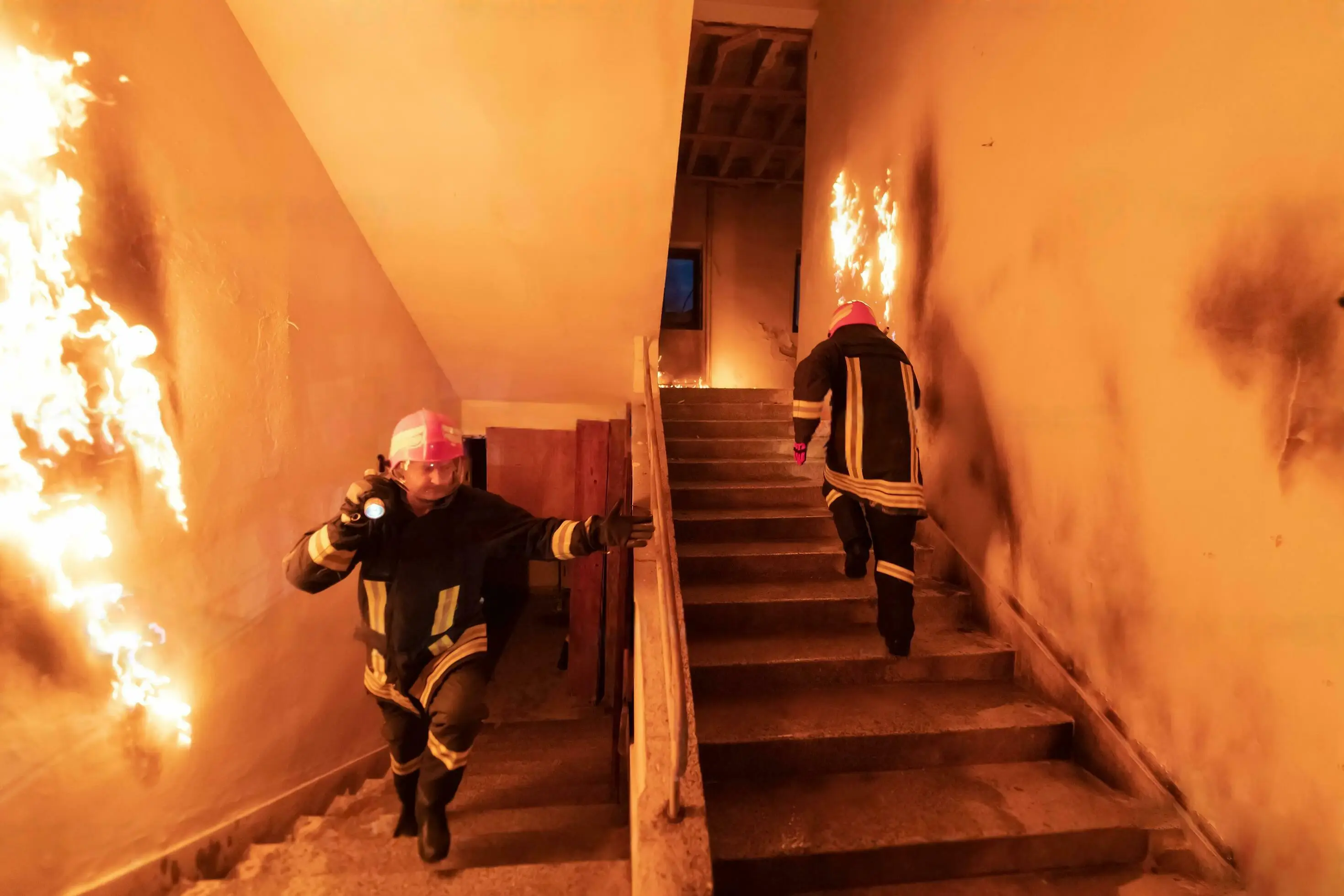
Fire Damage Restoration
Structural damage, soot, debris. We stabilize, clean, and rebuild what fire destroyed.
Learn more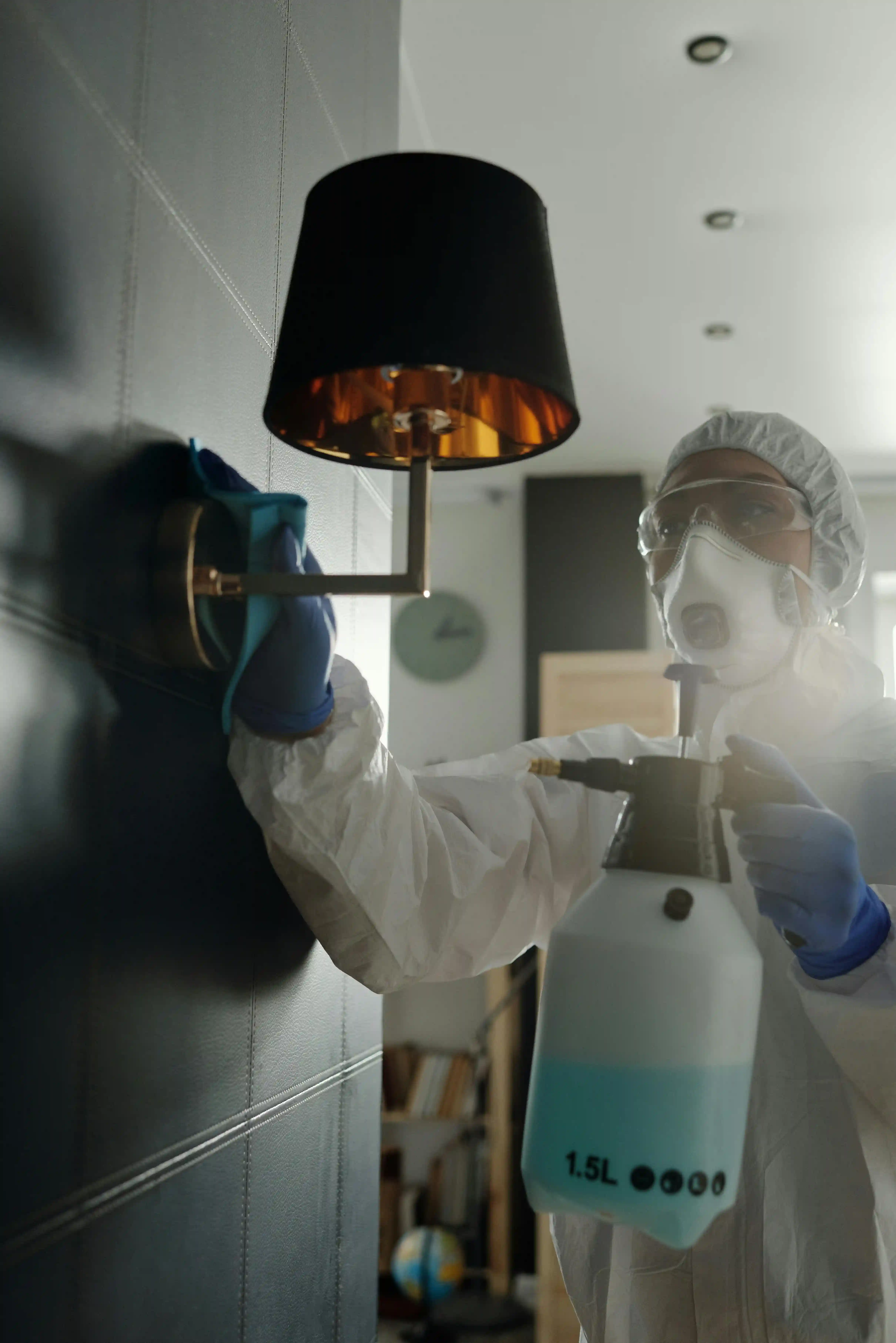
Mold Remediation
Testing, containment, removal, prevention. We find the source, eliminate the growth, and stop it from returning.
Learn more
Sewage Cleanup
Sewer backups, contaminated water, biohazard. We extract, sanitize, and restore safely.
Learn moreNearby Service Areas
Also serving nearby: