
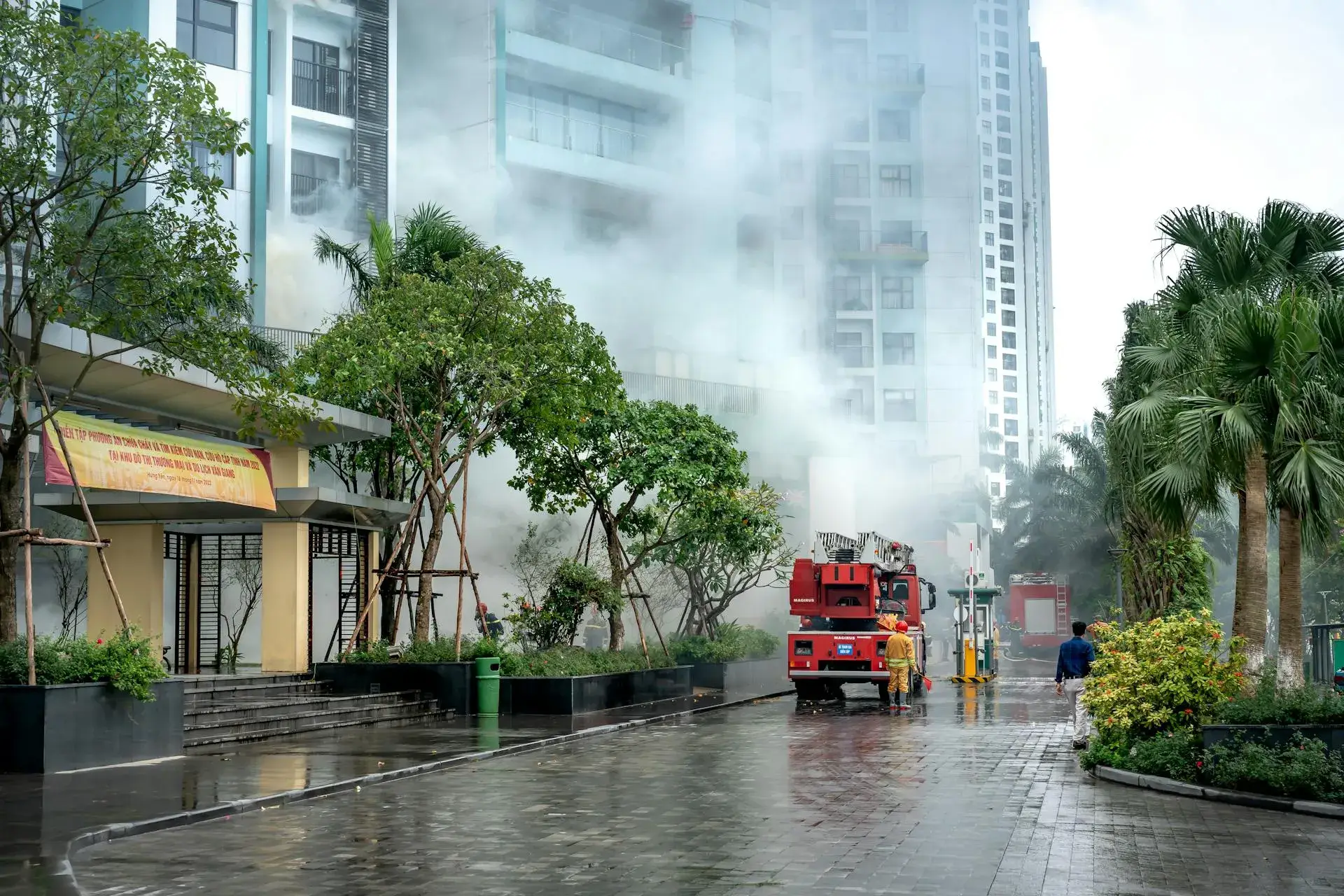
Smoke Damage Restoration in Friendswood, TX
Acidic smoke residues penetrate porous drywall, custom cabinetry, and HVAC ductwork within hours. Our certified odor removal specialists respond in 60 minutes.
What Happens When You Call
Your call initiates immediate dispatch of our certified smoke and odor restoration team in the Friendswood area.
Technicians perform detailed soot mapping, identifying residue types (wet smoke, dry smoke, protein smoke, or fuel oil soot).
Industrial HEPA air scrubbers and carbon filtration units are deployed to capture airborne particulate and stabilize air quality.
We execute precision chemical cleaning, thermal fogging, and HVAC decontamination to permanently eliminate stubborn odors.
Smoke from a structure fire, electrical burnout, or cooking disaster does not stop at the room of origin. Microscopic soot particles circulate through ventilation ducts, embedding deeply into building materials and furnishings. X Response delivers molecular-level smoke remediation and odor removal throughout Friendswood. From chemical sponge cleaning to thermal fogging and duct decontamination, we restore your indoor air quality and eliminate smoke odor permanently. Contact our Friendswood team 24/7.
Why Friendswood Homes Are Vulnerable to Smoke Damage
Friendswood is an established community of roughly 41,200 residents located southeast of Houston along Clear Creek in Galveston and Harris counties. Residential neighborhoods such as Wilderness Trails, Sunmeadow, Polly Ranch Estates, and Eagle Lakes feature spacious single-family homes with open-concept floor plans, vaulted ceilings, and high-volume interior airflow. Most homes in the area rely on central air conditioning systems with air handlers and extensive flexible ducting situated in unconditioned attic spaces. When an indoor fire occurs, whether a kitchen grease flare-up on FM 518, an electrical failure in an attic junction box, or a neighboring wildfire smoke intrusion, the ventilation network rapidly distributes fine particulate throughout every room in the home.
Friendswood residential properties with slab-on-grade foundations and attic-mounted HVAC systems face rapid smoke and soot migration through forced-air ductwork during structure fires, requiring specialized thermal fogging and HEPA air scrubbing under Texas Department of Insurance restoration protocols. In Southeast Texas's humid coastal climate, where ambient relative humidity frequently exceeds 80%, airborne soot particles combine with environmental moisture to create corrosive acidic compounds. These chemical films adhere tightly to painted drywall, stained wood cabinetry, double-paned window glass, and porous concrete slabs, causing rapid discoloration, metal oxidation, and persistent smoky odors that cannot be resolved with standard domestic cleaning supplies.
Attic-Mounted Air Handlers and Ductwork Contamination
The placement of HVAC air handlers and flexible return plenums in hot attic spaces creates a direct pathway for smoke distribution during fires. Superheated smoke collects in the highest points of the house, infiltrating unsealed duct joints and return grilles. Once inside the ductwork, soot coats fiberglass insulation and flexible inner liners, turning the HVAC system into a continuous source of soot re-contamination until complete duct sanitization or replacement is executed.
High Coastal Humidity and Chemical Acidification
Friendswood's proximity to Galveston Bay generates high ambient humidity year-round. Soot particles from burned synthetic materials, plastics, and building finishes contain sulfur and chlorine compounds. When exposed to ambient moisture above 70%, these compounds form dilute sulfuric and hydrochloric acids that actively pit metal surfaces, etch bathroom fixtures, and permanently yellow vinyl window frames within 48 to 72 hours of exposure.
Open-Concept Floor Plans and Unobstructed Smoke Drift
Many suburban residences in Friendswood feature open-concept living rooms that connect kitchens, dining areas, and two-story foyers with minimal physical partitions. Smoke generated in one area drifts unimpeded across ceiling surfaces, depositing dense carbon films on acoustic ceilings, decorative crown molding, and high window glass before exiting or settling onto horizontal surfaces across the entire main level.
Porous Building Substrates and Slab Absorption
Unsealed concrete slabs, brick fireplace veneers, grout lines, and solid hardwood flooring are porous building materials that absorb volatile organic compounds (VOCs) and microscopic smoke particles deeply into their cellular structures. As ambient temperatures rise in hot Texas summers, these materials off-gas trapped odors back into the living space unless sealed with specialized chemical encapsulants.
Protein Smoke from Kitchen Cooking Fires
Cooking-related grease and protein fires represent a frequent cause of residential smoke damage in Friendswood. Unlike dark carbon soot, protein smoke leaves an almost invisible, amber-colored residue with an intense, pungent odor. Because it is difficult to see with the naked eye, protein soot is often overlooked during superficial cleanings, allowing oils to oxidize into lacquer-like films that attract dirt and emit offensive odors for months.
Eradicating smoke damage in Friendswood requires specialized chemical understanding of combustion residues and advanced decontamination equipment. X Response provides the scientific expertise and IICRC-certified methodologies required to restore your home to pristine, odor-free condition.
What Happens to Your Home While You Wait
Within Minutes
Smoke particles coat upper ceilings, light fixtures, and wall art. Acidic combustion byproducts begin chemically attacking plastics, yellowing synthetic window blinds, and leaving oily films across kitchen cabinetry.
1–24 Hours
Corrosive soot particles chemically react with bathroom plumbing fixtures, chrome finishes, and aluminum door hardware, causing initial surface pitting. Porous stone countertops and unsealed grout absorb soot oils, turning superficial discoloration into deep-set staining.
24–48 Hours
Soot penetrates beneath the surface layer of latex wall paints and finished wood furnishings. HVAC flexible ductwork absorbs heavy volatile odor compounds, permanently contaminating interior insulation liners.
48–72 Hours
Acidic corrosion permanently etches glass windowpanes and polished metal hardware. Wood trim, flooring baseboards, and composite cabinetry suffer permanent discoloration requiring complete surface refinishing or material replacement.
One Week and Beyond
Smoke odors become deeply embedded into structural wall studs, ceiling joists, and concrete subfloor pores. Secondary chemical oxidation destroys electronic circuitry and delicate appliances. Restoration scope escalates to total drywall replacement and comprehensive HVAC duct system replacement.
Timely chemical neutralization within the first 48 hours saves thousands of dollars in replacement costs. Contact X Response immediately for professional smoke remediation in Friendswood.
How We Restore Smoke-Damaged Friendswood Homes
Our comprehensive smoke remediation protocol follows strict IICRC FSRT and OCT guidelines to neutralize residues and restore clean indoor air.
1. Diagnostic Soot Assessment and Air Quality Testing
We inspect every room in your Friendswood property using specialized chemical testing wipes and particulate counters to determine the exact soot composition (dry, wet, protein, or fuel oil) and identify all contaminated building assemblies.
2. Immediate HEPA Air Scrubbing and Charcoal Filtration
Industrial air scrubbers equipped with three-stage filtration (pre-filters, activated carbon matrices, and hospital-grade HEPA filters) are immediately deployed to capture airborne soot particles, volatile organic compounds, and toxic fire gases.
3. Precision Chemical Surface Decontamination
Technicians utilize dry chemical vulcanized rubber sponges to lift loose soot from painted drywall, wood paneling, and acoustic ceilings without smearing. Washable hard surfaces receive specialized alkaline degreasing washes to dissolve oily combustion films.
4. HVAC System and Ductwork Decontamination
We perform comprehensive cleaning of the central air handling unit, evaporator coils, blower wheels, and supply/return ductwork using rotary brush systems and HEPA vacuum extraction, followed by EPA-registered antimicrobial and odor-neutralizing misting.
5. Thermal Fogging and Hydroxyl Molecular Neutralization
Using specialized thermal foggers, we vaporize solvent-based deodorizers into sub-micron droplets that follow the exact penetration pathways of the original smoke. For occupied structures, industrial hydroxyl generators break down odor molecules at the molecular bond level without requiring property evacuation.
6. Odor-Barrier Encapsulation and Final Clearance
Structural framing timber and subfloor concrete that received heavy smoke exposure are sealed with specialized shellac-based or acrylic odor-blocking primers. Final air quality testing verifies complete elimination of volatile combustion compounds.
The X Response Difference
X Response delivers uncompromising quality, restoring your property to clean, healthy, pre-loss condition with guaranteed odor elimination.
Insurance Claim Guidance for Friendswood Homeowners
Smoke damage claims in Texas require careful documentation to distinguish between surface soot deposition and structural contamination. Texas homeowner policies generally provide coverage for smoke and soot losses resulting from sudden accidental fires, furnace blowbacks, or electrical failures. However, insurance adjusters require verified proof that hidden areas, including attic framing and HVAC ducts, have been affected.
How X Response Helps
- Systematic photographic and chemical wipe test documentation of soot residues across all living areas
- Comprehensive HVAC inspection reports documenting ductwork contamination and coil fouling
- Detailed line-item cleaning scopes generated in Xactimate to align with regional Galveston County labor rates
- Coordination with adjusters to include structural thermal fogging, HEPA air scrubbing, and encapsulant sealing in the approved scope
- Documentation of content losses, specialty pack-out cleaning, and dry cleaning needs under personal property coverage
X Response is an independent restoration contractor. We collaborate with your insurance adjuster to provide objective, verified damage assessments, while final claim settlement and coverage decisions rest solely with your insurance carrier.
Certified Restoration Specialists Serving Friendswood
Our Friendswood smoke restoration technicians are experienced environmental specialists who serve homeowners and businesses across Galveston and Harris counties. Having restored properties affected by residential blazes, kitchen flare-ups, and commercial fires throughout the Bay Area, our technicians possess deep practical knowledge of local building materials, coastal humidity factors, and modern deodorization chemistry.
Every field technician is certified by the IICRC in Fire and Smoke Restoration (FSRT) and Odor Control (OCT). We arrive on site with top-tier equipment, courteous professionalism, and a commitment to restoring your home safely, efficiently, and completely.
In Friendswood, X Response works with First Response Restoration, an independent local restoration partner serving Galveston County.
Smoke Damage Restoration FAQ for Friendswood Homeowners
Other Emergency Services in Friendswood

Water Damage Restoration
Burst pipes, storm flooding, standing water. We extract, dry, and restore before mold sets in.
Learn more
Fire Damage Restoration
Structural damage, soot, debris. We stabilize, clean, and rebuild what fire destroyed.
Learn more
Mold Remediation
Testing, containment, removal, prevention. We find the source, eliminate the growth, and stop it from returning.
Learn more
Sewage Cleanup
Sewer backups, contaminated water, biohazard. We extract, sanitize, and restore safely.
Learn more