
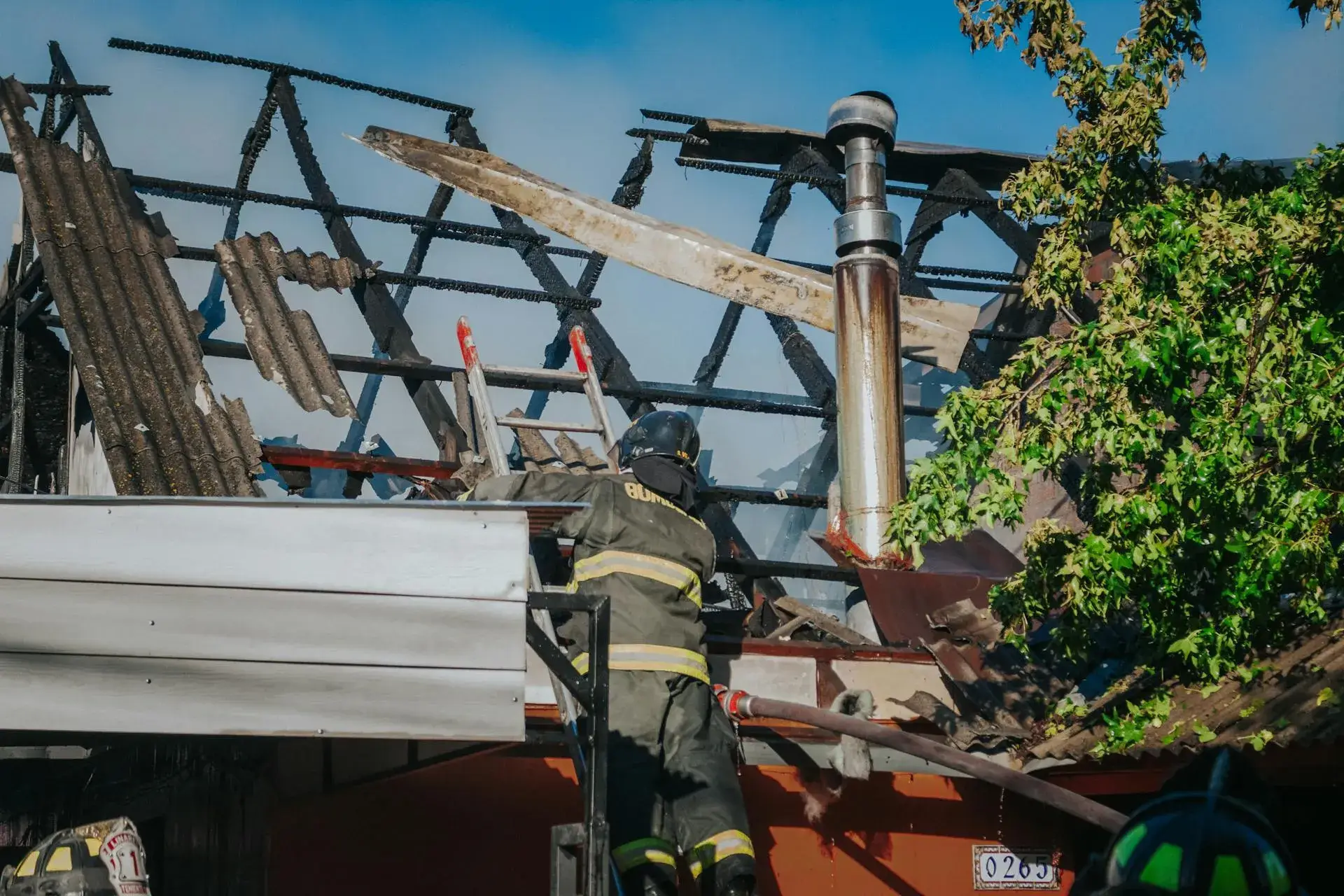
Fire Damage Restoration in Palm Harbor, FL
Every hour after a fire, soot acids etch deeper into surfaces and smoke compounds bond permanently to materials in Palm Harbor's coastal humidity. Our local team responds within 60 minutes.
What Happens When You Call
A real person answers. We assess your situation, confirm the property is cleared by the fire marshal, and coordinate your response immediately.
Your dedicated restoration team is dispatched from our Clearwater-area base serving Palm Harbor and northern Pinellas County.
Team arrives with structural assessment tools, soot removal equipment, air scrubbers, and water extraction systems. Emergency stabilization begins immediately.
Property secured, damage scope mapped, restoration plan documented. You know exactly what comes next.
The fire is out but the damage continues progressing. Soot acids corrode metal and etch glass. Smoke migrates deeper into materials. Suppression water sits in wall cavities where mold starts within 24 hours in this climate. X Response exists for this exact situation. When you reach out, your restoration team is mobilized within minutes and on site within the hour. One team manages everything from board-up through complete reconstruction. Call now. Your team is standing by.
Why Palm Harbor Homes Are Vulnerable to Fire Damage
Palm Harbor is an unincorporated community of over 61,000 residents in northern Pinellas County, Florida, where fire damage scenarios are shaped by the community's specific construction patterns, its position on the Gulf Coast peninsula, and the exceptional frequency of lightning strikes that characterize summer afternoons in west-central Florida. In August 2025, a lightning strike sparked a condo fire in Palm Harbor, with Palm Harbor Fire Rescue responding to a structure that sustained fire damage from a weather-caused ignition. One year earlier, in March 2024, a fire broke out on the first floor of an apartment at 3311 Haviland Court and rapidly spread to the third-floor units and into the attic, with drone footage showing the extent of roof damage as crews worked to extinguish the blaze. In June 2025, a family was displaced when fire destroyed their home in the Cobbs Landing neighborhood. And in December 2024, residents of a Palm Harbor neighborhood were seeking answers about a house that caught fire and remained an eyesore, raising concerns about code enforcement and cleanup responsibility for fire-damaged structures.
Palm Harbor's fire risk profile reflects Florida's status as the lightning capital of the United States. The Florida peninsula experiences more cloud-to-ground lightning strikes than any other region in the country, with Tampa Bay ranking as one of the highest-frequency lightning corridors. Palm Harbor, positioned between Tampa Bay to the east and the Gulf of Mexico to the west, sits within this high-frequency zone. Summer afternoon thunderstorms develop with regularity from June through September, and lightning strikes on rooftops, trees adjacent to structures, and utility infrastructure cause structure fires throughout the community on a recurring basis. Both the August 2025 Palm Harbor condo fire and the March 2024 Haviland Court apartment fire involved possible or confirmed lightning ignition. These events emphasize that fire damage in Palm Harbor is not limited to electrical or kitchen causes, and a significant portion of structure fires begin from weather-caused ignition that can strike any property without warning.
Lightning-Caused Ignition in a High-Strike Zone
The Tampa Bay region experiences approximately 25 lightning strikes per square mile per year, making it one of the most lightning-active regions in North America. Palm Harbor's position on the narrow Pinellas Peninsula, where sea breezes from the Gulf and the Bay converge over land heated by the subtropical sun, creates consistent afternoon thunderstorm development throughout the summer months. When lightning strikes a roof, chimney, HVAC unit mounted on the roof, or a tree adjacent to a structure, the energy can ignite roofing materials, travel through plumbing and electrical systems to cause fires inside wall cavities, or create a fire at the attic level that spreads rapidly through the open roof space above the ceiling plane. Attic fires are particularly dangerous because they often go undetected until smoke penetrates ceiling materials and enters living spaces, by which point the fire may have spread extensively through the attic. The March 2024 Haviland Court apartment fire that spread from the first floor to the third floor and attic illustrates how quickly an attic-level fire can consume a multi-story building.
Multi-Story Condominium and Apartment Fire Spread
Palm Harbor contains numerous condominium complexes and apartment communities built during the community's primary development era from the 1980s through the early 2000s. These structures feature continuous attic spaces that span entire building footprints, allowing fire that reaches the attic from any unit to travel horizontally across the entire building length above the ceiling plane of every connected unit. Fire-blocking requirements have been updated in modern building codes, but structures built in the 1980s and 1990s may have minimal or degraded fire-blocking in attic spaces, creating a fast-spread pathway once fire enters from below. The Haviland Court apartment fire demonstrated this mechanism when flames moved from a first-floor origin up through interior walls or a stairwell to reach the third floor and attic. Restoration of these fires involves not just cleaning smoke and extracting suppression water but also structural assessment of the attic framing and roof structure before reconstruction authorizes new roofing and ceiling materials.
Suppression Water in Coastal Heat and Humidity
Fire suppression in Palm Harbor's structures involves the same water cascade that affects all multi-story Florida buildings. Water applied to upper-floor or attic fires flows downward through floor assemblies, pools on lower levels, and saturates wall cavities and flooring throughout the building. In Palm Harbor's coastal climate where temperatures remain above 75 degrees and humidity exceeds 75% for most of the year, suppression water sitting in a building without functioning climate control creates mold colonization conditions within 24 hours. The interaction between suppression water, organic building materials, and the warm coastal air means that every hour between fire suppression and the start of professional water extraction allows mold to establish in materials that might otherwise be dried in place. Emergency water extraction following fire suppression is not optional in this climate. It is the difference between cleaning a smoke-damaged building and gutting one.
Older Single-Family Stock and Electrical Fire Risk
Palm Harbor's inventory of single-family homes built from the 1970s through the 1990s contains electrical systems that have been extended, modified, and loaded beyond original design specifications over four to five decades of residential occupancy. Aluminum wiring used in some Florida homes during the 1960s and 1970s develops loose connections at outlets and switches that overheat and can smolder before producing visible flame. Junction boxes with multiple wire connections in attic spaces accumulate heat from overloaded circuits. The December 2024 neighborhood fire that remained an unaddressed eyesore for months likely involved structural damage severe enough to make the property uninhabitable without full restoration. Single-family electrical fires in older Palm Harbor neighborhoods typically result in both fire damage to the affected room and smoke distribution to every room the HVAC system served before the system shut down during the event.
Coastal Salt Air and Post-Fire Corrosion
Palm Harbor's Gulf Coast position means that ambient air carries sodium chloride from the surrounding water bodies. After a fire, soot residue on metal fixtures, fasteners, and appliance components interacts with coastal salt air to produce accelerated corrosion. Metal surfaces that might remain cleanable for days following a fire in an inland location can reach permanent corrosion within 24 to 48 hours in Palm Harbor's salt-laden environment. Electronics damaged by smoke deteriorate faster when salt air reactivates deposited residue. Structural fasteners in fire-affected areas may require earlier replacement than structural assessment alone would suggest because corrosion is proceeding simultaneously with any fire-related weakening. Restoration scoping in coastal Pinellas County must account for this accelerated corrosion timeline when making decisions about which components can be cleaned and saved versus replaced.
These factors create fire damage scenarios in Palm Harbor defined by lightning-caused ignition in a high-strike zone, rapid fire spread through the connected attic spaces of 1980s and 1990s multi-family construction, suppression water that becomes a mold incubator in the coastal climate within 24 hours, electrical fire risk in the aging single-family housing stock, and coastal salt air that accelerates post-fire corrosion beyond what inland restoration timelines assume.
What Happens to Your Home While You Wait
Within 1 Hour
Soot begins reacting with surfaces. Acidic residue etches chrome, stainless steel, and glass. In Palm Harbor's coastal salt air, metal corrosion accelerates. Suppression water pools on lower floors and wicks into drywall from above. Biological activity starts in standing water in the subtropical heat.
1–24 Hours
Soot acids penetrate deeper into porous surfaces. Smoke odor absorbs into soft materials. Suppression water causes swelling and delamination in wall cavities. Coastal salt air interacts with wet soot, accelerating surface damage beyond inland rates. Electronics suffer advancing corrosion.
24–48 Hours
Mold colonization begins on suppression-wet surfaces. In Palm Harbor's subtropical heat without functioning AC, this accelerates dramatically. Smoke residue bonds more permanently. The combination of soot acids, suppression moisture, and coastal salt air compounds rapidly.
48–72 Hours
Soot staining becomes permanent on many surfaces. Mold grows visibly on wet materials. Smoke odor penetrates structural wood and concrete at depths requiring specialized treatment. Restoration costs increase significantly.
One Week and Beyond
Comprehensive secondary damage throughout. Mold in water-affected cavities spreads to dry areas. Smoke odor permeates the building envelope. Structural deterioration from combined fire weakening and moisture. Insurance claims grow complex.
Fire damage restoration in Palm Harbor has a narrow window. Coastal humidity and salt air accelerate every secondary pathway. Contact X Response now. Our team responds within 60 minutes.
How We Restore Fire-Damaged Palm Harbor Homes
Fire damage restoration involves multiple parallel workstreams. Here is exactly how we approach each phase.
Emergency Assessment and Stabilization
Once the fire marshal clears the property, our team assesses structural integrity on all affected levels, identifies smoke migration paths through connected attic spaces, and maps suppression water distribution. For lightning-struck roofs, we assess structural integrity of the attic framing before authorizing access. Stabilization includes board-up, roof tarping, and immediate water extraction to prevent mold in the coastal heat.
Suppression Water Extraction
Suppression water receives the same urgency as a standalone flood. In multi-story Palm Harbor condominiums and apartments, water from upper floors cascades through assemblies and pools below. We extract standing water, pull moisture from wall cavities, and deploy dehumidifiers within the first 24 hours. Materials too damaged by fire to salvage are removed; adjacent wet materials receive full drying protocol.
Smoke and Soot Removal
Different residue types receive appropriate treatment. Lightning-strike fires often involve burning wood and roofing materials producing a distinct residue from electrical fires. HEPA-filtered equipment prevents redistributing particulate. Ductwork is decontaminated or replaced based on contamination. Hydroxyl generators neutralize odor compounds. We work systematically through the entire structure including concealed attic contamination.
Structural Assessment and Selective Demolition
Every structural component in the fire zone is assessed for load-bearing capacity. For attic fires like the Haviland Court event, this includes roof rafters, ridge beams, and collar ties before new roofing is authorized. Drywall and insulation sustaining fire, smoke, or water damage are removed to expose framing for inspection. Clearance from Pinellas County building inspection is secured before reconstruction begins.
Restoration and Reconstruction
Reconstruction returns the property to pre-loss condition. Electrical and plumbing systems are inspected and repaired. Odor-sealing primer prevents smoke compounds bleeding through new finishes. HVAC testing confirms clean air circulation. Final inspection documents that all work meets the agreed scope and Pinellas County permitting requirements.
The X Response Difference
When you contact X Response after a fire in Palm Harbor, you get a single team managing every damage category from emergency response through reconstruction.
Insurance Claim Guidance for Palm Harbor Homeowners
Fire damage including lightning-caused ignition is covered under standard Florida homeowner's policies as a named peril. Coverage includes structural repair, smoke remediation, suppression water damage, contents, and additional living expenses during restoration. For Palm Harbor's condominium communities, HOA master policies cover structural and common-area damage while individual unit-owner policies cover interior finishes and personal property. Lightning-strike claims require clear documentation of ignition point and fire progression to establish causation, particularly when the ignition occurs in a concealed space like an attic.
How X Response Helps
- Document the ignition point and fire progression path with professional photos from the first hour
- For lightning-caused fires, obtain Palm Harbor Fire Rescue reports confirming the suspected cause
- For condominium fires involving shared attic spaces, coordinate documentation between HOA master policy and unit-owner coverage
- Inventory contents with professional assessment of restore-versus-replace
- Provide suppression water damage documentation connected to the fire event for inclusion in the fire loss claim
X Response does not file claims on your behalf, adjust claims, or make coverage determinations. Coverage decisions are made solely by your insurance carrier.
Certified Restoration Specialists Serving Palm Harbor
When you contact X Response after a fire in Palm Harbor, your team brings multi-discipline capability across fire, smoke, water, and structural restoration. They have worked through lightning-caused rooftop and attic fires in northern Pinellas County, multi-story apartment fires where connected attic spaces spread contamination beyond the fire unit, and the coastal corrosion factors that compress the salvage timeline for fire-affected metal components and electronics. They coordinate with Palm Harbor Fire Rescue and understand Pinellas County's permitting requirements for reconstruction.
Every technician holds current IICRC fire and smoke restoration certification alongside water damage credentials. Equipment includes truck-mounted extraction, commercial dehumidifiers, HEPA air scrubbers, hydroxyl generators, thermal imaging, and structural assessment capability. From the first hour through final reconstruction, one team owns every aspect of your project.
In Palm Harbor, X Response works with Dry Out Daddy Restoration, an independent local restoration partner serving Pinellas County.
Fire Damage Restoration FAQ for Palm Harbor Homeowners
Other Emergency Services in Palm Harbor

Water Damage Restoration
Burst pipes, storm flooding, standing water. We extract, dry, and restore before mold sets in.
Learn more
Smoke Damage Restoration
Soot residue, chemical odors, HVAC contamination. We decontaminate surfaces, eliminate odors, and restore air quality.
Learn more
Mold Remediation
Testing, containment, removal, prevention. We find the source, eliminate the growth, and stop it from returning.
Learn more
Sewage Cleanup
Sewer backups, contaminated water, biohazard. We extract, sanitize, and restore safely.
Learn more