
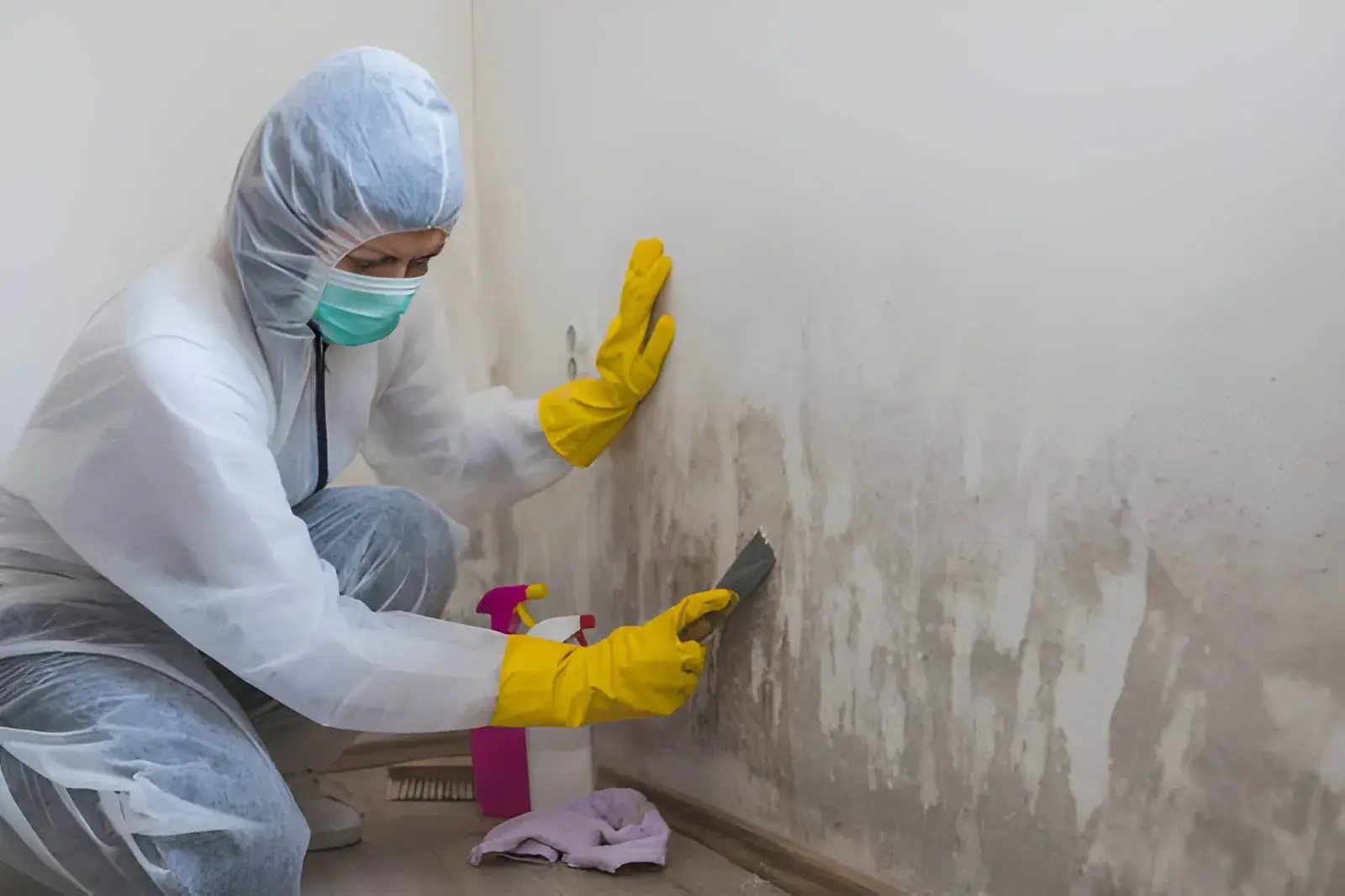
Mold Remediation in Palm Harbor, FL
Mold colonizes wet surfaces within 24 hours in Palm Harbor's subtropical coastal climate. Our licensed Pinellas County team responds within 60 minutes.
What Happens When You Call
A real person answers. We assess your situation, identify whether a licensed mold assessment is needed first, and coordinate immediately.
Your dedicated remediation team is dispatched from our Clearwater-area base serving Palm Harbor and northern Pinellas County.
Team arrives with containment materials, HEPA air filtration, moisture detection equipment, and PPE. Containment is established and assessment begins immediately.
Scope determined, protocol established, documentation started. You know exactly what the process involves and what clearance testing will verify.
You have found mold, or you suspect it is growing behind walls where water has been present. In Palm Harbor's climate, mold does not wait. X Response exists for exactly this situation. When you reach out, your licensed remediation team is on site within the hour. One team manages everything: assessment, containment, removal, clearance testing, and documentation. Call now. Your team is standing by.
Why Palm Harbor Homes Are Vulnerable to Mold
Palm Harbor is an unincorporated community of over 61,000 residents in northern Pinellas County, Florida, where the subtropical climate, Gulf Coast humidity, and the post-hurricane flooding of 2024 have created widespread mold conditions across multiple property types. During Hurricane Milton in October 2024, Pinellas County saw increased flooding from faulty stormwater pumps, and a Palm Harbor family was forced to gut the first floor of their home after floodwaters caused damage despite their property not being designated in a flood zone. When homes are gutted in a Florida coastal community, the exposed structural materials in a warm, humid environment become mold incubators within days. Structural framing that was exposed during demolition but not immediately dried and treated, or that was covered with new drywall before reaching dry standard, supports mold growth that may not become detectable for months until odors emerge or health symptoms develop. Under Florida Statute Chapter 468, Part XVI, mold remediation on areas exceeding 10 square feet requires a state DBPR license, ensuring remediation meets independently verified standards through the three-party protocol of separate assessment, remediation, and clearance.
Palm Harbor's mold conditions extend well beyond the 2024 hurricane season. The community's position along the Gulf Coast creates ambient relative humidity above 75% year-round, a level that can support mold growth in any area where sustained moisture exists. The community's housing stock spans multiple construction eras and types: older slab-on-grade homes from the 1970s and 1980s with aging plumbing increasingly prone to hidden leaks, condominium buildings with shared assemblies where HVAC condensate overflows travel downward through floor-ceiling assemblies to affect units below, mobile home communities where belly board insulation holds moisture from roof and plumbing leaks for extended periods, and waterfront properties along St. Joseph Sound and Lake Tarpon where elevated groundwater conditions and tidal influence create persistent subsurface moisture. Each of these construction types creates distinct mold pathways that require different assessment approaches and different remediation protocols.
Post-Milton Gutting and Reconstruction Mold Risk
When a Palm Harbor family guts the first floor of their home following a flood event, the demolition process exposes structural framing, subfloor materials, and wall cavities that may have absorbed moisture during the flood. If these exposed materials are not mechanically dried to target moisture content before new drywall and flooring are installed, the trapped moisture becomes a sustained mold incubator inside the reconstructed walls. In Palm Harbor's Gulf Coast climate, where outdoor humidity is consistently above 75%, exposed structural wood in an open home does not dry naturally. It equilibrates to the outdoor humidity and remains at an elevated moisture content indefinitely. Homeowners who gut their own flood-damaged homes and then rebuild without professional moisture verification often discover mold behind new drywall within three to six months. The visible sign is typically a musty odor that worsens when the AC runs, indicating that mold established inside a wall cavity is being disturbed and distributed by air movement.
Gulf Coast Humidity and HVAC Condensate
Palm Harbor's central air conditioning systems run for roughly nine months annually, and the evaporator coil generates significant condensate year-round during the warm months. The condensate drain is a PVC line vulnerable to algae clogging in Florida's warm, humid conditions. When the drain clogs, water overflows the collection pan inside the air handler closet or attic platform, saturating adjacent structural materials. The air handler closet or attic space becomes a warm, humid, dark environment with continuous organic material moisture, providing ideal conditions for rapid mold colonization. The system then distributes spores throughout the home with every AC cycle. In Palm Harbor's older single-family stock, this clogging pattern occurs multiple times per year and causes repeated moisture events in the same location, compounding mold conditions in the air handler area that may not become visible until the problem has been recurring for years.
Waterfront Property Groundwater and Salt Moisture
Palm Harbor's properties along St. Joseph Sound and the Lake Tarpon shoreline exist in a high-water-table environment where groundwater is seasonally close to the surface. During the wet season from June through September, the water table rises and may reach the slab elevation in low-lying shoreline properties. Moisture migrates upward through the slab by capillary action, maintaining elevated concrete surface moisture that supports mold growth beneath flooring materials and behind baseboards. For properties along the sound, tidal influence adds additional moisture cycling to the groundwater fluctuation. Salt spray from the sound's surface during wind events deposits sodium chloride on exterior materials that then absorbs atmospheric moisture, maintaining a wet-dry cycle that supports mold on exterior-facing surfaces and in the wall cavities behind them. Effective mold assessment for waterfront Palm Harbor properties must account for these environmental moisture sources independent of any plumbing failure or flood event.
Mobile Home Belly Board and Structural Panel Mold
Palm Harbor and northern Pinellas County contain significant manufactured housing communities where mold develops in structural locations specific to this construction type. The belly board, a material spanning the underside of the floor assembly, traps moisture between the floor joists when roof leaks, plumbing drips, or ground moisture migrates upward. In the humid Palm Harbor climate, this trapped moisture supports mold growth in the floor insulation and on the underside of the subfloor material. Mold in the belly board space can be extensive before any visible or olfactory evidence appears in the living space because the contamination is enclosed below the floor and insulation. Wall panels in manufactured housing are typically thinner and less permeable than standard drywall, so when moisture enters from window perimeter failures or wall penetrations, it tends to wick along the panel surface rather than absorbing deeply, producing surface mold on wall interiors that is more accessible but also more easily disturbed and distributed.
Florida Licensing Requirements
Florida Chapter 468, Part XVI requires a DBPR-issued Mold Remediator license (MRSR) for any remediation exceeding 10 square feet and a Mold Assessor license (MRSA) for assessment and protocol writing. The law mandates that these roles be performed by separate parties. An independent licensed assessor writes the remediation protocol specifying scope, containment requirements, removal procedures, and clearance criteria. A licensed remediator executes the work. An independent assessor returns to verify clearance through laboratory air sampling. For Palm Harbor homeowners who self-gutted their flood-damaged homes without professional oversight, this protocol is still available after the fact and provides documented proof of mold clearance that may be required before the home can be refinanced or sold.
These mold sources in Palm Harbor span post-flood structural moisture from the 2024 hurricane season, chronic HVAC condensate failures in the aging housing stock, elevated groundwater and salt moisture conditions at waterfront properties, belly board and panel mold specific to manufactured housing communities, and the year-round Gulf Coast humidity that activates any moisture source into active growth. Florida licensing requirements ensure that all remediation meets an independently verified standard.
What Happens to Your Home While You Wait
Within 24 Hours
Mold spores begin germinating on wet surfaces in Palm Harbor's warm, humid environment. The coastal climate provides optimal germination conditions at the fastest end of the biological range. During this window, thorough mechanical drying can prevent colonization.
24–72 Hours
Visible growth appears on paper-faced drywall and wood. Musty odors emerge. Spores become airborne and begin colonizing adjacent surfaces. The contamination expands beyond the original wet area.
3–7 Days
Mold penetrates into substrate materials. Surface cleaning is no longer sufficient. Porous materials require removal. For mobile home belly board insulation, colonization progresses in a confined space with no airflow to slow development.
1–4 Weeks
Colonies spread through wall cavities, insulation, and structural framing. HVAC distributes spores throughout the home. Indoor air quality degrades with measurable spore concentrations above background. Remediation scope involves multiple rooms.
One Month and Beyond
Extensive colonization throughout concealed spaces. Structural materials potentially compromised. Comprehensive remediation with multiple clearance testing cycles required. Costs and timeline increase substantially.
In Palm Harbor's coastal climate, established mold growth can develop within days of water contact. Contact X Response now. Our licensed team responds within 60 minutes.
How We Restore Mold-Affected Palm Harbor Homes
Mold remediation in Florida follows a regulated three-party process. Here is each phase under state licensing requirements.
Licensed Assessment and Protocol
A Florida-licensed mold assessor (MRSA) inspects the property, identifies moisture sources, and collects air and surface samples for laboratory analysis. For Palm Harbor post-flood homes where self-gutting occurred, assessment specifically evaluates whether new construction was installed over materials that had not fully dried. For manufactured housing, assessment includes belly board inspection from below. The assessor writes the formal protocol governing the remediation.
Containment and Environmental Controls
Physical containment with polyethylene barriers creates a negative-pressure enclosure. HEPA negative air machines maintain airflow from clean areas into containment. The HVAC system is sealed and shut down. Workers enter through a decontamination area. These controls remain throughout active removal.
Mold Removal and Disposal
Contaminated porous materials are removed per protocol: drywall, insulation, carpet, and cabinetry are bagged within containment and disposed as contaminated waste. For manufactured housing, belly board and affected subfloor insulation are accessed from below and removed. Structural framing and concrete surfaces are cleaned and treated with antimicrobials.
HEPA Cleaning and Antimicrobial Treatment
After removal, remaining surfaces receive HEPA vacuuming followed by EPA-registered antimicrobial treatment. Structural framing, slab surface, and retained building materials are cleaned and treated. HVAC contamination receives separate treatment under containment protocol. For Palm Harbor waterfront properties, we confirm that external moisture sources have been addressed before reconstruction proceeds.
Post-Remediation Clearance Testing
An independent Florida-licensed assessor conducts verification through visual inspection and laboratory air sampling. Indoor spore types and concentrations are compared against outdoor baseline. Only after passing clearance is containment released and reconstruction authorized. For Palm Harbor post-flood homes that were previously self-gutted, this clearance provides the documented proof that may be required for refinancing or sale.
The X Response Difference
When you contact X Response for mold in Palm Harbor, you get a Florida-licensed team following the regulated three-party protocol from assessment through verified clearance.
Insurance Claim Guidance for Palm Harbor Homeowners
Mold insurance in Florida is policy-specific and often limited. Standard homeowner's policies typically include mold coverage only when the mold results from a covered peril, usually limited to $10,000 to $50,000. For Palm Harbor post-flood mold where the damage originated from a hurricane event, flood insurance is the primary coverage vehicle. For HVAC condensate mold or maintenance-related moisture, coverage is generally excluded. For manufactured housing, coverage terms may differ significantly from standard homeowner's policies. Documenting the moisture source and its connection to a covered event is essential.
How X Response Helps
- Document the moisture source to establish whether it constitutes a covered peril
- Provide the licensed mold assessment with laboratory results establishing scope and contamination type
- For post-flood mold, connect growth to the covered flood event to route through flood insurance
- For manufactured housing mold, confirm coverage terms specific to your policy type
- Provide post-remediation clearance documentation proving completion to verified standard
X Response does not file claims on your behalf, adjust claims, or make coverage determinations. Coverage decisions are made solely by your insurance carrier.
Certified Restoration Specialists Serving Palm Harbor
When you contact X Response for mold remediation in Palm Harbor, your team holds active Florida DBPR MRSR licensing. They have worked through post-flood mold in Palm Harbor homes that sustained flooding during Hurricane Milton from stormwater pump failures, HVAC condensate mold in the community's aging single-family stock, and the belly board and structural panel mold specific to the manufactured housing communities in northern Pinellas County. They understand the three-party protocol and coordinate with independent assessors from first inspection through clearance verification.
Every technician carries IICRC AMRT certification alongside the state MRSR license. Equipment includes HEPA negative air machines, air sampling instruments, PPE meeting OSHA standards, and the specialized belly-board access tools needed for manufactured housing remediation. From containment through clearance, one team manages every phase.
In Palm Harbor, X Response works with Dry Out Daddy Restoration, an independent local restoration partner serving Pinellas County.
Mold Remediation FAQ for Palm Harbor Homeowners
Other Emergency Services in Palm Harbor

Water Damage Restoration
Burst pipes, storm flooding, standing water. We extract, dry, and restore before mold sets in.
Learn more
Fire Damage Restoration
Structural damage, soot, debris. We stabilize, clean, and rebuild what fire destroyed.
Learn more
Smoke Damage Restoration
Soot residue, chemical odors, HVAC contamination. We decontaminate surfaces, eliminate odors, and restore air quality.
Learn more
Sewage Cleanup
Sewer backups, contaminated water, biohazard. We extract, sanitize, and restore safely.
Learn more