
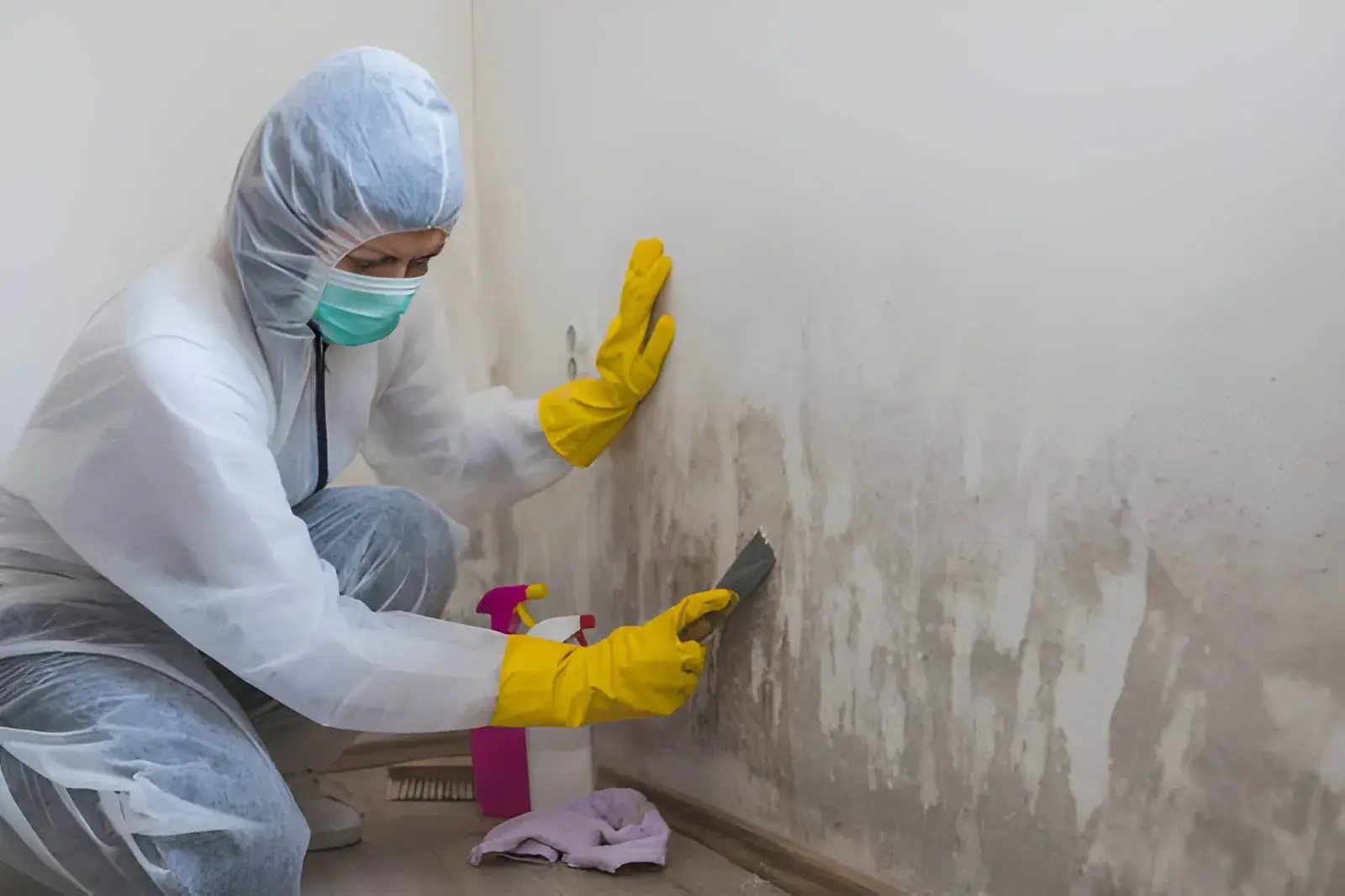
Mold Remediation in Clarkston, GA
Mold colonizes within 24 to 48 hours in DeKalb County's warm, humid climate. Every day of delay allows it to spread deeper into walls, ceilings, and HVAC systems. Our local team responds within 60 minutes.
What Happens When You Call
A real person answers, not a call center. We assess your situation, ask the right questions, and begin coordinating your response immediately.
Your dedicated remediation team is dispatched from our local base serving Clarkston and the surrounding DeKalb County communities.
Team arrives with inspection equipment, containment materials, HEPA filtration, and remediation tools. Assessment begins immediately.
Mold extent mapped, containment established, remediation plan documented. You know exactly what comes next.
You have discovered mold or suspect it is growing behind walls, in ceilings, or through your HVAC system. The longer it remains, the further it spreads and the more it costs to resolve. X Response exists for exactly this moment. When you reach out, your remediation team is mobilized within minutes and on site within the hour. From that point forward, one team manages everything: inspection, containment, removal, and prevention. You are never left guessing about the next step. Call now. Your team is standing by.
Why Clarkston Homes Are Vulnerable to Mold
Clarkston's mold problem is structural, not incidental. The city's housing stock consists primarily of multi-family apartment complexes built in the 1960s and 1970s, constructed during an era when vapor barriers, adequate ventilation, and moisture management in wall assemblies were not code requirements. These buildings have aged 50 to 60 years in a humid subtropical climate that delivers high average relative humidity for much of the year and summer conditions that regularly run high. The combination of aging construction, deferred maintenance, and relentless humidity creates conditions where mold does not just occur occasionally but grows persistently in wall cavities, ceiling assemblies, HVAC ductwork, and anywhere moisture accumulates without adequate airflow. DeKalb County condemned and demolished more than 50 units at the Brannon Hill Condominiums near Clarkston beginning in 2017, citing conditions that imperiled the health, safety and welfare of residents. That complex had deteriorated over more than a decade with repeated water intrusion, lack of repair, and unchecked biological growth that rendered units uninhabitable. Brannon Hill was an extreme case, but the underlying conditions that produced it, deferred moisture management in aging buildings occupied by residents with limited means to demand repairs, exist in varying degrees across Clarkston's apartment landscape.
Georgia does not require a state-specific mold remediation license, which means the quality of mold work varies dramatically between providers. The industry standard for professional mold remediation is the IICRC S520 Reference Guide for Professional Mold Remediation, which establishes protocols for assessment, containment, removal, and verification. The ANSI/IICRC S520 standard and the complementary AMRT (Applied Microbial Remediation Technician) certification represent the professional baseline that distinguishes qualified remediation from amateur tear-out. In a market where anyone can advertise mold removal services, choosing a team with current AMRT certification and adherence to S520 protocols is the single most important factor in getting the problem resolved rather than cosmetically concealed. For Clarkston's apartment communities, where mold recurrence after inadequate treatment means the same families get sick again in the same units, the difference between proper remediation and surface-level cleaning is not academic; it is a health outcome.
Aging Apartment Construction Without Moisture Management
The apartment buildings that comprise most of Clarkston's housing were designed and built before modern understanding of moisture dynamics in wall assemblies. They lack vapor barriers in exterior wall cavities, rely on minimal insulation that allows condensation to form on cooler surfaces during air conditioning season, and use building materials that readily absorb and hold moisture. Flat and low-slope roofs common in these buildings pond water during heavy rain and develop slow leaks at aging membrane seams that drip water into ceiling assemblies for weeks or months before visible staining alerts anyone. Bathroom exhaust fans, where they exist at all, vent into attic spaces rather than to the exterior, pumping moisture-laden air directly into the roof assembly daily. In these conditions, mold colonization is not a question of if but where and how much. The materials themselves, drywall paper, ceiling tiles, carpet backing, and wood framing, serve as food sources once moisture reaches them.
Humid Subtropical Climate and Year-Round Growth Conditions
DeKalb County's climate provides the temperature and moisture conditions that mold requires for active growth during every month of the year. Summer heat and humidity create obvious growth conditions, but winter presents its own risk: when heated indoor air contacts cooler exterior wall surfaces in uninsulated or poorly insulated wall cavities, condensation forms on the cold side and feeds mold growth that remains hidden until spring. The swing seasons, spring and fall, bring rain and temperature differentials that alternately wet and warm building materials. Atlanta's average annual rainfall exceeds 50 inches, distributed across frequent storm events that test every roof, window, and wall penetration in Clarkston's aging buildings. Unlike cold climates where winter freeze interrupts mold growth cycles, DeKalb County's mild winters allow established colonies to grow continuously once they establish on a food source with adequate moisture.
HVAC Systems as Mold Incubators and Distributors
Air conditioning systems in Clarkston's apartments condense moisture from indoor air onto the evaporator coil and into drain pans, by design. In a properly maintained system, that condensate drains away and the coil dries between cycles. In systems with clogged drain lines, dirty coils, or oversized units that short-cycle without adequate dehumidification, moisture accumulates in the air handler, on duct surfaces, and in the insulation that lines return air plenums. Mold colonizes these damp, dark, nutrient-rich surfaces and then distributes spores into the living space every time the system runs. In apartment buildings where HVAC components serve multiple units through shared ductwork, one contaminated air handler can distribute mold spores to every connected apartment. Residents experience allergy symptoms, respiratory irritation, and musty odors that intensify whenever the system cycles, without necessarily seeing visible mold in the living space. The source is hidden in the mechanical system, accessible only by opening the air handler and inspecting duct interiors.
Deferred Maintenance and Tenant Vulnerability
Clarkston's apartment communities include complexes with absentee ownership, minimal maintenance budgets, and populations of residents who may be unfamiliar with the American complaint-and-repair system or hesitant to report problems for fear of lease consequences. In this environment, slow roof leaks persist for months, plumbing leaks under sinks go unreported, bathroom ventilation failures are never corrected, and exterior water intrusion at windows and wall penetrations is patched cosmetically rather than repaired structurally. Each unaddressed moisture source feeds mold growth in concealed spaces. By the time the growth becomes visible on interior surfaces, typically as dark staining on walls or ceilings, the colony behind the surface may be extensive, having grown through the drywall paper, into insulation, and across framing members. The Brannon Hill condominiums represented the extreme endpoint of this pattern: decades of deferred maintenance compounding until the buildings were condemned. But the early stages of that same pattern, unchecked moisture feeding hidden mold growth, exist in numerous apartment buildings across the city today.
Post-Water-Event Mold Risk
Every water damage event in Clarkston that is not promptly and thoroughly dried creates a mold event 24 to 48 hours later. Pipe bursts in aging plumbing, roof leaks during heavy rain, South Fork Peachtree Creek flooding, storm drain backups into ground-floor units, and fire suppression water all introduce moisture that must be mechanically extracted and dried to prevent colonization. In Clarkston's climate, the warm ambient conditions accelerate the colonization timeline compared to cooler or drier regions. For apartment buildings where water events may not be immediately reported or where maintenance response is slow, the 24-to-48-hour mold prevention window closes before adequate drying equipment arrives. The August 2025 Clarkston Oaks fire, which sent suppression water through 32 units, and the recurring plumbing failures in aging buildings create repeated opportunities for mold establishment. Once established after a water event, mold persists indefinitely unless professional remediation removes it at the source.
These factors create a mold environment in Clarkston that goes beyond typical residential exposure. Aging apartment buildings without moisture management, a climate that supports year-round growth, HVAC systems that incubate and distribute contamination, deferred maintenance that allows moisture sources to persist indefinitely, and repeated water events that introduce new colonization opportunities compound into a persistent, systemic mold challenge. Effective mold remediation here means understanding how mold establishes and spreads through multi-family apartment construction, how it hides in shared wall cavities and mechanical systems, and how to prevent recurrence in buildings that will continue to face the same moisture pressures that caused the growth in the first place. It rewards a team that has worked in DeKalb County's dense apartment communities, follows IICRC S520 protocols, and treats remediation as a building science problem rather than a surface cleaning exercise.
What Happens to Your Home While You Wait
24–48 Hours After Moisture Exposure
Mold spores, which are always present in outdoor and indoor air, begin germinating on wet organic materials. In DeKalb County's warm, humid conditions, germination is rapid. Drywall paper, ceiling tiles, carpet backing, wood framing, and dust accumulation on surfaces all provide adequate food sources. Colonization begins in concealed spaces first: inside wall cavities, above ceiling tiles, beneath flooring, and within HVAC components. Nothing is visible from the living space yet, but the biological process has begun.
3–7 Days
Active mold growth becomes visible on surfaces with the highest moisture and lowest airflow. In Clarkston's apartments, this typically appears first as dark staining in ceiling corners, behind furniture against exterior walls, and around bathroom exhaust fans. The visible growth represents only the surface expression of colonies that have already established behind the drywall, in the wall cavity, and potentially on framing members. HVAC contamination may produce musty odors when the system cycles without visible growth in the living space. Spore counts in indoor air begin rising above outdoor baseline levels.
1–4 Weeks
Mold spreads through interconnected building cavities. In apartment construction with shared walls, it can travel from the unit where the moisture event occurred into adjacent units through unsealed penetrations at plumbing, electrical, and HVAC connections. Colonies mature and begin producing spores in greater quantities, degrading indoor air quality for residents who may experience increasing allergy symptoms, respiratory irritation, headaches, and fatigue. Materials that could have been dried and treated in the first week may now require removal because the growth has penetrated beyond the surface.
1–3 Months
Extensive colonization through wall cavities, ceiling assemblies, and HVAC ductwork. Materials are structurally compromised: drywall crumbles, wood framing softens at connection points, ceiling tiles disintegrate. Indoor air quality has degraded significantly in affected units and potentially in adjacent units connected through shared building systems. Remediation scope has expanded from targeted treatment to large-scale demolition and reconstruction of affected assemblies.
6 Months and Beyond
Chronic mold infestation that requires gut-level remediation of affected building sections. Structural damage to framing members at connection points. Cross-contamination through multiple connected units. At this stage, the remediation cost and timeline approach the threshold where property owners must evaluate whether rehabilitation or demolition is the more appropriate path. The Brannon Hill condominiums reached this endpoint after years of unchecked deterioration.
The difference between targeted mold treatment and large-scale demolition is often determined by how quickly professional remediation begins after the moisture source is identified. Contact X Response now. Our Clarkston team responds within 60 minutes.
How We Restore Mold-Affected Clarkston Homes
From the moment our team arrives, every step follows IICRC S520 protocols for professional mold remediation. Here is exactly what the process involves for Clarkston properties.
Inspection and Assessment
Our team arrives with moisture meters, thermal imaging cameras, and air quality sampling equipment to locate and characterize the mold problem. In Clarkston's apartment buildings, that means inspecting not just the visible growth but the concealed spaces where colonies typically establish first: inside wall cavities accessed through small inspection openings, above ceiling tiles, within HVAC components, and behind cabinetry and fixtures. Moisture mapping identifies the water source feeding the growth, whether it is a plumbing leak, roof intrusion, condensation in the wall assembly, or residual moisture from a prior water event. The assessment determines the extent of contamination, the materials affected, and the remediation protocol required. Everything is documented with photos, moisture readings, and air quality results that establish the baseline before work begins.
Containment
Before any mold is disturbed, the affected area is isolated from the rest of the building using physical containment barriers and negative air pressure. In Clarkston's apartment buildings where shared wall cavities and HVAC systems connect units, containment protocols are critical to prevent cross-contamination during removal. Polyethylene sheeting seals the work area from floor to ceiling. HEPA-filtered negative air machines maintain pressure differential so that air flows into the containment zone rather than out of it. HVAC registers within the containment are sealed to prevent contaminated air from entering the ductwork system. Workers enter and exit through decontamination chambers. For multi-unit apartment buildings where tenants in adjacent units remain in place during remediation, proper containment is the single most important step in preventing the remediation process itself from spreading contamination into previously clean spaces.
Removal and Cleaning
Mold-contaminated materials are removed according to S520 protocols: porous materials with active growth, such as drywall, insulation, carpet, and ceiling tiles, are removed, bagged, and disposed of because they cannot be effectively cleaned. Semi-porous materials like wood framing are cleaned using HEPA vacuuming, wire brushing, and antimicrobial treatment if structurally sound; if they are compromised, they are replaced. Non-porous surfaces like metal ductwork, concrete, and sealed surfaces are cleaned with appropriate antimicrobial agents and HEPA vacuumed. In Clarkston's apartment buildings, this process addresses every contaminated material within the containment zone, including the concealed sides of remaining drywall at the containment perimeter, any affected framing, and HVAC components within the contaminated section. All removed materials are documented for property management records and insurance purposes.
HVAC Decontamination
If mold has colonized HVAC components, cleaning the living space alone will not resolve the problem. The system will continue distributing spores each time it cycles. Our team inspects and cleans evaporator coils, drain pans, blower housings, duct interiors, and insulation lining within affected sections. Duct-board insulation that cannot be effectively cleaned is removed and replaced. In apartment buildings with shared mechanical systems, we trace contamination through the entire connected section and clean every component that shows colonization. New high-efficiency filters are installed and the system is treated with EPA-registered antimicrobial products to inhibit regrowth. The system is run and air quality is re-tested to confirm it is no longer distributing contamination.
Verification and Prevention
After remediation is complete, post-remediation verification confirms the work achieved its objective. Air quality sampling confirms that indoor spore counts have returned to acceptable levels relative to outdoor baseline. Visual inspection under enhanced lighting confirms no remaining visible growth on remediated surfaces. Moisture readings confirm the water source has been eliminated and affected materials are dry. We then address the moisture source that caused the growth in the first place, because remediation without source correction guarantees recurrence. For Clarkston's apartment buildings, that means recommending repairs to roof sections, plumbing systems, HVAC drain lines, or ventilation deficiencies to the property owner or manager so the conditions that produced the mold are corrected, not just the mold itself.
The X Response Difference
When you contact X Response, you get a dedicated remediation team that follows S520 protocols, contains the work area, removes contamination at the source, verifies the result with air quality testing, and identifies the moisture source to prevent recurrence. One team, one standard of work, documented results from start to finish.
Insurance Claim Guidance for Clarkston Homeowners
Mold insurance coverage in Georgia depends on what caused the mold. Standard homeowner's and renter's policies typically cover mold remediation when it results from a sudden, covered water event such as a burst pipe or fire suppression water. Mold from long-term maintenance failures, chronic leaks, condensation, or humidity without a covered triggering event is generally excluded or subject to strict sublimits. Many Georgia policies include a mold sublimit of $10,000 or less regardless of actual remediation costs. In Clarkston's apartment buildings, liability for mold remediation costs typically falls on the property owner rather than individual tenants, but the documentation of when moisture began, what caused it, and whether it constitutes a sudden event or a maintenance failure is critical to determining how costs are allocated between insurance coverage, property owner responsibility, and potential landlord liability.
How X Response Helps
- Document the moisture source and mold extent with professional inspection, moisture readings, and air quality testing from day one
- Establish whether the mold resulted from a sudden covered event or a long-term maintenance condition, which determines coverage eligibility
- Prepare documentation that distinguishes between water damage remediation and mold remediation costs, as policies may treat them differently
- Align our remediation scope with S520 professional standards so documentation meets carrier requirements for covered mold claims
- Explain your policy's likely mold coverage and sublimits before you authorize work, so you understand your financial exposure
X Response does not file claims on your behalf, adjust claims, or make coverage determinations. We provide documentation and guidance to help you make informed decisions about your property and your policy. Coverage decisions are made solely by your insurance carrier.
Certified Restoration Specialists Serving Clarkston
When you contact X Response for mold remediation in Clarkston, your team is drawn from certified professionals who work across DeKalb County and understand how mold establishes and spreads in the specific building types and climate conditions found here. They know how moisture moves through uninsulated wall cavities in 1960s apartment construction. They understand how HVAC systems in multi-family buildings incubate and distribute contamination across connected units. They have remediated post-water-event mold in ground-floor apartments after creek flooding, chronic mold in buildings with deferred maintenance, and HVAC-distributed contamination in complexes with shared mechanical systems. This is not a crew that sprays bleach on visible stains and calls it remediation. It is a team that follows IICRC S520 protocols, contains the work area, removes contamination at the source, and verifies the result.
Every technician on your team holds current IICRC AMRT (Applied Microbial Remediation Technician) certification and carries the appropriate Georgia state licensing for the work being performed. Equipment includes professional air sampling, thermal imaging, commercial HEPA filtration and negative air machines, antimicrobial application systems, and full containment materials. Georgia does not require a state mold license, which means certification and protocol adherence are the only markers of professional competence in this market. When your X Response team arrives at your Clarkston property, you are getting the industry standard of care, not the minimum legal requirement.
In Clarkston, X Response works with Atlanta's Best Restoration, an independent local restoration partner serving DeKalb County.
Mold Remediation FAQ for Clarkston Homeowners
Other Emergency Services in Clarkston

Water Damage Restoration
Burst pipes, storm flooding, standing water. We extract, dry, and restore before mold sets in.
Learn more
Fire Damage Restoration
Structural damage, soot, debris. We stabilize, clean, and rebuild what fire destroyed.
Learn more
Smoke Damage Restoration
Soot residue, chemical odors, HVAC contamination. We decontaminate surfaces, eliminate odors, and restore air quality.
Learn more
Sewage Cleanup
Sewer backups, contaminated water, biohazard. We extract, sanitize, and restore safely.
Learn more