
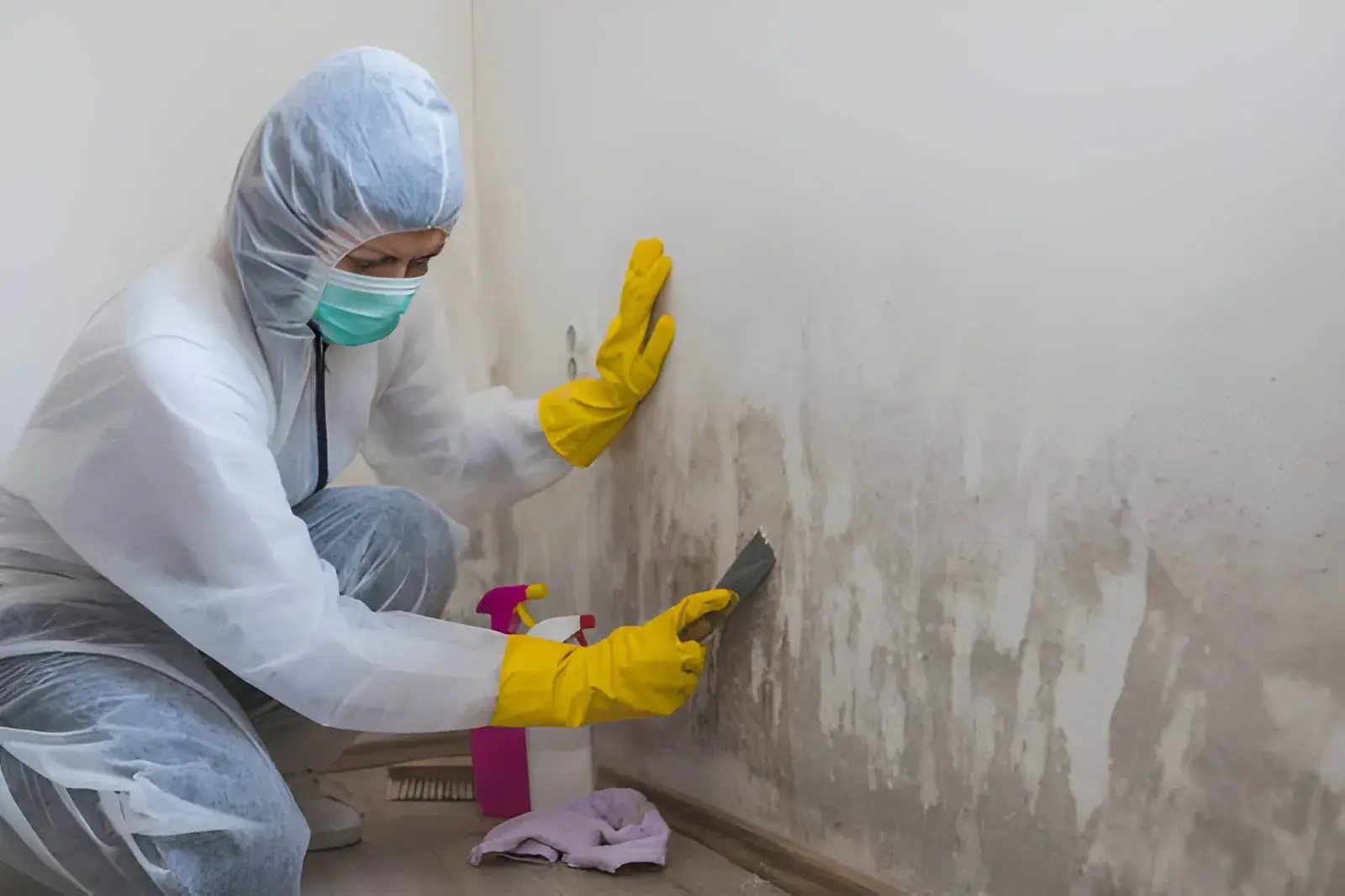
Mold Remediation in Druid Hills, GA
Mold colonizes within 24 to 48 hours in DeKalb County's warm, humid climate. Every day of delay allows it to spread deeper into walls, ceilings, and HVAC systems. Our local team responds within 60 minutes.
What Happens When You Call
A real person answers, not a call center. We assess your situation, ask the right questions, and begin coordinating your response immediately.
Your dedicated remediation team is dispatched from our local base serving Druid Hills and the surrounding DeKalb County communities.
Team arrives with containment materials, HEPA filtration, and moisture detection equipment. Assessment and containment begin immediately.
Mold contained, affected areas identified and documented, remediation plan established. You know exactly what comes next.
You have discovered mold or suspect it is growing behind walls, in ceilings, or through your HVAC system. The longer it remains, the further it spreads and the more it costs to resolve. X Response exists for exactly this moment. When you reach out, your remediation team is mobilized within minutes and on site within the hour. From that point forward, one team manages everything: inspection, containment, removal, and prevention. You are never left guessing about the next step. Call now. Your team is standing by.
Why Druid Hills Homes Are Vulnerable to Mold
Druid Hills contains one of metro Atlanta's largest concentrations of homes built between 1905 and 1940, an era when pier-and-beam foundations with vented crawl spaces were standard construction. These homes were designed with the assumption that air circulation through crawl space vents would keep the substructure dry. That assumption was wrong for the Georgia Piedmont climate, and it creates the primary mold vulnerability that defines this community. When warm, humid outdoor air enters a cooler crawl space through those vents, moisture condenses on cooler surfaces including floor joists, subfloor sheathing, and foundation walls. This condensation provides the persistent moisture that mold requires to colonize. SafeAir Certified Mold Inspection reports that roughly 6 out of every 10 metro Atlanta homes they inspect with elevated indoor mold levels have an active moisture problem in the crawl space, a finding particularly relevant to Druid Hills where the majority of pre-1940s homes sit on vented pier-and-beam foundations over earthen or poorly sealed crawl spaces. In a community where virtually every pre-war home has a vented crawl space, that statistic translates to a community-wide structural vulnerability.
The Olmsted-designed landscape that makes Druid Hills distinctive contributes directly to the moisture conditions that favor mold. The mature hardwood canopy shades properties throughout the day, keeping soil temperatures cool and reducing evaporation from the ground surface. The Peavine Creek corridor maintains elevated soil moisture throughout the year in adjacent properties. The dense vegetation holds humidity at ground level and reduces air movement that would otherwise carry moisture away from foundations. These are the same characteristics that make the neighborhood beautiful and that earned it National Register Historic District status, but they also create a microenvironment where crawl space relative humidity routinely runs high during summer months, well above the threshold where mold growth becomes active.
Georgia does not require a state license for mold remediation, which means the quality of work varies enormously across providers. The absence of licensing makes it particularly important to work with a company that follows established protocols: IICRC S520 Standard and Reference Guide for Professional Mold Remediation, ANSI/IICRC R520 Reference Guide for Professional Mold Remediation, and EPA guidance on mold cleanup. In Druid Hills, the stakes are higher than in typical suburban homes because the materials at risk are irreplaceable. Original heart pine floor joists from 1910 cannot be ordered from a supplier. Plaster walls with a century of paint history cannot be replicated. When mold compromises these materials beyond remediation, the loss extends beyond function to the historic fabric of the home itself.
Vented Crawl Spaces in Pre-War Construction
The vented crawl space is the dominant foundation type in Druid Hills' historic core. When these homes were built in the early 1900s, builders installed foundation vents under the assumption that cross-ventilation would prevent moisture accumulation beneath the floor. In practice, in the Georgia Piedmont's humid subtropical climate, these vents introduce warm, moisture-laden outdoor air into the cooler crawl space during summer months. The air cools as it enters, its relative humidity increases, and water condenses on any surface below the dew point. Floor joists, subfloor sheathing, sill plates, and pier caps all become condensation surfaces. Over time, this creates persistent moisture conditions that support active mold growth year after year. Many homeowners are unaware of the problem because it occurs beneath their floors, invisible unless someone crawls underneath to inspect.
Peavine Creek Corridor and Elevated Water Table
Properties in and near the Peavine Creek valley experience elevated groundwater and soil moisture year-round. The creek and its tributaries maintain the water table near the surface, and after heavy rainfall, groundwater can rise into crawl spaces that sit at low elevations in the valley. Even when standing water does not appear, the elevated soil moisture beneath the crawl space's dirt floor or deteriorated vapor barrier means the environment never fully dries. Moisture vapor migrates continuously upward from the soil into the crawl space, maintaining humidity levels sufficient for mold growth regardless of weather conditions. Properties along the lower sections of Oakdale Road, Springdale Road, and near Deepdene Park are particularly exposed because of their position in the creek valley.
Plaster Walls and Hidden Moisture
Lath-and-plaster walls behave differently than modern drywall when moisture is present. Plaster absorbs moisture slowly and releases it slowly, which means water intrusion behind a plaster wall can persist for weeks without creating the obvious brown stains that drywall shows quickly. The lime and horsehair plaster used in Druid Hills' early homes is more resistant to mold than gypsum drywall, but the wooden lath behind it is not. When moisture reaches the wall cavity from a roof leak, plumbing failure, or condensation, the lath provides an organic substrate for mold growth that remains completely hidden behind intact plaster. By the time mold becomes visible on the plaster surface, the colony behind the wall may have been growing for months and may extend far beyond what is visible.
Aging Plumbing and Slow Leaks
Druid Hills homes retain plumbing infrastructure from multiple eras: original galvanized steel supply lines, cast iron drain stacks, clay sewer laterals, and copper or PEX additions from various renovation periods. The connections between different pipe materials and different installation eras are common failure points. A slow leak at a joint between 1920s cast iron and 1970s copper can drip for months, maintaining a moisture source inside a wall cavity that is invisible from the living space. These slow leaks are the most common origin of mold growth in older homes because they provide constant moisture without the dramatic evidence of a burst pipe. The homeowner has no indication anything is wrong until mold appears on a surface or musty odor becomes noticeable.
HVAC Condensation and Ductwork Moisture
Heating and cooling systems in Druid Hills homes were typically retrofitted into structures not designed for them. Ductwork often runs through unconditioned crawl spaces, between floors, and through attic spaces where temperature differentials cause condensation on duct exteriors. Improperly insulated or poorly sealed ductwork sweats during summer cooling, dripping moisture onto surrounding framing and insulation. The condensate drain from the air handler can clog or overflow, releasing water into the immediate area. When the HVAC system itself becomes a moisture source, it also becomes a distribution system for mold spores, sending contaminated air to every room through supply registers every time the system cycles.
Mold growth in Druid Hills homes is not an isolated event caused by a single failure. It is typically the result of multiple interacting conditions: the vented crawl space design that is wrong for this climate, the creek valley location that keeps soil moisture high, the plaster walls that hide problems, the aging plumbing that leaks slowly, and the retrofitted HVAC that creates new condensation sources. Effective remediation in this community means addressing the colony you can see while understanding and correcting the moisture source that caused it. Otherwise, the mold returns within months.
What Happens to Your Home While You Wait
24 to 48 Hours After Moisture Exposure
Mold spores, which are present everywhere in outdoor air, begin germinating on any surface that has remained wet for this period. In DeKalb County's warm, humid climate where temperatures stay above 60 degrees most of the year, colonization begins at the early end of this window. Initial growth is microscopic and invisible to the naked eye. In Druid Hills' crawl spaces, floor joists that are persistently damp may already have active colonies that have never been observed because no one has inspected the space.
1 to 2 Weeks
Mold colonies become visible as discoloration on affected surfaces. In crawl spaces, growth appears as dark patches on floor joists, subfloor sheathing, and sill plates. Behind walls, colonies expand across the face of wooden lath and along the interior of wall cavities. Musty odors become detectable in the living space above or adjacent to the growth, even when the mold itself is not visible. At this stage, the colony is actively producing spores that circulate through the home.
1 to 3 Months
Established colonies cover significant surface area and begin degrading the structural integrity of affected wood. Floor joists in chronically damp crawl spaces develop soft spots. Subfloor sheathing weakens, creating noticeable flex in floors above. The HVAC system, if drawing air from or running through contaminated spaces, distributes spores throughout the home. Occupants may experience increased allergy symptoms, respiratory irritation, or persistent congestion without connecting it to the home environment.
6 Months and Beyond
Long-term mold exposure structurally compromises wooden framing members. Floor joists in crawl spaces may require sistering or replacement. Subfloor sheathing loses structural capacity. The colony has likely spread along the full length of affected framing, following moisture pathways from the original source. In Druid Hills' historic homes, this can mean damage to irreplaceable structural elements that were part of the original 1905 to 1940 construction. Remediation at this stage typically involves structural repair alongside mold removal, significantly increasing scope and cost.
Mold in Druid Hills homes is rarely sudden. It grows gradually in hidden spaces until it becomes visible, detectable by odor, or symptomatic in occupants. The earlier it is identified and addressed, the smaller the remediation scope and the better the chance of preserving original structural materials. Contact X Response now. Our team responds within 60 minutes for inspection and containment.
How We Restore Mold-Affected Druid Hills Homes
Mold remediation in historic homes requires a methodical approach that balances effective removal with material preservation. Here is our process for Druid Hills properties.
Inspection and Moisture Mapping
Our team conducts a comprehensive inspection that goes beyond the visible mold to identify the moisture source driving it. In Druid Hills homes, that means entering the crawl space to inspect floor joists, sill plates, and vapor barriers. It means using moisture meters to map wet zones in plaster walls. It means checking HVAC condensation, plumbing connections between dissimilar pipe materials, and the building envelope for infiltration points. We use thermal imaging to identify hidden moisture without invasive opening of walls wherever possible. The goal is not just finding mold but understanding why it is growing so that remediation eliminates both the colony and the conditions that created it.
Containment and Air Filtration
Before any mold is disturbed, we establish containment to prevent cross-contamination of unaffected areas. Polyethylene barriers seal the work zone from the rest of the home. Negative air pressure machines maintain airflow direction into the containment zone rather than outward. HEPA air scrubbers filter the air continuously, capturing spores down to 0.3 microns. In Druid Hills homes where the affected area is a crawl space or single wall cavity, containment prevents spores from entering the living space during removal. For larger affected areas, we establish staged containment that protects adjacent rooms while allowing systematic progression through the remediation scope.
Safe Mold Removal
Removal methods are selected based on the substrate and the severity of contamination. On non-porous surfaces like metal ductwork or concrete foundation walls, mold is cleaned and treated without material removal. On semi-porous surfaces like floor joists where contamination has not penetrated deeply, aggressive HEPA vacuuming, wire brushing, and antimicrobial treatment can restore the material to acceptable condition. On porous materials where contamination has penetrated beyond the surface, removal and replacement is necessary. In Druid Hills homes, we make material-specific decisions: original heart pine joists that can be saved through surface treatment are saved. Deteriorated sheathing that has lost structural capacity is replaced. The goal is preserving as much original material as possible while eliminating all active growth.
Moisture Source Correction
Removing mold without correcting the moisture source guarantees recurrence. Based on our inspection findings, we address the condition that caused the growth. For crawl space mold driven by ventilation moisture, solutions include sealing vents, installing vapor barriers over exposed earth, and placing dehumidification systems that maintain humidity below 60%. For plumbing leaks, we repair or replace the failed connection. For HVAC condensation, we insulate ductwork, repair drain lines, and seal leaking connections. For foundation drainage issues where the Peavine Creek corridor elevates groundwater, grading corrections or French drain systems may be recommended. We identify the source and either correct it directly or provide specific recommendations for the correction.
Verification and Clearance
After remediation is complete and surfaces have been treated, we verify results before releasing containment. Visual inspection confirms no remaining growth on any treated or adjacent surface. Moisture readings confirm that the affected area has returned to acceptable levels. For properties where occupant health concerns are significant or insurance documentation requires it, post-remediation air sampling by an independent third party provides objective verification that spore counts have returned to normal background levels. We provide complete documentation including the scope of work, before-and-after photos, moisture readings, treatment methods, and any recommendations for ongoing moisture management.
The X Response Difference
When you contact X Response, you get a dedicated remediation team that manages everything, from inspection through moisture source correction to verified clearance. One team, one point of contact, one standard of work from start to finish.
Insurance Claim Guidance for Druid Hills Homeowners
Mold remediation insurance coverage in Georgia depends on the cause of the moisture that led to the growth. If mold resulted from a sudden and accidental covered event like a burst pipe or appliance failure, standard homeowner's policies typically cover the remediation as part of the water damage claim. However, mold resulting from long-term maintenance issues like chronically damp crawl spaces, deferred plumbing repairs, or inadequate ventilation is often excluded as a maintenance failure rather than a covered loss. Many policies also have mold-specific sublimits that cap coverage well below the actual cost of remediation in a large affected area. For Druid Hills homes where crawl space mold may have developed gradually over years, the coverage question often hinges on whether a specific triggering event can be identified.
How X Response Helps
- Document all mold contamination with professional photos, moisture readings, and detailed scope from day one
- Identify the moisture source and timeline to support coverage for mold resulting from a covered water event
- Prepare documentation that distinguishes sudden-event mold from long-term maintenance issues for clear coverage determination
- Align our remediation scope with standard insurance coverage categories so your adjuster can process the claim efficiently
- Provide clearance testing documentation that demonstrates successful remediation for your records and any future disclosure needs
X Response does not file claims on your behalf, adjust claims, or make coverage determinations. We provide documentation and guidance to help you make informed decisions about your property and your policy. Coverage decisions are made solely by your insurance carrier.
Certified Restoration Specialists Serving Druid Hills
When you contact X Response for mold remediation in Druid Hills, your team is drawn from certified professionals who work across DeKalb County and understand the specific moisture dynamics of historic homes in this community. They know how vented crawl spaces interact with the Georgia Piedmont climate. They understand how plaster walls and lath conceal moisture problems. They have remediated mold in pier-and-beam foundations, behind century-old plaster, and in HVAC systems retrofitted into structures not designed for them. This is not a crew that sprays bleach and leaves. It is a remediation team that eliminates the colony, identifies the moisture source, and verifies the result.
Every technician on your team holds current IICRC certification in mold remediation and carries the appropriate Georgia state licensing for the work being performed. Equipment includes HEPA air scrubbers, negative air machines, professional moisture meters, thermal imaging cameras, and containment materials. When your team arrives, they bring everything needed to establish containment and begin assessment immediately, plus the documentation tools to build your insurance file from the first hour on site.
In Druid Hills, X Response works with Atlanta's Best Restoration, an independent local restoration partner serving DeKalb County.
Mold Remediation FAQ for Druid Hills Homeowners
Other Emergency Services in Druid Hills

Water Damage Restoration
Burst pipes, storm flooding, standing water. We extract, dry, and restore before mold sets in.
Learn more
Fire Damage Restoration
Structural damage, soot, debris. We stabilize, clean, and rebuild what fire destroyed.
Learn more
Smoke Damage Restoration
Soot residue, chemical odors, HVAC contamination. We decontaminate surfaces, eliminate odors, and restore air quality.
Learn more
Sewage Cleanup
Sewer backups, contaminated water, biohazard. We extract, sanitize, and restore safely.
Learn more