
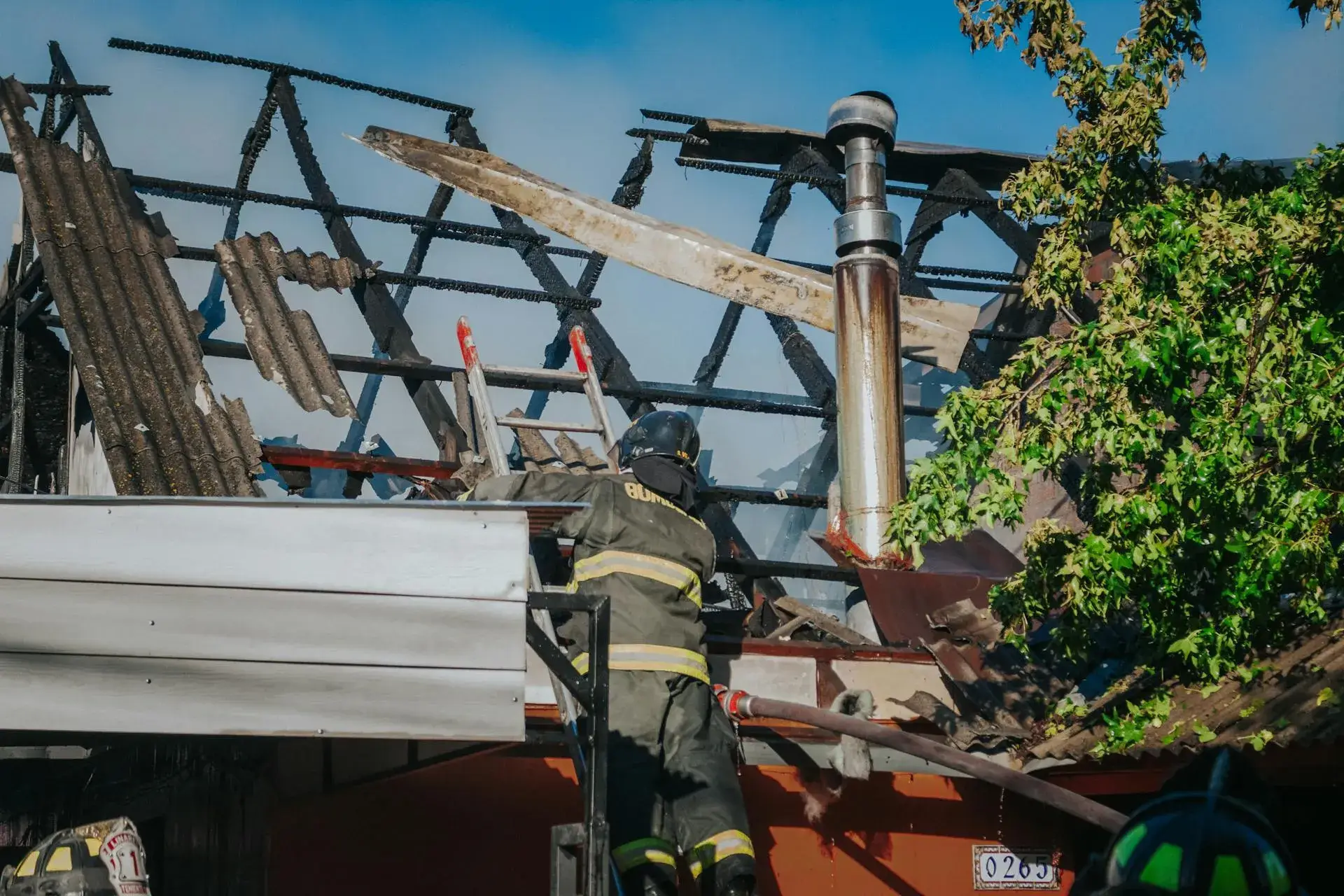
Fire Damage Restoration in Mableton, GA
Fire and smoke damage worsen every hour as soot acidifies, corrosion spreads, and odor penetrates deeper into materials. Our local team responds to Mableton emergencies within 60 minutes.
What Happens When You Call
A real person answers, not a call center. We assess your situation, ask the right questions, and begin coordinating your response immediately.
Your dedicated restoration team is dispatched from our local base serving Mableton and the surrounding south Cobb County communities.
Team arrives with board-up materials, soot removal equipment, air scrubbers, and structural assessment tools. Emergency securing and mitigation begins immediately.
Structure secured, immediate hazards addressed, suppression water managed, restoration plan documented. You know exactly what comes next.
A fire just happened and everything feels chaotic. The flames may be out, but the damage is still progressing. Soot is acidifying on surfaces, smoke residue is bonding to materials, and water from suppression is soaking into the structure beneath your feet. X Response exists for this exact moment. When you reach out, your restoration team is mobilized within minutes and on site within the hour. From that point forward, one team manages everything: securing the structure, removing soot and smoke, drying suppression water, and guiding the insurance process. Call now. Your team is standing by.
Why Mableton Homes Are Vulnerable to Fire Damage
Mableton's fire risk profile reflects a community that spans multiple housing eras and building types across its south Cobb County footprint. The mix includes 1960s and 1970s single-family ranch homes along the older creek corridors, 1980s and 1990s subdivisions with conventional wood-frame construction, and multi-family townhouse and apartment complexes concentrated along the Mableton Parkway commercial corridor. On March 31, 2024, a grease fire at the Upland Townhomes on the 6800 block of Mableton Parkway displaced 14 residents when flames spread through three connected units. Cobb County Fire and Emergency Services contained the fire to those three units, but all three suffered heavy fire and smoke damage. That incident captured a recurring pattern in attached-dwelling communities: fire that starts in one unit exploits shared walls, attic spaces, and connected roof assemblies to reach adjacent homes before occupants are aware, and smoke damage extends to units that fire never physically touched.
Just months later, in July 2024, a house fire on the 57000 block of Registry Oaks Lane in Mableton required Cobb County crews to work from approximately 5 p.m. onward, simultaneously fighting the blaze and protecting adjacent homes from radiant heat exposure. These events are not outliers. Mableton's population of roughly 77,700 people lives in a housing stock that includes aging electrical systems in older homes, high-density multi-family complexes along the commercial corridors, and single-family neighborhoods where proximity between structures allows fire to threaten multiple properties simultaneously. Cobb County Fire and Emergency Services responds, but the damage that accumulates between ignition and knockdown, and the secondary damage from suppression water, requires professional restoration that begins the same day.
Multi-Family and Townhouse Construction Along Mableton Parkway
Mableton Parkway is the community's primary commercial artery, and the corridor is lined with apartment complexes, townhouse communities, and condominiums built between the 1980s and 2000s. These attached-dwelling buildings share structural elements: party walls that may or may not extend through the attic, continuous roof assemblies that allow fire to travel above the living space, and shared plumbing and electrical chases that create vertical pathways for smoke migration. The March 2024 Upland Townhomes fire demonstrated the vulnerability: a grease fire in one kitchen spread to three connected units before suppression could contain it. For residents of the units that fire did not physically reach, smoke traveled through shared wall cavities and attic spaces, depositing soot on surfaces and embedding odor in materials throughout the connected structure. Restoration after a multi-family fire means addressing not just the fire unit but every connected space where smoke migrated, which often includes units whose occupants did not realize they had damage until days later when odor became apparent.
Aging Residential Electrical Systems in Older Neighborhoods
Mableton's older residential areas, particularly the neighborhoods between Nickajack Creek and Floyd Road that were developed in the 1960s and 1970s, contain homes with electrical panels and wiring designed for a fraction of the load modern households demand. Original 100-amp panels serve homes now running central HVAC, multiple appliances, home offices, and entertainment systems that collectively draw far more current than the system was rated for. Aluminum wiring, used extensively in this construction era, develops oxidation at connection points that increases resistance and generates heat. Space heaters compensating for inadequate HVAC in older homes draw heavy current through aging circuits. These conditions create electrical fires that smolder inside wall cavities, spreading heat and smoke through concealed spaces before breaking through to visible flame. By the time residents detect an electrical fire in these homes, smoke has often traveled through the entire wall and attic system.
Kitchen and Cooking Fires in Residential and Commercial Settings
Cooking fires are the leading cause of residential fires nationally, and the March 2024 Upland Townhomes fire in Mableton began as a grease fire, the most aggressive and difficult-to-suppress type of kitchen ignition. Grease fires produce temperatures exceeding 600 degrees Fahrenheit, generate thick protein-based soot that bonds aggressively to surfaces, and spread rapidly when occupants attempt suppression with water (which causes explosive splatter). In Mableton's multi-family housing stock, a kitchen fire that escapes the stovetop and reaches cabinetry or the exhaust hood can extend into wall cavities and the connected attic space within minutes. Along the Mableton Parkway commercial corridor, restaurants and food service establishments concentrate cooking fire risk in buildings with shared tenant spaces, where a kitchen fire in one business can send smoke through the HVAC system and structural connections into adjacent commercial units.
Radiant Heat Exposure Between Closely Spaced Homes
Many of Mableton's residential subdivisions were built with minimal setbacks between structures, a common practice in the subdivision development that characterized south Cobb County's growth decades. When fire fully involves a home with only 10 to 15 feet of separation from its neighbor, radiant heat can ignite vinyl siding, melt window frames, and char exterior sheathing on the adjacent structure without direct flame contact. The July 2024 Registry Oaks Lane fire required Cobb County crews to actively protect adjacent homes while fighting the primary blaze, a tactical decision that reflects how close spacing creates multi-property exposure during any fully involved structure fire. Even when the adjacent home does not ignite, radiant heat damages exterior finishes, melts vinyl soffits that protect the attic, and can crack windows, allowing smoke from the primary fire to enter the neighboring structure.
Suppression Water as Compound Damage
Every structure fire in Mableton produces two damage categories: the fire itself and the water used to extinguish it. Cobb County Fire and Emergency Services applies hundreds or thousands of gallons during suppression, and that water flows through the structure following gravity into lower levels, crawl spaces, and through floor systems. In Mableton's humid subtropical climate, suppression water left standing after firefighters clear the scene will begin producing mold growth within 24 to 48 hours, compounding the fire and smoke damage with a secondary biological contamination. For multi-story townhouses like those affected in the March 2024 Mableton Parkway fire, suppression water from the fire floor cascades to the ground level, soaking materials that the fire itself never reached. Managing suppression water is not an afterthought in fire restoration; it is a concurrent emergency that must begin the same day.
These factors define fire risk in Mableton: dense multi-family housing along the Parkway corridor where fire exploits shared structural elements, aging electrical systems in older single-family neighborhoods, concentrated cooking fire risk in both residential and commercial kitchens, close spacing that creates radiant heat exposure between structures, and the inevitable suppression water that compounds every fire with secondary water and mold damage. Effective fire restoration in Mableton requires understanding how fire moves through connected structures, how different soot chemistries demand different cleaning approaches, and how to prevent the suppression water from becoming a bigger problem than the fire it extinguished.
What Happens to Your Home While You Wait
Within 1 Hour
Soot settles on every exposed surface throughout the structure and begins reacting chemically with metals, finishes, and fabrics. Acidic smoke residue from synthetic materials starts etching chrome, brass, and aluminum fixtures. Suppression water pools on floors and soaks into subfloor materials, beginning the deterioration process that makes standalone water damage so destructive. In Mableton's warm climate, standing suppression water reaches temperatures that accelerate bacterial growth within hours. Every minute of delay makes cleaning harder and increases the number of surfaces that cross from salvageable to replacement.
1–24 Hours
Soot residue acidifies further and begins permanently staining porous materials like grout, natural stone, unsealed wood, and light-colored fabrics. Smoke odor drives deeper into insulation, carpet padding, and wall cavities as temperature differentials pull contaminated air into cooler enclosed spaces. Suppression water wicks into drywall and wood framing through capillary action. Chrome and brass fixtures begin to pit visibly. Electronics exposed to smoke residue malfunction as acidic particulate attacks solder connections and circuit board traces. What is cleanable at 6 hours becomes permanently damaged at 24.
24–48 Hours
Corrosion becomes visible on metal surfaces and hardware throughout the structure. Soot permanently stains carpet, upholstery, and unprotected porous surfaces beyond cleaning. Suppression water that was not extracted creates conditions for mold colonization, which in Cobb County's warm, humid climate begins aggressively within this window. Smoke odor reaches secondary spaces through air pathways and molecular diffusion. Structural wood in wall cavities absorbs moisture from suppression water and begins swelling at connection points, stressing fasteners. The restoration scope expands significantly as more materials cross from cleanable to replacement.
48–72 Hours
Mold initiates on surfaces wet from suppression water, particularly in crawl spaces, behind walls, and under flooring where standing water was not immediately removed. Smoke residue that penetrated HVAC ductwork distributes odor and particulate throughout the building every time the system cycles. Metal components corrode to the point of permanent damage requiring replacement rather than cleaning. The intersection of fire damage, smoke contamination, water damage, and mold creates a compound restoration challenge that single-focus contractors cannot address adequately.
One Week and Beyond
Extensive corrosion, permanent staining, established mold colonies in wet areas, and structural deterioration from unaddressed suppression water. Smoke odor has penetrated deep into the building envelope and requires thermal fogging or ozone treatment rather than surface cleaning alone. Insurance claims grow more complex as the carrier questions whether timely mitigation could have limited the loss. What could have been a cleaning and repair job becomes demolition, mold remediation, and full rebuild.
The difference between restoring your property and replacing it entirely is often measured in hours after the fire department leaves. Contact X Response now. Our Mableton team responds within 60 minutes.
How We Restore Fire-Damaged Mableton Homes
From the moment our team arrives, every step is documented, measured, and verified. Here is exactly what fire damage restoration involves for Mableton properties.
Emergency Securing and Assessment
Our team arrives with board-up materials, tarps, and structural assessment tools to secure the property against weather, intruders, and further damage. In Mableton, where summer thunderstorms can arrive within hours of a fire, protecting exposed structure from rain is an immediate priority that prevents suppression water damage from compounding with rainwater intrusion. We assess structural integrity, identify hazardous areas including compromised flooring and unstable framing, and map the full extent of fire, smoke, and water damage throughout the building. For multi-family properties along the Mableton Parkway corridor, that means assessing not just the fire unit but every connected unit where smoke may have migrated through shared walls, attics, and mechanical chases. Everything is documented with photos, written damage inventory, and a scope of work that supports your insurance claim from the first hour.
Suppression Water Management
Before soot cleaning can begin effectively, we address the suppression water that fire crews left behind. Standing water is extracted using commercial equipment capable of pulling hundreds of gallons per hour from floors, crawl spaces, and wall cavities. In Mableton's humid climate, suppression water left in a structure for even 24 hours will begin producing mold, which adds a biological contamination layer on top of the fire damage and dramatically increases restoration complexity. We extract, set drying equipment, and monitor moisture levels just as we would for a standalone water loss, because failing to manage suppression water means fighting mold remediation alongside fire restoration simultaneously.
Soot and Smoke Residue Removal
Different fires produce different soot chemistry, and effective cleaning requires matching the method to the residue type. The March 2024 Mableton Parkway townhouse fire began as a grease fire, which produces sticky, protein-based soot that requires alkaline cleaning agents and mechanical agitation to remove. An electrical fire in wall cavities produces minimal visible soot but deposits corrosive residue on electronics and metals. A structure fire involving synthetic furnishings and building materials produces dry, powdery soot that smears and embeds deeper if cleaned with the wrong technique. Our technicians identify the fire type, test residue on representative surfaces, and select the appropriate cleaning chemistry, tools, and sequence for each material in the structure. HEPA-filtered air scrubbers run continuously during cleaning to capture airborne particulate and prevent redistribution to already-cleaned surfaces.
Odor Elimination and Air Quality Restoration
Smoke odor penetrates far beyond the visible soot line, embedding in insulation, wall cavities, fabric, carpet padding, and HVAC ductwork throughout the structure. Surface cleaning removes soot but does not eliminate odor molecules that have migrated into porous materials and concealed spaces through pressure differentials during the fire. We use thermal fogging to reach concealed cavities with odor-neutralizing agents that follow the same pathways smoke used to enter those spaces. Hydroxyl generators provide occupied-space treatment for areas where people need access during restoration. HVAC systems are inspected and either cleaned or sealed depending on contamination level, because a contaminated duct system will redistribute odor throughout the building every time it cycles. Results are verified with air quality assessment before the job is considered complete.
Restoration and Quality Verification
Once cleaning, drying, and odor elimination are complete, we restore affected finishes, replace materials that could not be salvaged, and verify every area against the original scope of work. Final inspection includes air quality confirmation, visual inspection for residual soot or staining under varied lighting conditions, and documentation of all completed work with before-and-after photos. The completion package supports your insurance claim with a clear record of damage, process, and outcome. If any area fails our quality standard, we continue working until it passes. There is no partial completion.
The X Response Difference
When you contact X Response after a fire in Mableton, you get a team that handles every dimension of the damage: structural securing, suppression water, soot chemistry, odor elimination, and insurance documentation. One team, one standard, complete restoration.
Insurance Claim Guidance for Mableton Homeowners
Fire damage insurance claims in Georgia are generally covered under standard homeowner's policies, but the process is complex and the details matter. Your policy likely covers the structure, contents, additional living expenses while displaced, and debris removal, but coverage limits, deductibles, and specific exclusions vary by carrier and policy. For multi-family properties like the townhomes along Mableton Parkway, multiple policies from different carriers often apply to the same fire event, creating coordination challenges. Smoke damage to adjacent units that fire never physically reached is sometimes disputed by carriers who argue the damage is below the deductible or question causation. Arson determinations can delay claims for months while investigation proceeds. Proper documentation from the first hour, including clear source identification, damage mapping, and scope of work, is what makes the difference between a smooth claim and a contested one.
How X Response Helps
- Document all fire, smoke, and water damage with professional photos, written inventory, and a detailed scope of work from the first hour on site
- Identify the fire origin and damage categories clearly, because your policy may treat structural damage, contents loss, and additional living expenses as separate coverages with separate limits
- Document smoke migration into adjacent spaces with particulate testing and photographic evidence to support secondary damage claims
- Prepare documentation that aligns with standard insurance coverage categories so your adjuster can process efficiently without repeated requests for additional information
- Track additional living expenses and displacement costs from day one if you cannot occupy the property during restoration
X Response does not file claims on your behalf, adjust claims, or make coverage determinations. We provide thorough documentation and professional guidance to help you navigate the claims process effectively. Coverage decisions are made solely by your insurance carrier.
Certified Restoration Specialists Serving Mableton
When you contact X Response after a fire in Mableton, your restoration team is drawn from certified professionals who work across south Cobb County and understand the specific challenges of restoring fire-damaged properties in this community. They have worked townhouse fires along the Mableton Parkway corridor where smoke travels through shared walls and attics. They have managed single-family restorations in the older neighborhoods where electrical fires spread through concealed spaces before detection. They understand how Cobb County's humid subtropical climate accelerates mold growth on suppression-wet materials and why drying cannot wait for the soot cleaning to finish. This is not a generic crew reading a manual. It is a local team with direct experience in the building types, fire patterns, and climate conditions specific to Mableton.
Every technician on your team holds current IICRC certification in fire and smoke restoration and carries appropriate Georgia state licensing. Equipment includes commercial air scrubbers with HEPA filtration, thermal foggers for odor penetration, hydroxyl generators for occupied-space treatment, ozone generators for sealed-space molecular odor destruction, and the full suite of extraction and drying equipment needed to manage suppression water simultaneously. When your team arrives, they bring everything required to begin mitigation immediately, because in fire restoration the first 24 hours determine whether materials are saved or replaced.
In Mableton, X Response works with Atlanta's Best Restoration, an independent local restoration partner serving Cobb County.
Fire Damage Restoration FAQ for Mableton Homeowners
Other Emergency Services in Mableton

Water Damage Restoration
Burst pipes, storm flooding, standing water. We extract, dry, and restore before mold sets in.
Learn more
Smoke Damage Restoration
Soot residue, chemical odors, HVAC contamination. We decontaminate surfaces, eliminate odors, and restore air quality.
Learn more
Mold Remediation
Testing, containment, removal, prevention. We find the source, eliminate the growth, and stop it from returning.
Learn more
Sewage Cleanup
Sewer backups, contaminated water, biohazard. We extract, sanitize, and restore safely.
Learn more