
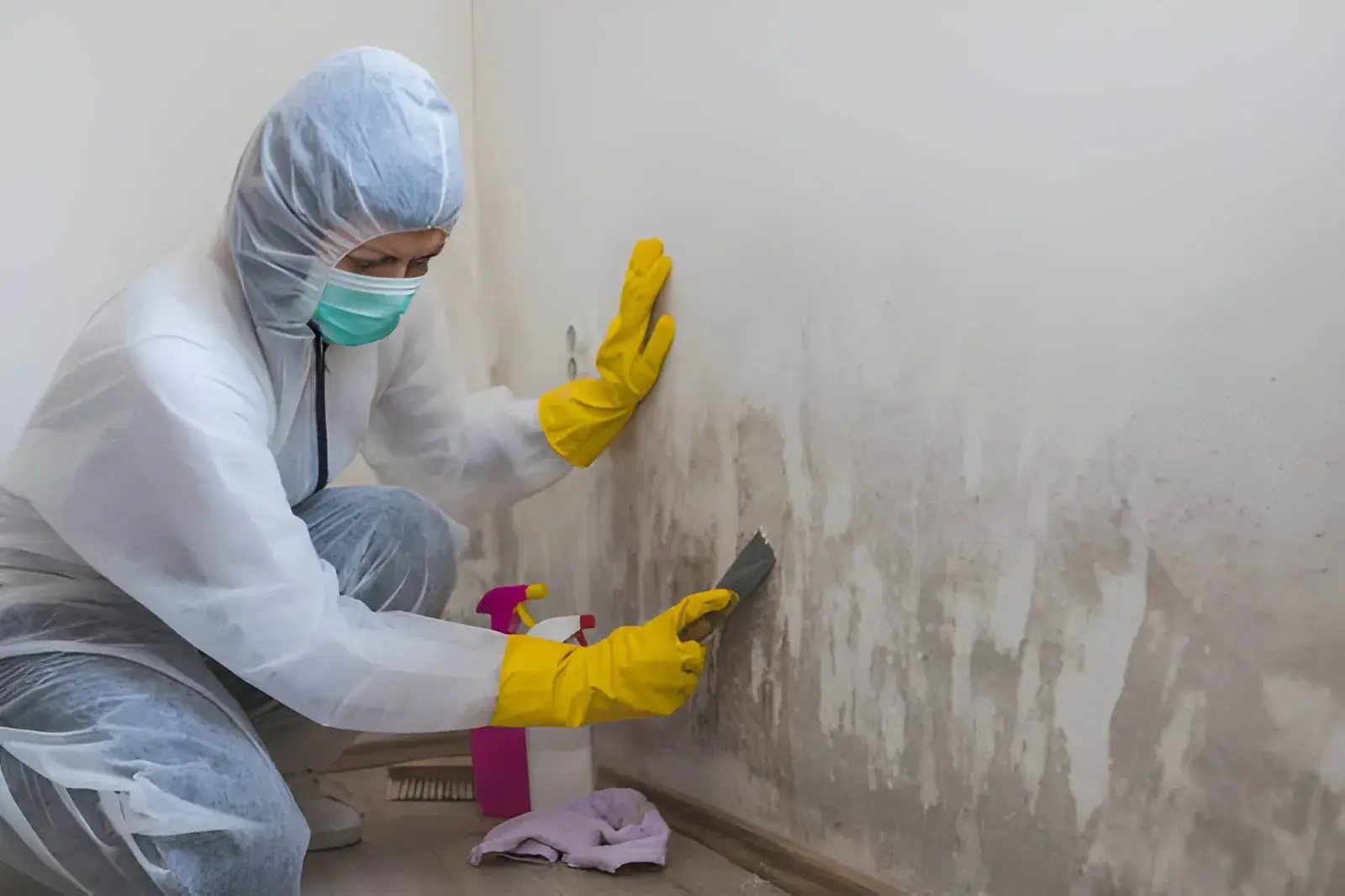
Mold Remediation in Baltimore, MD
Sustained Chesapeake humidity accelerates toxic mold growth inside porous rowhouse walls within 48 hours. Our certified Baltimore specialists deploy within 60 minutes.
What Happens When You Call
Your inquiry connects directly with an experienced remediation coordinator who evaluates moisture history, assesses health concerns, and schedules immediate inspection.
An IICRC-certified microbial remediation crew arrives at your Baltimore property within 60 minutes equipped with thermal imaging cameras and containment barriers.
Technicians map hidden moisture reservoirs behind historic plaster walls, under subfloors, and across rubblestone cellar foundations using digital pinless meters.
Crews construct 6-mil polyethylene containment zones under negative pressure, seal HVAC registers, and deploy commercial HEPA air scrubbers to capture airborne spores.
Discovering toxic mold growth inside your Baltimore residence or commercial property demands immediate, controlled remediation to protect indoor air quality and structural stability. X Response operates a regional disaster mitigation center in Central Maryland, dispatching certified microbial remediation specialists equipped with negative air machines, HEPA vacuums, and EPA-registered botanical antimicrobials directly to your address. From initial moisture profiling and containment construction through physical spore removal, sanitization, and post-remediation verification, our team manages every step. Call now. Your team is standing by.
Why Baltimore Homes Are Vulnerable to Mold
Mold proliferation in Baltimore is driven by a powerful confluence of maritime atmospheric humidity and historic building construction. Nearly one third of the buildings (over 65,000) are designated as historic in the National Register, more than any other U.S. city. Neighborhoods like Mount Vernon, Fell's Point, Federal Hill, Bolton Hill, and Old Town showcase architectural styles dating back to the late 18th and early 19th centuries, characterized by stone rubble basements, soft red brick exterior walls, and traditional lime mortar. These historic materials were engineered to breathe naturally in open drafts, but modern renovation practices, such as retrofitting airtight double-pane windows and insulating interior wall faces without exterior vapor barriers, frequently trap moisture inside the building envelope.
Compounding these structural factors is Baltimore's humid subtropical climate, heavily influenced by the adjacent waters of the Chesapeake Bay and the tidal Patapsco River. Throughout the summer months, average relative humidity stays high, with morning readings frequently running high and dew points pushing into the oppressive 70s. In this moisture-saturated atmosphere, finished basements and ground-floor living areas in classic rowhouses struggle to evaporate water that wicks upward from shallow coastal water tables through porous foundation walls. When slow plumbing leaks, roof scupper overflows, or seasonal high groundwater go unaddressed, dormant fungal spores of Aspergillus, Penicillium, and Stachybotrys chartarum rapidly colonize cellulose drywall paper, wooden subflooring, and carpet padding, creating serious respiratory hazards that require certified structural remediation.
Porous Historic Rubblestone and Brick Basements
Tens of thousands of Baltimore rowhouses feature subterranean foundations constructed from fieldstone or porous red clay brick bound with soft lime mortar. These century-old assemblies lack external elastomeric waterproofing membranes or modern footing drains, allowing groundwater under hydrostatic pressure to seep continuously into basements and maintain elevated subterranean relative humidity.
Chesapeake Bay Summer Humidity and Condensation
Warm, moisture-laden maritime air moving inland from the Chesapeake Bay brings sustained high dew points to Baltimore from June through September. When humid outdoor air penetrates cooler ground-level rowhome basements, it condenses against cool foundation slabs and pipes, creating chronic condensation that fuels active microbial growth on nearby organic surfaces.
Flat Bitumen Roofs and Internal Scupper Drain Leaks
Most Baltimore rowhouses utilize flat or low-pitch roofs that drain rainwater through internal copper or cast iron scupper boxes and downspouts routed through interior wall cavities. When aging scuppers corrode or become clogged with urban debris, stormwater backs up and leaks inside wall cavities, saturating plaster and timber unnoticed for months.
Inappropriate Modern Building Envelopes
Historic masonry buildings regulate moisture through continuous vapor transmission. When modern renovations apply fiberglass batt insulation or plastic vapor barriers directly against interior brick party walls without proper masonry breathability, moisture condenses within the wall assembly, rotting wooden joist ends and breeding hidden mold colonies.
Unconditioned Crawlspaces and Aging Water Infrastructure
Older residential sections of Baltimore often feature low, unpaved crawlspaces beneath kitchen additions or rear extensions. Earth floors evaporate soil moisture directly into subfloor timbers, while aging cast iron drain stacks develop hairline fractures, maintaining the chronic dampness required for toxic black mold amplification.
Eradicating mold in Baltimore requires deep understanding of historic masonry physics, local groundwater dynamics, and rigorous containment engineering. Surface bleach treatments cannot penetrate porous brick or lime plaster. X Response delivers scientific microbial remediation that removes active colonies and eliminates underlying moisture sources across Baltimore City.
What Happens to Your Home While You Wait
Within 24 to 48 Hours
Microscopic mold spores germinate in the presence of persistent moisture and warm Baltimore summer temperatures. Hyphae spread across damp drywall paper, cardboard backing, and timber subflooring, establishing active biological colonies that begin releasing musty volatile organic compounds.
3 to 7 Days
Visible fungal colonies expand across wall surfaces, behind baseboards, and along damp basement joists. Spore amplification elevates indoor airborne spore counts by tens of thousands of spores per cubic meter, triggering coughing, sneezing, and eye irritation among sensitive occupants.
1 to 2 Weeks
Fungal mycelium penetrates deep into the cellular structure of wooden floor joists and historic lath backing. Surface coatings blister and peel as mold breaks down organic binders. HVAC systems pull airborne spores into return ducts, spreading biological contamination into previously unaffected living areas.
2 to 4 Weeks
Structural timber framing begins exhibiting cellular breakdown and dry rot, compromising structural strength around joist pockets. Mycotoxins produced by species such as Stachybotrys and Chaetomium permeate porous furnishings and soft insulation, rendering them non-salvageable.
Beyond One Month
Severe, pervasive fungal colonization undermines structural framing, rots interior wall assemblies, and produces permanent noxious odors. The property requires extensive structural demolition down to the bare masonry, specialized chemical sanitization, and substantial reconstruction expense.
Delaying mold mitigation exposes your family to toxic spores and drives up structural repair costs. Contact X Response immediately to schedule a comprehensive Baltimore mold inspection.
How We Restore Mold-Affected Baltimore Homes
Our mold remediation protocol strictly follows ANSI/IICRC S520 guidelines and EPA indoor air quality standards, ensuring safe containment, thorough spore removal, and permanent moisture control.
Comprehensive Visual Inspection and Moisture Diagnostics
Our certified inspectors evaluate your Baltimore property using FLIR thermal cameras, calibrated pinless moisture meters, and optical borescopes to locate hidden moisture intrusions behind historic plaster and beneath finished flooring without unnecessary wall damage.
Negative Pressure Containment Engineering
Before disturbing any mold, technicians construct airtight containment chambers using 6-mil flame-retardant polyethylene sheeting, zip-wall poles, and self-closing magnetic doors. Commercial negative air machines equipped with medical-grade HEPA filters exhaust air outdoors, preventing spore escape.
Controlled Demolition and Material Removal
Severely colonized, non-salvageable porous materials such as water-damaged drywall, fiberglass insulation, and contaminated carpet padding are misted with antimicrobial agents, carefully cut out, and double-bagged in sealed 6-mil plastic bags for safe disposal.
HEPA Contact Vacuuming and Mechanical Sanding
Technicians systematically vacuum all exposed structural surfaces, historic brickwork, and wooden framing with commercial HEPA vacuums. Contaminated timber framing undergoes controlled mechanical sanding, wire brushing, or dry-ice blasting to remove embedded fungal roots completely.
Antimicrobial Treatment and Post-Remediation Clearance
We apply EPA-registered botanical antimicrobials to eliminate residual microbial activity, followed by a breathable fungicidal barrier coating to prevent future spore germination. An independent environmental testing firm conducts final air sampling to verify clearance before containment is dismantled.
The X Response Difference
Choose X Response for certified scientific protocols, safe containment engineering, and permanent mold eradication across Baltimore City.
Insurance Claim Guidance for Baltimore Homeowners
Navigating insurance coverage for mold remediation in Maryland requires demonstrating that the biological growth directly resulted from a sudden and accidental covered peril, such as a ruptured domestic supply pipe, sudden water heater failure, or storm-damaged roof breach. Standard homeowner policies in Maryland frequently impose strict mold coverage caps (typically $5,000 to $10,000) or exclude mold resulting from long-term maintenance neglect or chronic groundwater seepage. In Baltimore's historic rental market, landlords must also navigate compliance with the Maryland Department of the Environment and local housing codes. Our certified estimators document moisture origins precisely, compiling technical drying records and line-item estimates to maximize your available insurance coverage.
How X Response Helps
- Detailed photographic and thermal imaging documentation establishing the sudden moisture event that triggered mold colonization
- Line-item estimates prepared using industry-standard Xactimate software formatted to Maryland insurance claim requirements
- Comprehensive containment, negative air, and antimicrobial application protocol logs verifying compliance with IICRC S520
- Third-party laboratory spore trap analysis reports detailing airborne fungal species and concentrations before and after remediation
- Direct communication with insurance claim adjusters and underwriters licensed by the Maryland Insurance Administration
X Response provides licensed mold remediation and technical damage documentation. We do not operate as public adjusters or legal advocates; insurance coverage determinations rest exclusively with your policy carrier.
Certified Restoration Specialists Serving Baltimore
Our Baltimore mold remediation specialists bring extensive field experience resolving complex microbial infestations in residential, commercial, and institutional properties. Operating from our central Maryland facility, our crews have successfully remediated colonial residences in Fell's Point, historic brownstones in Bolton Hill, traditional brick rowhouses in Canton, and converted industrial lofts in Hampden. We possess specialized technical knowledge regarding historic building physics, lime mortar conservation, and the environmental dynamics of Chesapeake Bay coastal moisture.
Every crew leader maintains active certification from the IICRC as an Applied Microbial Remediation Technician (AMRT) and Water Damage Restoration Technician (WRT), adhering to strict EPA and OSHA safety protocols. Our service fleet is fully outfitted with commercial negative air machines, industrial HEPA vacuums, electrostatic antimicrobial foggers, and calibrated diagnostic moisture meters. When mold threatens your Baltimore property, our team delivers transparent, courteous, and guaranteed remediation service.
In Baltimore, X Response works with Green Clean Restoration LLC, an independent local restoration partner serving Baltimore County.
Mold Remediation FAQ for Baltimore Homeowners
Other Emergency Services in Baltimore

Water Damage Restoration
Burst pipes, storm flooding, standing water. We extract, dry, and restore before mold sets in.
Learn more
Fire Damage Restoration
Structural damage, soot, debris. We stabilize, clean, and rebuild what fire destroyed.
Learn more
Smoke Damage Restoration
Soot residue, chemical odors, HVAC contamination. We decontaminate surfaces, eliminate odors, and restore air quality.
Learn more
Sewage Cleanup
Sewer backups, contaminated water, biohazard. We extract, sanitize, and restore safely.
Learn moreNearby Service Areas
Also serving nearby: