
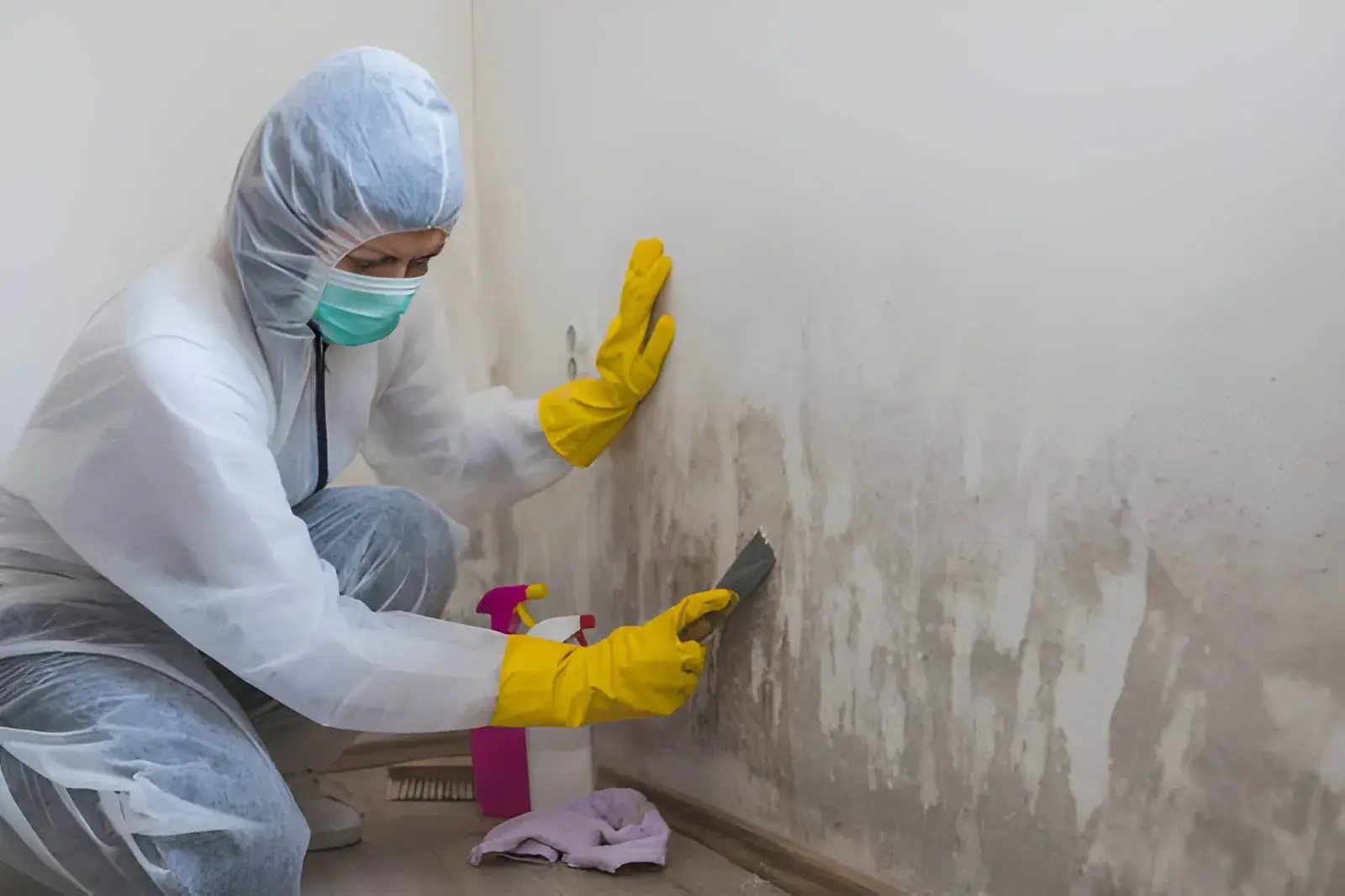
Mold Remediation in Dundalk, MD
Mold colonies spread rapidly across damp drywall and framing in our humid coastal climate. Our Baltimore County remediation team mobilizes within 60 minutes.
What Happens When You Call
Your inquiry connects directly with an experienced remediation consultant who evaluates visible contamination, identifies moisture sources, and schedules rapid on-site inspection.
Certified technicians arrive at your Dundalk address within 60 minutes, deploying infrared thermal cameras and calibrated pin meters to map hidden moisture pockets.
We erect critical physical containment barriers and install negative air pressure HEPA scrubbers to isolate mold spores from spreading into unaffected living areas.
Technicians remove non-salvageable materials, mechanically abrade fungal growth from framing, and apply EPA-registered antimicrobials to eliminate colonies permanently.
Discovering mold growth inside your property demands immediate, certified intervention to safeguard indoor air quality and structural integrity. X Response provides comprehensive, scientific mold remediation across Dundalk. From preliminary thermal moisture inspection and containment barrier setup to HEPA filtration, physical spore removal, and post-remediation clearance testing, our dedicated Baltimore County specialists restore healthy living environments. Call now. Your team is standing by.
Why Dundalk Homes Are Vulnerable to Mold
Mold contamination represents an ongoing structural and public health concern throughout the low-lying coastal neighborhoods of Dundalk. It is important to dry water-damaged areas and items within 24-48 hours to prevent mold growth. Because Dundalk rests at elevations barely above sea level along the Patapsco River and Chesapeake Bay, properties throughout Old Dundalk, Watersedge, Inverness, and St. Helena regularly experience elevated relative humidity, frequent groundwater saturation, and unmitigated condensation that fuel rapid fungal proliferation.
Many Dundalk homes feature sub-grade basements or compact crawlspaces built over dense, moisture-retentive coastal soils. Without continuous mechanical dehumidification and exterior drainage barriers, hydrostatic pressure forces moisture through porous concrete block foundation walls and hairline masonry cracks. When humid outdoor air enters unconditioned basements during warm Mid-Atlantic summers, moisture condenses on cool ductwork, plumbing lines, and wood floor joists, creating an ideal nursery for Aspergillus, Penicillium, and Stachybotrys mold colonies to flourish undetected behind drywall and finished baseboards.
Chesapeake Bay Atmospheric Humidity
Dundalk's maritime location between Back River, Bear Creek, and the Chesapeake Bay produces sustained summer dew points above seventy degrees. This constant moisture load keeps building envelopes damp, slowing natural evaporation and allowing dormant mold spores to germinate on paper-backed sheetrock, carpet padding, and organic ceiling tiles within forty-eight hours of moisture exposure.
Shallow Coastal Water Tables and Basement Seepage
With average elevations hovering around sixteen feet above sea level, Dundalk sits directly over a high coastal water table. Prolonged seasonal rains quickly saturate surrounding soils, forcing groundwater upward through basement slabs and block joints. Persistent capillary moisture feeds toxic mold colonization along sill plates and finished basement partition walls.
Aging Bethlehem Steel Housing and Plaster Assemblies
Historic stucco-clad residences dating back to Dundalk's founding in 1916 by Bethlehem Steel feature multi-layer wall systems that trap ambient moisture. When plumbing leaks or roof penetrations occur, water seeps into old lath-and-plaster assemblies. Fungal growth proliferates inside hollow wall cavities long before visible staining alerts homeowners on the interior living side.
HVAC Condensation and Microbial Duct Seeding
In older Dundalk duplexes and single-family homes with retrofitted central air conditioning, high humidity combined with uninsulated ductwork produces heavy condensation inside plenums and registers. Fungal spores colonize damp dust within duct trunks, turning the HVAC system into a distribution network that circulates allergens into every room.
Post-Flood Microbial Amplification
Tidal surges from the Patapsco River and urban flash flooding along Bread and Cheese Creek introduce organic debris and bacteria into residential structures. Stagnant moisture left in crawlspaces or floor assemblies accelerates microbial digestion of cellulose materials, transforming simple flood damage into severe biological contamination requiring specialized negative pressure containment.
Treating mold in Dundalk requires more than cosmetic bleaching; it requires identifying underlying coastal moisture pathways and implementing rigorous IICRC S520 remediation protocols. Our Baltimore County technicians eliminate active colonies and establish lasting environmental controls to ensure mold does not return.
What Happens to Your Home While You Wait
24 to 48 Hours
Microscopic mold spores germinate on wet drywall paper, subflooring, and carpet backing. Initial fungal hyphae begin spreading through cellulose materials, releasing subtle musty odors throughout confined basement and crawlspace areas in your Dundalk property.
48 to 72 Hours
Visible black and greenish mold colonies form on structural surfaces. Mold roots penetrate deeply into sheetrock and porous wood trim. Airborne spore counts rise sharply, triggering nasal congestion, sneezing, and eye irritation among sensitive occupants.
1 to 2 Weeks
Mycotoxins and microbial volatile organic compounds (mVOCs) saturate indoor air. Mold spreads across wall studs, subfloors, and into HVAC air returns. Porous materials like drywall, acoustic ceiling tiles, and carpet padding become permanently compromised and non-salvageable.
2 to 4 Weeks
Structural floor joists and wall framing suffer superficial wood rot as fungal enzymes digest cellulose fibers. Mold colonies colonize entire wall cavities and crawlspace subfloors. Remediation complexity increases, requiring extensive containment, structural sanding, and HEPA air scrubbers.
One Month and Beyond
Severe systemic contamination permeates the entire building envelope. Timber framing softens, compromising load-bearing connections. Unaddressed mold poses severe health risks and can lead to property condemnation or massive repair costs during real estate transactions.
Do not allow mold to compromise your family's health or property value. Call X Response immediately for certified mold remediation in Dundalk.
How We Restore Mold-Affected Dundalk Homes
Our remediation methodology follows rigorous IICRC S520 guidelines, prioritizing containment, safe structural extraction, and long-term moisture management.
Thermal Inspection and Moisture Mapping
We utilize non-invasive infrared cameras, deep-penetrating pin meters, and hygrometers to identify hidden moisture reservoirs behind walls, beneath tile, and within Dundalk foundation block assemblies without unnecessary structural demolition.
Critical Containment and Negative Air Pressure
Technicians construct six-mil polyethylene containment barriers with zippered airlocks to seal off contaminated areas. Industrial HEPA-filtered negative air machines exhaust filtered air outside, preventing spores from escaping into unaffected living zones.
HEPA Vacuuming and Controlled Material Removal
Unsalvageable, contaminated porous materials such as drywall and insulation are double-bagged and removed under sealed containment. Remaining structural surfaces are vacuumed with certified commercial HEPA filtration equipment capturing particles down to 0.3 microns.
Mechanical Abrasion and Antimicrobial Application
We mechanically sand and wire-brush exposed timber framing to physically remove embedded fungal roots. Technicians then apply EPA-registered, non-toxic botanical antimicrobials to eliminate residual microbial activity and prevent future colonization.
Post-Remediation Verification and Clearance Testing
Following comprehensive cleaning, independent air quality testing verifies that indoor airborne spore concentrations are lower than outdoor baseline levels. We deliver a formal clearance certificate providing complete documentation for homeowners and insurers.
The X Response Difference
\"Choose X Response for definitive, medically sound mold remediation that removes the biological hazard and corrects the underlying moisture problem permanently.\"
Insurance Claim Guidance for Dundalk Homeowners
\"Navigating mold remediation insurance coverage in Maryland requires careful policy analysis and precise technical documentation. Most standard homeowner policies cover mold remediation only when the contamination directly results from a covered sudden and accidental peril, such as a burst internal supply line or water heater failure. In contrast, mold resulting from ongoing maintenance neglect, high ambient humidity, or rising coastal floodwaters is frequently subject to policy exclusions or strict monetary sub-limits (commonly five to ten thousand dollars). Our Baltimore County team provides adjusters with clear, cause-of-loss documentation to maximize eligible policy benefits.\"
How X Response Helps
- \"Comprehensive photo documentation tracing mold growth directly to a sudden, covered water intrusion source\"
- \"Third-party certified laboratory spore trap analysis detailing baseline outdoor and indoor fungal concentrations\"
- \"Itemized IICRC-compliant scopes of work prepared in standardized Xactimate estimating software\"
- \"Clear differentiation between structural drying costs and mold remediation sub-limits to optimize coverage allocation\"
- \"Official Certificate of Completion and post-remediation clearance verification for your insurance carrier and municipal records\"
\"X Response provides professional mold mitigation, containment, and technical claims evidence. We do not act as public adjusters or make coverage determinations; policy interpretation rests solely with your insurance provider.\"
Certified Restoration Specialists Serving Dundalk
\"Our Dundalk mold remediation division combines extensive microbiological knowledge with practical building science expertise across southeastern Baltimore County. Serving neighborhoods from Old Dundalk and Turner Station to Gray Manor and Watersedge, our remediation specialists understand the complex moisture dynamics created by low coastal elevations, shallow water tables, and aging residential construction. We approach every project with the utmost care, prioritizing occupant health and safety above all else.\"
\"Every technician on our team holds active IICRC certification as an Applied Microbial Remediation Technician (AMRT) and Water Damage Restoration Technician (WRT). Operating under full Maryland licensing and equipped with cutting-edge HEPA air filtration fleets, negative air machines, and botanical antimicrobials, our crews deliver meticulous, lasting mold remediation you can trust.\"
In Dundalk, X Response works with Green Clean Restoration LLC, an independent local restoration partner serving Baltimore County.
Mold Remediation FAQ for Dundalk Homeowners
Other Emergency Services in Dundalk

Water Damage Restoration
Burst pipes, storm flooding, standing water. We extract, dry, and restore before mold sets in.
Learn more
Fire Damage Restoration
Structural damage, soot, debris. We stabilize, clean, and rebuild what fire destroyed.
Learn more
Smoke Damage Restoration
Soot residue, chemical odors, HVAC contamination. We decontaminate surfaces, eliminate odors, and restore air quality.
Learn more
Sewage Cleanup
Sewer backups, contaminated water, biohazard. We extract, sanitize, and restore safely.
Learn more