
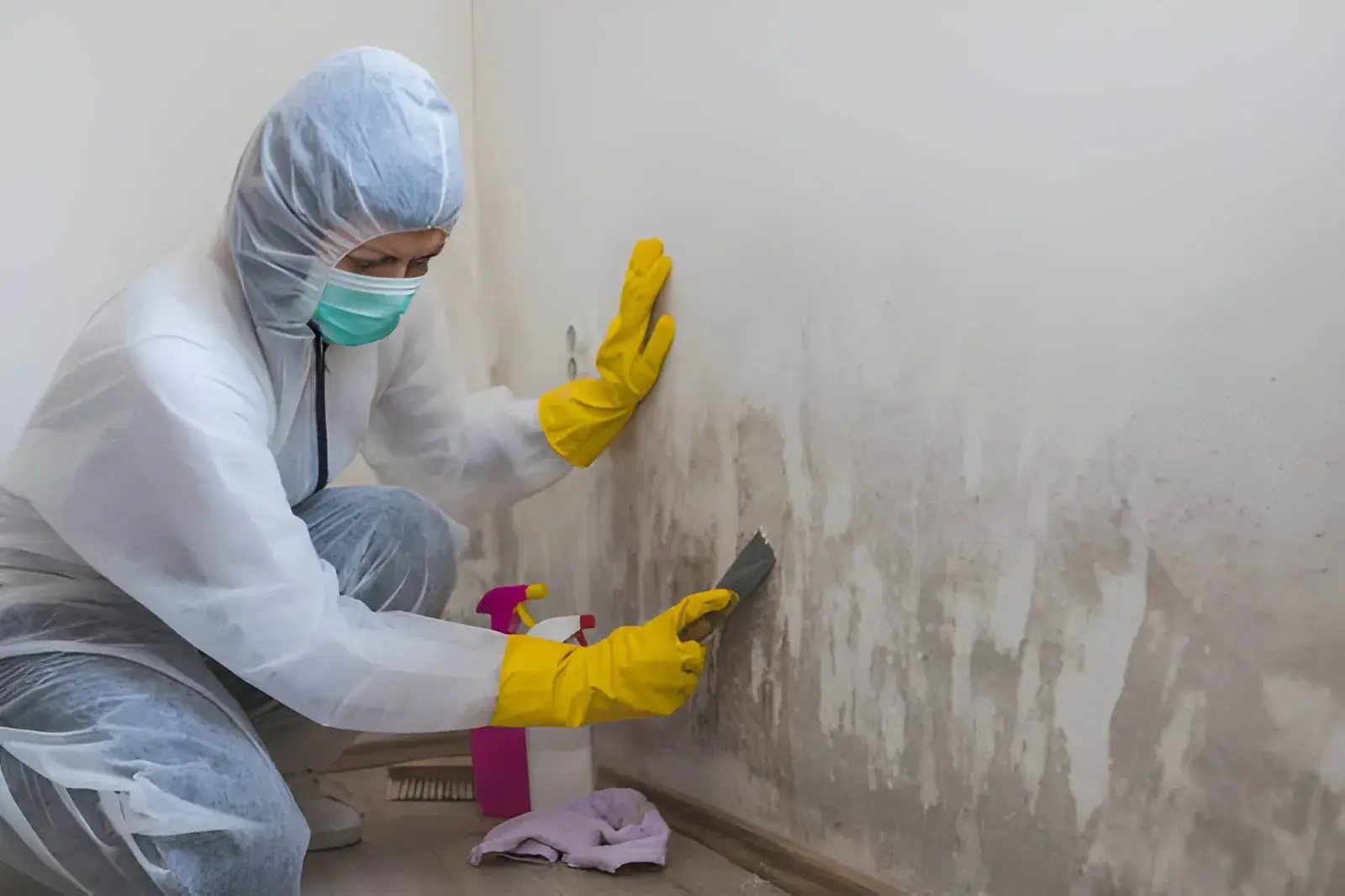
Mold Remediation in Meadville, PA
Mold colonies spread through airborne spores, colonizing drywall, subfloors, and wood framing within 24 to 48 hours of moisture exposure. Our certified remediation specialists deploy across Meadville within 60 minutes to isolate fungal contamination and protect your home.
What Happens When You Call
Direct emergency dispatch connects you to a certified microbial remediation supervisor who evaluates your moisture history and mobilizes our local field team.
Our certified remediation crew arrives on site in Meadville within 60 minutes, utilizing infrared thermal cameras and moisture meters to locate hidden fungal colonies.
Technicians erect sealed physical containment chambers using 6-mil polyethylene sheeting and place critical areas under negative air pressure to capture airborne spores.
All colonized porous materials are safely removed, structural lumber is treated with HEPA sanding and botanical antimicrobials, and industrial dehumidification stabilizes indoor humidity.
Discovering toxic mold or persistent musty odors in your basement, crawl space, or living areas indicates an active, unmanaged moisture problem. Fungal growth damages wood framing, deteriorates indoor air quality, and triggers allergic and respiratory symptoms in family members. X Response delivers a comprehensive, scientifically validated mold remediation protocol executed in strict compliance with IICRC S520 professional standards. No superficial bleach sprays, no uncontained spore dispersal, and no recurring outbreaks. Our local Crawford County technicians arrive equipped with negative air machines, industrial HEPA filtration, and EPA-registered botanical antimicrobials. Call now. Your team is standing by.
Why Meadville Homes Are Vulnerable to Mold
Meadville, Pennsylvania, the county seat of Crawford County, is home to 12,473 residents and is situated along French Creek in northwestern Pennsylvania. Nestled within a deep river valley where elevations rise from 1,080 feet at the creek bed to over 1,400 feet atop College Hill, Meadville experiences a humid continental climate characterized by warm, humid summers, heavy lake-effect winter precipitation, and damp transitional seasons. During July and August, outdoor relative humidity frequently exceeds 75 to 80 percent, carrying dense moisture into the French Creek basin. According to the U.S. Environmental Protection Agency, indoor relative humidity should be maintained below 60 percent, ideally between 30 and 50 percent, and wet materials must be dried within 24 to 48 hours to prevent mold growth. In Meadville residences, this elevated ambient humidity enters subterranean basements, condensing against cool stone and concrete foundation walls and creating an ideal environment for microbial spore germination.
Compounding this seasonal climate humidity is Crawford County's distinctive glacial hydrogeology. Meadville rests on dense glacial till soils, including Canfield and Cambridge silt loams, which feature tight subsoil fragipans that impede downward groundwater drainage. Following heavy snowmelts from the region's 80 to 100 inches of annual lake-effect snow and intense spring rainfall, high perched water tables persist for weeks. In historic residential neighborhoods surrounding Allegheny College, Diamond Park, and along Terrace Street, older homes constructed with fieldstone, cut sandstone, or early poured concrete basements face persistent lateral hydrostatic pressure. Groundwater seeps through porous lime mortar seams, wall cracks, and unsealed dirt or slab floors through capillary wicking. Once inside unconditioned basements, this moisture evaporates into indoor air, pushing basement relative humidity above 70 percent. Fungal species including Cladosporium, Penicillium, Aspergillus, and Stachybotrys readily colonize damp timber floor joists, rim joists, subflooring, and finished basement drywall.
River Basin Microclimate and Summer Condensation
Meadville's location along the French Creek floodplain produces elevated ambient humidity throughout July and August. When humid outdoor air penetrates subterranean basement spaces, moisture condenses rapidly on cool masonry walls, floor slabs, and uninsulated cold-water pipes, providing moisture that fuels fungal colonies.
Porous Historic Fieldstone and Sandstone Basements
Many older homes across College Hill and central Meadville sit atop fieldstone or cut sandstone foundations. Decades of weathering leave mortar joints porous, allowing groundwater under hydrostatic pressure to seep into basements, creating chronic moisture reservoirs.
Glacial Fragipan Soils and Saturated Snowmelt
Dense silt loam soils with clay-rich subsoils across Crawford County hold moisture near the surface rather than allowing free drainage. Saturated snowmelts exert continuous lateral hydrostatic pressure on basement walls, forcing moisture through mortar joints and basement floor perimeters.
Unconditioned Crawl Spaces and Basement Framing
Older residential construction in Meadville often incorporates unconditioned crawl spaces or semi-finished basements lacking mechanical dehumidification. Stagnant air and persistent capillary dampness foster extensive fungal growth across floor joists, sills, and subflooring assemblies.
Eradicating mold in Meadville homes requires more than surface cleaning; it demands structural moisture elimination, physical fungal containment, and permanent humidity control. Our certified remediation process resolves both visible mold and its root moisture source.
What Happens to Your Home While You Wait
24 to 48 Hours
Following water intrusion, plumbing seepage, or sustained relative humidity above 60 percent, microscopic fungal spores germinate on damp drywall, carpet backing, and wood framing. Initial hyphae networks begin penetrating porous cellulose materials.
3 to 7 Days
Active mold colonies become visible as black, green, or white powdery patches along baseboards, basement walls, and subfloors. Microbial volatile organic compounds (MVOCs) are released into the air, producing an unmistakable musty odor and causing mild respiratory irritation.
1 to 2 Weeks
Fungal root structures penetrate deeply into wood framing, plaster, and drywall cores, compromising material strength. Spore concentrations in indoor air escalate significantly, spreading through heating and cooling ducts into previously unaffected living spaces.
2 to 4 Weeks
Extensive surface colonization spreads across structural floor joists, subflooring, and finished drywall. Occupants may experience increased respiratory symptoms, allergic reactions, headaches, and sinus irritation as toxic mycotoxins accumulate in the indoor environment.
One Month and Beyond
Prolonged fungal growth causes irreversible structural rot in timber framing, subflooring, and historic lath assemblies. Remediation costs escalate substantially as straightforward containment and antimicrobial cleaning transition to extensive structural demolition and timber replacement.
Do not allow hidden mold to compromise your family's health and your property's structural integrity. Contact X Response now for certified mold inspection and abatement in Meadville.
How We Restore Mold-Affected Meadville Homes
Every mold remediation project in Meadville follows a strict scientific protocol aligned with the IICRC S520 standard to ensure safe, permanent mold removal without cross-contaminating your home.
Comprehensive Moisture Mapping and Visual Inspection
Our certified technicians conduct an exhaustive inspection of your property using infrared thermal imaging cameras, invasive and non-invasive moisture meters, and digital hygrometers. We identify every active moisture source, delineate all hidden fungal reservoirs, and establish an initial remediation protocol.
Critical Containment and Negative Air Pressure
Before disturbing any mold colonies, we isolate the work area using heavy-duty 6-mil polyethylene sheeting and airtight zip poles. Industrial negative air machines equipped with HEPA filtration run continuously, creating negative pressure to prevent fungal spores from migrating into unaffected living areas.
Targeted Removal of Porous Contaminated Materials
Non-salvageable porous building materials, including severely contaminated drywall, saturated fiberglass insulation, and colonized carpeting, are carefully bagged in sealed 6-mil waste bags and removed through controlled exit chambers to prevent spore release.
HEPA Vacuuming and Botanical Antimicrobial Treatment
All salvageable structural elements, including historic timber framing, subflooring, and stone foundation surfaces, undergo detailed HEPA vacuuming followed by physical sanding or wire brushing. We apply EPA-registered botanical antimicrobial agents that penetrate wood pores to eradicate underlying fungal roots.
Structural Drying and Clearance Testing
We deploy commercial LGR dehumidifiers and air movers to stabilize building materials to verified dry standard moisture levels. Following thorough decontamination, independent third-party air quality testing confirms that indoor spore levels are equal to or lower than natural outdoor baseline counts.
The X Response Difference
X Response delivers certified, permanent mold remediation throughout Crawford County, restoring clean indoor air and long-term structural health to your home.
Insurance Claim Guidance for Meadville Homeowners
Insurance coverage for mold remediation in Pennsylvania depends on the underlying cause of moisture intrusion. Standard homeowner property insurance policies typically cover mold remediation only when the mold is the direct result of a sudden and accidental covered peril, such as a burst plumbing pipe or water heater rupture that was promptly addressed. Conversely, mold resulting from ongoing maintenance issues, chronic high humidity, groundwater seepage through foundation walls, or long-term roof leaks is generally excluded, or subject to a restrictive coverage cap (typically $5,000 to $10,000). Establishing the exact timeline and cause of moisture is essential to navigating your insurance claim successfully.
How X Response Helps
- Establish the sudden and accidental water intrusion event that initiated mold growth with timestamped photographic evidence.
- Document all remediation protocols with detailed moisture readings and certified containment procedures to satisfy insurance adjusters.
- Review your homeowner policy for specific mold endorsements, exclusions, or limited fungal remediation coverage sub-limits.
- Separate personal contents from structural building elements in itemized remediation scopes to maximize applicable coverage categories.
- Provide professional clearance air testing documentation verifying that remediation met industry safety standards.
X Response provides objective microbial documentation, moisture mapping, and line-item remediation scopes to support policyholder claims. We do not act as public adjusters or make coverage determinations; final claim approval rests with your insurance carrier.
Certified Restoration Specialists Serving Meadville
When mold threatens your Meadville home, X Response provides certified, compassionate assistance from seasoned environmental restoration specialists. Our technicians understand the specific environmental conditions and architectural heritage of Crawford County, from historic Victorian residences on College Hill to mid-century homes along French Creek. We know where moisture hides in local buildings and how to eradicate fungal growth permanently.
Every crew member maintains current IICRC certification in Applied Microbial Remediation (AMRT) and Water Damage Restoration (WRT). Utilizing commercial HEPA air filtration equipment, negative pressure systems, and advanced botanical antimicrobials, our team possesses the training and technology required to safely eliminate mold infestations and restore clean, healthy air to your living environment.
In Meadville, X Response works with Restoworks Disaster Restoration, an independent local restoration partner serving Crawford County.
Mold Remediation FAQ for Meadville Homeowners
Other Emergency Services in Meadville

Water Damage Restoration
Burst pipes, storm flooding, standing water. We extract, dry, and restore before mold sets in.
Learn more
Fire Damage Restoration
Structural damage, soot, debris. We stabilize, clean, and rebuild what fire destroyed.
Learn more
Smoke Damage Restoration
Soot residue, chemical odors, HVAC contamination. We decontaminate surfaces, eliminate odors, and restore air quality.
Learn moreNearby Service Areas
Also serving nearby: