
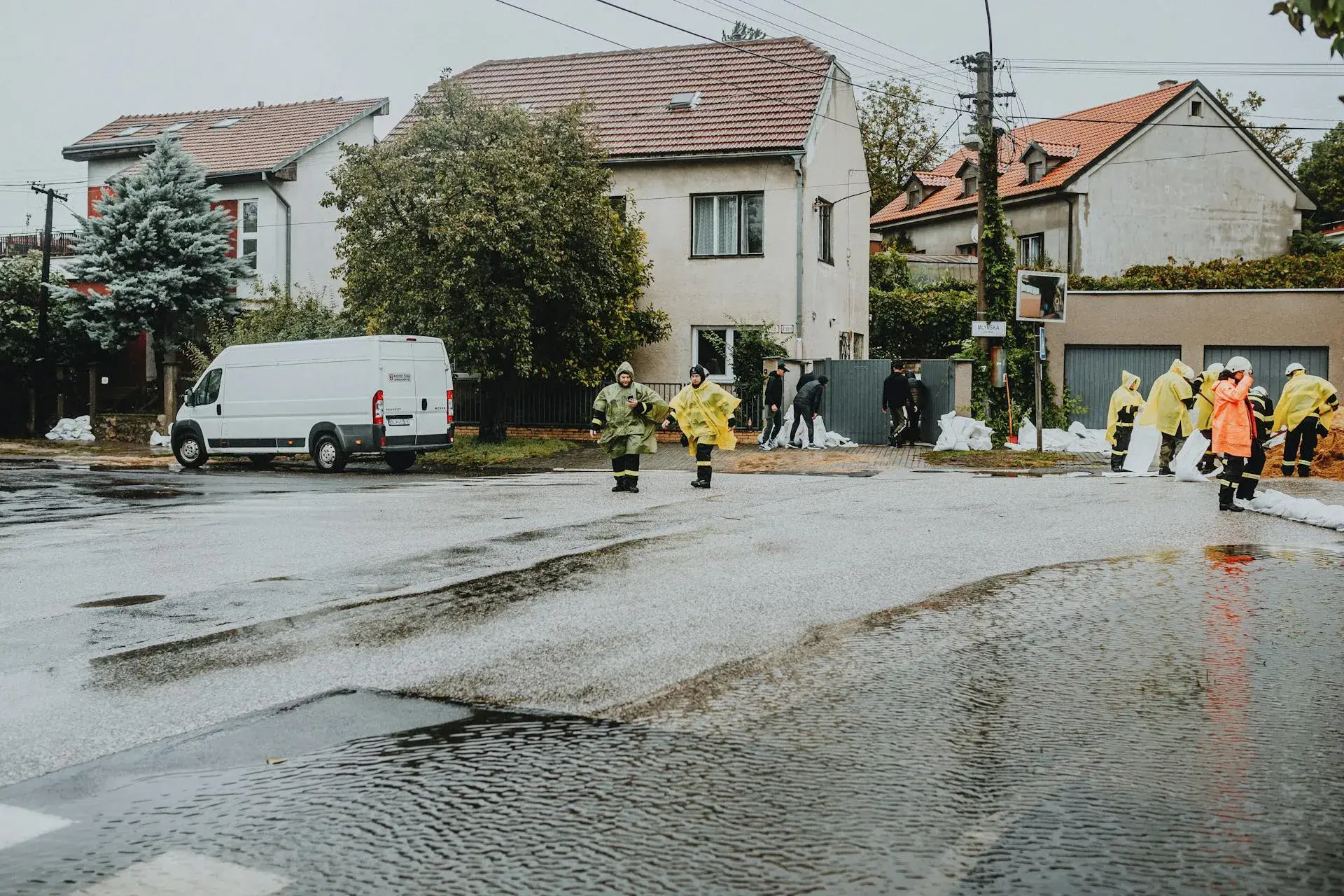
Sewage Cleanup in Fort Myers Beach, FL
Sewage contamination in Fort Myers Beach's subtropical heat breeds dangerous bacteria within hours. On a barrier island with a damaged wastewater system under multi-year reconstruction, backup events demand immediate response. Our local team arrives within 60 minutes.
What Happens When You Call
A real person answers, not a call center. We assess the severity, determine the contamination category, and dispatch your biohazard-certified team immediately.
Your dedicated team is dispatched from our local base serving Fort Myers Beach and the surrounding Lee County barrier islands.
Team arrives with sewage extraction equipment, PPE, antimicrobial agents, and biological contamination testing tools. Extraction and disinfection begin immediately.
Sewage removed, contaminated materials identified, biological hazard contained. You know exactly what comes next.
Sewage in your home is a health emergency. The biological contamination is active, multiplying in Fort Myers Beach's heat, and penetrating every porous material it contacts. This is not a situation where you can wait for a callback or schedule someone for tomorrow. X Response exists for exactly this moment. When you reach out, your certified biohazard team is mobilized within minutes and on site within the hour. From that point forward, one team manages everything: extraction, disinfection, material removal, drying, and documentation. Call now. Your team is standing by.
Why Fort Myers Beach Homes Are Vulnerable to Sewage
Fort Myers Beach faces sewage contamination risk that few mainland communities experience. The town's wastewater is processed by the Fort Myers Beach Water Reclamation Facility, which sustained extensive damage when Hurricane Ian pushed storm surge across Estero Island on September 28, 2022. The facility experienced a loss of treatment capacity and was left with aging infrastructure compounded by catastrophic storm damage. In February 2026, Lee County commissioners approved a $258 million construction contract to restore and expand the facility with a flood-resilient design, with construction beginning in March 2026 and estimated completion in 2030. During this multi-year reconstruction period, the island's wastewater system operates at reduced capacity with temporary measures, making it more vulnerable to overflows during high-demand periods, storm events, and equipment failures. A wastewater system running at diminished capacity on a barrier island surrounded by rising water during every storm creates conditions where sewer backup into homes is not a rare event but a foreseeable risk during the reconstruction years.
Beyond the facility-level vulnerability, Fort Myers Beach's sewer collection system itself was damaged by Hurricane Ian's surge. Gravity sewer lines that run beneath island streets were displaced, cracked, or infiltrated by sand and debris when the surge washed across the island. Lift stations that pump sewage from low points to the treatment facility lost electrical power and suffered saltwater damage to pumps and controls. When the collection system is compromised, sewage that should flow to the plant instead backs up through floor drains, toilet connections, and cleanouts into the lowest structures on the line. On a barrier island where ground elevation is minimal and the water table sits close to the surface, any failure in the pressurized system results in sewage finding alternative paths, including up through the plumbing of ground-floor homes and businesses. The combination of a treatment facility under reconstruction, a collection system still recovering from hurricane damage, and an island geography where the water table is always close to the surface creates persistent sewage backup risk that will not fully resolve until the infrastructure rebuild is complete.
Water Reclamation Facility Under Multi-Year Reconstruction
The Fort Myers Beach Water Reclamation Facility was severely damaged by Hurricane Ian in September 2022, losing treatment capacity and requiring a complete rebuild. Lee County approved a $258 million construction contract in February 2026 to restore and expand the facility with an elevated, flood-resilient design, with construction beginning in March 2026 and estimated completion in 2030. During this reconstruction period, the facility operates at reduced capacity while construction proceeds around the active treatment systems. Peak demand during tourist season, combined with storm events that introduce infiltration into the collection system, can push the facility beyond its temporary capacity. When treatment capacity is exceeded, untreated or partially treated wastewater must be managed through bypass, storage, or emergency discharge, and during severe events the pressurized system can force sewage back through the collection lines into connected structures.
Hurricane-Damaged Collection System and Lift Stations
Hurricane Ian's surge did not just damage the treatment facility. It damaged the network of gravity sewer lines, force mains, and lift stations that collect and transport sewage from homes and businesses across the island to the plant. Sand, debris, and saltwater infiltrated the underground piping network. Lift station electrical systems and pump components sustained saltwater corrosion. While emergency repairs restored basic function, the collection system's long-term integrity remains compromised in sections where storm damage has not yet been fully assessed or repaired. When a lift station fails or a force main experiences a break, sewage backs up into the structures connected to that section of the system. On a barrier island where the water table is close to the surface, broken or cracked sewer pipes also allow groundwater infiltration that overwhelms system capacity during rain events.
Tidal and Storm Inflow Infiltration
Fort Myers Beach's sewer system is designed for sanitary flow: wastewater from homes and businesses. However, the collection system receives significant inflow and infiltration during high-water events. When storm surge, king tides, or heavy rain raise the water table above the elevation of sewer pipes, groundwater enters through any crack, joint failure, or manhole opening. This additional volume overwhelms the collection system's capacity and the treatment facility's diminished throughput. The result is sewage mixed with groundwater that backs up through the lowest connections in the system: floor drains, first-floor toilets, shower drains, and cleanout caps. On Fort Myers Beach, where ground-floor elevations are minimal and the surrounding water level is always close, even moderate rain combined with a high tide can create the pressure differential that forces sewage into homes.
Barrier Island Plumbing Vulnerability
Homes on Fort Myers Beach connect to the municipal sewer system through lateral lines that run from the building to the main collection line beneath the street. These laterals are shallow on the barrier island because the water table limits how deep pipes can be buried. Shallow laterals are more vulnerable to damage from surface activity, tree root intrusion, and ground movement from storm events. Many laterals on the island were damaged by Ian's surge, which scoured ground cover, displaced fill, and shifted pipe connections. A compromised lateral can allow both infiltration into the sewer system during high water and backflow into the home during system surcharge. Properties with backwater valves installed after Ian have protection against system-level backup, but many older structures or those in partial renovation have not yet had valves installed, leaving them exposed to backup events whenever the collection system is pressurized beyond capacity.
Accelerated Biological Contamination in Subtropical Heat
Sewage contamination on Fort Myers Beach presents extreme biological hazard because the island's year-round warmth accelerates bacterial reproduction. At temperatures consistently above 75 degrees, pathogenic bacteria in sewage including E. coli, Salmonella, and other organisms double their populations every 20 to 30 minutes rather than the hours it takes in cooler climates. The subtropical humidity prevents surfaces from drying, which would otherwise slow bacterial spread. Contaminated materials that sit untreated for even a few hours in this environment reach biological loads orders of magnitude higher than the same material would in a temperate climate with the same delay. This makes the response time between sewage intrusion and professional extraction directly proportional to the severity of the health hazard and the scope of materials requiring removal rather than cleaning.
These factors create a sewage contamination environment on Fort Myers Beach that is both more likely to occur and more dangerous when it does. The wastewater system is under multi-year reconstruction with reduced capacity. The collection network carries hurricane damage that makes backup events more frequent. Tidal infiltration overwhelms the system during high-water events. Barrier island plumbing is shallow and vulnerable. And the subtropical climate accelerates biological hazard at a pace that compresses the safe response window from days to hours. Effective sewage cleanup on Estero Island means understanding the infrastructure constraints that caused the event, responding fast enough to prevent biological amplification in the heat, and knowing how to restore a home where contaminated water may have entered through both the plumbing system and the surrounding groundwater simultaneously.
What Happens to Your Home While You Wait
Within 1 Hour
Sewage spreads across flooring and begins wicking into porous materials: drywall, baseboards, cabinetry, and carpet. Pathogenic bacteria in Fort Myers Beach's year-round heat above 75 degrees begin rapid reproduction. Biological contamination expands beyond the initial contact area as liquid migrates through capillary action. The health hazard is immediate and active from the moment sewage enters the structure.
1–4 Hours
Bacterial populations multiply rapidly in the warm environment. Porous materials absorb contaminated water beyond the point where surface cleaning can address the biological hazard. Sewage odor intensifies as bacterial decomposition accelerates in the heat. Materials that could have been cleaned with immediate response now require removal because biological contamination has penetrated beyond the surface.
4–24 Hours
Biological contamination reaches levels requiring material demolition rather than cleaning. Drywall, carpet, pad, and any porous material in contact with sewage is now considered Category 3 contaminated material requiring removal and disposal. The contamination zone expands as wicking continues upward through drywall and outward through flooring materials. Airborne pathogen levels rise as bacterial colonies establish and off-gas in the enclosed space.
24–48 Hours
In Fort Myers Beach's humidity, materials that have not been extracted and dried become candidates for mold colonization in addition to bacterial contamination, compounding the biological hazard. Structural materials begin degrading from the combined effects of moisture, biological activity, and the mild acidity of sewage. The scope of demolition and material removal expands significantly with each passing day in this climate.
One Week and Beyond
Extensive biological contamination throughout all contacted materials. Mold established on surfaces and within wall cavities. Structural degradation advancing where materials have remained wet and contaminated. The property requires comprehensive hazardous material removal, structural drying, antimicrobial treatment, and potentially structural repairs. Health risk to occupants is severe. Insurance claim complexity increases dramatically as scope expands far beyond the original sewage intrusion event.
In Fort Myers Beach's subtropical heat, the difference between a contained sewage cleanup and a full biohazard demolition is measured in hours. Contact X Response now. Our biohazard-certified team responds within 60 minutes.
How We Restore Sewage-Damaged Fort Myers Beach Homes
From the moment our team arrives on Estero Island, every step follows established biohazard protocols for Category 3 contaminated water. Here is exactly what the sewage cleanup process involves.
Contamination Assessment and Safety Protocol
Our team arrives in full PPE including respiratory protection, chemical-resistant suits, and eye protection. Sewage is classified as Category 3 (grossly contaminated) water requiring the highest level of precaution. We map the full extent of contamination including visible sewage and areas where wicking has carried contaminated moisture beyond the obvious boundaries. On Fort Myers Beach, where the subtropical heat accelerates bacterial growth, speed of assessment directly affects the amount of material that can be saved versus what must be removed. We identify the backup source, whether municipal system surcharge, lateral failure, or internal plumbing, and coordinate with Lee County Utilities if the issue is system-wide.
Sewage Extraction and Material Removal
Standing sewage is extracted using specialized contaminated-water equipment. All porous materials in contact with sewage are removed: carpet, pad, affected drywall to at least 12 inches above the visible water line per IICRC S500 standards for Category 3 water, baseboards, and contaminated insulation. On Fort Myers Beach, where the warm climate accelerates penetration, we often remove drywall to 24 inches above the visible line because the wicking in humid conditions extends further than in temperate environments. Removed materials are bagged, sealed, and disposed of as biohazardous waste. Non-porous surfaces and structural framing are prepared for disinfection.
Disinfection and Antimicrobial Treatment
All remaining surfaces that contacted sewage receive EPA-registered antimicrobial treatment. This includes structural framing, concrete slabs, metal plumbing, and any non-porous material that will remain in place. On Fort Myers Beach, where the warm humid air supports rapid bacterial recovery, we apply antimicrobial agents at concentrations appropriate for the elevated biological load this climate produces. Treatment is applied to all surfaces within the contamination zone, including areas above the water line that may have received splash or aerosol contamination. HVAC systems that operated during the event are shut down and treated separately to prevent distribution of airborne contaminants through the building.
Structural Drying and Dehumidification
After extraction, removal, and disinfection, the exposed structural cavity must be dried to prevent mold colonization. We deploy commercial dehumidifiers and air movers to bring framing, concrete, and remaining structural materials below the moisture threshold that supports biological growth. On Fort Myers Beach, where ambient humidity runs high, mechanical dehumidification is the only path to achieving dry conditions. Natural air drying is impossible in this environment. We monitor daily with calibrated meters until the structure reaches target moisture levels, which on this barrier island requires maintaining equipment longer than mainland projects because the humid ambient air constantly fights the drying effort.
Clearance Verification and Documentation
Before reconstruction begins, we verify that all contamination has been resolved and the structure is safe for re-occupancy. Surface testing confirms that antimicrobial treatment was effective and biological loads are at acceptable levels. Moisture readings confirm the structure has reached dry standard. Air quality testing verifies that airborne pathogen levels are within safe parameters. All documentation, including contamination mapping, extraction records, disposal manifests, treatment protocols, and clearance results, is compiled for your insurance claim and health department records if required. Only after clearance verification is the space released for reconstruction.
The X Response Difference
When you contact X Response for sewage cleanup on Fort Myers Beach, you get a biohazard-certified team that understands the accelerated biological timelines of this subtropical barrier island and the infrastructure vulnerabilities of a wastewater system under multi-year reconstruction. One team, one standard of work, from emergency extraction through verified clearance.
Insurance Claim Guidance for Fort Myers Beach Homeowners
Sewage backup insurance coverage on Fort Myers Beach depends on the cause and your policy's specific endorsements. Standard homeowner's policies often exclude sewer backup damage unless you have purchased a separate sewer and drain backup endorsement, which many Florida insurers offer as an add-on. If the backup results from a municipal system failure or infrastructure limitation during the water reclamation facility reconstruction, liability may extend to Lee County Utilities depending on the circumstances. For properties with flood insurance, sewage intrusion that occurs as part of a broader flood event may fall under the flood policy rather than the homeowner's policy. The distinction matters because flood policies and sewer backup endorsements have different coverage limits, deductibles, and documentation requirements.
How X Response Helps
- Document the sewage source and cause, whether municipal system, lateral failure, or internal plumbing
- Photograph all contamination extent, affected materials, and damaged contents before removal begins
- Preserve documentation of the municipal system's status if the backup resulted from infrastructure issues during the facility reconstruction
- Align remediation scope with your sewer backup endorsement's coverage categories and limits
- Identify whether the event occurred during broader flooding, which may shift coverage to the flood policy with different terms
X Response does not file claims on your behalf, adjust claims, or make coverage determinations. We provide documentation and guidance to help you make informed decisions about your property and your policy. Coverage decisions are made solely by your insurance carrier.
Certified Restoration Specialists Serving Fort Myers Beach
When you contact X Response for sewage cleanup on Fort Myers Beach, your team is drawn from biohazard-certified professionals who work across Lee County and understand the specific challenges of sewage contamination in the barrier island's subtropical environment. They know how the island's wastewater infrastructure is operating at reduced capacity during the multi-year facility reconstruction, how the damaged collection system creates backup events during high-water conditions, and how the subtropical heat accelerates biological contamination at a pace that demands immediate response. They have managed sewage intrusion from municipal system surcharge during storm events, from compromised laterals on hurricane-damaged properties, and from the internal plumbing failures that affect both rebuilt and unrenovated structures on the island.
Every technician on your team holds current biohazard remediation certification and carries the appropriate Florida state licensing for the work performed. Equipment includes specialized contaminated-water extraction systems, full PPE for Category 3 environments, EPA-registered antimicrobial agents appropriate for the biological loads this climate produces, commercial dehumidifiers for structural drying, and air quality testing equipment for clearance verification. When your team arrives on Fort Myers Beach, they bring everything needed to extract, disinfect, dry, and verify in the demanding conditions that define this barrier island.
In Fort Myers Beach, X Response works with Florida Restoration and Platinum Air Mold Inspection, independent local restoration partners serving Lee County.
Sewage Cleanup FAQ for Fort Myers Beach Homeowners
Other Emergency Services in Fort Myers Beach

Water Damage Restoration
Burst pipes, storm flooding, standing water. We extract, dry, and restore before mold sets in.
Learn more
Fire Damage Restoration
Structural damage, soot, debris. We stabilize, clean, and rebuild what fire destroyed.
Learn more
Smoke Damage Restoration
Soot residue, chemical odors, HVAC contamination. We decontaminate surfaces, eliminate odors, and restore air quality.
Learn more
Mold Remediation
Testing, containment, removal, prevention. We find the source, eliminate the growth, and stop it from returning.
Learn more