
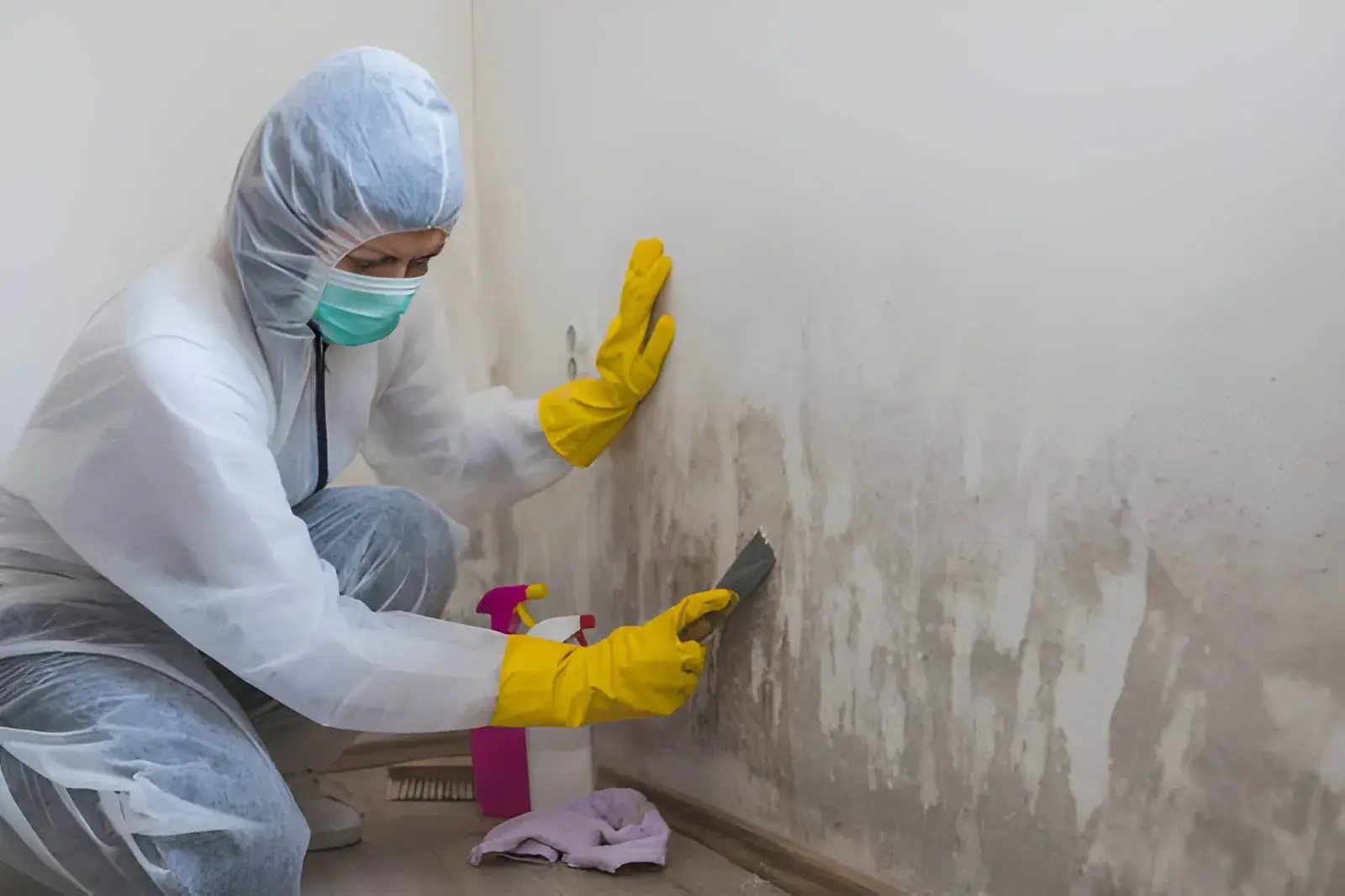
Mold Remediation in Fort Myers Beach, FL
Mold colonizes wet materials within 24 hours in Fort Myers Beach's subtropical heat and humidity. On a barrier island where structures were saturated by saltwater surge, the conditions for growth are constant. Our local team responds within 60 minutes.
What Happens When You Call
A real person answers, not a call center. We assess your situation, ask the right questions about moisture history and symptoms, and dispatch your remediation team immediately.
Your dedicated team is dispatched from our local base serving Fort Myers Beach and the surrounding Lee County barrier islands.
Team arrives with moisture mapping equipment, air quality testing tools, and containment materials. Assessment begins immediately to determine the scope and source.
Mold extent mapped, moisture source identified, remediation protocol established. You know exactly what the scope is and what comes next.
Mold does not wait, and on Fort Myers Beach it has every advantage: year-round warmth, humidity that never drops below 60 percent, saltwater-saturated materials that refuse to dry naturally, and a post-hurricane environment where moisture has been trapped in structures for months or years. If you can see it, smell it, or suspect it, the growth is already established and spreading. X Response exists for exactly this situation. One call, one certified team, one standard of work from assessment through verified clearance. Call now. Your team is standing by.
Why Fort Myers Beach Homes Are Vulnerable to Mold
Fort Myers Beach has become one of the most mold-affected communities in Lee County since Hurricane Ian struck on September 28, 2022. When storm surge of 10 to 15 feet pushed saltwater through the ground floors of virtually every structure on Estero Island, it saturated drywall, insulation, wood framing, and concrete block with water that could not evaporate in the subtropical climate. Since Hurricane Ian pushed saltwater surge into tens of thousands of Lee County homes in September 2022, the region has experienced a dramatic increase in mold-related complaints, with Fort Myers Beach and San Carlos Island among the hardest-hit communities due to prolonged structural saturation on the barrier islands. Many structures sat vacant for weeks or months after the storm with no power, no air conditioning, no dehumidification, and no airflow, while trapped moisture and year-round warmth above 75 degrees provided ideal conditions for mold colonization throughout every wet material in the building. By the time property owners could return and begin renovation, mold had established throughout wall cavities, behind remaining cabinetry, inside HVAC ductwork, and on structural framing.
The mold challenge on Fort Myers Beach extends beyond the initial hurricane event. The island sits at barely 5 to 7 feet elevation between the Gulf of Mexico and Estero Bay, surrounded by water that maintains high humidity year-round. Even structures that have been fully renovated since Ian remain vulnerable because the island's environmental conditions inherently favor mold growth. Salt deposits left by the surge continue to attract atmospheric moisture inside wall cavities, re-wetting materials that were dried during reconstruction. The island's stormwater drainage system, damaged by the hurricane and only partially restored, allows tidal flooding and rain backup to re-introduce moisture to ground-level structures during high-water events. Every wet-season thunderstorm, every king tide, and every tropical weather event re-activates the moisture cycle that feeds mold growth. Fort Myers Beach is not a community that had a one-time mold event. It is a community where the environmental conditions that drive mold are permanent features of barrier island life, intensified by hurricane damage that has not yet been fully resolved.
Post-Hurricane Ian Structural Saturation
When Hurricane Ian drove 10 to 15 feet of saltwater through Fort Myers Beach on September 28, 2022, it saturated building materials throughout virtually every structure on the island. Drywall, fiberglass insulation, wood studs, OSB sheathing, and concrete block absorbed saltwater that then had no natural path to dry. Many buildings lost power for weeks, and without air conditioning the interior environment reached temperatures above 85 degrees with humidity running high, the precise conditions where mold colonies establish rapidly on organic materials. Properties that sat vacant through October and November 2022 without dehumidification developed extensive mold growth throughout wall cavities, beneath flooring, behind cabinetry, and inside ductwork. By the time demolition and renovation began, the mold was systemic rather than localized, requiring full remediation rather than spot treatment.
Hygroscopic Salt Deposits and Re-Wetting Cycles
Saltwater flooding deposits salt crystals on every surface the water contacts: inside wall cavities, on structural framing, within insulation, and on concrete block. These salt deposits are hygroscopic, meaning they absorb moisture from the surrounding air. On Fort Myers Beach, where relative humidity rarely drops below 60 percent and frequently runs high, salt deposits inside wall cavities continuously absorb atmospheric moisture and keep materials damp even after active water intrusion has stopped. This creates a persistent wetting condition that standard drying protocols do not resolve because the moisture source is the humid air itself, drawn into the material by the salt. Structures that test dry during the controlled conditions of active dehumidification can return to elevated moisture levels within days of the equipment being removed, as the salt begins absorbing ambient humidity again. This hygroscopic re-wetting provides the continuous moisture supply that mold requires to maintain active growth indefinitely.
Year-Round Growth Conditions on a Barrier Island
Fort Myers Beach never experiences conditions that naturally suppress mold. Average monthly temperatures range from 65 to 83 degrees, remaining within the optimal mold growth range of 60 to 90 degrees every month of the year. Relative humidity stays high annually, with the wet season from June through September sustaining levels for extended periods. The island's position between the Gulf and Estero Bay means marine moisture surrounds the community from all directions. Unlike mainland locations that may experience dry periods during winter months when cold fronts pass and humidity drops temporarily, the barrier island's thermal mass and marine exposure moderate temperature swings and maintain humidity. This means any moisture intrusion on Fort Myers Beach, no matter how small, encounters growth-favorable conditions immediately and continuously, without the seasonal interruptions that slow or halt mold in temperate climates.
HVAC-Distributed Mold Contamination
Air conditioning systems on Fort Myers Beach run 10 to 12 months per year, creating a continuous air circulation path through every connected room. When mold establishes in one area of a building, the HVAC system can distribute spores throughout the ductwork and into every room the system serves. Evaporator coils, which condense moisture from the humid air as a normal function of cooling, provide an ideal surface for mold colonization inside the air handler itself. A moldy evaporator coil actively produces and distributes spores with every cooling cycle. In post-Ian structures where the HVAC system was exposed to surge water and either not replaced or inadequately cleaned, the system can be the primary mold source rather than a distribution pathway. We see cases where all visible mold in a property traces back to a contaminated air handler that was reinstalled or replaced without proper cleaning of the connected ductwork.
Construction-Phase Mold During Ongoing Reconstruction
Fort Myers Beach is in a multi-year reconstruction period, and mold frequently establishes during the construction phase before buildings are sealed and conditioned. New framing sits exposed to rain before roofing is complete. Drywall is installed in buildings without functioning air conditioning and immediately begins absorbing the ambient humidity. Concrete pours cure in outdoor conditions that provide moisture for mold to colonize the form lumber and adjacent materials. Imported building materials stored outdoors on the island absorb moisture from the humid air before installation. Many property owners discover mold in brand-new construction materials shortly after their renovation is completed, not because of a leak or failure, but because the materials were never properly conditioned before the building envelope was sealed. Effective remediation on Fort Myers Beach must address both legacy hurricane mold and the new-construction mold that the ongoing rebuild produces.
These factors make mold on Fort Myers Beach a permanent environmental challenge rather than a one-time event to resolve. The post-Ian saturation created systemic colonization throughout the building stock. Hygroscopic salt deposits maintain wetting cycles that standard drying cannot break. Year-round tropical conditions ensure no natural growth suppression ever occurs. HVAC systems distribute contamination building-wide. And the multi-year reconstruction introduces new mold at every stage of the rebuild. Effective mold remediation on this barrier island means understanding all five of these drivers and addressing the moisture source, not just the visible growth, because growth will return within weeks if the underlying conditions are not corrected.
What Happens to Your Home While You Wait
Within 24 Hours
Mold spores begin germinating on wet organic materials. On Fort Myers Beach, where ambient temperature and humidity are always within the optimal growth range, colonization can begin in as little as 12 hours on saturated drywall paper facing, carpet backing, and wood surfaces. In post-Ian structures where salt deposits maintain elevated moisture, any new water intrusion finds already-primed materials that colonize faster than clean, dry materials would.
24–48 Hours
Visible mold colonies establish on surfaces. Growth appears as discoloration on drywall, fuzzy patches on wood, or dark spots on ceiling tiles. In the barrier island's heat and humidity, what starts as a small patch doubles its coverage area daily. Musty odor becomes detectable. Spore production begins, and spores enter the HVAC system if the air conditioning is operating.
48–72 Hours
Mold spreads into wall cavities, behind baseboards, and beneath flooring where it grows unseen. HVAC distribution carries spores throughout the building. Multiple colony types establish as different mold species find their preferred niches in the varied materials of the structure. Occupants may begin experiencing allergic responses: nasal congestion, eye irritation, or respiratory symptoms.
One Week
Extensive colonization throughout wall cavities and on structural framing. Mold is no longer a surface issue but a systemic one requiring demolition of affected materials rather than surface cleaning. Drywall integrity fails where colonies consume the paper facing. Occupant health symptoms may intensify. Remediation scope and cost increase substantially.
One Month and Beyond
In Fort Myers Beach's constant warmth and humidity, unchecked mold growth consumes organic materials structurally. Floor joists, wall studs, and sheathing show degradation where colonies have been active for extended periods. The building becomes uninhabitable without full remediation. What started as a moisture problem requiring drying and treatment becomes a structural reconstruction project. Health exposure at this stage may require medical evaluation for sensitive occupants.
On Fort Myers Beach, the mold clock starts faster and runs continuously because the environmental conditions never pause. There is no cold season to slow growth, no dry period to interrupt the moisture cycle. Contact X Response now. Our team responds within 60 minutes.
How We Restore Mold-Affected Fort Myers Beach Homes
From the moment our team arrives on Estero Island, every step follows established IICRC S520 mold remediation standards adapted for barrier island conditions. Here is exactly what the process involves.
Inspection and Moisture Mapping
Our team arrives with moisture meters, thermal imaging cameras, and air quality sampling equipment to determine the full extent of mold growth and identify its moisture source. On Fort Myers Beach, we specifically test for hygroscopic salt contamination that maintains wetting cycles even when no active water leak exists. We map moisture levels throughout the structure, identify areas where relative humidity exceeds the 60 percent threshold that supports growth, and take air and surface samples where needed to determine mold types and spore concentrations. The inspection determines whether the mold source is active water intrusion, salt-driven re-wetting, condensation from HVAC issues, or construction-phase moisture.
Containment and Air Filtration
Before any mold is disturbed, we establish containment to prevent spores from spreading to unaffected areas. Polyethylene sheeting with sealed edges isolates the work area. Negative air pressure maintained by HEPA-filtered air machines ensures airflow moves into the containment rather than out, preventing spore migration. On Fort Myers Beach, where year-round AC operation can rapidly distribute spores, we shut down HVAC systems serving affected areas during remediation to prevent the ductwork from becoming a distribution pathway. Air scrubbers with HEPA filtration run continuously inside containment to capture spores released during material removal.
Mold Removal and Material Demolition
Contaminated materials are removed according to IICRC S520 protocols. Porous materials with established mold growth, including affected drywall, insulation, carpet, and pad, are removed and disposed of in sealed bags. Non-porous surfaces like concrete block, metal studs, and treated wood are cleaned with appropriate antimicrobial agents. On Fort Myers Beach, where salt deposits complicate remediation, we assess whether structural framing can be cleaned of both mold and salt or whether the hygroscopic contamination will re-create growth conditions if left in place. Materials are removed progressively, checking each layer for hidden growth behind surfaces, because mold in this climate typically extends well beyond what is visible from the occupied side of the wall.
Drying and Moisture Source Correction
Removing visible mold without correcting the moisture source guarantees recurrence on Fort Myers Beach, where environmental conditions always favor regrowth. We deploy commercial dehumidification to bring the structure below the 60 percent relative humidity threshold, identify and correct whatever is supplying moisture, whether active leak, salt deposit re-wetting, condensation, or drainage failure, and verify that corrections hold over time. For salt-contaminated structures, this may require flushing or removing affected framing to eliminate the hygroscopic agent. For properties with compromised drainage infrastructure, it may require exterior corrections to prevent recurrent water entry during high-tide events.
Clearance Testing and Verification
After remediation, we conduct clearance testing to verify that mold has been successfully removed and conditions no longer support regrowth. Air samples and surface samples are taken in the remediated area and compared to exterior baseline levels and unaffected interior areas. On Fort Myers Beach, where ambient spore counts are naturally elevated due to the tropical environment, clearance standards account for the outdoor baseline. We also verify that moisture levels have been reduced to safe thresholds and that the moisture source correction is holding. Only after clearance testing confirms successful remediation do we release the containment and authorize the space for reconstruction or re-occupancy.
The X Response Difference
When you contact X Response for mold remediation on Fort Myers Beach, you get a team that understands the permanent mold pressure this barrier island faces and addresses the environmental drivers, not just the visible symptoms. One team, one standard of work, from inspection through verified clearance.
Insurance Claim Guidance for Fort Myers Beach Homeowners
Mold insurance coverage in Florida is complex and frequently limited. Standard homeowner's policies typically cover mold damage that results directly from a covered water damage event, such as a burst pipe, but most Florida policies cap mold coverage at $10,000 to $50,000 and exclude mold resulting from flooding, long-term moisture, or maintenance failures. Since Fort Myers Beach's mold problems often trace to Hurricane Ian surge damage, flood insurance policies may be relevant, but NFIP flood policies do not cover mold remediation specifically. They cover the physical damage from flooding, and mold resulting from inadequate or delayed drying after a covered flood event falls into a gray area that requires careful documentation. Properties still in post-Ian repair may have additional coverage complications related to timing and mitigation obligations.
How X Response Helps
- Document the moisture source and its connection to a covered event, which is essential for mold coverage under most Florida policies
- Photograph all visible mold, moisture readings, and affected materials before remediation begins
- Capture air and surface sampling results that demonstrate the scope of contamination objectively
- Connect the mold to its water damage origin with a clear timeline showing when intrusion occurred and when mold was discovered
- Identify your policy's mold coverage cap and any exclusions before beginning remediation so you understand your financial exposure
X Response does not file claims on your behalf, adjust claims, or make coverage determinations. We provide documentation and guidance to help you make informed decisions about your property and your policy. Coverage decisions are made solely by your insurance carrier.
Certified Restoration Specialists Serving Fort Myers Beach
When you contact X Response for mold remediation on Fort Myers Beach, your team is drawn from certified professionals who work across Lee County's barrier islands and understand the specific mold challenges of post-hurricane structures in a tropical coastal environment. They know how salt deposits from Ian's surge maintain re-wetting cycles inside wall cavities, how the island's year-round humidity feeds continuous growth without seasonal interruption, and how HVAC systems distribute contamination building-wide in structures that run AC twelve months a year. They have remediated post-surge mold in beachfront condominiums, mold in newly reconstructed homes where construction-phase moisture was sealed inside the building envelope, and chronic mold in bayside properties where tidal flooding re-introduces moisture through compromised drainage.
Every technician on your team holds current mold remediation certification and carries the appropriate Florida state licensing for the work performed. Equipment includes commercial dehumidifiers, HEPA air scrubbers, negative air machines for containment, moisture mapping tools, thermal imaging cameras, and the sampling equipment needed for both assessment and clearance testing. Our team follows IICRC S520 mold remediation standards throughout and adapts protocols for the barrier island's unique salt-contamination and year-round growth conditions.
In Fort Myers Beach, X Response works with Florida Restoration and Platinum Air Mold Inspection, independent local restoration partners serving Lee County.
Mold Remediation FAQ for Fort Myers Beach Homeowners
Other Emergency Services in Fort Myers Beach

Water Damage Restoration
Burst pipes, storm flooding, standing water. We extract, dry, and restore before mold sets in.
Learn more
Fire Damage Restoration
Structural damage, soot, debris. We stabilize, clean, and rebuild what fire destroyed.
Learn more
Smoke Damage Restoration
Soot residue, chemical odors, HVAC contamination. We decontaminate surfaces, eliminate odors, and restore air quality.
Learn more
Sewage Cleanup
Sewer backups, contaminated water, biohazard. We extract, sanitize, and restore safely.
Learn more