
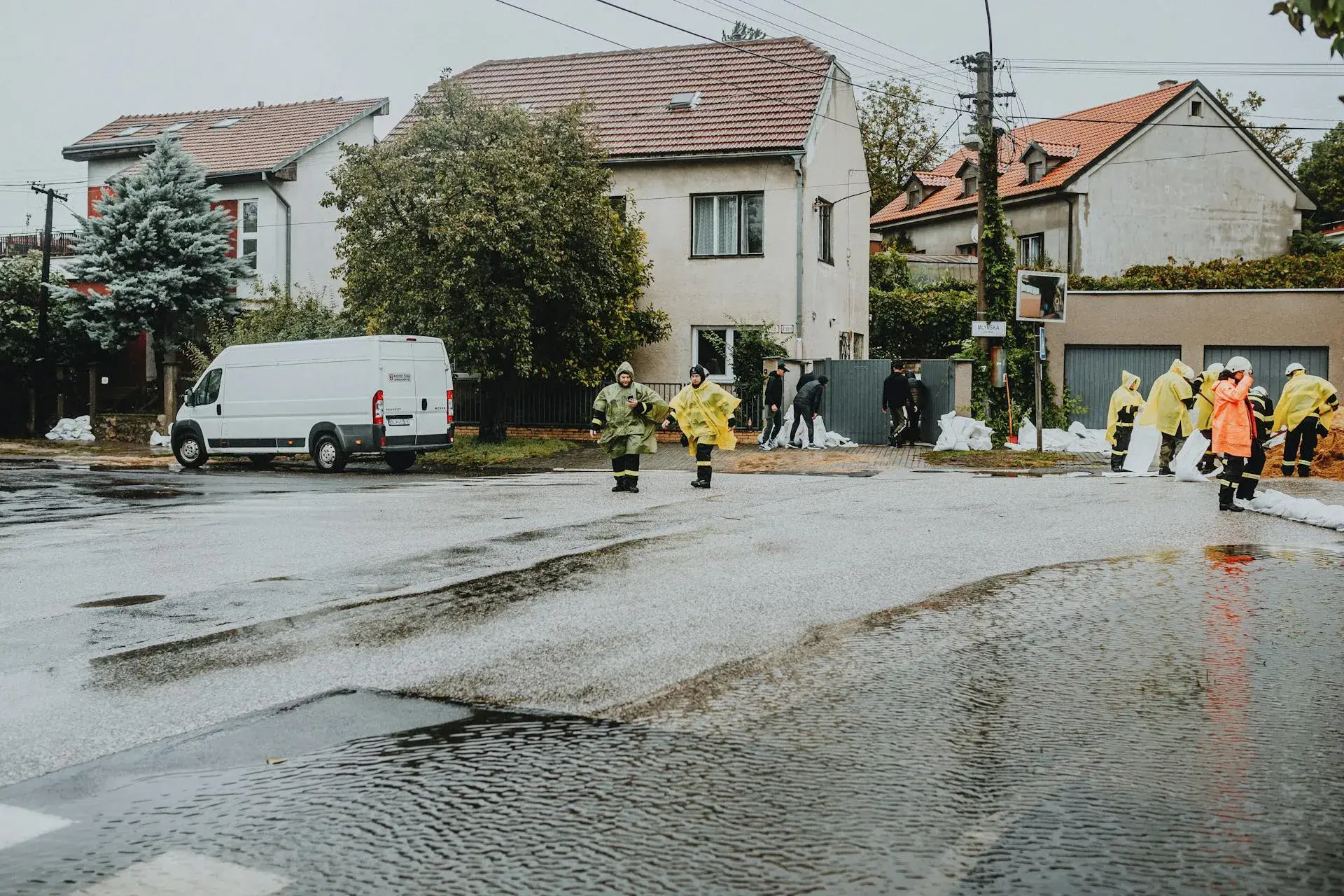
Sewage Cleanup in Prospect Heights, IL
Sewage backup is a biohazard. Every minute contaminated water sits in your home, bacteria multiply and contamination spreads into materials that become unsalvageable. Our local team responds to Prospect Heights sewage emergencies within 60 minutes.
What Happens When You Call
A real person answers, not a call center. We assess your situation, determine whether the backup is active or resolved, and begin coordinating your emergency response immediately.
Your dedicated restoration team is dispatched from our local base serving Prospect Heights and the surrounding northwest suburban communities.
Team arrives with contamination-rated extraction equipment, PPE, and biohazard decontamination supplies. Emergency extraction and initial decontamination begin immediately.
Contaminated water removed, affected porous materials identified for demolition, decontamination underway. You know exactly what comes next.
Sewage in your home is not a water damage event. It is a biohazard emergency. The contaminated water carries bacteria, viruses, parasites, and organic waste that pose immediate health risks and destroy every porous material they contact. There is no safe waiting period. X Response exists for exactly this moment. When you reach out, your emergency team is mobilized within minutes and on site within the hour. From that point forward, one team manages everything: extraction, decontamination, demolition of unsalvageable materials, structural drying, and insurance documentation. Call now. Your team is standing by.
Why Prospect Heights Homes Are Vulnerable to Sewage
Prospect Heights operates a separate sanitary sewer system maintained by the city and connecting to MWRD interceptors that conveys only sanitary waste (from toilets, sinks, showers, and appliances) through dedicated pipes to the Metropolitan Water Reclamation District of Greater Chicago interceptor sewers and ultimately to the Stickney Water Reclamation Plant. The city has a population of 16,058 in Wheeling Township, Cook County, Illinois. Unlike communities with combined sewer systems (where sanitary waste and stormwater share the same pipes), Prospect Heights' separate system was designed so that sanitary sewers handle only waste flows and a parallel storm sewer handles rainwater independently. In theory, this separation means that heavy rainfall should not affect the sanitary system. In practice, however, the MWRD's Infiltration/Inflow Control Program (IICP) has documented that aging separate sanitary sewer systems across Cook County experience significant infiltration (groundwater seeping into pipes through deteriorated joints, cracked pipe walls, and failed seals) and inflow (stormwater entering the sanitary system through improper connections such as downspout ties, foundation drain connections, and sump pumps piped to sanitary laterals). When heavy rain saturates the soil and the water table rises, groundwater pressure forces water into the sanitary system through every deficiency in pipes that are now 50 to 60 years old. This additional volume surcharges the sanitary mains beyond their capacity, and the excess backs up into homes through the lowest available outlet: basement floor drains.
The MWRD's IICP Technical Guidance Manual and its Operation and Maintenance Manual for Separate Sanitary Sewer Systems document the mechanisms and remedies for exactly this problem. The program requires municipalities within the MWRD service area to identify and reduce sources of infiltration and inflow in their sanitary sewer systems. For Prospect Heights, where the sanitary infrastructure was installed during the city's development in the 1960s and 1970s, the pipe materials of that era (vitrified clay tile, early-generation PVC, concrete with mastic joints) have deteriorated over half a century of thermal cycling, soil movement, root intrusion, and chemical exposure from the waste stream itself. Every joint, every lateral connection, every manhole frame provides a potential entry point for groundwater during saturated-soil conditions. The result is a system that functions normally during dry weather but becomes overwhelmed during the same intense rainfall events that flood the city's stormwater system, producing sewage backups in low-lying homes even though the system was designed to be isolated from storm events.
Infiltration and Inflow in Aging Separate Sanitary Sewers
Prospect Heights' sanitary sewer system was installed during the city's development period of the 1960s and 1970s using the pipe materials standard for that era: vitrified clay tile for mains, clay or early PVC for lateral connections, and concrete manholes with mastic seals. After 50 to 60 years in the ground, these materials have experienced predictable degradation. Clay tile develops circumferential cracks from soil loading and thermal cycling. Joint gaskets dry out, shrink, and lose their seal. Tree roots penetrate through cracks and joints, creating both blockage points and infiltration pathways. Manhole frames settle relative to the surrounding grade, creating gaps where surface water enters during rain (inflow). Lateral connections from homes to the main, which are the responsibility of individual property owners to maintain, often suffer the worst deterioration because they are smaller diameter, shallower, and rarely inspected or maintained over their lifetime. During heavy rainfall when the water table rises into the sewer trench backfill, groundwater enters through every one of these deficiencies simultaneously. The MWRD estimates that infiltration and inflow can increase flow in affected sanitary systems by 300 to 500 percent during intense storms, overwhelming pipe capacity designed for dry-weather sanitary loads only.
Multi-Family Building Plumbing Stacks and Sewage Exposure
Prospect Heights' concentration of multi-family condominium and apartment buildings creates sewage backup dynamics that differ from single-family communities. In a multi-story building, all units connect to shared vertical plumbing stacks that carry waste to the building's lateral connection and then to the municipal sanitary main. When the municipal main surcharges and backup pressure builds, the sewage enters the building through its lateral and rises in the lowest fixtures first: ground-floor and garden-level unit floor drains, shower stalls, and toilet bowls. In severe events, the backup can rise through the floor drain to a depth of several inches before the pressure equalizes. Garden-level units in Prospect Heights' condo buildings are particularly vulnerable because their fixtures are the lowest points in the building's drainage system. Additionally, the shared stacks mean that a blockage in the building's main line (from root intrusion, grease accumulation, or a collapsed section) can back sewage into lower units from the waste generated by all units above, creating a building-internal sewage event that has nothing to do with the municipal system. These events expose residents to Category 3 (grossly contaminated) water containing waste from every household connected to the same stack.
Improper Connections and Sump-to-Sanitary Piping
A common source of sanitary sewer surcharge in Prospect Heights' older homes and condo complexes is the improper connection of foundation drainage, sump pumps, or downspouts to the sanitary sewer lateral rather than the storm sewer. During the 1960s and 1970s when these homes were built, plumbing codes did not consistently prohibit connecting foundation drains or sump pump discharges to the sanitary system, and many builders made these connections for convenience. The result is that during every rain event, these connections pump groundwater and stormwater directly into the sanitary system, contributing to the infiltration/inflow problem that surcharges the mains. For individual homeowners, the consequence is twofold: their own improper connection contributes to the system-wide overload, and the system-wide overload then backs up into their home through their floor drain. The MWRD's IICP program encourages municipalities to require disconnection of these improper connections during property sales or renovation permits, but enforcement varies and many connections remain active across the city's housing stock. Identifying and disconnecting improper connections at your own property reduces both your contribution to system overload and your downstream neighbor's backup risk.
Sanitary Lateral Responsibility and Maintenance
In Prospect Heights, as in most Illinois municipalities, the property owner is responsible for the sanitary sewer lateral from the home's foundation to the connection point at the municipal main (typically located under the street or at the property line, depending on local practice). This lateral pipe, typically 4 to 6 inches in diameter and 50 to 60 years old in Prospect Heights homes, is the single most common point of failure in a sewage backup event. Root intrusion, offset joints from soil settlement, grease accumulation from decades of kitchen waste, and deteriorated clay-pipe sections all create blockage points that cause the home's own waste to back up into the basement. Unlike a municipal main surcharge that affects multiple homes simultaneously, a lateral blockage affects only the single property it serves. The distinction matters for insurance purposes: some homeowner's policies cover sewer backup damage (with a specific endorsement) but may exclude backups caused by failure to maintain the lateral. Regular camera inspection of the lateral (every 3 to 5 years in homes with mature trees and older pipe) identifies root intrusion, offset joints, and deterioration before they progress to a full blockage and backup event.
Condominium Association Responsibility and Response Coordination
In Prospect Heights' many condominium buildings, sewage backup events often involve complex responsibility splits between unit owners and the condominium association. The association typically owns and maintains the building's main sewer line (the shared lateral from the building to the municipal main) and the vertical stacks within the building walls. Individual unit owners are responsible for the horizontal branches connecting their fixtures to the stacks, and for the interior finishes damaged by a backup. When a backup occurs in a garden-level unit, determining whether the cause is a municipal main surcharge, a building lateral blockage, or a unit-level branch blockage determines who is responsible for both the plumbing repair and the resulting property damage. Associations that do not maintain their building laterals (regular cleaning, root treatment, camera inspection) expose all ground-floor unit owners to repeated backup risk from a shared pipe that no individual unit owner can access or maintain. When a backup event occurs, the restoration must proceed immediately regardless of the responsibility determination; waiting for the association and unit owner to agree on fault while sewage sits in the unit dramatically increases contamination spread and restoration cost.
Sewage cleanup in Prospect Heights is shaped by the intersection of aging infrastructure and dense multi-family development. The city's separate sanitary sewer system should in theory be immune to storm-driven surcharges, but five decades of pipe deterioration have introduced infiltration and inflow pathways that compromise that separation during heavy rain. The multi-family building stock adds complexity: shared plumbing stacks, building-level laterals maintained by associations rather than individuals, garden-level units at the lowest point of building drainage systems, and responsibility disputes that can delay response while contamination spreads. Effective sewage restoration here requires immediate extraction and decontamination regardless of the backup source, followed by identification and repair of the specific failure point to prevent recurrence.
What Happens to Your Home While You Wait
Within 1 Hour
Sewage water spreads across basement floors and makes contact with every porous material at floor level: carpet, padding, baseboards, the bottom edge of drywall, stored items, and any furniture legs resting on the floor. Bacteria begin multiplying immediately in the warm, nutrient-rich environment. In Prospect Heights' garden-level condo units, sewage from a surcharging floor drain can spread across the entire unit's floor area within minutes if the floor is level or graded toward living spaces rather than toward the drain. Every porous material contacted by sewage is immediately classified as Category 3 (grossly contaminated) under IICRC standards and cannot be dried in place; it must be removed regardless of contact duration.
1–24 Hours
Contaminated water wicks upward into drywall, particle-board cabinetry, and wood trim by capillary action. The contamination front rises above the visible water line, meaning materials above the standing water level are also compromised. Bacterial populations in the standing water multiply exponentially in warm conditions, increasing the biohazard classification of the event. Odor intensifies as anaerobic bacteria in the sewage produce hydrogen sulfide and other volatile compounds. In multi-family buildings where the backup has not been stopped at its source, the event may still be active, with continued flow entering the unit from the surcharging main or blocked lateral.
24–48 Hours
Bacterial and viral contamination has penetrated deeply into every porous material that contacted the sewage water. The contamination extends beyond the visible wet line by 12 to 24 inches vertically in drywall and by several feet laterally beneath flooring materials. Mold germination begins on contaminated organic surfaces, adding biological growth to the bacterial contamination already present. The demolition scope expands significantly: drywall, insulation, carpet, padding, particle-board subflooring, and all porous stored contents within the flood zone require removal. Structural wood (studs, sole plates, subfloor joists) requires decontamination treatment but can typically be saved if drying begins within this window.
48–72 Hours
Active mold growth on contaminated materials compounds the bacterial hazard. The combination of sewage contamination and mold creates a dual biohazard environment that requires both bacterial decontamination and mold remediation protocols. Odor permeates the structure at a level that persists even after material removal because volatile compounds have been absorbed into concrete, framing lumber, and the building envelope. In multi-unit buildings, odor migrates to adjacent units through shared walls and HVAC systems. Structural wood in prolonged contact with contaminated water begins showing early decay at vulnerable connection points.
One Week and Beyond
Extensive mold growth throughout the affected area. Structural materials show advanced contamination that may require replacement rather than decontamination in place. The scope approaches major demolition and rebuild rather than targeted restoration. In Prospect Heights' condo buildings where garden-level units share party walls, contamination may have migrated into adjacent units through wall penetrations and shared systems. Insurance claims at this stage become complex as carriers dispute whether timely response could have limited the damage, and whether the backup resulted from a sudden event (covered) or ongoing maintenance failure (potentially excluded).
undefined
How We Restore Sewage-Damaged Prospect Heights Homes
From the moment our team arrives, every step is documented, measured, and verified. Here is exactly what the sewage cleanup process involves for Prospect Heights properties.
Emergency Extraction and Source Control
Our first priority is removing contaminated water from your property while simultaneously identifying whether the backup source is still active. If the municipal main is surcharging and the backup is ongoing, we install a temporary backflow preventer on your floor drain and begin extraction of water already present. If the source is a lateral blockage, we coordinate with a plumber or sewer specialist to clear the blockage and stop the inflow. In Prospect Heights' multi-family buildings where the building lateral is the source, we alert the association and coordinate building-wide response while beginning extraction in the affected unit. Every minute of contact between sewage and building materials increases the demolition scope, so extraction begins immediately upon arrival regardless of whether the source has been fully identified.
Contamination Assessment and Material Classification
All sewage backup water is classified as Category 3 (grossly contaminated) under IICRC S500 standards, regardless of the visible water clarity. This classification means every porous material that contacted the water must be removed: carpet, padding, drywall below the water line plus a safety margin above, insulation, particle-board materials, cardboard, paper goods, and any permeable stored contents. Non-porous materials (concrete, metal, sealed hardwood, ceramic tile) can be decontaminated and retained. We document the water contact line with measurements and photos, establish the demolition boundary, and inventory damaged contents for your insurance claim. In garden-level units where the entire floor was flooded, this assessment determines whether flooring materials over the slab (vinyl, engineered wood, carpet) can be decontaminated or must be removed based on whether they permitted sewage contact with the subfloor material beneath.
Demolition and Biohazard Removal
Contaminated porous materials are removed using biohazard protocols: workers in full PPE (Tyvek suits, N95 or higher respirators, chemical-resistant gloves and boots), contaminated materials double-bagged in contractor-grade biohazard bags, and all debris removed from the structure before decontamination begins. We cut drywall 24 inches above the visible water line to account for wicking and contamination migration above the standing water level. Insulation within affected wall cavities is removed completely. Carpet and padding are rolled, wrapped, and disposed of. The goal is to expose all structural surfaces (studs, sole plates, subfloor, slab) to the decontamination and drying processes that follow, with no concealed contaminated material remaining behind finished surfaces.
Decontamination and Antimicrobial Treatment
With contaminated materials removed and structural surfaces exposed, we apply professional-grade antimicrobial treatment to all remaining surfaces. This is not a household cleaning product; it is an EPA-registered biocide designed to eliminate the bacterial and viral loads present in sewage contamination. We treat exposed framing, subfloor, slab surfaces, and any retained non-porous materials. The treatment protocol follows IICRC S500 guidelines for Category 3 water loss. After antimicrobial application and appropriate dwell time, we rinse and extract to remove both the treatment residue and the contamination it has neutralized. Verification swab testing confirms that bacterial levels have returned to safe thresholds before the structure is cleared for rebuild.
Structural Drying and Rebuild
After decontamination, standard structural drying proceeds using commercial air movers and dehumidifiers. Concrete slab, exposed framing, and remaining structural materials are dried to verified moisture content before any new materials are installed. In Prospect Heights' garden-level condo units, slab drying may take longer due to continued moisture vapor transmission from the ground below; a vapor barrier or drainage mat system installed during rebuild can prevent future moisture issues at the slab-to-flooring interface. Once verified dry, we rebuild the demolished area: new drywall, insulation, flooring, baseboards, and paint to restore the property to pre-loss condition. We recommend a backwater valve installation on the floor drain lateral to prevent future sewage backups from reaching your living space.
The X Response Difference
When you contact X Response for sewage cleanup in Prospect Heights, you get a biohazard-certified team that follows Category 3 contamination protocols from entry to clearance. One team, one standard, verified results.
Insurance Claim Guidance for Prospect Heights Homeowners
Sewage backup insurance coverage in Illinois requires specific attention to your policy's endorsements. Standard homeowner's policies typically do not cover sewer and drain backup without a dedicated endorsement, often called 'sewer and drain backup coverage' or 'water backup coverage.' In Prospect Heights, where the aging separate sanitary sewer system experiences infiltration and inflow during heavy rain that surcharges mains and forces sewage into basements, this endorsement is essential but many homeowners do not carry it until after their first backup event. The endorsement typically adds $50 to $150 annually to your premium and provides coverage (usually with its own sublimit, commonly $10,000 to $25,000) for damage caused when water or sewage backs up through drains, sewers, or sump pump failures. Without this endorsement, your standard policy will likely deny a claim for sanitary sewer backup into your Prospect Heights basement, even though the event was sudden, unexpected, and caused by weather rather than homeowner negligence. In multi-family buildings, the split between your HO-6 policy and the association's master policy adds complexity when the backup originates in shared building plumbing.
How X Response Helps
- Verify whether your policy includes sewer and drain backup coverage before filing, as standard policies exclude this peril without the endorsement
- Document the contamination source clearly: municipal main surcharge, building lateral blockage, and unit-level branch blockage each trigger different coverage and responsibility provisions
- Photograph all contaminated areas, materials removed, and the decontamination process with detailed documentation from entry to clearance
- Provide a scope of work that separates extraction, material removal, decontamination, drying, and reconstruction into distinct phases for adjuster review
- Explain your policy's backup coverage sublimit and deductible before you file, so you understand your likely recovery and plan accordingly
X Response does not file claims on your behalf, adjust claims, or make coverage determinations. We provide documentation and guidance to help you make informed decisions about your property and your policy. Coverage decisions are made solely by your insurance carrier.
Certified Restoration Specialists Serving Prospect Heights
When you contact X Response for sewage cleanup in Prospect Heights, your team is drawn from certified professionals who work across Cook County's northwest suburbs and understand the specific sewage challenges in this community. They know how the separate sanitary sewer system experiences infiltration during heavy rain despite its designed separation from storm flows, how garden-level condo units sit at the lowest point of multi-family building drainage systems, how aging vitrified clay tile laterals fail and create individual-unit backup emergencies, and how the multi-family building stock requires coordinated response across unit owners and associations. They have responded to neighborhood-wide surcharge events during major storms, to building-level lateral blockages affecting multiple ground-floor units, and to single-unit branch blockages on otherwise dry days. They understand the Category 3 contamination protocols required for any event involving raw sewage, the material-removal standards that apply, and the verification procedures that confirm safe re-occupancy. This is not a crew that treats sewage like dirty water. It is a biohazard-certified team that treats every sewage event as the health emergency it represents.
Every technician on your team holds current IICRC certification in water damage restoration with specific Category 3 contamination training, and carries the appropriate Illinois state licensing for the work being performed. Equipment includes submersible pumps for rapid extraction, industrial wet vacuums for residual removal, EPA-registered antimicrobial treatment systems, commercial dehumidifiers for structural drying, HEPA air scrubbers for airborne pathogen control, and full biohazard PPE for worker protection. When your team arrives, they bring everything needed to begin extraction and decontamination immediately, because sewage cleanup cannot wait for equipment to be sourced or delivered.
In Prospect Heights, X Response works with Scene Cleaners, an independent local restoration partner serving Cook County.
Sewage Cleanup FAQ for Prospect Heights Homeowners
Other Emergency Services in Prospect Heights

Water Damage Restoration
Burst pipes, storm flooding, standing water. We extract, dry, and restore before mold sets in.
Learn more
Fire Damage Restoration
Structural damage, soot, debris. We stabilize, clean, and rebuild what fire destroyed.
Learn more
Smoke Damage Restoration
Soot residue, chemical odors, HVAC contamination. We decontaminate surfaces, eliminate odors, and restore air quality.
Learn more
Mold Remediation
Testing, containment, removal, prevention. We find the source, eliminate the growth, and stop it from returning.
Learn more