
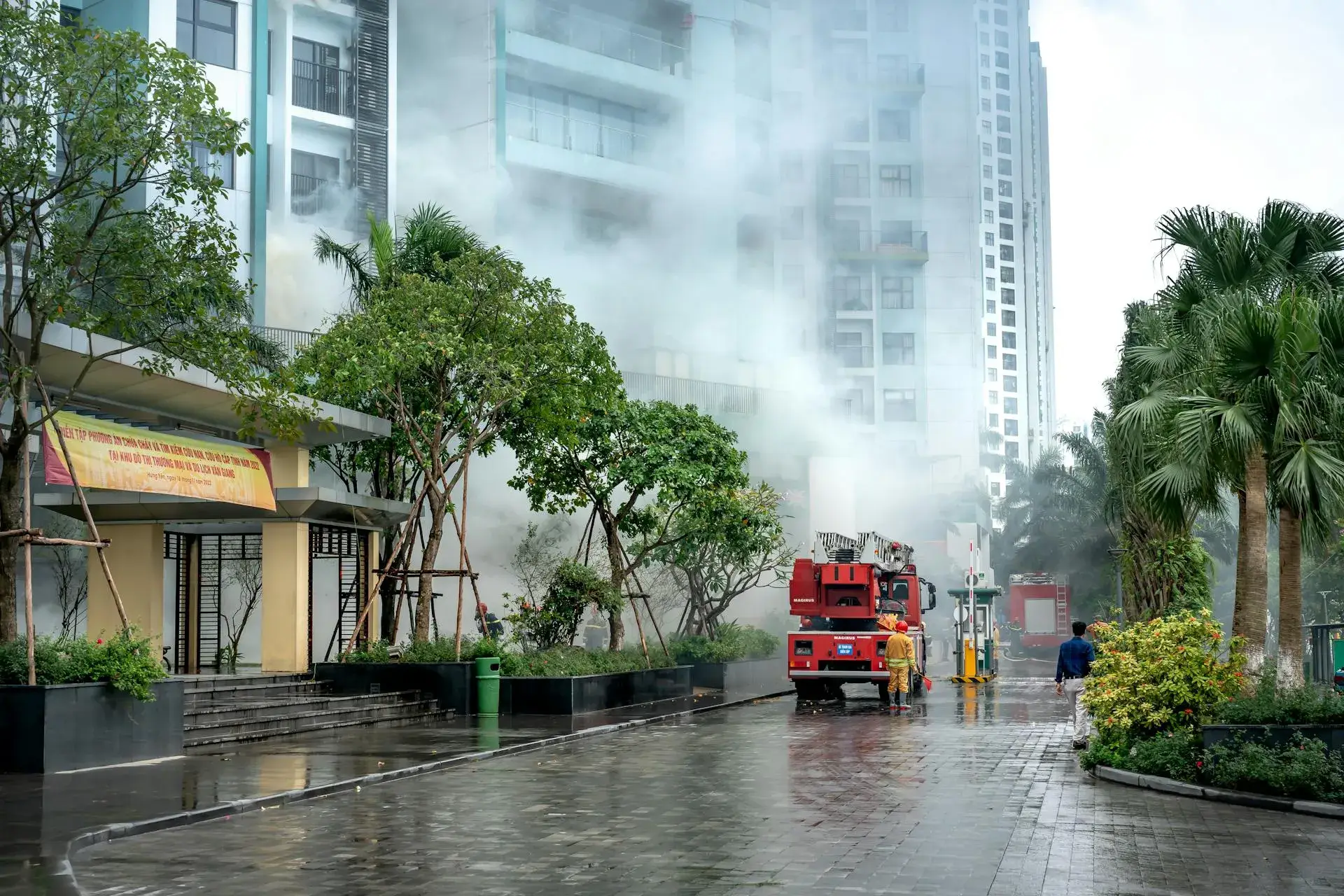
Smoke Damage Restoration in Roswell, GA
Microscopic soot particles penetrate deep into porous drywall, upholstery, and ductwork within hours. Our Roswell smoke recovery specialists respond within 60 minutes.
What Happens When You Call
A live smoke recovery specialist evaluates your situation, identifies the combustion source (protein, synthetic, or wood smoke), and dispatches our local crew.
Our north Fulton County team arrives within 60 minutes with commercial HEPA air scrubbers, soot extraction equipment, and diagnostic testing tools.
We establish negative air pressure containment and begin continuous air filtration to capture volatile organic compounds and prevent soot cross-contamination.
All affected surfaces, personal items, and HVAC ductwork are deep-cleaned, treated with molecular deodorizers, and verified with indoor air quality testing.
Even when a fire is small, contained to a kitchen cooktop, or quickly extinguished, smoke and toxic particulate matter travel rapidly throughout your Roswell property. Smoke flows freely through wall cavities, vaulted ceiling chases, and multi-zone HVAC ductwork, settling onto surfaces rooms away from the fire origin. X Response provides complete, certified smoke and odor restoration across north Fulton County. When you call, our certified crew mobilizes immediately to capture airborne toxins, neutralize acidic soot, and eliminate embedded odors permanently. Call now for 24/7 smoke mitigation in Roswell.
Why Roswell Homes Are Vulnerable to Smoke Damage
Roswell's residential communities feature many spacious multi-story custom homes, historic residences near Canton Street and the town square, and riverside executive properties along the Chattahoochee corridor. When a fire occurs, whether a localized kitchen grease flare-up or a structural blaze, thermal buoyancy drives hot combustion gases throughout the building envelope. Smoke particles find microscopic openings around recessed lighting fixtures, crown molding, electrical chases, and return air vents. In Roswell's humid subtropical climate, ambient moisture binds with airborne soot particles, creating sticky, acidic residues that adhere stubbornly to drywall, paint, custom wood cabinetry, and window treatments throughout unaffected rooms.
The U.S. Environmental Protection Agency reports that particulate matter from combustion sources includes inhalable particles ten micrometers in diameter or smaller that penetrate deep into building cavities and HVAC systems, requiring specialized air filtration and surface decontamination to restore indoor air quality. In north Fulton homes, attempting to clean smoke residues with standard household cleaners or painting over soot-stained walls only traps volatile organic compounds beneath the surface, ensuring that acrid smoke odors re-emerge whenever summer heat and humidity rise. Comprehensive smoke restoration requires identifying the precise chemical nature of the soot, deploying specialized chemical sponges, and neutralizing odor molecules deep within structural substrates.
Protein Smoke from Kitchen Cooking Fires
Kitchen grease fires and burned food produce protein smoke, one of the most common forms of smoke contamination in Roswell homes. Protein soot is virtually invisible to the naked eye, leaving an extremely thin, amber-tinted film over custom cabinets, stone countertops, appliances, and walls. Despite its subtle appearance, protein smoke carries an intense, pungent odor that permeates porous surfaces and permanently discolors painted finishes and wood varnishes if not cleaned with specialized enzyme-based solvents.
Synthetic Soot from Burned Electronics and Furnishings
When plastics, foam cushions, carpeting, or electronics burn at high temperatures, they generate thick, black, smeary synthetic soot. These oily particles contain complex chemical compounds that bond aggressively with surfaces. In Roswell's high summer humidity, synthetic soot rapidly corrodes copper pipes, architectural hardware, brass door handles, and kitchen appliance surfaces, requiring immediate chemical neutralization within 24 to 48 hours to prevent permanent etching.
Multi-Zone HVAC Forced-Air Smoke Distribution
Central heating and air conditioning systems with multiple air handlers are common in Roswell multi-story residences. When a fire occurs while the HVAC system is running, smoke is drawn through return vents and distributed across every connected room and level. Soot deposits inside sheet metal ductwork and saturates internal fiberglass insulation, turning the HVAC system into a continuous source of odor and airborne particulates until professionally decontaminated and sealed.
Subtropical Humidity and Odor Reactivation
Roswell's climate experiences prolonged periods of 70 to 80 percent relative humidity during spring and summer months. Porous building materials, such as framing lumber, drywall, and subflooring, expand and contract with humidity changes. Smoke particles trapped within these materials absorb moisture from the air, chemically reactivating and releasing pungent odors months or even years after the fire if deep molecular deodorization was not performed during initial restoration.
Vaulted Ceilings and High-Volume Soot Deposition
Many Roswell homes feature two-story foyers, vaulted great rooms, and open staircases that act as thermal chimneys during a fire. Hot smoke rises rapidly into upper ceiling planes, depositing heavy soot on upper walls, skylights, chandeliers, and high architectural trim. Accessing and cleaning these high-volume spaces requires specialized scaffolding, HEPA filtration equipment, and delicate hand detailing to restore finishes without damage.
Effective smoke damage restoration in Roswell demands far more than surface cleaning. Understanding how synthetic soot attacks luxury finishes in humid air, how protein residues hide on custom cabinetry, and how multi-zone HVAC ductwork distributes invisible particulates across north Fulton properties is essential. X Response utilizes industrial air scrubbers, thermal fogging, and molecular deodorization to completely eliminate smoke contamination.
What Happens to Your Home While You Wait
Within Hours
Airborne smoke particles settle across all horizontal and vertical surfaces throughout your Roswell home. Acidic residues begin yellowing plastics, synthetic fabrics, and painted walls. Porous materials like curtains, upholstery, and clothing absorb pungent smoke odors.
1–24 Hours
Corrosive soot particles actively react with ambient moisture, etching polished stone, glass mirrors, and metallic fixtures. Bare metal hardware and appliances begin tarnishing. Protein residues harden onto kitchen cabinets and countertops, becoming significantly more difficult to remove.
24–48 Hours
Soot penetrates deeply into semi-porous surfaces. Vinyl flooring, wood finishes, and fiberglass bathroom surrounds experience permanent chemical discoloration. Grout lines absorb acidic soot, while HVAC ductwork continues distributing airborne particulate matter into living areas.
48–72 Hours
Untreated smoke odors become embedded in wall framing, subflooring, and attic insulation. Paint finishes begin peeling and bubbling as acidic soot breaks down paint binders. Restoring contents and textiles becomes increasingly difficult, shifting items from cleanable to total loss.
One Week and Beyond
Smoke odor becomes permanently locked inside structural timbers and building cavities. Corrosive soot causes permanent pitting on metal hardware and appliances. Complete structural encapsulation, ductwork replacement, and extensive drywall removal become necessary to restore indoor air quality.
Prompt smoke remediation halts acidic corrosion and locks in your ability to salvage delicate furnishings and finishes. Contact X Response immediately. Our Roswell team responds within 60 minutes.
How We Restore Smoke-Damaged Roswell Homes
Our multi-phase smoke restoration protocol adheres to IICRC S540 standards, systematically removing soot residues, purifying indoor air, and eliminating odors at the molecular level.
Comprehensive Soot Inspection and Air Quality Assessment
Our certified technicians inspect your Roswell property, utilizing diagnostic soot sponge testing, particulate meters, and thermal imaging to trace smoke migration paths through walls, attics, and HVAC systems. We determine the exact soot composition (protein, synthetic, or dry carbon) to select the precise chemical cleaning agents required.
Air Filtration and Containment Setup
We establish containment zones using plastic barriers and deploy commercial HEPA air scrubbers with activated carbon filters. These units run continuously to capture airborne particulate matter, soot aerosols, and volatile organic compounds, immediately improving indoor air quality and preventing cross-contamination.
Specialized Surface Decontamination and Soot Removal
Technicians clean all affected surfaces using dry chemical soot sponges, specialized degreasers, and HEPA-filtered vacuum systems. We carefully clean ceilings, walls, woodwork, light fixtures, and flooring, ensuring soot is physically lifted and removed without pushing particles deeper into porous materials.
HVAC System and Ductwork Decontamination
We thoroughly clean and sanitize the entire HVAC system, including supply and return ducts, blower assemblies, and evaporator coils. Ductwork is brushed, vacuumed under negative pressure, and treated with EPA-registered antimicrobial sealants to ensure clean airflow throughout your north Fulton property.
Molecular Odor Elimination and Thermal Fogging
To permanently eliminate embedded smoke odors, we deploy industrial thermal foggers, hydroxyl generators, and vaporized gas neutralizing agents that penetrate deep into framing lumber, subfloors, and wall assemblies. Once fully deodorized, exposed framing is sealed with specialized odor-barrier coatings.
The X Response Difference
Do not let lingering smoke odor and corrosive soot diminish your Roswell home's value and air quality. Call X Response today for proven smoke restoration.
Insurance Claim Guidance for Roswell Homeowners
Smoke damage claims in Georgia often involve complex disputes regarding the extent of invisible contamination and the necessity of duct cleaning and structural sealing. Homeowner policies cover smoke and soot damage resulting from covered fire events, including fires that originated off-premises or in neighboring units. However, adjusters frequently underestimate the scope of smoke penetration into wall cavities, attic insulation, and HVAC systems. X Response provides meticulous documentation, including soot sponge lift tests, air quality measurements, and detailed room-by-room inventories to substantiate the full scope of required remediation.
How X Response Helps
- Conduct diagnostic soot lift tests and photo documentation proving smoke migration into unburned rooms and building cavities
- Prepare comprehensive inventories of smoke-damaged contents, furniture, and soft goods categorized for insurance valuation
- Document the necessity of full HVAC duct decontamination and attic insulation replacement to restore safe indoor air quality
- Utilize standardized insurance estimating software with detailed line items aligned with carrier requirements
- Collaborate directly with your adjuster to ensure all deodorization, cleaning, and structural sealing steps are fully approved
X Response does not adjust insurance claims or make legal coverage determinations. We provide scientific forensic documentation and indoor air quality evidence to assist policyholders and insurance adjusters.
Certified Restoration Specialists Serving Roswell
Our Roswell smoke restoration specialists bring deep technical expertise and dedicated local focus to every north Fulton County project. Living and working in North Georgia, they understand how local weather conditions, high summer humidity, and varied architectural styles influence smoke behavior and odor persistence. Whether restoring historic plaster in downtown Roswell or modern drywall in custom suburban estates, our team executes every project with meticulous care.
Every crew leader maintains current IICRC certification in Fire and Smoke Damage Restoration (FSRT) and Odor Control (OCT). Armed with commercial HEPA air scrubbers, hydroxyl generators, thermal foggers, and ultrasonic cleaning tanks, our technicians adhere strictly to national environmental standards, restoring your indoor air quality and peace of mind.
In Roswell, X Response works with Atlanta's Best Restoration, an independent local restoration partner serving Fulton County.
Smoke Damage Restoration FAQ for Roswell Homeowners
Other Emergency Services in Roswell

Water Damage Restoration
Burst pipes, storm flooding, standing water. We extract, dry, and restore before mold sets in.
Learn more
Fire Damage Restoration
Structural damage, soot, debris. We stabilize, clean, and rebuild what fire destroyed.
Learn more
Mold Remediation
Testing, containment, removal, prevention. We find the source, eliminate the growth, and stop it from returning.
Learn more
Sewage Cleanup
Sewer backups, contaminated water, biohazard. We extract, sanitize, and restore safely.
Learn moreNearby Service Areas
Also serving nearby: