
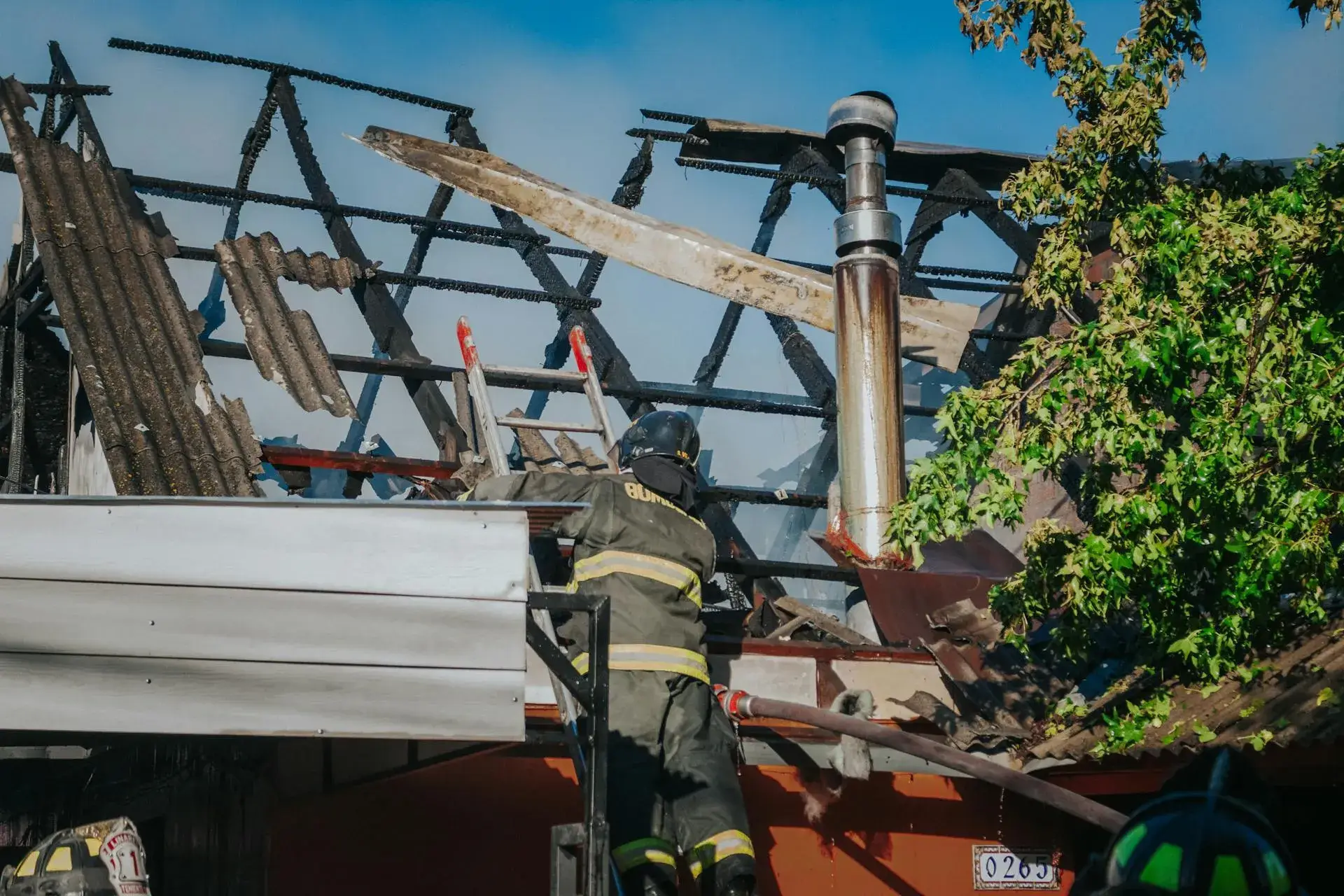
Fire Damage Restoration in Druid Hills, GA
Fire and smoke damage worsen every hour as soot acidifies, corrosion spreads, and odor penetrates deeper into materials. Our local team responds to Druid Hills emergencies within 60 minutes.
What Happens When You Call
A real person answers, not a call center. We assess your situation, ask the right questions, and begin coordinating your response immediately.
Your dedicated restoration team is dispatched from our local base serving Druid Hills and the surrounding DeKalb County communities.
Team arrives with board-up materials, HEPA equipment, and soot removal supplies. Emergency mitigation begins immediately.
Structure secured, initial soot and smoke hazards addressed, restoration plan documented. You know exactly what comes next.
A fire just happened and everything feels chaotic. The flames may be out, but the damage is still progressing. Soot is acidifying on surfaces, smoke residue is bonding to materials, and water from suppression is soaking into the structure. X Response exists for this exact moment. When you reach out, your restoration team is mobilized within minutes and on site within the hour. From that point forward, one team manages everything: securing the structure, removing soot and smoke, drying suppression water, and guiding the insurance process. Call now. Your team is standing by.
Why Druid Hills Homes Are Vulnerable to Fire Damage
Druid Hills sits in unincorporated DeKalb County, served by DeKalb County Fire Rescue rather than a municipal department. The community contains a diverse mix of property types that each present distinct fire risks: century-old single-family homes along Ponce de Leon Avenue and the surrounding historic streets, large apartment and condominium complexes along Briarcliff Road and North Druid Hills Road, and institutional buildings associated with Emory University and the CDC campus. On March 2, 2023, a fire at The Legacy at Druid Hills apartment complex off Briarcliff Road demonstrated how quickly a structure fire can displace an entire community. DeKalb County Fire crews arrived at approximately 6:30 a.m. to find flames shooting through the roof of one building and heavy smoke covering the parking lot. Eight apartment units were damaged and 18 families were displaced in a single morning. A second fire struck the same complex in January 2024, displacing four more families from third-floor units.
The historic residential core of Druid Hills presents fire risks that are fundamentally different from those in newer construction. Homes built between 1905 and 1940 typically feature balloon-frame or platform-frame construction with dimensional lumber, lath-and-plaster walls, original knob-and-tube wiring in some cases, and wood-burning fireplaces with aging clay-tile flue liners. The mature hardwood canopy that defines the Olmsted landscape means that many homes are surrounded by large oaks and hickories whose limbs extend over rooflines, creating ignition pathways during lightning storms. The density of vegetation in the Peavine Creek park corridor and throughout the residential streets provides fuel loading that newer, more open suburbs lack.
DeKalb County Fire Rescue responds from Station 1 on North Decatur Road and Station 18 on Briarcliff Road, both within minutes of any location in Druid Hills. But response time is only one factor. The complexity of fire restoration in this community comes from the materials involved. Original heart pine flooring, plaster crown moldings, built-in bookshelves, leaded glass windows, hand-carved mantels, and slate roofing are not items that can be matched at a building supply store. When fire and smoke damage affects these materials, restoration requires a different level of expertise than standard reconstruction. The homes in the 1,300-acre National Register Historic District carry preservation expectations that influence every decision about what to demolish, what to clean, and what to rebuild.
Century-Old Construction and Fire Spread
Druid Hills homes built in the early 1900s used construction methods that allow fire to spread more readily than modern building codes permit. Balloon framing, where wall studs run continuously from foundation to roofline, creates vertical channels that let fire travel from a basement or first-floor origin to the attic in minutes. Even in platform-frame homes of the era, the absence of modern fire stops between floors and at wall-to-ceiling intersections means fire can enter concealed spaces and travel laterally through walls before becoming visible. Lath-and-plaster walls provide some fire resistance, but once breached, the open wall cavities behind them become conduits. These homes were built before fire-rated drywall, fire stops, and residential sprinkler systems existed.
Aging Electrical Systems
Many Druid Hills homes retain at least some portion of their original electrical infrastructure, even after partial upgrades. Original knob-and-tube wiring, where it remains, uses insulation materials that have degraded over a century of service. Even homes that were rewired in the 1950s or 1960s may have aluminum branch wiring or undersized panels serving modern electrical loads far exceeding their original capacity. The NFPA identifies electrical malfunction as a leading cause of residential fires nationwide, and the risk concentrates in older housing stock where decades of modifications have created systems that no single electrician fully understands. In Druid Hills, where homes routinely sell for well over $1 million, the consequences of an electrical fire extend beyond structure to irreplaceable architectural elements.
Multi-Family Complexes Along Briarcliff Road
The apartment and condominium complexes along Briarcliff Road, North Druid Hills Road, and LaVista Road represent a different fire risk profile. These multi-story wood-frame structures, many built in the 1970s and 1980s, house dozens of families in close proximity. When fire breaks out in one unit, the timeline for it to affect neighboring units is measured in minutes. The March 2023 Legacy at Druid Hills fire demonstrated this clearly: flames reached the roof from a single unit's origin point, and the resulting damage displaced 18 families. Multi-family fires create cascading restoration needs because smoke and water damage extend far beyond the unit of origin, often affecting residents on multiple floors and in adjacent buildings through shared HVAC systems and common attic spaces.
Mature Tree Canopy and Lightning Exposure
The Olmsted-designed landscape of Druid Hills features one of the most extensive mature hardwood canopies in metro Atlanta. Large oaks, tulip poplars, and hickories tower over rooflines throughout the neighborhood, with some specimens exceeding 100 feet in height. These trees provide shade, character, and property value, but they also create fire exposure during lightning storms. A direct strike to a tree overhanging a slate or wood-shingled roof can ignite the structure below. Fallen limbs during storms can sever power lines, creating arc faults that ignite dry vegetation or the structure itself. DeKalb County averages 50 to 60 thunderstorm days per year, placing Druid Hills in a region with significant lightning frequency.
Fire Suppression Water Damage
When DeKalb County Fire Rescue responds to a structure fire in Druid Hills, the water used to suppress the flames often causes damage that rivals the fire itself. In a typical residential fire response, thousands of gallons of water saturate framing, subfloors, walls, and contents. In Druid Hills' historic homes, that water soaks into plaster walls where it is trapped behind lath, pools in crawl spaces that lack modern drainage, and saturates century-old hardwood flooring from below. The suppression water introduces its own restoration timeline: if not extracted within hours, it triggers mold growth in wall cavities, warps irreplaceable flooring, and compromises plaster ceilings. Fire restoration in these homes is always a dual challenge of fire damage and water damage simultaneously.
Fire restoration in Druid Hills is never a straightforward demolition-and-rebuild operation. The community's historic character, diverse building types, mature landscape, and aging infrastructure create a restoration environment that demands expertise beyond standard fire cleanup. The team that restores your property needs to understand balloon framing, know the difference between salvageable and unsalvageable plaster, respect the preservation context of National Register properties, and address the suppression water damage that is progressing alongside the fire damage from the moment hoses are turned off.
What Happens to Your Home While You Wait
Within 1 Hour
Soot begins acidifying on metal surfaces, causing pitting and corrosion on hardware, fixtures, light fittings, and appliances. Smoke residue settles on every horizontal surface throughout the home, including areas far from the fire origin. In Druid Hills' historic homes, soot penetrates the porous surfaces of plaster walls, unfinished wood trim, and original stone or brick mantels. Suppression water is simultaneously spreading through floors and walls, beginning the water damage timeline described above.
1 to 24 Hours
Acidic soot residue permanently stains and etches any metal, stone, or unfinished wood surface it contacts. Smoke odor compounds bond into porous materials including plaster, hardwood, fabric, and paper. Suppression water trapped behind lath-and-plaster walls begins softening the plaster from behind. In the crawl space below, standing water from hose runoff creates conditions for rapid mold growth. The window for cleaning soot without surface damage is closing.
24 to 72 Hours
Corrosion damage to metals becomes irreversible. Smoke odor becomes chemically bonded rather than surface-level, requiring thermal fogging or hydroxyl treatment rather than simple cleaning. Plaster in water-affected areas begins delaminating from lath. Mold colonization begins in any area where suppression water remains trapped in wall cavities or crawl spaces. Restoration scope expands as more materials transition from cleanable to replaceable.
One Week and Beyond
Secondary damage dominates: mold growth from trapped suppression water, permanent odor saturation in porous structural materials, and corrosion of hidden mechanical systems including HVAC components and electrical connections. In Druid Hills' historic homes, the loss of irreplaceable elements, original plaster cornices, hand-carved mantels, built-in cabinetry, accelerates as water and acid exposure continue without intervention. What began as a contained fire becomes a comprehensive structural restoration.
Every hour between fire suppression and professional restoration is an hour of compounding damage. Soot is acidifying, water is spreading, odor is bonding, and mold is colonizing simultaneously. Contact X Response now. Our Druid Hills team responds within 60 minutes to stop all four damage pathways at once.
How We Restore Fire-Damaged Druid Hills Homes
Fire restoration in Druid Hills requires managing fire damage, smoke damage, water damage, and often preservation concerns simultaneously. Here is our systematic approach.
Emergency Board-Up and Structural Securing
Our first priority is making the structure safe and secure. We board openings where windows, doors, or roof sections were compromised by fire or firefighting operations. We install temporary roof tarps where needed to prevent rain from adding water damage to an already-wet structure. For Druid Hills properties in the National Register Historic District, we use securing methods that protect surviving historic elements from further damage during the restoration process. Utility connections are verified safe, and any structural concerns from fire-weakened framing are identified before interior work begins.
Soot and Smoke Residue Removal
Different types of fire produce different soot residues, and each requires specific cleaning chemistry. A kitchen grease fire produces wet, sticky protein soot. An electrical fire produces fine, dry ionized soot that penetrates deeply into porous surfaces. Our team identifies the soot type, selects appropriate cleaning agents, and works systematically from the most heavily affected areas outward. In Druid Hills' historic homes, we use cleaning methods appropriate for plaster, original hardwood, stone mantels, and decorative moldings. Aggressive chemical stripping that might be acceptable on modern drywall would damage these irreplaceable surfaces. HEPA vacuuming removes loose particulates before wet cleaning to prevent grinding soot deeper into porous materials.
Suppression Water Extraction and Drying
Fire suppression puts thousands of gallons of water into the structure, and that water begins causing its own damage immediately. We extract standing water from all accessible areas, deploy pumps in crawl spaces, and set up structural drying equipment throughout the property. This happens in parallel with soot cleaning, because both timelines are progressing simultaneously. The same humid DeKalb County climate that makes water damage worse in general makes post-fire drying critical: trapped suppression water in wall cavities and crawl spaces will grow mold within 24 to 48 hours if not addressed mechanically.
Odor Elimination
Smoke odor is one of the most persistent challenges in fire restoration. The odor molecules are not simply sitting on surfaces; they have penetrated into porous materials at a molecular level. Surface cleaning alone will not eliminate them. We use a combination of thermal fogging, hydroxyl generators, and ozone treatment (in unoccupied spaces) to neutralize odor compounds where they are embedded. For Druid Hills homes with extensive original woodwork, plaster, and hardwood, these methods can often save materials that would otherwise need removal. The goal is eliminating the odor rather than masking it, because masked odors resurface when temperature and humidity change.
Reconstruction and Completion
Once all damage is stabilized, cleaning is complete, and the structure is dry, reconstruction begins. In Druid Hills, this may involve matching original plaster textures, sourcing period-appropriate hardware, replicating trim profiles, or commissioning custom millwork to replace fire-destroyed elements. We coordinate with specialty tradespeople experienced in historic restoration when the scope requires it. Final documentation includes photos, air quality testing results, moisture readings, and a detailed account of all work performed for your insurance file and your records.
The X Response Difference
When you contact X Response, you get a dedicated restoration team that manages everything, from emergency board-up through insurance documentation to final reconstruction. One team, one point of contact, one standard of work from start to finish.
Insurance Claim Guidance for Druid Hills Homeowners
Fire damage insurance claims in Georgia are typically covered under standard homeowner's policies for accidental fires originating within the property. Coverage generally includes structural repair, smoke damage remediation, content replacement, and additional living expenses during restoration. In Druid Hills' historic homes, the critical policy question is whether your coverage provides for replacement cost versus actual cash value, and whether it covers matching or period-appropriate materials rather than standard modern substitutes. For properties in the National Register Historic District, documenting the historic character and replacement costs of irreplaceable materials is essential to receiving appropriate coverage.
How X Response Helps
- Document all fire, smoke, and suppression water damage with professional photos and detailed scope from day one
- Identify affected areas including concealed damage behind walls, in crawl spaces, and in HVAC systems
- Prepare documentation that supports historically appropriate restoration costs rather than standard replacement values
- Align our restoration scope with standard insurance coverage categories so your adjuster can process the claim efficiently
- Coordinate with your adjuster on specialized costs for historic materials, custom millwork, and period-appropriate finishes
X Response does not file claims on your behalf, adjust claims, or make coverage determinations. We provide documentation and guidance to help you make informed decisions about your property and your policy. Coverage decisions are made solely by your insurance carrier.
Certified Restoration Specialists Serving Druid Hills
When you contact X Response for a fire damage emergency in Druid Hills, your restoration team is drawn from certified professionals who work across DeKalb County and understand the specific challenges of restoring historic properties after fire. They know the difference between salvageable smoke-damaged plaster and material that must be removed. They understand how suppression water behaves in pier-and-beam foundations. They have experience with the materials and construction methods used in Druid Hills' early 1900s homes. This is not a generic demolition crew. It is a restoration team with the expertise to preserve what can be saved.
Every technician on your team holds current IICRC certification in fire and smoke restoration and carries the appropriate Georgia state licensing for the work being performed. Equipment is commercial-grade and maintained to manufacturer specifications. When your team arrives, they bring board-up materials, HEPA filtration, thermal fogging equipment, extraction tools for suppression water, and the documentation tools to build your insurance file from the first hour on site.
In Druid Hills, X Response works with Atlanta's Best Restoration, an independent local restoration partner serving DeKalb County.
Fire Damage Restoration FAQ for Druid Hills Homeowners
Other Emergency Services in Druid Hills

Water Damage Restoration
Burst pipes, storm flooding, standing water. We extract, dry, and restore before mold sets in.
Learn more
Smoke Damage Restoration
Soot residue, chemical odors, HVAC contamination. We decontaminate surfaces, eliminate odors, and restore air quality.
Learn more
Mold Remediation
Testing, containment, removal, prevention. We find the source, eliminate the growth, and stop it from returning.
Learn more
Sewage Cleanup
Sewer backups, contaminated water, biohazard. We extract, sanitize, and restore safely.
Learn more