
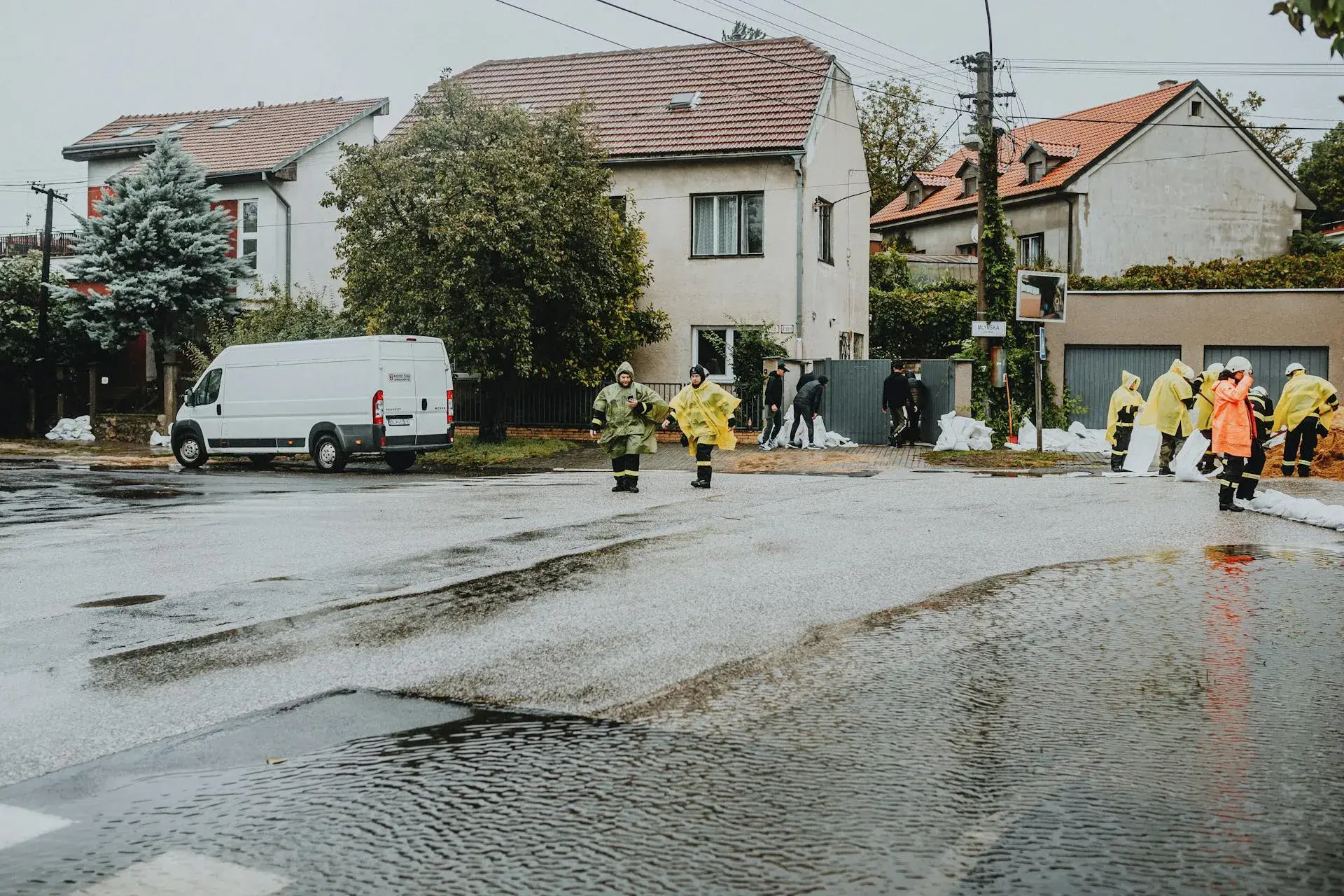
Sewage Cleanup in Druid Hills, GA
Sewage contains dangerous pathogens that threaten health within hours. Every minute of exposure increases contamination spread and restoration cost. Our local team responds to Druid Hills emergencies within 60 minutes.
What Happens When You Call
A real person answers, not a call center. We assess your situation, ask the right questions, and begin coordinating your response immediately.
Your dedicated cleanup team is dispatched from our local base serving Druid Hills and the surrounding DeKalb County communities.
Team arrives with extraction equipment, PPE, antimicrobial agents, and containment supplies. Emergency mitigation begins immediately.
Sewage extracted, affected areas sanitized, restoration plan documented. You know exactly what comes next.
Sewage is in your property and it needs to be removed immediately. This is not a situation that can wait for a callback queue or a scheduled appointment. Raw sewage contains bacteria, viruses, and parasites that pose immediate health risks, and it contaminates every surface it contacts. X Response exists for exactly this moment. When you reach out, your cleanup team is mobilized within minutes and on site within the hour. From that point forward, one team manages everything: extraction, sanitization, drying, and documentation. Call now. Your team is standing by.
Why Druid Hills Homes Are Vulnerable to Sewage
Druid Hills sits within DeKalb County's sanitary sewer system, a network that has been under federal oversight since 2011 when the U.S. Department of Justice and the EPA entered a Clean Water Act consent decree with the county after documenting chronic unauthorized overflows of untreated sewage into local waterways. The original consent decree required DeKalb County to make major improvements to eliminate sanitary sewer overflows (SSOs) that were discharging raw sewage into creeks and tributaries throughout the county. A 2020 modification extended deadlines, required an additional $1,047,000 civil penalty, and mandated a Capacity Assurance Program that restricts new sewer connections until system capacity improves. In June 2025, WABE reported that DeKalb and the EPA are working to rewrite the consent decree entirely, acknowledging that the county's aging sewer infrastructure continues to produce overflows despite more than a decade of court-ordered improvements. The South Fork of Peachtree Creek and Peavine Creek, both of which run through or border Druid Hills, are receiving waterways for these overflows.
The sewer infrastructure serving Druid Hills dates to the same era as the homes themselves. Clay tile sewer laterals, some original to the 1905 to 1940 construction period, connect individual properties to trunk lines that run along the Peavine Creek and South Fork Peachtree Creek corridors. These clay pipes are vulnerable to root intrusion from the massive Olmsted-canopy trees, ground shifting in the red clay soils, joint separation from decades of settlement, and simple age-related deterioration. DeKalb County's Department of Watershed Management announced in 2024 a public open house for the North Fork and South Fork Peachtree Creek Trunk Sewer Upsizing Project, specifically designed to address repeat sanitary sewer overflow areas along the corridor that borders Druid Hills and to meet future sewer demands for the next 50 years. The project acknowledges that the existing trunk lines are undersized for the flow they carry during wet weather.
When the trunk sewer system is overwhelmed during heavy rainfall, the backpressure can push sewage backward through house laterals and into the lowest fixtures in a home. In Druid Hills, that typically means basement floor drains, crawl spaces, or ground-floor plumbing in homes where the sewer lateral connects at a low elevation. The same September 2009 storms that caused catastrophic flooding also overwhelmed the sewer system, producing widespread SSOs throughout DeKalb County. But major storms are not the only trigger. Even moderate sustained rainfall can exceed the capacity of undersized trunk lines, and a single root-blocked lateral can cause a backup into one home regardless of weather conditions. The combination of aging laterals, undersized trunk lines, and a system still years from completing court-ordered repairs creates a persistent sewage exposure risk for properties throughout the Druid Hills area.
DeKalb County Consent Decree and Ongoing SSOs
The federal consent decree entered in 2011 exists because DeKalb County's sewer system was routinely discharging untreated sewage into waterways without authorization. More than a decade later, the county is negotiating a complete rewrite of the agreement because overflows continue. The North Fork and South Fork Peachtree Creek corridors, which border and run through Druid Hills, are identified overflow areas that the trunk sewer upsizing project targets specifically. For Druid Hills residents, this means the public sewer infrastructure serving their properties is officially documented as undersized and overflow-prone. During wet weather events, the system cannot handle the combined flow from the upstream service area, and backpressure in trunk lines can force sewage into lower-elevation connections including residential laterals.
Century-Old Clay Sewer Laterals
The sewer laterals connecting Druid Hills homes to the public trunk lines were installed when the homes were built, predominantly between 1905 and 1940. These are clay tile pipes with mortar joints, designed for a service life of 50 to 75 years. Many are now 85 to 120 years old. Over time, the joints separate as the surrounding clay soil shifts, tree roots penetrate through joints seeking moisture, the pipe interior scales and reduces flow capacity, and sections collapse entirely under soil loading. A root-blocked or collapsed lateral causes sewage to back up into the home through the lowest fixture or to pool in the crawl space if the pipe connection is below grade. Unlike modern PVC laterals that can be inspected easily with camera equipment, clay laterals often have offset joints and root masses that make camera inspection difficult and repair disruptive.
Tree Root Intrusion from the Olmsted Canopy
The mature hardwood canopy that defines Druid Hills' Olmsted-designed landscape creates a direct conflict with underground sewer infrastructure. Large oaks, hickories, and tulip poplars have root systems that extend 50 feet or more from the trunk, seeking moisture wherever it is available. Sewer pipes emit moisture vapor through joints, and tree roots grow preferentially toward that moisture signal. Once a root hair enters a joint, it grows rapidly in the nutrient-rich environment, eventually filling the pipe interior with a root mass that blocks flow and causes backups. In Druid Hills, where trees are 80 to 120 years old and laterals are the same age, root intrusion is not exceptional. It is the expected condition of any lateral that has not been replaced or lined within the last few decades.
Wet-Weather Surcharging and Basement Backups
When heavy rainfall combines with the undersized trunk lines along the Peavine Creek and South Fork Peachtree Creek corridors, the system surcharges. Surcharging means the sewer flow exceeds pipe capacity and backs up into connected laterals under hydraulic pressure. In Druid Hills homes with basements or low-elevation connections, this backup pushes raw sewage through floor drains, toilet seals, shower drains, and any fixture connected below the surcharge elevation. The backup is not caused by a problem at the individual home. It is a system-level event affecting every low-elevation connection along the affected trunk line segment. The trunk sewer upsizing project is designed to eliminate this condition, but construction and full completion are still years away.
Crawl Space Contamination from Below-Grade Connections
Many Druid Hills homes have sewer connections that pass through or beneath the crawl space before exiting to the street-side lateral. When a lateral fails, whether from root intrusion, collapse, or system surcharge, sewage can discharge into the crawl space rather than backing up through interior fixtures. Crawl space contamination is particularly dangerous because it may not be immediately apparent from the living space above. The sewage soaks into the earthen floor, contaminates foundation piers and sill plates, and creates a biohazard environment beneath the home. The warm, humid conditions in a Druid Hills crawl space accelerate bacterial and mold growth on contaminated surfaces. By the time the homeowner notices odor or evidence of the discharge, the contamination may have been present for days.
Sewage events in Druid Hills originate from a combination of individual infrastructure failures and system-level capacity problems that have been documented and litigated at the federal level for over a decade. The aging clay laterals beneath century-old homes are at or beyond their service life. The trunk lines along the creek corridors are officially undersized for wet-weather flows. The massive trees that define the community's character are simultaneously undermining the pipes that serve it. Effective sewage cleanup in this environment means understanding both the immediate health hazard that demands rapid response and the infrastructure context that explains why the event occurred, so that prevention measures can be targeted appropriately.
What Happens to Your Home While You Wait
Within 1 Hour
Sewage spreads across flooring and begins wicking into porous materials. In Druid Hills' older homes with hardwood floors over crawl spaces, contaminated water seeps through gaps in the subfloor and pools against foundation elements below. Pathogens including E. coli, Salmonella, and hepatitis A virus are active on every contaminated surface. The area is a Category 3 biohazard requiring professional-grade personal protective equipment for safe entry.
1 to 24 Hours
Sewage soaks deeper into porous materials: hardwood absorbs it, plaster walls wick it upward, and crawl space soil becomes saturated. Bacterial populations multiply rapidly in the warm, nutrient-rich environment. Odor intensifies as anaerobic decomposition begins in saturated materials. In DeKalb County's warm climate, pathogen concentrations increase rather than decrease during this period. Every porous material that remains contaminated becomes more difficult to salvage as absorption deepens.
24 to 48 Hours
Mold colonization begins on sewage-contaminated surfaces, compounding the biohazard with a secondary contamination layer. Hardwood flooring that absorbed sewage begins warping and may become unsalvageable. Plaster walls that wicked contaminated water show staining and begin losing structural integrity. The restoration scope expands as more materials transition from cleanable to requiring removal. Cross-contamination through HVAC systems can spread pathogens to unaffected areas of the home.
One Week and Beyond
Extended sewage exposure destroys organic materials including hardwood flooring, wooden subfloor, lath behind plaster walls, and crawl space framing. Mold growth on contaminated materials produces its own health hazards layered on top of the bacterial contamination. Structural elements in the crawl space may require replacement. What began as an extraction and sanitization job becomes selective demolition, mold remediation, and structural repair. In Druid Hills' historic homes, this can mean the loss of irreplaceable original flooring and framing.
Sewage contamination is the most hazardous category of property damage because of the immediate health risks from pathogens. Every hour of delay increases both the health exposure and the restoration scope. Contact X Response now. Our Druid Hills team responds within 60 minutes with full PPE and biohazard-rated equipment.
How We Restore Sewage-Damaged Druid Hills Homes
Sewage cleanup requires immediate action under strict safety protocols. The combination of biological hazards, structural damage, and contamination spread demands a systematic approach. Here is our process for Druid Hills properties.
Safety Assessment and Containment
Our team arrives in full personal protective equipment rated for Category 3 biohazard conditions. Before any work begins, we assess structural safety, verify that electrical systems in flooded areas are de-energized, and establish containment barriers between contaminated and uncontaminated zones. In Druid Hills homes where sewage has entered the crawl space, we secure access points between the crawl space and the living area to prevent cross-contamination. Air scrubbers with HEPA and activated carbon filtration begin running immediately to address both particulate and odor contamination in the air.
Sewage Extraction
All sewage and contaminated water is extracted using equipment dedicated to biohazard work. Truck-mounted extractors remove standing sewage from floors and accessible areas. Submersible pumps remove contamination from crawl spaces, basements, and below-grade areas. For Druid Hills homes with pier-and-beam foundations, we access the crawl space directly to extract pooled sewage from around foundation piers and beneath the subfloor. All extracted material is contained and disposed of according to DeKalb County and Georgia environmental regulations. No contaminated water is discharged to the storm drainage system.
Contaminated Material Removal
Porous materials that absorbed sewage are removed and disposed of as biohazard waste. This includes carpet, carpet padding, affected insulation, saturated drywall or damaged plaster sections, and any structural material where contamination has penetrated beyond the surface. In Druid Hills' historic homes, we make material-specific decisions about what can be saved through professional sanitization versus what must be removed for health and safety. Original hardwood flooring that was submerged in sewage for extended periods typically cannot be sanitized to safe levels and must be removed. Flooring with only surface exposure that was addressed within hours may be salvageable through aggressive cleaning and antimicrobial treatment.
Professional Sanitization and Antimicrobial Treatment
All remaining surfaces in the affected area receive professional-grade antimicrobial treatment. We apply EPA-registered hospital-grade disinfectants to every surface that contacted or was exposed to sewage contamination. For crawl spaces, this includes treating floor joists, sill plates, foundation walls, and any retained structural materials. For living spaces, we sanitize subfloor surfaces exposed after flooring removal, wall surfaces, trim, and any content that was retained. The goal is eliminating pathogenic organisms to levels verified safe for human occupancy. We do not use household-grade products for Category 3 biohazard events.
Structural Drying and Verification
After extraction and sanitization, structural drying prevents the secondary damage that follows any wet event: mold growth, wood rot, and material degradation. We deploy commercial dehumidifiers and air movers throughout the affected area, monitoring progress with daily moisture readings. DeKalb County's humid climate makes mechanical drying essential because ambient conditions will not dry the structure. Once moisture levels reach acceptable thresholds, a final inspection verifies that all contamination has been addressed, all surfaces are clean and dry, and the space is safe for reoccupancy. Documentation includes before-and-after photos, moisture readings, sanitization protocols, and disposal records for your insurance claim.
The X Response Difference
When you contact X Response, you get a dedicated biohazard cleanup team that manages everything, from emergency extraction through professional sanitization to verified safe conditions. One team, one point of contact, one standard of work from start to finish.
Insurance Claim Guidance for Druid Hills Homeowners
Sewage backup insurance coverage in Georgia depends on your policy's specific endorsements. Standard homeowner's policies typically exclude sewer and drain backup damage unless you have purchased a separate sewer backup endorsement or rider. This is a different coverage from flood insurance and from standard water damage coverage. If you have the endorsement, it generally covers cleanup, sanitization, and restoration of damage caused by sewage backing up through your home's plumbing. For Druid Hills homes where wet-weather system surcharging from undersized DeKalb County trunk lines can push sewage into low-elevation connections, this endorsement is particularly important to carry.
How X Response Helps
- Document all contamination with professional photos, contamination mapping, and detailed scope from day one
- Identify the sewage source clearly, distinguishing between lateral failures, system surcharging, and other causes
- Prepare documentation that meets biohazard cleanup standards so your claim reflects the full scope of professional work required
- Align our cleanup scope with standard insurance coverage categories so your adjuster can process the claim efficiently
- Provide sanitization and disposal records that demonstrate Category 3 biohazard protocols were followed throughout
X Response does not file claims on your behalf, adjust claims, or make coverage determinations. We provide documentation and guidance to help you make informed decisions about your property and your policy. Coverage decisions are made solely by your insurance carrier.
Certified Restoration Specialists Serving Druid Hills
When you contact X Response for sewage cleanup in Druid Hills, your team is drawn from certified professionals who work across DeKalb County and understand the specific infrastructure challenges of this community. They know about the consent decree, the trunk sewer capacity issues along the Peavine Creek and South Fork corridors, and the aging clay laterals beneath century-old homes. They have cleaned sewage from crawl spaces, extracted contamination from around pier-and-beam foundations, and sanitized historic homes after both lateral failures and system-level surcharge events. This is not a general cleaning crew. It is a biohazard team equipped and trained for Category 3 contamination.
Every technician on your team holds current IICRC certification and carries the appropriate Georgia state licensing for biohazard work. Equipment includes truck-mounted extractors, submersible pumps, full Category 3 PPE, hospital-grade antimicrobial agents, HEPA air scrubbers with activated carbon, and professional moisture monitoring equipment. When your team arrives, they bring everything needed to begin safe extraction immediately, plus the documentation tools to build your insurance file from the first hour on site.
In Druid Hills, X Response works with Atlanta's Best Restoration, an independent local restoration partner serving DeKalb County.
Sewage Cleanup FAQ for Druid Hills Homeowners
Other Emergency Services in Druid Hills

Water Damage Restoration
Burst pipes, storm flooding, standing water. We extract, dry, and restore before mold sets in.
Learn more
Fire Damage Restoration
Structural damage, soot, debris. We stabilize, clean, and rebuild what fire destroyed.
Learn more
Smoke Damage Restoration
Soot residue, chemical odors, HVAC contamination. We decontaminate surfaces, eliminate odors, and restore air quality.
Learn more
Mold Remediation
Testing, containment, removal, prevention. We find the source, eliminate the growth, and stop it from returning.
Learn more