
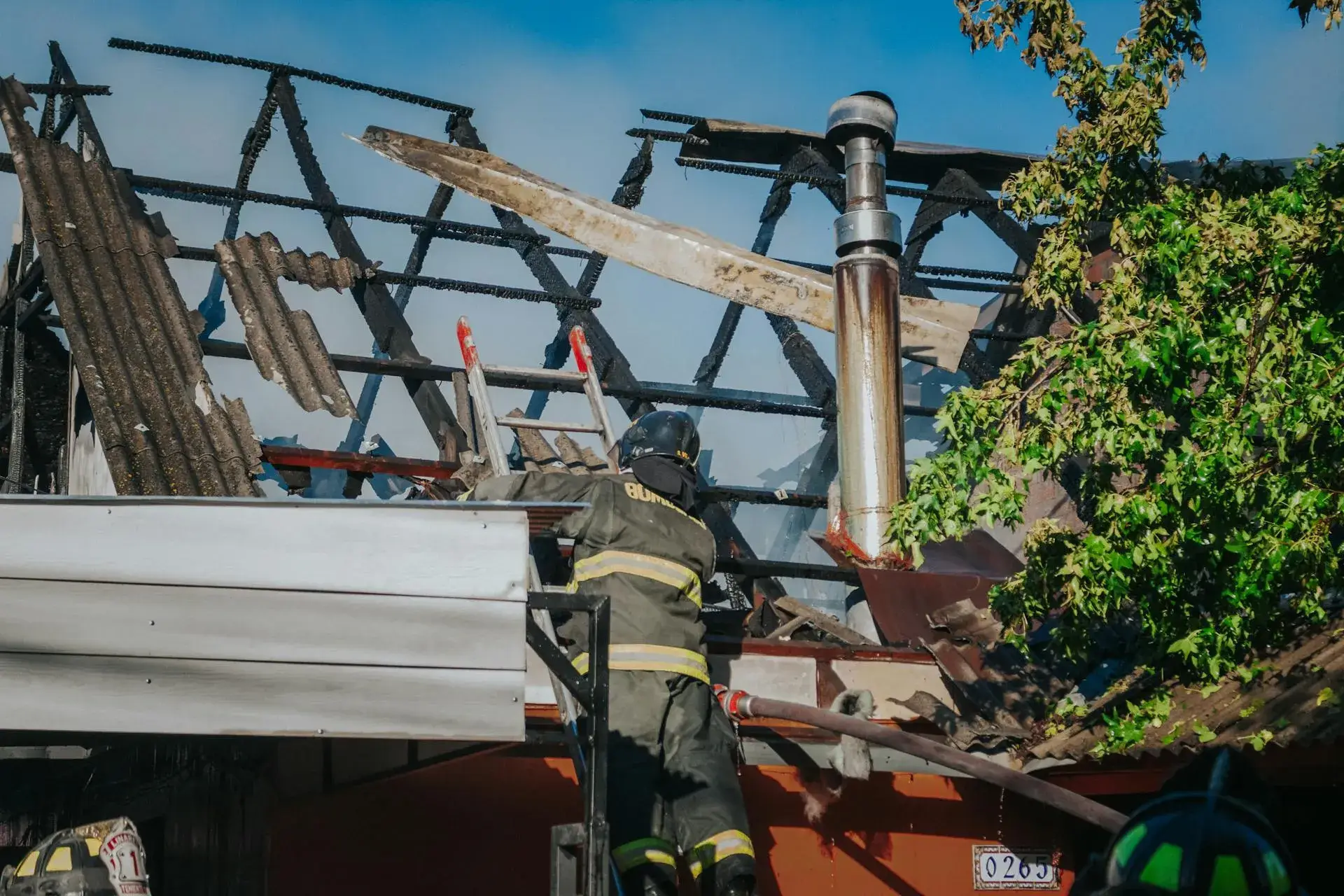
Fire Damage Restoration in Vinings, GA
Fire and smoke damage worsen every hour as soot acidifies, corrosion spreads, and odor penetrates deeper into materials. Our local team responds to Vinings emergencies within 60 minutes.
What Happens When You Call
A real person answers, not a call center. We assess your situation, ask the right questions, and begin coordinating your response immediately.
Your dedicated restoration team is dispatched from our local base serving Vinings and the surrounding southeast Cobb County communities.
Team arrives with board-up materials, soot removal equipment, air scrubbers, and structural assessment tools. Emergency securing and mitigation begins immediately.
Structure secured, immediate hazards addressed, suppression water managed, restoration plan documented. You know exactly what comes next.
A fire just happened and everything feels chaotic. The flames may be out, but the damage is still progressing. Soot is acidifying on surfaces, smoke residue is bonding to materials, and water from suppression is soaking into the structure beneath your feet. X Response exists for this exact moment. When you reach out, your restoration team is mobilized within minutes and on site within the hour. From that point forward, one team manages everything: securing the structure, removing soot and smoke, drying suppression water, and guiding the insurance process. Call now. Your team is standing by.
Why Vinings Homes Are Vulnerable to Fire Damage
Vinings' fire risk profile reflects a community that spans nearly two centuries of building construction across a compact geographic footprint. The community traces its origins to the late 1830s when Hardy Pace settled along the Chattahoochee River and the Western and Atlantic Railroad established Vining's Station as a construction hub. That railroad history, combined with the community's growth through distinct development eras, has produced a housing stock that ranges from pre-Civil War historic structures near the original village center to 1970s townhouse complexes like Vinings Ferry, to modern luxury condominiums and the high-rise commercial towers of the adjacent Cumberland district. Cobb County Fire and Emergency Services operates Fire Station 5 at 4336 Paces Ferry Road in Vinings, positioned at the corner of Paces Mill and Paces Ferry roads, providing first-due suppression coverage for this diverse building stock. The department protects more than 740,000 residents across 29 stations countywide, responding to over 62,000 emergency calls annually.
The mix of building eras in Vinings creates distinct fire risk categories that each demand different restoration approaches. Historic homes along the Chattahoochee corridor and near the original village center feature plaster-and-lath walls, balloon framing, knob-and-tube or early Romex wiring, and wood-shingled roof assemblies that allow fire to spread through concealed channels faster than in modern compartmentalized construction. The 1970s townhouse communities along Paces Mill Road share structural elements including party walls, continuous attic spaces, and connected roof lines that allow fire to travel between units. The Cumberland commercial district immediately adjacent to Vinings contains high-rise office towers and mixed-use developments with complex fire suppression systems, multiple occupant categories, and restoration challenges that differ fundamentally from residential structures. Each category requires specialized fire restoration knowledge that accounts for the materials present, the fire's travel path through the structure, and the soot chemistry produced by what burned.
Historic Structures and Balloon Framing Along the River Corridor
Vinings retains a significant number of historic residential structures from its earliest development periods, particularly along the Chattahoochee River corridor and near the original village center around Paces Ferry Road. The Solomon and Penelopy Pace House, listed in the National Register of Historic Places in May 2009, exemplifies the construction era. These homes and their later 19th-century neighbors were built with balloon framing, a construction method where wall studs run continuously from the foundation sill to the roof plate without the horizontal fire-stops that modern platform framing requires. Balloon framing creates open channels inside the walls that act as chimneys during a fire, allowing flames to travel rapidly from a ground-floor ignition to the attic without breaking through to visible flame at each floor. By the time occupants detect fire in a balloon-framed home, flames have often spread through the entire wall system. Restoring a fire-damaged historic home in Vinings adds layers of complexity that modern construction does not present: original materials like plaster, lath, and heart pine framing may be irreplaceable, insurance replacement cost calculations must account for historic replication, and demolition must respect preservation requirements that limit how much original fabric can be removed.
Attached-Dwelling Construction in Townhouse Communities
Vinings contains several townhouse and condominium communities built during the 1970s through 1990s development era, including Vinings Ferry (built circa 1976), Overlook at Vinings, and other attached-dwelling complexes along Paces Mill Road and the Cumberland corridor. These attached buildings share structural elements that allow fire to spread between units: party walls that may not extend through the attic space as fire-rated assemblies, continuous roof assemblies under a single covering, shared plumbing and electrical chases that create vertical pathways for smoke migration, and HVAC systems that can distribute smoke products throughout connected units. When fire starts in one townhouse unit and reaches the attic space, it can travel laterally across multiple units under the roofline before breaking through to visible flame in neighboring homes. Residents of the unburned units experience heavy smoke migration through shared wall cavities and attic connections, depositing soot on every surface in their home without fire ever entering their living space. Restoration after a multi-unit townhouse fire means assessing and treating not just the fire unit but every connected unit where smoke traveled, which often includes homes three or four units away from the ignition.
Electrical System Aging in the 1960s-1980s Housing Stock
Vinings' residential growth through the 1960s, 1970s, and 1980s produced a significant inventory of homes with electrical systems designed for the power demands of that era. Original 100-amp or 150-amp panels serve homes now running central HVAC, multiple appliances, home entertainment systems, electric vehicle chargers, and home office equipment that collectively draw far more current than the original design capacity. Federal Pacific and Zinsco panels, both manufactured during this period and both now widely recognized as having failure-prone breakers that do not reliably trip during overcurrent conditions, remain installed in homes throughout the area. Aluminum branch wiring, used extensively in construction from the mid-1960s through the 1970s, develops oxidation at connection points to copper devices and terminals, increasing resistance and generating localized heat that can ignite surrounding insulation or framing. These electrical fires typically smolder inside wall cavities, spreading heat and smoke through concealed spaces before breaking through to visible flame. By the time an electrical fire is detected in these homes, smoke has often traveled through the entire wall and attic system, requiring comprehensive smoke restoration across the structure.
The Cumberland Commercial District and Mixed-Use Structures
The Cumberland area immediately adjacent to Vinings contains one of metro Atlanta's densest concentrations of commercial and mixed-use development, including high-rise office towers, hotels, The Battery mixed-use complex near Truist Park, and retail centers. While these commercial structures have fire suppression systems that residential properties lack, the restoration challenges they present are equally complex. A sprinkler activation in a high-rise office confines fire but produces massive water damage across multiple floors as suppression water cascades downward. Smoke from a small fire on one floor can distribute through the HVAC system to affect every occupied floor. Commercial contents including electronics, documents, specialized equipment, and inventory require different restoration protocols than residential furnishings. For Vinings residents who work in Cumberland, a workplace fire may bring them into contact with restoration needs that extend beyond their residential experience. For property owners in the transitional zone between residential Vinings and commercial Cumberland, mixed-use buildings present fire restoration scenarios that combine commercial complexity with residential displacement.
Suppression Water and the Compound Damage Problem
Every structure fire in Vinings produces two concurrent damage mechanisms: the fire itself and the water used to suppress it. Cobb County Fire and Emergency Services Station 5 applies hundreds or thousands of gallons during suppression, and that water flows through the structure following gravity into lower levels, crawl spaces, and through floor systems. In Vinings' humid subtropical climate, where summer ambient humidity routinely runs high, suppression water left standing after firefighters clear the scene will begin producing mold growth within 24 to 48 hours, compounding fire and smoke damage with a secondary biological contamination. For the historic homes along the river corridor with crawl spaces, suppression water pools beneath the structure on vapor barriers or directly on exposed earth, creating a moisture reservoir that wicks into floor joists and subfloor from below. For multi-story townhouses, suppression water cascades from the fire floor to the ground level, soaking materials that the fire itself never reached. Managing suppression water is not an afterthought; it is a concurrent emergency that must begin the same day as fire restoration to prevent the secondary damage from exceeding the primary fire loss.
These factors define fire risk in Vinings: historic balloon-framed homes where fire travels through concealed wall channels before detection, attached townhouse construction where fire exploits shared attic spaces and party walls, aging electrical systems in the substantial 1960s-1980s housing stock, the adjacent Cumberland commercial district with its distinct restoration complexity, and the inevitable suppression water that compounds every fire with secondary water and mold damage. Effective fire restoration in Vinings requires understanding how fire moves through each construction type present in this community, how soot chemistry varies based on what burned, and how to prevent the suppression water from creating a second emergency that outlasts the first.
What Happens to Your Home While You Wait
Within 1 Hour
Soot begins acidifying on contact with surfaces. In Vinings homes with synthetic furnishings, plastics, and modern materials, the soot produced is highly acidic and begins etching metal, discoloring paint, and permanently staining porous surfaces immediately. Protein-based soot from kitchen fires produces a thin, nearly invisible residue that yellows surfaces and embeds odor deeply. Suppression water is flowing downward through the structure into lower levels and crawl spaces. In the humid Vinings climate, the moisture from suppression accelerates corrosion on exposed metal and begins softening drywall that the fire itself did not damage.
1–24 Hours
Acidic soot continues chemical reactions with surfaces. Chrome, brass, and copper fixtures begin pitting and corroding permanently. Smoke residue bonds more aggressively to surfaces as it cools and sets. In Vinings' historic homes with plaster walls, smoke penetrates the porous plaster far more deeply than it penetrates modern drywall, embedding odor in the material itself. HVAC systems that cycled during or after the fire have distributed soot and odor throughout the ductwork and into every room the system serves, including rooms far from the fire origin. Suppression water standing in crawl spaces begins producing bacterial growth in the warm environment.
24–48 Hours
Soot corrosion on metals becomes permanent without professional cleaning. Wood surfaces absorb smoke compounds and begin requiring sanding or replacement rather than surface cleaning. In multi-unit townhouse buildings where fire traveled through shared attic spaces, neighboring units develop visible soot staining and persistent odor as smoke residue migrates through wall cavities over time. Mold begins colonizing materials wet from suppression water, particularly in concealed crawl spaces, behind baseboards, and inside wall cavities where drying is slowest. The window for surface cleaning narrows as chemical bonds between soot and surfaces strengthen.
48–72 Hours
Smoke odor fully penetrates soft goods, upholstery, clothing, and bedding. Materials that could have been cleaned in the first 24 hours now require replacement. Mold growth from suppression water becomes visible on organic materials in humid concealed spaces. In balloon-framed historic homes where smoke traveled through continuous wall cavities, odor becomes embedded in structural members that cannot be removed, requiring specialized sealing rather than cleaning. Corrosion damage on electronics, appliances, and HVAC components progresses past economical repair. Restoration scope and cost escalate significantly compared to same-day intervention.
One Week and Beyond
Comprehensive smoke odor throughout the structure requires thermal fogging, ozone treatment, or hydroxyl generation rather than surface cleaning alone. Mold from suppression water requires independent remediation. Historic materials damaged by both fire and acidic soot may require specialist conservation rather than standard restoration techniques. In attached-dwelling buildings, secondary smoke migration continues affecting units that appeared unaffected in the first days after the fire. Insurance claims grow more complex as secondary damage layers accumulate on top of the original fire loss. What began as a fire restoration project now encompasses smoke remediation, water damage repair, mold remediation, and potentially historic preservation compliance.
Every hour of delay after the fire is out costs you surfaces, finishes, and materials that could have been saved. Contact X Response now. Our Vinings team responds within 60 minutes.
How We Restore Fire-Damaged Vinings Homes
From the moment our team arrives, every step is coordinated to stop secondary damage and begin recovery. Here is exactly what the fire restoration process involves for Vinings properties.
Emergency Board-Up and Structural Securing
Our first priority is securing the structure against weather, unauthorized entry, and further damage. In Vinings, where storms can follow quickly after a fire event, an unsecured structure with broken windows and compromised roofing will take water damage on top of fire damage within hours. We board windows, tarp damaged roof sections, and secure openings using fire-rated materials that meet Cobb County code requirements. For historic homes along the Chattahoochee corridor with irreplaceable architectural elements, we take extra care to protect surviving features while securing the envelope. The structure is documented photographically before any securing work begins so your insurance record captures the as-found condition.
Assessment and Scope Development
With the structure secured, we conduct a comprehensive assessment using thermal imaging, soot testing, and moisture mapping. In Vinings' mixed housing stock, this means evaluating fire travel through balloon-framed historic walls, smoke migration through townhouse party walls and shared attic spaces, soot deposition patterns across all affected rooms, and suppression water accumulation in lower levels and crawl spaces. We test surfaces to identify soot chemistry (protein, synthetic, or combination) because each type requires different cleaning compounds. The assessment produces a detailed scope of work with room-by-room specifications that your insurance adjuster can review and approve.
Soot and Smoke Residue Removal
Surface cleaning begins with the correct chemistry for the soot type identified during assessment. Synthetic soot from burned plastics requires acidic-neutralizing agents. Protein soot from kitchen fires needs enzymatic cleaners. Mixed-source soot demands a layered approach. We clean every surface the smoke contacted: walls, ceilings, trim, cabinetry interiors, closet contents, and structural members in exposed areas. For Vinings townhouses where smoke migrated through shared walls, we clean surfaces in units the fire never physically reached but where soot deposited through migration pathways. HEPA air scrubbers run continuously to capture particulate disturbed during cleaning.
Suppression Water Management and Drying
Suppression water is extracted concurrent with soot cleaning to prevent the secondary damage from outpacing the primary restoration. In Vinings homes with crawl spaces, suppression water pools beneath the structure and must be pumped before it saturates floor joists. We deploy commercial dehumidifiers and air movers in the same drying configuration used for water damage restoration, monitoring moisture daily until structural materials reach their dry standard. For multi-story townhouses, suppression water cascading from the fire floor to lower levels requires extraction and drying across multiple stories simultaneously.
Odor Elimination and Final Verification
After all soot is removed and the structure is dry, embedded odor is addressed through thermal fogging, hydroxyl generation, or ozone treatment depending on the smoke type and materials affected. We seal surfaces with specialized odor-blocking primers where smoke compounds have penetrated drywall or wood beyond cleanable depth. A final walkthrough verifies that all surfaces are clean, all moisture readings are within standard, all odor sources are eliminated, and the scope of work is complete. Documentation including before-and-after photos, cleaning logs, moisture readings, and air quality results supports your insurance claim and confirms the restoration meets professional standards.
The X Response Difference
When you contact X Response after a fire in Vinings, you get one team that manages the entire recovery: securing, cleaning, drying, deodorizing, and documenting. One point of contact, one standard of work, one team that stays until the job is verified complete.
Insurance Claim Guidance for Vinings Homeowners
Fire damage insurance claims in Georgia are generally straightforward in coverage but complex in scope. Standard homeowner's policies cover fire damage and the resulting smoke and suppression water damage as part of the same covered event. The complexity comes from documenting the full extent of damage, particularly in Vinings' attached-dwelling buildings where smoke migrates into units that were never on fire, and in historic homes where replacement cost calculations must account for materials and craftsmanship that differ from modern construction. Suppression water damage is covered as a direct consequence of the fire, but if it is not addressed promptly and produces secondary mold, carriers may dispute whether the mold damage resulted from the fire or from delayed mitigation. Thorough documentation from day one prevents that dispute.
How X Response Helps
- Document all fire, smoke, and suppression water damage with professional photos and a detailed room-by-room scope from day one
- Identify smoke migration pathways in attached-dwelling buildings so neighboring units can file claims against the originating fire event
- Begin suppression water extraction immediately to prevent carriers from attributing secondary mold to delayed mitigation rather than the fire
- Calculate replacement cost for historic materials that require specialized replication rather than standard modern substitutes
- Provide completion documentation with before-and-after evidence, cleaning logs, and moisture readings to close the claim cleanly
X Response does not file claims on your behalf, adjust claims, or make coverage determinations. We provide documentation and guidance to help you make informed decisions about your property and your policy. Coverage decisions are made solely by your insurance carrier.
Certified Restoration Specialists Serving Vinings
When you contact X Response after a fire in Vinings, your restoration team is drawn from certified professionals who work across southeast Cobb County and understand the specific challenges of restoring fire-damaged properties in this community. They know how fire travels through balloon-framed historic homes along the river corridor, how smoke migrates through the shared walls and attic spaces of 1970s townhouse complexes, how Cobb County Fire Station 5 operates and what condition a structure is typically in after suppression, and how the humid subtropical climate accelerates secondary damage from suppression water. This is not a crew dispatched from hours away with generic fire restoration training. It is a local team with direct experience in the building types, construction eras, and fire behavior patterns specific to Vinings.
Every technician on your team holds current IICRC certification in fire and smoke restoration (FSRT) and carries the appropriate Georgia state licensing for the work being performed. Equipment includes HEPA air scrubbers, thermal foggers, hydroxyl generators, commercial dehumidifiers for suppression water, thermal imaging cameras, and soot-chemistry testing supplies. When your team arrives, they bring everything needed to begin securing, cleaning, and drying immediately, not a clipboard and a promise to return later with equipment.
In Vinings, X Response works with Atlanta's Best Restoration, an independent local restoration partner serving Cobb County.
Fire Damage Restoration FAQ for Vinings Homeowners
Other Emergency Services in Vinings

Water Damage Restoration
Burst pipes, storm flooding, standing water. We extract, dry, and restore before mold sets in.
Learn more
Smoke Damage Restoration
Soot residue, chemical odors, HVAC contamination. We decontaminate surfaces, eliminate odors, and restore air quality.
Learn more
Mold Remediation
Testing, containment, removal, prevention. We find the source, eliminate the growth, and stop it from returning.
Learn more
Sewage Cleanup
Sewer backups, contaminated water, biohazard. We extract, sanitize, and restore safely.
Learn more