
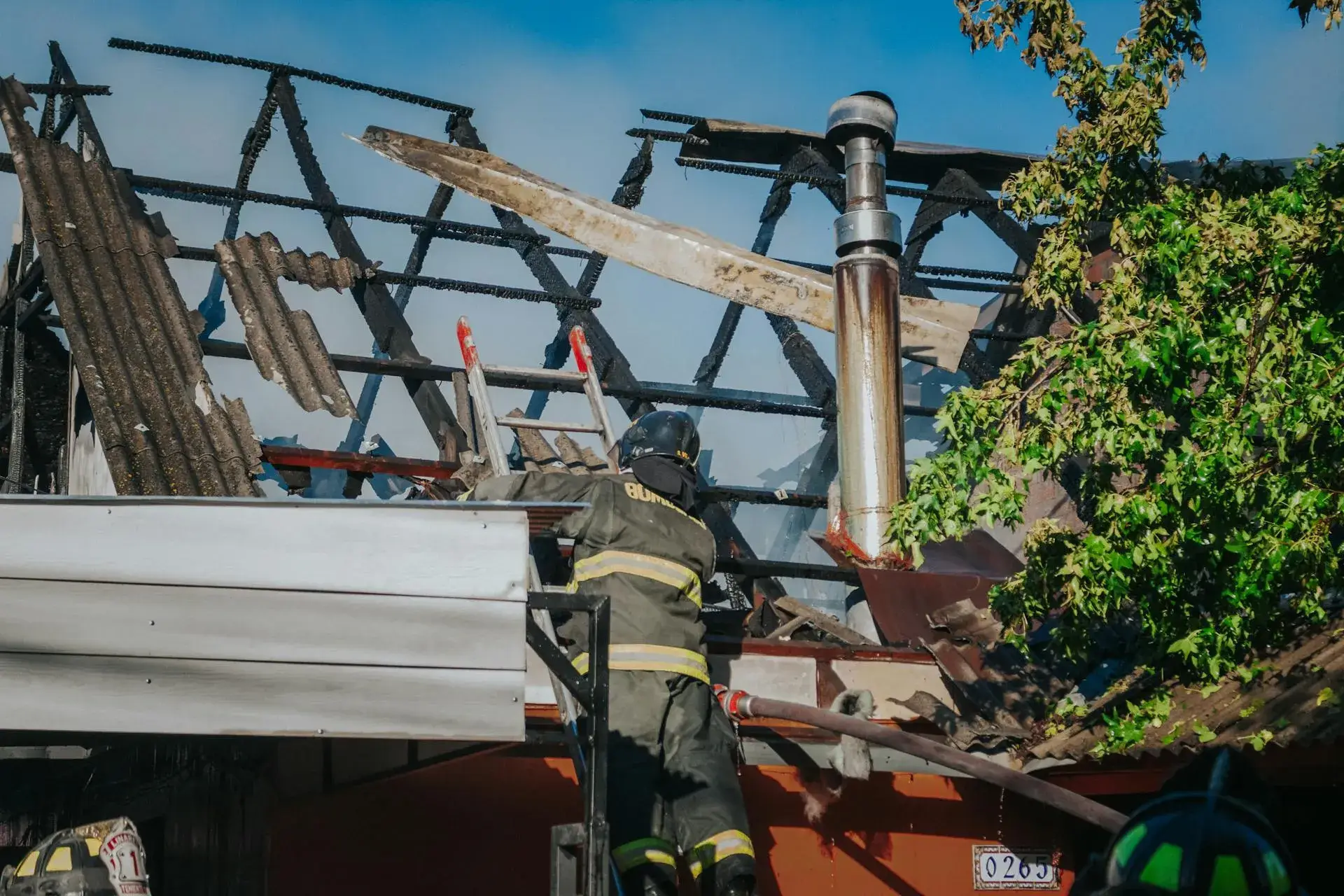
Fire Damage Restoration in Elk Grove Village, IL
Fire damage compounds every hour through soot penetration, corrosion, and secondary water damage from suppression efforts. Our local team responds to Elk Grove Village emergencies within 60 minutes.
What Happens When You Call
A real person answers, not a call center. We assess your situation, ask the right questions about the fire's extent and the current state of the property, and begin coordinating your response immediately.
Your dedicated restoration team is dispatched from our local base serving Elk Grove Village and the surrounding northwest suburban communities in Cook and DuPage Counties.
Team arrives with board-up materials, structural assessment tools, and soot mitigation equipment. Emergency stabilization begins immediately.
Property secured, immediate threats addressed, restoration plan documented. You know exactly what comes next.
A fire just happened in your home or business. The flames may be out, but the damage is still actively progressing. Soot is acidic and corrodes metal surfaces, etches glass, and permanently stains porous materials with every passing hour. Water from suppression soaks into everything the fire did not touch. X Response exists for exactly this moment. When you reach out, your restoration team is mobilized within minutes and on site within the hour. From that point forward, one team manages everything: stabilization, cleaning, reconstruction, and insurance documentation. Call now. Your team is standing by.
Why Elk Grove Village Homes Are Vulnerable to Fire Damage
Elk Grove Village occupies 11.6 square miles in Cook and DuPage Counties, approximately 22 miles northwest of Chicago. Incorporated in 1956 as one of America's first master-planned communities, the village was built through a partnership between Centex Corporation and the Pritzker family to house returning World War II veterans. The original master plan divided the community in half: residential neighborhoods to the west, and an industrial park to the east bordering O'Hare International Airport. That industrial park has grown into the largest contiguous business park in North America, with over 62 million square feet of inventory housing more than 5,600 businesses and 400 manufacturers. The fire risk profile of Elk Grove Village reflects this dual identity. Residential fire risk concentrates in the aging 1957-1973 Centex housing stock with outdated electrical systems and original heating equipment. Commercial and industrial fire risk spans the enormous business park where manufacturing processes, chemical storage, warehouse operations, and data center cooling systems create hazard scenarios that residential firefighting does not address.
The Elk Grove Village Fire Department achieved a prestigious ISO Class 1 designation from the Insurance Services Office, placing it in the top 1% of fire departments nationwide. Out of over 46,000 fire departments across the United States, only 498 have reached Class 1 status, and the Elk Grove Village department is one of just 118 agencies worldwide holding both an ISO Class 1 rating and Accreditation from the Center for Public Safety Excellence. The ISO Public Protection Classification program evaluates departments on training, apparatus, response capabilities, water supply, dispatch operations, and fire prevention programs. This designation reflects the scale of what the department protects: not just 32,812 residents, but the North American-leading business park that generates the majority of the village's revenue and employs over 100,000 workers daily. The department's seven stations, career staffing model, and specialized apparatus including hazmat and technical rescue capabilities are scaled to the industrial risk the village presents.
ISO Class 1 Fire Protection and What It Means for Restoration
Elk Grove Village's ISO Class 1 fire department rating means fires in this community are typically suppressed faster and contained to smaller areas than in communities with lower ratings. The department's training standards, response times, apparatus deployment, and water supply infrastructure are among the best in the nation. For property owners, this translates to fires that are more likely to be caught before full structural involvement, particularly in the residential neighborhoods where station proximity means a first-alarm response within minutes. However, even a fire that is quickly contained still produces significant soot, smoke, and water damage that extends well beyond the burn area. A kitchen fire suppressed in ten minutes may leave the burn area confined to one room, but smoke and soot contamination migrates through the entire home via the HVAC system, pressurized by the fire's heat, in those same ten minutes. Restoration addresses the 90% of the property the fire did not directly burn but the smoke did reach.
1957-1973 Centex Housing and Residential Fire Risk
The Centex subdivision that forms the residential core of Elk Grove Village was built between 1957 and 1973. These ranch and colonial style homes present specific fire risks related to their age and original construction. Electrical systems in the earliest homes were designed for the appliance loads of the late 1950s, with 60-amp or 100-amp panels, aluminum wiring in some cases, and original outlets that lack ground fault protection. Heating systems in many homes have been updated over the decades, but original ductwork, gas line routing, and chimney flues remain. The balloon-frame construction used in some of the earlier ranch homes allows fire to travel rapidly through wall cavities from basement to attic without the fire stops that modern building codes require. Basements in these homes, frequently finished in the 1970s and 1980s with wood paneling, drop ceilings, and foam-backed carpet, contain concentrated fuel loads in spaces with limited egress. When a fire originates in these finished basements, the entire below-grade space can become involved before the fire department arrives, with heat and smoke venting upward through the floor system into the living space above.
North America's Largest Business Park and Industrial Fire Complexity
The Elk Grove Village industrial park encompasses over 62 million square feet of warehouse, manufacturing, data center, and commercial space in more than 5,600 businesses. Fire damage in industrial and commercial structures involves fundamentally different restoration challenges than residential fires. Warehouse fires produce enormous volumes of smoke that deposits soot across hundreds of thousands of square feet of inventory, racking, and building systems. Manufacturing fires may involve chemical residues, hazardous materials, and specialized equipment that require environmental assessment before restoration can begin. Data center fires, even small ones, can damage millions of dollars of electronic equipment through corrosive soot particulates that penetrate server enclosures. The scale of these commercial losses frequently exceeds anything residential restoration encounters: a single warehouse fire can produce more linear feet of soot-contaminated surface area than an entire residential neighborhood. Multi-tenant buildings add the complication of smoke migration between lease spaces through shared HVAC systems, ceiling plenums, and wall penetrations.
Elk Grove Township Fire Protection District Dissolution (2023)
On October 1, 2023, the Elk Grove Township Fire Protection District permanently closed due to loss of funding, with its response area split between Elk Grove Village, Mount Prospect, and Des Plaines fire departments. This reorganization expanded the territory that the Elk Grove Village Fire Department covers, including previously unincorporated areas. While the village department's ISO Class 1 rating reflects its capacity to absorb additional coverage, properties in the former township district that previously received fire protection from a separate agency now fall under a different response model. For property owners in these transitional areas, the jurisdictional change does not affect restoration needs after a fire, but it does affect which agency arrives and how pre-incident planning may differ from what was in place before the dissolution. The Elk Grove Village Fire Department's accredited status and specialized apparatus ensure consistent response quality across its expanded territory.
Secondary Water Damage from Fire Suppression
In Elk Grove Village, where the ISO Class 1 fire department deploys substantial suppression resources, the water damage that accompanies fire suppression is often more extensive than the fire itself. A structure fire that is quickly controlled may confine burn damage to one or two rooms, but the hose streams used to knock down the fire and protect exposures saturate adjacent rooms, flow down through floor systems into basements, and pool in the lowest areas of the structure. In the Centex-era homes with finished basements, suppression water flows through the first-floor fire area, through the floor joists and subfloor, and cascades into the basement below where it damages finished walls, flooring, and stored possessions that the fire never reached. For multi-story buildings in the industrial park, suppression water flows from upper-floor fires through elevator shafts, stairwells, and utility penetrations to affect every floor below the fire origin. Fire restoration in Elk Grove Village is always a dual-discipline project: fire and smoke remediation on the upper levels, water damage restoration below.
Fire damage restoration in Elk Grove Village addresses two distinct property environments. Residential fires in the aging Centex stock involve 1950s and 1960s construction where fire travels quickly through outdated framing, and where finished basements below the fire floor are routinely destroyed by suppression water flowing downward. Commercial and industrial fires in North America's largest business park involve scale, specialized hazards, and business-interruption stakes that residential fires do not approach. Both environments demand rapid stabilization to prevent soot from permanently damaging surfaces that can still be restored, and both require the expertise to manage the water damage from suppression alongside the fire damage itself.
What Happens to Your Home While You Wait
Within 1 Hour
Soot begins to etch metal surfaces, tarnish fixtures, and discolor plastics. The acidic compounds in smoke residue start chemical reactions with household surfaces immediately after the fire is extinguished. Suppression water is actively flowing through the structure, saturating materials the fire did not directly damage. In Elk Grove Village homes with finished basements, this water reaches the below-grade level within minutes of suppression beginning, starting a secondary water damage event concurrent with the fire damage above.
1–24 Hours
Soot residue permanently stains grout, natural stone, and unfinished wood if not addressed. Metal surfaces including appliances, fixtures, and HVAC components develop visible corrosion spots. Fabrics and upholstery absorb smoke odor molecules deep into their fiber structure. Suppression water standing on floors and in basements begins the same damage clock as any water event: wicking into drywall, swelling wood, and creating conditions for mold within 24 to 48 hours.
24–72 Hours
Corrosive soot permanently damages chrome, brass, and aluminum surfaces beyond restoration. Electronics exposed to soot particulates experience circuit-board corrosion that may not manifest as failure for weeks but is occurring now at the microscopic level. Smoke odor embeds deeper into porous materials including wall cavities, insulation, and HVAC ductwork. Suppression water in the basement and lower levels has now triggered the mold colonization window in summer humidity conditions typical of Cook County.
One Week and Beyond
Materials that could have been cleaned and restored in the first 48 hours now require replacement. Soot corrosion has penetrated protective finishes on metal surfaces. Smoke odor has permeated the entire HVAC system and been distributed to every room through ductwork. Suppression water left standing has produced active mold growth in concealed spaces. The scope of the project has expanded from restoration to demolition and replacement in areas where timely intervention would have preserved salvageable materials.
Every hour after a fire, soot is corroding your property's surfaces and suppression water is creating a secondary water damage event below. Contact X Response now. Our Elk Grove Village team responds within 60 minutes to stabilize both the fire damage and the water damage simultaneously.
How We Restore Fire-Damaged Elk Grove Village Homes
Fire restoration is a multi-phase project that addresses the fire damage, the smoke contamination, and the suppression water damage as interconnected problems. Here is exactly what the process involves for Elk Grove Village properties.
Emergency Stabilization and Board-Up
Our team arrives to secure the property against weather, unauthorized entry, and further damage. In Elk Grove Village, that means boarding up broken windows and compromised openings, tarping damaged roof sections to prevent rain intrusion, and shutting off utilities where fire has compromised gas lines, electrical systems, or water supply. We coordinate with the Elk Grove Village Fire Department on scene access and fire investigation timelines so our stabilization work does not disturb areas the investigator needs to examine. For commercial properties in the industrial park, stabilization may include securing hazardous materials areas, protecting undamaged inventory from smoke migration, and establishing climate control to slow soot corrosion on sensitive equipment.
Assessment and Scope Documentation
Once the property is stabilized and released by the fire department, we conduct a detailed assessment of every affected area. We map the burn perimeter, the smoke and soot migration path through the structure, and the full extent of suppression water damage. In Elk Grove Village's Centex-era homes, that means inspecting the basement below the fire area for water accumulation, checking HVAC ductwork for soot contamination that would redistribute particulates when the system runs, and evaluating whether the fire compromised structural elements in the floor system or load-bearing walls. Everything is documented with photos, diagrams, and a written scope of work that becomes the foundation for your insurance claim.
Soot and Smoke Remediation
Soot removal uses specialized techniques matched to the residue type. Protein fires from kitchen incidents produce a thin, nearly invisible residue that stains and produces severe odor. Synthetic material fires produce a thick, oily soot that smears if cleaned with standard methods. Wood-structure fires produce a dry, powdery soot that responds to dry sponge techniques before wet cleaning. Our team identifies the predominant residue type in each area and applies the correct method: dry sponge, wet cleaning, solvent-based cleaning, or media blasting on masonry surfaces. HEPA filtration runs throughout the cleaning process to capture airborne particulates. Hard surfaces are cleaned, sealed, and primed. Porous materials that cannot be restored, such as carpet padding, insulation, and heavily contaminated drywall, are removed and documented for replacement.
Structural Drying and Water Damage Mitigation
Suppression water is addressed simultaneously with smoke remediation because both damage clocks are running. Extraction equipment removes standing water from basements and lower levels. Structural drying equipment is placed in water-affected areas while smoke cleaning proceeds in fire-affected areas above. This parallel approach prevents the suppression water from producing mold growth that would compound the fire damage with a biological contamination problem. In Elk Grove Village homes where the finished basement took the full volume of suppression water from the fire floor above, the basement often requires its own complete restoration separate from the fire-damaged area upstairs.
Reconstruction and Completion
Once cleaning and drying are complete, reconstruction begins. Fire-damaged structural elements are replaced to code. Drywall, flooring, trim, and finishes are rebuilt. Electrical and mechanical systems are inspected and repaired or replaced as required. The goal is to return the property to its pre-fire condition, not just structurally but in appearance and function. Final inspection includes thermal imaging to verify no hidden moisture remains, air quality testing to confirm odor elimination, and a comprehensive documentation package for your insurance carrier. The project is not complete until every scope item is resolved and the property is habitable or operational.
The X Response Difference
Fire damage restoration is complex because it involves multiple damage types, fire, smoke, soot, and water, occurring simultaneously across different areas of the property. X Response manages all of them as one coordinated project under one team with one point of contact.
Insurance Claim Guidance for Elk Grove Village Homeowners
Fire damage insurance claims in Illinois are typically covered under the dwelling and personal property sections of a standard homeowner's policy, as fire is a named peril. However, the claim process involves multiple categories of damage, each documented and assessed separately. The fire itself, the smoke and soot damage to areas the fire did not directly reach, the suppression water damage to lower levels, and the loss of use while the property is uninhabitable all fall under different coverage sections. For commercial properties in the Elk Grove Village industrial park, the claim complexity increases with business interruption coverage, inventory valuation, tenant improvements, and the distinction between building-owner and tenant insurance obligations. Elk Grove Village's ISO Class 1 rating means that insurance premiums in the community already reflect the superior fire protection, but that does not simplify the claim process when a loss does occur.
How X Response Helps
- Document all damage categories separately: fire/burn damage, smoke and soot migration, suppression water damage, and structural compromise
- Photograph and inventory damaged personal property and contents with pre-loss valuation where possible
- Maintain a written scope of work that distinguishes between restoration (cleaning and saving materials) and replacement (removing and rebuilding)
- Track additional living expenses or business interruption costs from the first day of displacement
- Coordinate with your carrier's preferred timeline while ensuring mitigation begins immediately to prevent secondary damage
X Response does not file claims on your behalf, adjust claims, or make coverage determinations. We provide documentation and guidance to help you make informed decisions about your property and your policy. Coverage decisions are made solely by your insurance carrier.
Certified Restoration Specialists Serving Elk Grove Village
When you contact X Response after a fire in Elk Grove Village, your restoration team brings experience with both the residential Centex-era housing stock and the commercial structures in the industrial park. They understand how the 1957-1973 construction responds to fire, how balloon framing in the earlier ranch homes allows fire extension through wall cavities, how finished basements below the fire floor become secondary water damage zones, and how the smoke from synthetic materials in modern furnishings differs from the smoke produced by structural wood framing. For commercial clients, they understand the documentation and timeline requirements that insurance carriers expect on large-loss industrial claims, and they have the equipment capacity to handle cleaning projects measured in tens of thousands of square feet rather than hundreds.
Every technician on your team holds current IICRC certification in fire and smoke restoration and carries the appropriate Illinois state licensing for the work being performed. Equipment includes industrial HEPA filtration systems, ozone generators for odor treatment, thermal fogging equipment for smoke odor in inaccessible cavities, and the full suite of water extraction and drying equipment needed to address suppression damage simultaneously. When your team arrives at an Elk Grove Village property after a fire, they bring the capacity to address every aspect of the damage under one mobilization.
In Elk Grove Village, X Response works with Scene Cleaners, an independent local restoration partner serving Cook County.
Fire Damage Restoration FAQ for Elk Grove Village Homeowners
Other Emergency Services in Elk Grove Village
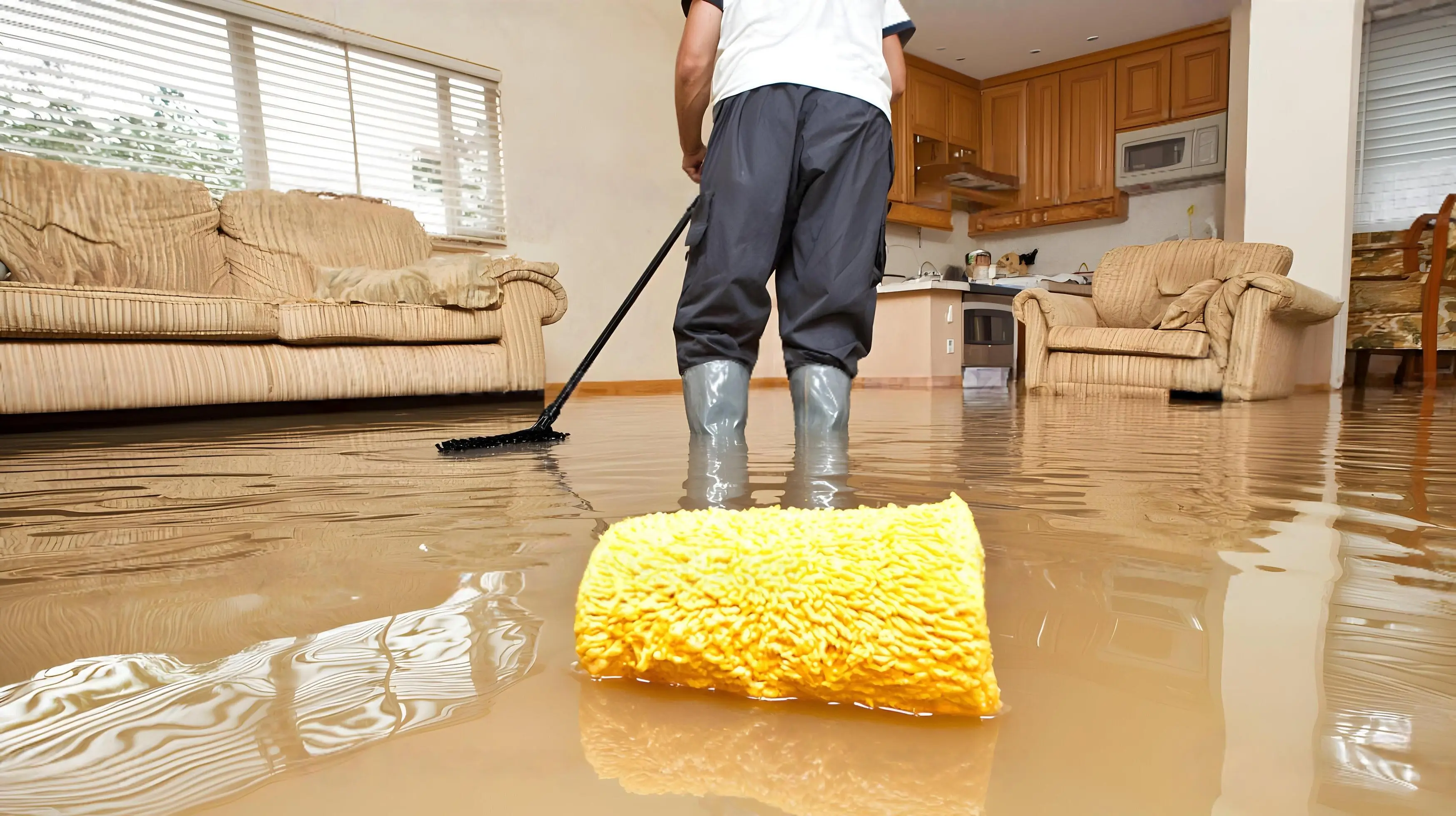
Water Damage Restoration
Burst pipes, storm flooding, standing water. We extract, dry, and restore before mold sets in.
Learn more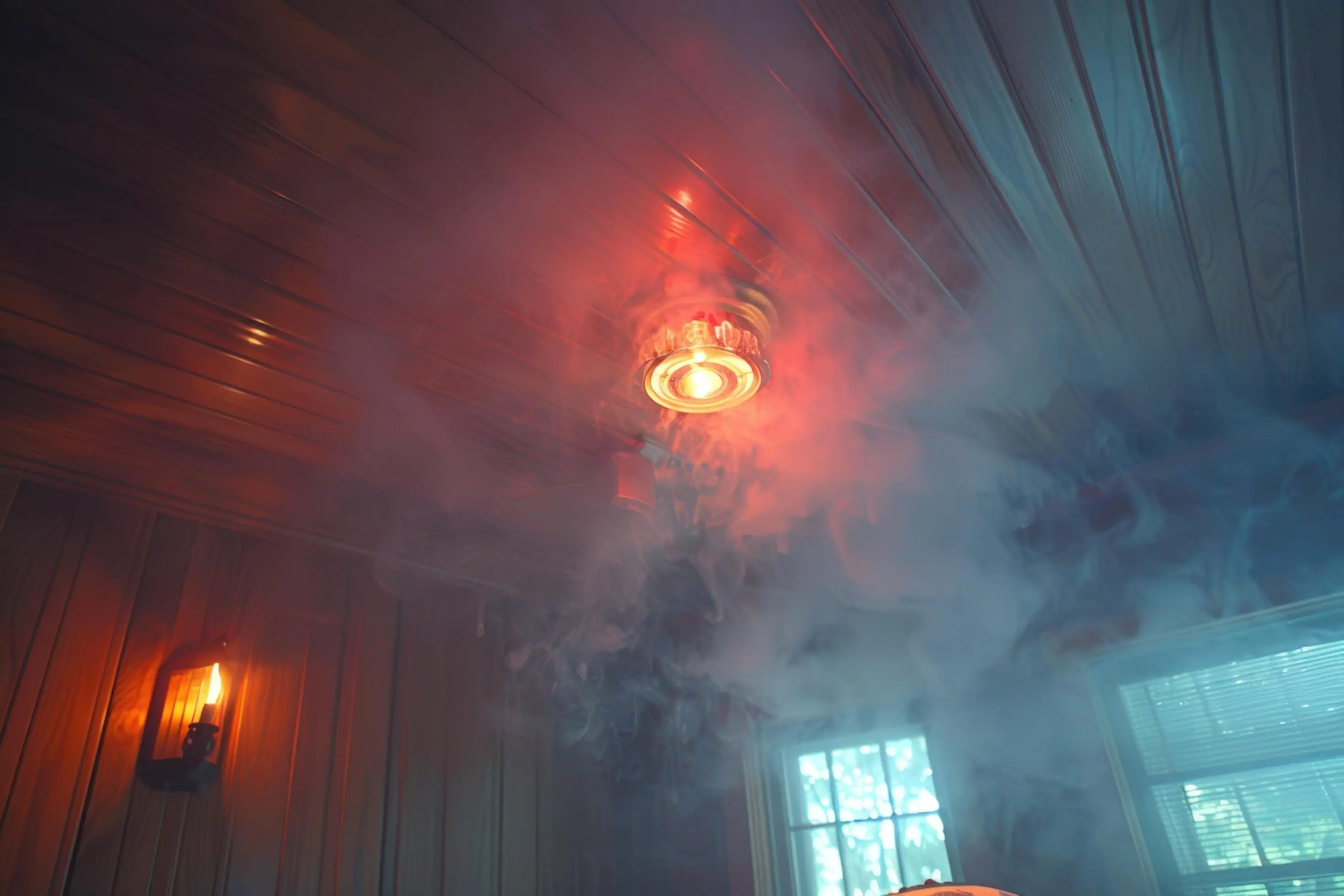
Smoke Damage Restoration
Soot residue, chemical odors, HVAC contamination. We decontaminate surfaces, eliminate odors, and restore air quality.
Learn more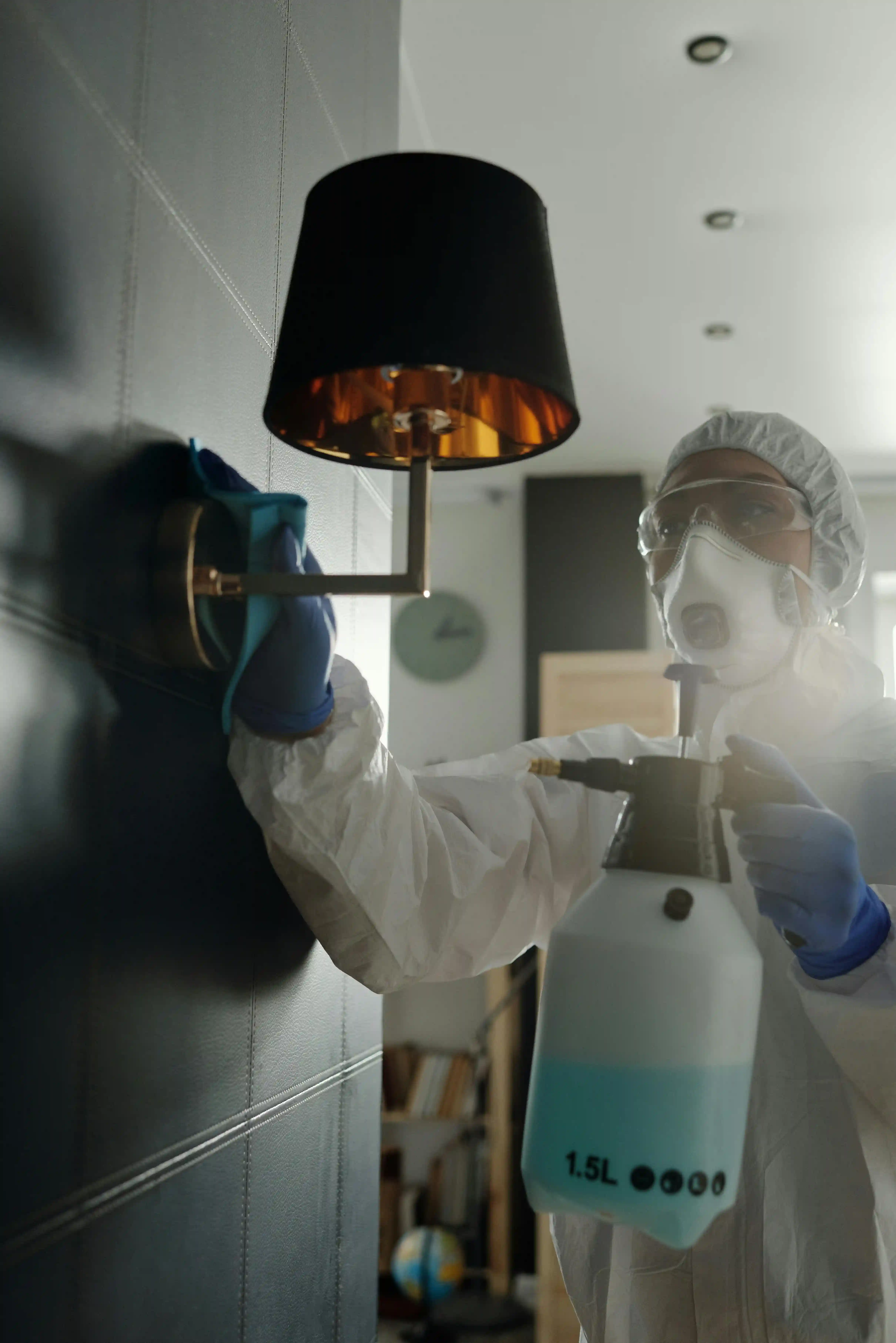
Mold Remediation
Testing, containment, removal, prevention. We find the source, eliminate the growth, and stop it from returning.
Learn more
Sewage Cleanup
Sewer backups, contaminated water, biohazard. We extract, sanitize, and restore safely.
Learn moreNearby Service Areas
Also serving nearby: