
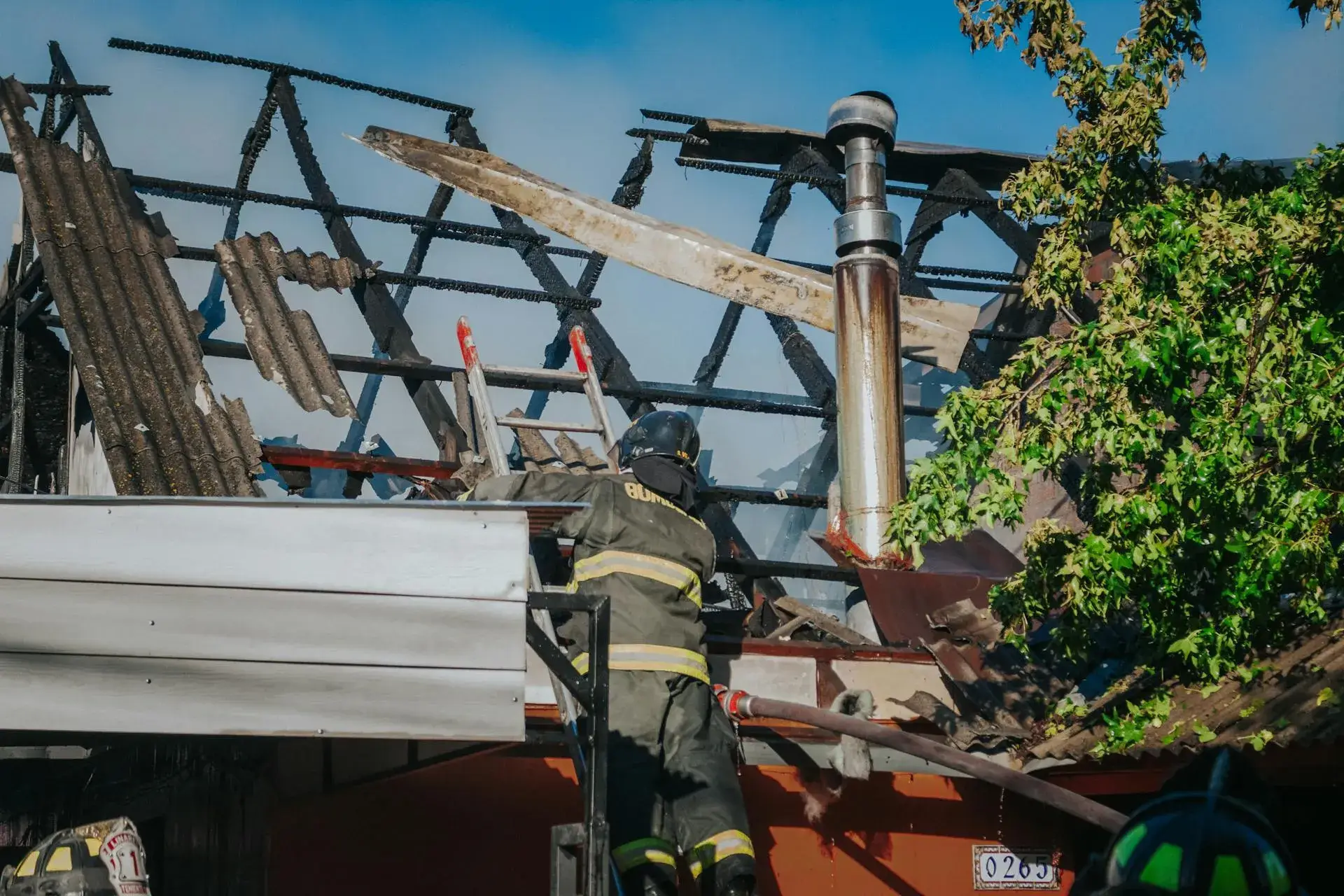
Fire Damage Restoration in Mount Prospect, IL
Fire damage worsens every hour as soot acids etch into surfaces and smoke residue penetrates deeper. Our local team responds to Mount Prospect emergencies within 60 minutes.
What Happens When You Call
A real person answers, not a call center. We assess your situation, ask the right questions, and begin coordinating your response immediately.
Your dedicated restoration team is dispatched from our local base serving Mount Prospect and the surrounding northwest Cook County communities.
Team arrives with board-up materials, HEPA filtration, soot removal equipment, and thermal imaging to assess structural integrity. Emergency stabilization begins immediately.
Structure secured, immediate hazards addressed, restoration plan documented with photos and scope of work. You know exactly what comes next.
Your property just experienced a fire. Whether the flames reached one room or engulfed the structure, the aftermath demands immediate professional action. Soot is acidic, and it bonds permanently to surfaces within days if not treated. Smoke residue migrates through HVAC systems and wall cavities into areas the fire never touched. X Response exists for exactly this moment. When you reach out, your restoration team is mobilized within minutes and on site within the hour. From that point forward, one team manages everything: stabilization, cleaning, deodorization, structural repair, and insurance documentation. Call now. Your team is standing by.
Why Mount Prospect Homes Are Vulnerable to Fire Damage
Mount Prospect is a mature suburban community of nearly 57,000 residents in northwest Cook County, with a housing stock that ranges from the original 1950s single-family homes near the village core to multi-family apartment complexes built through the 1970s and 1980s and more recent mixed-use developments in the downtown area. The village's fire department, established in 1913, operates from multiple stations and provides mutual aid across the Northwest Suburban Mutual Aid Box Alarm System (MABAS). That mutual-aid network proved essential on June 17, 2024, when a fire broke out at approximately 6:45 p.m. at the Orion Parkview Apartments in the 1800 block of West Palm Drive. The blaze engulfed a three-story, 36-unit building and burned until 3:15 a.m. the following morning, requiring more than 100 firefighters from multiple departments to contain and extinguish. The building was declared a total loss. Approximately 100 residents were displaced. The U.S. Small Business Administration subsequently opened a Disaster Loan Outreach Center at Holmes Junior High School to assist affected residents and businesses.
The Orion Parkview fire illustrated a reality that applies across Mount Prospect's housing landscape: multi-family buildings, densely constructed neighborhoods, and homes built before modern fire-separation standards can experience rapid fire spread that exceeds what a single department can manage alone. The village's proximity to O'Hare International Airport means flight-path corridors and commercial zones border residential areas, and the density of construction along major corridors like Golf Road, Rand Road, and Elmhurst Road places structures in close proximity with limited fire breaks. For homeowners and property managers, the aftermath of a fire involves far more than what the flames touched directly. Smoke and soot travel through HVAC ductwork, wall cavities, and the path of least resistance to contaminate rooms the fire never reached. That secondary damage often exceeds the direct fire damage in scope and cost.
Multi-Family and Apartment Complex Density
Mount Prospect contains a significant concentration of multi-family housing, from garden-style apartment complexes built in the 1960s and 1970s to three-story buildings like the Orion Parkview complex. Fire in multi-family structures spreads differently than in single-family homes. Shared attic spaces, common walls between units, and centralized HVAC systems allow fire and smoke to move laterally and vertically through connected spaces. Even when fire is contained to one unit or one building, smoke infiltrates neighboring units through ductwork, plumbing chases, and structural gaps. The June 2024 Orion Parkview fire demonstrated this at scale: the entire 36-unit building was lost because fire spread through the roof structure faster than crews could establish firebreaks between units. For residents of adjacent buildings, smoke contamination required professional cleaning even though no flames reached their units.
1950s and 1960s Construction and Fire Separation
Most of Mount Prospect's single-family housing was built during the post-war suburban expansion, particularly the 1950s when population grew 370 percent. Homes from that era were built with balloon-frame construction techniques that create continuous vertical channels from basement to attic within wall cavities, allowing fire to climb rapidly from floor to floor once it enters the wall. Modern platform framing blocks this vertical path at each floor level, but thousands of Mount Prospect homes predate that standard. Additionally, the typical ranch and split-level homes of this era have forced-air heating systems with ductwork running through open basement ceiling cavities, providing both a path for fire spread and a distribution system that pushes smoke and soot throughout the structure within minutes of a fire starting.
Winter Heating Hazards
Northern Illinois winters drive heavy reliance on gas furnaces, space heaters, fireplaces, and supplemental heating equipment from November through March. Heating equipment is the second-leading cause of residential fires nationally, and Cook County's climate intensifies the exposure: furnaces running continuously during polar vortex events, space heaters placed too close to combustibles in bedrooms and basements, and chimneys that go years without inspection because the home was built with a gas furnace rather than a wood-burning fireplace. Electrical systems in the 1950s housing stock were designed for the appliance loads of that era, and panel upgrades have not kept pace with modern demand. Overloaded circuits, particularly during winter when electric space heaters supplement gas heat, create ignition risks in older homes with original or partially upgraded wiring.
Kitchen Fires in Dense Residential Areas
Cooking remains the leading cause of residential fires in Illinois and nationally. In Mount Prospect's dense residential neighborhoods, where homes sit on standard suburban lots with limited separation, a kitchen fire that extends beyond its origin can threaten adjacent structures through radiant heat, direct flame contact at close eave-to-eave distances, or ember transport during windy conditions. The same density that makes the village walkable and community-oriented also means that one residential fire can produce smoke exposure for neighboring homes downwind, contaminating exterior surfaces, entering through HVAC fresh-air intakes, and depositing soot on cars, outdoor furniture, and landscaping across multiple properties.
Commercial Corridor Fire Risks
Mount Prospect's commercial corridors along Rand Road, Elmhurst Road, and the Randhurst Village area contain mixed-use buildings, strip retail, restaurants, and light-industrial spaces. Restaurant fires involving cooking equipment and grease duct ignition generate intense heat and heavy, oily smoke that contaminates structures aggressively. A commercial fire on one of these corridors produces not only direct structural damage to the affected business but heavy smoke exposure to neighboring tenants in the same building and properties across the street or parking lot. For business owners, fire damage restoration also involves inventory loss documentation, business interruption claims, and timeline pressures to reopen that residential projects do not face.
These factors compound one another. Multi-family structures allow rapid fire spread through shared attics and walls. The 1950s housing stock has balloon-frame construction that channels fire vertically and ductwork that distributes smoke building-wide. Winter heating reliance multiplies ignition sources for four to five months each year. Residential density means one fire's smoke affects multiple properties. And the commercial corridors face the intense, contaminating fires that restaurant equipment and mixed-use occupancies generate. Fire damage restoration in Mount Prospect requires understanding not just what the fire touched directly but how far smoke and soot have traveled through the structure and to neighboring properties, because the invisible contamination is often larger in scope than the visible burn damage.
What Happens to Your Home While You Wait
Within 1 Hour
Soot begins bonding to surfaces as temperatures cool. Acidic combustion byproducts from burned plastics, synthetics, and building materials start etching into metal fixtures, countertops, and glass. Smoke odor penetrates soft furnishings, upholstery, and clothing. In Mount Prospect's forced-air homes, the HVAC system has already distributed soot particles into rooms the fire never reached. Surfaces that appear clean to the eye carry microscopic soot films that will stain permanently if not addressed within 24 to 72 hours.
1–24 Hours
Soot films oxidize and become progressively harder to remove from porous surfaces. Appliance finishes, chrome fixtures, and light-colored countertops begin showing permanent discoloration. Smoke odor drives deeper into drywall, wood, and insulation. If fire suppression involved water, the water damage clock runs simultaneously, with wet materials beginning to swell, warp, and support microbial growth beneath the soot layer. Electronics exposed to corrosive smoke residue begin experiencing circuit board damage.
24–72 Hours
Soot acids cause permanent etching on metal surfaces and synthetic countertops. Porous materials like grout, unfinished wood, and textured ceilings absorb soot deeply enough that surface cleaning alone cannot restore them. Smoke odor molecules embed in the structure's thermal envelope. Soft goods including clothing, bedding, and upholstered furniture continue absorbing odor and may cross from restorable to non-restorable. Corrosion begins on HVAC components, electrical panels, and wiring connections in smoke-exposed areas.
72 Hours–One Week
Restoration scope expands as materials that could have been cleaned in the first 48 hours now require replacement. Drywall, ceiling texture, and interior trim absorb smoke residue so deeply that cleaning cannot fully remove the odor, requiring demolition and replacement. If fire suppression water was present, mold colonization begins in wall cavities and beneath flooring. Insurance documentation becomes more complex as the adjuster must now distinguish between direct fire damage, smoke damage, water damage from suppression, and secondary damage from delayed mitigation.
One Week and Beyond
Extensive corrosion on metal building systems. Permanent smoke odor embedded in the structure itself. Mold growth in water-damaged areas if suppression water was not extracted. Soft goods throughout the home are total losses. What began as a targeted restoration becomes a near-complete renovation, with costs, timeline, and insurance complexity all escalating. Restoration that could have preserved and cleaned most finishes within the first 72 hours now requires wholesale replacement.
Soot is acidic and bonds permanently within days. The difference between cleaning your surfaces and replacing them is measured in hours. Contact X Response now. Our Mount Prospect team responds within 60 minutes.
How We Restore Fire-Damaged Mount Prospect Homes
Fire damage restoration is more complex than water damage because it involves multiple damage types simultaneously: structural fire damage, smoke and soot contamination, water damage from fire suppression, and potential environmental hazards from burned materials. Here is how our team approaches a Mount Prospect fire restoration.
Emergency Stabilization and Safety Assessment
Our team arrives to secure the property immediately. That means board-up of broken windows, tarping of roof openings, and securing entry points against weather and unauthorized access. For Mount Prospect properties, this is critical during winter months when an unheated, open structure can suffer frozen-pipe damage on top of the fire damage within hours. We conduct a structural safety assessment using thermal imaging and visual inspection to identify compromised load-bearing members, weakened floors, and hazardous areas. Fire suppression water is assessed for extraction needs. The entire scope is documented with photos and written notes that become the foundation of your insurance claim.
Soot and Smoke Contamination Mapping
Before any cleaning begins, we map exactly how far smoke and soot traveled through the structure. In Mount Prospect's forced-air homes, that typically means every room connected to the HVAC system, even those on different floors and at the opposite end of the home from the fire origin. We test surfaces throughout the structure with soot sponges and pH indicators to determine contamination levels and identify the boundary between the cleaning zone and unaffected areas. For multi-unit buildings, we assess neighboring units for cross-contamination through shared walls, attic spaces, and common ductwork. This mapping drives the scope of work and ensures nothing is missed during restoration.
Contents Pack-Out and Restoration
Salvageable contents are inventoried, packed, and transported to our climate-controlled facility for specialized cleaning and deodorization. Textiles, electronics, documents, artwork, and personal items each require different restoration techniques. For Mount Prospect families displaced by fire, getting cleaned and restored belongings returned quickly is a priority. Items that cannot be restored are documented for insurance purposes with photos and condition notes. We provide a detailed inventory that maps to your insurance company's contents claim process.
Structural Cleaning and Deodorization
Once contents are packed out, structural cleaning begins. We use chemical sponges, alkaline cleaners, and specialized soot removal compounds matched to the type of residue present, because protein fires (kitchen), synthetic fires (plastics and electronics), and natural fires (wood framing) each produce different residue chemistry that requires different cleaning agents. After surface cleaning, we deploy hydroxyl generators and thermal fogging for odor neutralization. These technologies reach smoke molecules embedded in porous materials, HVAC ductwork, and wall cavities that surface cleaning alone cannot access. For severe smoke damage, we seal cleaned surfaces with shellac-based sealants before repainting to permanently lock in any residual odor molecules.
Structural Repair and Rebuild
With cleaning and deodorization complete, we move into the rebuild phase. Fire-damaged structural members are replaced. Water-damaged drywall and insulation from suppression efforts are removed and replaced. Electrical and mechanical systems in fire-affected areas are inspected, repaired, or replaced per Village of Mount Prospect building code requirements. We coordinate all necessary inspections and permits. The goal is returning the property to its pre-loss condition, documented throughout so your insurance claim has before-and-after evidence at every stage.
The X Response Difference
When you contact X Response after a fire, you get a single team that manages everything from emergency stabilization through structural rebuild. One team, one documentation file, one standard of work from first call to final inspection.
Insurance Claim Guidance for Mount Prospect Homeowners
Fire damage insurance claims in Illinois are typically covered under standard homeowner's policies as a named peril, but the process is more complex than most homeowners expect. The claim involves multiple damage categories: direct fire/flame damage, smoke and soot damage to areas the fire did not reach, water damage from fire suppression, additional living expenses while displaced, and contents losses. Each category may be subject to different coverage limits, deductibles, and documentation requirements. For significant fires like the June 2024 Orion Parkview event, the SBA may offer disaster loans to supplement insurance, but that option is not automatic and requires a formal declaration.
How X Response Helps
- Document all damage categories separately: fire/flame, smoke/soot, suppression water, contents, and structural compromise
- Photograph and inventory all affected contents before any cleaning or disposal occurs
- Establish the fire origin and cause through fire department reporting, which your carrier will request
- Track all additional living expenses from day one, including temporary housing, meals, and transportation
- Align our restoration scope with the carrier's preferred documentation format so the adjuster can process each damage category efficiently
X Response does not file claims on your behalf, adjust claims, or make coverage determinations. We provide documentation and guidance to help you make informed decisions about your property and your policy. Coverage decisions are made solely by your insurance carrier.
Certified Restoration Specialists Serving Mount Prospect
When you contact X Response for fire damage restoration in Mount Prospect, your team is drawn from certified professionals who work across northwest Cook County and understand the specific challenges of restoring properties here. They know how the 1950s forced-air systems distribute smoke through entire homes, how balloon-frame construction allows fire to travel vertically through wall cavities, and how multi-family buildings require unit-by-unit contamination assessment even when fire was contained to a single apartment. They have worked through residential fires in the neighborhoods near Central Road and Golf Road, apartment complex fires along the commercial corridors, and kitchen fires in the mixed-use buildings of downtown Mount Prospect. This is a local team with local experience, not a crew dispatched from a distant market.
Every technician holds current IICRC certification in fire and smoke restoration (FSRT) and water damage restoration (WRT), because fire restoration almost always involves concurrent water damage from suppression. Equipment includes HEPA filtration units for particulate control during demolition, hydroxyl generators for odor neutralization, thermal imaging for hidden hot spots and moisture mapping, and the full range of structural cleaning compounds matched to different residue chemistries. When your team arrives, they bring everything needed to stabilize, document, and begin restoration immediately.
In Mount Prospect, X Response works with Scene Cleaners, an independent local restoration partner serving Cook County.
Fire Damage Restoration FAQ for Mount Prospect Homeowners
Other Emergency Services in Mount Prospect
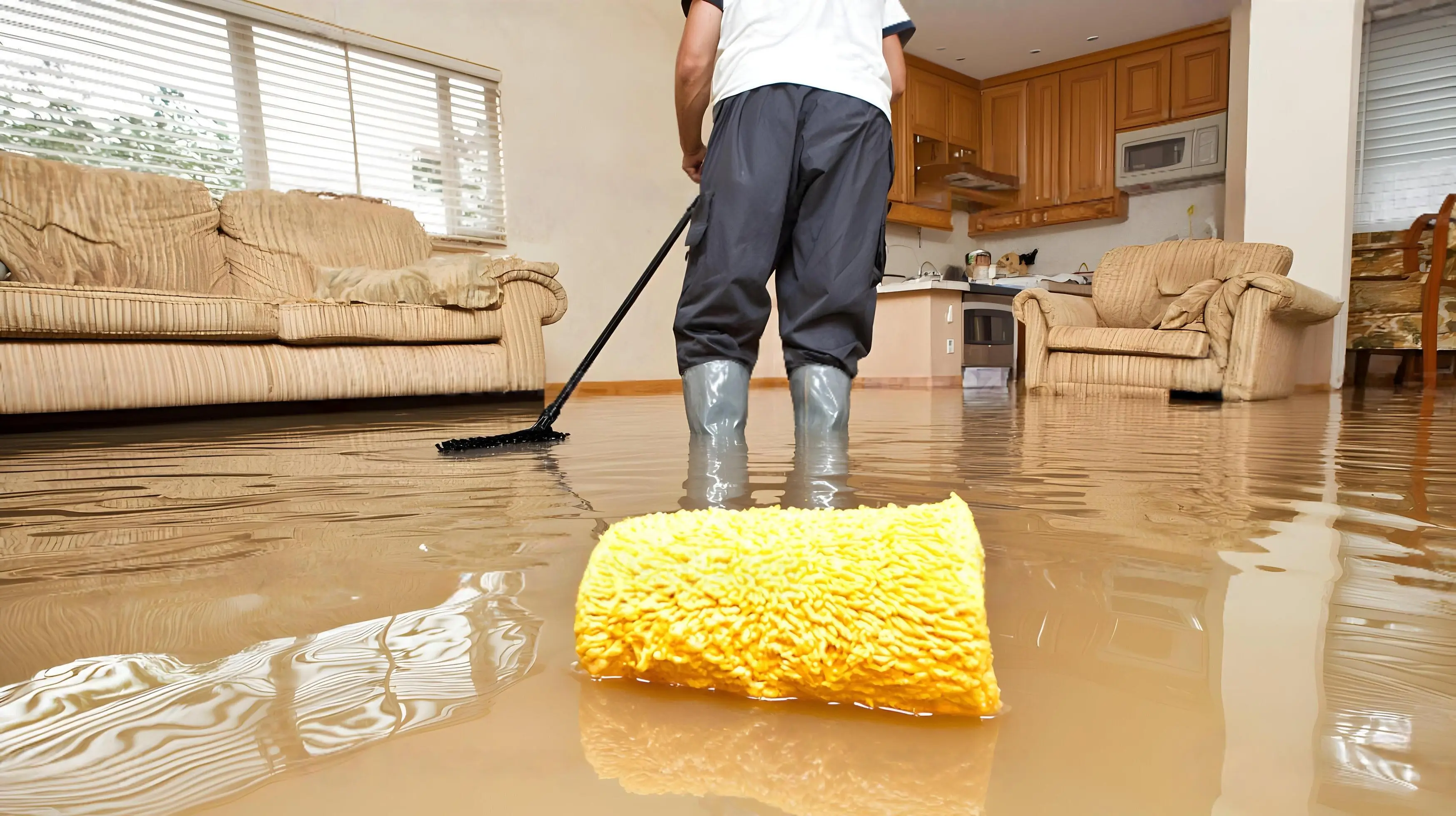
Water Damage Restoration
Burst pipes, storm flooding, standing water. We extract, dry, and restore before mold sets in.
Learn more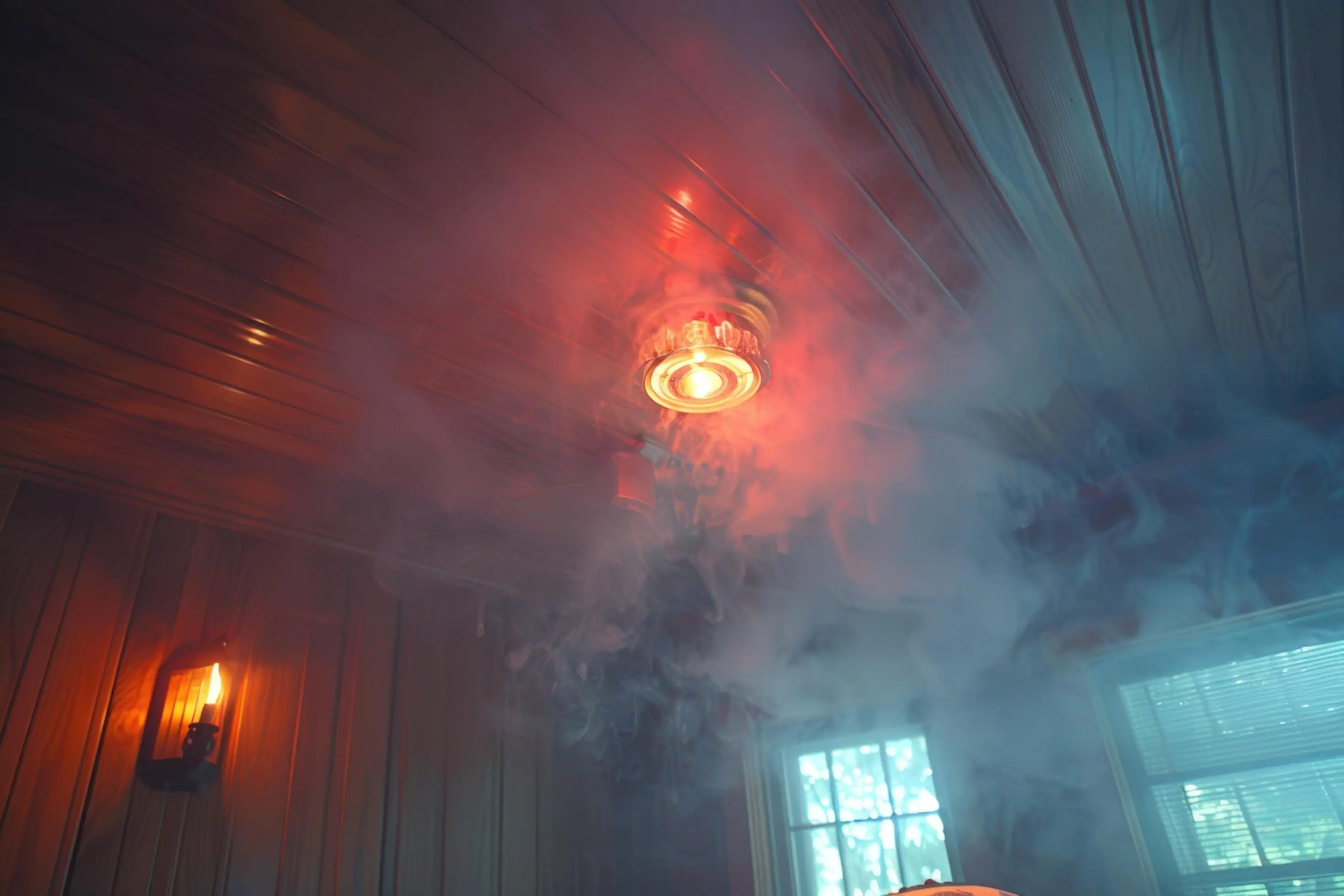
Smoke Damage Restoration
Soot residue, chemical odors, HVAC contamination. We decontaminate surfaces, eliminate odors, and restore air quality.
Learn more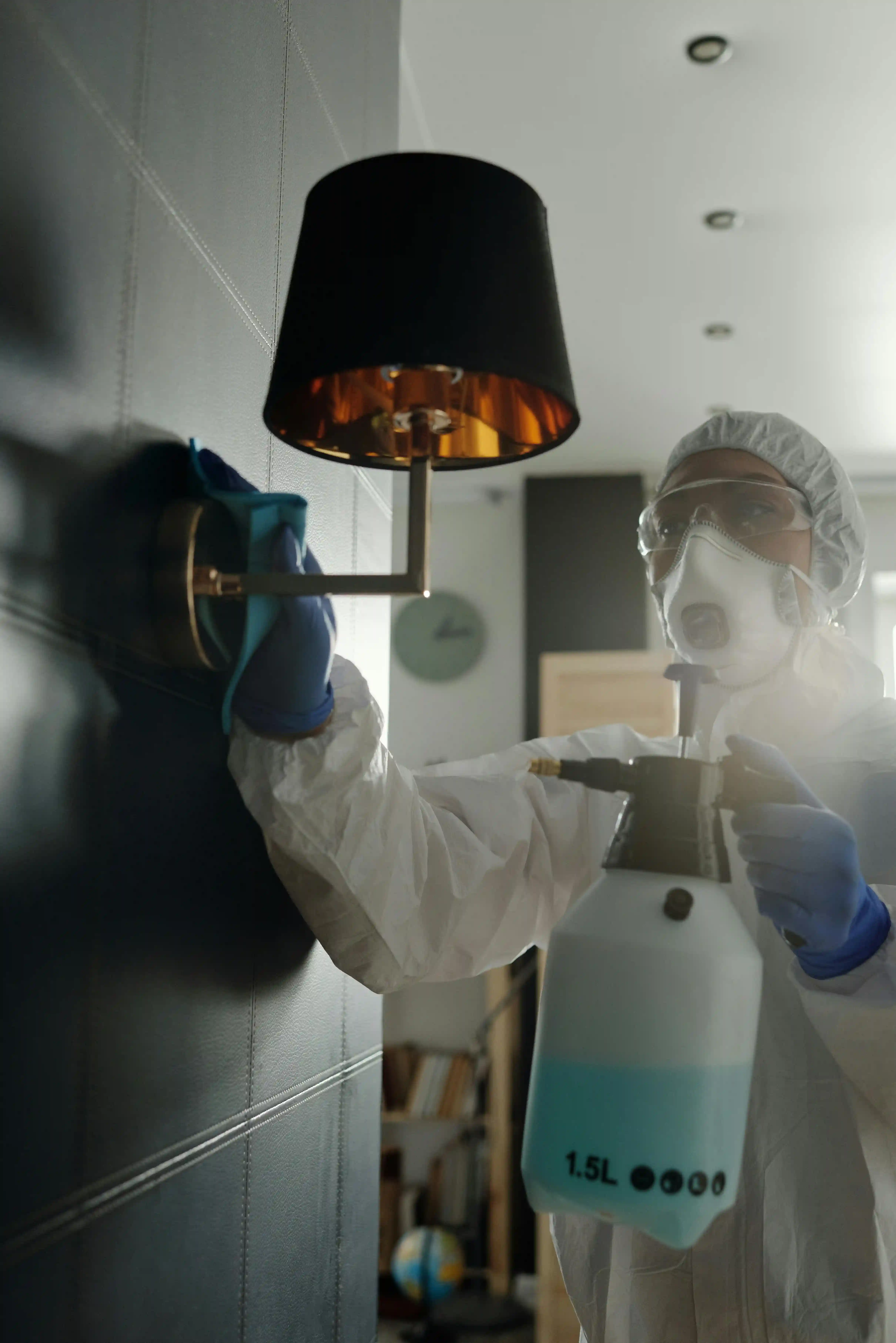
Mold Remediation
Testing, containment, removal, prevention. We find the source, eliminate the growth, and stop it from returning.
Learn more
Sewage Cleanup
Sewer backups, contaminated water, biohazard. We extract, sanitize, and restore safely.
Learn moreNearby Service Areas
Also serving nearby: