
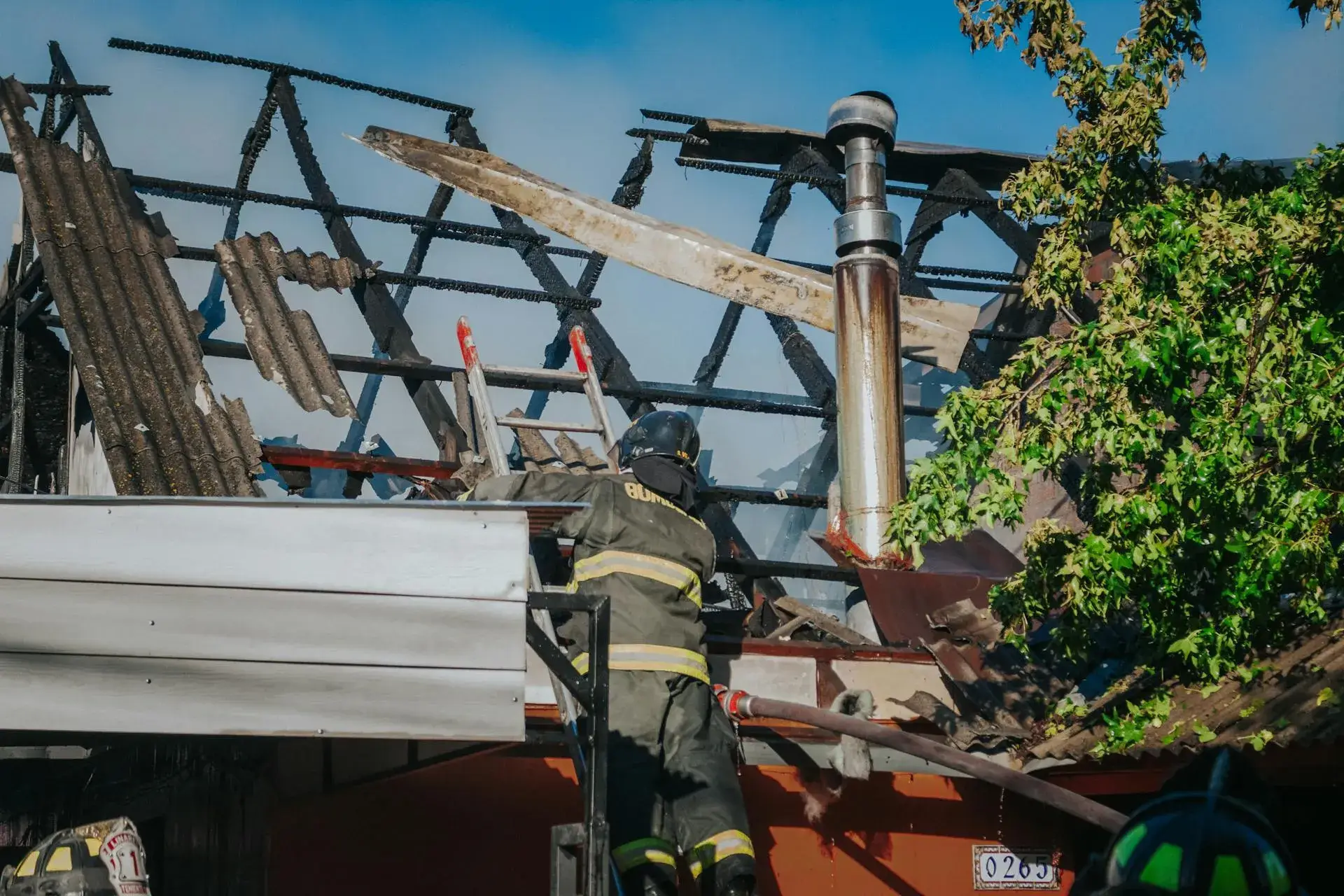
Fire Damage Restoration in Rolling Meadows, IL
Fire damage worsens every hour as soot acids etch into surfaces and smoke residue penetrates deeper. Our local team responds to Rolling Meadows emergencies within 60 minutes.
What Happens When You Call
A real person answers, not a call center. We assess your situation, ask the right questions, and begin coordinating your response immediately.
Your dedicated restoration team is dispatched from our local base serving Rolling Meadows and the surrounding northwest Cook County communities.
Team arrives with board-up materials, HEPA filtration, soot removal equipment, and thermal imaging to assess structural integrity. Emergency stabilization begins immediately.
Structure secured, immediate hazards addressed, restoration plan documented with photos and scope of work. You know exactly what comes next.
Your property just experienced a fire. Whether the flames reached one room or engulfed the structure, the aftermath demands immediate professional action. Soot is acidic, and it bonds permanently to surfaces within days if not treated. Smoke residue migrates through HVAC systems and wall cavities into areas the fire never touched. X Response exists for exactly this moment. When you reach out, your restoration team is mobilized within minutes and on site within the hour. From that point forward, one team manages everything: stabilization, cleaning, deodorization, structural repair, and insurance documentation. Call now. Your team is standing by.
Why Rolling Meadows Homes Are Vulnerable to Fire Damage
Rolling Meadows is a residential city of approximately 24,200 people in northwest Cook County, built primarily during the 1950s post-war suburban expansion when developer Kimball Hill constructed hundreds of affordable homes on former farmland south of Arlington Park. The city incorporated in 1955 and grew steadily through the following decades, adding apartment complexes, condominiums, and townhome developments that today make up a substantial share of its housing stock. The Rolling Meadows Fire Department operates from a station at 2455 Plum Grove Road and participates in the Northwest Suburban Mutual Aid Box Alarm System (MABAS), which allows rapid escalation to multi-department responses when a fire exceeds a single department's capacity. That mutual-aid capability proved critical when, on December 29, 2020, a fire broke out at approximately 1:37 a.m. at the Coach Light condominiums on Algonquin Road, requiring an extra-alarm response from multiple departments. The blaze tore through the three-story building, injured both a resident and a firefighter, displaced all 18 families, and caused an estimated $3.5 million in structural damage, with Fire Chief Jeff Moxley reporting that half the building was possibly a total loss.
The Coach Light fire was not an isolated event. In March 2015, a fire at a 49-unit condominium building at 5201 Carriageway Drive killed one resident who jumped from a third-floor balcony and displaced approximately 100 people. Investigators identified smoking near oxygen tanks as the probable cause. In December 2021, a stove fire in another condominium spread quickly and displaced a resident. In June 2022, a condo fire displaced five residents from two units. These incidents reveal a pattern tied to Rolling Meadows' housing composition: a city with a high concentration of multi-family buildings, many dating to the 1960s and 1970s, where fire in one unit can spread rapidly through shared attic spaces, common walls, and outdated fire-separation construction to affect dozens of residents simultaneously. For homeowners and tenants, the aftermath extends far beyond the unit where flames appeared. Smoke and soot contaminate adjacent units, entire floors, and sometimes entire buildings through the shared ductwork and structural pathways that older multi-family construction provides.
Multi-Family Building Fires and Rapid Spread
Rolling Meadows contains a significant inventory of multi-family housing built between the 1960s and 1980s, including garden-style apartments, three-story condominium buildings, and townhome clusters. Fire in these structures behaves differently than in single-family homes. Shared attic spaces above multiple units allow fire to spread laterally across an entire building before crews can establish firebreaks. Common walls between units constructed without modern fire-rated assemblies permit flames and superheated gases to breach from one unit to the next. The December 2020 Coach Light fire demonstrated this at catastrophic scale: fire that started in one unit reached the attic and spread through the roof structure, eventually involving the entire three-story building and requiring more than two hours to bring under control despite a multi-department response. For restoration purposes, even fires that are contained to a single unit in a multi-family building produce smoke and soot contamination across multiple units through shared HVAC systems, plumbing chases, and structural gaps between units that were not sealed to modern standards.
1950s and 1960s Construction Methods
The original Kimball Hill homes and the apartment buildings that followed through the 1960s were built with construction techniques that increase fire vulnerability compared to modern standards. Balloon-frame construction in some of the earliest homes creates continuous vertical channels from basement or ground level to the attic within wall cavities, allowing fire to bypass floor-to-floor barriers and reach the roof structure within minutes of entering a wall. Later buildings used platform framing that blocks this vertical channel, but the fire-separation assemblies between units in many of the multi-family buildings do not meet current codes for fire-resistance ratings. Additionally, the electrical systems in these older buildings were designed for the appliance loads of their era. Seven decades of added air conditioning, kitchen appliances, home electronics, and electric vehicle chargers stress wiring that was never sized for modern demand, creating ignition risk from overloaded circuits and deteriorated connections.
Winter Heating Season Hazards
Northern Illinois winters drive continuous heating demand from November through March, and the equipment that meets that demand is the second-leading cause of residential fires nationally. Gas furnaces in Rolling Meadows homes run for extended periods during polar vortex events, and their age in many 1950s and 1960s homes means heat exchangers, ignition systems, and flue connections have operated for decades beyond their designed service life. Supplemental heating adds further risk: portable space heaters placed too close to bedding or furniture, fireplace chimneys that have not been inspected in years, and electric baseboard heaters in older apartment units where circuits were not designed for continuous high-draw operation. The Coach Light fire occurred in late December, during the peak of heating season, consistent with the seasonal pattern that concentrates residential fire events in the coldest months when heating equipment runs hardest.
Cooking Fires in Dense Residential Neighborhoods
Cooking remains the leading cause of residential fires in Illinois and across the United States. In Rolling Meadows, where single-family homes sit on standard suburban lots and multi-family buildings place units directly adjacent to one another, a kitchen fire that extends beyond the stove can threaten not just the unit of origin but neighboring spaces. In condo buildings, a grease fire that ignites wall cabinets can reach the shared attic through the wall cavity before the resident even exits the unit. In single-family homes, kitchen fires that breach the home's envelope expose neighbors through radiant heat at close lot-line distances or wind-driven ember transport during dry conditions. The frequency of cooking fires means that even a community with no unusual fire hazards will experience multiple kitchen-origin events each year, and in a city the size of Rolling Meadows, each one has the potential to escalate based on the building type, construction era, and speed of response.
Smoke and Soot Migration Beyond the Fire Area
In every fire event in Rolling Meadows, the area affected by smoke and soot contamination exceeds the area touched by flames, often by a factor of five or more. Smoke follows the path of least resistance through a structure: up through ceiling cavities, into HVAC return ducts, through electrical and plumbing penetrations in walls and floors, and into adjacent spaces that share structural connections with the fire area. In multi-family buildings, this means units on entirely different floors from the fire can sustain significant smoke damage through shared ductwork and vertical chases. In single-family homes, smoke from a kitchen fire can contaminate every room connected to the forced-air heating system within minutes as the blower distributes particulates throughout the home. The soot deposited by smoke is acidic and bonds permanently to surfaces if not removed within 48 to 72 hours, converting what would be a cleaning job into a replacement job for affected materials.
These factors compound one another in Rolling Meadows. The multi-family housing stock allows individual fires to affect dozens of units simultaneously. The 1950s and 1960s construction provides pathways for fire spread that modern buildings block. The heating season concentrates ignition events in winter months when structures are sealed tight and smoke has nowhere to exit. Cooking fires occur year-round and escalate based on building type. And in every case, smoke contamination extends well beyond the visible fire damage. Effective fire damage restoration here means understanding the building's construction era, identifying how far smoke has traveled through HVAC systems and structural cavities, and treating the full contamination footprint rather than just the area the flames reached.
What Happens to Your Home While You Wait
Within 1 Hour
Soot begins settling on horizontal surfaces throughout the structure. In Rolling Meadows homes with forced-air heating, the HVAC system distributes smoke particulates to every room served by the ductwork within minutes of the fire starting, regardless of whether flames reached those areas. Acidic soot residue contacts metal fixtures, appliance surfaces, and electronics, beginning a corrosion process that worsens with time. The structure is cooling, and as it does, smoke residue that was airborne during the fire condenses onto cold surfaces: windows, mirrors, metal hardware, and exterior walls.
1–24 Hours
Soot acids etch into metal surfaces, discoloring chrome fixtures, corroding exposed copper plumbing, and degrading electronic circuit boards. Smoke odor penetrates soft furnishings, carpet fibers, clothing, and upholstery. On painted walls and ceilings, soot bonds into the paint film and becomes progressively harder to remove without surface damage. In multi-family buildings, smoke continues to migrate through structural pathways into adjacent units that were not directly involved in the fire, expanding the contamination zone with each passing hour.
24–72 Hours
Permanent staining sets in on porous surfaces that have not been cleaned: grout, natural stone, unfinished wood, fabric, and textured ceilings. Acidic residues cause visible discoloration on brass, chrome, and stainless steel fixtures. Smoke odor molecules penetrate deep into wall cavities, insulation, and structural wood where surface cleaning alone cannot reach them. What was recoverable through professional cleaning at hour six becomes a replacement cost at hour 72 as soot chemistry permanently alters the materials it contacts.
3–7 Days
Corrosion damage to electronics, HVAC components, and metal building systems progresses past the point of repair. Smoke odor becomes embedded in structural materials and cannot be removed through surface treatment alone, requiring thermal fogging, ozone treatment, or hydroxyl generation to neutralize odor molecules within wall cavities and framing. Restoration scope and cost increase substantially as more materials cross from cleanable to replaceable.
One Week and Beyond
Permanent damage to structural surfaces, mechanical systems, and building finishes becomes extensive. Items that could have been restored with prompt treatment must now be replaced. Secondary moisture damage from firefighting water that was not extracted compounds the soot damage, creating conditions for mold growth in water-affected areas. The combined fire, smoke, water, and biological damage creates a complex multi-phase restoration that takes weeks rather than days. Insurance claims grow more contested as carriers question whether earlier intervention would have reduced the scope.
The difference between restoring your home and rebuilding it often comes down to how quickly soot is removed from surfaces and smoke residue is neutralized before it bonds permanently. Contact X Response now. Our Rolling Meadows team responds within 60 minutes.
How We Restore Fire-Damaged Rolling Meadows Homes
From the moment our team arrives, every step is documented, measured, and verified. Here is exactly what the fire damage restoration process involves for Rolling Meadows properties.
Emergency Stabilization and Board-Up
Our team arrives to secure the structure immediately. That means boarding up broken windows and compromised openings to prevent weather exposure, theft, and animal intrusion. For Rolling Meadows properties damaged during winter months, this is critical: an unsecured structure loses heat rapidly, and freezing temperatures can burst water pipes, adding water damage to the existing fire damage. We assess structural integrity using thermal imaging and visual inspection to identify compromised load-bearing members, fire-weakened roof trusses, and areas unsafe to enter. The structure is documented in its current state with comprehensive photography and a preliminary scope assessment that begins building your insurance file from the first hour.
Contents Assessment and Pack-Out
Personal belongings, furnishings, electronics, and documents are assessed on site for damage category: salvageable with professional cleaning, questionable pending detailed inspection at our facility, or total loss requiring documentation for insurance purposes. Items that can be restored through ultrasonic cleaning, ozone treatment, or dry-chemical sponge cleaning are carefully packed and transported to our processing facility. This pack-out protects your belongings from additional damage during the structural restoration phase, when demolition dust, chemical treatments, and equipment traffic would further degrade items left in place. Every item is inventoried with photographs and condition notes for your insurance claim.
Soot and Smoke Residue Removal
This is where the restoration diverges from what a general contractor can provide. Soot removal requires understanding the combustion source, because different materials produce different residue types that demand different cleaning approaches. Protein-based soot from kitchen fires is nearly invisible but extremely odorous and corrosive. Synthetic soot from burning plastics and modern furnishings is thick, sticky, and black. Fuel-oil soot from furnace malfunctions smears and penetrates aggressively. Our technicians identify the soot type, select the appropriate cleaning chemistry and technique, and work systematically from ceilings downward, cleaning every surface in the smoke-affected area. HEPA-filtered air scrubbers run continuously during this phase to capture airborne particulates stirred up during cleaning.
Deodorization and Air Quality Restoration
Smoke odor molecules penetrate far deeper than visible soot. They embed in structural wood, insulation, concrete, and materials inside wall cavities where surface cleaning cannot reach. We deploy thermal fogging that generates a deodorizing vapor matching the penetration characteristics of smoke, reaching the same hidden spaces the smoke reached during the fire. For severe cases, hydroxyl generators or controlled ozone treatments neutralize odor molecules at the molecular level within enclosed spaces. HVAC ductwork is cleaned and treated separately because it serves as both a distribution pathway during the fire and a reservoir for trapped soot and odor afterward. Air quality testing confirms the space meets safe occupancy standards before we declare this phase complete.
Structural Repair and Rebuild
Once the structure is clean, deodorized, and verified, reconstruction begins. Damaged framing, drywall, flooring, and finish materials are replaced to match or exceed the pre-loss condition. For Rolling Meadows homes from the 1950s and 1960s, this phase often represents an opportunity to bring affected areas up to current code: improved electrical capacity, modern fire-separation assemblies in multi-family walls, updated insulation, and HVAC ducting that meets current sealing standards. We manage the rebuild from demolition through final finish, coordinating trades, pulling permits through the City of Rolling Meadows, scheduling inspections, and maintaining the documentation thread your insurance company requires to close the claim.
The X Response Difference
When you contact X Response after a fire, you get a single restoration team that manages the entire recovery: securing the structure, removing contamination, eliminating odors, rebuilding what was lost, and documenting everything for your insurance claim. One team, one standard, start to finish.
Insurance Claim Guidance for Rolling Meadows Homeowners
Fire damage insurance claims in Illinois are typically covered under standard homeowner's policies, but the process is more complex than most homeowners expect. The claim must distinguish between direct fire damage, smoke and soot damage to areas the fire did not reach, water damage from firefighting efforts, and additional living expenses while the home is uninhabitable. Each category has different documentation requirements, different coverage limits, and potentially different deductibles depending on your policy structure. For Rolling Meadows condo owners, the complexity multiplies: your individual HO-6 policy covers your unit's interior and personal property, while the building's master policy covers structural and common elements. Determining where one policy's coverage ends and the other's begins requires careful documentation of exactly which damage affected which portions of the structure.
How X Response Helps
- Document all damage categories separately: direct fire damage, smoke/soot contamination, water damage from suppression efforts, and structural compromise
- Photograph and inventory all affected personal property with pre-loss condition evidence where available
- Establish the contamination boundary clearly so smoke damage to areas beyond the fire origin is included in the claim scope
- For condo owners, document which damage affects your unit interior versus common structural elements to support proper allocation between your HO-6 policy and the building master policy
- Maintain records of additional living expenses from the day the home becomes uninhabitable, as coverage typically extends for the reasonable repair period
X Response does not file claims on your behalf, adjust claims, or make coverage determinations. We provide documentation and guidance to help you make informed decisions about your property and your policy. Coverage decisions are made solely by your insurance carrier.
Certified Restoration Specialists Serving Rolling Meadows
When you contact X Response after a fire in Rolling Meadows, your restoration team is drawn from certified professionals who work across northwest Cook County and understand the specific challenges this community presents. They know the construction characteristics of the original Kimball Hill homes, the fire-spread pathways in the 1960s and 1970s condo buildings along Algonquin Road and Kirchoff Road, and how smoke behaves differently in a slab-on-grade ranch home versus a three-story multi-family structure. They have worked through multi-unit fires where smoke contaminated an entire building from a single-unit origin, kitchen fires in dense residential blocks where adjacent homes required exterior cleaning, and heating-equipment malfunctions in aging homes where original ductwork distributed soot building-wide. This is not a crew dispatched from hours away with no knowledge of local building types. It is a local team with local expertise, operating under national quality standards.
Every technician on your team holds current IICRC certification in fire and smoke restoration (FSRT) and carries the appropriate Illinois state licensing for the work being performed. Equipment includes HEPA-filtered air scrubbers, thermal foggers, ozone and hydroxyl generators, ultrasonic cleaning equipment for contents restoration, and thermal imaging cameras for structural assessment. When your team arrives, they bring everything needed to begin stabilization immediately and transition directly into the restoration process without waiting for equipment deliveries or subcontractor coordination.
In Rolling Meadows, X Response works with Scene Cleaners, an independent local restoration partner serving Cook County.
Fire Damage Restoration FAQ for Rolling Meadows Homeowners
Other Emergency Services in Rolling Meadows
Water Damage Restoration
Burst pipes, storm flooding, standing water. We extract, dry, and restore before mold sets in.
Learn more
Smoke Damage Restoration
Soot residue, chemical odors, HVAC contamination. We decontaminate surfaces, eliminate odors, and restore air quality.
Learn more
Mold Remediation
Testing, containment, removal, prevention. We find the source, eliminate the growth, and stop it from returning.
Learn more
Sewage Cleanup
Sewer backups, contaminated water, biohazard. We extract, sanitize, and restore safely.
Learn moreNearby Service Areas
Also serving nearby: