
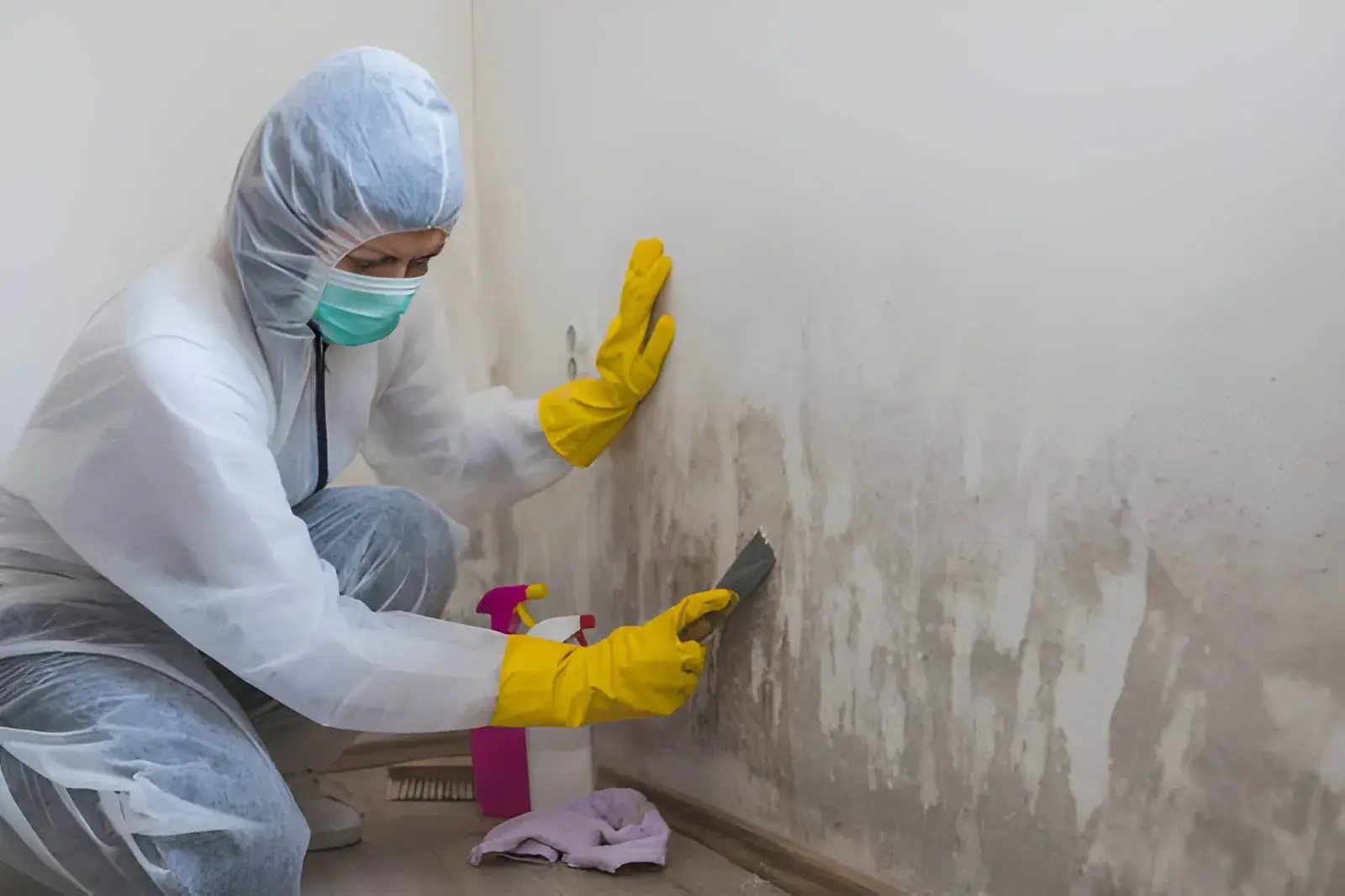
Mold Remediation in Naples, FL
In Naples' high year-round humidity, mold colonizes water-damaged materials within 24 hours. Our local team responds within 60 minutes to contain the problem before it spreads through your home.
What Happens When You Call
A real person answers, not a call center. We assess your mold situation, determine the urgency level, and begin coordinating your response immediately.
Your dedicated mold remediation team is dispatched from our local base serving Naples and the surrounding Collier County communities.
Team arrives with air quality testing equipment, containment materials, and HEPA filtration systems. Assessment and containment begin immediately to prevent further spread.
Contamination scope mapped, containment established, remediation plan documented. You know exactly what comes next.
Mold does not wait. In Southwest Florida's heat and humidity, it colonizes damp materials faster than anywhere in the temperate United States. By the time you see it or smell it, it has already spread behind what is visible. X Response exists for exactly this moment. When you reach out, your mold remediation team is mobilized within minutes and on site within the hour. From that point forward, one team manages everything: inspection, containment, removal, air quality restoration, and prevention. You are never left guessing about the next step. Call now. Your team is standing by.
Why Naples Homes Are Vulnerable to Mold
Naples experiences high average humidity levels year-round, with summer temperatures regularly exceeding 90 degrees and winter lows rarely dropping below 60 degrees. These conditions make it one of the most consistently mold-favorable climates in the United States, creating an environment where mold colonization is not an occasional risk following a specific water event but a constant pressure that any moisture source enables. Even the dry season maintains humidity levels sufficient to support mold growth on any surface with a moisture source, whether from a leak, condensation, or residual flood damage. The combination of sustained warmth and atmospheric moisture means that mold begins colonizing damp materials within 24 to 48 hours in Naples. Every water event, from a slow AC drain line clog to a hurricane, triggers a shorter clock for professional response before contamination becomes established and spreads through wall cavities, HVAC systems, and structural framing. Florida regulates mold assessment and mold remediation under Chapter 468, Part XVI of its statutes, and a company may not remediate a home that it or its assessor assessed within the previous 12 months.
Naples also has a characteristic that intensifies its mold problem beyond what the climate alone would produce: a large seasonal and vacation home population. Collier County's winter season brings tens of thousands of seasonal residents who close their homes and leave for four to six months during the wet season, precisely when humidity is highest, tropical storms are most likely, and AC systems are most prone to failure. A home that sits unoccupied from May through October with the AC set to an efficiency temperature rather than a dehumidification setting, or worse, with the system developing an undetected failure, can develop severe mold contamination before the owner returns. Florida Statute Chapter 468, Part XVI requires that any person performing mold assessment or remediation on areas greater than 10 square feet must hold a state license issued by the Department of Business and Professional Regulation, ensuring that the professionals addressing these problems meet documented training and experience standards.
Year-Round Humidity and the 24-Hour Colonization Window
Mold requires moisture, warmth, and an organic food source. Naples provides all three without interruption. High humidity means the air itself carries enough moisture to sustain mold growth on any surface with an organic food source, including drywall paper, wood framing, carpet backing, dust accumulation on hard surfaces, and adhesive behind wallpaper and vinyl flooring. The warmth, typically 75 to 95 degrees for eight months and 60 to 80 degrees for the remaining four, represents the optimal growth band for most mold species. The result is a colonization timeline measured in hours rather than days for any water event. A pipe leak discovered after 12 hours in Naples likely already has early-stage mold activity at the moisture boundary. The same leak in a Northern climate might not show colonization for two to three days. This accelerated timeline means every water event in Naples is simultaneously a mold prevention emergency.
Seasonal and Vacation Home Vacancy
Naples' economy depends heavily on seasonal residents and vacation homeowners who occupy their properties from roughly November through April and leave them shuttered for the summer wet season. During those months of vacancy, homes face the highest humidity, the heaviest rainfall, the greatest likelihood of tropical storm damage, and the most intense AC demand, all without an occupant present to notice problems. A clogged AC condensate drain in June produces water damage that feeds mold growth for weeks before anyone discovers it. A minor roof leak during a July thunderstorm introduces moisture that colonizes an entire attic space by August. Even a functioning AC system set to 80 degrees rather than an actively dehumidifying temperature allows interior humidity to rise above the 60% threshold where mold readily grows. Local restoration professionals report that seasonal home mold discoveries upon return in October and November represent a significant portion of their annual remediation workload.
Post-Hurricane Ian Hidden Mold Legacy
Hurricane Ian flooded thousands of Naples homes in September 2022, and the aftermath created a mold problem that continues emerging years later. Many homes were repaired under emergency conditions, with new drywall installed, flooring replaced, and fresh paint applied without confirming that structural framing, slab perimeters, and wall cavities were fully dry and verified mold-free before enclosure. In Naples' climate, mold that establishes behind new drywall or beneath new flooring does not die or go dormant. It continues growing in the enclosed, humid space until it eventually becomes visible on the new surface, produces musty odor, or causes respiratory symptoms for occupants. Homeowners who purchased Ian-damaged homes after repair, or who returned to repaired homes after extended post-storm evacuations, are still discovering contamination that dates back to 2022 but was concealed by cosmetic repairs that did not address the underlying moisture and biological conditions.
Air Conditioning as Both Defense and Vulnerability
Naples homes depend on air conditioning for 10 to 12 months per year, and the AC system serves as both the primary defense against indoor humidity and a common source of mold when it malfunctions. The evaporator coil produces condensation continuously as it cools the humid air drawn through the return, and that condensation drains through a line to the exterior. In Naples' climate, algae and biofilm grow inside the drain line year-round, producing clogs that cause condensate to overflow into the air handler, the drain pan beneath it, and eventually into the ceiling, wall, or closet below. The result is a hidden water source feeding mold growth in a dark, enclosed space where it can spread for weeks or months before anyone notices. Even a properly functioning system creates temperature differentials at supply register locations that can produce condensation on surrounding surfaces if ductwork insulation has deteriorated or been compromised by rodents, which are common in Collier County's semi-tropical environment.
Slab-on-Grade Moisture Wicking from Below
Naples homes built on concrete slab-on-grade foundations face a mold risk source that many homeowners never consider: moisture migration upward from the soil through the concrete. The slab is porous and wicks moisture by capillary action, especially during and after the wet season when the water table rises toward the surface. That moisture travels upward through the slab and into whatever materials sit on top of it: carpet and pad, vinyl plank flooring adhesive, wood laminate, tile grout, and the bottom edges of baseboards and drywall. In homes without an effective vapor barrier beneath the slab, or where the barrier has been compromised by age, root intrusion, or settling, this upward moisture provides a constant, invisible water source that feeds mold growth at the floor line. Homeowners discover it when baseboards are removed during renovation, when musty odor develops without any visible water event, or when flooring materials begin bubbling and lifting from the adhesive that has degraded in the persistent moisture.
These factors make mold not an occasional misfortune in Naples but a constant environmental pressure requiring active management. The climate provides the humidity and warmth. The seasonal vacancy pattern removes the human observer who would catch early signs. Post-Hurricane Ian repairs concealed contamination that is still being discovered. The AC system provides both the defense against humidity and, when it fails, the water source. Slab construction provides moisture from below. Effective mold remediation in Naples requires understanding which moisture source feeds the growth, removing the contamination completely rather than covering it, and addressing the conditions that will allow recolonization if left unchanged. Florida law requires that professionals performing this work hold DBPR-issued licenses, ensuring documented training and competence for the specific challenges of mold remediation in this environment.
What Happens to Your Home While You Wait
Within 24 Hours
Mold spores, present in every indoor environment, detect the moisture source and begin germinating on organic surfaces. In Naples' temperature and humidity conditions, germination initiates faster than in cooler or drier climates. Microscopic hyphal growth begins on the wettest materials first: drywall paper facing, carpet backing, wood surfaces in direct contact with water, and dust on hard surfaces. At this stage, the contamination is not yet visible to the naked eye, but laboratory testing would confirm active growth.
24–48 Hours
Visible mold becomes apparent on the most heavily affected surfaces. In Naples' optimal growth conditions, colonies that would take 48 to 72 hours to become visible in temperate climates appear within 24 to 36 hours. Growth concentrates on drywall paper, behind baseboards where moisture wicks upward, beneath cabinets where water is trapped, and on any organic material with sustained contact with the moisture source. The musty odor characteristic of active mold growth becomes detectable in enclosed spaces.
48–72 Hours
Mold colonies expand rapidly and begin producing spores that become airborne and distribute through the home. If the HVAC system is operating, spores enter the return air stream and deposit throughout the ductwork, on the evaporator coil, and at supply registers in rooms far from the original moisture source. The contamination is no longer localized to the wet area but has begun establishing secondary colonies wherever spores land on suitable surfaces with sufficient moisture. Remediation scope expands significantly beyond the original water damage footprint.
One Week
Mold growth penetrates into wall cavities, spreads behind drywall into stud bays, and establishes on structural framing. In Naples' humidity, wall cavities maintain moisture levels sufficient to support growth even after the original water source is addressed if the cavity was not dried mechanically. HVAC contamination is well established, distributing spores with every cooling cycle. Materials that could have been dried and treated in the first 48 hours now require removal. Health symptoms, including respiratory irritation, allergic reactions, and persistent headaches, may develop in sensitive occupants.
One Month and Beyond
Extensive colonization through structural systems, HVAC distribution throughout the home, and potential structural degradation of affected wood framing. In Naples seasonal homes left unoccupied, mold can grow unchecked for months, consuming drywall, carpet, and structural materials with no intervention. By this stage, remediation involves comprehensive containment, extensive material removal, structural treatment, complete HVAC cleaning or replacement, and post-remediation verification testing. Total cost is many times what early intervention would have required.
In Naples' climate, mold moves from invisible to extensive faster than in any Northern market. Every day of delay expands the scope and cost of remediation. Contact X Response now. Our Naples team responds within 60 minutes to contain the problem before it spreads.
How We Restore Mold-Affected Naples Homes
From the moment our team arrives, every step follows established protocols designed for the specific challenges of mold remediation in Southwest Florida's climate. Here is exactly what the process involves.
Inspection, Testing, and Moisture Source Identification
Our team arrives with air quality sampling equipment, surface testing supplies, moisture meters, and thermal imaging cameras. The first priority is identifying the moisture source feeding the mold growth, because removing visible mold without addressing its water source guarantees recolonization. In Naples, common sources include clogged AC condensate drains, slab moisture wicking, failed plumbing connections beneath slabs, roof leaks from storm damage, and the ambient humidity infiltration that affects seasonal homes with inadequate dehumidification during vacancy. We test air quality to establish baseline spore counts, take surface samples where warranted for laboratory analysis, and use moisture mapping to identify the full extent of water intrusion beyond what is visible. The inspection results determine whether the contamination requires professional remediation or can be addressed through moisture correction and surface treatment.
Containment and Negative Air Pressure
Before any mold is disturbed, we establish physical containment around the affected area using polyethylene sheeting sealed with tape at all edges. Negative air machines with HEPA filtration create negative pressure inside the containment zone, ensuring that air flows inward from clean areas rather than allowing contaminated air to escape into unaffected portions of the home. This prevents spore dispersal during the removal process from creating secondary contamination in clean rooms. In Naples high-rise condominiums, containment also prevents contamination from crossing into neighboring units through shared wall penetrations or HVAC connections. The HVAC system serving the affected zone is isolated and sealed to prevent the air handler from distributing spores during remediation.
Mold Removal and Material Demolition
Contaminated materials are removed following IICRC S520 protocols. Porous materials with established mold growth, including drywall, carpet, pad, insulation, and heavily contaminated wood trim, are cut out, bagged inside the containment zone, and removed from the structure as waste. Non-porous and semi-porous materials that can be cleaned, such as structural framing, concrete, and metal, are treated with appropriate antimicrobial agents and verified clean by visual inspection and surface testing. In Naples post-Ian homes where mold was concealed behind cosmetic repairs, this step often reveals contamination extending well beyond the initially visible area, requiring expanded containment and additional material removal. All removed materials are documented with photos and measurements for insurance purposes.
Structural Drying and Moisture Correction
With contaminated materials removed, we address the moisture source and dry the exposed structural cavity to prevent recolonization. This may involve repairing the AC condensate drain that was leaking, addressing slab moisture with vapor barriers or sealants, fixing plumbing connections beneath the slab, or correcting the dehumidification settings that allowed humidity to climb during vacancy. Structural framing and the slab surface are dried using commercial dehumidifiers and targeted air movement until moisture meters confirm levels below the threshold that supports mold growth. In Naples' humid climate, achieving and maintaining dry conditions requires mechanical dehumidification. Simply opening the structure to ambient air introduces more moisture rather than removing it.
Post-Remediation Verification and Clearance
After remediation is complete and the affected area is dried to standard, we conduct post-remediation verification. This includes visual inspection confirming no visible mold remains on any treated surface, moisture readings confirming all materials are below the growth threshold, and air quality testing comparing spore counts in the remediated area to baseline counts from unaffected areas of the home. Florida's licensing standards under Chapter 468 require that the person performing mold assessment (testing and verification) holds a separate license from the person performing remediation, preventing the same party from both doing the work and declaring it complete. When third-party clearance testing is warranted by the scope or insurance requirements, we coordinate with independent assessors to schedule testing efficiently. Only after clearance is achieved do we recommend proceeding with reconstruction of removed materials.
The X Response Difference
When you contact X Response for mold remediation in Naples, you get licensed professionals who identify the source, contain the contamination, remove it completely, verify the results with testing, and correct the conditions that allowed growth. One team, documented process, proven results.
Insurance Claim Guidance for Naples Homeowners
Mold remediation insurance coverage in Florida depends on how the mold developed and what caused the moisture that fed it. Most Florida homeowner's policies cover mold remediation when it results from a covered peril, such as a burst pipe, appliance failure, or storm-related roof leak, that was reported and addressed promptly. Mold resulting from long-term maintenance neglect, gradual seepage, or chronic humidity problems is typically excluded. For Naples seasonal homeowners, this creates a particular challenge: mold discovered upon return in the fall may have originated from a covered event (an AC failure) or an excluded condition (accumulated humidity during vacancy), and the determination depends on documentation of what happened and when. Having professional documentation of the moisture source, the timeline of development, and the connection to a covered peril significantly strengthens coverage arguments.
How X Response Helps
- Document the moisture source and its connection to a covered peril with professional inspection findings
- Provide timeline evidence showing when the water event occurred and how quickly it was discovered and reported
- Include detailed scope of work with line-item costs for containment, removal, cleaning, drying, and verification
- Document pre-remediation air quality and moisture levels establishing the contamination baseline
- Provide post-remediation clearance testing demonstrating successful elimination
X Response does not file claims on your behalf, adjust claims, or make coverage determinations. We provide documentation and guidance to help you make informed decisions about your property and your policy. Coverage decisions are made solely by your insurance carrier.
Certified Restoration Specialists Serving Naples
When you contact X Response for mold remediation in Naples, your team consists of DBPR-licensed professionals who hold the specific credentials Florida law requires for mold assessment and remediation work. They understand the specific mold challenges Naples presents: the year-round humidity that creates constant colonization pressure, the seasonal vacancy pattern that allows contamination to develop undetected for months, the post-Hurricane Ian legacy of concealed mold behind cosmetic repairs, and the AC system vulnerabilities that produce hidden water sources in this climate. They have remediated contamination in everything from the waterfront homes along Gulf Shore Boulevard to the planned communities of North Naples to the high-rise condominiums along the beach. This is not a general cleanup crew. It is a licensed, specialized mold remediation team with the training and equipment for the specific challenges of Collier County's subtropical environment.
Every technician holds current IICRC certification in mold remediation, and the team operates under the Florida licensing framework established by Chapter 468, Part XVI of the Florida Statutes. Equipment includes commercial HEPA air scrubbers, negative air machines for containment pressure, professional moisture meters and thermal imaging for source identification, air sampling equipment for pre-and-post verification, and the containment materials and PPE required for safe remediation of any scope. When your team arrives, they bring everything needed to begin containment and assessment immediately without waiting for equipment delivery or specialty materials.
In Naples, X Response works with Florida Restoration and Platinum Air Mold Inspection, independent local restoration partners serving Collier County.
Mold Remediation FAQ for Naples Homeowners
Other Emergency Services in Naples

Water Damage Restoration
Burst pipes, storm flooding, standing water. We extract, dry, and restore before mold sets in.
Learn more
Fire Damage Restoration
Structural damage, soot, debris. We stabilize, clean, and rebuild what fire destroyed.
Learn more
Smoke Damage Restoration
Soot residue, chemical odors, HVAC contamination. We decontaminate surfaces, eliminate odors, and restore air quality.
Learn more
Sewage Cleanup
Sewer backups, contaminated water, biohazard. We extract, sanitize, and restore safely.
Learn more