
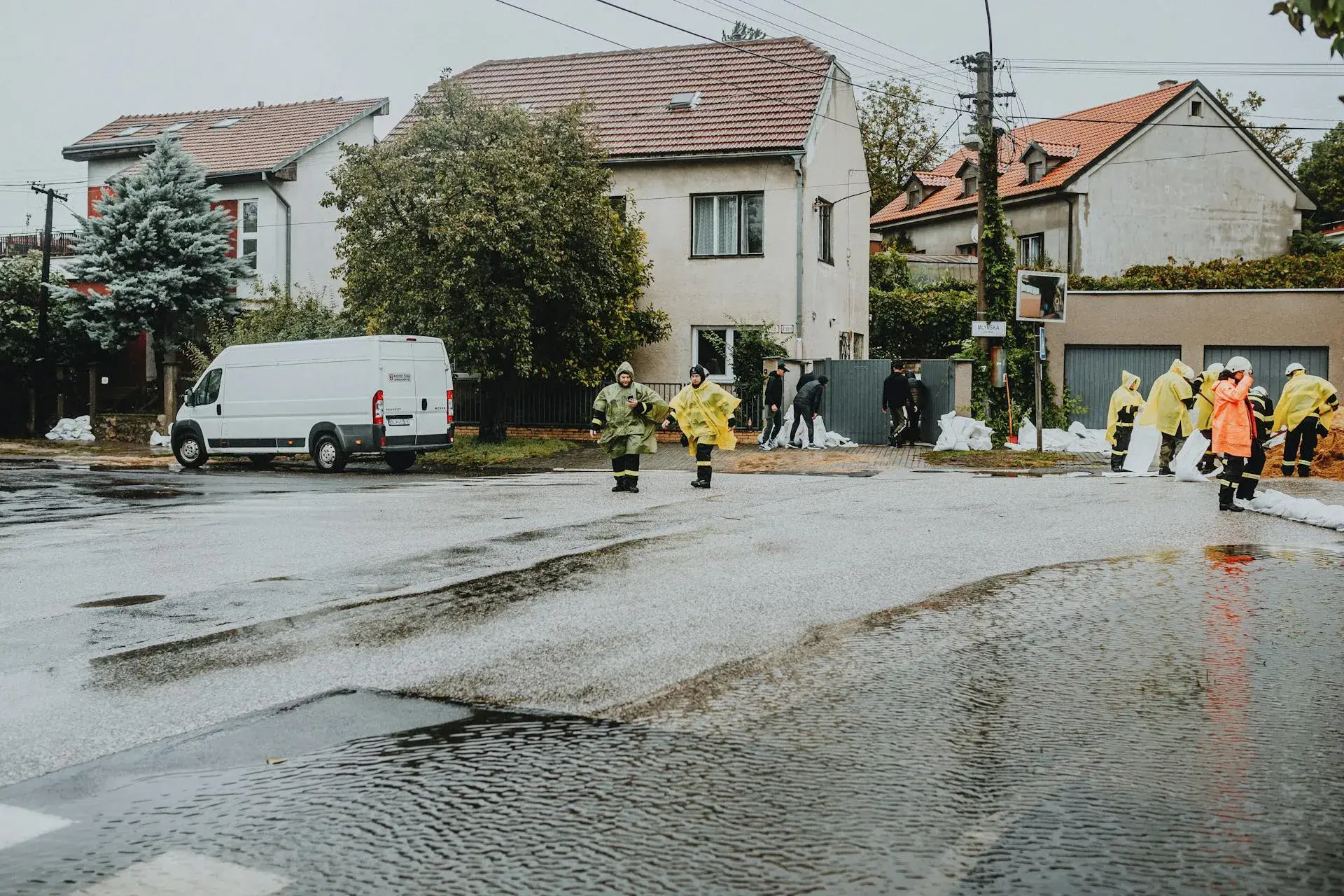
Sewage Cleanup in Bolingbrook, IL
Sewage in your home is a biohazard. Every minute of contact increases contamination, health risk, and material destruction. Our local team responds to Bolingbrook emergencies within 60 minutes.
What Happens When You Call
A real person answers, not a call center. We assess the severity, determine the likely source, and begin coordinating your emergency response immediately.
Your dedicated restoration team is dispatched from our local base serving Bolingbrook and the surrounding Will County communities.
Team arrives with sewage extraction equipment, biohazard PPE, antimicrobial treatment systems, and commercial drying equipment. Emergency mitigation begins immediately.
Sewage extracted, contaminated materials removed, decontamination applied, drying initiated. You know exactly what comes next.
Sewage has entered your home and this is now a health emergency. Raw sewage carries bacteria, viruses, parasites, and chemical contaminants that make every surface it contacts a biohazard. This is not a situation where you wait for a callback, try to mop it up yourself, or hope it dries out. The contamination gets worse with every minute of contact, and materials that might be salvageable now will require full removal within hours. X Response exists for exactly this moment. Call now. Your team is standing by.
Why Bolingbrook Homes Are Vulnerable to Sewage
Bolingbrook is a village of 73,922 residents in Will and DuPage counties, Illinois, covering 24.6 square miles along the I-55 corridor approximately 28 miles southwest of Chicago. The village operates a municipal separate storm sewer system (MS4) under an NPDES permit administered by the Illinois EPA, meaning stormwater and sanitary sewage flow through separate pipe networks rather than the combined system found in older Chicago-area communities. However, this separation does not eliminate sewage backup risk. During intense rainfall, the storm sewer system can surcharge and overwhelm the separate sanitary system through infiltration and inflow at deteriorated joints, cracked pipes, and illegal cross-connections in the aging 1960s-era infrastructure. The village was built beginning in 1965 on former wetland ground with heavy clay soils that shift with freeze-thaw cycles, placing constant stress on underground sewer lines and creating the conditions for joint separation, pipe bellying, and root intrusion that lead to localized sewage backups into individual homes.
In April 2013, heavy storms overwhelmed stormwater infrastructure across Will County, prompting Illinois Farmers Insurance Company to file a landmark lawsuit against Will County and 12 municipalities including Bolingbrook. The suit alleged that the governments 'failed to safely operate retention basins, detention basins, tributary enclosed sewers and tributary open sewers/drains for the purpose of safely conveying stormwater,' resulting in what the filing termed 'sewer water invasions' into hundreds of homes. The suit documented that some invasions were so severe that elderly residents and young children were forced to evacuate their homes due to safety concerns. The April 2013 storm dropped more than six inches of rain across portions of Will County, exceeding the capacity of both storm and sanitary infrastructure simultaneously. While Farmers Insurance ultimately withdrew the suit, the event demonstrated the systemic vulnerability of Will County's stormwater and sewer systems during extreme precipitation events, a vulnerability that has not been eliminated in the decade since.
Separate Storm Sewers and Infiltration Vulnerability
Bolingbrook's sanitary sewer system was designed as a separate system, with storm drains carrying rainwater to detention basins and waterways while a parallel sanitary network carries household waste to the treatment plant. In theory, this means heavy rain should not cause sewage to back up into homes. In practice, the system has vulnerabilities. The original sewer lines installed in the 1960s and 1970s were constructed with materials and joint techniques that deteriorate over 50-plus years of service in Will County's heavy clay soils. As joints separate, pipes crack, and root intrusion creates blockages, stormwater infiltrates into the sanitary system during heavy rain. This infiltration can overwhelm the sanitary system's capacity, causing it to surcharge in the same way a combined system does during storms. Additionally, illegal cross-connections from roof drains, sump pumps, and foundation drains into the sanitary system, installed by homeowners or contractors over decades, add storm flows directly into the sanitary network during every rain event. The result is a system that behaves like a combined sewer during intense storms despite its separate design.
Clay Soils, Freeze-Thaw Damage, and Lateral Failures
The heavy glacial clay beneath Bolingbrook shifts significantly with seasonal freeze-thaw cycles, expanding when saturated and contracting when dry. This movement places constant lateral pressure on underground sewer pipes, particularly at joints and connections. Over 50-plus years, this cyclical stress causes joint separation, pipe bellying where sections settle unevenly, and outright cracking at stress points. The private sewer lateral connecting each home to the public main is the homeowner's responsibility to maintain, and many Bolingbrook residents are unaware that this lateral, typically 4-inch clay tile or early PVC installed during original construction, may have deteriorated significantly. A failed lateral can cause sewage to back up into the home when downstream flow is obstructed by root masses, soil intrusion through separated joints, or pipe collapse. Unlike a system-wide surcharge that affects many homes simultaneously during storms, a lateral failure can cause a sewage backup during dry weather with no warning, no community-wide event, and no obvious external cause. The homeowner discovers raw sewage in their basement with no storm, no flood, and no explanation until a camera inspection reveals the lateral's condition.
The 2013 Will County Storm and Systemic Failure
The April 2013 storm that prompted the Farmers Insurance lawsuit dropped more than six inches of rain across portions of Will County, a volume that exceeded the design capacity of the stormwater management infrastructure serving Bolingbrook and 11 other municipalities. The lawsuit's specific allegations provide a detailed picture of what happens when the system fails: retention basins, detention basins, and enclosed sewers all exceeded capacity simultaneously, and the resulting surcharge forced contaminated water into homes through the lowest available opening, which is typically the basement floor drain or laundry standpipe. The suit described conditions where sewage water invaded homes with sufficient depth and contamination that evacuation was necessary. Similar lawsuits filed simultaneously against Cook, DuPage, Kane, Kendall, Lake, McHenry, LaSalle, and DeKalb counties demonstrate that the April 2013 event overwhelmed infrastructure across the entire northeastern Illinois region. For Bolingbrook homeowners, the event confirmed that even a separate storm sewer system can fail catastrophically during extreme precipitation, and that system-wide failure produces sewage contamination in homes across wide areas simultaneously.
Basement Floor Drains as Entry Points
In Bolingbrook's 1960s-1980s housing stock, basement floor drains are connected to the sanitary sewer system at or below the elevation of the street main. This connection was standard practice during the era and serves as the drainage point for water heater relief valves, laundry overflow, and basement cleaning. However, this same low-point connection becomes the entry point for sewage backup when the sanitary system surcharges. Water and sewage under pressure in the sewer main seeks the lowest available outlet, which in most Bolingbrook homes is the basement floor drain. Without a backflow prevention device (backwater valve) installed on the lateral between the home and the main, there is no barrier preventing surcharged sewage from rising through the floor drain and flooding the basement. Many Bolingbrook homes, particularly those built before the village required backflow prevention in new construction, lack this protection. Homeowners with finished basements are especially vulnerable because carpet, drywall, and stored contents in direct contact with the floor absorb sewage contamination immediately upon contact, dramatically increasing the scope and cost of cleanup.
Will County Stormwater Management and Infrastructure Age
The Will County Stormwater Management Planning Committee (WCSMPC) oversees regional stormwater planning for the county's municipalities, including Bolingbrook. The committee is responsible for implementing the Comprehensive Stormwater Management Plan, which addresses detention requirements, floodplain management, and conveyance capacity for new development. However, the legacy infrastructure serving Bolingbrook's original 1960s-1980s subdivisions was designed and built before current stormwater standards were established. The original detention basins, pipe sizes, and conveyance capacities were calculated based on rainfall intensities and land-use densities that no longer reflect current conditions. Upstream commercial and residential development that postdates the original infrastructure adds impervious surface and runoff volume to systems never designed to handle it. The NPDES MS4 permit requires the village to address stormwater quality and quantity, but retrofitting undersized infrastructure across an entire village is a decades-long capital improvement process. In the meantime, homeowners in older subdivisions face sewage backup risk during storms that exceed the original design capacity of their local infrastructure.
These factors create a community where sewage backup is driven by the intersection of aging infrastructure, clay-soil damage to underground pipes, system infiltration during heavy rain, low-elevation basement connections without backflow protection, and storm intensities that exceed design capacity. Effective sewage cleanup in Bolingbrook requires immediate response because every minute of sewage contact with interior materials increases contamination spread, health risk, and the scope of materials that must be removed rather than cleaned. The source, whether a system-wide surcharge during storms or a private lateral failure during dry weather, determines the cleanup protocol, but in both cases the contamination level is the same: Category 3 biohazard requiring full extraction, material removal, decontamination, and professional drying.
What Happens to Your Home While You Wait
Within 1 Hour
Raw sewage spreads across basement floors and begins absorbing into every porous material it contacts. Carpet, carpet pad, drywall at the floor line, cardboard storage, wood furniture legs, and any fabric or paper product touching the floor become contaminated immediately. In Bolingbrook's finished basements, sewage wicks into the base of framed walls and begins migrating upward through drywall paper facing by capillary action. The contamination is classified as Category 3 from the moment of contact: bacteria, viruses, parasites, and chemical contaminants are present throughout. Every surface the sewage touches requires either professional decontamination or removal, with no exceptions for items that 'look clean' after the water recedes.
1–24 Hours
Contamination migrates further into wall cavities, beneath flooring systems, and into any space connected to the flooded area. Bacterial populations multiply rapidly in the warm, nutrient-rich environment of sewage-saturated materials. In Bolingbrook homes where basement HVAC return air registers sit at floor level, contaminated air enters the duct system and distributes pathogens to upper floors. The sewage odor becomes overwhelming as decomposition accelerates. Porous materials that contacted sewage for more than a brief period cross the threshold where decontamination is possible and must be removed entirely: carpet, pad, lower sections of drywall, insulation, and any absorbent material that contacted the water.
24–48 Hours
Materials that might have been saved with immediate extraction are now unsalvageable. Drywall wicking extends contamination 12 to 24 inches above the actual water line. Wood framing at the base of walls absorbs contaminated moisture and begins supporting microbial growth. The scope of demolition required expands significantly beyond the original flood footprint. In Bolingbrook's humid summer climate, mold colonization begins on sewage-wetted materials within this window, adding a secondary contamination concern to the primary biohazard. Health risk to occupants increases as airborne pathogen levels rise in the enclosed basement environment.
48–72 Hours
Extensive microbial growth establishes on all sewage-contacted materials. Structural wood at sill plates and rim joists, where the framed wall meets the foundation, shows active bacterial and fungal colonization. The HVAC system has distributed contaminated air throughout the home for multiple cycles. Restoration at this point requires comprehensive demolition of all affected finished materials, antimicrobial treatment of the exposed structure, verification that contamination has not penetrated structural elements beyond salvage, and extended drying before reconstruction can begin. The total cost of restoration at 72 hours typically exceeds the cost at one hour by a factor of three or more.
One Week and Beyond
Without professional intervention, sewage-contaminated basements become uninhabitable health hazards. Structural wood decay begins where sustained moisture from the high water table and clay soils maintains wetness against the framing. Mold growth becomes extensive through every material that was wet. The property suffers both structural damage and biohazard contamination that requires professional remediation before any occupancy can resume. Insurance claims become significantly more complex and costly as the scope expands from what could have been a contained emergency response into a major reconstruction project.
Sewage contamination gets worse with every minute of delay. Materials that can be saved in the first hour require removal after 24 hours. Costs that are manageable with immediate response multiply with every day of inaction. Contact X Response now. Our Bolingbrook team responds within 60 minutes with full biohazard extraction and decontamination capability.
How We Restore Sewage-Damaged Bolingbrook Homes
Sewage cleanup requires a specific protocol that prioritizes safety, contamination control, and complete decontamination. Here is exactly what the process involves for Bolingbrook properties.
Emergency Assessment and Safety Protocol
Our team arrives in full biohazard PPE and assesses the extent of sewage contamination, the active status of the backup (is sewage still entering?), and whether the source is a system-wide surcharge or a private lateral failure. If sewage is still actively entering the home, we coordinate with the village or a plumber to stop the inflow before extraction begins. In Bolingbrook homes during storm events, this may mean waiting for the system to stabilize or establishing temporary barriers until the surcharge subsides. The affected area is isolated from the rest of the home to prevent cross-contamination. We identify every material that has contacted sewage water, map the contamination boundary including wicking above the water line, and document the full scope for insurance purposes. No unprotected person enters the contaminated zone.
Sewage Extraction and Material Removal
Standing sewage is extracted using specialized pumps and equipment designed for contaminated water. Unlike clean-water extraction, sewage removal requires contained disposal and decontamination of all extraction equipment after use. Once standing water is removed, every porous material that contacted the sewage is removed and disposed of as contaminated waste: carpet, carpet pad, drywall from the floor to at least 12 inches above the visible water line (higher where wicking is detected), insulation, baseboards, and any absorbent contents. In Bolingbrook's finished basements, this typically means stripping the affected walls to exposed framing and foundation, removing all flooring to bare concrete, and clearing the space completely for decontamination. Non-porous items are separated for professional cleaning if salvageable. The goal is to expose every surface that contacted contamination so it can be treated directly.
Biohazard Decontamination
After contaminated materials are removed, every exposed surface receives thorough decontamination treatment. Concrete floors and foundation walls are cleaned of all visible residue and treated with EPA-registered antimicrobial and disinfectant solutions rated for sewage-borne pathogens. Wood framing, floor joists, subfloor sheathing, and any structural member that contacted contaminated water is cleaned, treated, and assessed for integrity. The decontamination protocol follows IICRC S500 Category 3 standards, which require elimination of pathogenic contamination before any drying or reconstruction proceeds. In Bolingbrook homes where clay soils maintain moisture against the exterior of the foundation, we ensure that the decontamination treatment reaches surfaces where residual moisture from hydrostatic pressure might otherwise sustain microbial activity.
Structural Drying
Once decontamination is complete, commercial dehumidifiers and air movers are positioned to dry the exposed structure to appropriate moisture standards. In Bolingbrook, where the high water table and clay soils maintain hydrostatic moisture against foundation walls even after interior contamination is removed, the drying phase requires monitoring for re-wetting from exterior sources. Daily moisture readings track progress and identify areas where moisture persists. Concrete slabs and foundation walls dry slowly because of their mass and the continued moisture pressure from the exterior soil. The structure must reach verified dry standards before any reconstruction begins, because enclosing damp materials behind new drywall and flooring creates the conditions for mold growth that will require a second remediation within months.
Verification and Reconstruction Preparation
Final verification confirms that all contamination has been eliminated, all surfaces have been treated, and moisture levels support safe reconstruction. Visual inspection under appropriate lighting confirms no remaining organic residue on any surface. Moisture readings verify that the structure has reached standards compatible with new material installation. The space is released from biohazard protocol and cleared for reconstruction. Documentation of the entire process, including contamination mapping, material removal records, decontamination verification, and final moisture readings, supports your insurance claim and provides a complete record of the work performed. Your team can coordinate reconstruction or hand off to your preferred contractor with a clear scope of what was affected and what was resolved.
The X Response Difference
When you contact X Response for sewage cleanup, you get a team trained in biohazard response that treats the situation with the urgency and protocol it demands. Extraction, decontamination, drying, and documentation handled by one team under one coordinated response.
Insurance Claim Guidance for Bolingbrook Homeowners
Sewage backup coverage in Illinois requires a specific endorsement on your homeowner's policy. Standard policies do not cover sewer and drain backup as a default inclusion. In Bolingbrook, where both system-wide surcharge during storms and private lateral failures during dry weather can push sewage into basements, this endorsement is essential protection. The sewer backup endorsement typically provides $5,000 to $25,000 in coverage depending on the limit you selected, which may or may not cover the full cost of extraction, decontamination, demolition, drying, and reconstruction for a significant basement sewage event. Understanding your specific endorsement limit and any sublimits or exclusions is important before a backup occurs. If sewage backup results from a flood event (rising surface water), it may fall under flood insurance rather than the sewer backup endorsement, adding another coverage distinction that depends on the documented source.
How X Response Helps
- Verify whether your policy includes the sewer and drain backup endorsement and its coverage limit before an event occurs
- Document the contamination source clearly, as system-wide surcharge, private lateral failure, and flood-related backup trigger different coverage provisions
- Photograph all damage and contamination immediately, including water depth markers, affected materials, and the entry point of the backup
- Preserve a record of the timeline from discovery through professional response, as carriers may evaluate whether reasonable mitigation steps were taken promptly
- Separate sewage-related costs from any concurrent storm damage costs, as they fall under different coverage provisions
X Response does not file claims on your behalf, adjust claims, or make coverage determinations. We provide documentation and guidance to help you make informed decisions about your property and your policy. Coverage decisions are made solely by your insurance carrier.
Certified Restoration Specialists Serving Bolingbrook
When you contact X Response for sewage cleanup in Bolingbrook, your team is drawn from certified professionals trained in biohazard response who work across Will County and understand the specific sewage risks in this community. They know that Bolingbrook's separate sewer system still produces backups during heavy storms through infiltration and surcharge, that the 1960s-era laterals in clay soils are prone to failure from freeze-thaw stress and root intrusion, that finished basements with floor-level drain connections lack backflow protection in many older homes, and that the clay soils and high water table extend drying timelines after contamination is removed. They have responded to system-wide surcharge events affecting multiple homes simultaneously, isolated lateral failures during dry weather, and every variant of sewage contamination common to Will County's infrastructure. This is not a general cleaning crew attempting biohazard work. It is a trained, equipped, certified team that handles sewage contamination as the health emergency it is.
Every technician on your team holds current IICRC certification in water damage restoration with specific training in Category 3 contamination protocols. Equipment includes biohazard PPE, specialized sewage extraction pumps, EPA-registered antimicrobial and disinfectant treatment systems, commercial dehumidifiers sized for the volume of Bolingbrook basements, and containment materials to prevent cross-contamination to unaffected areas of the home. When your team arrives, they bring everything needed to begin extraction, decontamination, and drying immediately.
In Bolingbrook, X Response works with Scene Cleaners, an independent local restoration partner serving Will County.
Sewage Cleanup FAQ for Bolingbrook Homeowners
Other Emergency Services in Bolingbrook
Water Damage Restoration
Burst pipes, storm flooding, standing water. We extract, dry, and restore before mold sets in.
Learn more
Fire Damage Restoration
Structural damage, soot, debris. We stabilize, clean, and rebuild what fire destroyed.
Learn more
Smoke Damage Restoration
Soot residue, chemical odors, HVAC contamination. We decontaminate surfaces, eliminate odors, and restore air quality.
Learn more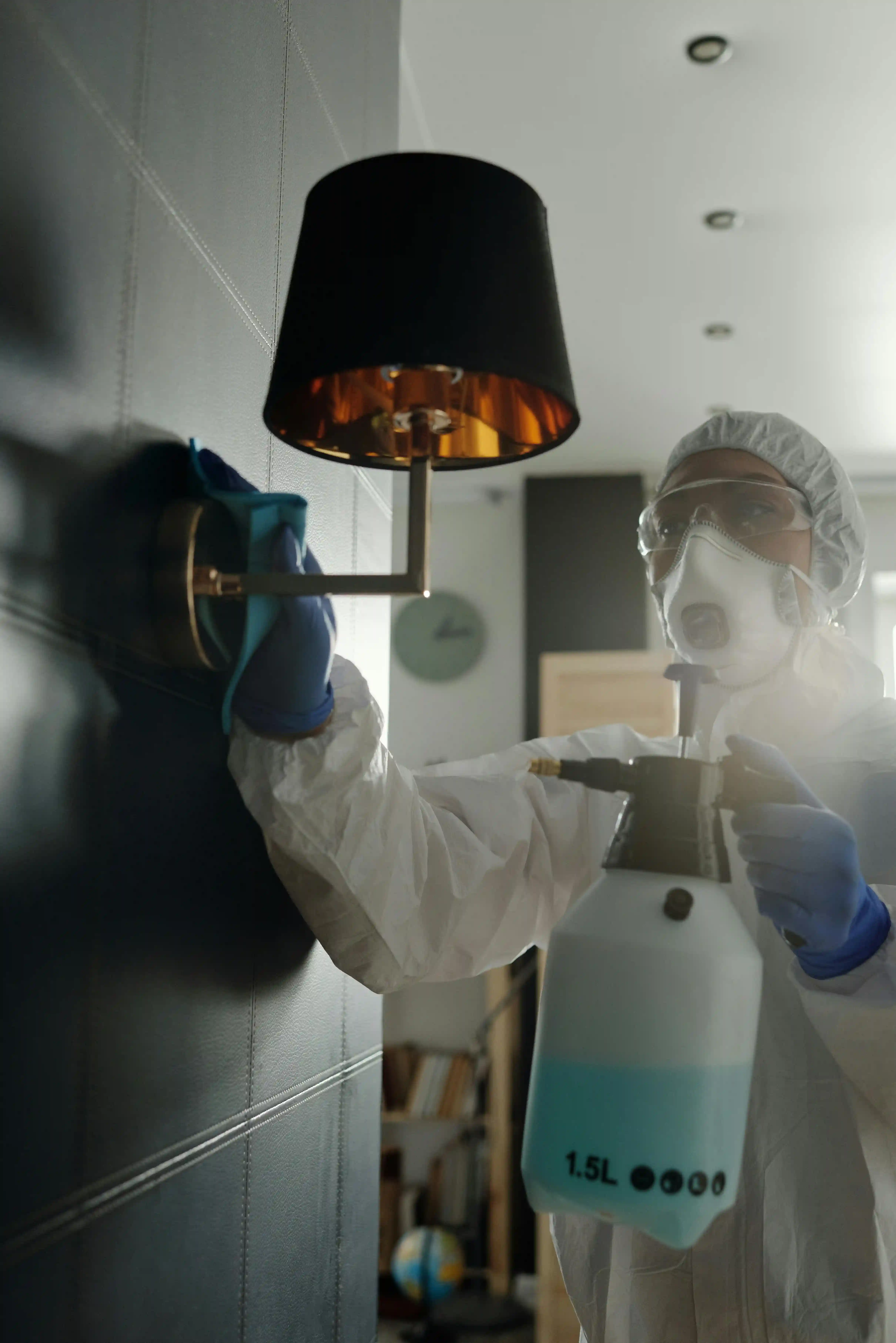
Mold Remediation
Testing, containment, removal, prevention. We find the source, eliminate the growth, and stop it from returning.
Learn more