
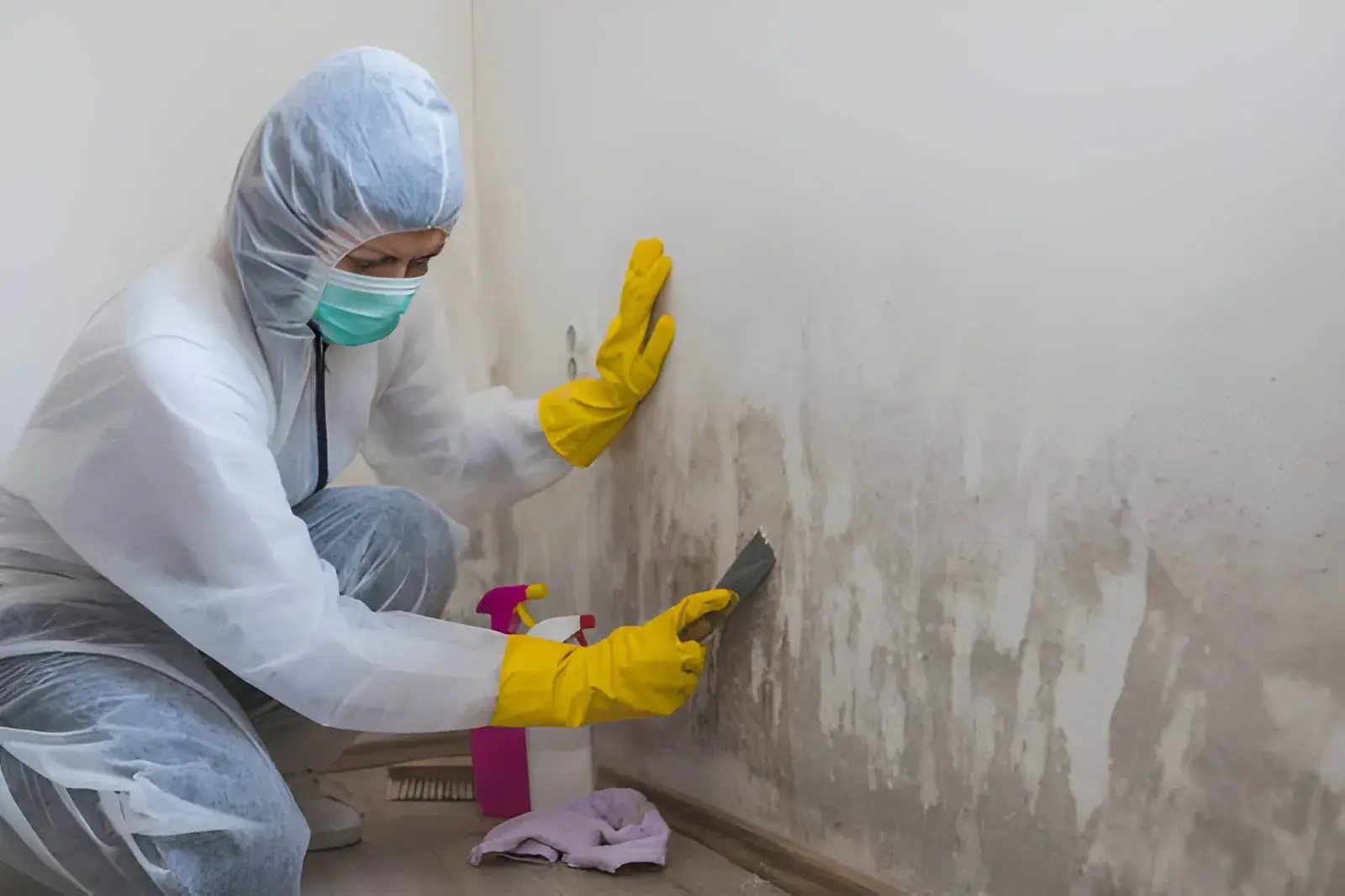
Mold Remediation in Aurora, IL
Mold spreads rapidly in hidden spaces, degrading air quality and structural materials with every day it goes unaddressed. Our local team responds to Aurora assessments within 24 hours.
What Happens When You Call
A real person answers, not a call center. We assess your situation, ask the right questions, and schedule your on-site assessment.
Your dedicated remediation team arrives at your Aurora property with moisture detection equipment, air sampling capability, and visual inspection tools.
Assessment complete: moisture source identified, contamination extent mapped, remediation scope documented. You know exactly what the work involves.
Containment established, removal completed under controlled conditions, post-remediation verification confirms the space meets clearance standards.
You found mold, or you suspect it based on smell, visible staining, or respiratory symptoms that worsen indoors. Whether the source is a past flood, a slow leak, condensation from humidity, or a sewer backup you thought was fully cleaned, the problem is growing. Mold does not stop colonizing until the moisture source is eliminated and contaminated materials are properly removed. X Response exists for exactly this moment. When you reach out, your remediation team is scheduled within 24 hours. From that point forward, one team manages everything: assessment, containment, removal, verification, and guidance on preventing recurrence. Call now. Your team is standing by.
Why Aurora Homes Are Vulnerable to Mold
Aurora is the second-largest city in Illinois with a 2020 Census population of 180,542, spanning both banks of the Fox River across Kane, DuPage, Kendall, and Will counties. The city's relationship with water defines its mold risk profile. Aurora sits in a FEMA-designated Special Flood Hazard Area along the Fox River and Indian Creek corridors, where mapped flood zones intersect with dense residential development on both sides of the river. Kane County's glacial till soils, rich in clay and silt, hold moisture against foundations rather than allowing free drainage, creating persistent hydrostatic pressure that pushes water into basements through every crack, joint, and deterioration point in the foundation system. This continuous low-level moisture intrusion, even absent any dramatic flooding event, creates the sustained elevated humidity that mold requires to colonize and spread. Aurora holds the Illinois all-time 24-hour rainfall record (16.94 inches, July 17-18, 1996), and while that event was exceptional, the city's position along a river with a 2,640-square-mile watershed means moderate flooding from upstream events occurs on a recurring basis that regularly saturates low-lying properties.
Beyond river flooding, Aurora's combined sewer system in the older core neighborhoods creates a second pathway for persistent moisture and mold risk. The city's combined sewer system still produced 198 overflow events as recently as 2010, creating recurring basement moisture conditions in older neighborhoods that promote mold colonization within 24 to 48 hours of each event. Each of those 198 instances represents raw sewage and stormwater mixture surcharging the system and backing up into the lowest points, which are residential basements, saturating porous building materials with contaminated water. Many homeowners in Aurora's older neighborhoods have experienced repeated basement dampness from minor sewer surcharge events that do not rise to the level of an insurance claim or a professional restoration call. They pump or mop the water, run a fan, and move on. But each event leaves residual moisture in concrete block walls, behind paneling, beneath carpet pad, and in the soil-contact zones of wood framing that accumulates over months and years into chronic mold conditions that eventually manifest as visible growth, musty odor, or health symptoms.
Fox River Floodplain and Chronic Moisture Exposure
Properties within and adjacent to the Fox River and Indian Creek floodplains experience the highest baseline mold risk in Aurora. The proximity to surface water keeps the water table elevated in surrounding soils, maintaining hydrostatic pressure against foundation walls year-round rather than just during storm events. During spring snowmelt and after regional rainfall, the water table rises further, pushing moisture through foundation joints, slab cracks, and utility penetrations. Properties that have experienced even one significant flood event often develop persistent mold conditions in the months that follow, particularly in wall cavities and beneath flooring where moisture was never fully extracted. The 1996 record flood saturated thousands of Aurora homes simultaneously, and restoration standards of that era did not consistently address concealed moisture in wall cavities and beneath floor systems. Many properties affected by that flood were cleaned superficially but never professionally dried to the standards that prevent mold colonization. Three decades later, some of these homes still harbor mold in structural cavities that was seeded during that event and has persisted because the ongoing moisture conditions along the floodplain never allowed the materials to fully dry.
Combined Sewer Overflows and Contaminated Moisture
Aurora's combined sewer system handles both sanitary waste and stormwater in shared pipes across the older east and west side neighborhoods near downtown. When heavy rain overwhelms capacity, the system surcharges and pushes a mixture of stormwater and raw sewage back through basement floor drains and plumbing fixtures. Fox Metro Water Reclamation District documented 198 CSO events in 2010, even after more than $250 million in sewer separation investment over the preceding three decades. Their Long Term Control Plan targets reducing overflows to a maximum of four per year, but the goal has not yet been achieved in all areas. For mold purposes, the contamination level of CSO-sourced water is Category 3 (grossly contaminated), which means any porous material it contacts must be removed rather than dried in place. When homeowners attempt to manage these events with consumer-grade equipment and surface drying, they often leave contaminated moisture trapped behind walls and beneath floors. The organic nutrients in sewage-contaminated water actually accelerate mold growth compared to clean water, meaning colonization can begin faster than the standard 24-to-48-hour window in warm conditions.
Multi-Era Housing Stock and Concealment Patterns
Mold thrives in concealed spaces where moisture persists undetected: behind drywall, beneath flooring, inside wall cavities, and in areas where air circulation is restricted. Aurora's housing stock, spanning from the 1850s to the present, creates different concealment patterns in different eras. In the oldest homes near downtown (McCarty-Burlington, West Side Historic District), mold colonizes behind original plaster on lath where moisture migrates through deteriorated masonry and stone foundations. In mid-century homes from the 1950s and 1960s, mold grows behind paneling and in finished basements where drywall was installed directly against concrete block walls without a moisture barrier, creating a sandwich of organic material (paper-faced drywall) trapped against a cold, damp surface (concrete block). In newer homes on the far east and south sides, mold appears when builder-grade waterproofing fails prematurely, when sump pump failures allow brief flooding that is mopped up without structural drying, or when HVAC condensate leaks saturate ceiling cavities and wall spaces in concealed ductwork chases. Each era's construction creates its own mold habitat that requires specific inspection techniques to detect and specific access methods to remediate.
Northern Illinois Humidity and Seasonal Mold Cycles
Aurora's continental climate produces two distinct mold-risk seasons. Summer months bring sustained relative humidity above 60 to 70 percent outdoors, which translates to elevated indoor humidity particularly in basements where cool surfaces promote condensation. The dew point in July and August frequently exceeds 65 degrees Fahrenheit, meaning moisture condenses on any surface cooler than outdoor air temperature, including basement walls, cold-water pipes, and ductwork running through unconditioned spaces. This condensation creates surface moisture that feeds mold growth without any flood event or plumbing failure. Winter months bring a different mechanism: when heated indoor air contacts cold exterior walls and cold-side surfaces in poorly insulated assemblies, condensation forms inside wall cavities where it is invisible from either side. This interstitial condensation accumulates over the heating season, providing sustained moisture that feeds mold growth in concealed spaces through the coldest months. Many Aurora homeowners discover mold only in spring when they access basements or utility spaces that were closed during winter, finding growth that developed over months of invisible moisture accumulation.
Illinois Mold Regulatory Framework
Illinois does not require a state-specific mold remediation license for contractors performing mold removal work. Unlike states such as Florida, Texas, and New York that mandate state licensing, certification requirements, and specific protocols for mold remediation, Illinois leaves the regulatory framework to industry standards. This means the quality of mold remediation varies widely depending on the contractor hired. Some companies perform work according to IICRC S520 standards (the industry reference for mold remediation), while others offer surface cleaning that addresses visible mold without identifying or resolving the underlying moisture source or addressing contamination in concealed cavities. For Aurora homeowners, this regulatory gap means the burden of selecting a qualified remediator falls on the property owner. Key qualifications to verify include current IICRC certification in mold remediation (AMRT designation), adherence to S520 protocols for containment, removal, and verification, and a documented process for identifying and addressing the moisture source that allowed growth to occur. X Response operates under IICRC S520 standards regardless of Illinois's lack of mandatory licensing, because those standards represent the minimum threshold for effective, safe mold remediation.
Aurora's mold risk profile combines a major river floodplain with chronic groundwater pressure, an aging combined sewer system that regularly introduces contaminated moisture into basements, a housing stock spanning 190 years of construction with different concealment patterns in each era, and a climate that produces both summer humidity and winter condensation as moisture drivers. The absence of Illinois-specific mold licensing means homeowners must actively verify contractor qualifications. Effective mold remediation here requires identifying the moisture source (river-influenced groundwater, CSO backflow, condensation, or plumbing failure), eliminating it, removing contaminated materials under proper containment, and verifying clearance before the space is restored.
What Happens to Your Home While You Wait
24–48 Hours After Moisture Event
Mold spores, which are present in all indoor environments at low concentrations, begin germinating on wet organic surfaces. In Aurora basements where combined sewer surcharge or groundwater intrusion has saturated drywall, carpet, or wood materials, colonization begins at the material-moisture interface where visibility is lowest: behind baseboards, beneath carpet padding against concrete, and on the hidden face of drywall installed against foundation walls. At this stage, there is no visible mold or detectable odor. The colonization is occurring at a microscopic level on surfaces that have maintained moisture above 60 percent relative humidity for more than one day.
3–7 Days
Visible mold growth appears on the most favorable surfaces first: paper facing of drywall, cardboard storage boxes, carpet backing, and untreated wood in contact with moisture. Musty odor becomes detectable in enclosed spaces. In Aurora's summer humidity, growth accelerates as ambient conditions support rather than inhibit the colonization. The mold is producing mycotoxins and spores that become airborne and enter the HVAC system through basement return air registers, beginning to affect indoor air quality on upper floors that show no visible contamination. At this stage, targeted removal of affected materials combined with moisture correction can still limit the scope to the originally wet area.
2–4 Weeks
Mold spreads beyond the original wet area through airborne spore dispersal and hyphal growth along materials. In Aurora homes with forced-air HVAC drawing return air from basement spaces, spores have been distributed to every room served by the system and may have colonized secondary locations where dust and moisture provide favorable conditions: HVAC duct interiors, drip pans beneath cooling coils, bathroom ceiling surfaces, and window condensation areas. The remediation scope has expanded beyond the original wet area into areas that received secondary contamination through the air distribution system. What started as a localized removal project now requires whole-system assessment.
1–3 Months
Extensive mold growth through wall cavities, beneath flooring systems, and throughout concealed spaces connected to the original moisture source. Structural wood at sill plates, rim joists, and floor framing shows surface colonization that may be affecting wood fiber integrity. The musty odor is pervasive and detectable throughout the home, not just near the original moisture source. Health symptoms among occupants may include respiratory irritation, allergic reactions, headaches, and worsening asthma. The remediation scope now involves significant demolition of affected materials, HVAC decontamination, and potentially structural wood treatment. Costs have multiplied compared to what early intervention would have required.
6 Months and Beyond
Chronic mold conditions with deep structural involvement. Wood framing shows decay at moisture-contact points. Insulation throughout affected wall cavities is contaminated and must be replaced. The HVAC system has become a persistent reservoir that recontaminates cleaned spaces. The scope approaches or exceeds a gut renovation of affected areas. Property value is materially impacted, and disclosure obligations arise under Illinois real estate transaction law. What began as a maintenance issue has become a major capital project.
Mold does not stop growing on its own. It stops when the moisture source is eliminated and contaminated materials are removed. Every week of delay expands the scope and cost. Contact X Response now for professional assessment within 24 hours.
How We Restore Mold-Affected Aurora Homes
From initial assessment through post-remediation verification, every step follows IICRC S520 protocols. Here is exactly what the mold remediation process involves for Aurora properties.
Professional Assessment and Moisture Mapping
Our team arrives with professional moisture meters, thermal imaging cameras, and air sampling equipment to determine the full extent of mold contamination and its underlying moisture source. In Aurora homes, assessment focuses on the specific moisture pathways common to each construction era: foundation stone joints and deteriorated mortar in pre-1900 homes near downtown, slab-edge seepage and floor-drain backflow in mid-century homes on the east and west sides, sump system failures in newer far-east-side construction, and condensation patterns in poorly insulated wall assemblies across all eras. We map moisture levels in every accessible surface and use thermal imaging to identify moisture anomalies behind finished walls that indicate concealed problems. The assessment determines contamination boundaries, identifies the moisture source that must be corrected, and produces the documented scope of work that guides remediation.
Containment and Environment Control
Before any mold-contaminated material is disturbed, we establish engineering controls to prevent cross-contamination. Polyethylene containment barriers seal the work area from the rest of the home. Negative air pressure, maintained by HEPA-filtered air scrubbers exhausting to the exterior, ensures that airborne spores released during removal travel into the filtration system rather than migrating to clean areas. The HVAC system is isolated with sealed register covers to prevent the air handler from distributing contamination. In Aurora homes where the mold-affected area is a basement with the HVAC equipment inside the containment zone, we establish temporary ventilation for the upper floors before sealing the basement from the distribution system. Workers enter and exit through a decontamination chamber to prevent tracking contamination on clothing and equipment.
Material Removal and Decontamination
Contaminated porous materials, including drywall, insulation, carpet, carpet pad, and any organic material with visible mold growth, are removed under containment and double-bagged in 6-mil polyethylene for disposal. Non-porous and semi-porous materials (wood framing, concrete, metal) are cleaned with HEPA vacuuming followed by application of antimicrobial treatments. For Aurora's older homes where original wood framing, plaster, and architectural elements have historical or structural value, we assess whether surface mold can be removed through HEPA vacuuming and sanding without requiring full material replacement. Structural wood with surface-only colonization can often be saved through aggressive cleaning and encapsulant application, preserving irreplaceable 19th-century lumber that cannot be replicated with modern materials. All removed materials are documented with photos and measurements for insurance purposes.
Moisture Source Correction
Remediation is incomplete unless the moisture source that fed the mold is identified and corrected. Without moisture correction, mold will recolonize treated areas within weeks. For Aurora properties, moisture correction may involve repairing foundation cracks or deteriorated mortar joints that admit groundwater, installing or repairing sump pump systems to manage hydrostatic pressure from Kane County's clay soils, correcting drainage grading around the foundation, installing backflow prevention on floor drains connected to the combined sewer system, repairing leaking supply or drain plumbing, improving ventilation in enclosed spaces to reduce condensation, or adding dehumidification capacity to maintain relative humidity below 60 percent in below-grade spaces. We identify the correction needed and either perform it (within our scope of work) or coordinate with the appropriate specialist to ensure it is completed before the remediated space is restored.
Post-Remediation Verification
After removal and decontamination are complete but before containment is removed, we conduct post-remediation verification to confirm the space meets clearance standards. Visual inspection confirms no remaining visible mold on any surface within the containment area. Moisture readings confirm that remaining structural materials have returned to acceptable levels and are not actively wet. Air sampling, when specified in the scope, compares post-remediation spore counts to outdoor baseline and pre-remediation levels to verify that airborne contamination has been effectively reduced. If any metric fails to meet clearance criteria, we continue treatment until it passes. Only after verification confirms successful remediation do we remove containment barriers and release the space for restoration. Documentation of clearance results becomes part of your project record for insurance and future property transactions.
The X Response Difference
Mold remediation without moisture correction is temporary. When you contact X Response, you get a team that addresses both the contamination and its cause, verified by post-remediation testing before the space is released for restoration.
Insurance Claim Guidance for Aurora Homeowners
Mold damage insurance coverage in Illinois is one of the most contested areas in homeowner's claims. Most standard policies include a mold exclusion or a mold sublimit that caps coverage at $5,000 to $10,000 regardless of actual remediation costs, which can easily reach $15,000 to $50,000 for significant contamination in a residential property. The critical exception is when mold results directly from a covered water damage event. If a burst pipe caused water damage that led to mold because the water was not dried quickly enough, the mold remediation may be covered as part of the original water damage claim. If mold resulted from long-term maintenance issues (condensation, slow leaks, chronic dampness), it is almost universally excluded. In Aurora, where many mold conditions originate from combined sewer surcharge events that may or may not have been filed as water damage claims at the time they occurred, the coverage determination often depends on whether you can document the original water event that triggered the growth.
How X Response Helps
- Document the connection between the mold and its originating moisture event when one can be identified
- Provide professional assessment reports showing moisture source, contamination extent, and required scope of work
- Photograph all visible mold and document concealed contamination discovered during remediation
- Align remediation scope with insurance coverage categories and sublimits so your adjuster understands the claim structure
- Explain your policy's mold coverage position before work begins so you understand out-of-pocket exposure
X Response does not file claims on your behalf, adjust claims, or make coverage determinations. We provide documentation and guidance to help you make informed decisions about your property and your policy. Coverage decisions are made solely by your insurance carrier.
Certified Restoration Specialists Serving Aurora
When you contact X Response for mold remediation in Aurora, your team is drawn from certified professionals who understand the specific moisture conditions and building characteristics across Illinois's second-largest city. They know how the Fox River floodplain maintains elevated groundwater against foundations in low-lying neighborhoods, how the combined sewer system introduces contaminated moisture into basements during surcharge events, how different construction eras from the 1850s through modern homes create different mold habitats and require different access strategies, and how Kane County's clay soils maintain hydrostatic pressure against foundations regardless of season. They have remediated mold in Victorian-era homes with stone foundations and original plaster, in mid-century basements where drywall was installed directly against concrete block, in modern homes where sump failures or condensation created concealed growth, and in multi-family buildings where moisture migrated between units through shared structural cavities. This is not a crew dispatched from hours away with no local context. It is a local team with local expertise.
Every technician on your team holds current IICRC certification in Applied Microbial Remediation (AMRT) and operates under IICRC S520 protocols regardless of Illinois's lack of mandatory state licensing. Equipment includes HEPA air scrubbers, negative air machines, professional moisture meters, thermal imaging cameras, containment materials, and the full range of antimicrobial treatments and encapsulants required for safe, effective mold removal. When your team arrives, they bring everything needed to assess, contain, remove, and verify without waiting for additional equipment or specialist subcontractors.
In Aurora, X Response works with Scene Cleaners, an independent local restoration partner serving Kane County.
Mold Remediation FAQ for Aurora Homeowners
Other Emergency Services in Aurora
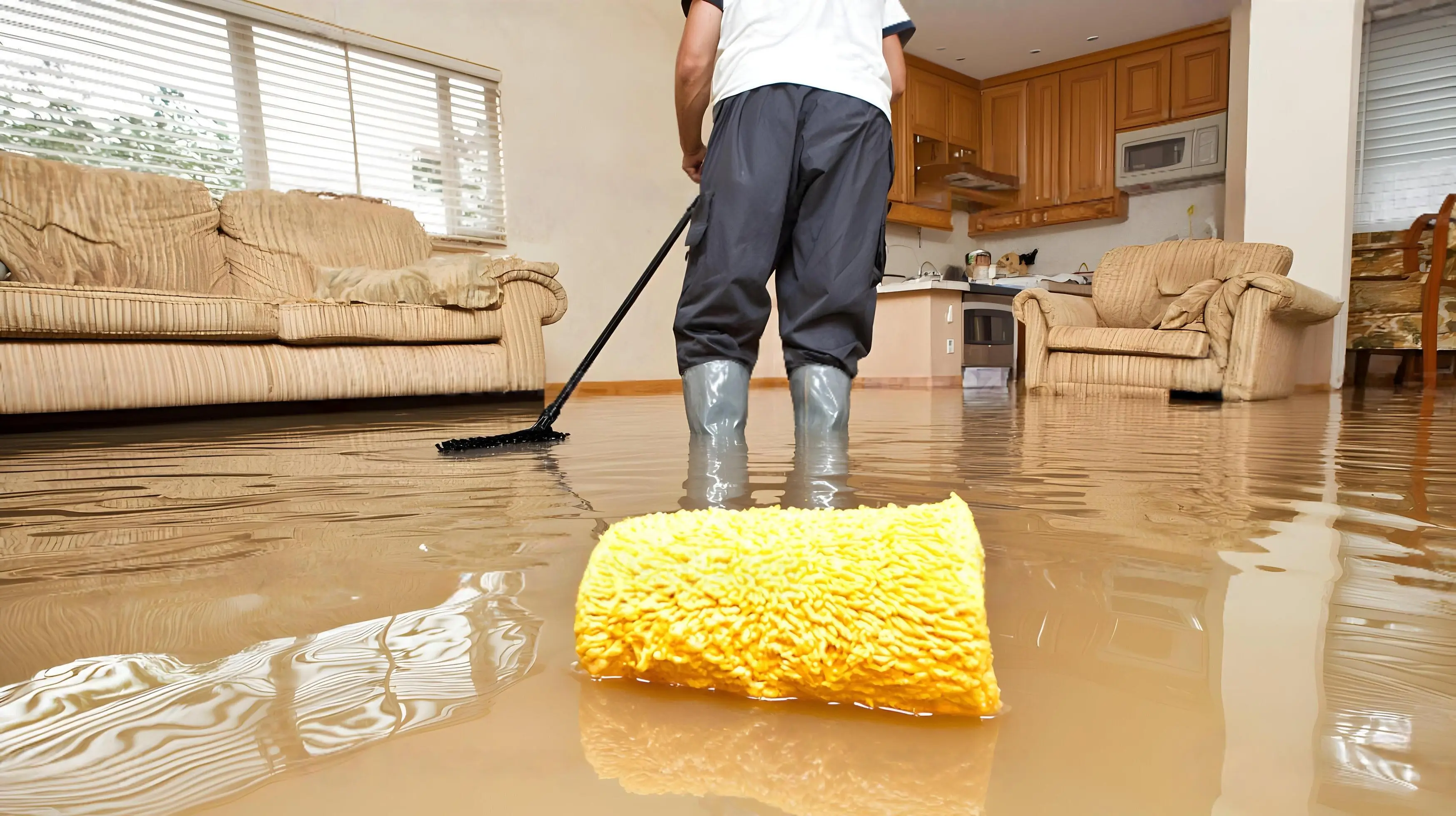
Water Damage Restoration
Burst pipes, storm flooding, standing water. We extract, dry, and restore before mold sets in.
Learn more
Fire Damage Restoration
Structural damage, soot, debris. We stabilize, clean, and rebuild what fire destroyed.
Learn more
Smoke Damage Restoration
Soot residue, chemical odors, HVAC contamination. We decontaminate surfaces, eliminate odors, and restore air quality.
Learn more
Sewage Cleanup
Sewer backups, contaminated water, biohazard. We extract, sanitize, and restore safely.
Learn more