
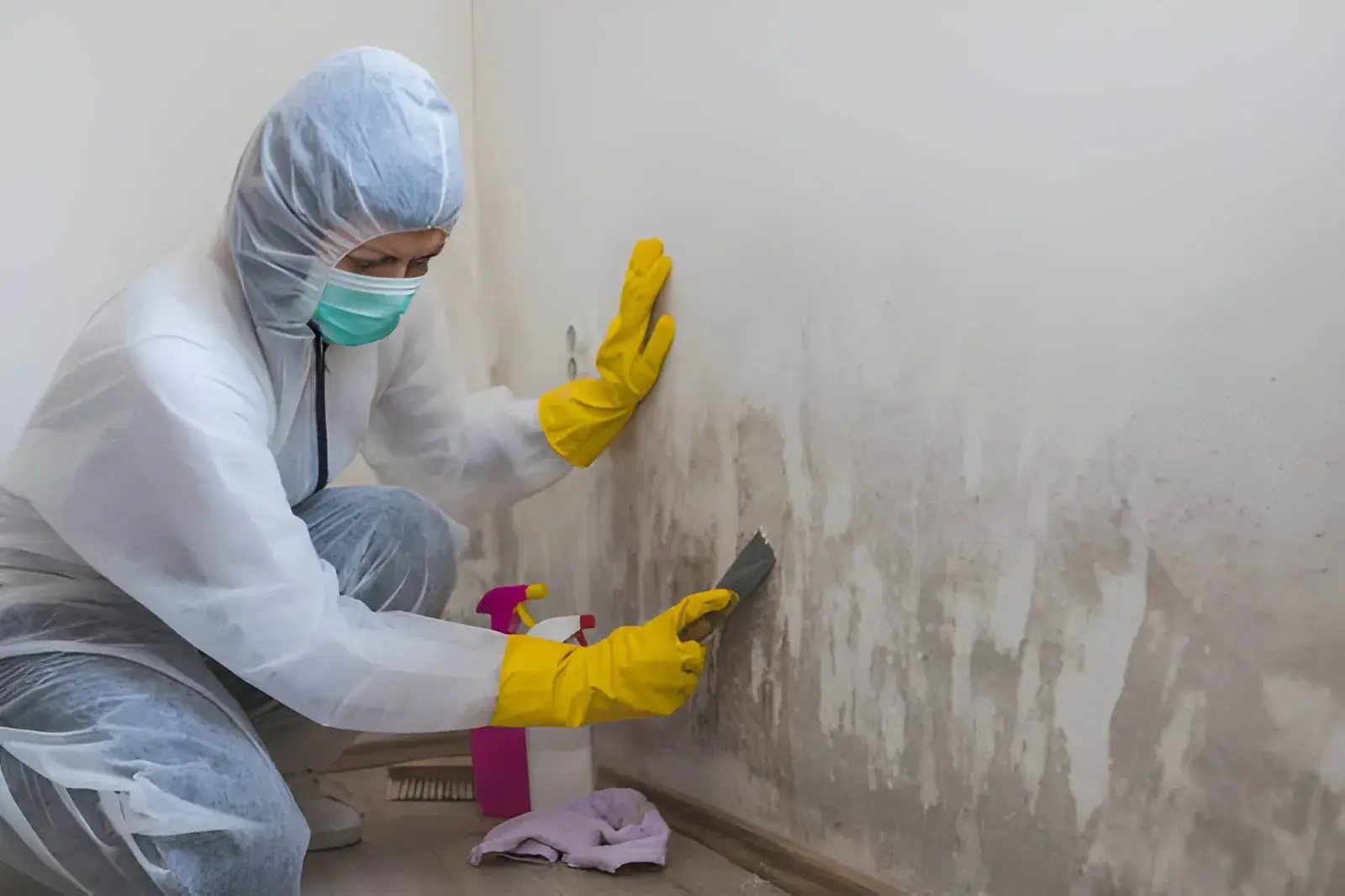
Mold Remediation in Hanover Park, IL
Mold spreads through wall cavities and HVAC systems within 24 to 48 hours of moisture exposure. Our certified local team responds to Hanover Park emergencies within 60 minutes.
What Happens When You Call
A real person answers, not a call center. We assess your situation, ask the right questions, and begin coordinating your response immediately.
Your dedicated remediation team is dispatched from our local base serving Hanover Park and the surrounding northwest suburban communities.
Team arrives with moisture detection equipment, containment materials, HEPA filtration, and air quality monitoring tools. Assessment begins immediately.
Moisture source identified, contamination extent mapped, remediation plan documented. You know exactly what comes next.
You have discovered mold in your home, or worse, you can smell it but cannot find it. Either way, the problem is growing while you wait. Mold does not pause for appointments or callbacks. X Response exists for exactly this moment. When you reach out, your remediation team is mobilized within minutes and on site within the hour. From that point forward, one team manages everything: inspection, containment, removal, drying, and verification. You are never left guessing about the next step. Call now. Your team is standing by.
Why Hanover Park Homes Are Vulnerable to Mold
Hanover Park is a village of 37,470 residents straddling the Cook and DuPage county line in Chicago's northwest suburbs, built primarily during the 1960s and 1970s on what was formerly agricultural land along the West Branch of the DuPage River. The village's location in a river corridor, combined with flat glacial terrain, clay-heavy soils, and aging residential construction, creates persistent moisture conditions that make mold growth a recurring concern for homeowners. The West Branch floods repeatedly, saturating soils and raising groundwater levels in surrounding neighborhoods. The $6.2 million flood-relief project announced in 2023 between Hanover Park and Schaumburg confirms that chronic flooding near the river has been an ongoing problem for years, meaning homes in the affected areas have experienced multiple wetting events that create ideal conditions for mold colonization behind walls, beneath flooring, and in crawlspaces where moisture is not easily detected.
Effective January 1, 2025, Illinois SB 1087 amended the Mold Remediation Registration Act (410 ILCS 105) to require all mold remediation professionals to hold active third-party certification from IICRC, ACAC, or equivalent bodies and register with the state before performing remediation work in residential or commercial buildings. This legislation, passed by both chambers of the Illinois General Assembly, establishes a minimum qualification standard for anyone performing mold remediation in Hanover Park and across the state. The law reflects the General Assembly's finding that excessive indoor dampness in buildings is a widespread problem warranting state-level action, and that homeowners need assurance that remediation providers meet verifiable competency standards. For Hanover Park homeowners, this means any company offering mold remediation must demonstrate certified expertise, not just general cleaning capability. X Response technicians hold the IICRC certifications required under the Act and maintain active state registration.
The West Branch DuPage River and Chronic Moisture Exposure
The West Branch of the DuPage River flows through Hanover Park's center, and the neighborhoods along its corridor have experienced repeated flooding events over decades. Each flood event saturates the soil, raises the local water table, and introduces moisture into basements, crawlspaces, and foundation wall assemblies. Even when visible floodwater recedes within hours or days, the moisture it introduced into building materials remains. Concrete foundation walls absorb water and release it slowly into interior spaces through vapor diffusion for weeks after a flood event. Wood framing in contact with damp concrete develops the sustained moisture levels that support mold colonization. Homes that have experienced multiple flood events without complete professional drying, which is common along the West Branch corridor where flooding has recurred for years, accumulate moisture damage in concealed spaces that supports long-term mold growth. The mold may not become visible for months or years after the triggering moisture event, growing behind drywall, beneath flooring, and inside wall cavities where it remains hidden until occupants notice musty odors, experience respiratory symptoms, or discover it during a renovation project.
1960s and 1970s Basement Construction and Moisture Pathways
Hanover Park's predominant housing stock was built during the 1960s and 1970s with construction practices that create multiple moisture pathways into the building. Foundation walls were typically waterproofed with a single coat of tar or asphalt-based damp-proofing on the exterior, which degrades over five to six decades and loses effectiveness. Exterior drain tile systems, where installed, may be clogged with sediment, crushed by soil settlement, or disconnected at joints. Many homes lack functioning exterior drainage entirely. Basement floor slabs were poured directly on gravel or compacted fill without the continuous vapor barrier required by modern codes, allowing moisture to wick upward through the concrete and into any material placed on the slab surface, including carpet, pad, wood framing, and stored belongings. Floor drains connected to the combined sewer system can allow humid sewer air to enter the basement continuously, maintaining elevated humidity even when no active water intrusion is occurring. In finished basements where homeowners have framed walls against the foundation, installed carpet over the slab, and created enclosed living spaces, these moisture pathways deliver water vapor into enclosed cavities where it condenses on cold surfaces and supports mold colonization that remains concealed behind the finishes.
Flat Terrain, Clay Soils, and Persistent Groundwater
Hanover Park sits on the flat glacial till plain characteristic of the Chicago suburbs, with minimal natural slope and clay-heavy soils that drain slowly. After rain events, water percolates through the upper soil layers slowly, saturating the clay and maintaining elevated moisture levels against foundation walls for extended periods. Unlike sandy or gravelly soils that drain within hours, the clay surrounding Hanover Park foundations can remain saturated for days or weeks after a storm, maintaining hydrostatic pressure against basement walls and continuous moisture delivery through the concrete. During spring thaw and extended wet periods, the water table rises to within a few feet of the surface in low-lying areas near the West Branch, creating conditions where moisture enters basements from below through the slab and from the sides through foundation walls simultaneously. This persistent moisture, not necessarily visible standing water but sustained elevated humidity and surface dampness, provides the conditions mold needs to colonize and spread. Homeowners may not recognize a problem because there was never a dramatic flooding event, just a gradually worsening musty smell and rising humidity readings in below-grade spaces.
HVAC Systems and Mold Distribution
The forced-air HVAC systems in Hanover Park's homes create both conditions that support mold growth and pathways for mold spore distribution. Air conditioning systems generate condensation on the evaporator coil and in the condensate drain pan, creating a persistently wet surface inside the HVAC system. In aging systems without UV treatment or regular maintenance, mold colonizes the coil, the pan, and the surrounding plenum surfaces, growing in a dark, damp environment with a continuous nutrient supply from dust and organic debris in the airstream. Every time the system operates, it passes supply air over or through mold colonies and delivers spores to every room on the distribution system. Similarly, return ductwork that passes through unconditioned crawlspaces or unfinished basements can draw mold-contaminated air from those spaces and distribute it throughout the living areas. In homes where mold is growing behind basement walls or beneath flooring, the return air system pulls spore-laden air from those contaminated spaces through return registers and delivers it to the upper floors, spreading contamination far beyond the moisture source. Professional remediation in Hanover Park must address the HVAC system as both a potential mold source and a distribution pathway.
Post-Flood Mold and the Delayed Discovery Problem
The most common mold remediation scenario in Hanover Park involves delayed discovery: mold that has been growing for weeks, months, or even years behind walls, beneath flooring, or in crawlspaces before anyone realizes it exists. This happens because the triggering moisture event, often a basement flood from the West Branch corridor, a sewer backup, or chronic groundwater intrusion, was addressed at the visible level but not at the concealed level. Water was pumped out, the floor was mopped, fans were run for a day or two, and the basement appeared dry. But moisture trapped behind the wall framing, beneath the carpet pad, inside the base of drywall, and within the concrete itself remained at levels sufficient to support mold growth. The mold colonizes in concealed cavities and grows outward slowly, consuming the paper facing of drywall, the organic components of wood framing, and the adhesives in flooring systems. Occupants first notice a persistent musty odor that does not go away with cleaning or ventilation. Then they may experience worsening allergic symptoms, respiratory irritation, or headaches when in the home. By the time the mold is discovered visually, typically when a section of baseboard is pulled away or a piece of damaged drywall is removed, the contamination has usually spread well beyond the visible area into adjacent wall bays, floor systems, and HVAC ductwork.
These factors create a village where mold growth is driven by the interaction between a river corridor that delivers repeated moisture events, aging construction that provides multiple pathways for water to enter and remain in concealed spaces, flat terrain with clay soils that maintain groundwater pressure against foundations, HVAC systems that both support mold growth and distribute spores, and a pattern of incomplete drying after flood events that allows concealed colonization. Effective mold remediation in Hanover Park requires identifying and eliminating the moisture source, not just removing visible mold, because any remediation that leaves the moisture pathway intact will result in regrowth. The 2025 Illinois certification requirement under SB 1087 establishes that this work demands demonstrated professional competency, not general handyman capability.
What Happens to Your Home While You Wait
Within 24 Hours
After a moisture event, mold spores present in normal indoor air begin germinating on wet organic surfaces. Drywall paper facing, wood framing, carpet backing, and cardboard are the first colonization targets because they provide both moisture and nutrients. In Hanover Park's summer humidity, surfaces that remain above 60 percent relative humidity support germination even without visible standing water. At this stage, no visible mold is present and no odor is detectable. The clock starts with the moisture event, not with the discovery of mold. Every hour that wet materials remain undried is an hour of growth conditions being provided to spores already present in the environment.
24–72 Hours
Mold colonies establish and begin producing hyphae that penetrate into the substrate material. On drywall, the paper facing is consumed from behind where it contacts damp concrete or framing. On wood, hyphae penetrate into the grain along moisture pathways. At this stage, colonies may be visible in open areas as small spots of discoloration, but in concealed spaces behind walls and beneath flooring, growth proceeds unseen. The musty odor compounds (microbial volatile organic compounds, or MVOCs) begin accumulating in enclosed spaces but may not be detectable in the broader living area yet.
One Week
Active mold colonies are producing spores and releasing them into the air. In areas connected to the HVAC system through return registers or duct leakage, spores are distributed throughout the home. Musty odor becomes detectable in the affected area and may reach adjacent spaces. The colonized area is expanding outward from the original moisture source into neighboring wall bays, across ceiling joists, and along the sill plate where the wood contacts the foundation. Materials that could have been dried and saved in the first 24 to 48 hours now require removal because the mold has penetrated into their structure rather than remaining on the surface.
One Month
Mold has spread through the wall system adjacent to the moisture source, colonizing multiple wall bays, floor joists, and potentially the subfloor above. Spore counts in the home's air are elevated significantly above outdoor baseline levels. Occupants may be experiencing allergic responses, respiratory irritation, or worsening asthma symptoms. The remediation scope has expanded from localized treatment to multi-bay or multi-room containment and removal. Building materials, including drywall, insulation, carpet, and potentially framing members, require removal rather than surface treatment.
Three Months and Beyond
Extensive mold colonization through concealed wall and floor systems, with secondary colonization in the HVAC system from sustained spore distribution. Structural wood members in contact with persistent moisture may show early decay beyond surface mold, indicating that the wood's structural capacity is being compromised. The remediation project at this stage involves significant demolition, structural assessment, and reconstruction rather than cleaning and treatment. The longer mold grows unchecked, the more material must be removed, the higher the project cost, and the longer the home may be uninhabitable during remediation. Early detection and response limit the scope, cost, and health exposure dramatically.
The difference between surface cleaning and structural demolition is often just days of response time after a moisture event. Contact X Response now. Our Hanover Park team responds within 60 minutes.
How We Restore Mold-Affected Hanover Park Homes
From the moment our team arrives, every step is documented, measured, and verified. Here is exactly what the mold remediation process involves for Hanover Park properties.
Inspection, Testing, and Moisture Source Identification
Our team arrives with professional moisture meters, thermal imaging cameras, and air quality monitoring equipment to assess the full extent of mold contamination and identify the moisture source driving it. In Hanover Park homes, that means checking behind basement wall finishes for concealed growth, probing beneath flooring for slab moisture migration, inspecting crawlspaces for standing water or vapor intrusion, examining HVAC components for coil and ductwork colonization, and using thermal imaging to detect temperature differentials that indicate hidden moisture behind intact surfaces. We do not just locate visible mold; we trace the moisture pathway that feeds it, because any remediation that removes mold without eliminating its water source will fail. Air sampling and surface sampling establish baseline contamination levels and guide the scope of containment and removal work. Everything is documented with photos, moisture readings, and sampling results that support your insurance claim and verify the project's success at completion.
Containment and HEPA Filtration
Before any mold-contaminated material is disturbed, we establish containment to prevent spore spread to unaffected areas of the home. In Hanover Park's split-level and bi-level homes where the lower level connects directly to upper living spaces, containment is critical because air moves freely between levels through stairways and HVAC connections. We install polyethylene barriers sealed at all edges with negative air pressure maintained inside the containment zone by HEPA-filtered air scrubbers exhausting to the exterior. The HVAC system is shut down to prevent distribution of disturbed spores through ductwork. Workers enter and exit through constructed airlocks. This containment remains in place throughout the removal process and is not removed until post-remediation air testing confirms that spore counts inside the former work zone have returned to normal levels.
Mold Removal and Material Demolition
Contaminated materials are removed following IICRC S520 guidelines. Porous materials with mold growth, including drywall, insulation, carpet, pad, and paper-faced products, are cut away at least two feet beyond the visible mold boundary to ensure all contamination is captured. In Hanover Park basements where mold has colonized the paper facing of drywall installed against foundation walls, the entire finished wall system is typically removed to the concrete because moisture pathways through the foundation ensure regrowth if any organic material remains in contact with the damp surface. Non-porous materials like concrete, metal, and solid wood framing can be cleaned and treated rather than removed if the mold has not penetrated their structure. Structural wood members are assessed for decay; surface mold on sound wood is removed by sanding or media blasting, but wood with structural decay requires replacement. All removed materials are bagged within the containment zone and disposed of as contaminated waste.
Moisture Elimination and Structural Drying
With contaminated materials removed, we address the moisture source that caused the problem. In Hanover Park homes along the West Branch corridor, this may involve improving foundation drainage, installing interior drain tile systems, adding sump pumps, sealing foundation wall penetrations, or correcting exterior grading that directs water toward the foundation. For sewer surcharge moisture, backflow prevention devices eliminate the pathway. For HVAC condensation problems, drain line repair, pan treatment, and coil cleaning eliminate the moisture source. Once the source is controlled, commercial dehumidifiers and air movers dry the remaining structure to acceptable moisture levels verified by meter readings. The combination of source elimination and structural drying ensures that the conditions which supported mold growth cannot recur. We do not consider remediation complete until moisture readings confirm the environment will not support regrowth.
Post-Remediation Verification and Clearance
After removal, treatment, and drying are complete, we conduct post-remediation verification to confirm the project was successful. Air sampling inside the former work zone and in comparison to outdoor baseline levels verifies that spore counts have returned to normal. Surface sampling on treated materials confirms no residual viable mold. Moisture readings throughout the affected area verify that conditions no longer support growth. Only when all verification criteria are met do we remove containment barriers and declare the project complete. This clearance documentation proves to your insurance carrier, to any future buyer, and to you that the remediation was performed to professional standards with verified results. If any test does not pass, we identify the remaining issue and correct it before clearance is issued.
The X Response Difference
When you contact X Response for mold remediation in Hanover Park, you get a certified team that identifies the moisture source, contains the contamination, removes affected materials, dries the structure, and verifies success through testing. One team, one standard, documented results.
Insurance Claim Guidance for Hanover Park Homeowners
Mold damage insurance coverage in Illinois depends almost entirely on the moisture source that caused the growth. Standard homeowner's policies typically cover mold remediation when the mold results from a covered peril, such as a burst pipe, appliance failure, or wind-driven rain entry through a damaged roof. Mold caused by maintenance issues, such as a slow plumbing leak, chronic condensation, or unaddressed moisture intrusion through aging foundations, is typically excluded or subject to a sub-limit (often $5,000 to $10,000) that may not cover the full remediation cost. Mold resulting from flood damage from the West Branch of the DuPage River requires separate flood insurance, and even flood policies may cap mold-related expenses. In Hanover Park, where moisture enters homes through multiple pathways and mold is often discovered long after the triggering event, documenting the chain of causation from a covered peril to the mold growth is essential to establishing coverage.
How X Response Helps
- Document the moisture source and its connection to a covered peril under your policy, as causation determines coverage
- Provide professional moisture readings, air sampling results, and contamination mapping that demonstrate the scope of remediation required
- Establish the timeline from moisture event to mold discovery through evidence of concealed growth patterns
- Document remediation scope with before-and-after photos, material removal records, and post-remediation clearance testing
- Identify whether your policy includes a mold sub-limit and how the remediation cost compares to that limit
X Response does not file claims on your behalf, adjust claims, or make coverage determinations. We provide documentation and guidance to help you make informed decisions about your property and your policy. Coverage decisions are made solely by your insurance carrier.
Certified Restoration Specialists Serving Hanover Park
When you contact X Response for mold remediation in Hanover Park, your team is drawn from certified professionals who work across Cook and DuPage counties and understand the specific moisture dynamics that drive mold growth in this community. They know how the West Branch DuPage River corridor delivers repeated flood moisture to surrounding neighborhoods, how the 1960s and 1970s basement construction with minimal waterproofing and direct sewer connections creates persistent moisture pathways, how the flat terrain and clay soils maintain groundwater pressure against foundations for weeks after storms, and how the forced-air HVAC systems in these homes both support mold growth on evaporator coils and distribute spores to every room on the system. They have remediated concealed mold behind finished basement walls installed against damp foundations, under carpet over bare concrete slabs, in crawlspaces with standing water, and in HVAC systems with colonized coils and contaminated ductwork.
Every technician on your team holds current IICRC certification in mold remediation and maintains active registration under the Illinois Mold Remediation Registration Act as required by SB 1087. Equipment includes professional moisture meters, thermal imaging cameras, air sampling pumps, HEPA-filtered negative air machines, containment materials, antimicrobial treatment systems, and commercial dehumidifiers sized for the volume and moisture conditions typical of Hanover Park properties. When your team arrives, they bring everything needed to assess the contamination, establish containment, and begin remediation immediately.
In Hanover Park, X Response works with Scene Cleaners, an independent local restoration partner serving Cook / DuPage County.
Mold Remediation FAQ for Hanover Park Homeowners
Other Emergency Services in Hanover Park

Water Damage Restoration
Burst pipes, storm flooding, standing water. We extract, dry, and restore before mold sets in.
Learn more
Fire Damage Restoration
Structural damage, soot, debris. We stabilize, clean, and rebuild what fire destroyed.
Learn more
Smoke Damage Restoration
Soot residue, chemical odors, HVAC contamination. We decontaminate surfaces, eliminate odors, and restore air quality.
Learn more
Sewage Cleanup
Sewer backups, contaminated water, biohazard. We extract, sanitize, and restore safely.
Learn moreNearby Service Areas
Also serving nearby: