
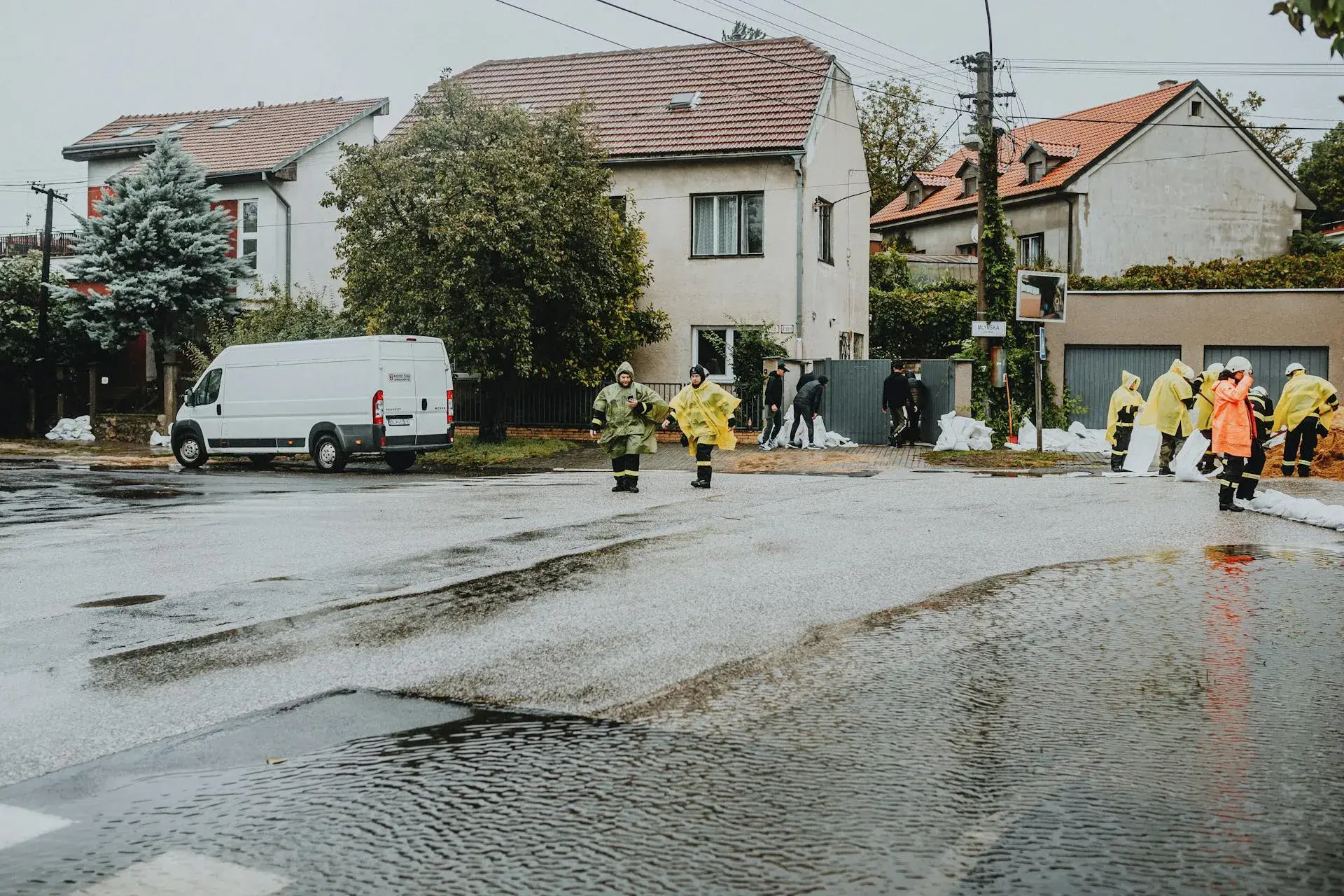
Sewage Cleanup in Basehor, KS
Raw sewage contains pathogenic bacteria, viruses, and parasites that multiply rapidly. Our Basehor biohazard cleanup team deploys within 60 minutes.
What Happens When You Call
Your emergency call connects directly with a biohazard restoration coordinator who reviews contamination boundaries, safety protocols, and dispatch times.
Our specialized biohazard response crew dispatches from our Kansas City operations center, arriving in Basehor fully outfitted in personal protective equipment.
Technicians isolate the affected area with plastic containment barriers, establish negative air pressure, and halt active sewer inflow.
We extract standing black water, safely remove non-salvageable porous materials, apply EPA-registered hospital-grade disinfectants, and deploy drying systems.
A sewage backup is a biological emergency that demands immediate professional intervention. Raw wastewater rising from a basement floor drain, toilet, or shower pan is classified as Category 3 black water, filled with dangerous pathogens including E. coli, Salmonella, Norovirus, and Hepatitis A. Attempting to clean raw sewage with a household mop or shop vacuum exposes your family to severe health hazards and spreads biological contamination throughout your home. X Response provides certified biohazard extraction, hospital-grade disinfection, and complete structural restoration across Basehor. Call now for emergency sewage response.
Why Basehor Homes Are Vulnerable to Sewage
Sewage backups represent one of the most severe property disasters a homeowner can experience in southern Leavenworth County. The City of Basehor Municipal Services Department operates a dedicated Wastewater Division responsible for maintaining the municipal sewer collection system and community wastewater treatment facility. While municipal operators work continuously to maintain trunk lines and lift stations throughout subdivisions such as Falcon Lakes, Wolf Creek Meadows, Prairie Gardens, and Glenwood, extreme Midwestern weather frequently overwhelms underground sanitary systems. During intense spring cloudbursts and convective summer thunderstorms, torrential sheet runoff enters sanitary sewer mains through aging manhole covers, cracked lateral lines, and unpermitted stormwater connections. When main sewer lines reach full hydraulic capacity, raw municipal wastewater backs up through the lowest plumbing fixtures in residential homes, discharging directly across finished basement floor drains.
Beyond municipal sewer line surcharges, Basehor properties face significant localized wastewater risks based on residential plumbing design and geography. In older neighborhoods along 155th Street, State Avenue, and Leavenworth Road, aging vitreous clay and cast-iron lateral pipes suffer from chronic tree root intrusion and soil settlement, leading to sudden, complete lateral blockages that force household sewage back into lower-level fixtures. Meanwhile, on acreage properties and unincorporated township lots surrounding the city limits, homeowners rely on private septic tanks and lateral absorption fields. When Leavenworth County's dense clay soils become fully saturated by prolonged seasonal rains, septic leach fields lose their percolation capacity entirely, causing septic effluent to reverse direction and flood utility rooms, finished living spaces, and mechanical chases with dangerous biological waste.
Stormwater Inflow and Municipal Sewer Surcharges
During heavy rainfall events in Basehor, storm runoff infiltrates the municipal sanitary collection network through surface manholes and degraded pipe joints. As inflow outpaces gravity sewer capacity, backwater pressure builds within the main line. Because residential basements sit below the street crown, this pressurized municipal sewage follows the path of least resistance, forcing raw black water backward through basement floor drains, utility sinks, and lower-level toilets.
Tree Root Infiltration in Aging Private Laterals
Many older homes across Basehor and Fairmount Township feature original vitreous clay or cast-iron sewer laterals that connect the house to the street main. Over decades, mature oak, maple, and cottonwood trees send roots into pipe joints seeking moisture and nutrients. Root masses catch toilet paper, kitchen grease, and solids, creating a total blockage that causes household wastewater from upper levels to back up and overflow into finished basement living areas.
Saturated Clay Soils and Septic Absorption Failure
In rural and semi-rural sections of Fairmount Township outside municipal sewer boundaries, homes depend on on-site wastewater septic systems. Leavenworth County is underlain by heavy silty clay loams that have very poor absorption when wet. Extended wet periods saturate the soil around lateral absorption lines, preventing treated effluent from dispersing into the ground and forcing untreated wastewater backward into home plumbing drains.
Category 3 Biological Pathogens and Health Hazards
Sewage is classified by the IICRC as Category 3 black water, harboring dangerous biological contaminants including bacteria like Salmonella and E. coli, viruses like Rotavirus and Hepatitis A, parasitic protozoa, and toxic endotoxins. When sewage spills into a home, it rapidly aerosolizes into the air. In Basehor homes with finished basements, central HVAC air returns draw these airborne pathogens into ventilation ductwork, spreading biological contamination to upper floors.
Rapid Contamination of Porous Finished Basement Materials
Modern finished basements throughout Basehor subdivisions feature carpet, padding, gypsum drywall, and wood baseboards installed directly over or against concrete slabs. When raw sewage overflows onto these surfaces, porous materials absorb the contaminated liquid within minutes. Because biological pathogens cannot be reliably cleansed from porous underlayment and drywall cores, these materials must be treated as hazardous waste and removed under controlled containment.
Cleaning raw sewage in Basehor requires strict adherence to IICRC S500 standards for professional water damage and biohazard remediation. Surface mopping or standard bleach applications fail to eradicate deep bacterial contamination. Proper remediation demands complete biological containment, extraction with commercial-grade antimicrobial equipment, the safe disposal of affected porous substrates, and hospital-grade sanitization to guarantee total environmental safety.
What Happens to Your Home While You Wait
Within Minutes
Raw wastewater spreads across basement floors, soaking into carpet fibers, cardboard storage boxes, and baseboards. Pathogenic bacteria and foul-smelling bioaerosols disperse into the ambient air, creating immediate biological hazards.
Within 24 Hours
Bacterial populations expand exponentially in warm basement environments. Drywall wicks contaminated black water upward, absorbing fecal matter and dissolved chemicals into its gypsum core. Unsealed concrete slabs absorb moisture and organic waste deep into microscopic pores.
24–48 Hours
Dangerous fungal spores germinate alongside proliferating bacterial colonies, creating severe co-contamination of mold and biohazards. Saturated wooden studs and framing swell and begin rotting. Strong chemical ammonia and methane gases permeate the home's living areas.
48–72 Hours
Contamination penetrates deeply into structural subflooring, wall studs, and electrical conduits. Airborne pathogens enter central HVAC ductwork, spreading foul odors and bioaerosols throughout the entire residential structure.
One Week and Beyond
Pervasive biological contamination compromises structural wood framing and permanently embeds pungent odors within concrete subgrades. Complete interior demolition and extensive hospital-grade bio-remediation become mandatory before the home can be declared habitable.
Do not risk your health by exposing yourself to raw sewage. Contact X Response immediately. Our certified Basehor biohazard cleanup team is on call 24 hours a day.
How We Restore Sewage-Damaged Basehor Homes
Our sewage remediation protocol follows strict IICRC S500 and OSHA safety guidelines, ensuring complete biological decontamination and structural restoration for Basehor homeowners.
Biohazard Safety Containment and Engineering Controls
Our technicians arrive fully equipped in personal protective equipment (PPE), including full-body Tyvek suits, nitrile gloves, rubber boots, and half-face HEPA respirators. We seal off the contaminated area with heavy plastic containment barriers and install negative air machines to prevent foul odors and airborne pathogens from escaping into upper living areas.
Category 3 Black Water Extraction
We deploy specialized truck-mounted waste extraction units and heavy-duty macerating pumps to rapidly extract standing sewage, sludge, and contaminated liquid. All extracted biological waste is captured in closed holding tanks for environmentally compliant municipal disposal.
Controlled Removal and Disposal of Porous Materials
In accordance with industry health standards, all porous items that have touched black water, including carpet, padding, laminate flooring, baseboards, and contaminated drywall, are carefully removed. Contaminated debris is double-bagged in heavy-duty hazardous material bags and safely hauled away.
Pressure Washing and Hospital-Grade Sanitization
All remaining structural surfaces, including poured concrete foundation walls and floor slabs, undergo deep mechanical scrubbing and hot-water pressure washing. We apply EPA-registered, broad-spectrum hospital-grade disinfectants and virucides that eliminate 99.99% of bacteria, viruses, and fungi on contact.
Structural Drying and Clearance Verification
We place commercial LGR dehumidifiers and high-velocity air movers to thoroughly dry the concrete and structural framing. Once the structure meets certified dry standards, we conduct adenosine triphosphate (ATP) surface testing to scientifically verify the total absence of biological contamination.
The X Response Difference
Choose X Response for fast, certified, and compassionate sewage cleanup that restores safety, hygiene, and comfort to your Basehor home.
Insurance Claim Guidance for Basehor Homeowners
Navigating an insurance claim for a sewage backup in Kansas requires specific policy endorsements and clear documentation of the failure point. Standard homeowner insurance policies throughout Leavenworth County exclude damage caused by sewage backup or sump pump failure unless the homeowner has purchased an optional Water Backup and Sump Overflow endorsement. This endorsement typically provides between five thousand and twenty-five thousand dollars in coverage for structural cleanup and contents replacement. When a backup occurs, adjusters inspect the property closely to determine whether the sewage originated from a blockage on the homeowner's private lateral line or backed up from the municipal collection system. Our team documents the exact point of entry and compiles comprehensive photographic and itemized records to support your insurance claim.
How X Response Helps
- Document the precise plumbing entry point, whether a basement floor drain, utility sink, or toilet fixture
- Photograph and catalog all affected building materials and personal belongings before removal and disposal
- Prepare detailed line-item cleanup scopes that align with standard insurance biohazard reimbursement categories
- Supply certified ATP testing logs proving the necessity of hospital-grade disinfection and containment
- Coordinate directly with your carrier's claims department to ensure all required documentation is submitted promptly
X Response is an independent certified restoration contractor. We do not act as licensed public adjusters, insurance brokers, or attorneys. We provide technical biohazard documentation and professional restoration services to assist you with your insurance claim.
Certified Restoration Specialists Serving Basehor
Our biohazard and sewage cleanup team serving Basehor and Leavenworth County brings extensive technical training and dedicated professionalism to every emergency. We recognize that experiencing a sewage backup is stressful, overwhelming, and deeply disruptive to your family's daily routine. Our technicians arrive with the utmost empathy, handling the dirty, hazardous work with quiet efficiency while ensuring your home is thoroughly decontaminated and returned to a pristine, hygienic state.
Every project is supervised by technicians certified by the IICRC in Water Damage Restoration (WRT) and Applied Microbial Remediation (AMRT), with specialized training in Bloodborne Pathogens and Category 3 Biohazard handling under OSHA regulations. We utilize commercial-grade extraction systems, EPA-registered hospital disinfectants, and scientific air-monitoring equipment. When you trust X Response with your sewage cleanup, you can rest assured that your Basehor property will be decontaminated to the highest standards of safety and care.
In Basehor, X Response works with Best Option Restoration, an independent local restoration partner serving Leavenworth County.
Sewage Cleanup FAQ for Basehor Homeowners
Other Emergency Services in Basehor

Water Damage Restoration
Burst pipes, storm flooding, standing water. We extract, dry, and restore before mold sets in.
Learn more
Fire Damage Restoration
Structural damage, soot, debris. We stabilize, clean, and rebuild what fire destroyed.
Learn more
Smoke Damage Restoration
Soot residue, chemical odors, HVAC contamination. We decontaminate surfaces, eliminate odors, and restore air quality.
Learn more
Mold Remediation
Testing, containment, removal, prevention. We find the source, eliminate the growth, and stop it from returning.
Learn more