
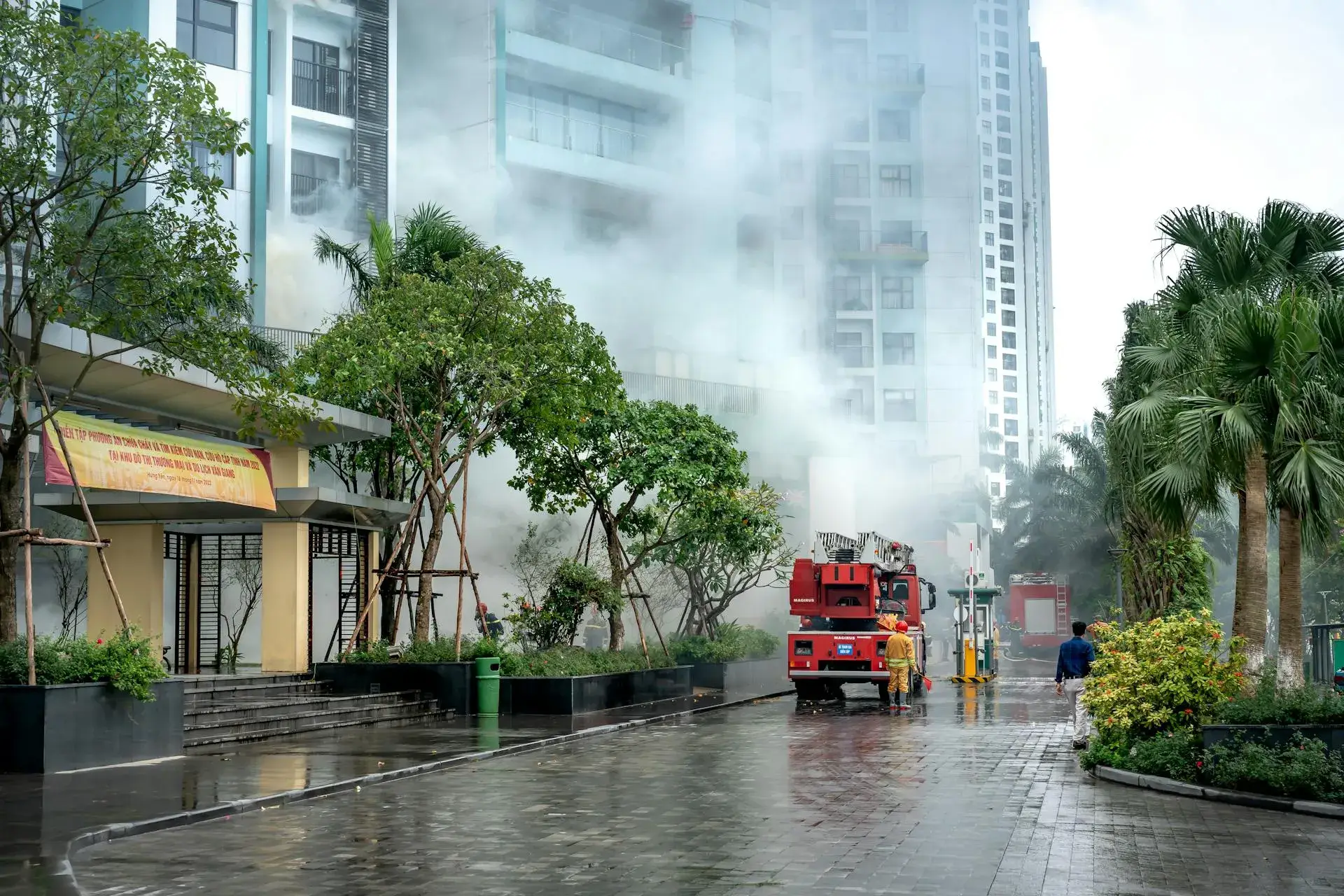
Smoke Damage Restoration in Vinings, GA
Smoke residue acidifies on surfaces within hours, causing permanent damage to finishes, electronics, and fabrics. Our local team responds to Vinings emergencies within 60 minutes.
What Happens When You Call
A real person answers, not a call center. We assess your situation, identify the smoke source and chemistry, and begin coordinating your response immediately.
Your dedicated restoration team is dispatched from our local base serving Vinings and the surrounding southeast Cobb County communities.
Team arrives with air scrubbers, soot removal equipment, thermal foggers, and HVAC inspection tools. Assessment and mitigation begin immediately.
Surfaces cleaned, air quality restored, odor sources eliminated, restoration plan documented. You know exactly what comes next.
Smoke damage does not stop when flames go out or when air quality alerts are lifted. Whether from a structure fire in your building, a neighbor's fire that sent smoke through shared walls, or wildfire smoke that infiltrated your home during a multi-day air quality event, the residue deposited on your surfaces and inside your HVAC system is actively damaging your property right now. X Response exists for exactly this moment. When you reach out, your restoration team is mobilized within minutes and on site within the hour. Call now. Your team is standing by.
Why Vinings Homes Are Vulnerable to Smoke Damage
Vinings' smoke damage exposure comes from three distinct source categories, each producing different soot chemistry and requiring different restoration approaches. The most immediate source is structure fires within the community itself or in the adjacent Cumberland commercial district, where fire in one building sends smoke into neighboring structures through shared walls, HVAC systems, or simply through the outdoor air. The second source is neighbor and proximity fires in the dense townhouse communities along Paces Mill Road, where smoke migrates through party walls and connected attic spaces into units that the fire itself never reached. The third source, documented in July 2023, is regional wildfire smoke that infiltrates homes from the outside over multiple days. On July 18, 2023, the Georgia Department of Natural Resources Environmental Protection Division issued a Code Orange air quality alert for metro Atlanta as Canadian wildfire smoke drove PM2.5 particulate levels above 55 micrograms per cubic meter. Georgia Tech's School of Earth and Atmospheric Sciences confirmed that air quality across the metro area ranged from unhealthy for sensitive groups to unhealthy. For Vinings residents, that smoke infiltrated homes through every opening: HVAC fresh air intakes, gaps around windows and doors, dryer vents, and the natural air exchange that all structures undergo.
The July 2023 wildfire smoke event affected Vinings differently than a localized structure fire. Structure fire smoke produces heavy, visible soot deposits concentrated near the fire origin. Wildfire smoke infiltration produces a fine, widely distributed particulate film across every surface in the home, with PM2.5 particles small enough to penetrate HVAC filtration systems that would catch larger soot particles. The smoke entered homes continuously over multiple days as the Canadian wildfire plume drifted across Georgia, meaning that even homes with relatively tight building envelopes accumulated measurable deposits by the time the event ended. The deposits are most visible on horizontal surfaces (shelving, countertops, ceiling fan blades) and most damaging inside electronics, HVAC ductwork, and on sensitive finishes where the acidic particulate reacts with the surface chemistry over time. This type of widespread, low-concentration infiltration is more insidious than structure fire smoke because residents often do not recognize it as restoration-level damage until odor persists or sensitive equipment begins malfunctioning weeks later.
The July 2023 Canadian Wildfire Smoke Event
On July 18, 2023, the Georgia Department of Natural Resources Environmental Protection Division issued a Code Orange air quality alert for metro Atlanta as smoke from Canadian wildfires drifted south across the eastern United States. Georgia Tech atmospheric scientists documented that PM2.5 levels exceeded 55 micrograms per cubic meter south of the city, well above the 35.4 threshold that the EPA classifies as unhealthy for sensitive groups. The alert followed days of visible haze across the metro area, with residents throughout Cobb County, including Vinings, observing diminished visibility and smelling smoke outdoors. For homes in Vinings, the multi-day duration of the event was the critical factor: even well-sealed homes exchange air with the exterior over time through HVAC systems, range hoods, bathroom exhaust, dryer vents, and natural infiltration around windows, doors, and penetrations. Over three or more days of elevated outdoor smoke, enough particulate enters a typical home to deposit a measurable film on surfaces and load HVAC ductwork with fine soot that the standard 1-inch pleated filter cannot capture. This type of damage does not present like a structure fire. There is no char, no heavy soot layer, no visible smoke staining on walls. But the fine particulate is acidic, chemically reactive, and small enough to penetrate electronics, settle inside HVAC components, and deposit on surfaces throughout the home.
Smoke Migration in Attached-Dwelling Communities
Vinings' townhouse and condominium communities, including Vinings Ferry and others along Paces Mill Road and the Cumberland corridor, create smoke migration pathways that bring structure fire smoke into homes that were never on fire. When fire occurs in one unit of an attached building, smoke travels through party walls, shared attic spaces, plumbing and electrical chases, and connected HVAC systems. The smoke does not need a direct opening between units: it migrates through gaps around electrical outlets in shared walls, through unsealed penetrations where plumbing passes through party walls, through attic spaces where fire-stop detailing is incomplete, and through shared mechanical rooms. Residents in neighboring units smell smoke, notice soot on surfaces, and experience irritation, but may not immediately connect it to the fire in a unit several doors away. By the time they recognize the source, soot has deposited throughout their living space, entered their HVAC system, and begun the same acidification process that affects the fire unit itself. Insurance covers this damage as a direct consequence of the fire, but the affected residents must document the smoke migration pathway and the damage in their unit independently of the fire unit's claim.
Furnace Puffbacks in Older Heating Systems
A furnace puffback occurs when an oil or gas furnace fails to ignite cleanly, causing unburned fuel to accumulate in the combustion chamber and then ignite explosively, blowing soot back through the heat exchanger and into the supply ductwork. The soot then distributes throughout the home via the forced-air system, coating every surface in every room the ducts serve with an oily, fine black residue. In Vinings' older residential stock from the 1960s through 1980s, aging furnaces with deteriorating ignition components, cracked heat exchangers, or malfunctioning draft inducers are susceptible to puffbacks, particularly at the beginning of heating season when systems fire for the first time after months of inactivity. The resulting soot distribution is comprehensive: because it travels through the duct system, it reaches every room simultaneously. Every surface, cabinet interior, closet, and upholstered item receives a deposit. Puffback soot is typically oily (from unburned fuel residue) and bonds tenaciously to surfaces, making it more difficult to remove than dry soot from a wood fire. The entire home requires professional cleaning, and the HVAC system itself must be thoroughly decontaminated since it was the distribution mechanism.
Proximity Smoke from the Cumberland Commercial District
The Cumberland area immediately east and north of Vinings contains one of metro Atlanta's densest concentrations of commercial activity, including restaurants, hotels, entertainment venues, and mixed-use buildings. A commercial fire in the Cumberland district, particularly a restaurant kitchen fire or a larger commercial structure fire, produces a substantial smoke plume that drifts with the prevailing wind into the residential areas of Vinings. Commercial fires typically produce heavier smoke volume and longer burn duration than residential fires because of the fuel load (commercial inventory, cooking equipment, stored materials) and the larger structure sizes that take longer to suppress. Vinings homes downwind of a Cumberland commercial fire may receive exterior smoke deposition on siding, decks, outdoor furniture, and vehicles, while interior infiltration through the building envelope deposits soot inside the home. Unlike fire damage in the resident's own building, coverage for smoke drift from a third-party commercial fire may fall under the commercial property's liability insurance rather than the homeowner's policy, creating a claim pathway that requires clear documentation of the drift pattern and the resulting damage.
Soot Chemistry and Surface Interaction
Smoke damage restoration in Vinings requires understanding that different fires produce chemically distinct soot that interacts with surfaces differently. Wildfire smoke contains wood-combustion particulate that is dry, alkaline, and relatively easy to remove from hard surfaces when addressed promptly. Structure fire smoke from a modern home produces complex soot containing plasticizers, synthetic compounds, and acidic residues from burned plastics, foams, and synthetic fabrics. This synthetic soot is highly acidic and begins etching metal, discoloring paint, and permanently staining porous surfaces within hours of deposition. Protein-based soot from kitchen grease fires produces a nearly invisible varnish-like residue that yellows surfaces and embeds odor at the molecular level. Puffback soot is oily and tenacious, bonding to surfaces through the petroleum content of unburned fuel. Each type requires different cleaning chemistry, different application methods, and different aggressiveness. Using the wrong approach, such as applying alkaline cleaners to already-alkaline wildfire soot or using dry cleaning methods on oily puffback residue, wastes time at best and sets the soot permanently into surfaces at worst. Professional assessment identifies the soot type before cleaning begins.
These factors define smoke damage risk in Vinings: regional wildfire smoke events like July 2023 that infiltrate homes over multiple days through the building envelope and HVAC systems, smoke migration through attached-dwelling construction in the townhouse communities, furnace puffbacks in older heating systems that distribute soot through the entire duct network, proximity smoke from the adjacent Cumberland commercial district, and the chemical complexity of different soot types requiring different restoration approaches. Effective smoke restoration in Vinings starts with identifying the source and soot chemistry, then applies the correct cleaning and odor elimination protocols for that specific type of contamination.
What Happens to Your Home While You Wait
Within 1 Hour
Soot from structure fires begins acidifying on contact with surfaces. Synthetic soot, the type produced by burning modern materials, is highly acidic and begins chemical reactions with metal finishes, painted surfaces, and delicate fabrics immediately on deposition. In Vinings homes where fire smoke has migrated through shared walls or HVAC systems, surfaces appear hazed but not yet permanently damaged. This is the window where professional cleaning produces the best results with the least material loss. Wildfire smoke particulate from events like July 2023 continues depositing as long as the outdoor air quality event persists.
1–24 Hours
Acidic soot compounds begin etching chrome, brass, and copper fixtures permanently. Smoke residue bonds more aggressively to surfaces as it cools from warm deposition temperature to ambient. Odor begins penetrating porous materials: fabric, carpet, upholstery, paper, and unsealed wood. In Vinings' humid climate, moisture in the air interacts with soot chemistry to accelerate the acidification process. HVAC systems that cycled during the smoke event have distributed contamination throughout the ductwork and into every room the system serves. Surfaces that could be cleaned with dry sponges in the first hour now require chemical cleaning.
24–48 Hours
Soot corrosion on chrome, nickel, and brass finishes becomes permanent without replacement. Painted walls in light colors develop visible yellowing where protein or synthetic soot has reacted with the paint chemistry. Smoke odor fully penetrates soft goods, clothing, bedding, and upholstered furniture. In multi-unit buildings where smoke migrated through shared walls, neighboring residents begin noticing persistent odor and visible discoloration as smoke residue continues off-gassing from inside wall cavities. Electronics exposed to smoke develop internal corrosion on circuit boards and connectors that may not cause visible malfunction for weeks but is progressing toward failure.
48–72 Hours
Materials that could have been cleaned in the first 24 hours now require replacement. Carpet and pad that absorbed smoke compounds cannot be deodorized economically and must be removed. Smoke odor has penetrated drywall, requiring sealing with specialized primers rather than simple cleaning. In Vinings homes with crawl spaces, smoke that settled into the crawl space during a structure fire interacts with moisture and begins producing a persistent musty-smoke combination odor that re-enters the living space through the subfloor. Restoration scope and cost escalate significantly compared to same-day intervention.
One Week and Beyond
Comprehensive smoke odor throughout the structure requires thermal fogging, ozone treatment, or hydroxyl generation rather than surface cleaning alone. HVAC systems require full internal decontamination, not just filter replacement. Electronics damaged by soot corrosion begin malfunctioning. In Vinings homes affected by wildfire smoke infiltration like the July 2023 event, fine particulate deposited inside electronics, behind outlet covers, and in concealed spaces continues causing micro-corrosion that degrades equipment over months. What began as a surface cleaning job now requires deep structural odor treatment, HVAC replacement, electronics inventory, and potentially full soft-goods replacement throughout the home.
Every hour soot sits on your surfaces, the damage deepens and cleaning becomes replacement. Contact X Response now. Our Vinings team responds within 60 minutes.
How We Restore Smoke-Damaged Vinings Homes
From the moment our team arrives, every step targets the specific soot chemistry affecting your property. Here is exactly what the smoke restoration process involves for Vinings homes.
Source Identification and Soot Chemistry Testing
Our team arrives and immediately identifies the smoke source and tests affected surfaces to determine soot chemistry. This step is critical because different soot types require different cleaning compounds: alkaline cleaners on alkaline wildfire soot accomplish nothing, and aggressive solvents on delicate historic finishes cause irreversible damage. We identify whether the contamination is dry wildfire particulate from an event like July 2023, oily puffback residue from a furnace malfunction, synthetic acidic soot from a structure fire, protein varnish from a kitchen fire, or a combination from smoke migration through connected townhouse units. The chemistry dictates every subsequent decision about cleaning methods, products, and urgency.
HVAC Isolation and Air Quality Control
Before any cleaning begins, we shut down the HVAC system to stop it from distributing additional contamination throughout the home. HEPA air scrubbers are placed in affected areas to begin capturing airborne particulate immediately. For Vinings homes where smoke entered through the HVAC fresh air intake during the July 2023 wildfire event, the system itself is the primary distribution mechanism and must be isolated before cleaning disturbs settled soot that would otherwise re-circulate. Negative air pressure is established in heavily contaminated areas to prevent cross-contamination to cleaner spaces during the restoration process.
Surface Cleaning with Correct Chemistry
Cleaning proceeds with the specific chemical compounds matched to the soot type identified in step one. Dry sponges remove loose particulate from surfaces that would smear under wet application. Chemical sponges and specialized solutions address bonded residue. We clean systematically from top to bottom, from least contaminated to most contaminated areas, ensuring that disturbed soot does not redeposit on already-cleaned surfaces. For Vinings townhouses where smoke migrated through shared walls, we clean surfaces in the affected neighboring unit with the same protocol applied to the fire unit itself. Every surface the smoke contacted receives treatment: walls, ceilings, trim, cabinetry interiors, shelving, and structural members in exposed areas.
HVAC Decontamination
Once surfaces are clean, we address the HVAC system that distributed smoke throughout the home. Supply and return ductwork is cleaned internally using specialized rotary brushes and HEPA-filtered vacuum collection. The evaporator coil, blower assembly, and drain pan are cleaned and treated with antimicrobial agents. For Vinings homes with ductwork routed through crawl spaces or unconditioned attic areas, we inspect the full run for soot deposits at connection points and register boots. The furnace heat exchanger is inspected for cracks or contamination, particularly in homes where a puffback was the smoke source. Filter replacement alone does not address soot already deposited throughout the duct interior.
Odor Elimination and Verification
After all visible soot is removed and the HVAC system is clean, embedded odor is addressed. Thermal fogging penetrates porous materials with a deodorizing vapor that neutralizes smoke compounds at the molecular level. Hydroxyl generators produce reactive molecules that break down odor compounds in the air and on surfaces without the ozone toxicity concerns that require vacating the space. Surfaces where smoke has penetrated beyond cleanable depth are sealed with specialized odor-blocking primers. Final verification includes air quality testing and a thorough walkthrough to confirm that no residual odor sources remain. Documentation including cleaning logs, air quality readings, and before-and-after photos supports your insurance claim.
The X Response Difference
When you contact X Response for smoke damage in Vinings, you get a team that starts with the chemistry and works from there. One team identifies the soot type, applies the correct cleaning protocol, decontaminates the HVAC, eliminates embedded odor, and verifies the result. No guessing, no generic approach, no callbacks because the smell came back.
Insurance Claim Guidance for Vinings Homeowners
Smoke damage insurance coverage in Georgia depends on the source. Smoke damage from a covered fire event in your own home or a neighbor's connected unit is covered under your standard homeowner's policy as part of the fire claim. Smoke migration from a neighbor's fire in an attached building is covered under your own policy as direct physical damage from the fire event. Wildfire smoke infiltration from regional events like the July 2023 Canadian wildfire plume is less straightforward: some carriers cover it as windstorm or weather-related damage, others exclude it as an air quality event rather than direct physical damage. Furnace puffback damage is typically covered as a sudden mechanical failure. The key in every scenario is documenting the source, the pathway, and the resulting damage clearly so your carrier cannot dispute the connection between the covered event and the contamination in your home.
How X Response Helps
- Document all smoke contamination with professional photos, soot-chemistry test results, and a detailed room-by-room scope from day one
- Identify the smoke source and migration pathway clearly so the carrier cannot dispute the connection to a covered event
- Photograph HVAC contamination before cleaning to prove the system requires professional decontamination rather than simple filter replacement
- Inventory damaged electronics, soft goods, and specialty items with replacement cost documentation
- Provide completion documentation with air quality readings and cleaning verification to close the claim without dispute
X Response does not file claims on your behalf, adjust claims, or make coverage determinations. We provide documentation and guidance to help you make informed decisions about your property and your policy. Coverage decisions are made solely by your insurance carrier.
Certified Restoration Specialists Serving Vinings
When you contact X Response for smoke damage in Vinings, your restoration team is drawn from certified professionals who work across southeast Cobb County and understand the specific challenges this community presents. They know the difference between wildfire particulate from a regional air quality event and synthetic soot from a structure fire next door. They understand how smoke migrates through the shared wall assemblies and attic connections in Vinings' townhouse communities. They have experience with puffback events in the older heating systems common to the 1960s-1980s housing stock. And they know that the Cumberland commercial district adjacent to Vinings produces proximity smoke events that differ in chemistry and pathway from residential fires.
Every technician on your team holds current IICRC certification in fire and smoke restoration (FSRT) and carries the appropriate Georgia state licensing for the work being performed. Equipment includes HEPA air scrubbers, thermal foggers, hydroxyl generators, soot-chemistry testing kits, rotary duct cleaning systems, and specialized cleaning compounds for every soot type. When your team arrives, they bring everything needed to isolate the HVAC, begin cleaning, and control air quality immediately.
In Vinings, X Response works with Atlanta's Best Restoration, an independent local restoration partner serving Cobb County.
Smoke Damage Restoration FAQ for Vinings Homeowners
Other Emergency Services in Vinings

Water Damage Restoration
Burst pipes, storm flooding, standing water. We extract, dry, and restore before mold sets in.
Learn more
Fire Damage Restoration
Structural damage, soot, debris. We stabilize, clean, and rebuild what fire destroyed.
Learn more
Mold Remediation
Testing, containment, removal, prevention. We find the source, eliminate the growth, and stop it from returning.
Learn more
Sewage Cleanup
Sewer backups, contaminated water, biohazard. We extract, sanitize, and restore safely.
Learn more