
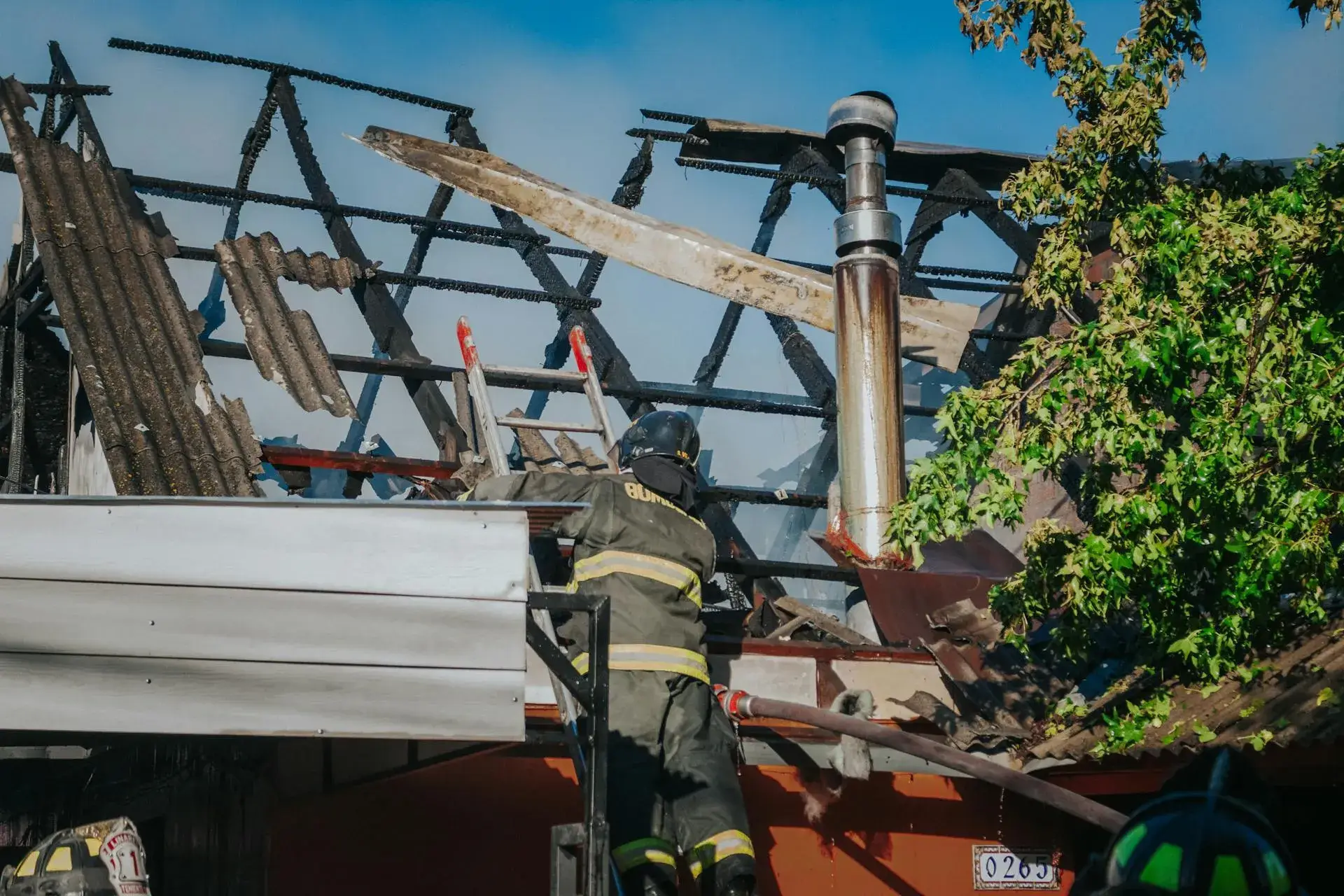
Fire Damage Restoration in DeLand, FL
Fire damage compounds every hour as soot corrodes surfaces, smoke odor penetrates deeper into materials, and water from suppression accelerates secondary damage. Our local team responds to DeLand emergencies within 60 minutes.
What Happens When You Call
A real person answers your call. We assess the situation, confirm the fire department has released the scene, and begin coordinating your response immediately.
Your dedicated restoration team is dispatched from our local base serving DeLand and the surrounding Volusia County communities.
Team arrives with board-up materials, industrial air scrubbers, and soot removal equipment. Emergency stabilization begins immediately.
Structure secured, immediate threats neutralized, restoration plan documented. You know exactly what comes next.
The fire is out, but the damage is still advancing. Soot is acidic and continues corroding metal, discoloring surfaces, and bonding to materials with every passing hour. Smoke odor penetrates deeper into porous substrates. Water from suppression soaks into structural framing and creates conditions for mold growth. You need a team on site now, not next week. When you reach out to X Response, your restoration team mobilizes immediately. From that point forward, one team manages everything: securing the structure, removing soot and char, restoring salvageable contents, and coordinating reconstruction. Call now. Your team is standing by.
Why DeLand Homes Are Vulnerable to Fire Damage
DeLand is the county seat of Volusia County with a population approaching 40,000 residents, and its fire risk profile reflects both its growth and its history. The DeLand Fire Department responded to 879 fire calls during 2025 out of 9,624 total calls for service, a pace that averages more than two fire responses every single day across the city. In March 2024, a structure fire destroyed VFW Post 2380 at 510 South Alabama Avenue when firefighters arrived to find heavy, dark smoke pushing from the roof and eaves of the building. The fire caused extensive damage to the interior and roof structure, displacing the veterans organization for over a year while reconstruction was completed. In April 2024, a residential fire on the city's east side killed one occupant and displaced a family, with the State Fire Marshal's Office investigating the cause. These are not isolated incidents. They represent the ongoing structural fire risk that a growing city with a mix of older and newer construction carries every day of the year.
DeLand's fire risk is shaped by its built environment. The city contains a significant inventory of older structures near the downtown core and the Stetson University campus, including wood-frame homes from the early twentieth century, mid-century commercial buildings along Woodland Boulevard, and historic institutional structures that predate modern fire codes. These older buildings often lack the fire separations, sprinkler systems, and modern electrical wiring that reduce fire spread in newer construction. At the same time, rapid residential growth on the eastern and southern edges has added thousands of newer homes with attached garages, synthetic building materials, and open floor plans that allow fire to spread faster through a structure once ignition occurs. The combination of historic construction downtown and modern open-concept homes on the growth edges gives DeLand a fire damage profile that demands expertise across both building eras.
Older Construction and Historic Buildings
DeLand's downtown and the neighborhoods surrounding Stetson University contain homes and commercial buildings dating from the 1880s through the 1950s. Many of these structures were built with balloon-frame construction, where wall studs run continuously from the foundation to the roof without fire stops at each floor level. In a modern platform-frame home, a fire in a first-floor wall cavity hits a horizontal plate that slows its vertical spread. In a balloon-frame building, that same fire races upward through the wall cavity directly into the attic space without obstruction. These older DeLand homes also feature lath-and-plaster walls that create concealed void spaces where fire can travel undetected, knob-and-tube or early Romex wiring that poses ignition risk, and wood shingle roofing on some structures that has never been replaced with fire-resistant material. When fire occurs in these buildings, it often achieves significant concealed spread before occupants or fire crews can locate and suppress it.
Electrical System Age and Overload
Many of DeLand's pre-1970 homes were wired for electrical loads far below what modern households demand. A home wired for 60-amp service in 1955 now runs air conditioning, multiple appliances, entertainment systems, and electric vehicle chargers that draw current the original circuits were never designed to carry. Overloaded wiring generates heat at connection points, particularly at receptacles, junction boxes, and the panel itself. Over time, this heat degrades wire insulation until it cracks and exposes conductors. According to the National Fire Protection Association, electrical failures are the leading cause of residential structure fires nationally, and older housing stock with original or minimally updated wiring carries disproportionate risk. DeLand's inventory of mid-century homes near the downtown core and along the older residential streets represents a concentrated electrical fire risk, especially in summer when air conditioning loads peak and circuits run at or near capacity for months at a time.
Modern Open Floor Plans and Synthetic Materials
DeLand's newer subdivisions on the eastern and southern growth edges feature open-concept floor plans with minimal interior walls separating living spaces. While these layouts are desirable for daily living, they allow fire to spread across an entire floor rapidly because there are no closed doors or full-height walls to slow flame and smoke movement. Modern construction also incorporates engineered lumber, synthetic insulation, and petroleum-based furnishings that burn faster, hotter, and produce more toxic smoke than the solid wood and natural fiber materials in older homes. A kitchen fire in a 1950s DeLand home with closed rooms and solid wood construction may remain contained to one room for several minutes. The same ignition in a 2020 open-concept home with engineered trusses and synthetic furnishings can involve the entire first floor in under four minutes. Restoration after fire in modern construction often reveals structural failure of engineered components that appear intact visually but have lost load-bearing capacity.
Lightning Strike Ignition
Central Florida leads the nation in lightning strike density, and DeLand's inland location in the heart of the state's summer thunderstorm corridor exposes it to frequent lightning activity from May through October. Lightning strikes ignite structure fires by entering through the electrical system, antenna masts, metal roof components, or direct strikes to the structure itself. A direct strike can blow through roof sheathing, ignite attic insulation, and start a concealed fire that burns within the attic space before occupants are aware of it. In DeLand's older homes without lightning protection systems, the risk is compounded by aging roof materials and combustible attic contents. The DeLand Fire Department's 879 fire calls in 2025 include a significant share of lightning-related responses during the summer storm season, when afternoon thunderstorms develop almost daily over the Volusia County interior.
Attached Garage Fires
The majority of DeLand's newer homes include attached garages that share a common wall with the living space. Garages concentrate fire ignition sources: gasoline, paint, solvents, lithium-ion battery chargers, electrical panels, and vehicles. When a garage fire occurs, the shared wall and the door between the garage and the home become the critical fire barrier. In many homes, the fire-rated drywall on the garage side has been penetrated by later modifications, cable runs, or inadequate sealing around the door frame. A garage fire that breaches the shared wall enters the living space with enormous heat and toxic smoke, often while occupants are unaware because the garage is not typically monitored by smoke detectors in the same way living areas are. Restoration after a garage fire frequently involves the living space, the attic above the garage, and the HVAC system that drew smoke through the return air path.
DeLand's fire damage restoration demands change depending on whether the affected structure is an 1890s balloon-frame home near Stetson, a 1960s ranch along a downtown side street, or a 2022 open-concept home in a growth-edge subdivision. Each building type burns differently, conceals damage differently, and requires a different restoration approach. What they share is the urgency: soot chemistry begins permanently damaging surfaces within hours, smoke odor bonds deeper into materials with every day of delay, and water from fire suppression starts its own damage clock in DeLand's humid climate. Effective restoration means acting fast and understanding what you are working with.
What Happens to Your Home While You Wait
Within 1 Hour
Soot settles on every exposed surface and begins a chemical reaction with metals, plastics, and finished wood. Acidic soot compounds corrode chrome, brass, and copper fixtures. Smoke residue discolors grout, painted surfaces, and countertops. In DeLand's humid air, moisture in the soot accelerates the corrosion process compared to dry climates. Water from fire suppression begins soaking into drywall, subfloor, and insulation, starting a secondary water damage timeline beneath the visible fire damage.
1–24 Hours
Soot bonds more permanently to porous surfaces. Grout, raw wood, fabric, and unfinished concrete absorb the acidic residue and become progressively harder to clean without replacement. Smoke odor penetrates deeper into wall cavities, upholstered furniture, and soft goods. Fire suppression water continues spreading through structural materials. In DeLand's subtropical climate, the combination of water and warm temperatures means mold colonization from suppression water can begin within 24 hours in concealed spaces like wall cavities and above ceilings.
24–72 Hours
Metal surfaces show visible corrosion and pitting from acidic soot. Smoke odor becomes embedded in HVAC ductwork and distributes throughout the home every time the system runs. Drywall and insulation saturated by suppression water begin growing mold in hidden wall cavities. Wood framing in fire-weakened areas absorbs water and swells, compromising connection points. The restoration scope expands as surfaces that could have been cleaned in the first hours now require replacement. Content items like electronics, artwork, and textiles become increasingly difficult to salvage.
3–7 Days
Permanent staining on surfaces not cleaned within the first 72 hours. Widespread mold growth in suppression-water-saturated areas, particularly in DeLand's warm, humid conditions. Structural wood that absorbed both fire heat and suppression water shows signs of decay at connection points. HVAC system is thoroughly contaminated with soot and mold spores. The project has transitioned from cleaning and restoration to demolition and reconstruction for most affected areas.
Two Weeks and Beyond
Extensive secondary damage from the combination of fire, smoke, soot corrosion, and suppression water. Structural assessment may reveal hidden fire weakening of load-bearing members that appeared intact initially. Mold remediation required in addition to fire restoration. Insurance claim complexity increases as the loss encompasses fire, smoke, water, and mold damage categories simultaneously. Total project timeline and cost have multiplied compared to immediate intervention.
Every hour of delay after the fire department clears the scene adds cost and complexity to your restoration. Soot chemistry, smoke penetration, and suppression water damage all advance on their own timelines. Contact X Response now. Our DeLand team responds within 60 minutes of scene release.
How We Restore Fire-Damaged DeLand Homes
Fire damage restoration is a multi-phase process that addresses structural damage, smoke and soot contamination, water damage from suppression, and odor elimination. Here is exactly what the process involves.
Emergency Board-Up and Structural Securing
Our team arrives to secure the structure immediately after the fire department releases the scene. This means boarding up broken windows, tarping damaged roofing, and securing any openings where weather, animals, or unauthorized entry could cause additional damage. In DeLand's climate, an open roof section allows rain intrusion within hours during the wet season, compounding fire damage with water damage. We also perform an initial safety assessment: checking for structural instability, identifying areas where fire may have weakened load-bearing members, and confirming that utilities are properly disconnected. The property is secured before any interior work begins.
Soot and Smoke Damage Assessment
We conduct a room-by-room assessment to map the extent of soot deposition, smoke penetration, and thermal damage. This includes areas far from the fire origin, because smoke travels through HVAC ductwork, wall cavities, and any opening in the building envelope. In DeLand's older homes with balloon-frame construction, smoke can travel from a first-floor fire into the attic and back down into every wall cavity in the home. We categorize damage by type: dry soot from fast-burning fires, wet or protein-based residue from slow-smoldering fires, and chemical soot from synthetic material combustion. Each type requires different cleaning chemistry and technique. The assessment produces a detailed scope of work that guides restoration and supports your insurance claim.
Content Pack-Out and Restoration
Salvageable personal belongings, furniture, electronics, and documents are inventoried, packed, and transported to our climate-controlled restoration facility. Items remaining in a fire-damaged structure continue deteriorating from ongoing soot exposure and humidity. At our facility, textiles are cleaned using specialized soot-removal processes, electronics are evaluated for thermal and soot damage, documents and photographs are stabilized, and furniture is assessed for structural integrity and surface restoration potential. A detailed inventory with condition notes accompanies every item so you maintain full visibility of your belongings throughout the process. Items that cannot be restored are documented for your insurance claim.
Structural Cleaning, Demolition, and Reconstruction
With contents removed, structural restoration begins. Surfaces that can be cleaned are treated with appropriate soot removal chemistry: alkaline cleaners for acidic soot, solvents for protein residue, and abrasive methods for char. Surfaces beyond cleaning, including charred framing, fire-weakened structural members, and heat-deformed materials, are demolished and replaced. For DeLand's older structures, this may involve matching historic trim profiles, preserving original architectural details where possible, and meeting current Florida Building Code requirements for the reconstructed sections. Suppression water damage is addressed simultaneously: saturated insulation removed, wet framing dried with commercial dehumidification, and antimicrobial treatments applied to prevent mold colonization in wall cavities.
Odor Elimination and Final Verification
Smoke odor is the last element addressed because it cannot be fully eliminated until all soot sources are removed and all porous materials are either cleaned or replaced. We use hydroxyl generators and thermal fogging to neutralize odor molecules embedded in concrete, framing, and any remaining porous surfaces. These treatments break down the molecular compounds that cause smoke odor rather than masking them with fragrance. Final verification includes air quality testing, visual inspection of all restored surfaces, and a walkthrough to confirm that no residual odor remains in any area of the home. If any area does not meet our standard, we continue treatment until it does.
The X Response Difference
When you contact X Response after a fire in DeLand, you get a team that manages the entire restoration from emergency board-up through final odor verification. One team, one point of contact, one standard of work from start to finish.
Insurance Claim Guidance for DeLand Homeowners
Fire damage insurance claims in Florida are generally straightforward in terms of coverage determination: standard homeowner's policies cover fire damage to the structure and contents, including smoke damage to areas not directly involved in the fire. The complexity comes in scope documentation, content valuation, and the secondary water damage from fire suppression. Insurance carriers evaluate whether suppression water damage is included under the fire loss or treated as a separate water damage claim, and the distinction affects coverage limits and deductibles. Additional living expenses while you are displaced are typically covered under a separate policy provision with its own sublimit. The claim process benefits enormously from thorough initial documentation that captures the full scope before any cleaning or demolition begins.
How X Response Helps
- Document all damage with professional photos and video before any cleaning or removal begins, capturing soot extent, structural char, and suppression water intrusion
- Inventory all affected contents with condition notes, pre-loss value estimates, and damage descriptions that support replacement or restoration claims
- Document suppression water damage as part of the fire loss to prevent the carrier from splitting it into a separate claim with a separate deductible
- Provide detailed scope of work with line-item estimates that align with insurance industry pricing standards for Volusia County
- Track additional living expenses from the first day of displacement with receipts and documentation that meets your policy's ALE requirements
X Response does not file claims on your behalf, adjust claims, or make coverage determinations. We provide documentation and guidance to help you make informed decisions about your property and your policy. Coverage decisions are made solely by your insurance carrier.
Certified Restoration Specialists Serving DeLand
When you contact X Response after a fire in DeLand, your restoration team is drawn from certified professionals who understand fire damage restoration across the full range of DeLand's building stock. They have restored balloon-frame homes near the downtown historic district where fire traveled through wall cavities into the attic before crews arrived. They have worked modern open-concept homes on the growth edges where engineered trusses failed under fire load despite appearing visually intact. They know the difference between dry soot from a fast kitchen fire and the oily, protein-based residue from a slow electrical smolder, and they bring the correct cleaning chemistry for each. This is not a general contractor learning fire restoration on your property. It is a specialized team that has restored fire-damaged structures across Volusia County under every scenario DeLand's building diversity presents.
Every technician on your team holds current IICRC certification in fire and smoke damage restoration, and the team carries appropriate Florida state licensing for structural work. Equipment includes industrial HEPA air scrubbers, hydroxyl generators for odor elimination, thermal imaging for concealed fire detection, and the full complement of structural drying equipment needed to address suppression water damage simultaneously. When your team arrives, they are equipped to begin work immediately rather than returning later for specialized equipment.
In DeLand, X Response works with Hugo Fire and Water, an independent local restoration partner serving Volusia County.
Fire Damage Restoration FAQ for DeLand Homeowners
Other Emergency Services in DeLand

Water Damage Restoration
Burst pipes, storm flooding, standing water. We extract, dry, and restore before mold sets in.
Learn more
Smoke Damage Restoration
Soot residue, chemical odors, HVAC contamination. We decontaminate surfaces, eliminate odors, and restore air quality.
Learn more
Mold Remediation
Testing, containment, removal, prevention. We find the source, eliminate the growth, and stop it from returning.
Learn more
Sewage Cleanup
Sewer backups, contaminated water, biohazard. We extract, sanitize, and restore safely.
Learn more