
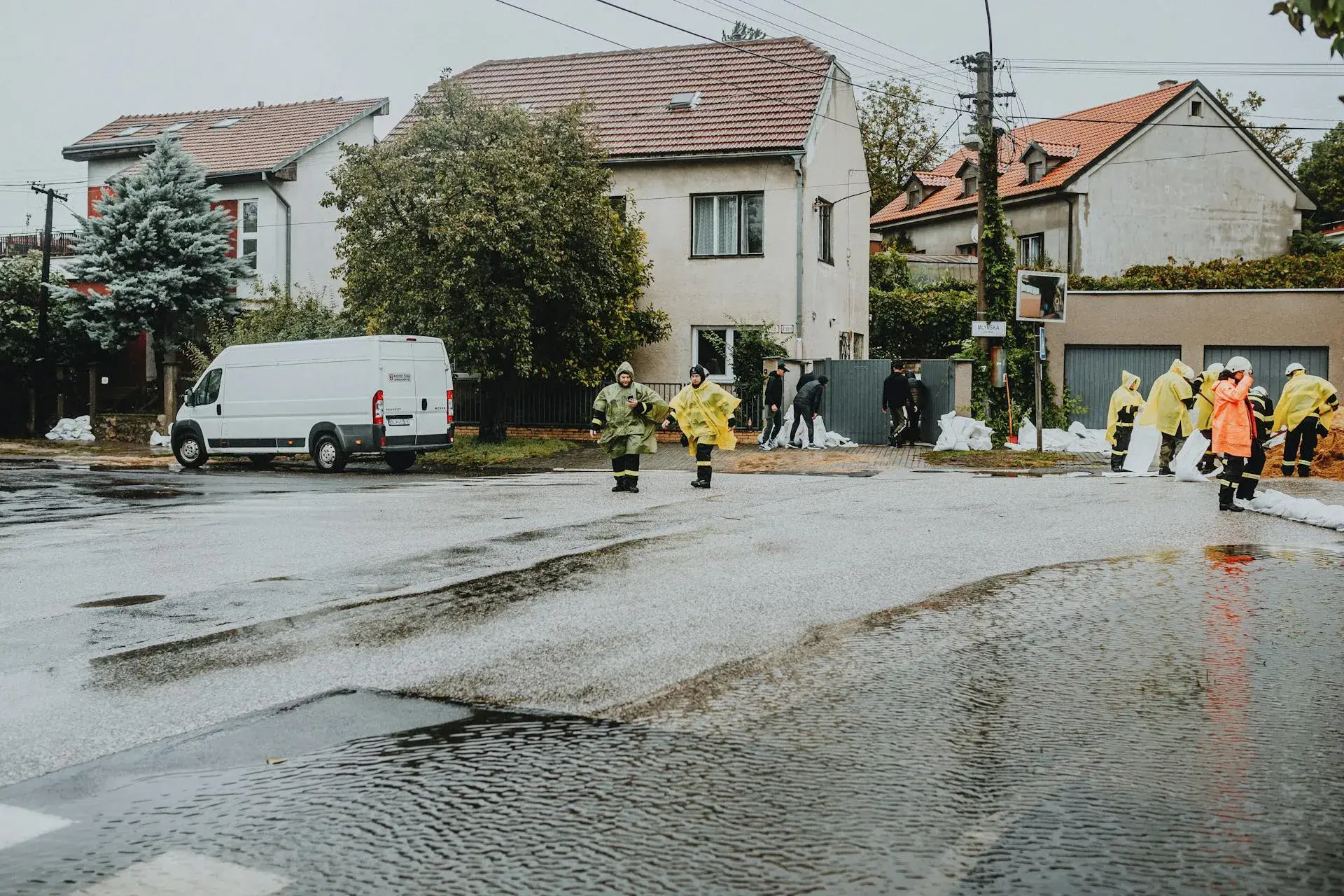
Sewage Cleanup in DeBary, FL
Sewage contamination creates an immediate biohazard. Pathogens multiply rapidly in DeBary's warm climate, and every hour of delay increases health risk and structural damage. Our local team responds within 60 minutes.
What Happens When You Call
A real person answers your call. We assess the contamination type and extent, and begin coordinating your emergency response immediately.
Your dedicated remediation team is dispatched from our local base serving DeBary and the surrounding Volusia County communities.
Team arrives with extraction equipment, biohazard PPE, disinfection systems, and containment materials. Emergency mitigation begins immediately.
Sewage extracted, contaminated materials removed, disinfection applied, drying initiated. You know exactly what the scope is and what comes next.
Sewage in your home is not a plumbing inconvenience. It is a biohazard that introduces bacteria, viruses, parasites, and chemical contaminants into your living space. In DeBary's warm climate, pathogen multiplication accelerates compared to cooler regions, making every hour of exposure more dangerous. You need professional extraction, disinfection, and restoration, not a mop and bleach. When you reach out to X Response, your remediation team mobilizes immediately. From that point forward, one team manages everything: extraction, disinfection, material removal, drying, and verification. Call now. Your team is standing by.
Why DeBary Homes Are Vulnerable to Sewage
DeBary faces a sewage contamination risk that is fundamentally different from most Florida cities, and it stems from a documented infrastructure reality: approximately 2,300 homes in the city still rely on aging on-site septic systems rather than centralized sewer. In August 2021, the DeBary City Council approved a plan to remove these septic tanks after the Florida Department of Environmental Protection identified them as the source of 63 percent of the total nitrogen load polluting Gemini Springs, an Outstanding Florida Spring located within the city. The state-mandated conversion to a vacuum sewer system is projected to cost more than $50 million over 20 years and will require each affected property to transition from its private septic system to the new centralized infrastructure. Until that transition is complete, which may take two decades, thousands of DeBary homes continue operating on septic systems that are aging, many past their designed service life, in soil conditions that compromise their function during wet periods.
The septic problem in DeBary is not merely an environmental concern about spring water quality. It is a direct household sewage contamination risk. During heavy rainfall events, which are routine in DeBary's subtropical climate and catastrophic during hurricanes, the soil surrounding septic drain fields becomes saturated and can no longer accept effluent from the tank. When the drain field fails to percolate, the septic tank fills beyond capacity and sewage backs up into the home through the lowest plumbing fixture, typically a floor drain, shower, or toilet. DeBary experienced three major hurricane-driven flood events between September 2022 and October 2024 (Ian, Nicole, and Milton), each of which saturated the ground throughout the St. Johns River corridor for extended periods. During these events, septic systems across the city's western and central neighborhoods faced simultaneous failure conditions: the water table rose from below, surface water saturated from above, and the drain field lost all percolation capacity between. The result was widespread sewage backup into homes, concurrent with river and surface flooding that mixed Category 3 contaminated water (sewage, chemicals, biological waste) with the floodwater already entering from external sources.
Aging Septic Systems Past Design Life
Many of DeBary's 2,300 septic systems were installed when the homes were built in the 1970s and 1980s, meaning they are 40 to 50 years old. The typical design life of a concrete septic tank is 20 to 40 years, and drain field longevity depends heavily on soil conditions, usage patterns, and maintenance history. Systems past their design life develop cracks in tank walls that allow groundwater infiltration (which fills the tank with clean water and reduces its treatment capacity), deteriorated baffles that allow solids to escape into the drain field (clogging the percolation trenches), and drain field soils that have accumulated biomat to the point where percolation rates have declined significantly from original design capacity. When these compromised systems face the stress of heavy rainfall and saturated soil, they fail more readily and more completely than newer systems operating within their design parameters. The failure mode is sewage backup into the home through the lowest fixture, often without warning because the obstruction is in the saturated soil rather than in the plumbing itself.
High Water Table and Drain Field Saturation
DeBary sits on karst geology above the Floridan Aquifer, with water table levels that respond rapidly to rainfall. During wet periods, the water table rises close to the ground surface in low-lying areas, and in some neighborhoods it rises above the bottom of septic drain field trenches. When groundwater reaches the drain field, the percolation process that allows effluent to filter through soil ceases entirely because there is nowhere for the liquid to go. The soil is already saturated from below. This condition can persist for days or weeks during extended wet periods, and it occurred throughout DeBary's western and central neighborhoods during the prolonged flooding after Hurricane Ian in September 2022 and again during Milton in October 2024. The DeBary Gemini Springs Wastewater Treatment Feasibility Analysis documented that the area's water table conditions make conventional drain fields problematic even under normal conditions, which is part of why the state mandated conversion to a vacuum sewer system rather than simply requiring septic system upgrades.
Storm-Driven Simultaneous Failure
The most dangerous sewage contamination scenarios in DeBary occur during hurricanes and tropical storms, when multiple failure modes converge simultaneously. Rising river water from the St. Johns pushes surface flooding into western neighborhoods. Intense rainfall saturates the ground from above. The water table rises from below. Septic drain fields across entire neighborhoods lose percolation capacity at the same time. The result is not one household experiencing a septic backup while neighbors are fine. It is dozens or hundreds of homes experiencing simultaneous sewage failure during the same event, concurrent with floodwater that is already entering the home from external sources. This creates Category 3 water contamination (the most severe, containing raw sewage, biological waste, and chemical contaminants) throughout affected homes, requiring full biohazard protocols for cleanup rather than simple water extraction. During Hurricane Ian in September 2022, the flooding persisted for weeks because the St. Johns River recedes slowly, meaning septic systems remained in failure condition and homes remained contaminated for extended periods before professional remediation could begin.
Gemini Springs Contamination Zone
DeBary's septic systems do not exist in isolation. They sit within the springshed of Gemini Springs, a designated Outstanding Florida Spring where the Florida DEP documented that 63% of nitrogen pollution comes from septic tank effluent. This designation means the soil and groundwater beneath DeBary properties is already carrying elevated nutrient loads from decades of septic effluent percolation. When these systems fail during storms and sewage backs up into homes, the contamination is not limited to fresh sewage from the homeowner's own tank. Groundwater that infiltrates through the compromised system carries accumulated contaminants from the broader springshed. The Basin Management Action Plan (BMAP) adopted for Gemini Springs specifically targets septic removal because the cumulative pollution from 2,300 systems has degraded groundwater quality throughout the area. For homeowners, this means the contamination risk from a septic failure extends beyond their own household waste to include nutrients and pathogens that have accumulated in the local groundwater over decades of operation across the neighborhood.
Delayed Conversion Timeline
The city-approved plan to convert DeBary's septic systems to a vacuum sewer system is projected to take 20 years and cost more than $50 million, with affected homeowners likely responsible for approximately $5,000 each through an ad valorem assessment. As of 2026, the project remains in planning and early implementation phases, meaning the vast majority of the 2,300 affected systems remain active and operational. City officials and Volusia County Water Resources have acknowledged that doing nothing is not an option because the systems will eventually fail to meet state requirements for nitrogen reduction, potentially requiring individual homeowners to install expensive enhanced nutrient-reducing systems costing $15,000 to $17,000 each. But until the centralized conversion reaches their neighborhood, DeBary homeowners on septic continue facing the same backup risks during every heavy rainfall event. The conversion is phased by geographic area, meaning some neighborhoods may wait a decade or more for connection. During that interval, the aging systems continue operating, degrading, and failing during storm events.
DeBary's sewage cleanup challenge is not a matter of occasional plumbing failure. It is a systemic infrastructure condition where 2,300 aging septic systems operate in soil with high water tables and compromised percolation capacity, adjacent to a contaminated springshed, subject to repeated hurricane-driven saturation events, and decades away from centralized sewer connection. Every major storm brings the risk of widespread simultaneous failure and Category 3 contamination in homes across the city. Effective cleanup requires biohazard protocols, not plumbing repair, and a team that understands the contamination profile of septic failure in DeBary's specific hydrogeological context.
What Happens to Your Home While You Wait
Within 1 Hour
Sewage spreads across flooring and begins saturating porous materials at ground level. In DeBary's slab-on-grade homes, contaminated water enters carpet, pad, baseboards, and drywall simultaneously. Pathogens including E. coli, Salmonella, hepatitis A virus, and parasitic organisms are present in raw sewage and begin colonizing every surface contacted. The warm interior temperature in DeBary homes, maintained by ambient subtropical heat even without HVAC running, accelerates bacterial multiplication. Health risk to occupants is immediate from contact, inhalation of contaminated aerosols, and surface cross-contamination.
1–24 Hours
Bacterial colonies multiply exponentially in the warm, nutrient-rich environment that sewage creates on interior surfaces. Drywall wicks contaminated water upward from the floor line, spreading contamination into wall cavities where it cannot be reached without demolition. Carpet pad acts as a bacterial incubator, trapping contaminated moisture against the slab in warm conditions ideal for pathogen growth. Sewage odor intensifies as anaerobic decomposition accelerates. In DeBary's humid climate, the contaminated moisture does not evaporate naturally; it remains in place and the biological load increases rather than decreasing over time.
24–48 Hours
Porous materials including drywall, carpet, pad, unsealed wood, and paper-faced insulation are considered irrecoverable and require removal rather than cleaning. The contamination has penetrated beyond what surface disinfection can reach. Mold colonization begins on contaminated organic surfaces, combining sewage biohazard with mold contamination in a dual remediation scenario. In DeBary's warm conditions, this combined colonization happens faster than in cooler climates. The HVAC system, if running during the event, has circulated contaminated air through ductwork and deposited biological material on interior duct surfaces and the evaporator coil.
48–72 Hours
Extensive biological contamination throughout wall cavities, beneath flooring, and in any concealed space where contaminated water reached. Structural wood at the base of walls absorbs contaminated moisture and begins supporting bacterial and fungal colonies simultaneously. The restoration scope expands from affected rooms to adjacent areas where contamination migrated through shared wall cavities, plumbing penetrations, and HVAC pathways. Health risk escalates as airborne pathogen and spore concentrations increase. The project has transitioned from extraction and disinfection to demolition, biohazard waste disposal, and reconstruction.
One Week and Beyond
Severe biological contamination of the structure requiring extensive demolition, professional biohazard remediation, and potential structural repair. Materials left in contact with sewage for a week in DeBary's warm conditions have supported substantial bacterial colonies, mold growth, and anaerobic decomposition that produces hydrogen sulfide and other hazardous gases. The slab surface beneath removed flooring requires specialized treatment. Plumbing penetrations through the slab become pathways for additional contamination if the septic system remains in failure condition. Insurance claim complexity and total project cost multiply significantly. Health department involvement may be required depending on the extent of contamination and the occupancy status of the home.
Sewage contamination advances rapidly in DeBary's warm climate. Pathogens multiply, biological load increases, and materials become irrecoverable within hours rather than days. Contact X Response now. Our team serving DeBary responds within 60 minutes for sewage emergencies.
How We Restore Sewage-Damaged DeBary Homes
Sewage cleanup requires biohazard protocols that go far beyond standard water damage restoration. Here is exactly what the process involves for DeBary properties experiencing sewage contamination.
Emergency Assessment and Containment
Our team arrives in full personal protective equipment appropriate for Category 3 biohazard conditions. We assess the source of the sewage, whether from septic backup, municipal sewer failure, or flood-driven contamination, because the source determines the scope and the contamination profile. For DeBary homes on septic systems, we determine whether the system remains in failure condition (which means contamination may continue until the drain field recovers percolation capacity) or whether the backup was a discrete event that has resolved. If active backup continues, we establish pumping to manage the ongoing flow while containment prevents further spread within the home. The HVAC system is shut down immediately to prevent distribution of contaminated aerosols through ductwork. Affected areas are isolated from uncontaminated portions of the home.
Sewage Extraction and Contaminated Material Removal
Standing sewage is extracted using dedicated contamination-rated equipment that is separate from our clean-water extraction systems. In DeBary's slab-on-grade homes, extraction addresses all floor surfaces, pulls contaminated moisture from beneath flooring materials, and removes standing sewage from any low points. All porous materials contacted by sewage are removed and disposed of as biohazard waste: carpet, pad, drywall below the contamination line plus a safety margin above visible wetting, baseboards, unsealed wood trim, and paper-faced insulation in wall cavities. Semi-porous materials like concrete slab surfaces, framing lumber, and subfloor substrates are retained for treatment but assessed individually. Contaminated materials are bagged, sealed, and removed from the property following biohazard waste handling protocols for disposal at approved facilities.
Biohazard Disinfection
After contaminated materials are removed, all remaining structural surfaces receive professional-grade biohazard disinfection. This is not household bleach applied to surfaces. It is EPA-registered hospital-grade disinfectant applied systematically to every exposed structural surface: the concrete slab, wall framing, remaining sheathing, plumbing penetrations, and any other substrate that contacted contaminated water. For DeBary homes where septic failure introduced contamination from below the slab through plumbing penetrations, we treat the slab surface and accessible plumbing entry points where sewage migrated into the living space. The disinfection protocol includes appropriate contact time for the specific product used, because antimicrobial agents require sustained wet contact to achieve kill rates claimed on their label. We verify application coverage and contact time rather than spraying and moving on.
Structural Drying and Environment Control
After disinfection, the structure must be dried to prevent mold colonization on the now-clean but damp surfaces. We deploy commercial dehumidifiers and air movers to bring remaining structural materials to target moisture levels. In DeBary's humid climate, this requires mechanical dehumidification because ambient air cannot provide the drying capacity needed. For homes where the septic system failure was driven by saturated soil conditions from a storm, the ground beneath the slab may remain wet for weeks, continuing to push moisture upward through the concrete. We monitor sub-slab conditions and maintain drying equipment until readings confirm the structure has reached and maintains acceptable levels. HEPA air scrubbers run throughout the drying phase to maintain air quality in the exposed structure.
Verification and Clearance
Before reconstruction begins, we verify that disinfection and drying are complete. This includes moisture readings at all structural surfaces to confirm target dryness, visual inspection to confirm no remaining contamination or mold growth, and if warranted by the scope of contamination, environmental testing to verify pathogen levels have returned to acceptable standards. For DeBary homes on septic systems, we also assess whether the system has recovered function or whether additional plumbing work is needed to prevent recurrence. If the drain field remains compromised due to ongoing high water table conditions, we advise on interim measures to protect the home until conditions improve or the centralized sewer connection reaches the property. Final documentation includes the full scope of work, disposal manifests for biohazard waste, disinfection verification, and moisture confirmation for your insurance claim.
The X Response Difference
When you contact X Response for sewage contamination in DeBary, you get a biohazard remediation team that treats the situation with the seriousness it demands. Full extraction, material removal, hospital-grade disinfection, structural drying, and documented clearance. One team, one standard, from emergency response through verified completion.
Insurance Claim Guidance for DeBary Homeowners
Sewage damage insurance coverage in Florida depends on the source of the contamination and your specific policy provisions. Standard homeowner's policies typically exclude sewer and drain backup unless you carry a specific sewer backup endorsement, which is an optional add-on coverage with its own sub-limit (commonly $5,000 to $25,000). If sewage entered your DeBary home through a septic system failure during a flood event, the contamination may fall under your flood insurance policy if you carry one, but coverage distinctions between the flood damage and the septic failure are often disputed. If the backup resulted from a blockage in your own lateral line rather than flooding or system overload, the sewer backup endorsement on your homeowner's policy would typically apply.
How X Response Helps
- Identify and document the contamination source clearly: septic backup from drain field failure versus sewer line blockage versus flood-driven contamination, because each has different coverage implications
- Document the contamination extent with professional photos, moisture readings, and written scope before any material is removed
- Maintain biohazard waste disposal documentation showing proper handling and disposal at approved facilities
- Provide detailed records of disinfection products used, application methods, and contact times to demonstrate professional-grade remediation
- Coordinate with your flood insurance carrier if the septic failure occurred concurrent with a covered flood event, as the contamination may be claimable under that policy
X Response does not file claims on your behalf, adjust claims, or make coverage determinations. We provide documentation and guidance to help you make informed decisions about your property and your policy. Coverage decisions are made solely by your insurance carrier.
Certified Restoration Specialists Serving DeBary
When you contact X Response for sewage contamination in DeBary, your remediation team is drawn from certified professionals who work across Volusia County and understand the specific sewage risks this area presents. They know DeBary's septic infrastructure, the high water table conditions that cause drain field failure during storms, the contamination profile of septic backup versus municipal sewer overflow, and the biohazard protocols required for Category 3 water contamination in Florida's warm climate. They have responded to septic failures during the post-Ian and post-Milton flooding, individual system backups during routine heavy rainfall, and the compound contamination scenarios that occur when septic failure happens concurrent with river flooding.
Every technician on your team holds current IICRC certification and carries appropriate Florida licensing for biohazard remediation work. Equipment includes contamination-rated extraction units, hospital-grade disinfection systems, HEPA air filtration, commercial dehumidifiers, and the personal protective equipment required for Category 3 biohazard conditions. Biohazard waste is handled according to Florida regulatory requirements and transported to approved disposal facilities with proper documentation. When your team arrives, they bring the capability to address the full scope of contamination from the first visit.
In DeBary, X Response works with Hugo Fire and Water, an independent local restoration partner serving Volusia County.
Sewage Cleanup FAQ for DeBary Homeowners
Other Emergency Services in DeBary

Water Damage Restoration
Burst pipes, storm flooding, standing water. We extract, dry, and restore before mold sets in.
Learn more
Fire Damage Restoration
Structural damage, soot, debris. We stabilize, clean, and rebuild what fire destroyed.
Learn more
Smoke Damage Restoration
Soot residue, chemical odors, HVAC contamination. We decontaminate surfaces, eliminate odors, and restore air quality.
Learn more
Mold Remediation
Testing, containment, removal, prevention. We find the source, eliminate the growth, and stop it from returning.
Learn more