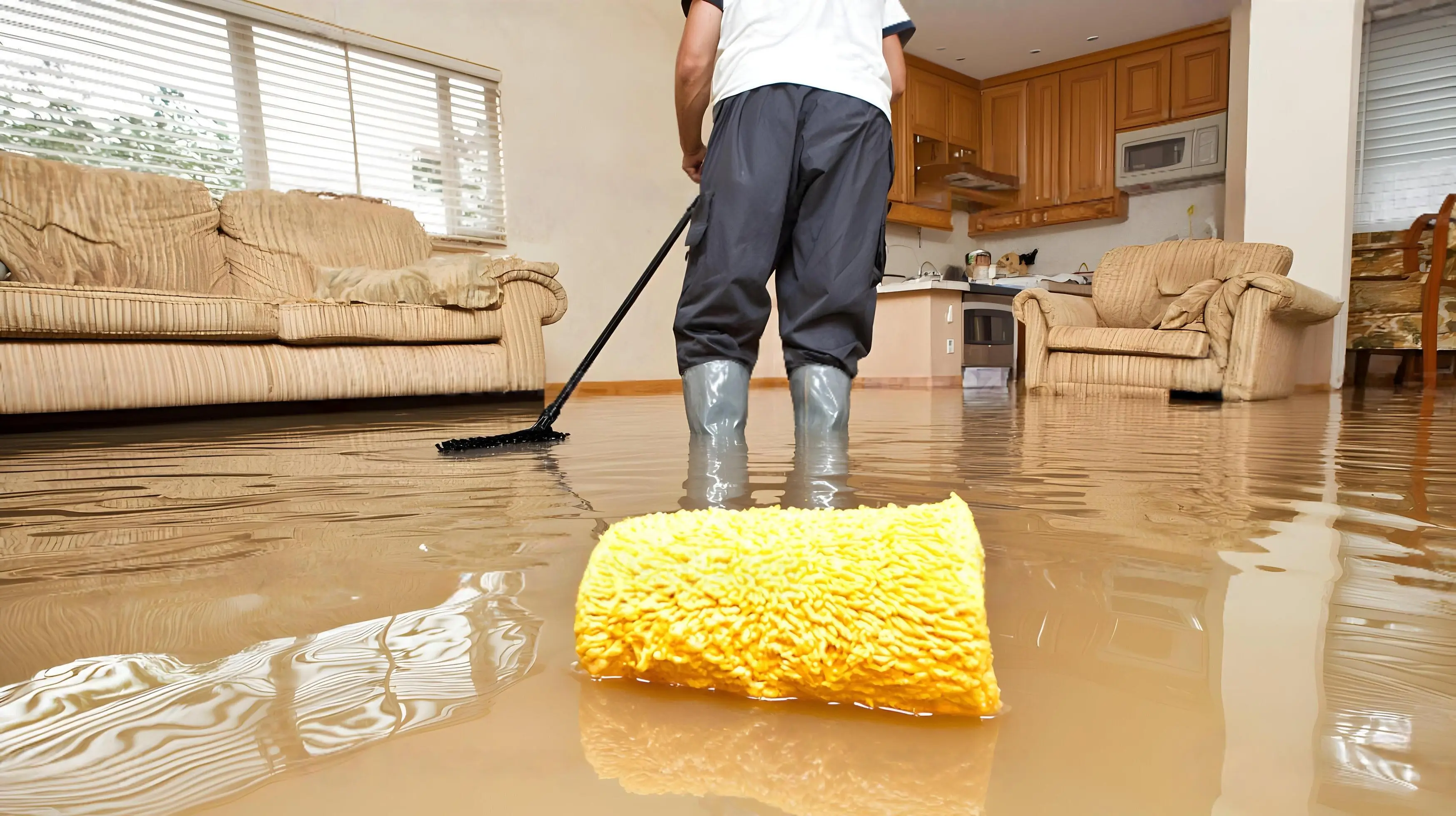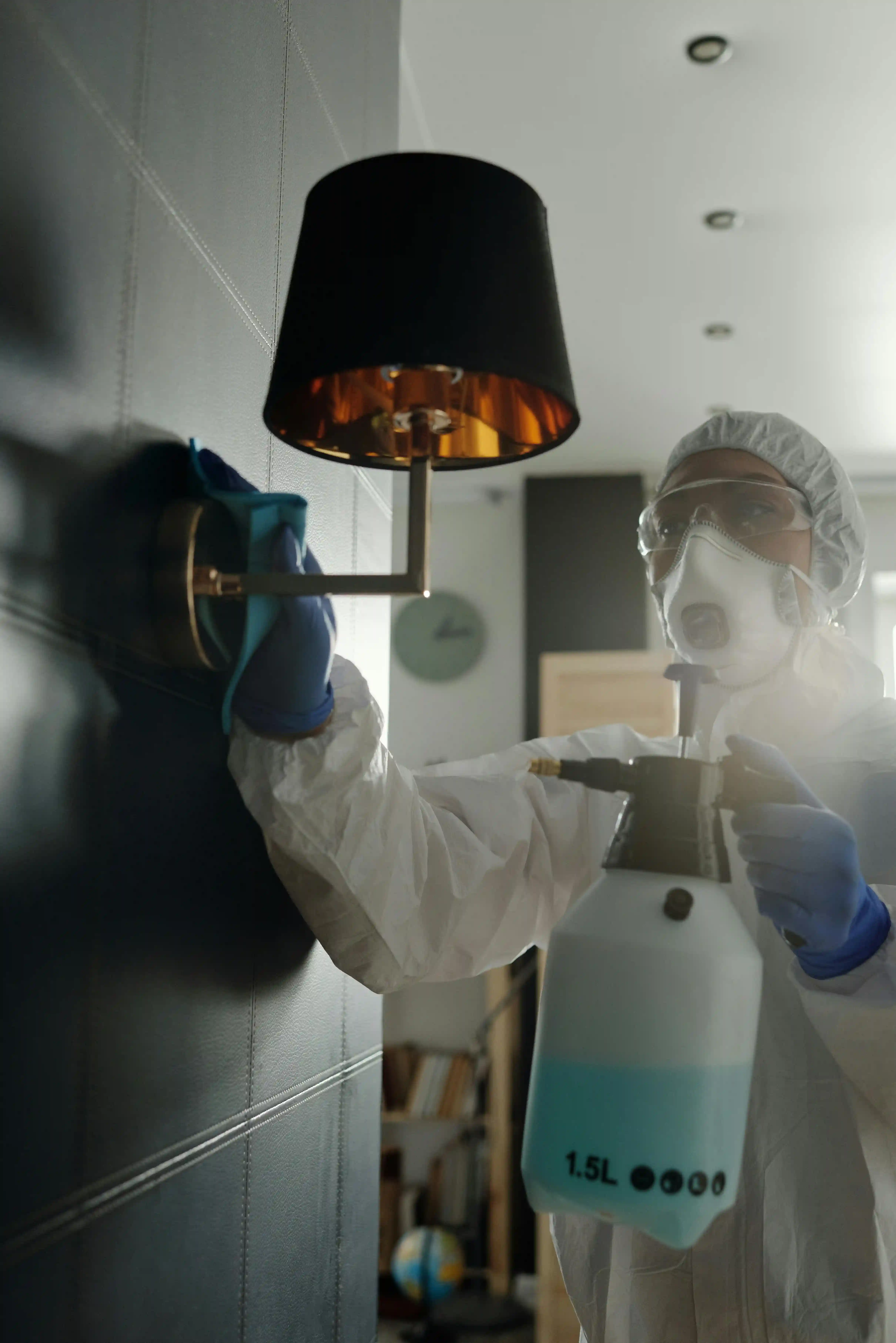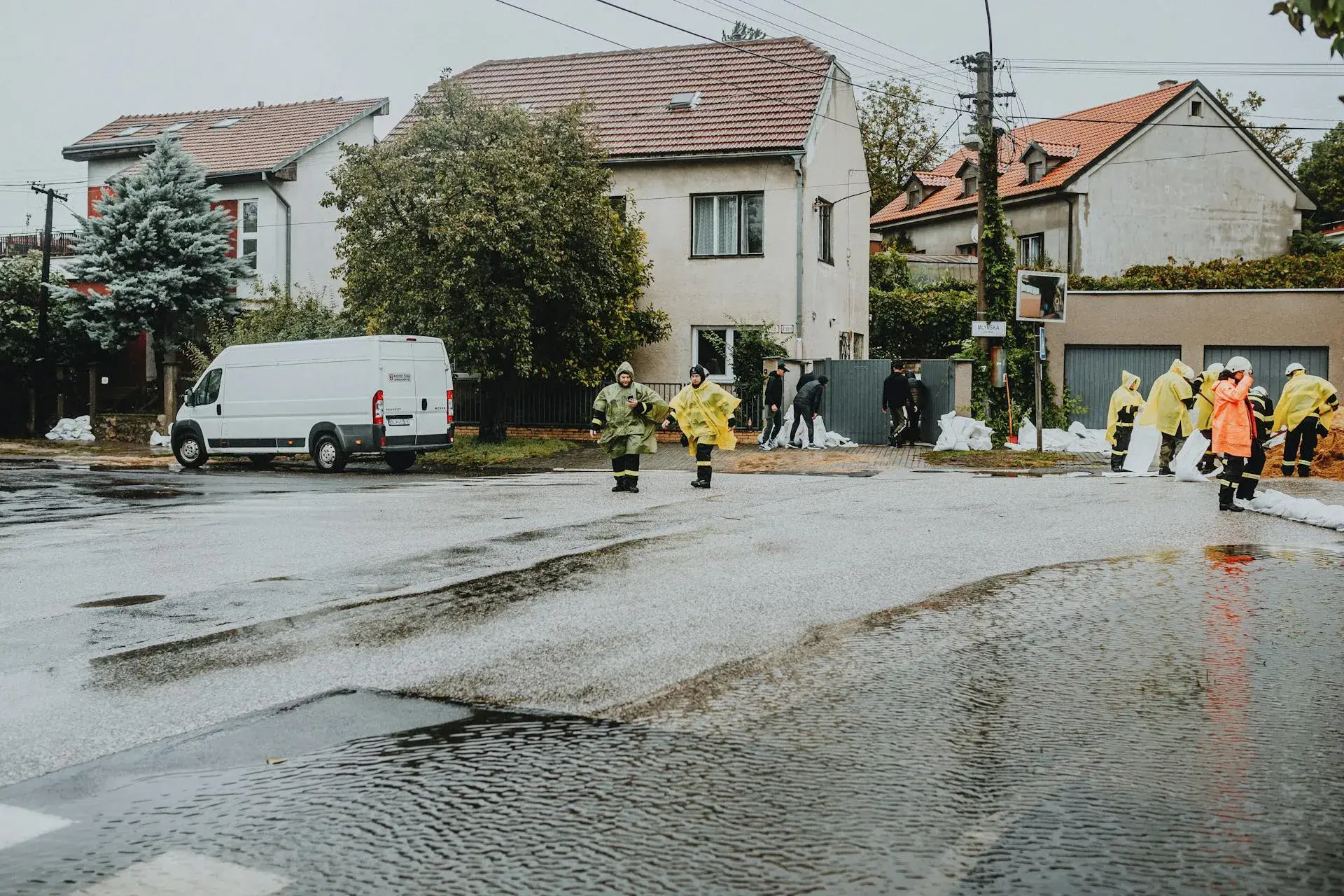
Professional sewage cleanup crew in protective equipment performing emergency biohazard extraction in a residential property
Teams Active in Volusia County

Sewage Cleanup in Deltona, FL

Sewage backups are biohazard emergencies. Every minute of exposure increases contamination and health risk. Our certified team extracts, sanitizes, and restores your home safely.

60-Min Response IICRC Certified Insurance Guidance Serving Volusia County

What Happens When You Call

You Call

A real person answers. We classify the situation, advise you on immediate safety precautions, and dispatch your biohazard team within minutes.

60 Minutes

Your certified crew arrives in full PPE with extraction equipment, antimicrobial agents, and containment materials. The contaminated area is isolated immediately.

Same Day

Sewage extracted, contaminated materials removed, surfaces treated with hospital-grade disinfectants. Structural drying equipment deployed. Your home is safe to re-enter.

Days 2-7

Structural drying monitored daily. Final disinfection applied. Clearance testing confirms safe conditions. Complete documentation provided for your insurance claim.

Sewage in your home is not a plumbing inconvenience. It is a biohazard emergency. The water backing up through your drains carries bacteria, viruses, and parasites that can cause serious illness through skin contact alone. You need it handled now, by people trained to work safely in contaminated environments. When you call X Response, your biohazard team is dispatched immediately and on site within the hour. From that point forward, one team manages everything: extraction, sanitation, drying, and insurance documentation. Call now. Your team is standing by.

Why Sewage Backups Are Common in Deltona

Deltona has a sewage infrastructure problem that most residents do not fully understand until it backs up into their home. Of the more than 30,000 homes in the city, only about 6,000 are connected to municipal sewer lines. The remaining roughly 80% rely on individual septic systems. Many of these systems were installed when the community was first developed in the 1960s through 1980s, meaning they are now 40 to 60 years old and approaching or past their expected functional lifespan. The city has acknowledged this challenge, but the cost of extending municipal sewer service to all neighborhoods runs into hundreds of millions of dollars, and progress has been slow.

When a septic system fails or becomes overwhelmed, the result is raw sewage backing up through floor drains, toilets, and shower drains into the living space. This is classified as Category 3 water under the IICRC S500 standard, the most dangerous classification, containing bacteria, viruses, parasites, and other pathogens that pose immediate health risks.

Aging Septic Systems Past Their Lifespan

Conventional septic systems have a functional lifespan of 20 to 30 years with proper maintenance. Many Deltona systems are now 40 to 60 years old. As drain fields deteriorate, they lose the ability to absorb and filter effluent. The tank fills faster than it can drain, and sewage has nowhere to go except back into the home through the lowest drain point. Homes in older Deltona neighborhoods like Deltona Lakes and the original Mackle Brothers subdivisions are at highest risk.

High Water Table Saturates Drain Fields

Deltona sits at an average elevation of just 46 feet with a water table that rises close to the surface during the wet season. When groundwater rises into the drain field zone, the soil cannot absorb septic effluent. The system becomes hydraulically overloaded, and sewage backs up into the home. This problem intensifies during sustained rain events and is worst in properties near the city's more than 20 named lakes.

Hurricane Flooding Overwhelms Systems

Hurricanes Milton and Helene in 2024 dumped over 15 inches of rain on Volusia County in 48 hours. When that volume of water saturates the ground, every septic system in the affected area is compromised simultaneously. Floodwater mixes with septic effluent and enters homes through floor drains, creating widespread Category 3 contamination. The 2022 hurricane season caused similar conditions throughout Deltona, with some neighborhoods experiencing sewage-contaminated flooding that persisted for days.

Limited Municipal Sewer Coverage

For the roughly 6,000 Deltona homes that are connected to municipal sewer, the infrastructure itself presents risks. The city's sewer system serves a fraction of the population it was designed for in a community that has grown to nearly 98,000 residents. During heavy rain events, stormwater infiltrates aging sewer lines through cracks and joint failures, causing the system to exceed capacity. The result is sewage backing up through connected homes or overflowing from manholes into streets and yards.

Slab-on-Grade Construction Traps Contamination

Most Deltona homes are built on monolithic slab foundations with no basement or crawl space. When sewage backs up through a floor drain or toilet, it spreads across the slab and wicks into the base of concrete block walls, saturating drywall, insulation, and baseboards with contaminated water. Because there is no space beneath the floor for drainage, the sewage pools until it is mechanically extracted. Every porous material it contacts must be removed and disposed of as biohazard waste.

These factors create a situation where sewage backups in Deltona are not rare events. They are a predictable consequence of aging infrastructure, challenging geography, and a climate that regularly delivers more water than the ground can absorb. When it happens to your home, the priority is immediate professional extraction and sanitation by a team trained in biohazard protocols. Attempting to clean sewage contamination without proper equipment and training puts your family's health at serious risk.

What Happens to Your Home While Sewage Sits

Within Minutes

Sewage spreads across flooring and begins wicking into porous materials. Bacteria including E. coli, Salmonella, and Hepatitis A virus are actively present in the water. Any skin contact, inhalation of aerosols, or ingestion creates immediate infection risk. Children and immunocompromised individuals are at highest danger.

1 to 4 Hours

Contaminated water saturates carpet, pad, drywall, and the base of concrete block walls. Pathogens penetrate deep into porous materials where surface cleaning cannot reach them. The affected area expands as water wicks outward and upward through capillary action. Odor intensifies as anaerobic bacteria multiply.

4 to 24 Hours

Bacterial colonies multiply rapidly in the warm, nutrient-rich environment. In Florida's heat, pathogen concentrations can increase by orders of magnitude within hours. Contamination spreads into wall cavities, under cabinetry, and into HVAC returns at floor level. The scope of required material removal expands significantly.

24 to 48 Hours

Mold colonization begins on sewage-saturated materials, compounding the biohazard with a secondary contamination. Structural materials begin degrading. The combination of sewage pathogens and mold spores creates an environment that is unsafe to occupy without respiratory protection. Restoration scope and cost increase substantially.

Beyond 48 Hours

Extensive structural damage, widespread mold growth, and deep pathogen penetration into building materials. What started as an extraction and sanitation job becomes a full demolition and reconstruction project. Insurance claims become more complex and contested. The home may be uninhabitable for weeks rather than days.

Sewage contamination is not something that improves with time. Every hour of delay increases health risk, expands the contamination zone, and raises the cost of restoration. Contact X Response now. Our Deltona biohazard team responds within 60 minutes.

How We Handle Sewage Contamination in Deltona Homes

Sewage cleanup follows strict biohazard protocols. Every step is performed by technicians in full personal protective equipment following the IICRC S500 standard for Category 3 water damage.

Safety Assessment and Containment

Our team arrives in full PPE including Tyvek suits, respirators, and chemical-resistant boots. The first priority is isolating the contaminated area to prevent cross-contamination to unaffected parts of your home. We identify the sewage source, shut off water supply if the backup is ongoing, and establish containment barriers. In Deltona homes with slab foundations, we assess how far the sewage has spread along the slab and into wall cavities using moisture meters. The contamination boundary determines the scope of work.

Sewage Extraction and Material Removal

Standing sewage is extracted using specialized pumps and truck-mounted units designed for contaminated water. All porous materials that contacted sewage are removed and disposed of as biohazard waste. This includes carpet, pad, drywall (typically cut 12 to 24 inches above the visible contamination line), insulation, baseboards, and any wood materials that absorbed contaminated water. In Deltona's concrete block homes, we remove drywall to expose the CMU wall surface for direct treatment. Non-porous surfaces like tile, concrete slab, and metal fixtures are cleaned but not removed.

Sanitation and Disinfection

Every surface in the contaminated zone is treated with EPA-registered hospital-grade disinfectants effective against the pathogens found in sewage. The concrete slab, exposed CMU block walls, framing members, and any remaining non-porous surfaces receive multiple applications. We use antimicrobial fogging to reach areas that direct spray cannot access, including inside wall cavities and under cabinetry that remains in place. HEPA air scrubbers run throughout the process to capture airborne pathogens and reduce odor. The goal is complete pathogen elimination, not just surface cleaning.

Structural Drying

After extraction and sanitation, the structure must be thoroughly dried to prevent secondary damage and mold growth. We deploy commercial dehumidifiers and high-velocity air movers in a calculated pattern. In Florida's subtropical humidity, structural drying after sewage contamination typically takes 4 to 6 days. Our team returns daily to take moisture readings, reposition equipment as needed, and verify that drying is progressing on schedule. The concrete slab and CMU block walls common in Deltona homes retain moisture longer than wood-frame construction, requiring extended drying time and careful monitoring.

Clearance Testing and Documentation

Before the project is considered complete, we verify that all moisture readings have returned to acceptable levels and that treated surfaces are free of residual contamination. You receive a complete project report including photos, moisture readings, sanitation protocols used, and a summary of all materials removed and disposed of. This documentation supports your insurance claim and provides a verified record that your home has been restored to safe, habitable conditions. If any area does not pass our quality check, we continue work until it does.

The X Response Difference

Typical Experience A plumber fixes the pipe or pumps the septic tank. The sewage that already entered your home is left for you to deal with. You are told to "bleach it" and open windows.
X Response We handle the biohazard contamination inside your home. Full extraction, material removal, hospital-grade disinfection, structural drying, and clearance verification. The plumber fixes the pipe. We restore your home.
Typical Experience A general cleaning crew shows up without proper PPE or biohazard training. They mop the floor and spray air freshener. The contamination remains in wall cavities and under flooring.
X Response Certified biohazard technicians in full PPE following IICRC S500 Category 3 protocols. Every contaminated porous material is removed. Every surface is treated with EPA-registered disinfectants. Nothing is left to chance.
Typical Experience No documentation beyond a basic invoice. When you file an insurance claim, the adjuster questions the scope and pushes back on coverage.
X Response Professional documentation from the moment we arrive: contamination mapping, photos, scope of work, materials removed, sanitation protocols, moisture readings. All formatted for your adjuster.
Typical Experience The smell lingers for weeks. You are not sure if the contamination is actually gone or just covered up. No testing, no verification.
X Response Final clearance verification confirms the structure is dry, surfaces are sanitized, and your home is safe to occupy. If it does not pass, we continue work until it does.

Sewage cleanup is not a cleaning job. It is a biohazard remediation project that requires trained technicians, proper equipment, and verified results. When you contact X Response, that is exactly what you get.

Insurance Claim Guidance for Sewage Damage in Deltona

Sewage backup coverage in Florida is not included in standard homeowner's policies by default. It requires a specific endorsement, often called "sewer and drain backup" or "water backup" coverage, that must be added to your policy separately. Many homeowners do not realize they lack this coverage until they are standing in sewage. For homes on septic systems, which includes roughly 80% of Deltona properties, coverage can be even more complicated. Some policies exclude damage caused by septic system failure entirely, while others cover it only if the failure was sudden rather than gradual. The distinction between "sudden" and "gradual" is where most coverage disputes arise.

How X Response Helps

  • Document the contamination with professional photos, contamination mapping, and a detailed scope of work from the moment we arrive
  • Classify the damage according to IICRC S500 categories, which is the standard insurance adjusters use to evaluate sewage claims
  • Provide documentation that distinguishes between the sewage damage (potentially covered) and the plumbing or septic repair (typically a separate claim or exclusion)
  • Explain your policy's likely coverage for sewer backup before you file, so you understand your options and potential out-of-pocket exposure
  • Guide you on timing and what to include in your claim submission

X Response does not file claims on your behalf, adjust claims, or make coverage determinations. We provide documentation and guidance to help you make informed decisions about your property and your policy. Coverage decisions are made solely by your insurance carrier.

Certified Biohazard Specialists Serving Deltona

When you contact X Response for a sewage emergency in Deltona, your team is drawn from certified professionals who work in Volusia County and understand the specific challenges of this area. They know the septic-heavy infrastructure. They know concrete block construction and how contaminated water behaves on slab foundations. They have handled post-hurricane sewage contamination in homes throughout this community. This is not a general cleaning crew. It is a trained biohazard team with the equipment, certifications, and protocols to handle Category 3 contamination safely and completely.

Every technician on your team holds current IICRC certification in water damage restoration and carries bloodborne pathogen training required for biohazard work. Equipment includes commercial extractors rated for contaminated water, hospital-grade disinfection systems, HEPA air scrubbers, and full personal protective equipment. When your team arrives, they bring everything needed to begin safe extraction immediately.

IICRC Certified
Licensed & Insured
24/7 Availability
Serving Volusia County
Biohazard Trained

Sewage Cleanup FAQ, Deltona, FL

Nearby Cities We Serve

Also serving nearby: Sanford Orange City DeBary DeLand Daytona Beach

Sewage Is a Biohazard. Do Not Wait.

Your Deltona biohazard team is standing by. Free assessment, no obligation, and we guide you through the insurance process from day one. The sooner we start, the safer your family will be.

Call Now Get Help Now Text Us