
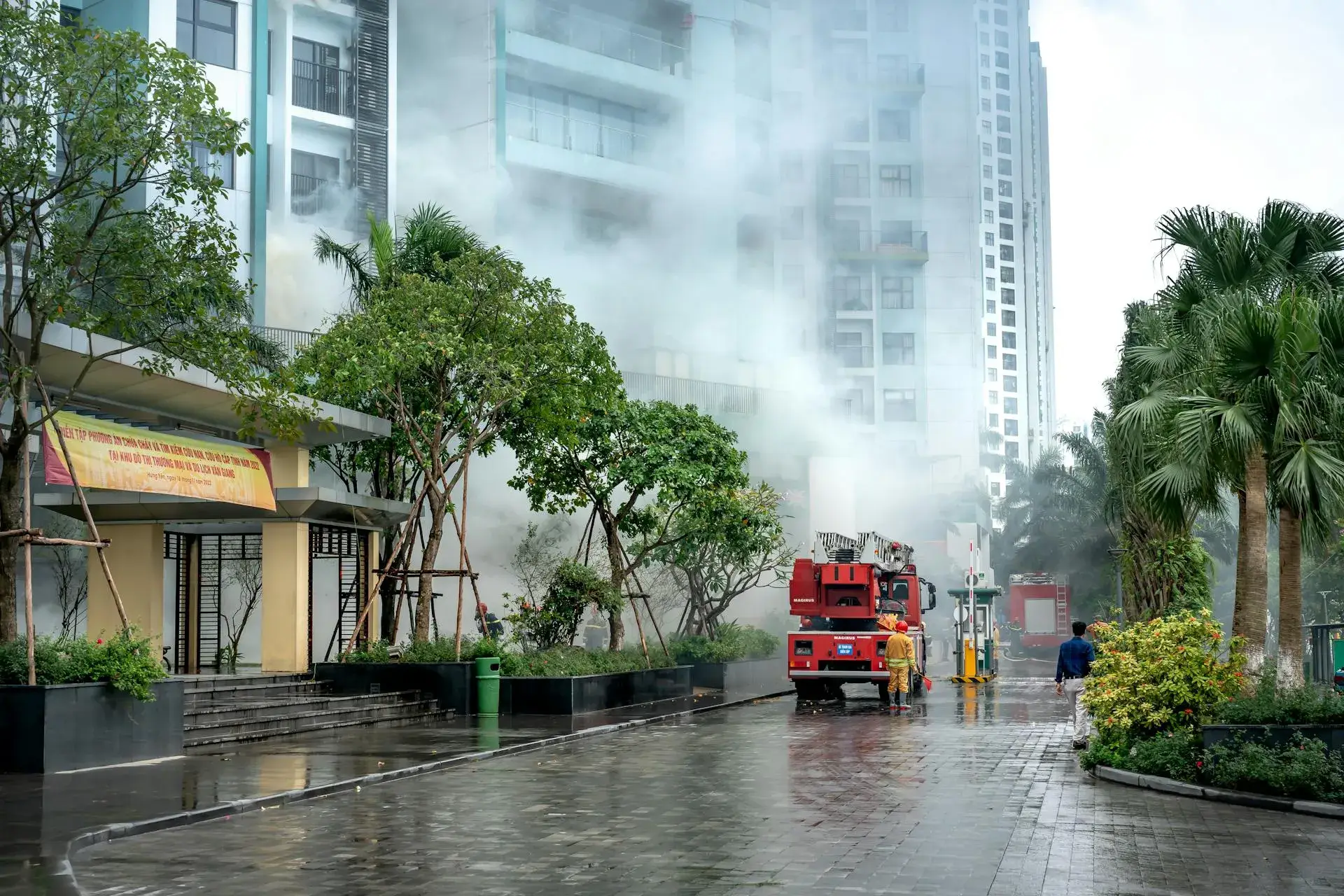
Smoke Damage Restoration in Lincolnwood, IL
Smoke residue corrodes surfaces and embeds deeper into materials with every passing hour. Our local team responds to Lincolnwood emergencies within 60 minutes.
What Happens When You Call
A real person answers, not a call center. We assess your situation, ask the right questions, and begin coordinating your response immediately.
Your dedicated restoration team is dispatched from our local base serving Lincolnwood and the surrounding Cook County communities.
Team arrives with HEPA filtration, soot removal equipment, thermal foggers, and air quality testing instruments. Assessment and mitigation begin immediately.
Damage assessed, cleaning protocol established, restoration plan documented. You know exactly what comes next.
Smoke has filled your home and you need it resolved, not tomorrow, not next week. X Response exists for exactly this moment. When you reach out, your restoration team is mobilized within minutes and on site within the hour. From that point forward, one team manages everything: soot removal, surface cleaning, deodorization, and air quality verification. You are never left guessing about the next step. Call now. Your team is standing by.
Why Lincolnwood Homes Are Vulnerable to Smoke Damage
Lincolnwood is a village of 13,463 residents in Niles Township, Cook County, Illinois, occupying approximately 2.5 square miles directly north of Chicago's city limits. The village shares boundaries with Chicago on three sides and Skokie to the north and west, with the North Shore Channel forming its eastern border. More than half of Lincolnwood's housing stock was constructed between 1940 and 1959, during the postwar suburban boom that filled former farmland with dense residential blocks. These homes feature forced-air HVAC systems that distribute conditioned air through ductwork connecting basements, living spaces, and upper floors, creating pathways that smoke exploits to reach every room in the house whether the smoke originates from a fire inside the home, a neighbor's structure fire, or an outdoor air quality event that infiltrates through the building envelope.
On June 27, 2023, smoke from Canadian wildfires pushed the Chicago region's air quality index above 231, a level rated 'very unhealthy' by the Illinois Environmental Protection Agency. Chicago had the worst air quality among major cities in the world that day, and conditions remained at very unhealthy levels for a second consecutive day on June 28. The entire state of Illinois was placed under an air quality alert. The City of Chicago issued a public health advisory urging all residents to remain indoors, limit physical activity, and keep windows closed. For Lincolnwood and the surrounding North Shore suburbs, this event demonstrated how wildfire smoke thousands of miles away can infiltrate homes, deposit fine particulate matter on interior surfaces, overwhelm residential HVAC filtration, and create indoor air quality conditions that persist long after the outdoor event passes. Homes with older HVAC systems, inadequate filtration, or compromised building envelopes absorbed particulate matter that settled on surfaces, embedded in textiles, and circulated through ductwork for weeks afterward.
Wildfire Smoke Infiltration in Postwar Housing
Lincolnwood's housing stock, predominantly built between 1940 and 1959, was not constructed with the air-sealing standards of modern energy codes. These homes have multiple infiltration pathways: gaps around window frames, unsealed electrical and plumbing penetrations, deteriorating weather stripping, foundation-to-sill-plate joints without continuous air barriers, and attic bypasses that allow air exchange between conditioned spaces and unconditioned cavities. During the June 2023 wildfire smoke event, outdoor particulate matter with a diameter of 2.5 microns or less (PM2.5) infiltrated these homes through every unsealed opening. Standard residential HVAC filters, typically MERV 8 or lower, cannot capture particles of this size. The result was measurable particulate deposition on interior surfaces, visible haze in rooms with closed windows, and a persistent campfire odor that lasted well beyond the days when outdoor air quality was visibly impacted. Homes that ran their HVAC systems during the event cycled smoke-laden air through ductwork, depositing a thin film of fine particulate on every surface connected to the distribution system.
Structure Fire Smoke and Proximity Exposure
Beyond wildfire events, Lincolnwood's residential density creates regular exposure to structure-fire smoke from neighboring properties. When a home fire occurs on the tightly packed blocks of this village, where setbacks between structures are often 5 to 10 feet, adjacent homes receive significant smoke exposure through open windows, ventilation intakes, and infiltration pathways. The March 2026 fire on Kolmar Avenue, which destroyed a two-story home after flames spread from an attached garage, generated a smoke plume that affected properties up and down the block. Homes near a structure fire that do not sustain flame damage often sustain substantial smoke damage: soot deposition on exterior surfaces that migrates inward, odor infiltration through the building envelope, and particulate contamination of HVAC systems that continued operating during the event. These proximity exposures require professional assessment because damage may not be immediately visible but can corrode surfaces, embed odors, and affect indoor air quality for months if left unaddressed.
HVAC Distribution of Smoke Contamination
Forced-air heating and cooling systems in Lincolnwood homes serve as both pathways and amplifiers for smoke contamination. When smoke enters the home through any opening, the HVAC system's return air intake draws contaminated air through the filter, past the blower and heat exchanger, and distributes it through supply ducts to every room in the house. Standard residential filters do not capture the fine particles and volatile organic compounds that constitute smoke. Once inside the ductwork, these contaminants deposit on the interior surfaces of metal and flexible ducts, accumulate at registers, and become a reservoir that re-releases particles and odor each time the system cycles. A single smoke event, whether from a nearby fire, a wildfire episode, or even prolonged cooking with a malfunctioning range hood, can contaminate an entire HVAC system. The contamination persists indefinitely unless the system is professionally cleaned, because normal operation does not generate enough velocity to dislodge bonded particulate from duct surfaces.
Smoke Damage from Kitchen and Cooking Fires
Not all smoke damage in Lincolnwood homes comes from catastrophic events. Kitchen fires that are quickly extinguished, grease fires that flash and self-extinguish, and even severe overcooking incidents generate enough smoke to damage surfaces throughout the home when the HVAC system distributes combustion products. In Lincolnwood's postwar homes, many kitchens have been renovated with open floor plans that remove the compartmentalization of original designs. A grease fire on a stovetop in an open kitchen immediately fills the connected living space, family room, and dining area with dense smoke. The HVAC system then distributes that smoke to bedrooms, bathrooms, and basement spaces within minutes. The resulting damage pattern often surprises homeowners: visible soot on bathroom mirrors, closet contents that smell of smoke, and a thin film on ceiling surfaces in rooms that seemed far from the event. What appears to be a minor kitchen incident frequently requires whole-house professional cleaning and deodorization.
Secondary Smoke Damage from Fire Suppression Water
When a fire occurs in or near a Lincolnwood home, the suppression water creates a secondary damage pathway for smoke contamination. Water that flows through smoke-saturated structural materials carries dissolved soot, ash, and volatile compounds into areas below and adjacent to the fire. This contaminated water deposits smoke residue on surfaces it contacts as it flows, creating smoke damage in areas that were never directly exposed to airborne smoke. In Lincolnwood's two-story homes, a fire on the upper level sends contaminated suppression water through floor assemblies and into the first-floor ceiling, walls, and basement. The resulting damage combines water damage and smoke damage in a way that requires coordinated restoration protocols: you cannot dry the water damage without addressing the embedded smoke contamination, and you cannot deodorize effectively while moisture remains in the materials. This dual-pathway damage is common in postwar homes where floor assemblies lack waterproof membranes between levels.
These factors create a community where smoke damage arrives from multiple sources and spreads through predictable pathways. Whether the origin is a Canadian wildfire event, a neighbor's structure fire, a garage fire that spreads through shared walls, or a kitchen incident amplified by the HVAC system, the contamination follows the same progression: infiltration, distribution through ductwork, deposition on surfaces, and embedding in porous materials. Effective smoke damage restoration in Lincolnwood requires identifying every pathway the smoke traveled, treating every surface it contacted, and verifying that air quality has returned to acceptable levels throughout the entire home rather than just the rooms where damage was visible.
What Happens to Your Home While You Wait
Within 1 Hour
Smoke particles settle on all exposed surfaces in affected rooms. Acidic soot residue begins reacting with metals, plastics, and painted finishes. In Lincolnwood homes where the HVAC system operated during the smoke event, contamination has already spread to every room connected to the ductwork. Thin films of particulate form on mirrors, glass, countertops, and electronics. At this stage, most surfaces can be cleaned without permanent damage if the right methods are used. Improper cleaning attempts, particularly wiping soot with wet cloths, can drive particles into surface pores and create permanent staining.
1–24 Hours
Soot residue bonds more firmly to surfaces as it interacts with humidity, surface oils, and temperature fluctuations. Chrome and nickel fixtures begin to tarnish. Painted walls develop a yellowish cast in areas of heavy deposition. Smoke odor penetrates deeper into porous materials: upholstery fabric, carpet fibers, drapery, clothing, and the paper facing of drywall. Textiles exposed to smoke for more than a few hours absorb volatile organic compounds that standard laundering cannot fully remove. The longer porous materials remain in a smoke-contaminated environment without professional treatment, the deeper the odor penetrates and the more aggressive the deodorization protocol required.
24–48 Hours
Permanent discoloration begins on surfaces where acidic soot has been left in contact. Metal hardware pits. Grout absorbs soot and darkens permanently. Synthetic fabrics yellow as smoke compounds react with polymer chains. The boundary between items that can be professionally restored and items that require replacement shifts significantly: contents that were salvageable at 12 hours may not be at 48. Smoke odor saturates insulation inside walls, attic cavities, and floor assemblies where it becomes extremely difficult to reach without demolition. The scope of necessary work expands from surface cleaning into concealed-space treatment.
48–72 Hours
Corrosion damage to electronics, appliances, and mechanical systems accelerates. Circuit boards inside computers, televisions, and appliances develop corrosion that causes malfunction or failure. HVAC components, including the blower motor, heat exchanger, and evaporator coil, accumulate deposits that reduce efficiency and re-release contaminants during operation. Smoke odor becomes entrenched in the home's structural materials. Deodorization at this stage requires more aggressive methods, longer treatment times, and potentially removal of saturated materials that could have been treated in place if addressed sooner.
One Week and Beyond
Permanent damage to surfaces, contents, and building systems becomes widespread. Paint requires stripping rather than cleaning. Carpeting that might have been restored now requires replacement as odor has migrated through the backing into the pad and subfloor. HVAC ductwork that could have been cleaned may now require replacement if corrosion has compromised joint integrity. Structural wood, insulation, and sheathing absorb smoke compounds that off-gas for months or years. The total cost of restoration at this stage can be multiples of what would have been required with prompt professional intervention in the first 24 hours.
Smoke damage is progressive and irreversible once it crosses specific thresholds. The sooner professional cleaning begins, the more surfaces, contents, and building systems can be saved. Contact X Response now. Our Lincolnwood team responds within 60 minutes.
How We Restore Smoke-Damaged Lincolnwood Homes
From the moment our team arrives, every step is documented, measured, and verified. Here is exactly what the smoke damage restoration process involves for Lincolnwood properties.
Assessment and Source Identification
Our team arrives and conducts a comprehensive evaluation of smoke damage throughout the home. We identify the smoke source type, which determines the cleaning chemistry and deodorization approach required. Protein-based smoke from kitchen fires requires different treatment than petroleum-based soot from garage fires, which differs again from the fine particulate matter deposited during wildfire events. We trace the smoke's travel path through the home, checking every room connected to the HVAC system, inspecting concealed spaces accessible from attic hatches and basement ceilings, and testing surfaces in rooms that appear unaffected. In Lincolnwood homes with forced-air systems, we evaluate duct contamination levels to determine whether cleaning or replacement is required. Every affected area is documented with photos and a detailed scope of work that guides the restoration and supports your insurance claim.
Air Filtration and Containment
Before cleaning begins, we establish air quality control throughout the affected area. HEPA air scrubbers capable of capturing particles down to 0.3 microns are positioned to filter the indoor air continuously throughout the project. In homes where some rooms are heavily contaminated and others are minimally affected, we establish containment barriers to prevent cross-contamination during cleaning. Negative air pressure in contaminated zones prevents smoke particles dislodged during cleaning from migrating to clean areas. This filtration runs continuously from the start of the project until final air quality testing confirms acceptable particulate levels. For Lincolnwood homes affected by wildfire smoke infiltration, where the entire home received uniform low-level contamination through the HVAC system, filtration addresses the whole house simultaneously.
Surface Cleaning and Soot Removal
Each surface type in the home receives cleaning appropriate to its material and the type of smoke residue present. Hard surfaces are cleaned with progressive methods starting with the least aggressive: dry sponging removes loose soot without spreading it, followed by chemical cleaning agents matched to the specific soot chemistry. Painted walls and ceilings may require specialized alkaline or solvent-based cleaners depending on whether the smoke was protein-based, petroleum-based, or wildfire particulate. Textiles, upholstery, and soft goods are assessed individually: items that can be restored receive professional cleaning on-site or at our facility, while items saturated beyond salvage are documented for insurance purposes. Hard flooring is cleaned with appropriate methods for the material, whether hardwood, tile, vinyl, or laminate. Every surface in the smoke path receives attention, including interior cabinetry, closet interiors, light fixture housings, and behind furniture and appliances.
HVAC Decontamination
The forced-air system is addressed as a primary contamination pathway. Supply and return ductwork is cleaned using rotary brush systems and high-powered vacuum equipment that removes deposited soot and particulate from interior surfaces. Registers, grilles, and diffusers are removed and cleaned individually. The blower housing, blower wheel, and evaporator coil are cleaned to remove accumulated deposits that would otherwise re-contaminate the home each time the system operates. The furnace filter is replaced with a high-efficiency unit appropriate to the system's specifications. In severe cases where duct liner or flexible duct has absorbed smoke compounds that cannot be removed by surface cleaning, those sections are replaced. The system is not returned to operation until testing confirms that air passing through it meets acceptable particulate and odor standards.
Deodorization and Verification
Odor removal addresses both surface residue and absorbed compounds in porous materials. We deploy thermal fogging with petroleum-based deodorants that penetrate the same pathways smoke traveled, reaching inside wall cavities, carpet backing, upholstery padding, and other materials that surface cleaning cannot access. Hydroxyl generators provide continuous odor neutralization in occupied spaces without requiring evacuation. Ozone treatment, applied only in unoccupied and sealed spaces, oxidizes embedded organic compounds that other methods cannot reach. The specific combination and duration of deodorization methods depends on the smoke type and severity documented during assessment. Final verification includes both subjective evaluation by trained technicians and, where warranted, air quality testing for particulate levels and volatile organic compounds. The standard is a home that smells clean to an unacclimated person entering from fresh air, not merely one where the occupant has adapted to a diminished odor.
The X Response Difference
When you contact X Response for smoke damage, you get a team that understands smoke science: how different fuels produce different residues, how those residues interact with different materials, and what methods resolve each combination permanently. One team, one standard, verified results.
Insurance Claim Guidance for Lincolnwood Homeowners
Smoke damage insurance claims in Illinois depend on the source of the smoke and whether it constitutes a covered peril under your policy. Smoke damage from a fire in your own home is covered under the same fire claim. Smoke damage from a neighbor's fire is typically covered as well, since smoke is a consequential damage of fire regardless of where the fire occurred. Wildfire smoke infiltration during a regional air quality event like June 2023 falls into a more complex category: standard policies cover 'sudden and accidental' damage, and a multi-day atmospheric event that gradually deposits particulate may or may not meet that threshold depending on your carrier's interpretation. Damage from a single identifiable smoke event, such as a nearby structure fire, has a clear trigger date and typically processes straightforwardly. The key to any smoke damage claim is documentation that establishes the source, the scope of contamination, the cleaning methods required, and the verification that restoration was achieved.
How X Response Helps
- Document the smoke source, date of exposure, and resulting damage with photos and professional assessment before any cleaning begins
- Identify every area of contamination, including HVAC systems, concealed spaces, and contents, to establish the full scope of loss
- Provide cleaning protocols matched to specific smoke types and surfaces, demonstrating professional-grade restoration rather than basic housekeeping
- Include air quality data and deodorization verification to prove restoration was achieved to an objective standard
- Explain your policy's coverage for the specific smoke source before you file, so you understand how your carrier is likely to categorize the claim
X Response does not file claims on your behalf, adjust claims, or make coverage determinations. We provide documentation and guidance to help you make informed decisions about your property and your policy. Coverage decisions are made solely by your insurance carrier.
Certified Restoration Specialists Serving Lincolnwood
When you contact X Response for smoke damage in Lincolnwood, your restoration team is drawn from certified professionals who work across Cook County's North Shore suburbs and understand the specific challenges of smoke contamination in this community's housing stock. They know how forced-air systems in postwar homes distribute smoke to every connected room, how the building envelope characteristics of 1940s and 1950s construction allow wildfire particulate to infiltrate during air quality events, how different smoke sources produce different residues that require different cleaning approaches, and how to trace concealed contamination through wall cavities and duct systems that are invisible from the living space. They have restored homes after structure fires, nearby-fire proximity exposure, wildfire smoke infiltration, and kitchen fire distribution events throughout the North Shore corridor. This is not a general cleaning crew with no specialized training. It is a smoke damage restoration team with the knowledge and equipment to resolve contamination at its source.
Every technician on your team holds current IICRC certification in fire and smoke restoration and carries the appropriate Illinois state licensing for the work being performed. Equipment includes HEPA air scrubbers rated to 0.3 microns, negative air machines for containment, thermal fogging systems, hydroxyl generators for occupied-space treatment, ozone generators for unoccupied treatment, duct cleaning systems with rotary brushes and HEPA-filtered vacuum, and the full range of cleaning chemistry for protein, petroleum, and wildfire particulate residues. When your team arrives, they bring everything needed to begin assessment and filtration immediately.
In Lincolnwood, X Response works with Scene Cleaners, an independent local restoration partner serving Cook County.
Smoke Damage Restoration FAQ for Lincolnwood Homeowners
Other Emergency Services in Lincolnwood
Water Damage Restoration
Burst pipes, storm flooding, standing water. We extract, dry, and restore before mold sets in.
Learn more
Fire Damage Restoration
Structural damage, soot, debris. We stabilize, clean, and rebuild what fire destroyed.
Learn more
Mold Remediation
Testing, containment, removal, prevention. We find the source, eliminate the growth, and stop it from returning.
Learn more
Sewage Cleanup
Sewer backups, contaminated water, biohazard. We extract, sanitize, and restore safely.
Learn more