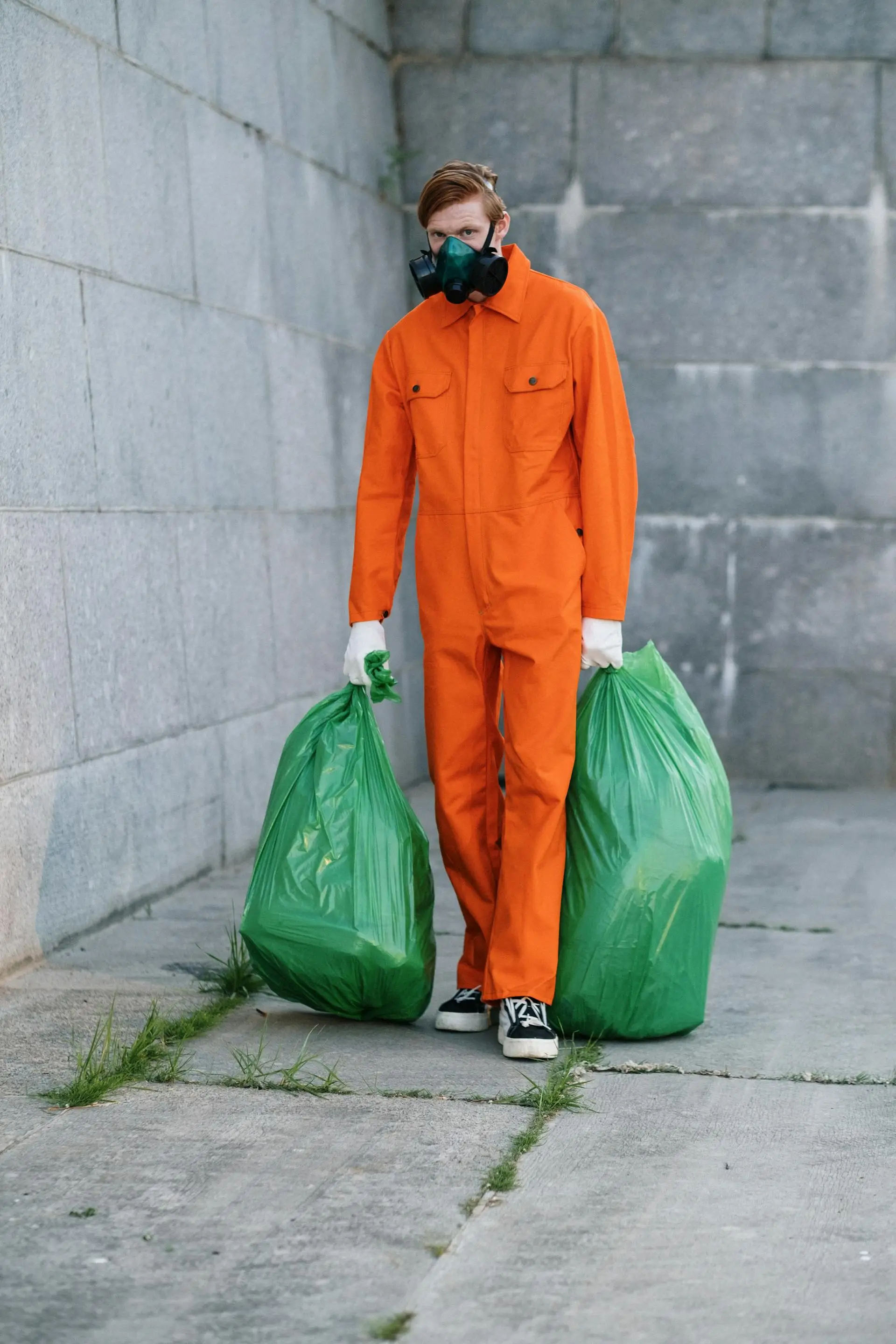
Smoke damage restoration specialist using professional equipment to clean soot residue from interior surfaces
Teams Active in DuPage County

Smoke Damage Restoration in Naperville, IL

Smoke residue continues damaging surfaces and embedding odor every hour it remains untreated. Our local team provides professional smoke cleanup and HVAC decontamination for Naperville homes.

Rapid Response IICRC Certified Insurance Guidance Serving DuPage County

What Happens When You Call

You Call

A real person answers. We ask about the smoke source, when it occurred, and what you are experiencing. We begin coordinating your assessment immediately.

Assessment

Our team arrives to test air quality, identify the smoke type, evaluate HVAC contamination, and map the extent of residue throughout the home including the basement.

Containment

HVAC system shut down to stop redistributing particles. Air scrubbers deployed. Building envelope sealed if smoke source is external. Contamination contained to prevent further spread.

Active Restoration

Surface cleaning, deodorization, and HVAC decontamination begin. Restoration plan documented with scope of work and insurance documentation prepared from day one.

You can smell smoke in your home and it is not going away. Maybe a neighbor's house caught fire. Maybe wildfire haze settled into your HVAC system during a bad air quality day. Maybe your furnace misfired and sent soot through every vent. Whatever the source, the smell is getting worse and surface cleaning is not working. X Response exists for exactly this situation. We identify the smoke type, find where it has penetrated, and eliminate it at the source. Call now. We can help.

Why Naperville Homes Are Vulnerable to Smoke Damage

Smoke damage is distinct from fire damage because it can occur without any fire on your property. A neighbor's house fire sends smoke across the street. Canadian wildfire haze settles over DuPage County for days. A furnace puffback sends soot through every vent in the house. In each case, the homeowner has smoke contamination throughout their home without a single flame ever touching their property. This distinction matters for insurance, for restoration approach, and for understanding why the damage is often worse than it appears.

Naperville's housing stock makes smoke damage particularly challenging to address. Every home has forced-air HVAC that acts as a distribution system for smoke particles. Every home has a basement that collects smoke traveling downward through ductwork and stairwells. The tight construction of modern suburban homes means that once smoke enters, it has limited pathways to exit naturally. And the Chicago metro area has experienced multiple severe wildfire smoke events in recent years, making this a recurring rather than rare concern for DuPage County homeowners.

Canadian Wildfire Smoke Events

The Chicago metro area experienced severe wildfire smoke episodes in June 2023, June 2025, and July 2025, with Chicago ranking among the worst air quality in the world during these events. Fine particulate matter from Canadian wildfires traveled hundreds of miles south and blanketed DuPage County for days at a time. During these events, smoke infiltrates homes through HVAC fresh air intakes, gaps in the building envelope, and any open windows or doors. Extended exposure deposits a fine gray residue on surfaces, contaminates ductwork, and embeds odor in porous materials throughout the home. Homes that ran their HVAC systems during these events pulled contaminated outdoor air directly into the duct system.

Furnace Puffbacks in Forced-Air Homes

A furnace puffback occurs when a gas or oil furnace misfires, sending a burst of soot and combustion byproducts through the ductwork and into every room the system serves. In Naperville homes with forced-air heating, a single puffback can deposit oily black soot on walls, ceilings, furniture, clothing, and food preparation surfaces throughout the entire house within seconds. Puffbacks are most common at the start of heating season in October and November when furnaces fire up after months of inactivity. Dirty burners, cracked heat exchangers, and delayed ignition are the typical mechanical causes. The damage is sudden, pervasive, and requires professional restoration because the soot is oily and smears when wiped.

Neighbor Fire Smoke Impingement

When a house fire occurs in a Naperville neighborhood, smoke does not respect property lines. Adjacent homes and even homes across the street can sustain significant smoke damage from a neighbor's fire. The dense suburban layout of most Naperville neighborhoods means homes are close together, and prevailing winds can push smoke directly into neighboring properties. Smoke enters through open windows, HVAC intakes, attic vents, and any gap in the building envelope. The homeowner has no fire damage to their structure, but their interior surfaces, ductwork, and belongings are contaminated with smoke residue and odor from the neighbor's fire.

HVAC Systems as Smoke Distribution Networks

The forced-air HVAC systems universal in Naperville homes become smoke distribution networks during any smoke event. Whether the source is external wildfire haze, a neighbor's fire, or an internal puffback, the duct system pulls smoke particles into the return air, passes them through the air handler, and deposits them in every room the system serves. Once contaminated, the HVAC system continues redistributing residue every time it cycles, even after the original smoke source is gone. This is why homeowners report that smoke odor returns after cleaning: the ductwork is recontaminating the house with every heating or cooling cycle. Professional restoration must include full HVAC decontamination or the problem will persist indefinitely.

Prescribed Burns and Local Smoke Exposure

The City of Naperville conducts prescribed burns in parks and natural areas including Old Plank Park and Country Commons Park for ecological management of prairies and wetlands. While the city notifies nearby residents and works to accommodate those with medical concerns, homes adjacent to burn sites can experience smoke infiltration during these events. Combined with the increasing frequency of wildfire smoke from the north, Naperville homeowners face more smoke exposure events per year than in previous decades. Homes with older building envelopes or HVAC systems that draw outdoor air are most vulnerable to infiltration during any external smoke event.

The common thread across all these scenarios is the forced-air HVAC system. It turns a localized smoke event into whole-house contamination. It stores residue in ductwork where surface cleaning cannot reach. And it recontaminates cleaned spaces every time it runs. Effective smoke damage restoration in Naperville must treat the HVAC system as the primary contamination pathway, not an afterthought. Without full duct decontamination, no amount of surface cleaning will permanently resolve the odor.

What Happens While Smoke Residue Sits Untreated

First 24 Hours

Soot particles settle on every horizontal surface. Acidic residue begins chemically reacting with metals, plastics, and painted surfaces. Smoke odor molecules begin absorbing into porous materials: carpet, upholstery, curtains, clothing. The HVAC system continues circulating contaminated air if not shut down.

24–72 Hours

Soot residue permanently stains light-colored walls, ceilings, and fabrics. Metal fixtures and appliance surfaces begin pitting from acidic compounds. Odor penetrates deeper into wall cavities, insulation, and carpet padding. Items that could have been cleaned in the first day may now require replacement.

1 Week

Permanent discoloration on porous surfaces. Smoke odor fully embedded in structural materials. HVAC ductwork coated with residue that will redistribute with every cycle. Restoration requires more aggressive techniques and longer treatment times. Costs increase as more materials become unsalvageable.

2+ Weeks

Odor becomes part of the structure itself. Carpet, padding, and soft furnishings likely require replacement rather than cleaning. Walls may need to be sealed with specialty primers before repainting. HVAC system may require component replacement rather than cleaning alone. What started as a cleaning project becomes a partial renovation.

The sooner smoke residue is addressed, the more of your home and belongings can be saved through cleaning rather than replacement. Contact X Response now. Early intervention saves time, money, and your possessions.

How We Restore Smoke-Damaged Naperville Homes

Smoke damage restoration requires identifying the smoke type, tracing its pathways through the home, and eliminating residue and odor at the source — not just on visible surfaces.

Emergency Assessment and Air Quality Testing

Our team tests indoor air quality for particulate matter and volatile organic compounds, inspects every room for visible and invisible residue, and evaluates the HVAC system for contamination. We identify the type of smoke residue present because the cleaning approach differs fundamentally: dry soot from wildfire requires different techniques than oily puffback residue or protein smoke from a kitchen fire. In Naperville homes, we always inspect the basement and ductwork even when the smoke source was external, because the forced-air system distributes contamination to every level.

Source Identification and Containment

Before cleaning begins, we identify how smoke entered the building and contain the affected areas to prevent cross-contamination during restoration. For wildfire impingement, this means sealing HVAC intakes and closing building envelope gaps. For puffbacks, we isolate the furnace and shut down the system to stop redistribution. For neighbor fire smoke, we identify entry points and seal them. Air scrubbers with HEPA filtration are placed throughout the home to begin reducing airborne particulate levels immediately while we prepare for surface cleaning.

Surface Cleaning and Residue Removal

Every surface in the affected area is cleaned using techniques matched to the specific smoke type. Dry wildfire soot is removed with HEPA-filtered vacuums and dry chemical sponges to avoid smearing. Oily puffback residue requires specialized solvents and degreasing agents. Protein residue from kitchen fires demands enzymatic cleaners. Hard surfaces, walls, ceilings, and trim are cleaned systematically from top to bottom. Porous materials like carpet, upholstery, and drapes are evaluated for salvageability. Salvageable contents are cleaned on site or sent to a specialized facility. Items beyond recovery are inventoried for your insurance claim.

Specialized Deodorization

Surface cleaning removes visible residue, but smoke odor molecules penetrate deep into wall cavities, insulation, and porous materials where wiping cannot reach. Our team uses thermal fogging, which sends heated deodorizing agents along the same pathways smoke originally traveled, reaching behind walls and inside structural cavities. Hydroxyl generators produce radicals that break down odor molecules at the molecular level and are safe for occupied spaces. For severe contamination in unoccupied areas, ozone treatment oxidizes odor compounds. In cases of deep penetration, surfaces may be sealed with shellac-based primers before repainting to permanently lock in residual molecules.

HVAC Cleaning and Final Air Quality Verification

This is the step that separates professional restoration from DIY cleaning in Naperville homes. The entire forced-air system is decontaminated: all supply and return ductwork, the air handler, evaporator coils, blower assembly, and filter housing. Residue is removed mechanically and chemically, and the system is sealed and verified before being returned to service. After all cleaning and deodorization is complete, a final air quality test confirms that particulate levels and VOC concentrations have returned to safe levels. A walkthrough with you ensures everything meets our standards and yours before the project closes.

The X Response Difference

Typical Experience You hire a cleaning service that wipes down surfaces. The odor comes back within days because the ductwork was never addressed.
X Response We decontaminate the entire HVAC system, treat wall cavities where smoke traveled, and verify air quality before closing the project. The odor does not come back.
Typical Experience The company uses one cleaning method for everything. Oily puffback soot gets smeared into surfaces, making the damage worse.
X Response We identify the smoke type first and match cleaning techniques to the specific residue. Dry soot, oily soot, protein residue, and wildfire particulate each require different approaches.
Typical Experience Nobody checks the basement. Smoke traveled down through the ductwork and deposited residue on every surface below, but it goes untreated.
X Response We trace smoke pathways through the entire home, including the basement. Every level that the HVAC system serves is assessed and treated as part of the restoration scope.
Typical Experience You are told smoke damage from a neighbor's fire or wildfire is not covered. No one helps you understand your policy or document the damage properly.
X Response We document the smoke source, the contamination extent, and the restoration scope in a format your adjuster can process. We help you understand your coverage options before you file.

Smoke damage restoration is not surface cleaning. It is identifying how smoke traveled through your home, where it deposited residue, and eliminating it at every point along that pathway — including inside the ductwork that connects every room. That is what X Response delivers.

Insurance Claim Guidance for Naperville Smoke Damage

Smoke damage insurance coverage depends on the source of the smoke. Damage from a neighbor's fire is typically covered under your standard homeowner's policy because it falls under the fire peril, even though no fire occurred on your property. Furnace puffbacks are generally covered as sudden and accidental mechanical failures. Wildfire smoke impingement is where coverage becomes less certain: some Illinois policies cover it explicitly under the fire peril, others require the smoke to originate from a specific covered event, and some exclude gradual environmental exposure. The distinction between a single acute smoke event and prolonged exposure matters for coverage determination.

How X Response Helps

  • Identify and document the smoke source clearly, which determines which coverage provision applies
  • Provide air quality test results showing contamination levels before and after restoration
  • Document the full extent of contamination including HVAC system and basement, which are often overlooked in initial claims
  • Align our restoration scope with standard insurance coverage categories and Xactimate formatting
  • Help you understand your specific policy language regarding smoke damage before you file

X Response does not file claims on your behalf, adjust claims, or make coverage determinations. We provide documentation and guidance to help you make informed decisions about your property and your policy. Coverage decisions are made solely by your insurance carrier.

Certified Smoke Restoration Specialists Serving Naperville

When you contact X Response for smoke damage in Naperville, your restoration team is drawn from certified professionals who work in DuPage County and understand the specific challenges of restoring homes with forced-air HVAC systems. They know how to identify different smoke types by sight and smell. They know that wildfire particulate behaves differently than furnace puffback residue. They understand that in Naperville homes, the ductwork is always part of the problem and must always be part of the solution.

Every technician holds current IICRC certification in fire and smoke restoration (FSRT) with specialized training in odor control and HVAC decontamination. Equipment includes air quality monitors for particulate and VOC testing, HEPA-filtered soot removal systems, thermal foggers, hydroxyl generators, ozone generators, and professional duct cleaning systems capable of reaching every branch of a residential forced-air system.

IICRC FSRT Certified
Licensed & Insured
24/7 Availability
Serving DuPage County
Odor Control Specialists

Smoke Damage Restoration FAQ — Naperville, IL

Nearby Service Areas

Also serving nearby:

Smoke Odor Does Not Go Away on Its Own

Your Naperville restoration team is standing by. Professional assessment. Full HVAC decontamination. Permanent odor elimination.

Available 24/7 · IICRC Certified · Insurance guidance included

Call Now Get Help Now Text Us