
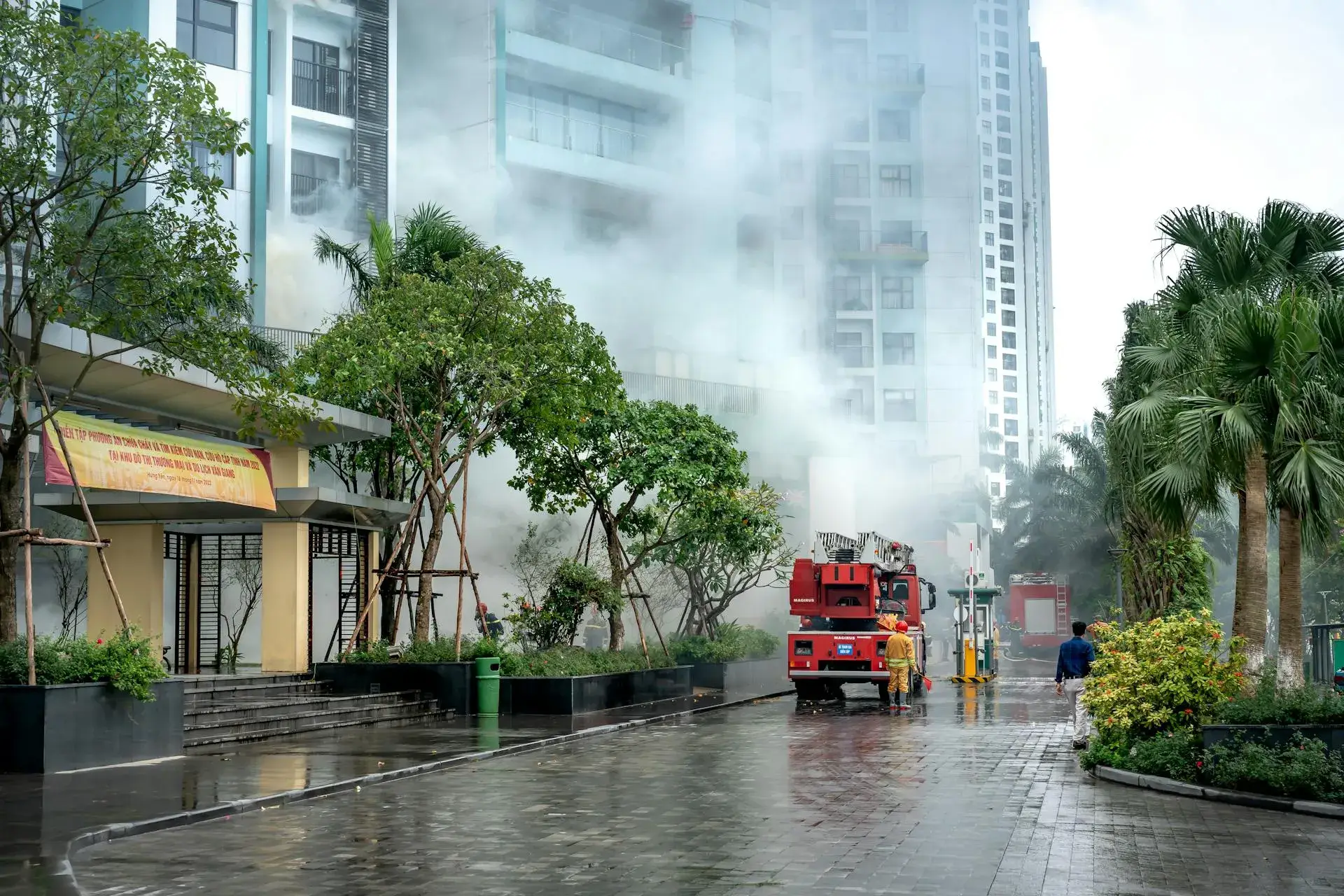
Smoke Damage Restoration in Palatine, IL
Smoke residue bonds to surfaces permanently within hours. Whether from a house fire or wildfire smoke infiltration, professional restoration prevents lasting damage to your home and health. Our local team responds within 60 minutes.
What Happens When You Call
A real person answers and assesses the source and severity of your smoke exposure. We determine the right response level immediately.
Your dedicated restoration team is dispatched from our local base serving Palatine and the surrounding northwest Cook County communities.
Team arrives with air quality testing equipment, HEPA air scrubbers, and specialized cleaning tools. Assessment and initial air scrubbing begin immediately.
Damage scope documented, cleaning plan established, air scrubbers running. You know exactly what comes next.
Smoke damage does not require flames in your home. Whether residue comes from a fire on your property, a neighboring structure fire, or wildfire smoke that infiltrated your home through the HVAC system, the same corrosive particles are bonding to your surfaces and embedding in your materials right now. X Response exists for this moment. When you reach out, your restoration team is mobilized within minutes. One team handles assessment, cleaning, odor treatment, and air quality verification from start to finish. Call now. Your team is standing by.
Why Palatine Homes Are Vulnerable to Smoke Damage
Palatine is a village of 67,908 residents in northwest Cook County, Illinois, roughly 25 miles from downtown Chicago. The community's smoke damage exposure comes from two distinct sources: structure fires within the village and its immediate neighbors, and regional atmospheric events that push wildfire smoke across the entire Chicago metropolitan area. Both create indoor air quality problems, but through different mechanisms and requiring different restoration approaches. Structure fires produce concentrated, localized smoke that enters neighboring homes through shared walls, attic spaces, and open windows. Regional wildfire smoke enters homes through HVAC fresh-air intakes, leaky building envelopes, and open doors, depositing fine particulates throughout the interior at lower concentrations but across every surface and system in the home.
The June 2023 Canadian wildfire smoke event demonstrated the regional exposure pathway at scale. On June 27, 2023, smoke from wildfires burning across 19.5 million acres of Canadian wilderness pushed the Chicago area's Air Quality Index above 230, placing it in the 'very unhealthy' category. The Illinois Environmental Protection Agency's air monitors confirmed the readings, and IQAir's global pollution index ranked Chicago as having the worst air quality of any major city in the world that day. The event persisted for multiple days, with unhealthy conditions continuing through June 29. For Palatine residents, the smoke infiltrated homes through every pathway available: HVAC systems drawing in exterior air, leaky window seals, door gaps, and the natural air exchange that occurs in any residential structure. The fine particulate matter (PM2.5) deposited on interior surfaces, embedded in soft furnishings, and contaminated HVAC filters and ductwork, leaving a residue that continued degrading indoor air quality long after the outdoor haze cleared.
Canadian Wildfire Smoke Infiltration (June 2023 and Recurring)
The June 2023 wildfire smoke event was not an isolated occurrence. Climate patterns are pushing wildfire smoke from Canadian and western U.S. fires into the Midwest with increasing frequency, and the Chicago area has experienced multiple air quality alerts in consecutive summers. For Palatine homes, each event deposits fine particulate matter (PM2.5) throughout the interior. These particles are small enough to bypass standard HVAC filters (MERV 8 or below, which are the default in most residential systems) and settle on every surface in the home: countertops, furniture, bedding, clothing, and inside electronic equipment. A single multi-day smoke event leaves enough residue to trigger respiratory symptoms in sensitive individuals, and repeated events create cumulative contamination in ductwork, carpet fibers, and upholstery that standard household cleaning does not remove. The 2023 event was severe enough that the Illinois EPA issued health advisories recommending residents stay indoors, but for many Palatine homes, the indoor air was nearly as contaminated as the outdoor air because of infiltration through the building envelope.
Neighboring Structure Fire Smoke
Palatine's housing density means that a fire in one property frequently produces smoke damage in neighboring structures. In the village's multi-family housing along Northwest Highway and Rand Road, fire in one apartment can push smoke through shared attic spaces, wall cavities, and HVAC plenums into adjacent units. But even single-family homes on typical suburban lots are close enough that heavy smoke from a neighbor's fire enters through open windows, HVAC fresh-air intakes, or the natural stack effect that draws outdoor air into the home through lower-level gaps. The smoke from a neighbor's fire can contaminate your home without any flame ever touching your property. This creates a unique insurance situation: you have smoke damage but no fire damage, and your claim falls under a different coverage section than if the fire had been on your property.
Forced-Air HVAC System as Smoke Distribution Network
Nearly every home in Palatine relies on a forced-air furnace and central air conditioning, with ductwork running through basements, floor cavities, and attic spaces. When smoke enters the home from any source, whether wildfire, neighboring fire, or a small fire on the property, the HVAC system distributes it to every room. The return-air system pulls contaminated air from the affected area and pushes it through the ductwork to every supply register in the house. Smoke particles settle inside the ductwork, on the evaporator coil, and in the blower housing, creating a reservoir of contamination that re-releases into the air every time the system cycles. Changing the filter addresses only the largest particles passing through it during operation. The soot and residue already deposited on duct walls, coil fins, and blower blades remains in place, continuously re-contaminating the indoor air until the system is professionally cleaned.
Smoke Residue Chemistry and Surface Damage
Smoke residue is not a uniform substance. It varies dramatically based on what burned. Structure fires involving synthetic materials (plastics, foams, synthetic fabrics, modern building materials) produce a wet, sticky, acidic soot that bonds aggressively to surfaces and corrodes metals within hours. Natural material fires (wood, paper, cotton) produce a dry, powdery soot that is easier to clean but penetrates deeper into porous materials. Wildfire smoke typically produces fine, dry particulate that settles uniformly across all surfaces. Each type requires different cleaning chemistry and methods. Using the wrong approach, such as wiping synthetic soot with a wet cloth, drives the residue deeper into porous materials and creates permanent staining that professional methods could have reversed. Palatine homes exposed to neighbor-fire smoke may encounter mixed residue types depending on what was burning, requiring assessment before cleaning begins.
Attic and Wall Cavity Smoke Trapping
Palatine's housing stock, built primarily in the 1960s and 1970s, features construction details that trap smoke in hidden spaces. Balloon-frame construction in some older homes allows smoke to travel from basement to attic through continuous wall cavities. Platform-frame homes trap smoke in the joist bays between floors and in the soffit spaces above kitchen cabinets. Attic spaces, ventilated to the exterior through soffit and ridge vents, draw in smoke from neighboring fires and trap it in insulation where it slowly off-gasses for months. These hidden reservoirs of smoke contamination explain why some homeowners continue smelling smoke long after visible surfaces have been cleaned: the odor source is inside the structure's cavities rather than on its surfaces, and it emerges through electrical outlets, plumbing penetrations, and the natural air movement within the building envelope.
Smoke damage in Palatine comes from predictable sources: the village's dense housing stock concentrates structure-fire exposure, the forced-air HVAC systems in every home distribute contamination throughout the living space, and recurring wildfire smoke events from Canadian and western fires push particulates into homes through building envelopes that were never designed to filter fine particles. Effective smoke restoration means identifying the source, the type of residue, and every pathway it traveled, including the hidden cavities and ductwork that standard cleaning cannot reach.
What Happens to Your Home While You Wait
Within 1 Hour
Smoke particles settle on every exposed surface in the home. Acidic residue from synthetic materials begins bonding to metals, including light fixtures, appliance surfaces, plumbing fittings, and electronics. The HVAC system, if running during the event, has already distributed particulates through the ductwork to every room with a supply register. Fine soot settles into carpet fibers, upholstery weave, and the texture of painted walls. The longer residue sits, the deeper it bonds.
1–24 Hours
Soot residue permanently stains porous surfaces including grout, natural stone countertops, and unsealed wood if not addressed. Metal surfaces begin pitting from acid exposure, particularly chrome, nickel, and brass finishes on fixtures and hardware. Smoke odor penetrates deeper into soft materials: furniture cushions, mattresses, clothing in closets, and window treatments. Synthetic soot becomes increasingly difficult to remove as it cross-links with surface materials.
24–48 Hours
Corrosion becomes visible on metal surfaces. Yellowing appears on light-colored paint, plastics, and appliance surfaces. Smoke compounds penetrate through paint films and into the substrate beneath. Electronics exposed to conductive soot particles begin experiencing intermittent failures as residue bridges circuit board traces. The window for reversible cleaning narrows as residue bonds chemically rather than just physically to surfaces.
48–72 Hours
Permanent etching on glass surfaces exposed to acidic smoke compounds. Metal corrosion progresses to the point of requiring replacement rather than cleaning. Odor compounds embed deeply in structural materials, insulation, and framing lumber, requiring increasingly aggressive treatment methods rather than surface cleaning. Content items (clothing, linens, upholstered furniture) cross the threshold from professional cleaning to replacement as odor bonds permanently.
One Week and Beyond
Widespread permanent staining and corrosion. Odor embedded in the structure requires thermal fogging, ozone treatment, or hydroxyl generation rather than surface cleaning alone. HVAC system contamination continues re-depositing particles on cleaned surfaces every time the system runs. Restoration cost and scope increase substantially compared to immediate response. Insurance documentation becomes more complex as the carrier questions whether timely intervention would have reduced the loss.
Smoke damage gets permanently worse with every day of inaction. Residue that could be cleaned in the first hours bonds irreversibly within days. Contact X Response now. Our Palatine team responds within 60 minutes.
How We Restore Smoke-Damaged Palatine Homes
Smoke damage restoration requires systematic identification of every contaminated surface and material, followed by cleaning methods matched to the specific type of residue. Here is exactly what the process involves for Palatine properties.
Source Identification and Damage Assessment
Our team arrives to identify the smoke source, assess the type of residue (dry, wet/sticky, protein-based, or fine particulate), and map the full extent of contamination throughout the structure. In Palatine homes, that means testing surfaces in every room, inspecting HVAC ductwork for contamination, checking attic and wall cavities for trapped smoke, and determining whether the exposure came from a fire on the property, a neighboring structure fire, or regional wildfire smoke infiltration. Each source produces different residue requiring different cleaning chemistry. The assessment produces a room-by-room cleaning plan and a content inventory that distinguishes cleanable items from those requiring specialized restoration or replacement.
Air Quality Stabilization
HEPA-filtered air scrubbers are deployed immediately to begin removing airborne particulates from the living space. If the HVAC system is contaminated, it is isolated to prevent continued distribution of particles through the ductwork. Negative air pressure may be established in heavily contaminated areas to prevent cross-contamination of cleaner spaces during the cleaning process. For wildfire smoke infiltration events, we seal the building envelope against continued outdoor infiltration while running interior air scrubbers to clean down the existing contamination.
Surface and Content Cleaning
Every contaminated surface is cleaned using methods appropriate to the residue type and the material. Dry soot is removed with dry chemical sponges and HEPA vacuuming before any wet cleaning to prevent smearing. Wet, sticky residue from synthetic fires requires solvent-based cleaning followed by degreasing. Porous surfaces like unfinished wood and concrete may require media blasting or sealing depending on depth of penetration. Contents, including clothing, linens, electronics, documents, and furnishings, are cleaned on-site or packed out for specialized cleaning at our facility depending on contamination severity and item sensitivity.
HVAC System Decontamination
The entire forced-air system is cleaned: supply ducts, return ducts, trunk lines, branch lines, register boots, the blower housing, evaporator coil, and heat exchanger surfaces. Filters are replaced with high-efficiency units (MERV 13 or higher) appropriate for the system's airflow capacity. This step is essential in Palatine homes because the ductwork acts as both a distribution mechanism during the event and a reservoir of contamination afterward. Leaving contaminated ductwork in place guarantees that cleaned rooms are re-contaminated every time the system cycles, regardless of how thoroughly surfaces were addressed.
Odor Elimination and Verification
After surface cleaning and HVAC decontamination, residual odor embedded in structural materials is addressed using thermal fogging, ozone treatment, or hydroxyl generators depending on the structure's occupancy status, the type of smoke compounds, and the materials involved. Thermal fogging penetrates the same pathways smoke traveled, reaching into wall cavities, attic insulation, and hidden spaces that surface cleaning cannot access. Final air quality testing confirms that particulate levels and odor compounds have returned to acceptable standards before the project is considered complete.
The X Response Difference
Smoke damage restoration requires understanding where the smoke came from, what it contaminated, and how to clean each material without causing further damage. X Response manages the entire process with one team and one standard of quality.
Insurance Claim Guidance for Palatine Homeowners
Smoke damage insurance coverage in Illinois depends on the source. If the smoke came from a fire on your property, the damage falls under your standard fire coverage. If smoke entered from a neighboring property's fire, you file under your own policy (typically the 'smoke' peril, which is a named peril on most Illinois homeowner's policies) and your carrier may subrogate against the neighbor's liability coverage. Wildfire smoke infiltration from distant fires presents a grayer area: some carriers cover it as smoke damage, while others dispute coverage because there was no proximate fire event on or near the property. The June 2023 Canadian wildfire event tested these boundaries across the Chicago metro area, and carrier responses varied.
How X Response Helps
- Document smoke contamination with air quality readings, surface testing, and photographic evidence throughout the property
- Identify the smoke source clearly, as coverage paths differ for fires on your property, neighboring fires, and regional wildfire smoke
- Inventory and document all affected contents with pre-loss condition and replacement values
- Provide cleaning vs. replacement recommendations for contents based on professional assessment of restorability
- Track HVAC decontamination, air scrubbing, and odor treatment as separate line items that your adjuster can evaluate against your policy's coverage
X Response does not file claims on your behalf, adjust claims, or make coverage determinations. We provide documentation and professional assessment to help you navigate the claims process. Coverage decisions are made solely by your insurance carrier.
Certified Restoration Specialists Serving Palatine
When you contact X Response for smoke damage in Palatine, your restoration team brings specialized expertise in identifying residue types, tracing smoke paths through forced-air systems and structural cavities, and selecting the correct cleaning chemistry for each material and surface. They have restored homes after kitchen fires that distributed smoke through ductwork to every room, multi-unit buildings where smoke traveled through shared attic spaces, and properties contaminated by the June 2023 wildfire event where fine particulate infiltrated through the building envelope. They understand the difference between addressing visible contamination and eliminating the hidden reservoirs in ductwork, insulation, and wall cavities that cause odor callbacks weeks after initial cleaning.
Every technician holds current IICRC certification in fire and smoke restoration and has completed specialized training in odor identification and treatment. Equipment includes HEPA air scrubbers, thermal foggers, hydroxyl generators, ozone units, and the full range of cleaning tools and chemistry required for every type of smoke residue. Air quality testing equipment provides objective pre-and-post measurements that document the restoration's effectiveness and support your insurance claim.
In Palatine, X Response works with Scene Cleaners, an independent local restoration partner serving Cook County.
Smoke Damage Restoration FAQ for Palatine Homeowners
Other Emergency Services in Palatine

Water Damage Restoration
Burst pipes, storm flooding, standing water. We extract, dry, and restore before mold sets in.
Learn more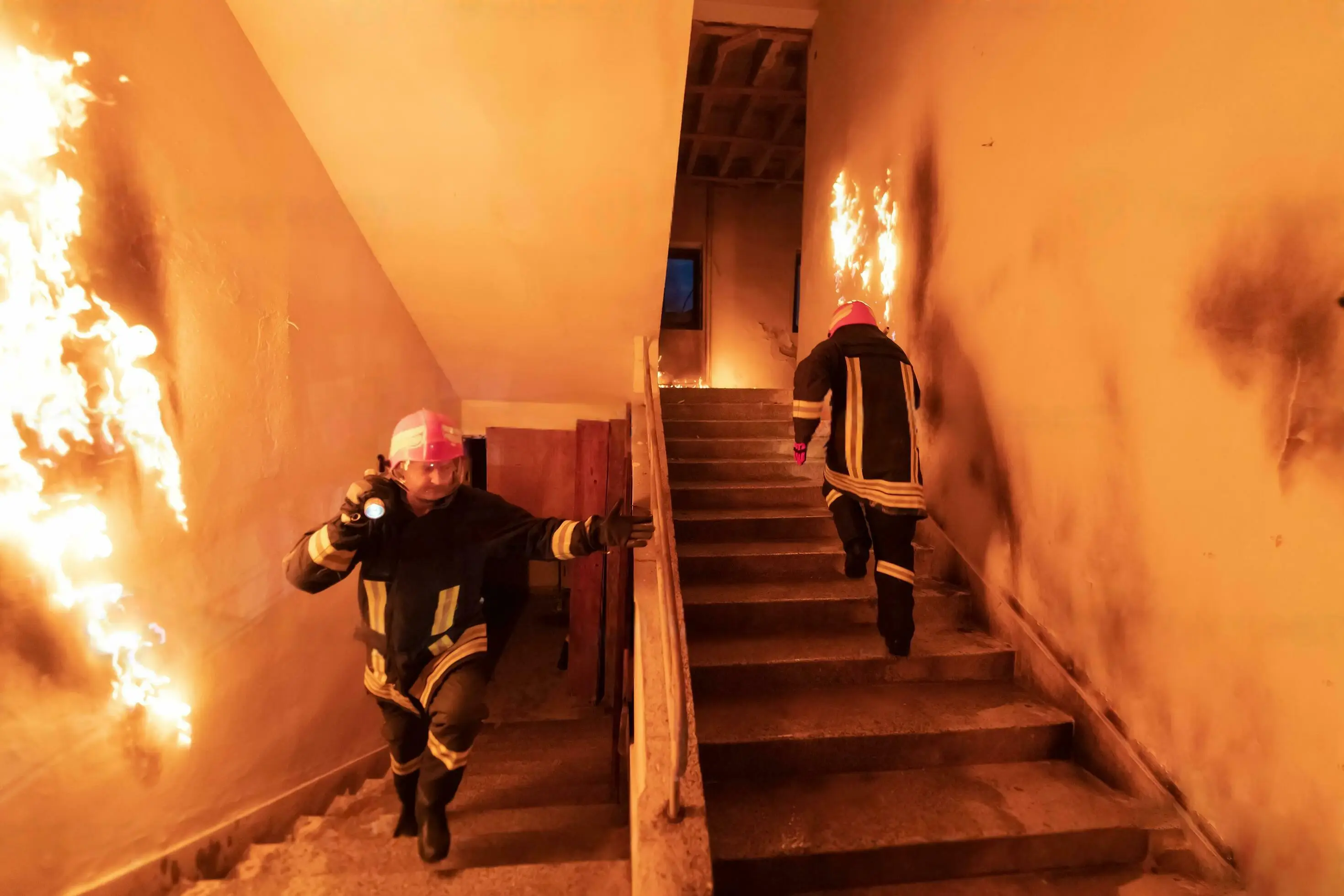
Fire Damage Restoration
Structural damage, soot, debris. We stabilize, clean, and rebuild what fire destroyed.
Learn more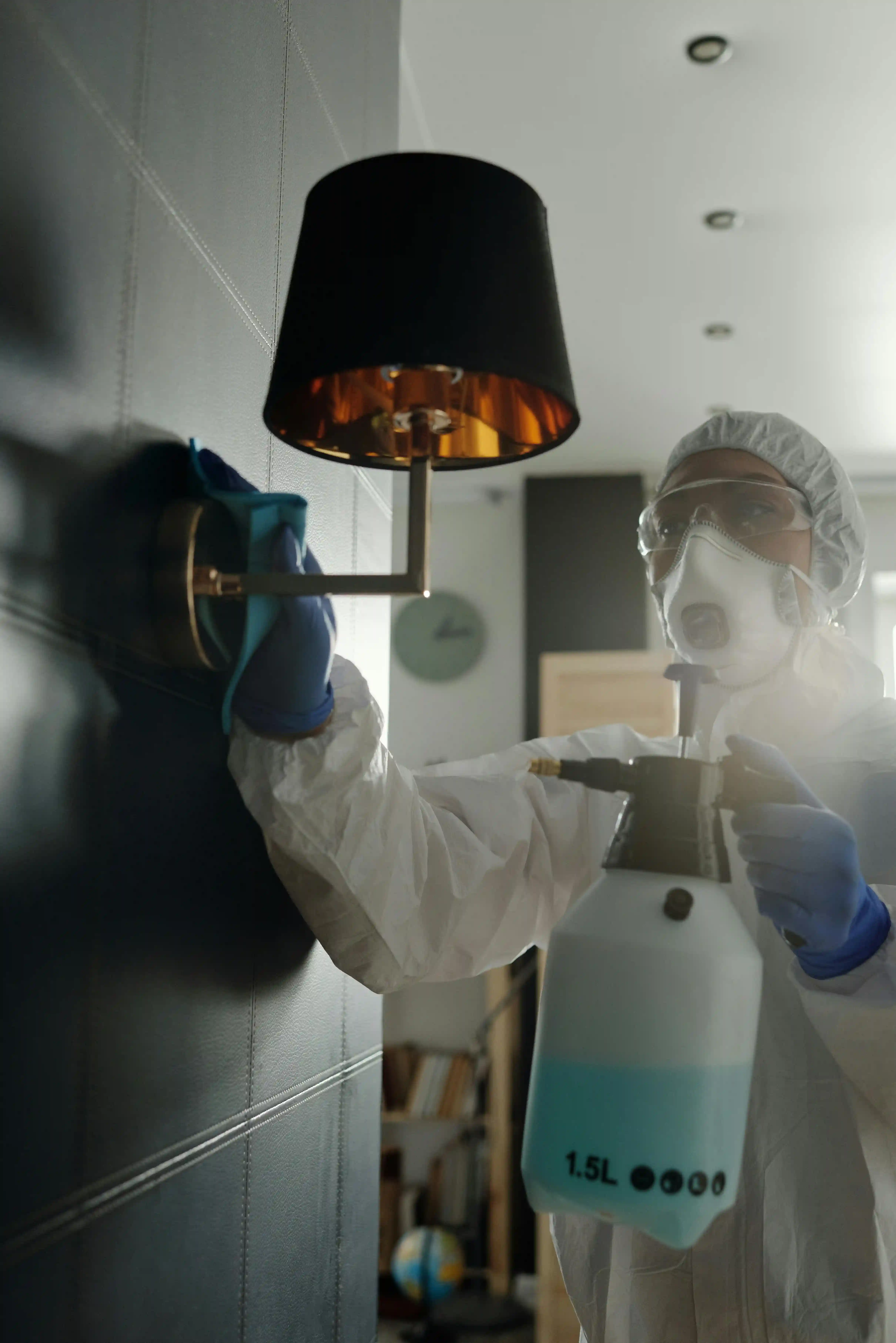
Mold Remediation
Testing, containment, removal, prevention. We find the source, eliminate the growth, and stop it from returning.
Learn more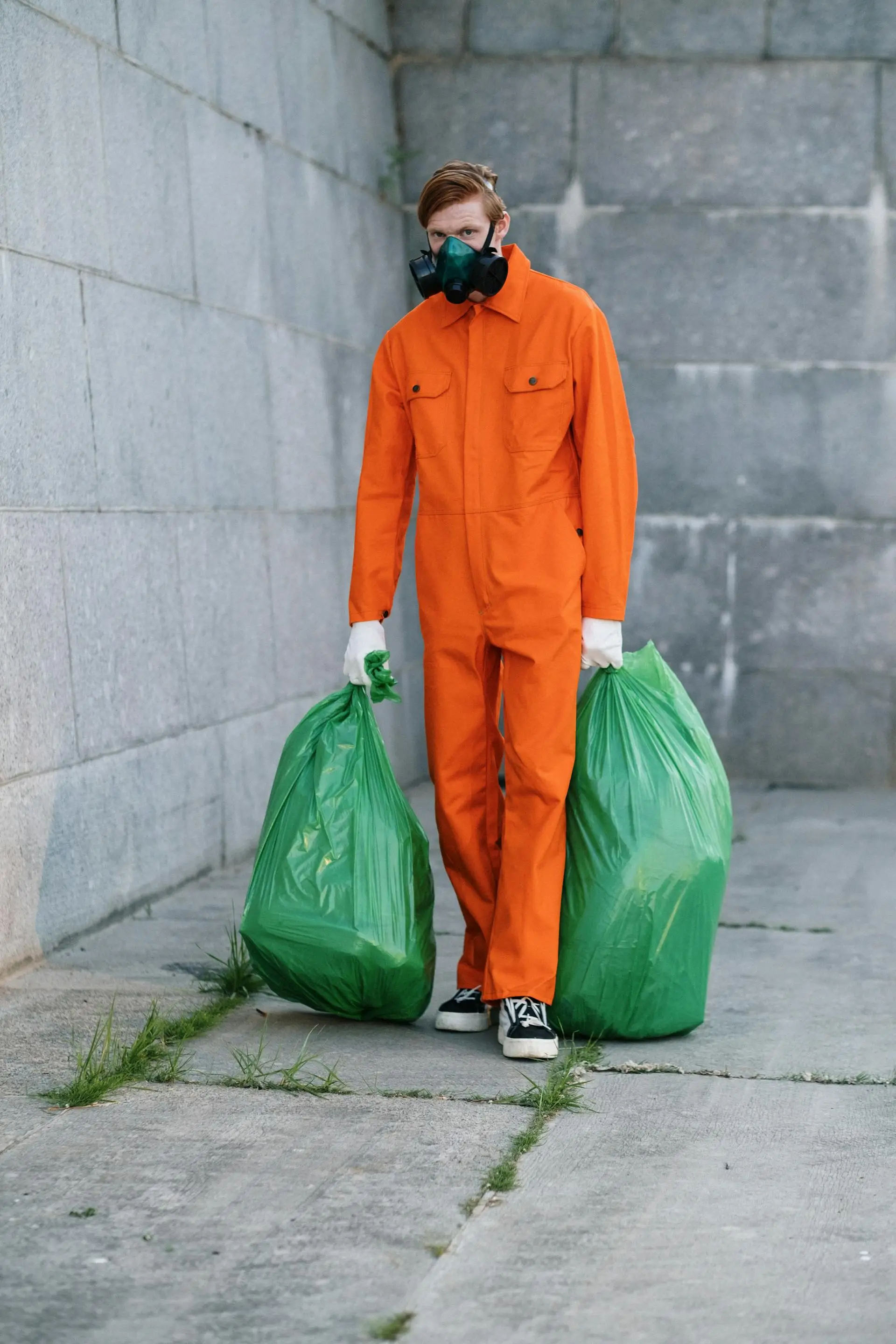
Sewage Cleanup
Sewer backups, contaminated water, biohazard. We extract, sanitize, and restore safely.
Learn moreNearby Service Areas
Also serving nearby: