
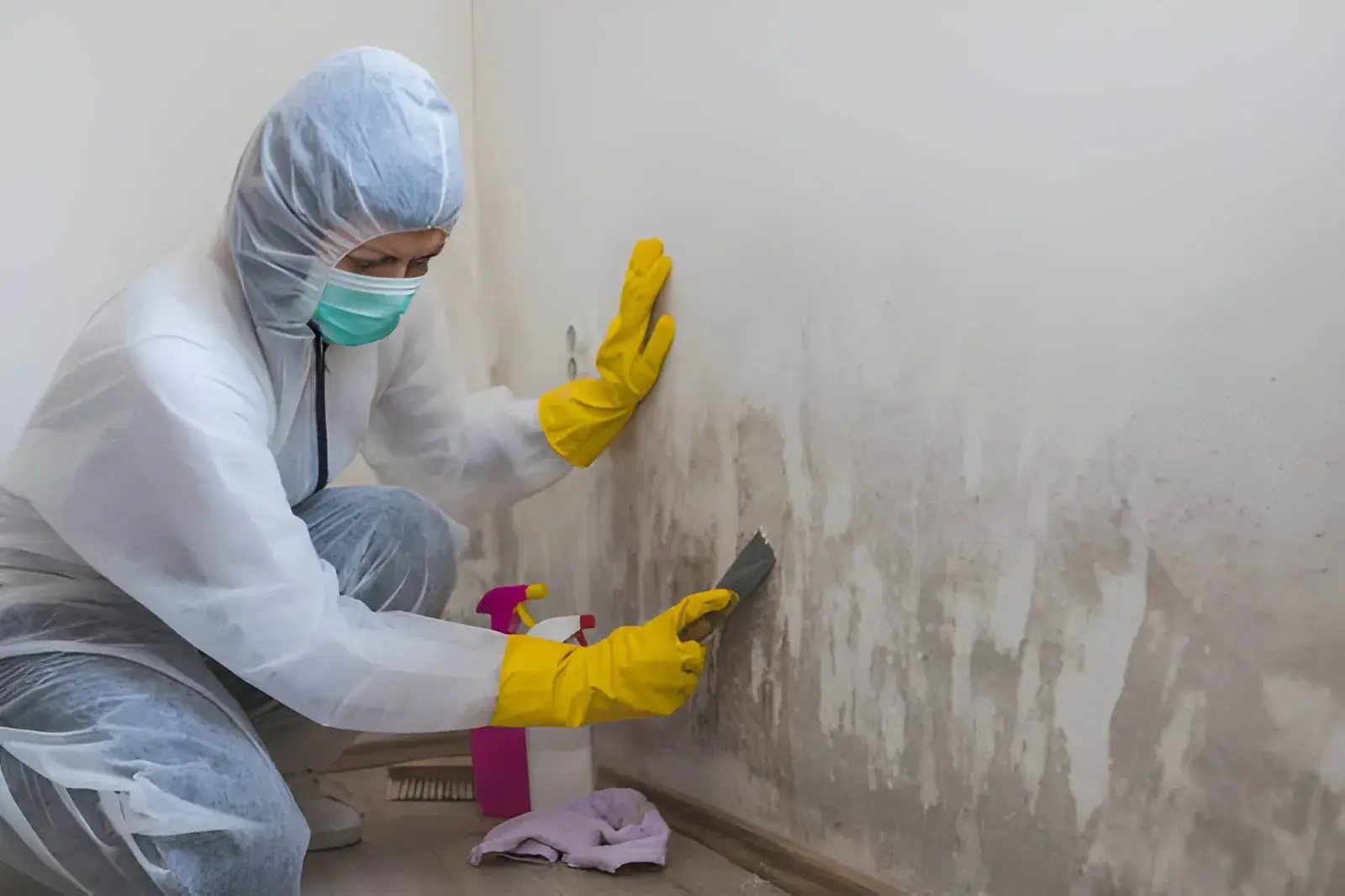
Mold Remediation in Mount Prospect, IL
Mold doubles its colony size every 24 to 48 hours in favorable conditions. Our local team responds to Mount Prospect mold emergencies within 60 minutes.
What Happens When You Call
A real person answers, not a call center. We assess your situation, ask about the location, extent, and suspected moisture source, and begin coordinating your response immediately.
Your dedicated remediation team is dispatched from our local base serving Mount Prospect and the surrounding northwest Cook County communities.
Team arrives with moisture meters, thermal imaging, HEPA filtration, and containment materials. Assessment and source identification begin immediately.
Moisture source identified, contamination scope mapped, remediation plan documented. You know exactly what comes next and what it will take to resolve.
You found mold in your home, or you suspect it based on a persistent musty smell, unexplained respiratory symptoms, or visible discoloration in your basement. Mold does not resolve on its own. It grows as long as moisture is present, and in Mount Prospect's basement-heavy housing stock with recurring water intrusion from the combined sewer system and interior drainage flooding, the moisture source is often persistent rather than one-time. X Response exists for exactly this moment. When you reach out, your remediation team is mobilized within minutes. From that point forward, one team manages everything: assessment, containment, removal, moisture correction, and clearance verification. Call now. Your team is standing by.
Why Mount Prospect Homes Are Vulnerable to Mold
Mount Prospect's mold problem is fundamentally a moisture problem, and the village has several moisture sources that operate simultaneously. The most persistent is the combined sewer system that serves much of the older housing stock. During heavy rain, stormwater and sanitary sewage share the same pipe, and when volume exceeds capacity, contaminated water backs into basements through floor drains and laundry connections. That water saturates drywall, carpet, and structural framing, and even after the visible water recedes, moisture remains trapped in wall cavities, beneath flooring, and in the pores of concrete block foundations. In the warm, enclosed environment of a basement with limited ventilation, mold colonization begins within 24 to 48 hours of saturation. Many Mount Prospect homeowners experience recurring sewer backup events separated by months or years, with each event adding another layer of moisture damage and mold growth to materials that never fully dried from the previous incident.
The second persistent moisture source is unique to the neighborhoods within the Levee 37 interior drainage area, west of Route 83 and east of the Des Plaines River. Levee 37 prevents river flooding but also prevents local stormwater from draining toward the river. During heavy rain, water ponds behind the levee, saturates the soil around basement foundations, and seeps through concrete block walls, floor-wall joints, and foundation cracks. The MWRD partnered with the village in 2021 to build underground detention at Aspen Trails Park and Burning Bush Trails Park, providing over 5.5 million gallons of combined storage capacity to reduce this ponding. Those projects help, but they do not eliminate the water table rise during sustained wet periods, and homes with deteriorating foundation waterproofing continue to experience basement moisture that feeds mold growth year after year. Illinois has no state mold remediation license, which means homeowners must evaluate contractors based on IICRC certification (AMRT) and documented protocols rather than state oversight.
Combined Sewer Backup and Recurring Contamination
Mount Prospect's combined sewer system creates a specific mold risk pattern. When the system overwhelms during heavy rain, sewage-contaminated water enters basements through the lowest fixtures: floor drains, standpipes, and laundry connections. This water carries bacteria, organic matter, and moisture that saturates building materials. After the visible water is pumped out or recedes, moisture remains in concrete block foundations, behind finished basement walls, within carpet pad and tack strips, and in the lower portions of drywall panels. If materials are not professionally dried within 24 to 48 hours, mold colonization begins. Many Mount Prospect homeowners experience this pattern repeatedly, with each backup adding moisture to materials that never fully dried from the previous event. The result is progressive mold growth hidden behind finished surfaces, often undetected until the colony is extensive enough to produce visible surface growth, a persistent musty odor, or health symptoms.
Levee 37 Interior Drainage and Foundation Moisture
Neighborhoods within the Levee 37 interior drainage area experience a moisture source that operates independently of the sewer system. When heavy rain ponds behind the levee, the local water table rises and pushes moisture against basement foundations. Water enters through cracks in poured-concrete walls, through mortar joints in concrete block foundations, and through the cold joint where the floor slab meets the foundation wall. This hydrostatic pressure can push moisture into the basement even when no visible water is present on the floor, creating chronically damp conditions on foundation walls and in the lower portions of partition walls built against them. Mold thrives in these persistently damp environments, growing on the paper facing of drywall, on wood sill plates, and on the organic matter in dust that accumulates on concrete surfaces.
1950s Basement Construction and Ventilation Limitations
Most Mount Prospect homes were built in the 1950s with full basements designed as utility spaces rather than living areas. The original construction used concrete block foundations with minimal or no interior waterproofing, single-coat parging on the exterior, and clay tile drain systems that deteriorate and clog over 60 to 70 years. As homeowners finished these basements over the decades, they typically installed wood-framed partition walls directly against the foundation, insulated with fiberglass batts, and covered with paper-faced drywall. This assembly creates a hidden mold incubator: the paper faces the cold, damp foundation wall, fiberglass batts trap moisture rather than shedding it, and the finished surface conceals the problem until growth is extensive. Ventilation in these basement spaces is typically limited to the forced-air system return, which means that when mold does establish, it distributes spores through the ductwork to the entire home.
Spring Snowmelt and Sustained Soil Saturation
Northern Illinois delivers sustained soil moisture loading during the spring thaw that lasts weeks rather than the hours of a summer thunderstorm. Snow accumulated over months melts gradually into the ground, raising the water table against basement foundations throughout March, April, and into May. This extended wet period differs from a single storm event because materials stay damp for weeks rather than days, providing ideal sustained conditions for mold colonization. Homes with failing perimeter drain systems or deteriorated waterproofing absorb this moisture continuously, and the basement environment stays cool and humid long after surface snow disappears. The timing compounds the problem: mold that establishes during the cool, damp spring accelerates its growth when summer temperatures warm the basement, and homeowners often do not notice until the musty odor or visible growth appears during the humid summer months.
Humidity, Condensation, and HVAC Interactions
Cook County summers bring sustained periods of high humidity that compound basement moisture problems. When warm, humid outdoor air enters a cool basement through window wells, hopper windows, or the door connecting to the upper floors, it condenses on cold surfaces: foundation walls, cold-water pipes, and the underside of the first-floor subfloor. This condensation provides a continuous moisture supply to surfaces that already tend toward dampness. The HVAC system's role is complex: central air conditioning dehumidifies the living space above but does not condition the basement directly in many Mount Prospect homes, leaving the basement as a cool, humid pocket that the system's return draws from, pulling mold spores upward into the conditioned space. Conversely, homes that do condition the basement sometimes create temperature differentials that increase condensation on uninsulated foundation walls.
These factors create a cycle rather than a series of isolated events. The combined sewer backs up and saturates basement materials. The Levee 37 interior drainage raises the water table against foundations. Snowmelt sustains moisture for weeks. Summer humidity adds condensation. And the 1950s construction traps all of it behind finished walls where mold grows undetected. Effective mold remediation in Mount Prospect means more than killing visible colonies. It requires identifying which moisture source is active, correcting it so the problem does not return after remediation, and removing materials that have become permanent mold reservoirs because they experienced repeated saturation without adequate drying. A team familiar with Mount Prospect's specific moisture patterns can distinguish between a one-time event and a systemic condition, which determines whether remediation alone is sufficient or whether waterproofing, drainage correction, or sewer protection must be addressed first.
What Happens to Your Home While You Wait
24–48 Hours After Saturation
Mold spores, which are always present in ambient air, begin colonizing damp organic materials. In Mount Prospect basements, that means the paper facing of drywall installed against foundation walls, wood sill plates, carpet pad, and any cardboard or paper storage in contact with the floor. Growth is microscopic at this stage and invisible to the eye. No odor is detectable. But the colony is establishing, sending root structures (hyphae) into the material substrate.
3–7 Days
Colonies become visible as discoloration on surfaces: gray, green, or black patches on drywall, white or gray fuzz on wood, dark spots on ceiling tiles. Musty odor becomes noticeable in the basement and may begin reaching the upper floors through the HVAC return. The mold is now actively consuming the organic material it has colonized and producing spores that become airborne. People with mold sensitivities begin experiencing symptoms: nasal congestion, eye irritation, coughing, or worsening asthma.
1–4 Weeks
Growth spreads behind finished walls and beneath flooring where it is not visible from the living space. Colony mass increases substantially. Spore concentrations in the air rise. The HVAC system distributes spores to upper floors, contaminating rooms that have no direct moisture problem. Wood structural members at the sill plate level begin degrading as fungi break down cellulose. The remediation scope expands from targeted removal to potentially extensive demolition of finished basement assemblies.
1–3 Months
Mold colonizes the entire wall cavity behind finished basement walls where moisture is present. Structural framing begins losing load-bearing capacity at connection points. The home's indoor air quality is significantly compromised, with spore counts well above outdoor ambient levels. Remediation now requires full demolition of affected finished assemblies, structural repair of degraded framing, HVAC decontamination, and extensive air scrubbing. Costs multiply compared to early intervention.
Chronic/Long-Term
Homes with recurring moisture sources that go unaddressed develop systemic mold problems that affect structural integrity, indoor air quality, property value, and habitability. The mold is no longer a discrete colony but a condition of the building that requires both comprehensive remediation and correction of the underlying moisture source before the home can be restored. At this stage, some materials have been consumed beyond repair rather than simply colonized on the surface.
The window between manageable remediation and extensive demolition is measured in days after a moisture event. Contact X Response now. Our Mount Prospect team responds within 60 minutes.
How We Restore Mold-Affected Mount Prospect Homes
Mold remediation is not cleaning. It is the identification and correction of a moisture problem combined with the safe removal of contaminated materials and verification that the environment has been restored to safe conditions. Here is how our team approaches mold remediation in Mount Prospect.
Inspection and Moisture Source Identification
Our team arrives with professional moisture meters, thermal imaging cameras, and hygrometers to assess both the visible mold and the hidden moisture driving it. In Mount Prospect, the first question is always which moisture source is active: combined sewer backup, interior drainage ponding from the Levee 37 area, foundation seepage from a rising water table, condensation from humidity differentials, or a plumbing leak. The answer determines whether remediation alone will resolve the problem or whether drainage, waterproofing, or sewer protection must be addressed first to prevent recurrence. We map the moisture throughout the structure, check behind finished walls with non-invasive meters, and identify the full extent of colonization before defining the scope of work.
Containment and Negative Air Pressure
Before any mold-contaminated material is disturbed, we establish physical containment using polyethylene sheeting, sealed to floor, ceiling, and walls with tape and spray adhesive. HEPA-filtered negative air machines create pressure differential that pulls air from the containment zone into the filtration equipment rather than allowing spores to escape into unaffected areas. In Mount Prospect's forced-air homes, the HVAC system is isolated to prevent it from distributing disturbed spores through the ductwork. Workers enter and exit through a decontamination chamber. This containment protocol is not optional; disturbing mold without it spreads the contamination throughout the home rather than resolving it.
Material Removal and Surface Treatment
Contaminated porous materials that cannot be restored are removed: drywall with mold growth on either face, saturated insulation, carpet and pad with mold at the backing, and any wood framing with structural degradation from fungal decay. In Mount Prospect basements with finished walls built against the foundation, this typically means removing the lower 2 to 4 feet of drywall, the fiberglass insulation behind it, and treating the exposed concrete block foundation with antimicrobial solution. Non-porous and semi-porous materials that can be saved are cleaned with appropriate agents (HEPA vacuuming followed by antimicrobial wiping). All removed materials are bagged within the containment zone and transported directly out of the home without passing through uncontaminated areas.
Moisture Correction
With contaminated materials removed and the source exposed, we address the moisture mechanism. For combined sewer backup, we recommend overhead sewer conversion or backwater valve installation, and coordinate with the homeowner's plumber. For foundation seepage in the Levee 37 area, options include interior drain tile connected to a sump system, crack injection, and application of crystalline waterproofing to exposed block walls while the cavities are open. For condensation, solutions include dehumidification, insulating foundation walls with closed-cell materials that do not support mold growth, and improving air circulation. The specific correction depends on which source is active. We do not reinstall finished assemblies over an uncorrected moisture source, because doing so guarantees recurrence.
Clearance Verification
After remediation and before any reconstruction, the work area undergoes verification. We visually confirm that all contaminated material has been removed, moisture readings confirm the remaining structure has dried to acceptable levels, and the environment passes our quality standards. For projects where the homeowner or their insurer requests third-party clearance testing, we coordinate with an independent industrial hygienist who collects air and surface samples for laboratory analysis. Remediation is not considered complete until clearance is achieved. Only then does reconstruction of the affected area begin, using materials and assemblies that resist future moisture and mold rather than replicating the original vulnerable construction.
The X Response Difference
When you contact X Response for mold remediation in Mount Prospect, you get a team that treats the cause, not just the symptom. One team handles assessment, containment, removal, moisture correction, and clearance verification, so the problem is resolved completely rather than temporarily masked.
Insurance Claim Guidance for Mount Prospect Homeowners
Mold insurance coverage in Illinois depends on the cause of the moisture that led to the growth. Standard homeowner's policies typically cover mold remediation when it results from a covered peril such as a sudden pipe burst, appliance failure, or storm damage. Mold from gradual conditions like long-term foundation seepage, chronic humidity, or deferred maintenance is generally excluded. Combined sewer backup, one of Mount Prospect's most common mold triggers, requires a specific sewer and drain backup endorsement. Many policies include a mold sublimit (often $5,000 to $25,000) that caps coverage regardless of actual remediation cost. The distinction between sudden water damage that caused mold versus gradual moisture that allowed mold determines whether coverage applies.
How X Response Helps
- Document the water event that caused the mold, as the coverage determination depends on the moisture source being a covered peril
- Photograph mold growth before remediation begins and document its location relative to the moisture source
- Establish a timeline showing when the water event occurred and when mold was discovered, supporting the sudden-loss classification
- Note whether your policy includes sewer backup coverage, as combined sewer overflow is one of the most common mold triggers in Mount Prospect
- Identify your policy's mold sublimit early so you understand the coverage cap before the scope of work is finalized
X Response does not file claims on your behalf, adjust claims, or make coverage determinations. We provide documentation and guidance to help you make informed decisions about your property and your policy. Coverage decisions are made solely by your insurance carrier.
Certified Restoration Specialists Serving Mount Prospect
When you contact X Response for mold remediation in Mount Prospect, your team is drawn from certified professionals who work across northwest Cook County and understand the specific moisture patterns that drive mold growth in this area. They know how the combined sewer system overwhelms during heavy rain and saturates basement materials, how the Levee 37 interior drainage area pushes water tables against foundations during wet periods, and how the 1950s finished-basement construction creates hidden mold incubators behind drywall installed directly against damp concrete block. They have remediated post-flood mold in the River Trails neighborhoods, sewer-backup mold in the older homes east of Route 83, and chronic condensation mold in basements throughout the village. This is a local team with local expertise, not a crew following a generic protocol without understanding the underlying moisture dynamics.
Every technician holds current IICRC certification in Applied Microbial Remediation (AMRT) and Water Damage Restoration (WRT). Illinois does not require a state mold remediation license, which means homeowners must evaluate contractors based on industry certification and documented protocols. Our team follows the IICRC S520 Standard for Professional Mold Remediation, the ANSI/IICRC R520 Reference Guide, and EPA guidance on mold remediation in residential buildings. Equipment includes HEPA-filtered negative air machines, professional containment systems, thermal imaging for moisture mapping, professional-grade hygrometers, and the full range of antimicrobial and encapsulating agents for different substrate materials.
In Mount Prospect, X Response works with Scene Cleaners, an independent local restoration partner serving Cook County.
Mold Remediation FAQ for Mount Prospect Homeowners
Other Emergency Services in Mount Prospect
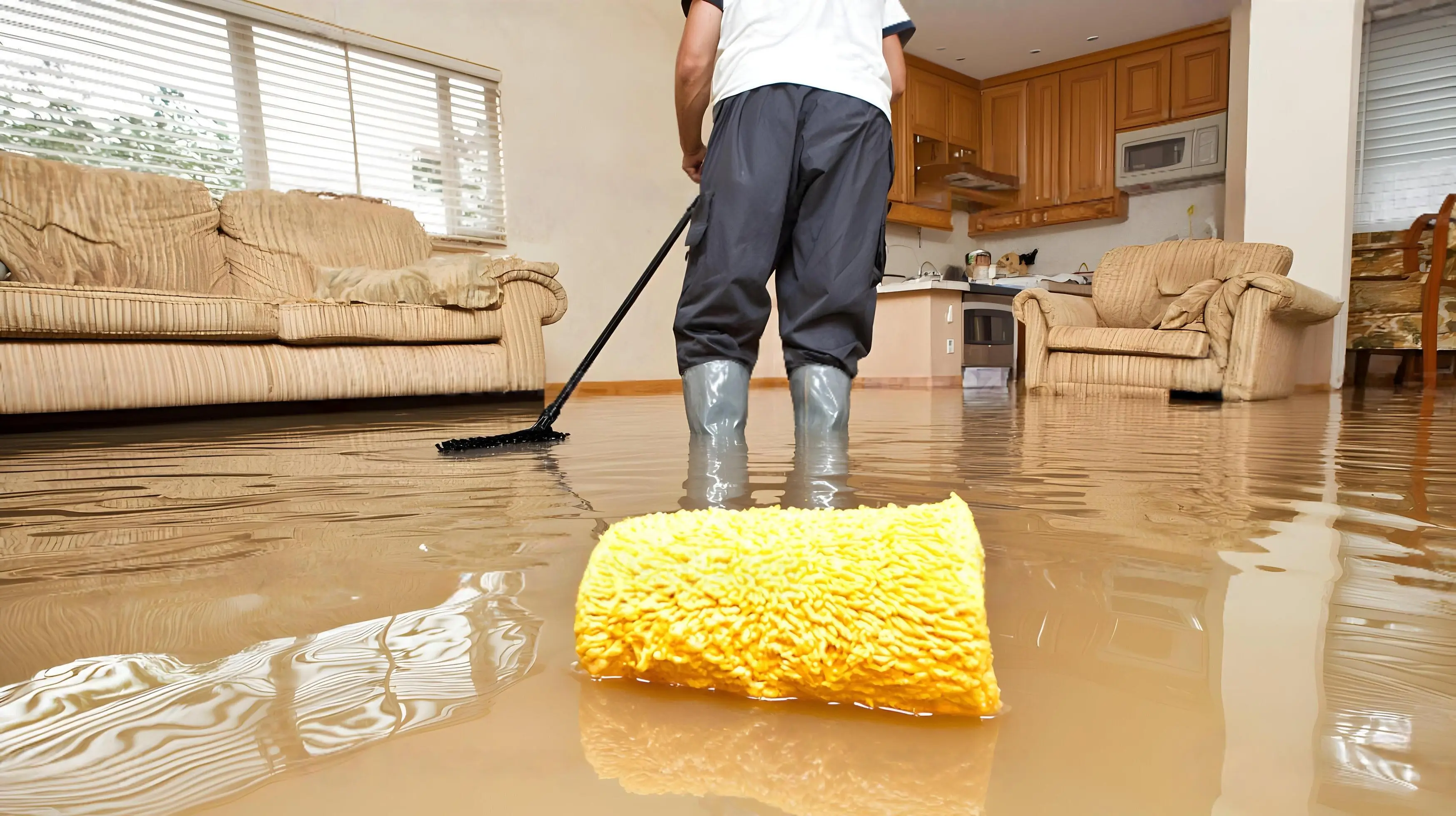
Water Damage Restoration
Burst pipes, storm flooding, standing water. We extract, dry, and restore before mold sets in.
Learn more
Fire Damage Restoration
Structural damage, soot, debris. We stabilize, clean, and rebuild what fire destroyed.
Learn more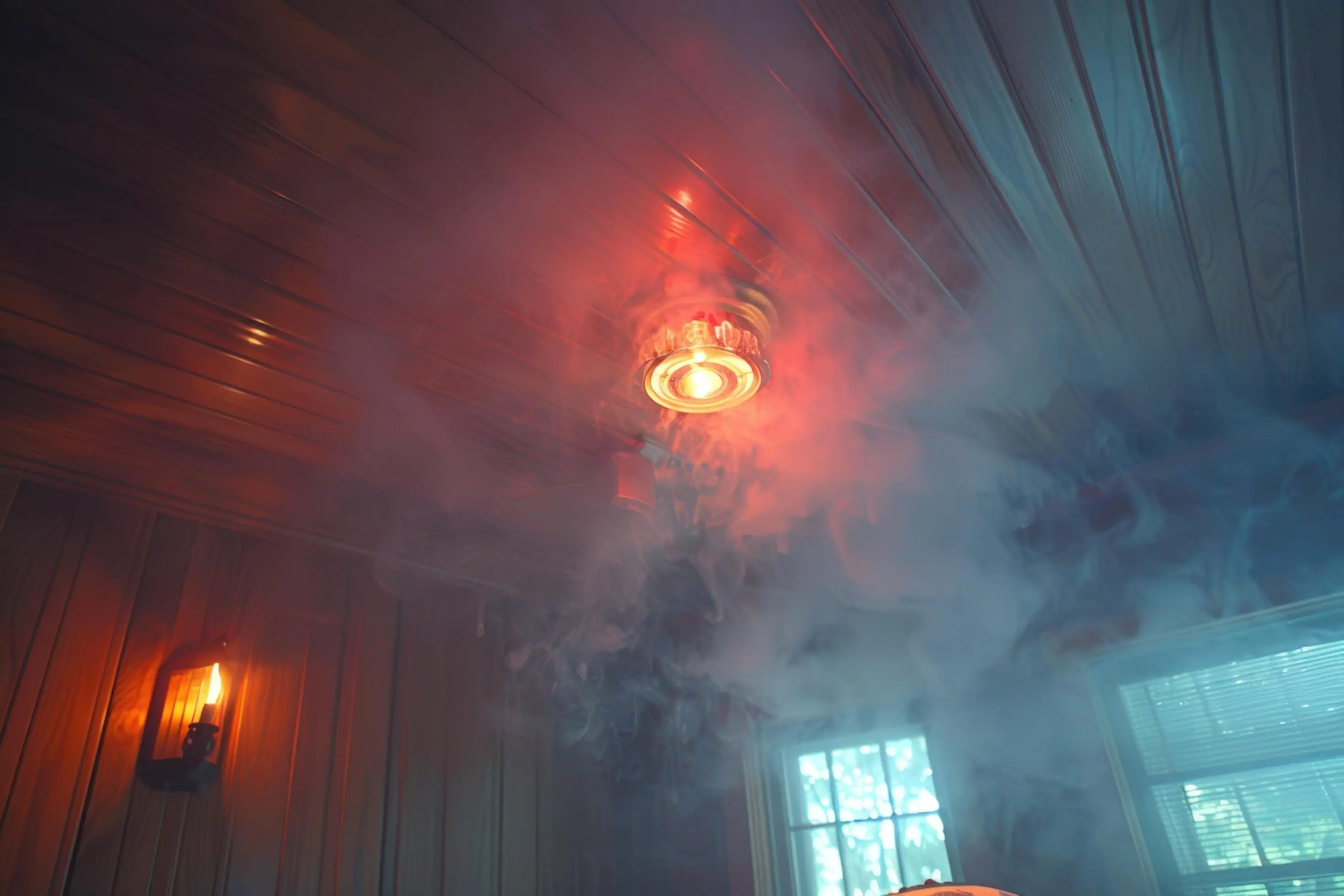
Smoke Damage Restoration
Soot residue, chemical odors, HVAC contamination. We decontaminate surfaces, eliminate odors, and restore air quality.
Learn more
Sewage Cleanup
Sewer backups, contaminated water, biohazard. We extract, sanitize, and restore safely.
Learn moreNearby Service Areas
Also serving nearby: