
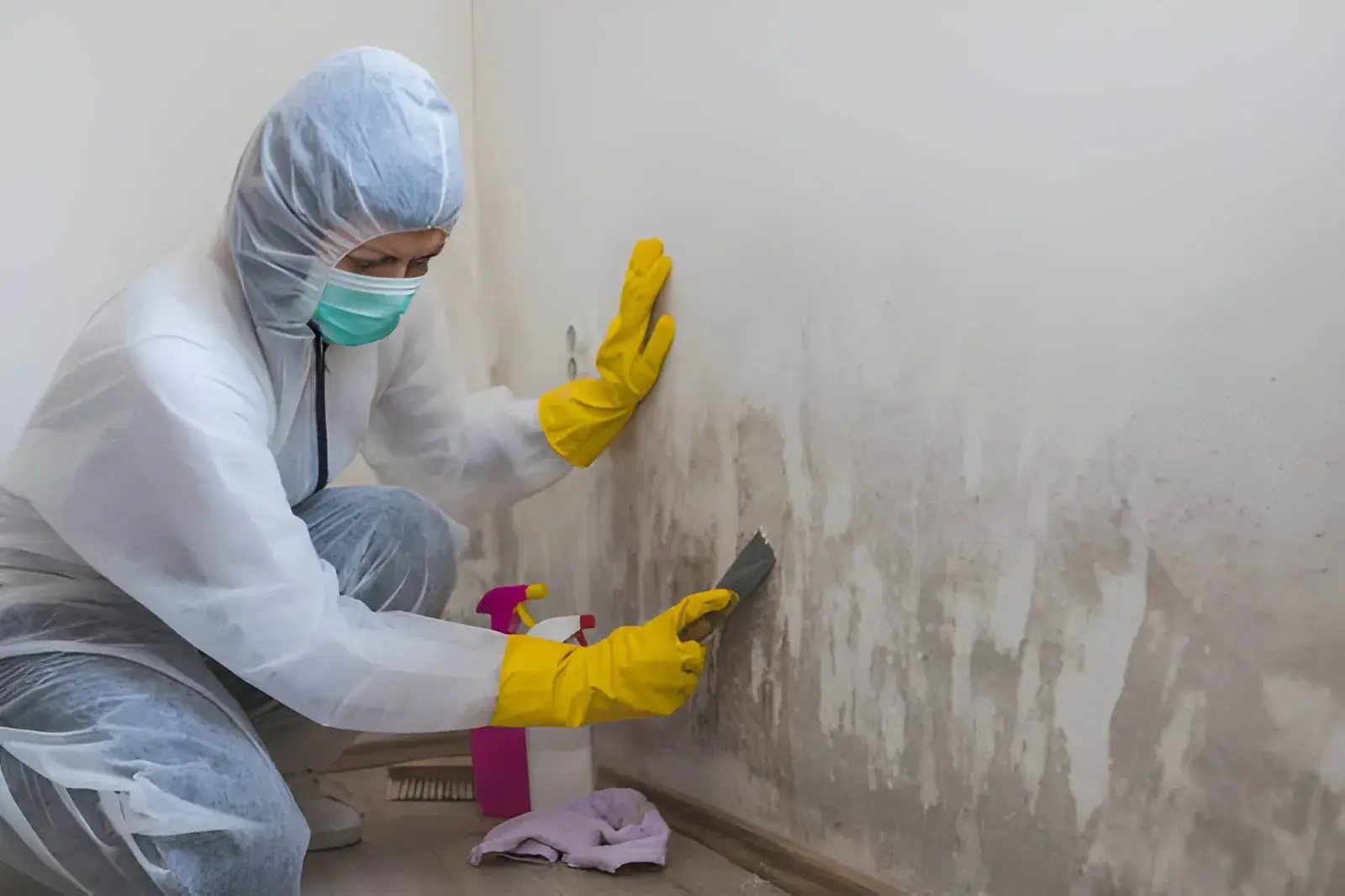
Mold Remediation in Daytona Beach, FL
Mold colonizes water-damaged materials within 24 hours in Daytona Beach's subtropical climate. Every day of delay allows spores to spread deeper into wall cavities and HVAC systems. Our local team responds within 60 minutes.
What Happens When You Call
A real person answers, not a call center. We assess your situation, discuss visible indicators and moisture history, and begin coordinating your response immediately.
Your dedicated remediation team is dispatched from our local base serving Daytona Beach and the surrounding Volusia County communities.
Team arrives with containment materials, HEPA filtration, moisture mapping equipment, and professional testing tools. Assessment and containment begin immediately.
Contamination boundaries mapped, containment established, remediation plan documented. You know exactly what comes next and what your options are.
Mold does not wait. In Daytona Beach's heat and humidity, it establishes colonies on wet building materials within 24 hours and spreads through wall cavities and HVAC systems within days. By the time you see visible growth or smell musty odors, the contamination has already extended well beyond what is visible. You need a team that understands mold behavior in subtropical construction and can contain, remove, and prevent recurrence. X Response is that team. Call now. Your team is standing by.
Why Daytona Beach Homes Are Vulnerable to Mold
Daytona Beach's subtropical climate creates near-ideal conditions for mold growth year-round. Average humidity exceeds 74%, temperatures rarely drop below the range that supports active mold metabolism, and the city's exposure to tropical weather systems delivers repeated water intrusion events that saturate building materials. Hurricanes Ian and Nicole struck Volusia County within six weeks of each other in fall 2022, Ian crossing the state in September and Nicole making landfall on the Atlantic coast near Vero Beach in November before tracking north through the county. Both storms flooded homes across Daytona Beach, and the compressed timeline between events meant that properties damaged by Ian had not fully dried before Nicole delivered additional water. The resulting prolonged moisture created widespread mold colonization in homes that could not be remediated quickly enough given the volume of affected properties competing for limited restoration resources. Two years later, Hurricane Milton in October 2024 repeated the pattern, flooding homes with up to four feet of water and overwhelming the restoration capacity of the region.
Beyond hurricane events, Daytona Beach's mold risk is driven by everyday moisture dynamics that affect buildings continuously. The city receives approximately 54 inches of annual rainfall concentrated in intense summer thunderstorms. Volusia County recorded 70.2 inches in 2024, well above the historical average. High groundwater tables in low-lying areas like Midtown push moisture upward through slab foundations. The Halifax River's tidal influence raises groundwater in adjacent neighborhoods twice daily. Air conditioning systems run year-round and create condensation on ductwork, drain pans, and the interior surfaces of wall cavities where cooled air meets warm exterior walls. Florida's building code requires vapor barriers and proper drainage, but the city's older housing stock between Ridgewood Avenue and the Halifax River predates many of these requirements. Homes built in the 1950s and 1960s often lack modern vapor management, and their construction details create moisture traps where warm, humid air contacts cooler surfaces inside wall and ceiling assemblies. These conditions produce chronic mold problems unrelated to any single water event.
Post-Hurricane Moisture and Delayed Remediation
When tropical systems flood homes in Daytona Beach, the volume of affected properties overwhelms the available remediation workforce. After Hurricane Ian in September 2022, restoration companies were backlogged for weeks across Volusia County. Properties that could not begin professional drying within 24 to 48 hours developed mold colonization that extended well beyond the original water line. Drywall wicks moisture upward, and in Daytona Beach's heat, mold colonizes the paper facing and interior gypsum within a day of saturation. By the time professional crews reached some properties, mold had spread through entire wall systems, into HVAC ductwork, and across attic insulation. Hurricane Nicole arrived six weeks later and re-wetted properties that were still in various stages of drying and repair. Hurricane Milton in October 2024 created similar conditions. The practical reality for Daytona Beach homeowners is that hurricane mold damage often requires more extensive remediation than the original water damage because the delay between flooding and professional intervention allows contamination to spread far beyond the wet footprint.
Chronic Humidity and Condensation-Driven Mold
Not all mold in Daytona Beach results from dramatic flooding events. The most common mold problems in the city develop gradually from the interaction between year-round air conditioning and the humid subtropical exterior environment. When a home's AC system cools interior air to 72 to 76 degrees, it creates a temperature differential across exterior walls and ceiling assemblies. Warm, humid outdoor air migrates inward through gaps, penetrations, and permeable materials toward the cooler interior. Where this moisture-laden air contacts cooled surfaces, particularly the interior face of exterior sheathing and the backside of drywall, condensation forms. In homes with proper vapor barriers, this moisture is managed. In Daytona Beach's older housing stock, where vapor barriers may be absent, deteriorated, or incorrectly positioned, this condensation accumulates daily and sustains mold colonies that grow inside wall cavities invisibly for months or years. Homeowners discover the problem when musty odors become persistent, when visible staining appears on interior surfaces, or when respiratory symptoms develop.
HVAC System Mold Growth
Central Florida's year-round air conditioning creates specific mold risks within the HVAC system itself. The evaporator coil operates below the dew point, causing continuous condensation that drains into the condensate pan and through the drain line. In properly maintained systems, this moisture drains efficiently. When drain lines clog, pans overflow, or biofilm develops on the coil surface, standing moisture accumulates in the air handler and becomes a mold incubator. The warm, dark, perpetually moist environment inside the air handler is ideal for mold colonization. Once established on the coil or in the drain pan, mold spores become airborne with every cooling cycle and distribute through the duct system into every room of the home. Supply ducts in unconditioned attic spaces sweat when exterior heat contacts cooled air inside the duct, creating moisture on the duct exterior or, if insulation has gaps, on the duct interior. Daytona Beach homeowners who notice musty odor primarily when the AC runs are often experiencing HVAC-driven mold distribution from contamination within the air handling system itself.
Slab-on-Grade Moisture Intrusion
Daytona Beach homes built on slab-on-grade foundations face moisture intrusion from below as well as from above. The water table in low-lying areas near the Halifax River and in the Midtown corridor sits close to the surface and rises during rain events, high tides, and storm conditions. Moisture migrates upward through the concrete slab by capillary action, a process that occurs continuously but intensifies when the water table is elevated. This moisture exits the slab surface beneath flooring materials, providing a perpetual moisture source that sustains mold growth between the slab and whatever material sits on top of it. Carpet with pad is particularly vulnerable because the pad holds moisture against the slab surface in darkness where mold grows unchecked. Vinyl plank and tile over mastic can trap moisture beneath the flooring surface where mold colonizes the adhesive and the concrete surface itself. Homeowners in flood-prone areas of Daytona Beach who install new flooring after water events without first verifying the slab has fully dried often discover mold beneath the new flooring within months.
Coastal Salt Air and Building Envelope Degradation
Daytona Beach's barrier island and beachside neighborhoods experience accelerated building envelope degradation from salt air exposure. Salt corrodes metal flashings, deteriorates caulk joints, and accelerates the breakdown of exterior sealants that prevent moisture intrusion. As the building envelope degrades, rain-driven moisture penetrates wall cavities through failed sealant joints, corroded flashings, and gaps around windows and doors. This moisture enters the wall assembly and encounters cooled interior surfaces where it condenses and sustains hidden mold growth. Beachside properties in Daytona Beach face a compounding cycle: salt air degrades the exterior barriers that prevent moisture intrusion, and the subtropical humidity ensures that any moisture that enters the wall assembly supports mold growth rather than evaporating harmlessly. Buildings along Atlantic Avenue, Seabreeze Boulevard, and the A1A corridor require more frequent envelope maintenance to prevent the chronic moisture intrusion that feeds hidden mold colonies.
Mold in Daytona Beach is not an unusual occurrence that results only from catastrophic events. It is a continuous risk driven by the interaction between subtropical humidity, year-round air conditioning, aging building stock, high groundwater, and repeated hurricane exposure. Effective remediation requires understanding these underlying moisture dynamics and addressing the source, not just removing visible growth. A remediation that removes mold without correcting the moisture condition that caused it will result in recurrence, often within weeks in this climate.
What Happens to Your Home While You Wait
Within 24 Hours
Mold spores begin germinating on wet building materials. In Daytona Beach's climate with temperatures above 70 degrees and humidity above 74%, colonization begins within 24 hours of water contact rather than the 48 to 72 hours typical of temperate climates. Paper-faced drywall, ceiling tile, carpet backing, and wood framing are colonized first because their organic content provides immediate nutrition.
24–72 Hours
Visible mold growth appears on surfaces closest to the moisture source. Colonies expand rapidly along drywall paper facing, across ceiling materials, and into the grain structure of wood framing. Musty odors become detectable as the colony matures and produces volatile organic compounds. Spores become airborne and begin spreading to adjacent areas through air currents and HVAC distribution.
3–7 Days
Mold penetrates into the core structure of porous building materials. Drywall requires removal rather than surface treatment. Wood framing may require aggressive cleaning or replacement depending on penetration depth. The HVAC system, if running, has distributed spores throughout the home creating secondary colonies on any surface with sufficient moisture. Remediation scope expands significantly beyond the original wet area.
1–4 Weeks
Mature colonies produce heavy spore loads that contaminate the entire indoor air environment. Occupants may develop respiratory symptoms, allergic reactions, or aggravated asthma. Materials throughout the home accumulate spore deposits even in rooms not directly affected by the original water event. Hidden colonies inside wall cavities, above ceilings, and within HVAC ductwork may be far more extensive than visible surface growth suggests.
One Month and Beyond
Extensive structural contamination requiring comprehensive remediation. Mold digests organic building materials, weakening their structural integrity. Paper-faced drywall crumbles. Wood framing loses load-bearing capacity in severely affected areas. Remediation at this stage involves significant demolition, HVAC replacement, and reconstruction. Costs multiply dramatically compared to intervention in the first 24 to 72 hours.
In Daytona Beach's climate, the mold colonization timeline is compressed and unforgiving. Contact X Response now. Our team responds within 60 minutes to assess, contain, and begin remediation before contamination spreads beyond the original moisture footprint.
How We Restore Mold-Affected Daytona Beach Homes
Professional mold remediation follows a controlled sequence designed to remove contamination without spreading it further. Here is how we manage each phase.
Assessment and Moisture Mapping
Our team arrives with moisture meters, thermal imaging cameras, and professional testing equipment to identify both visible mold and hidden contamination. We map moisture levels throughout the affected area and adjacent spaces to determine the full extent of conditions supporting mold growth. Thermal imaging reveals moisture patterns inside wall cavities without destructive inspection. We identify the moisture source driving the growth, whether it is a plumbing leak, condensation issue, drainage problem, slab moisture, or residual hurricane damage. The assessment produces a detailed remediation plan with clear boundaries defining the work area, and it documents conditions for both insurance purposes and post-remediation verification.
Containment and Engineering Controls
Before any mold-contaminated material is disturbed, we establish containment to prevent spore migration into unaffected areas. Polyethylene barriers seal the work area from floor to ceiling. Negative air pressure is established using HEPA-filtered air scrubbers so that air flows into the containment zone rather than out of it. HVAC registers within the work area are sealed to prevent contamination from entering the duct system. In Daytona Beach, where running air conditioning is essential for occupant comfort in unaffected areas of the home, containment also isolates the work zone thermally so the HVAC system can operate normally in clean areas without cross-contaminating through pressure differentials or return air pathways.
Mold Removal and Materials Disposal
Contaminated materials are removed according to industry protocols that minimize spore release. Porous materials colonized beyond surface depth, including drywall, insulation, carpet, and pad, are cut away, double-bagged in the containment zone, and removed from the property through a designated exit path. Semi-porous materials like wood framing are evaluated for depth of penetration. Surface colonization on wood can often be removed through aggressive HEPA sanding and antimicrobial treatment. Deep penetration requires removal and replacement. Non-porous surfaces like metal, glass, and tile are cleaned and treated with antimicrobial solutions. All work occurs under negative air pressure with HEPA filtration capturing airborne spores throughout the process.
Moisture Source Correction
Removing mold without correcting the moisture source that caused it guarantees recurrence. In Daytona Beach's climate, this step is non-negotiable. We identify and correct the moisture pathway: repairing plumbing leaks, improving drainage around the foundation, correcting condensation problems within wall assemblies, clearing HVAC condensate drain lines, addressing slab moisture with vapor barriers or sealants, and verifying that the building envelope is intact against rain-driven moisture intrusion. For chronic humidity-driven mold in older homes, solutions may include vapor barrier installation, dehumidification system integration, or air sealing improvements that reduce the volume of humid outdoor air entering the building assembly.
Verification and Clearance
After remediation is complete and the work area has been cleaned, we verify success through visual inspection and moisture verification. The containment zone is HEPA vacuumed and all surfaces wiped with antimicrobial solution. Moisture readings confirm that all materials in the remediated area have returned to normal levels and that the corrected moisture source is no longer delivering water to the affected area. For projects where third-party clearance testing is required by an insurance carrier or desired by the homeowner, we coordinate with independent environmental consultants who collect air and surface samples for laboratory analysis. We do not remove containment until verification confirms the remediation meets industry standards.
The X Response Difference
When you contact X Response for mold remediation in Daytona Beach, you get a team that treats the problem at its source: identifying the moisture driver, containing and removing contamination without spreading it, correcting the underlying condition, and verifying the result. One team from assessment through rebuild.
Insurance Claim Guidance for Daytona Beach Homeowners
Mold insurance coverage in Florida is complex and varies significantly between policies. Most standard Florida homeowner's policies include limited mold coverage, often capped between $10,000 and $50,000, and typically cover mold only when it results from a covered water damage event such as a burst pipe or storm-related roof leak. Mold from long-term maintenance issues such as chronic condensation, slow leaks, or deferred envelope maintenance is generally excluded. Flood insurance through the NFIP does not cover mold remediation separately from the flood damage claim itself. The key distinction for Daytona Beach homeowners is connecting mold growth to a specific covered event and documenting the timeline between the water intrusion and the mold discovery.
How X Response Helps
- Document the connection between a covered water event and the resulting mold growth with photos, dates, and moisture evidence
- Identify the water source and timeline clearly to demonstrate mold resulted from a sudden covered event rather than chronic maintenance failure
- Prepare documentation showing the extent of mold contamination including hidden areas verified through professional assessment
- Align remediation scope with your policy's mold coverage limits and any applicable sub-limits or endorsements
- Provide your adjuster with clear evidence supporting the remediation scope, including moisture mapping, contamination boundaries, and materials requiring removal
X Response does not file claims on your behalf, adjust claims, or make coverage determinations. We provide thorough documentation and guidance to help you make informed decisions. Coverage decisions are made solely by your insurance carrier.
Certified Restoration Specialists Serving Daytona Beach
When you contact X Response for mold remediation in Daytona Beach, your team includes professionals who understand mold behavior in Volusia County's subtropical construction environment. They have remediated post-hurricane mold in flood-damaged homes throughout the city, addressed chronic condensation-driven growth in the older beachside housing stock, cleaned HVAC-distributed contamination in the western suburban communities, and managed slab moisture-driven mold in the low-lying Midtown neighborhoods. They understand that mold in Daytona Beach is not a single problem with a single solution but a range of conditions driven by different moisture sources that each require specific identification and correction.
Every technician holds current certifications in mold remediation and water damage restoration. Equipment includes professional containment systems, HEPA-filtered negative air machines, commercial dehumidifiers, thermal imaging cameras for non-destructive moisture mapping, and the full range of antimicrobial treatments appropriate for different substrate materials. When your team arrives, they bring everything required to establish containment and begin remediation without waiting for additional equipment deliveries or specialty subcontractors.
In Daytona Beach, X Response works with Hugo Fire and Water, an independent local restoration partner serving Volusia County.
Mold Remediation FAQ for Daytona Beach Homeowners
Other Emergency Services in Daytona Beach

Water Damage Restoration
Burst pipes, storm flooding, standing water. We extract, dry, and restore before mold sets in.
Learn more
Fire Damage Restoration
Structural damage, soot, debris. We stabilize, clean, and rebuild what fire destroyed.
Learn more
Smoke Damage Restoration
Soot residue, chemical odors, HVAC contamination. We decontaminate surfaces, eliminate odors, and restore air quality.
Learn more
Sewage Cleanup
Sewer backups, contaminated water, biohazard. We extract, sanitize, and restore safely.
Learn moreNearby Service Areas
Also serving nearby: