
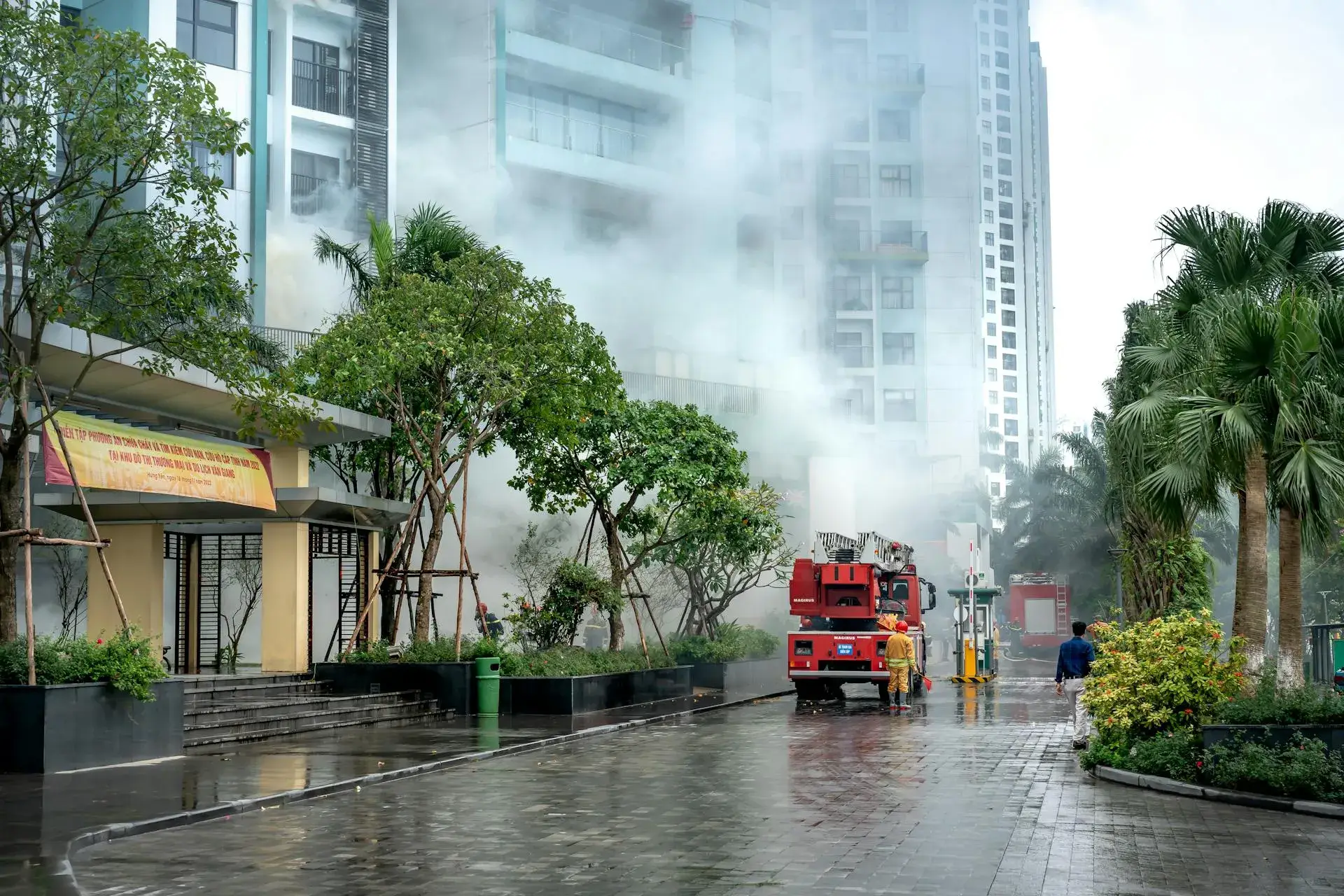
Smoke Damage Restoration in Daytona Beach, FL
Smoke residue bonds permanently to surfaces within hours in Daytona Beach's humid climate. Every hour of delay makes removal more difficult and expensive. Our local team responds within 60 minutes to begin professional smoke mitigation.
What Happens When You Call
A real person answers, not a call center. We assess the type and extent of smoke exposure and begin coordinating your response immediately.
Your dedicated restoration team is dispatched from our local base serving Daytona Beach and the surrounding Volusia County communities.
Team arrives with HEPA air scrubbers, soot extraction equipment, and professional testing tools. Assessment and emergency mitigation begin immediately.
Contamination mapped, cleaning protocol established, and restoration plan documented. You know exactly what comes next.
Smoke damage is insidious. The fire may be miles away or already out, but the residue it left behind is actively damaging your home right now. Soot particles are acidic. They corrode metal, etch glass, and permanently stain porous materials, and Daytona Beach's humidity accelerates every one of those reactions. You need a team that understands smoke chemistry and arrives fast enough to intervene before the damage becomes irreversible. X Response is that team. Call now. Your team is standing by.
Why Daytona Beach Homes Are Vulnerable to Smoke Damage
Daytona Beach experiences smoke damage from two distinct sources that affect residential and commercial properties differently. The first and most widespread is wildfire smoke from the thousands of acres of pine flatwoods, scrub, and wetlands that surround the city in western Volusia County. Tiger Bay State Forest, a 28,000-acre preserve immediately west of the city, burns regularly through both prescribed management and uncontrolled wildfire. In March 2023, the Double Gate wildfire in Tiger Bay grew to more than 1,600 acres over several days, sending sustained heavy smoke across Daytona Beach and Ormond Beach. The smoke reduced visibility on roadways, prompted the closure of the state forest, forced the evacuation of campgrounds, and infiltrated homes and businesses across a wide area of the city. Unlike a house fire where smoke exposure is intense but localized, wildfire smoke events in Daytona Beach can affect entire neighborhoods for days at a time as wind direction shifts and the fire continues burning. The Florida Forest Service Bunnell District, which manages prescribed burns throughout Volusia County, conducts burns regularly in the dry season between November and May, and smoke from these operations routinely drifts into residential areas depending on wind patterns.
The second source of smoke damage is structural fires within the city, including the wildland-urban interface fires along the LPGA Boulevard corridor. In January 2024, a prescribed burn south of State Road 40 jumped its containment line and sent embers and thick smoke into the Mosaic subdivision near Margaritaville. In February 2026, a wildfire forced the evacuation of approximately 80 homes in the same area. Even homes that escape direct flame contact in these events sustain smoke infiltration through HVAC systems, attic vents, soffit openings, and window seals. The smoke from wildland fires burning pine and palmetto produces a distinctive resinous soot that adheres aggressively to surfaces and penetrates deep into porous materials. Properties downwind of these fires can require professional smoke restoration even when no flames come within hundreds of yards of the structure. The combination of frequent wildfire smoke events and a climate that accelerates soot bonding makes Daytona Beach one of the more challenging environments for smoke damage prevention and restoration on Florida's Atlantic coast.
Tiger Bay State Forest and Regional Smoke Events
Tiger Bay State Forest sits directly west of Daytona Beach and encompasses 28,000 acres of fire-adapted pine flatwoods, cypress swamps, and scrub habitat. The forest has a long wildfire history, including severe burning during the 1998 Florida wildfire firestorm that consumed approximately 15,000 acres within the forest alone. The Florida Forest Service manages the property with regular prescribed burns, but uncontrolled wildfires also occur, particularly during dry spring conditions with low humidity and sustained winds. The March 2023 Double Gate wildfire demonstrated how quickly fire in Tiger Bay translates to smoke in Daytona Beach: the fire grew from initial detection to 750 acres within the first day and ultimately reached more than 1,600 acres before containment, with smoke impacting residential areas throughout the multi-day event. Wind patterns in Volusia County typically carry smoke from western fires eastward toward the coast during afternoon sea breeze development, meaning Daytona Beach neighborhoods receive smoke from Tiger Bay fires as a prevailing pattern rather than an occasional occurrence.
Prescribed Burn Smoke Exposure
The Florida Forest Service Bunnell District conducts prescribed burns on thousands of acres across Volusia County annually as part of wildfire risk reduction and ecosystem management. These burns are authorized under Florida law and are considered necessary for reducing catastrophic wildfire risk, but they produce substantial smoke that drifts into residential areas depending on wind speed and direction. In January 2024, a prescribed burn south of SR-40 was authorized by the Florida Forest Service but jumped its containment line in two spots under windy conditions, creating separate 7-acre and 4-acre fires that sent embers and heavy smoke directly into the Mosaic community. Residents reported embers floating through the air and thick smoke reducing visibility. Even burns that remain within their authorized boundaries routinely send smoke plumes across LPGA Boulevard, Williamson Boulevard, and the communities along the Interstate 95 corridor. For homeowners in western Daytona Beach, prescribed burn smoke exposure is not an unusual event but a recurring seasonal pattern that requires vigilance about HVAC filtration and building envelope sealing.
Smoke Infiltration Pathways in Florida Construction
Florida homes are built to manage heat and humidity, not to exclude smoke. Standard construction includes soffit vents that allow attic ventilation, fresh air intakes for HVAC systems that draw from exterior air, and window and door seals designed for weather resistance rather than particulate exclusion. When wildfire smoke envelops a neighborhood, these normal ventilation pathways become infiltration routes. Smoke enters through the HVAC fresh air intake and distributes throughout the home via the duct system. It enters through soffit vents and settles on attic insulation, creating a reservoir of soot that releases particles for weeks after the smoke event ends. It penetrates through gaps around windows and doors designed to allow pressure equalization during hurricane winds. Once inside, Daytona Beach's year-round air conditioning recirculates smoke particles continuously, driving soot deep into fabrics, carpets, and the interior surfaces of wall cavities. A home that appeared unaffected during a smoke event may reveal progressive soot staining and persistent odor in the days and weeks that follow as particles settle and bond with surfaces in the humid air.
Humidity-Accelerated Soot Bonding
Soot particles are acidic and chemically reactive. In a dry climate, they sit on surfaces and can often be removed with relatively straightforward cleaning methods if addressed within a few days. In Daytona Beach's climate, where average humidity exceeds 74% year-round, the process accelerates dramatically. Moisture in the air activates the acid in soot particles, causing them to react with and bond to the surfaces they contact. Metal fixtures develop corrosion pitting within hours. Glass develops etching that cannot be polished out. Painted surfaces develop permanent yellowing as soot chemistry reacts with the paint binder. Porous materials like drywall, wood trim, and fabric absorb soot particles into their structure where the humid environment locks them in place. The practical implication is that the cleaning window in Daytona Beach is measured in hours rather than days. Soot that could be removed with dry sponges on day one may require chemical treatment by day two and surface replacement by day three, solely because the humidity accelerated the bonding process.
HVAC System Contamination
Central Florida homes run air conditioning virtually year-round, and the HVAC system becomes the primary distribution mechanism for smoke contamination throughout a property. During a smoke event, the system's return draws smoke-laden air from every room through the return ductwork to the air handler. The filter captures some particulate, but fine smoke particles pass through standard MERV-rated filters and deposit on the evaporator coil, blower fan, and interior surfaces of both supply and return ductwork. After the smoke event ends, the system continues circulating these deposited particles with every cooling cycle. Homeowners often notice persistent smoke odor that seems to come from the vents even weeks after the original event. The evaporator coil, constantly wet from condensation in Florida's humid air, traps soot in a moist film that becomes a breeding ground for bacteria and mold if not professionally cleaned. Effective smoke restoration in Daytona Beach requires treating the HVAC system as a contaminated component, not merely changing the filter and assuming the problem is resolved.
Smoke damage in Daytona Beach operates on a compressed timeline because the climate accelerates every chemical reaction between soot and building materials. Whether the source is a Tiger Bay wildfire that blankets the city for days, a prescribed burn that drifts into western neighborhoods, or a structural fire that sends smoke through a building's HVAC system, the restoration challenge is the same: remove contamination before humidity permanently bonds it to surfaces and the HVAC system distributes it everywhere the air conditioning reaches.
What Happens to Your Home While You Wait
Within 1 Hour
Soot particles settle on all exposed surfaces and begin reacting with ambient moisture. In Daytona Beach's humidity, the acid in soot activates immediately on contact with metal fixtures, glass, and painted surfaces. Smoke odor penetrates fabrics, upholstery, and soft goods. If the HVAC system is running, smoke distributes through ductwork into every room served by the system.
1–24 Hours
Soot begins permanently etching metal hardware, light fixtures, and glass surfaces. Smoke odor bonds with wall paint, ceiling texture, and porous trim materials. The HVAC evaporator coil accumulates a wet film of soot particles that will continue releasing odor with every cooling cycle. Fabrics and upholstery absorb smoke molecules deep into their fibers where surface cleaning cannot reach.
24–48 Hours
Acidic soot causes irreversible staining on countertops, tile grout, and unpainted metal. Smoke odor becomes embedded in attic insulation, wall cavity insulation, and carpet padding. Professional removal becomes significantly more labor-intensive and expensive as bonding progresses. Materials that could have been cleaned with dry methods now require wet chemical treatment or replacement.
48–72 Hours
Corrosion advances on electrical components, appliance surfaces, and decorative metal. Smoke odor fully permeates soft goods, making many unsalvageable. Soot residue in HVAC ductwork bonds to interior surfaces and cannot be removed with simple vacuuming. The contamination scope expands as settled particles continue reacting with surfaces throughout the home.
One Week and Beyond
Without professional intervention, smoke damage becomes permanent throughout the affected areas. Metal requires replacement rather than cleaning. Painted surfaces require complete repainting with shellac-based sealers. Insulation requires removal and replacement. HVAC ductwork may require replacement if interior coatings have absorbed soot beyond cleaning capacity. What began as a surface contamination issue becomes a comprehensive renovation.
In Daytona Beach's humidity, the difference between cleaning smoke damage and replacing materials is measured in hours. Contact X Response now. Our team responds within 60 minutes to begin professional smoke mitigation before permanent bonding occurs.
How We Restore Smoke-Damaged Daytona Beach Homes
Smoke damage restoration requires a systematic approach that addresses every contamination pathway. Here is how we handle each phase.
Assessment and Contamination Mapping
Our team arrives with particulate meters, thermal imaging, and surface testing equipment to map the full extent of smoke infiltration. We test surfaces in every room, not just those with visible soot, because smoke travels through HVAC systems and settles in areas far from the source. We inspect attic insulation, HVAC components, wall cavities through access points, and concealed spaces behind cabinetry and above dropped ceilings. For wildfire smoke events in Daytona Beach, contamination is often distributed evenly throughout the home via the HVAC system rather than concentrated near a fire origin. The assessment determines which materials can be cleaned in place, which require removal, and which building systems need decontamination.
Air Quality Stabilization
Before detailed cleaning begins, we stabilize indoor air quality to prevent continued exposure and further contamination. HEPA air scrubbers are positioned to filter airborne particles from every affected area. The HVAC system is isolated to prevent further distribution of contamination through ductwork. In Daytona Beach, where closing windows in summer creates immediate heat and humidity problems, we manage indoor climate with portable cooling while the primary HVAC system is offline for decontamination. Negative air pressure prevents contaminated air from migrating into clean areas during the restoration process.
Surface Cleaning and Soot Removal
Professional soot removal uses methods matched to the surface type and the specific soot chemistry involved. Wildfire soot from pine and palmetto burning produces a resinous residue that requires different treatment than protein soot from a kitchen fire or synthetic soot from burning plastics. We use dry chemical sponges on painted surfaces, HEPA vacuums on textured materials, and progressive wet cleaning methods where dry methods are insufficient. Every surface is addressed systematically: ceilings first, then walls, then horizontal surfaces, following the gravity pattern of soot settlement. In Daytona Beach's climate, we work within the bonding window, prioritizing metal and glass surfaces where acid damage occurs fastest, then addressing porous materials before humidity locks contamination into their structure.
HVAC Decontamination
The air conditioning system requires separate, thorough treatment in every smoke restoration project in Central Florida. We clean the evaporator coil, blower assembly, and interior surfaces of both supply and return ductwork using specialized tools that reach throughout the entire duct network. Filters are replaced with high-MERV units during the project. The condensate drain pan and line are treated because the wet environment traps soot and breeds bacteria. We test the system after cleaning by running it and monitoring air quality at supply registers to confirm that smoke odor and particulate are no longer being distributed. In cases of severe contamination, duct lining or flexible ductwork may require replacement if interior surfaces have absorbed soot beyond cleaning capacity.
Odor Elimination and Verification
Smoke odor persists because molecules have penetrated deep into porous materials beyond where surface cleaning can reach. We use hydroxyl generators for occupied-space treatment, thermal fogging to reach concealed cavities with neutralizing agents, and ozone treatment in sealed unoccupied spaces for severe contamination. Attic insulation that has absorbed smoke often requires removal and replacement because its fibrous structure traps odor molecules indefinitely. We verify odor elimination through multiple cycles of treatment and testing rather than assuming a single application is sufficient. In Daytona Beach's humidity, trapped odor molecules can re-release during high-moisture periods, so verification includes testing under elevated humidity conditions to confirm the treatment holds.
The X Response Difference
When you contact X Response for smoke damage in Daytona Beach, you get a comprehensive restoration team that addresses contamination at every level: surfaces, HVAC systems, concealed spaces, and embedded odor. One point of contact from assessment through verified completion.
Insurance Claim Guidance for Daytona Beach Homeowners
Smoke damage insurance coverage depends on the source of the smoke and the specific terms of your policy. Standard homeowner's policies typically cover smoke damage from fires on your property or neighboring properties, including damage to contents, surfaces, and HVAC systems. Coverage for wildfire smoke infiltration can be more complex because the smoke source may be miles away with no direct fire threat to your structure. Some policies cover smoke damage only when it results from a 'hostile fire,' which generally includes wildfires and escaped prescribed burns but may exclude smoke from routine agricultural burning or authorized controlled burns. The key to a successful smoke damage claim in Daytona Beach is thorough documentation of the contamination before, during, and after restoration.
How X Response Helps
- Document all smoke contamination with professional photos, surface testing results, and air quality measurements from day one
- Identify and document the smoke source clearly, connecting the contamination to a covered peril under your policy
- Prepare comprehensive inventories of affected contents including soft goods, electronics, and items requiring specialized cleaning
- Align our restoration scope with insurance coverage categories including structure cleaning, HVAC decontamination, contents restoration, and materials replacement
- Provide your adjuster with clear documentation showing why specific materials require replacement rather than cleaning based on contamination depth and bonding severity
X Response does not file claims on your behalf, adjust claims, or make coverage determinations. We provide thorough documentation and guidance to help you make informed decisions. Coverage decisions are made solely by your insurance carrier.
Certified Restoration Specialists Serving Daytona Beach
When you contact X Response for smoke damage in Daytona Beach, your restoration team includes professionals who understand the specific challenges of smoke restoration in a subtropical coastal environment. They have managed wildfire smoke infiltration from Tiger Bay State Forest events that affected entire neighborhoods for days, prescribed burn smoke that entered homes through HVAC systems along the LPGA corridor, and structural fire smoke in properties ranging from beachside condominiums to single-family homes in the western suburbs. They know that smoke restoration in Daytona Beach's climate requires faster response and more aggressive treatment than the same contamination would demand in a drier region, and they bring the equipment and chemistry to intervene within the critical bonding window.
Every technician holds current IICRC certification in fire and smoke restoration (FSRT) with specialized training in odor control and HVAC decontamination. Equipment includes industrial HEPA air scrubbers, hydroxyl generators for occupied-space treatment, thermal fogging systems for concealed cavities, duct cleaning apparatus that reaches throughout entire HVAC networks, and the testing equipment needed to verify complete contamination removal. When your team arrives, they bring everything required to begin mitigation immediately without waiting for additional equipment or specialty subcontractors.
In Daytona Beach, X Response works with Hugo Fire and Water, an independent local restoration partner serving Volusia County.
Smoke Damage Restoration FAQ for Daytona Beach Homeowners
Other Emergency Services in Daytona Beach

Water Damage Restoration
Burst pipes, storm flooding, standing water. We extract, dry, and restore before mold sets in.
Learn more
Fire Damage Restoration
Structural damage, soot, debris. We stabilize, clean, and rebuild what fire destroyed.
Learn more
Mold Remediation
Testing, containment, removal, prevention. We find the source, eliminate the growth, and stop it from returning.
Learn more
Sewage Cleanup
Sewer backups, contaminated water, biohazard. We extract, sanitize, and restore safely.
Learn moreNearby Service Areas
Also serving nearby: