
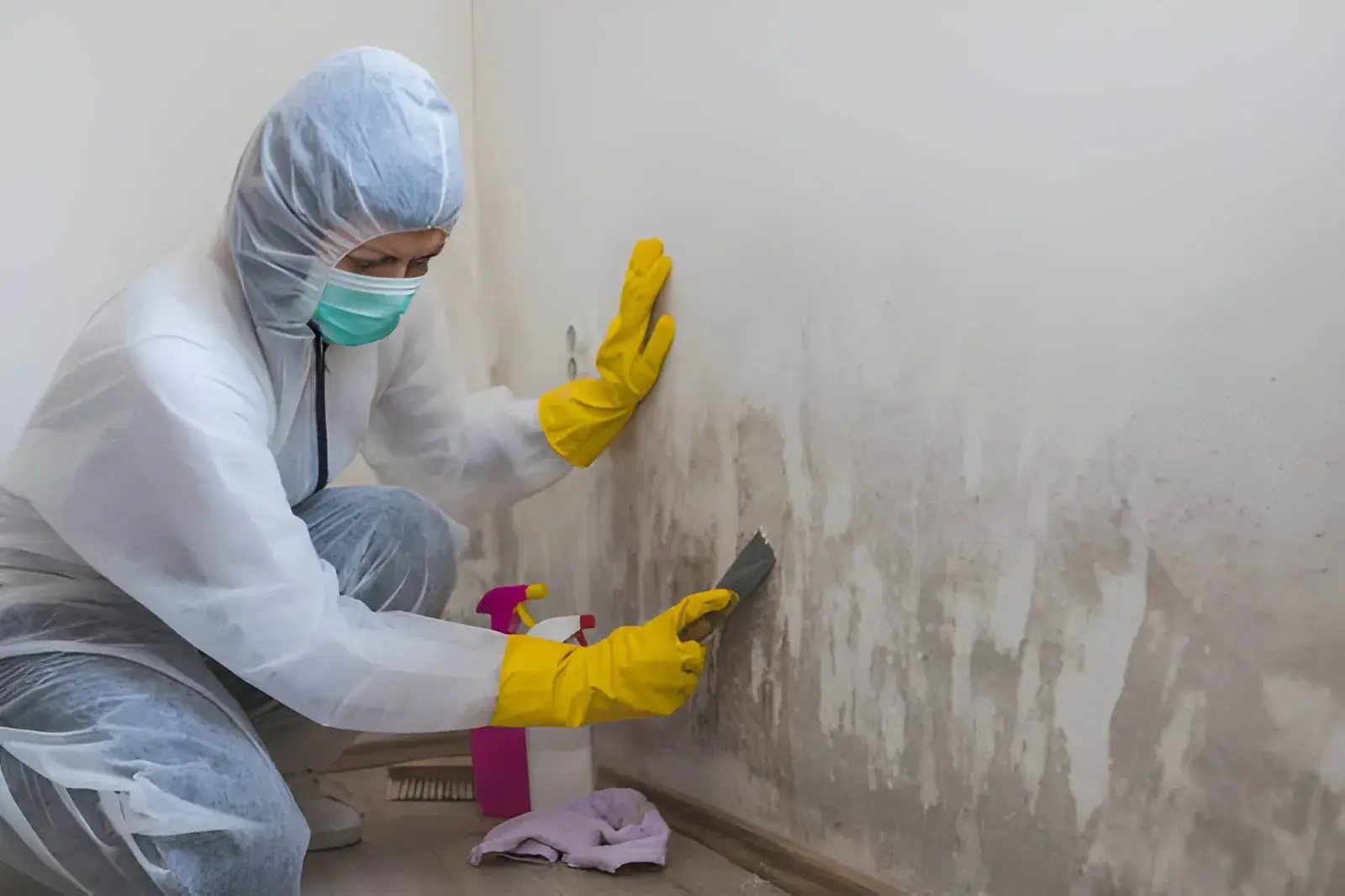
Mold Remediation in North Fort Myers, FL
Mold colonizes wet materials within 24 hours in North Fort Myers' subtropical conditions. Every day of delay expands the affected area and increases remediation costs. Our local team responds within 60 minutes to assess, contain, and begin professional mold removal.
What Happens When You Call
A real person answers, not a call center. We assess your situation, ask about visible signs, moisture history, and health symptoms to begin understanding the scope.
Your dedicated remediation team is dispatched from our local base serving North Fort Myers and Lee County.
Team arrives with moisture meters, thermal imaging, and air sampling equipment. Professional assessment begins immediately to map the full extent of contamination.
Containment established, scope documented, and remediation plan outlined. You know exactly what your home needs and what your options are.
Mold does not wait for a convenient time to grow. In North Fort Myers' heat and humidity, it colonizes wet materials within 24 hours, spreads through wall cavities in days, and distributes spores through your HVAC system into every room of your home. By the time you see it or smell it, the colony has already expanded well beyond the visible area. You need professional intervention that finds the full extent, contains the spread, and removes the problem at its source. Call now. Your team is standing by.
Why North Fort Myers Homes Are Vulnerable to Mold
North Fort Myers is an unincorporated community of over 42,000 residents in Lee County, Florida, where the combination of subtropical climate, shallow water table, and an aging housing stock creates one of the most mold-conducive environments in Southwest Florida. A 2022 peer-reviewed study by Florida Atlantic University's Harbor Branch Oceanographic Institute examined groundwater conditions across the community and found that over 80 percent of water table depth measurements were too shallow to support proper subsurface drainage, defined as less than 1.07 meters below grade. This means the soil beneath most North Fort Myers homes is perpetually saturated or near-saturated, creating a constant moisture source that wicks into foundations, floor systems, and wall cavities from below. The study documented high concentrations of nutrients in both groundwater and surface water throughout the area, confirming that the water table interacts directly with the built environment rather than remaining safely below foundation level. For homeowners, this translates to a persistent moisture load that feeds mold growth year-round, independent of rainfall events, plumbing failures, or storm damage.
Beyond the water table, North Fort Myers faces mold risk from its climate and housing characteristics. Lee County's subtropical conditions deliver year-round humidity frequently running high outdoors, with indoor humidity above 60 percent common in homes where air conditioning systems are undersized, poorly maintained, or turned off during extended absences. The community's large stock of mobile and manufactured homes presents particular mold challenges because these structures sit on pier foundations with enclosed floor cavities where moisture accumulates against insulation and belly board materials invisible from inside. Hurricane Ian in September 2022 drove water into thousands of North Fort Myers homes, and in the months following the storm, mold became the dominant restoration challenge as saturated materials in the subtropical heat produced rapid colonization. Many homes that survived the wind and water developed extensive mold growth in the weeks that followed because drying did not occur fast enough to prevent colonization in the continuously hot, humid environment.
Shallow Water Table and Persistent Ground Moisture
The FAU Harbor Branch study's finding that over 80 percent of water table measurements in North Fort Myers were too shallow for proper subsurface drainage has direct implications for mold growth in homes. When the water table sits within a meter of the surface, the soil cannot absorb additional moisture during rainfall, and capillary action continuously wicks water upward toward foundations and floor systems. In slab-on-grade homes, this moisture migrates through the concrete by capillary action and releases at the surface, creating a persistently damp environment beneath flooring materials. In mobile homes on pier foundations, the saturated soil beneath the structure keeps the enclosed floor cavity humid year-round, promoting mold growth on subfloor materials, insulation, and the belly board. This is not a seasonal problem that resolves during dry months. The water table in coastal areas of Lee County remains high year-round because it is connected to the tidal Caloosahatchee River system, meaning the moisture source is constant and independent of recent rainfall.
Year-Round Humidity and Temperature
Mold requires moisture, warmth, and organic material to grow. North Fort Myers provides all three continuously. Average temperatures range from the mid-60s in January to the low-90s from May through September, with high humidity consistently outdoors. Even air-conditioned homes maintain interior humidity above 55 to 60 percent unless supplemental dehumidification is installed, and many North Fort Myers homes rely on older AC systems that cool effectively but provide limited moisture removal. When residents leave for extended periods, as many snowbird-owned properties experience from April through October, AC systems may be set to higher temperatures or turned off entirely. Interior humidity quickly rises, and mold growth begins on any organic surface: drywall paper, wood framing, carpet backing, cardboard storage, and fabric furnishings. The growth accelerates in summer when temperatures inside an unoccupied home can exceed 90 degrees with no air circulation.
Mobile Home Floor System Vulnerability
North Fort Myers' large population of mobile and manufactured homes faces a mold challenge unique to this construction type. Mobile homes sit on pier or block foundations with an enclosed cavity between the floor system and the ground. This cavity is bordered above by the subfloor and below by a belly board, a sheet material that forms the bottom enclosure. Between these layers sits insulation, ductwork, plumbing, and wiring. The belly board is not airtight. It allows humid air from the saturated ground beneath to enter the cavity, where it contacts cooler surfaces and condenses. Insulation absorbs this moisture and holds it against the subfloor material, which in most manufactured homes is particleboard or oriented strand board. These materials are highly susceptible to mold growth when persistently damp. The homeowner sees no visible mold because it grows on the underside of the floor, inside the enclosed cavity, invisible until the floor begins to soften, buckle, or produce odor. By the time these symptoms appear, extensive remediation is typically required.
Post-Hurricane Ian Mold Conditions
Hurricane Ian in September 2022 created the most widespread mold event in North Fort Myers' recent history. The storm drove water into thousands of homes through storm surge from the Caloosahatchee, wind-driven rain through damaged roofs and walls, and flooding from overwhelmed drainage systems. In the aftermath, the community lacked power for days to weeks, meaning air conditioning and dehumidification were unavailable during the critical first 24 to 72 hours when mold colonization begins. Materials saturated during the storm remained wet in the subtropical heat, and mold established rapidly on drywall, wood framing, insulation, and furnishings. Many residents who evacuated returned to find mold covering walls and ceilings in rooms that had been wet for days without ventilation. The post-Ian mold crisis was compounded by delayed professional response due to the volume of damaged properties across all of Lee County. Properties that received prompt drying were often salvageable. Those that sat for a week or more in the heat typically required extensive gutting and remediation.
HVAC Systems and Mold Distribution
Air conditioning systems in North Fort Myers run year-round, and this continuous operation can either prevent or promote mold depending on system condition and maintenance. A properly sized, well-maintained AC system removes moisture from indoor air as it cools, keeping interior humidity below the threshold for mold growth. However, oversized systems that short-cycle, undersized systems that cannot keep up with humidity loads, dirty evaporator coils that reduce dehumidification capacity, and ductwork with air leaks in unconditioned spaces all compromise moisture removal. In North Fort Myers' older housing stock, many AC systems are original installations that have lost efficiency over decades of continuous operation. When these systems fail to adequately dehumidify, mold grows on surfaces throughout the home. Additionally, condensation that forms on the evaporator coil and collects in the drain pan provides a persistent moisture source inside the air handler. If the drain line clogs, water overflows into the air handler closet or attic, creating hidden mold growth that distributes spores through the duct system into every room.
Mold in North Fort Myers is not an occasional problem caused by unusual events. It is a persistent condition driven by geological reality, climate, and housing characteristics that create continuous moisture exposure. The shallow water table feeds moisture into foundations year-round. Subtropical humidity prevents natural drying. Mobile home floor systems create hidden moisture traps. Post-hurricane conditions accelerated growth across thousands of properties. And HVAC systems either manage the moisture or become part of the problem. Effective mold remediation here requires identifying and addressing the moisture source, not just removing visible growth, because the growth will return within weeks if the conditions that created it remain unchanged.
What Happens to Your Home While You Wait
Within 24 Hours
Mold spores, which are always present in Florida's outdoor air, begin germinating on wet organic surfaces within 24 hours when temperature and humidity conditions are favorable. In North Fort Myers, those conditions exist year-round. Drywall paper, wood framing, carpet backing, and mobile home subfloor materials provide the organic food source. The warm, humid environment provides the conditions. Colonization begins before any visible growth appears.
24–72 Hours
Visible mold colonies appear on wet surfaces as mycelium networks establish and begin producing the characteristic colored growth. In the subtropical heat, colony expansion is rapid. Growth spreads along wall cavities following moisture paths, traveling behind baseboards, beneath flooring, and above ceiling tiles. In mobile homes, subfloor mold expands across the enclosed floor cavity along moisture-laden insulation. Musty odor becomes noticeable as the colony produces volatile organic compounds.
3–7 Days
Established colonies begin producing spores that become airborne and distribute through the home via air currents and the HVAC system. Residents may notice respiratory symptoms, eye irritation, or allergic reactions as spore counts rise. Mold penetrates into drywall beyond the paper surface, requiring demolition rather than surface cleaning. Growth appears in secondary locations as spores settle on other damp surfaces and begin new colonies.
1–2 Weeks
Mold growth extends into wall cavities, behind cabinetry, inside HVAC ductwork, and throughout mobile home floor systems. The affected area is now significantly larger than what is visible. Structural materials begin deteriorating as mold enzymes digest wood cellulose and drywall paper. The remediation scope has expanded from surface treatment to structural demolition and reconstruction. Insurance claims become more complex as the extent of hidden damage requires invasive investigation.
One Month and Beyond
Without professional intervention, mold growth becomes systemic throughout the structure. Wood framing loses structural integrity. Entire wall sections, floor systems, and ceiling assemblies require replacement. The HVAC system requires complete cleaning or replacement. Health effects intensify for occupants. The property may become uninhabitable and require complete gutting to the structural frame before reconstruction. What began as a moisture problem has become a structural and health crisis.
In North Fort Myers' climate, mold growth progresses faster and more aggressively than in temperate regions. The window between surface treatment and structural demolition is days, not weeks. Contact X Response now. Our team responds within 60 minutes to assess, contain, and begin remediation before the problem expands.
How We Restore Mold-Affected North Fort Myers Homes
From the moment our team arrives, every step is documented, measured, and verified. Here is exactly what the mold remediation process involves.
Professional Assessment and Testing
Our team arrives with moisture meters, thermal imaging cameras, and professional air sampling equipment to map the full extent of mold contamination. Thermal imaging identifies moisture concentrations behind walls and beneath floors that correspond to hidden mold growth. Moisture meters confirm the source and extent of water intrusion feeding the colony. Air sampling establishes spore counts and species identification in each room, providing objective data about contamination levels and potential health concerns. In North Fort Myers' mobile homes, we inspect beneath the structure to assess subfloor and insulation conditions. The assessment determines whether the problem is surface growth from condensation, systemic growth from a persistent moisture source, or post-event growth from water intrusion that has not been adequately dried.
Containment and Source Control
Before removing any mold, we establish engineering controls to prevent cross-contamination. Affected areas are sealed with polyethylene sheeting and placed under negative air pressure using HEPA-filtered air scrubbers. This ensures that spores released during removal cannot migrate to uncontaminated areas. The HVAC system serving the affected area is isolated to prevent spore distribution through ductwork. Simultaneously, we identify and address the moisture source feeding the mold growth. In North Fort Myers, this might be a plumbing leak, condensation from inadequate AC dehumidification, groundwater wicking through the slab, humidity accumulating in a mobile home floor cavity, or residual moisture from hurricane damage. Removing mold without resolving the moisture source guarantees the growth returns within weeks.
Mold Removal and Material Demolition
Mold-contaminated materials are removed using methods appropriate to the surface and extent of contamination. Porous materials like drywall, insulation, carpet, and particleboard that are colonized beyond surface depth cannot be cleaned and must be demolished and disposed of in sealed containment bags. Semi-porous materials like wood framing are assessed individually. Surface mold on structurally sound wood can often be removed through sanding and treatment. Wood with deep penetration or structural softening requires replacement. We work systematically within the containment area, removing affected materials back to clean substrate and documenting everything with photos for your insurance record. HEPA air scrubbers run continuously during demolition to capture airborne spores.
Antimicrobial Treatment and Prevention
After contaminated materials are removed, all remaining surfaces within the affected area receive EPA-registered antimicrobial treatment. Structural wood framing, concrete slabs, and other retained materials are treated to eliminate residual spores and prevent recolonization during reconstruction. In North Fort Myers' persistent humidity, we apply encapsulant coatings to structural surfaces that will be enclosed during reconstruction, creating a barrier against future moisture-driven growth. For mobile homes, we treat the floor joist system and recommend belly board replacement with moisture-resistant materials. We also address the HVAC system with coil cleaning, drain line clearing, and ductwork treatment if spore distribution was confirmed during testing.
Verification and Clearance Testing
Before releasing the containment and approving reconstruction, we conduct post-remediation verification. Air sampling confirms that spore counts have returned to acceptable levels comparable to outdoor ambient conditions. Moisture readings verify that the source has been resolved and remaining materials are dry. Visual inspection confirms that all contaminated materials have been removed and treated surfaces are clean. This clearance testing provides objective proof that the remediation was successful and the space is safe for reconstruction and occupancy. The complete documentation package, including pre-remediation testing, scope of work, removal records, treatment documentation, and post-remediation clearance results, supports your insurance claim and provides a permanent record for the property.
The X Response Difference
When you contact X Response for mold remediation in North Fort Myers, you get a team that treats mold as a moisture problem with biological symptoms. Find the water, fix the water, remove the mold, verify it is gone. One team manages the full scope from assessment through clearance testing.
Insurance Claim Guidance for North Fort Myers Homeowners
Mold remediation insurance coverage in Florida depends on the cause of the mold and the type of policy you hold. Most homeowner's policies cover mold remediation when the mold results from a covered peril such as a burst pipe, storm damage, or appliance failure. Many policies cap mold coverage at a specific dollar amount, commonly $10,000 to $50,000, regardless of actual remediation costs. Mold resulting from deferred maintenance, chronic humidity, or gradual leaks is typically excluded. Understanding your policy's mold coverage, including any caps or sublimits, before filing a claim allows you to plan effectively.
How X Response Helps
- Document the moisture source that caused the mold growth, as coverage depends on the cause being a covered peril
- Provide professional air sampling results that establish contamination levels objectively for your adjuster
- Maintain a clear chain of documentation from initial discovery through clearance testing
- Identify your policy's mold coverage cap early so you can make informed decisions about scope and out-of-pocket exposure
- Separate emergency mitigation costs from remediation costs, as they may fall under different coverage categories
X Response does not file claims on your behalf, adjust claims, or make coverage determinations. We provide documentation and guidance to help you make informed decisions about your property and your policy. Coverage decisions are made solely by your insurance carrier.
Certified Restoration Specialists Serving North Fort Myers
When you contact X Response for mold remediation in North Fort Myers, your team is drawn from certified professionals who work across Lee County and understand the specific mold challenges this community faces. They know how the shallow water table feeds moisture into foundations year-round, how mobile home floor systems trap humidity against subfloor materials, how post-Hurricane Ian conditions created widespread mold problems across the community, and how North Fort Myers' mix of housing types each present different moisture pathways and remediation approaches. They have conducted remediation in waterfront homes along North River Road, mobile home communities along Bayshore Road, and subdivisions throughout the US 41 corridor.
Every technician on your team holds current IICRC certification in mold remediation and carries the appropriate Florida state licensing for the work performed. Equipment includes professional air sampling for laboratory analysis, thermal imaging for hidden moisture detection, commercial HEPA air scrubbers for containment and air cleaning, and the full range of antimicrobial treatments and encapsulants approved for structural application. When your team arrives, they bring everything needed to assess, contain, remove, and verify remediation without waiting for additional equipment or separate contractors.
In North Fort Myers, X Response works with Florida Restoration and Platinum Air Mold Inspection, independent local restoration partners serving Lee County.
Mold Remediation FAQ for North Fort Myers Homeowners
Other Emergency Services in North Fort Myers

Water Damage Restoration
Burst pipes, storm flooding, standing water. We extract, dry, and restore before mold sets in.
Learn more
Fire Damage Restoration
Structural damage, soot, debris. We stabilize, clean, and rebuild what fire destroyed.
Learn more
Smoke Damage Restoration
Soot residue, chemical odors, HVAC contamination. We decontaminate surfaces, eliminate odors, and restore air quality.
Learn more
Sewage Cleanup
Sewer backups, contaminated water, biohazard. We extract, sanitize, and restore safely.
Learn moreNearby Service Areas
Also serving nearby: