
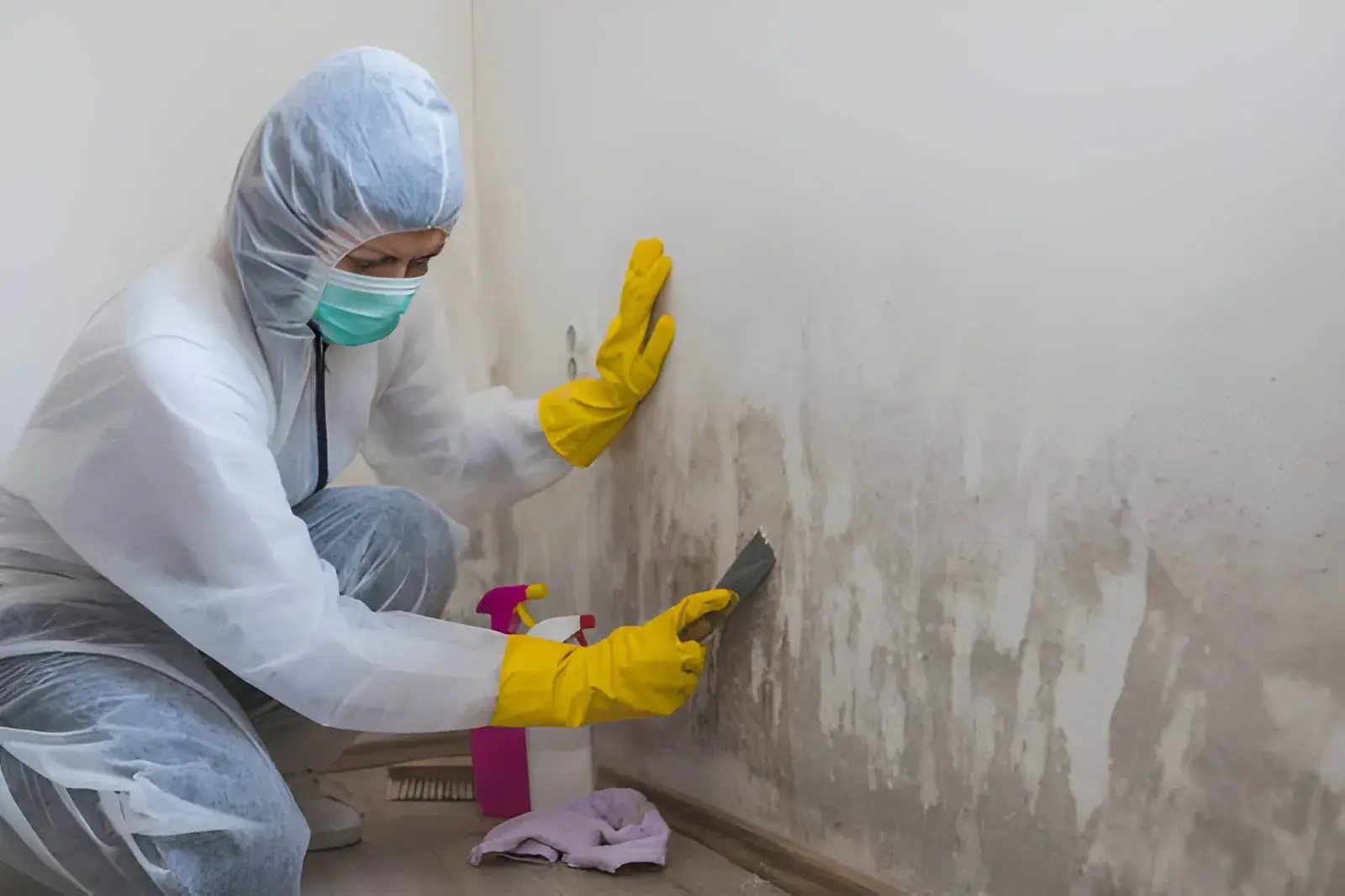
Mold Remediation in Wilmette, IL
Mold spreads through hidden spaces in as little as 24 to 48 hours after water intrusion. Our local team responds to Wilmette mold emergencies quickly to contain the growth before it compromises your home and your health.
What Happens When You Call
A real person answers, not a call center. We assess your situation, ask the right questions about moisture history and visible signs, and begin coordinating your response immediately.
Your dedicated remediation team is dispatched from our local base serving Wilmette and the surrounding North Shore communities.
Team arrives with containment materials, HEPA air scrubbers, and moisture detection equipment. Assessment begins immediately to determine the full extent of growth and its moisture source.
Containment established, remediation plan documented, moisture source identified. You know exactly what comes next.
Mold does not wait. It begins colonizing damp materials within 24 to 48 hours and can spread through wall cavities, beneath flooring, and into HVAC systems within days. By the time you see visible growth or smell that musty odor, the colony has already established behind the surfaces you can see. X Response exists for exactly this moment. When you reach out, your remediation team is mobilized and on site quickly. From that point forward, one team manages everything: assessment, containment, removal, and prevention. Call now. Your team is standing by.
Why Wilmette Homes Are Vulnerable to Mold
Wilmette is a village of 28,170 residents on Chicago's North Shore, bordered by Lake Michigan to the east and surrounded by Evanston, Kenilworth, Skokie, and Glenview in Cook County. The village's proximity to Lake Michigan creates elevated ambient humidity throughout the warm months, and its pre-war housing stock provides abundant opportunities for moisture accumulation in hidden spaces. Homes built between the 1880s and 1940s feature full basements with stone or concrete-block foundation walls, balloon-frame construction with open wall cavities, and plaster-and-lath wall systems that can conceal mold growth for months or years before it becomes visible on the living-space side. The village's dual sewer system (combined east of Ridge Road, separate west of Ridge Road) has produced decades of basement flooding events that leave behind the moisture conditions mold requires to colonize. Many Wilmette basements have experienced multiple water intrusion events over their 80 to 140 year history, creating recurring cycles of moisture, biological growth, and incomplete drying that allow mold colonies to establish deep within structural materials.
Effective January 1, 2025, the Illinois Mold Remediation Registration Act (SB 1087) requires all parties providing mold remediation services in residential, public, and commercial buildings in the state to register with the Illinois Department of Public Health and provide proof of both third-party certification (such as IICRC, ACAC, or equivalent) and financial responsibility. This landmark legislation makes Illinois one of the few states with mandatory mold remediation oversight, addressing a previous gap where any company could advertise mold services without verifiable credentials or accountability. For Wilmette homeowners, this means that legitimate mold remediation providers must now demonstrate certified expertise and carry insurance specifically covering mold remediation work. The law protects consumers from unqualified operators who may disturb mold colonies without proper containment, spreading contamination rather than resolving it. X Response's technicians hold the third-party certifications required under this act and have maintained them long before the registration requirement took effect.
Lake Michigan Humidity and the North Shore Microclimate
Wilmette's lakefront location creates a microclimate with higher ambient humidity than inland suburbs during the warm months. Lake Michigan moderates temperatures (cooler summers, warmer winters near shore) but also adds moisture to the air as prevailing easterly breezes carry lake-effect humidity inland across the village. During summer months, outdoor relative humidity in Wilmette frequently runs high, the threshold at which mold growth can begin on interior surfaces within 24 hours if indoor moisture is not mechanically controlled. Homes that rely on natural ventilation rather than air conditioning during transitional seasons (spring and fall) introduce this humid air directly into living spaces. The lake's thermal mass also creates condensation conditions: cool lake air flowing over warmer interior surfaces produces moisture on basement walls, window frames, and any surface where temperature differentials exist. For pre-war homes without vapor barriers, without mechanical ventilation in basements, and without modern insulation that controls thermal bridging, this lakefront humidity creates persistent moisture conditions that feed chronic low-level mold growth in concealed spaces.
Pre-War Basements and Chronic Foundation Moisture
The majority of Wilmette's pre-war homes have full basements constructed with stone rubble, concrete block, or early poured-concrete foundation walls. Waterproofing on these structures, where it existed at all, was typically a coat of tar or bituminous material applied to the exterior before backfilling. After 80 to 140 years, this waterproofing has long since cracked, deteriorated, and lost effectiveness. The clay-heavy soils typical of the North Shore hold moisture against foundation walls for extended periods after rain, maintaining hydrostatic pressure that drives water through joints, cracks, and porous block. Many of these basements show evidence of chronic moisture: efflorescence (white mineral deposits) on block walls, staining at the floor-wall joint, musty odors, and visible mold growth on stored items and organic materials in contact with foundation surfaces. The mold species that thrive in these conditions (commonly Cladosporium, Penicillium, and Aspergillus) colonize the paper facing on stored boxes, the organic matter in dust accumulation, wooden shelving and support posts, and the backside of any drywall or paneling installed over foundation walls without a proper vapor barrier and air gap.
Combined Sewer Backups and Category 3 Mold Risk
East of Ridge Road, Wilmette's combined sewer system carries both sanitary sewage and stormwater in a single pipe. When heavy rain overwhelms the system's capacity, sewage-contaminated water can back up through basement floor drains and into finished and unfinished below-grade spaces. This creates a particularly aggressive mold risk because the water carries organic nutrients (human waste, food particles, bacteria) that accelerate mold colonization. After a Category 3 (grossly contaminated) water event, mold can establish on affected materials within 12 to 24 hours rather than the typical 24 to 48 hour window for clean water. All porous materials that contacted the sewage-contaminated water must be removed regardless of whether visible mold has appeared, because colonization on contaminated organic substrates is virtually guaranteed. Wilmette's history of basement flooding from sewer surcharges means that many homes have experienced multiple contamination events, each of which may not have been fully remediated, leaving established mold colonies within wall cavities and beneath flooring that grow, sporulate, and recede with seasonal moisture cycles.
Balloon-Frame Cavities and Hidden Mold Colonization
In Wilmette homes built before 1930, balloon-frame construction creates continuous wall cavities from the basement sill plate to the attic. These open stud bays function as air chimneys, carrying moisture-laden air vertically through the wall system. When basement moisture evaporates, it rises through these cavities, condensing on cooler surfaces higher in the wall, particularly at the intersection of exterior walls and roof framing where temperature differentials are greatest in winter. This condensation creates mold growth in attic spaces and upper-wall cavities that appears unconnected to the basement moisture source. Homeowners may discover mold in an attic or second-floor ceiling space and assume a roof leak, when the actual moisture source is chronic basement dampness feeding humidity upward through the balloon-frame walls. Effective mold remediation in these homes must trace the moisture pathway from source to colony, which often means addressing basement waterproofing, not just treating the visible mold in the attic or upper floor.
Post-Flood Mold After Stormwater Events
Wilmette's history of west-side overland flooding from undersized storm sewers (before the $61 million Neighborhood Storage Project was completed in 2023) and east-side combined sewer backups means that many homes have experienced water events followed by incomplete drying. When a basement floods and the homeowner pumps the water out but does not professionally dry the structure, residual moisture in wall cavities, beneath floor coverings, behind paneling, and within the concrete or block foundation itself provides the sustained dampness that mold requires. The timeline is reliable: within 48 hours of a flood event that is not professionally dried, mold begins colonizing in hidden spaces. Within one to two weeks, colonies can establish to the point where spores are released into the basement air and distributed through the home's HVAC system. Many Wilmette homeowners first notice mold growth weeks or months after a flood event, when the visible colony has grown large enough to detect by sight or smell, despite the fact that colonization began within days of the original water intrusion.
Mold in Wilmette is driven by the convergence of lakefront humidity, aged foundations that admit chronic moisture, a combined sewer system that produces contaminated flooding events, balloon-frame construction that allows vertical moisture migration, and a history of repeated water intrusions that were not fully dried. The Illinois Mold Remediation Registration Act now ensures that homeowners working with registered professionals receive certified, accountable remediation. Effective mold work in this community goes beyond surface treatment: it requires identifying the moisture source, tracing migration pathways through pre-war construction, containing and removing colonized materials, and establishing drying and ventilation conditions that prevent recurrence. Treating visible mold without addressing the underlying moisture that feeds it guarantees the colony will return.
What Happens to Your Home While You Wait
24–48 Hours After Water Intrusion
Mold spores, which are always present in ambient air, begin germinating on damp organic materials. In Wilmette basements with concrete-block walls, moisture enters through joints and porosity and dampens the paper facing on any adjacent drywall, cardboard storage, or wooden framing. Growth is not yet visible to the naked eye but is actively establishing at a microscopic level. This is the window where professional drying prevents mold entirely.
3–5 Days
Mold colonies become visible as discoloration on affected surfaces: dark spots on drywall paper, white or green growth on wood, fuzzy patches on stored items in contact with damp surfaces. Musty odor becomes detectable in enclosed spaces. In Wilmette's humid summer conditions, growth accelerates because ambient moisture supplements the original water source. Colonies begin releasing spores that travel through air currents to colonize new surfaces.
1–2 Weeks
Established colonies sporulate actively, releasing millions of spores into the indoor air. HVAC systems distribute these spores throughout the home, depositing them on surfaces far from the original moisture source. In balloon-frame homes, moisture carries spores upward through wall cavities. Secondary colonies establish wherever spores land on a surface with sufficient moisture. The remediation scope expands from the original affected area to include distant spaces contaminated through air distribution.
1–3 Months
Deep colonization of structural materials. Mold mycelium penetrates into wood framing, subfloor sheathing, and the interior of concrete-block walls. Surface cleaning alone cannot eliminate colonies that have penetrated into the material substrate. Structural wood may show early signs of decay at mold-colonized connection points. Indoor air quality degrades measurably, with spore counts elevated throughout the home. Health symptoms may appear in sensitive occupants.
Chronic (Months to Years)
Long-established mold within structural materials causes wood decay, compromises structural connections, and continuously degrades indoor air quality. In Wilmette homes where chronic basement moisture has persisted for years without remediation, mold becomes deeply embedded in framing, subfloor systems, and the interior surfaces of foundation walls. Remediation at this stage requires demolition of colonized materials, structural repair where decay has compromised wood, and comprehensive moisture management to prevent re-establishment after removal.
Mold remediation is simplest and least expensive when addressed within the first 48 hours after water intrusion, before colonies establish. Every week of delay expands the scope, increases the cost, and deepens the colonization into materials that become unsalvageable. Contact X Response now.
How We Restore Mold-Affected Wilmette Homes
From the moment our team arrives, every step follows established protocols that meet both IICRC S520 standards and the requirements of Illinois' Mold Remediation Registration Act. Here is exactly what the remediation process involves for Wilmette properties.
Inspection and Moisture Assessment
Our team conducts a thorough inspection to determine the full extent of mold colonization and identify the moisture source that sustains it. In Wilmette's pre-war homes, this means inspecting not just visible surfaces but also concealed spaces: behind basement paneling, inside balloon-frame wall cavities where accessible, in attic spaces where moisture from below may have condensed, and beneath flooring systems where dampness is trapped. We use professional moisture meters to map the wet zones, thermal imaging to identify temperature differentials that indicate hidden moisture, and visual assessment to document all visible growth. Air sampling or surface sampling may be conducted to identify mold species and quantify contamination levels. The goal is a complete picture of where mold has colonized, what species are present, what moisture source feeds the growth, and how extensive the remediation must be.
Containment and Air Filtration
Before any mold-contaminated material is disturbed, we establish engineering controls to prevent cross-contamination to unaffected areas. Polyethylene barriers seal the work area from the rest of the home. Negative air pressure within the containment zone ensures that any spores released during removal flow toward HEPA-filtered exhaust rather than into living spaces. Air scrubbers with true HEPA filtration run continuously within the containment. In Wilmette homes where balloon-frame wall cavities connect the work area to other floors, we seal stud-bay openings at the containment boundary to prevent vertical spore migration through the wall system. Access to the containment zone is through a decontamination chamber that prevents workers from carrying spores into clean areas. These controls remain in place throughout the active remediation phase.
Mold Removal and Material Demolition
Mold-colonized materials are removed following a hierarchy: non-porous surfaces (metal, glass, hard plastic) are cleaned and retained. Semi-porous materials (wood framing, concrete) are cleaned, sanded, or media-blasted to remove surface colonization if the underlying material is structurally sound. Porous materials where mold has penetrated the substrate (drywall, carpet, insulation, cardboard, paper-faced materials) are removed and disposed of as contaminated waste. In Wilmette basements where mold has colonized behind paneling installed over foundation walls, the paneling, any underlying insulation, and affected framing are removed to expose the foundation surface for direct treatment. Wood framing that shows structural decay from prolonged mold exposure is replaced. All removal work occurs within containment under negative pressure, and workers wear appropriate respiratory protection.
Surface Treatment and Antimicrobial Application
After colonized materials are removed, remaining structural surfaces within the remediation area are treated with EPA-registered antimicrobial products. Concrete and masonry foundation walls are cleaned and treated. Wood framing that passed structural assessment is sanded or wire-brushed to remove surface growth and then treated. The antimicrobial application creates a hostile surface for future colonization, though it is not a substitute for moisture control. In Wilmette homes where the moisture source is chronic foundation seepage, we address the moisture pathway as part of the remediation rather than simply treating the mold and leaving the water source active. This may include interior drainage systems, vapor barriers, or dehumidification recommendations.
Verification and Clearance
After remediation is complete, a final inspection verifies that all visible mold has been removed, moisture levels in treated materials have returned to acceptable ranges, and the containment zone meets clearance standards. Post-remediation air sampling or surface sampling confirms that mold spore counts have returned to levels consistent with the outdoor ambient environment. In Illinois, the Mold Remediation Registration Act establishes accountability standards that registered providers must meet. We provide complete documentation including pre-remediation assessment, scope of work, work performed, and clearance results. This record satisfies insurance requirements and provides evidence of professional remediation if the property is ever sold or refinanced and mold history is disclosed.
The X Response Difference
When you contact X Response for mold remediation in Wilmette, you get a registered, certified team that follows IICRC S520 protocols, identifies and addresses the moisture source, contains the work area properly, removes contaminated materials completely, and verifies the results. One team, one standard, documented results.
Insurance Claim Guidance for Wilmette Homeowners
Mold coverage under Illinois homeowner's policies depends on the cause of the moisture that produced the mold, not the mold itself. Most standard policies exclude mold as a standalone peril, but they cover mold remediation when the mold resulted from a covered water damage event. If a burst pipe floods your basement and you filed a water damage claim, mold that develops from that event is part of the same claim. If a covered sewer backup (under a sewer endorsement) produces mold growth, the remediation falls under that claim. However, mold from chronic conditions (long-term foundation seepage, persistent humidity without a sudden event, deferred maintenance) is typically excluded because it is not the result of a sudden and accidental occurrence. Many policies also cap mold coverage at a sublimit ($5,000 to $25,000 is common) even when the underlying water event is fully covered. For Wilmette homes where mold resulted from a documented flooding event (east-side sewer backup or west-side stormwater), connecting the mold to the original water event through documentation is critical for coverage. For chronic basement mold from long-term foundation moisture, coverage is unlikely under a standard policy.
How X Response Helps
- Document the connection between the mold growth and a specific, dated water intrusion event that falls under your policy's covered perils
- Provide professional moisture assessment showing the source pathway that caused the mold, linking it to the covered event rather than chronic conditions
- Document the full scope of remediation with photos, measurements, air sampling results, and clearance verification
- Identify whether your policy includes a mold sublimit and how the remediation scope fits within that cap
- Distinguish between mold caused by a sudden covered event and pre-existing mold from chronic moisture, as only the former is typically covered
X Response does not file claims on your behalf, adjust claims, or make coverage determinations. We provide documentation and guidance to help you make informed decisions about your property and your policy. Coverage decisions are made solely by your insurance carrier.
Certified Restoration Specialists Serving Wilmette
When you contact X Response for mold remediation in Wilmette, your team consists of certified professionals registered under the Illinois Mold Remediation Registration Act who work across the North Shore and understand the specific mold challenges of lakefront pre-war communities. They know how Lake Michigan humidity creates condensation on basement walls during seasonal temperature transitions, how balloon-frame cavities carry moisture from basements to attics creating mold in seemingly unconnected spaces, how the combined sewer system on the east side produces Category 3 contamination events with accelerated mold timelines, and how 80 to 140 year old foundation waterproofing admits chronic moisture that feeds recurring growth cycles. They have remediated active colonies behind basement paneling in pre-war homes, addressed attic mold traced to basement moisture migrating through balloon-frame walls, removed mold from post-flood basements where prior water events were never professionally dried, and established moisture management systems that prevent recurrence in homes with chronic foundation seepage.
Every technician on your team holds current IICRC certification in mold remediation (AMRT) along with the third-party certification and state registration required under the Illinois Mold Remediation Registration Act effective January 1, 2025. Equipment includes HEPA air scrubbers, negative-air machines for containment pressurization, professional moisture meters and thermal imaging for assessment, air sampling equipment for pre- and post-remediation verification, and the full range of containment materials, PPE, and antimicrobial products required for safe, effective remediation that meets both IICRC S520 standards and Illinois regulatory requirements.
In Wilmette, X Response works with Scene Cleaners, an independent local restoration partner serving Cook County.
Mold Remediation FAQ for Wilmette Homeowners
Other Emergency Services in Wilmette

Water Damage Restoration
Burst pipes, storm flooding, standing water. We extract, dry, and restore before mold sets in.
Learn more
Fire Damage Restoration
Structural damage, soot, debris. We stabilize, clean, and rebuild what fire destroyed.
Learn more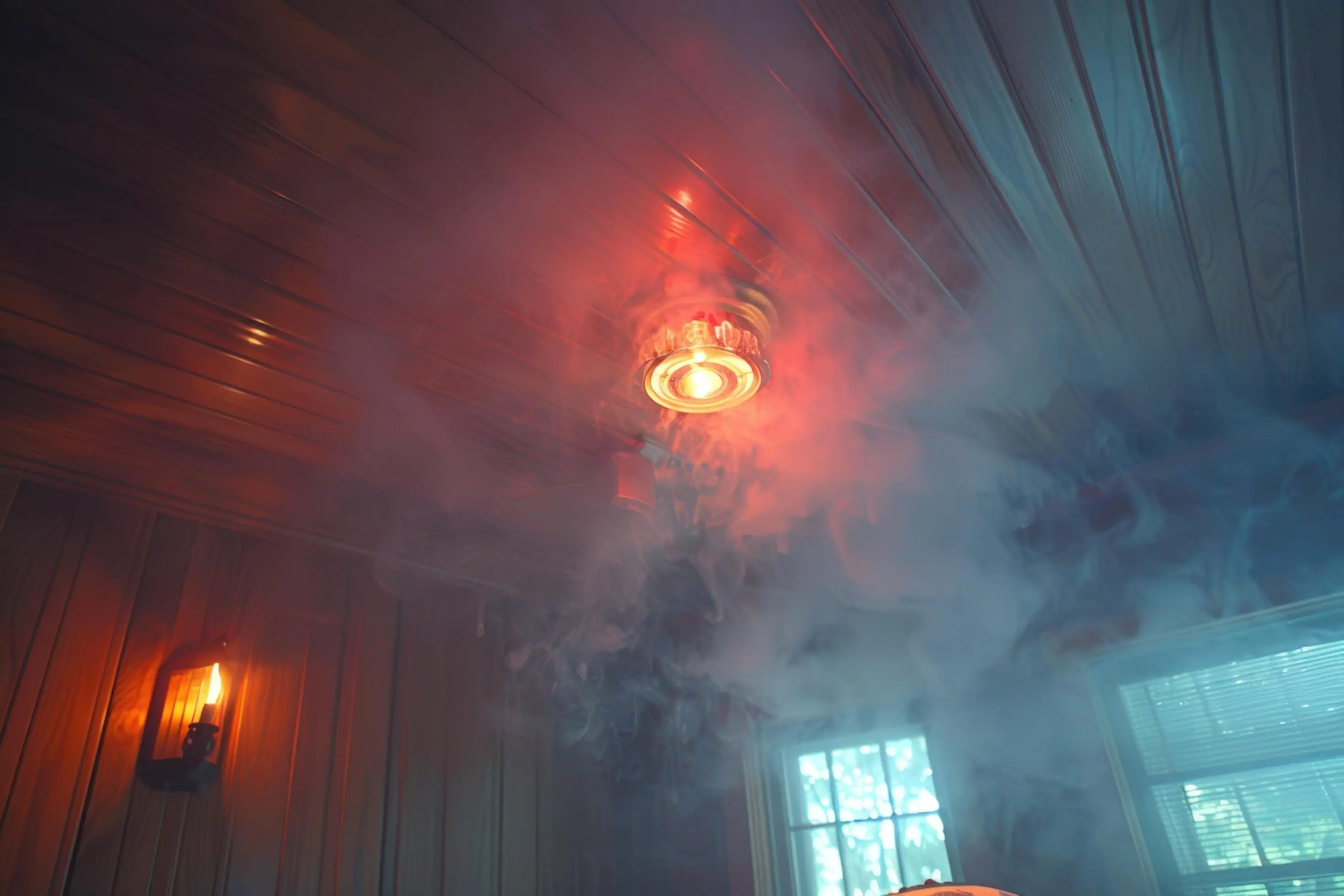
Smoke Damage Restoration
Soot residue, chemical odors, HVAC contamination. We decontaminate surfaces, eliminate odors, and restore air quality.
Learn more
Sewage Cleanup
Sewer backups, contaminated water, biohazard. We extract, sanitize, and restore safely.
Learn moreNearby Service Areas
Also serving nearby: