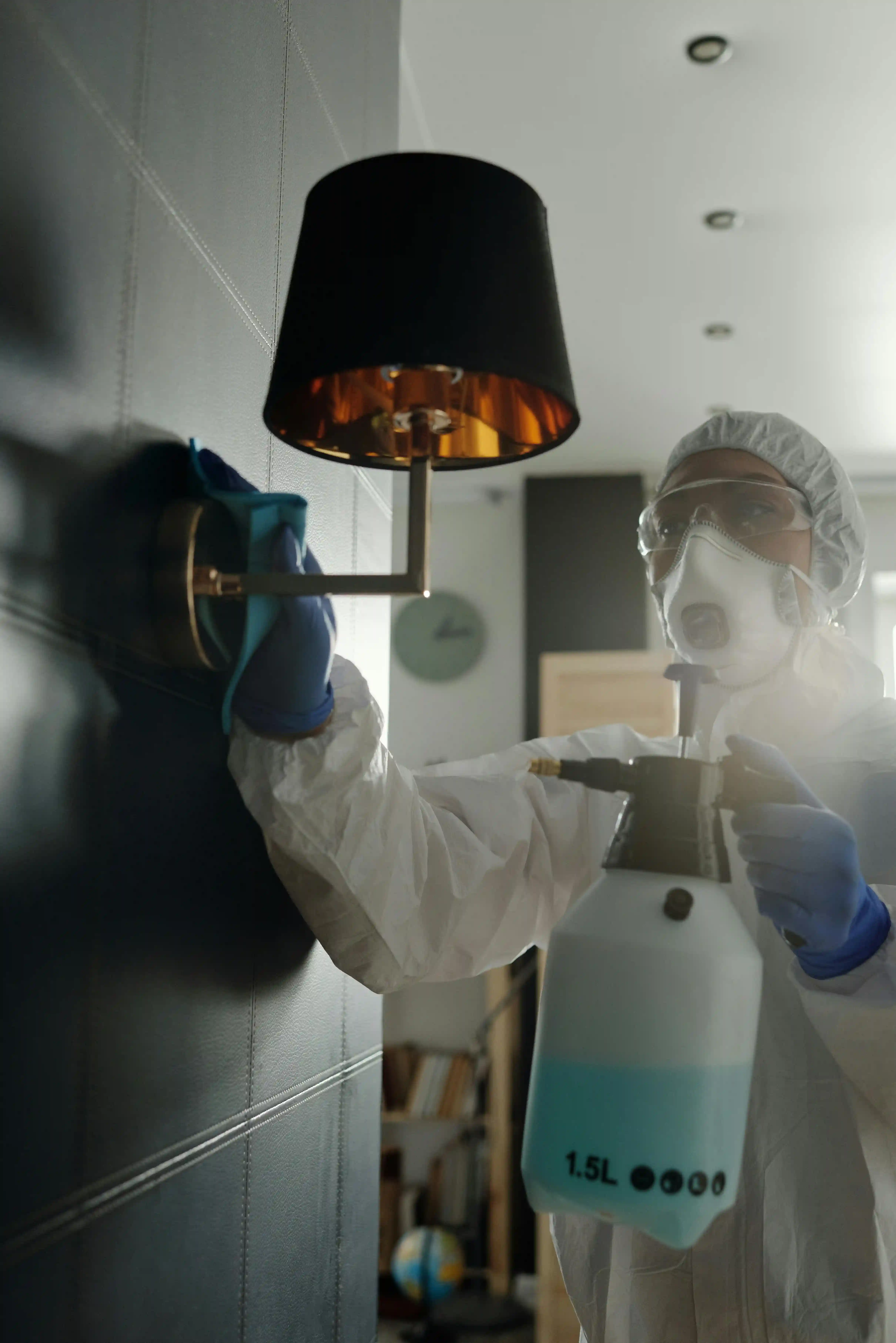
Smoke damage restoration specialist cleaning soot residue and deodorizing a residential interior
Teams Active in Seminole County

Smoke Damage Restoration in Sanford, FL

Smoke residue keeps embedding into surfaces and odors set deeper every hour. Our local team responds to Sanford smoke damage within 60 minutes.

60-Min Response IICRC Certified Insurance Guidance Serving Seminole County

What Happens When You Call

You Call

A real person answers. We assess the situation, ask about the smoke source and how far it has spread, and begin coordinating your response immediately.

15 Minutes

Your dedicated restoration team is dispatched from our local base serving Sanford and the greater Seminole County area with air scrubbers and cleaning equipment.

45–60 Minutes

Team arrives on site. We assess the smoke type, shut down the HVAC system to stop it spreading contamination, and begin air filtration to improve indoor air quality.

Same Day

Containment established, air scrubbers running, and a documented restoration plan outlined. You know exactly what comes next.

Smoke has gotten into your home and the smell will not lift. Maybe a fire never touched your property at all, just haze from a distant burn that crept inside. You need someone who understands what that smoke leaves behind and how to remove it for good. When you reach out to X Response, your restoration team is mobilized within minutes. From that point forward, one team manages everything: assessment, cleaning, deodorization, and HVAC decontamination. You are never left wondering what happens next. Call now. Your team is standing by.

Why Sanford Homes Are Exposed to Smoke Damage

Smoke damage is the form of disaster most Sanford homeowners never see coming, because it does not require a fire on your property. Seminole County sits surrounded by vast tracts of forest and conservation land, including the Ocala National Forest to the north, the Rock Springs Run State Reserve and Wekiva River wildlands to the west, and dozens of smaller preserves. These lands burn, both in wildfires during drought and in the controlled prescribed burns that land managers set to reduce fuel. When they do, the smoke drifts. Residents across Seminole County have repeatedly woken to a strong smell of smoke and hazy skies from burns miles away, and that same smoke finds its way into homes.

These events are routine here, not rare. In early 2026, prescribed burns in the Ocala National Forest and a roughly 300-acre burn in the Rock Springs Run State Reserve sent smoke and falling ash across Seminole County, prompting concern and calls to authorities. Drifting haze from regional burns regularly settles over the Interstate 4 corridor through Sanford, sometimes trapped near the ground by morning temperature inversions. The 2026 dry season brought some of the most severe statewide fire danger in years, with burn bans across Central Florida. A Sanford home can take in smoke from a fire its owners never see, and the soot, fine particulates, and odor it leaves behind are exactly what professional smoke remediation exists to remove.

Drifting Smoke from Forest and Conservation Burns

Smoke does not respect city limits. Wildfires and large prescribed burns in the Ocala National Forest, Rock Springs Run State Reserve, and other regional wildlands send haze drifting across Seminole County whenever the wind aligns. Residents have seen ash fall in their yards from burns hundreds of acres in size set miles away. A Sanford home can be affected by smoke from a fire it never sees, sometimes more than once in a single dry season, with no flames ever coming near the property.

Year-Round HVAC Operation Distributes Contamination

In Central Florida's climate, air conditioning runs nearly continuously. When wildfire or prescribed burn smoke enters the outdoor air, the HVAC system pulls contaminated air through return vents and distributes it to every room in the house. Smoke particles settle inside ductwork, coat evaporator coils, and saturate filters. Even after outdoor air quality improves, the system keeps recirculating trapped smoke residue throughout the home until it is professionally cleaned.

Temperature Inversions Trap Smoke Near the Ground

On calm mornings, a temperature inversion can trap smoke and haze close to the surface across the I-4 corridor through Sanford, holding pollution at ground level rather than letting it disperse. Drivers and residents notice the heaviest smell and lowest visibility in the early hours before the day warms. These low-lying, concentrated smoke conditions push more particulate into homes through intakes and gaps, and they prolong how long a property is exposed during a regional burn event.

Older Homes with Poor Air Sealing

Much of Sanford's housing, especially in the historic districts, was built long before modern energy codes and tight building envelopes. These homes have gaps around original windows, doors, and wall penetrations that let outdoor smoke infiltrate even with everything closed. Newer homes with better air sealing resist impingement more effectively, but Sanford's older housing stock is particularly vulnerable when smoke settles over the city during a regional burn.

Fine Particulate and Indoor Air Quality

Wildfire and brush smoke carries PM2.5, fine particulate matter small enough to lodge deep in the lungs. During Central Florida smoke events, health officials warn that inhaling it can cause respiratory distress, especially for children and people with asthma, and urge residents to stay indoors with the air conditioning recirculating. Those same particles settle onto and into household surfaces and remain a source of poor indoor air quality long after the outdoor haze clears, which is why surface cleaning alone is not enough without full air and HVAC decontamination.

Interior and Electrical Fires Produce Toxic Smoke

Beyond wildfire impingement, kitchen fires and electrical faults in Sanford's older homes produce some of the most difficult smoke to remediate. When plastics, wiring insulation, and synthetic materials burn, they create wet smoke: a sticky, smeary residue carrying toxic compounds that resists standard cleaning. Protein smoke from cooking fires is nearly invisible yet leaves an intense, persistent odor. Each type demands a specific approach.

These factors compound one another. A prescribed burn or wildfire ignites in the forest, the wind carries smoke across Seminole County, a morning inversion holds it at ground level, the home's air conditioning draws it inside and spreads it through the ductwork, and gaps in an older building envelope let even more in. By the time the outdoor haze clears, the contamination is already embedded in surfaces, contents, and the HVAC system. Professional smoke remediation in Sanford is about more than wiping down visible soot. It is about removing the residue and odor compounds you cannot see.

What Happens to Your Home While Smoke Sits

Within Hours

Acidic soot begins etching into glass, metal, and finished surfaces. Fine particulates settle into carpet, upholstery, and bedding. The HVAC system, if still running, distributes smoke into rooms far from the source.

24–48 Hours

Soot permanently discolors and stains porous surfaces, grout, and unsealed stone. Metal fixtures and electronics begin corroding from acidic residue. Odor compounds penetrate deeper into drywall, wood, and textiles with every hour.

3–7 Days

Residue bonds to surfaces and becomes far harder to remove. Smoke odor sets into building materials and contents, requiring specialized deodorization rather than simple cleaning. In Central Florida humidity, moisture in materials locks odor compounds in place. Original woodwork in historic homes is especially vulnerable.

1–2 Weeks

Corrosion damages electronics, appliances, and HVAC components. Soot staining on walls and ceilings becomes permanent. Contents that could have been cleaned early now require replacement. Restoration scope and cost expand.

One Month and Beyond

Embedded odor becomes a chronic problem that reappears with heat and humidity. Untreated ductwork recirculates residue indefinitely. What could have been a few days of cleaning becomes a full decontamination and partial reconstruction project.

The sooner cleaning and deodorization begin, the more of your home and belongings can be saved. Contact X Response now. Our Sanford team responds within 60 minutes.

How We Restore Smoke-Damaged Sanford Homes

From air quality testing through final deodorization, every step is documented, measured, and verified. Here is exactly what the restoration process involves.

Assessment and Smoke Type Identification

Our team begins by identifying the type of smoke present, because dry smoke, wet smoke, and protein residue each require different cleaning methods. We test air quality, map the extent of contamination room by room, and inspect the HVAC system, which is almost always involved when wildfire or prescribed burn smoke has entered through the intake. For Sanford homes hit by drifting smoke impingement, we check the building envelope to find where outdoor smoke infiltrated. This assessment produces the documented scope of work that drives both the cleaning plan and your insurance claim.

Containment and Air Filtration

To stop smoke residue from spreading further, we establish containment around the most affected areas and run HEPA air scrubbers to capture airborne particulates, including the fine PM2.5 that wildfire smoke carries. The HVAC system is shut down and sealed so it stops recirculating contamination. Negative air pressure keeps residue from migrating into clean parts of the home while we work. This phase immediately improves indoor air quality and protects unaffected rooms and contents.

Surface Cleaning and Soot Removal

Using methods matched to the smoke type, we clean every affected surface. Dry soot from brush and wood fires is removed with specialized dry sponges and HEPA vacuums before any wet cleaning, because wiping it first smears it in. Wet and protein smoke require chemical degreasers and solvents. We clean walls, ceilings, hard surfaces, fixtures, and contents, working top to bottom. For the original woodwork, trim, and plaster found in Sanford's historic homes, we use gentle techniques that lift residue without stripping or damaging irreplaceable period materials.

Odor Elimination and Deodorization

Smoke odor cannot be masked. We neutralize it at the molecular level using thermal fogging, hydroxyl generators, and ozone treatment, matching the method to the materials and the severity. Thermal fogging recreates the way smoke originally penetrated, allowing the deodorizing agent to reach the same pores. In Central Florida humidity, where moisture in building materials holds odor compounds stubbornly, this phase often takes longer and is verified before we consider it complete. We do not rely on air fresheners that simply cover the smell.

HVAC Decontamination and Verification

Because Sanford air conditioning runs almost constantly, the HVAC system is often the largest reservoir of trapped smoke. We clean ductwork, replace filters, and decontaminate the air handler and coils so the system stops redistributing residue the moment it powers back on. A final verification confirms that surfaces are clean, odor is eliminated, and air quality readings have returned to normal. We provide completion documentation with before-and-after evidence to support your insurance claim. If any area does not pass, we continue until it does.

The X Response Difference

Typical Experience A general cleaning crew wipes down visible soot and sprays air freshener. The odor returns within days as residue resurfaces from porous materials.
X Response We identify the smoke type, clean with the correct method, and deodorize at the molecular level so the odor does not come back.
Typical Experience The crew cleans the rooms but ignores the HVAC system. Every time the air conditioning runs, it blows trapped smoke residue back through the house.
X Response We decontaminate the full HVAC system, including ductwork and coils, so the air handler stops recirculating contamination.
Typical Experience You are told the smell will fade on its own, so you wait while odor compounds set permanently into walls, woodwork, and contents.
X Response We respond within the hour and begin containment and filtration immediately, before residue bonds and odor becomes a chronic problem.
Typical Experience You are left to document the loss and argue with your adjuster about whether invisible smoke damage is real.
X Response We document contamination with air quality readings and photos, formatted for your adjuster, and guide you through the claim.

When you contact X Response, you get a dedicated restoration team that manages everything, from smoke assessment through HVAC decontamination to final deodorization. One team, one point of contact, one standard of work from start to finish.

Insurance Claim Guidance for Sanford Homeowners

Smoke damage is one of the more favorably treated losses in a standard Florida homeowner's policy. Smoke is typically a named peril, which means damage from a fire elsewhere, including a wildfire or prescribed burn that never touched your property, is generally covered. That usually includes surface cleaning, content restoration, HVAC decontamination, and odor elimination, and unlike flood damage it does not require a separate policy. The challenge with smoke claims is proof. Because much of the damage is invisible, settling into ductwork and porous materials rather than leaving obvious char, adjusters sometimes question whether the loss is real or how extensive it is. That is why documentation from the start, including air quality readings and a clear record of the smoke source and its path into your home, makes the difference.

How X Response Helps

  • Document smoke contamination with air quality testing, photos, and a detailed room-by-room scope of work
  • Identify and record the smoke source and how it entered, which supports a wildfire or prescribed burn impingement claim
  • Align our cleaning and deodorization scope with standard coverage categories so your adjuster can process the claim efficiently
  • Provide the documentation your carrier needs, formatted the way adjusters expect to receive it
  • Explain your likely coverage and deductible before work begins, so you understand your options and out-of-pocket exposure

X Response does not file claims on your behalf, adjust claims, or make coverage determinations. We provide documentation and guidance to help you make informed decisions about your property and your policy. Coverage decisions are made solely by your insurance carrier.

Certified Restoration Specialists Serving Sanford

When you contact X Response for smoke damage in Sanford, your restoration team is drawn from certified professionals who work in Seminole County and understand how smoke behaves in this part of Central Florida. They know how forest and prescribed burn smoke drifts in from the Ocala National Forest and Wekiva conservation lands, how morning inversions hold it over the I-4 corridor, and how a home's air conditioning pulls it inside and spreads it. They know how to clean soot from the original woodwork and plaster of a historic home without destroying the period detail. This is not a crew dispatched from across the state. It is a local team with local knowledge, operating under national quality standards.

Every technician on your team holds current IICRC certification in fire and smoke restoration and carries the appropriate Florida state licensing for the work being performed. Equipment is commercial-grade and maintained to manufacturer specifications. When your team arrives, they bring everything needed to begin air filtration and cleaning immediately. No waiting for equipment deliveries or second trips.

In Sanford, X Response works with Hugo Fire and Water, an independent local restoration partner serving Seminole County.

IICRC Certified
Licensed & Insured
24/7 Availability
Serving Seminole County
EPA Lead-Safe

Smoke Damage Restoration FAQ, Sanford, FL

Nearby Cities We Serve

Also serving nearby: Daytona Beach DeLand Lake Mary Longwood Deltona DeBary Orange City

Smoke Odor Sets Deeper Every Day

Your Sanford restoration team is standing by. Free assessment, no obligation, and we guide you through the insurance process from day one. The sooner we start, the more of your home and belongings we can save.

Call Now Get Help Now Text Us